Category: Regulators

  • Dasmunsi urges diaspora role to reflect changing India

    Dasmunsi urges diaspora role to reflect changing India

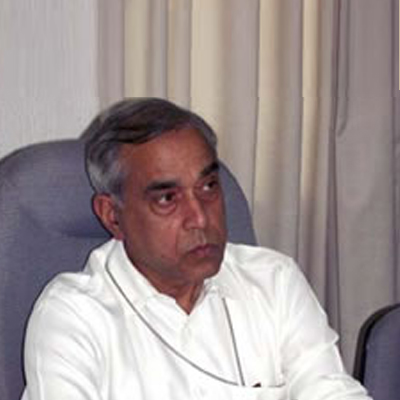
    MUMBAI: Union Minister of Information and Broadcasting and Parliamentary Affairs, PR Dasmunsi while addressing the session on ‘Media and Indian Diaspora’ at the Pravasi Bharatiya Divasstated that the Indian diaspora should act as a medium to reflect the changing scene in India.

    The Minister said that the spate of development in India is carrying along with it the democratic values, freedom of the Press and other pillars of Indian democratic system and is not just growth from the economic point of view.

    This perspective, he said, needs to be conveyed to the world at large for showing a true picture of emerging India. The Minister appreciated the role of Indian diaspora in providing a window to us all for a better understanding of the systems and values operational worldwide.

    Delineating recent changes brought in the regulatory and facilitative framework for the print as well as electronic media in the country, Dasmunsi said that Indian Press enjoys enormous freedom. The interaction between the Government and the Media is on democratic and friendly lines.

    He lauded the support and cooperation of the media to the Government in hours of crises to keep in check the designs of divisive forces. The Minister felt that the Indian media based abroad can exploit the ongoing boom in the electronic media in news as well as programme based channels in the country.

  • FTA subscription sharing: TDSAT for expanded review by Trai

    FTA subscription sharing: TDSAT for expanded review by Trai

    NEW DELHI: The Telecom Disputes Settlement Appellate Tribunal (TDSAT) has sent back the case related to MSO’s demanding a share of the Rs 77 for FTAs to be paid by consumers under the Cas regime, for an expanded review by the Telecom Regulatory Authority of India (Trai).

    The tribunal, in its order issued yesterday, said that the process would have to be completed within six weeks.

    According to the TDSAT, since the case is of great importance and has wide repercussions, Trai should also incorporate the views of all stakeholders, including those of the cable operators.

    Wire and Wireless India Limited (formerly Siticable) had filed the case against the 31 August, 2006, order by Trai, giving to the cable operators the entire Rs 77 that consumers pay for Free-to-air channels under the Cas regime.

    “We said that if this is done under the Cas regime, the Rs 75-odd in fees that we get for carrying pay channels will not even cover our variable costs, let alone overheads,” Arvind Mohan, vice president, WWIL, told Indiantelevision.com.

    In the court the WWIL counsel proffered his logic, stating that Trai had said that while cable operators could keep the Rs 77, MSOs could keep the subscription from pay channels, as well as the carriage fees.

    However, the subscription for the pay channels would also be shared between MSOs and LMOs as well as broadcasters, as per a Trai formula.

    ‘Carriage fees’ are the amount charged by MSOs for carrying a certain pay channel in the ‘prime band’ or ‘colour band’, that is, special, viewer-preferred slots. This was applicable when the channels were streamed in the analogue system, because in that system, the number of channels would be limited to a maximum of 60.

    Under the Cas system, where digitalisation is compulsory, the number of channels shown can be innumerable, theoretically, and not less than 600, or 10 times that under the analogue system.

    WWIL argued today that Trai itself had gone on record that ‘carriage fees’ are a temporary phenomena and would disappear under the Cas regime, because the carrying capacity would shoot up from 60 to at least 600. Hence, the MSOs would lose that avenue of revenue.

    Trai argued that sharing of the FTA purse would lead to disputes and hence it had opted for a simple formula that MSOs could keep the carriage fees and the cable operators could keep the Rs 77 from the consumer subscription for FTAs.

    The tribunal, however, felt that he matter was seminal and the views of all the stakeholders need to be incorporated, and asked Trai to file the response of the views of all parties concerned within six weeks.

    Incidentally, this is the second time in two weeks that TDSAT has asked Trai to review aspects of an important case. The first was last week when TDSAT asked Trai to give their views on transponder capacity issue after examination of the facts. That case too, had been filed by Siticable, now known as WWIL.

  • Trai orders access providers to comply with SMS short code guidelines

    MUMBAI: Sector regulator Trai has issued an order instructing all access providers to comply with the DOT’s guidelines issued recently for allocation of short codes by the access providers to the content providers including SMS based services.

    It is mentioned that the short codes are being used by service providers/ content providers for variety of applications including downloading ring-tones, contests, quiz, polls, information and enquiry service, entertainments, SMS Games, Astrology, Cricket updates etc.

    Access providers particularly mobile operators are allocating short codes to their content providers for various value added services including SMS based services within their network. Trai observed that some of these short codes were not in accordance with the National Numbering Plan-2003 and DOT’s earlier orders on this issue, asserts an official release.

    As per the license agreement access providers should adhere to the National Numbering Plan in this context Trai had asked access providers to stop use of these prohibited levels vide its direction dated 31 July 2006. Subsequently this issue was examined by DoT and necessary guidelines in this regard were issued.

    As per the guidelines issued by DoT five digit code starting with level five is to be used by access providers for allocation of short codes to their content providers including SMS based services within their network and accordingly all existing four digit short codes are to be prefixed by five to convert the same to five digit codes.

    Further the existing five and six digit short codes are to be migrated to five digit codes by replacing the first digit or first two digits respectively by five and so on.

    Trai has sought compliance of the DoT guidelines fro amll the access providers as and when the same is implemented but not later than 31 May 2007, adds the release.

  • Guild seeks tax sops, to submit pre-Budget memorandum to I&B ministry

    Guild seeks tax sops, to submit pre-Budget memorandum to I&B ministry

    NEW DELHI: The film industry wants abolition of customs/excise duty, countervailing duty on import of broadcasting/post-production and animation equipment, set-top boxes (STBs) and removal of octroi on raw stock and exemption of service tax on duplication of prints to be removed on export sales.

    The Film and Television Producers Guild of India is meeting information and broadcasting minister Priya Ranjan Dasmunsi shortly to submit the Pre-Budget Memorandum highlighting issues concerning the entertainment industry.
    The demands will include an increase in proportion of foreign direct investment in media from 26 per cent to 74 per cent for Direct to Home (DTH).

    Subsidies and incentives will be sought for boosting export of animation content being driven out of India on the lines of tax benefits provided by Canadian Government for creating local animation content.

    There is also a demand for creation of Special Export Zones (SEZs) for the entertainment media to facilitate promotion of Indian exports content, and widening the definition of industrial undertaking under Section 72A of the Income Tax Act, 1961 to include electronic media (TV broadcasting).

    Another demand is for reduction of the base for fringe benefit tax from 20 per cent to 5 per cent for the broadcasting industry, as in the case of computer software industry and exemption for broadcasting industry from service tax as in the case of print media.

  • No extension on Cas deadline: I&B ministry

    No extension on Cas deadline: I&B ministry

    MUMBAI: Conditional access system (Cas) will be rolled out in the notified areas of Delhi, Mumbai and Kolkata from 31 December and no time extension is under consideration, the government said today.

    The deadline has been fixed by the Delhi High Court and there is no possibility of it being extended, an official statement from the information and broadcasting (I&B) ministry clarified.

    “In an application moved by a multi-system operator (MSO) before the Delhi high court for extension of time, the court has already taken a view that no such time extension is possible. The I&B ministry does not have the power to order any extension in the date of implementation of Cas. The transition time to run encrypted and unencrypted channels and switching off pay channel signals in unencrypted format began from 16 December and will end on 30 December,” the release said.

    The ministry was reacting to a report in a leading news daily that the deadline for rolling out Cas had been relaxed. “The report is totally misleading and baseless,” the ministry said.

    The ministry also categorically denied that it had left open a month-long window after 31 December for implementation of CAS and said that there was no question of any channel being blacked out. The I&B ministry has not filed an affidavit in the Delhi High Court seeking transition time after 31 December, it clarified.

    “In the advertisements on Cas released by the ministry from time to time in various newspapers, subscribers have been requested to apply sufficiently well in advance of 31 December for set-top boxes indicating their choice for pay channels lest their pay channels are blacked out on 31 December,” the release added.

  • Delhi High Court, Tdsat refuse to grant stay on Cas

    Delhi High Court, Tdsat refuse to grant stay on Cas

    NEW DELHI: This seems to be the last word on Cas (conditional access system). The Delhi High Court and Tdsat (Telecom Disputes Settlement and Appellate Tribunal) today made it clear in separate verdicts that Cas had to roll out on 1 January, ending the efforts of broadcasters and some multi-system operators (MSOs) to obtain a stay.

    The High Court heard arguments in two appeals clubbed together, filed before it against the roll out of Cas, while Tdsat heard appeals against the tariff rate being fixed at Rs 5 per channel as well the interconnection order by Trai, regarding sharing of revenue between the MSOs, last mile operators (LMOs), and the broadcasters.

    The Delhi High Court, refusing to grant more time to MSOs, said that there is no question of Cas not being rolled out on the notified date. It asked the two petitioners to file replies which will be heard after the court vacation ends.

    Star Broadband Services, a MSO in Delhi whose licence for operating under Cas had been cancelled by Trai in an order dated 14 December, had moved the court saying that it was getting ready for Cas roll out but needed more time.

    NGO Shakti had filed application seeking postponement on the ground that the MSOs were not yet ready with the infrastructure for Cas implementation on the due date. Hence, Cas should be postponed indefinitely.

    Meanwhile, in a separate hearing, the Tdsat declined to grant stay on an appeal filed by ESPN and SET Discovery.

    The Tdsat sat through the final arguments by Trai and MSOs and the rejoinder by the broadcasters (ESPN and SET), and asked them to file written submissions, to be taken up after the vacation, but said that nothing that would be argued or heard later would mean that Cas will not roll out on the impugned date.

    The Tdsat had been told earlier by the broadcasters’ counsels that there was no rationale in the tariff fixed and that the Chennai model, where Cas had been found to be effective without Trai intervention in pricing, had left the subscribers happy. The broadcasters held that the ‘facts’ shown by Trai and the ‘assumption’ on which they based their order were mutually contradictory.

    The counsel for SET Discovery dubbed this as non-application of mind, and said this was unacceptable when Trai is issuing such a momentous order that would govern the industry for a long time.

    The counsel for the broadcasters said that Trai’s fixing of price was based on such arbitrary assumptions that went against the survey report quoted by the Authority itself.

    The Trai senior counsel, in his argument yesterday, had caused a flutter in the court, showing that the broadcasters had completely failed in Chennai and that only 3.7 per cent of the total cable households there had opted for pay channels because the prices fixed by the pay channels were too high.

    This revelation had almost every sit up, and the judges had asked whether this means that Chennai cable homes had the option of both CAS and non-CAS operation. Trai senior counsel Rakesh Dwivedi said that was correct, and that the vast majority had not take the offer.

    Dwivedi also argued that the Chennai model in any case could not be extended to Mumbai, Kolkata or Delhi, as in Chennai, four out of the five most popular channels are FTAs, and only one of the top five is a pay channel The case is the reverse with the other three metros.

    In fact, he argued that by fixing the ratio of revenue sharing at 45 per cent, Trai had actually given the broadcasters three benefits at one go: it has got rid of underdeclaration as a perennial problem; cut out ‘piracy’ that broadcasters had accused LMOs of indulging in; and given them a 300 per cent rise in their revenues.

    He argued that the broadcasters had complained that under the present system of operations, the LMOs and MSOs retain 85 to 90 per cent of the revenue from subscriotion, and only 15 per cent reach them, and that too becomes difficult to collect. “We are ensuring them a 45 per cent share and besides, the bulk of their revenue, as they claim, from advertisements remains intact,” the Trai counsel said.

    The counsel for SET Discovery today in his rejoinder said that while Trai had the legal authority to fix the tariff, it was the manner in which that had been done that bordered on perversity.

    His argument was that the Trai had itself admitted that there was not enough material on which the fixation was based.

    The SET Discovery counsel held that Trai had been referring to a document, an IMRB survey that was two and half years old and today could not be valid, since so many FTAs have now become pay channels. He said also that the budgets of households had increased manifold and that Trai had fixed the tariff without adequacy of material to support that pricing.

    Besides, the Trai had so long not brought up the issue of the IMRB survey, which had not been mentioned in the Consultation Paper issued by Trai, nor in later discussions, and was only using it to justify a wrong decision taken without any basis.

    The SET Discovery counsel also held that the Trai itself had repeatedly admitted in the court that any price fixation is arbitrary. The price, thus, fixed could not be held to be legal.

    SET Discovery’s last plea was that Tdsat should ask Trai to undertake a fresh survey and base the new tariff fixation on that. He said that actually the price fixed should be around Rs 10 per pay channel, and that if the price is fixed now at Rs 5, then there would never be an upward revision, even if Trai held a review. Public ire would prevent that upward revision, if Trai did the review at all, which he doubted would ever happen in actuality.
  • Govt. earns Rs 11.45 billion from FM channels: year-end review report

    Govt. earns Rs 11.45 billion from FM channels: year-end review report

    NEW DELHI: The government has earned revenue of Rs 11.45 billion from the successful bidding of 280 FM (frequency modulation) channels during the year through ‘One Time Entry Fee’ (OTEF) and migration fee, according to a year-end review of the information and broadcasting ministry. In all, 337 channels across 91 cities in the country were put on bidding.

    Allotment of frequencies has already been made for all eligible 245 channels. A total of 44 private FM radio channels have already become operational while others are in the various stages of getting set up. With the completion of this phase, a total of 266 FM radio stations will be functional all over the country.

    The ministry claims that the step is expected to revolutionise the field of radio infotainment, offer employment opportunities to the youths in smaller towns/cities all over the country, provide a boost to local programming and promote culture and heritage.

    The review claims that the ministry initiated several policy measures and operational steps to smoothen the flow of information to the media as well as to the public at large during the year.While private radio stations throughout the country are set to usher in a revolution in the radio infotainment, policy on setting up of community radio has been liberalised to facilitate communities and non-profit organisations in this field. Public information campaigns were launched all over the country to empower the rural masses with information and the where withal of availing benefits under various schemes undertaken by the government.

    According to the new Audio Visual Advertisement Policy, ministries/departments are no longer obliged to advertise on Prasar Bharati channels if they want to advertise on private channels. While making media plans, sufficient weightage is to be given to regional channels. Broad distribution of advertisements in monetary terms will now be 70 per cent for national channels and 30 per cent for regional channels.

  • ‘Trai has kept entry barrier low to make Cas acceptable’ : Nripendra Misra – Trai chairman

    ‘Trai has kept entry barrier low to make Cas acceptable’ : Nripendra Misra – Trai chairman

    The cable TV industry is on the cusp of change. The multi-system operators (MSOs) have chalked out plans to roll out digital cable, a transition that they believe will make their business models viable and add value to their networks.


    Perturbed by the cap on a la carte pricing of their channels at Rs 5, the broadcasters, on the other hand, have taken shelter in legal cases.


    Crucial to making Cas (conditional access system) a reality has been the role played by the Telecom Regulatory Authority of India (Trai). It has not only come out with a consumer-friendly tariff order but also made sure that progress is made by the MSOs on the implementation front.


    In this interview with Indiantelevision.com‘s Sibabrata Das, Trai chairman Nripendra Misra reiterates that digitalisation is the way forward. Cas will be implemented and even regulating direct-to-home (DTH) in areas of quality of service is on Trai‘s radar.


    Excerpts:

    How ready are the multi-system operators (MSOs) to implement Cas in the notified areas of Mumbai, Delhi and Kolkata?

    The progress is satisfactory and let there be no doubt in the minds of stakeholders that Cas is going to be implemented on the due date. There is no element of uncertainty. We already have reports of 10 MSOs (as of 16 December) having conducted the trial runs for testing out their digital systems under Cas. We want to be sure that there are no glitches in implementation of Cas and that the transition is smooth.

    In Delhi, Spectranet, Satellite Channels, Sanjay Cable Network and Star Broadband Services have been issued letters by the information and broadcasting ministry that they are not in a position to switchover to addressable system by 31 December as they are not ready with the digital systems including headend, Cas and set-top boxes (STBs). What is the action Trai has taken?

    There are four networks who we found are not in a position to roll out their service. We have asked the other MSOs (Hathway Cable & Datacom, Incablenet, Wire & Wireless India Ltd. and Home Cable Network) to step in so that consumers falling under the Cas belt of Delhi do not suffer blackout of their cable TV service. We are constantly monitoring the progress made by the MSOs.

    How many MSOs have applied for licence and got approval to operate in the Cas areas?

    There were 21 MSOs and five more applied later. Our focus is on 21. Out of this, as I told earlier, 10 (as of 16 December) have started trials.

    Estimates are that there are around 1.2 million cable & satellite homes in the Cas areas. Have the MSOs brought in adequate number of STBs?

    There are already a total of over 300000 boxes available with the MSOs. It is tough to estimate the exact number of C&S households in the Cas region. The whole cable TV industry is marked by high levels of under-reporting of subscribers. But supply shouldn‘t be a problem as the MSOs say that they can quickly import the STBs in case of demand. Their argument is that they shouldn‘t be stuck up with investments if Cas, for any reason, doesn‘t pick up. We expect 40 per cent of analogue subscribers converting into digital. That apparently is in line with the global trend. Digitisation is a way forward and consumers falling under the Cas notified areas should start ordering for STBs from now so that there is no crowding towards the end.

    What gives you the confidence that Cas will take off this time?

    Unlike in 2003, we now have a broadcast and cable regulator in Trai. We have kept the entry barrier as low as possible so that Cas can get accepted by everybody. Consumers also can select individual channels and we have fixed a price cap on a la carte channels at Rs 5. The tariff order also means that STBs are available on rental schemes with a fixed deposit amount (Rs 30 per month on a deposit of Rs 999 and Rs 45 for a deposit of Rs 250). Besides, this time there is competition from direct-to-home (DTH) with DD Direct, Dish TV and Tata Sky already offering their services. In fact, we have found medium-sized MSOs in some non Cas areas investing around Rs 15 million on diogital headends so that they can compete against DTH.

    The average monthly bill for digital cable TV subscribers will not see a sigificant drop as they will be loaded with an entertainment tax of Rs 45 (other areas different), Rs 45 as rent on the STB (if they pay a deposit of Rs 250) and a service tax. Add to this a payout of Rs 77 on free-to-air (FTA) channels and there is a slim chance of lowering down the bills. Would you agree?

    We shouldn‘t be talking of a system where we do not pay taxes. The taxes are applicable even under the current system. That is no way to calculate the cable TV subscription rates. Consumers can now pay as little as Rs 5 for the channel they want to see and limit their bills.

    ‘Regulating DTH in the quality of service area is certainly on our radar

    Will the rental schemes attract value added tax (VAT)?

    Yes. In any case, taxation is not a subject which falls within the purview of Trai.

    Consumers complain that costs will go up as they have to pay for the second TV set as well?

    We have decided not to regulate on the concessional rates for the second or more TV sets. Market forces should take care of that – as has been happening now. In any case, a large percentage are single TV households. We shouldn‘t regulate wherever we can, but only in areas where there is need.

    How long will this price of Rs 5 and a minimum subscription commitment of four months for any channel last?

    We are open to taking a relook at this. As we determined on a price as low as Rs 5, we also decided to balance it by asking consumers to subscribe a channel for at least a period of four months. After six months, we intend to first assess whether a review on the pricing and other related issues is necessary at all or not.

    Are you looking at coming out with some kind of regulations for non Cas territories?

    We are considering if we should step in and regulate the non cas areas so far as quality of service is concerned.

    Will Trai try to encourage various modes of digitalisation?

    We have a forward-looking approach. We generally feel digitisation is the road ahead. Besides mandated Cas, we are looking at voluntary spread of digitisation across all technologies. We will be having a serious of discussions from January-June. The first round table kicks off on 27 January. There are various alternatives – DTH, Cas, IPTV. We will be having a series of regional meetings where we want to discuss and review all these things. Then we will send our recommendations to the government.

    Is Trai going to regulate DTH as well?

    Perhaps, we need to look at regulating DTH in the quality of service area. It is certainly on our radar. As the DTH base grows, subscribers need to be protected. But DTH is at an infant stage and it may be too early to regulate it like cable. Let us not forget that cable TV has grown in India so far as an unorganised industry.

    As the DTH base grows, subscribers need to be protected. But DTH is at an infant stage and it may be too early to regulate it like cable. Let us not forget that cable TV has grown in India so far as an unorganised industry.

  • MSOs have to now start trial runs on STBs: Trai

    MSOs have to now start trial runs on STBs: Trai

    MUMBAI: The Telecom Regulatory Authority of India (Trai) has directed multi-system operators (MSOs) to start trial runs on homes where they have seeded the digital set-top boxes (STBs) for conditional access system (Cas).

    “We have reports of 10 MSOs having conducted the trials for testing out their digital systems under Cas. The deadline starts from today. We want to be sure that there are no glitches in implementation of CAS and the transition is smooth,” said Trai chairman Nripendra Misra while addressing a consumer forum meet today in Mumbai.

    The progress is satisfactory and let there be no doubt in the minds of stakeholders that CAS is going to be implemented on the due date, he added. “Digitisation is a way forward and consumers falling under the Cas notified areas should start ordering for STBs from now so that there is no crowding towards the end.”

    With effect from 1 January, pay channels in the notified areas of South Mumbai, Delhi and Kolkata can be viewed only through the STBs.

    The cable and broadcast regulator will encourage various modes of digitalisation, Misra said. “We want to discuss on the road ahead for digitalisation. Besides mandated CAS, we are looking at voluntary spread of digitalisation across all technologies. We will be having a serious of discussions from 27 January-June.”

    Clarifying on the issue of taxes, Misra said it did not fall under the purview of Trai. “VAT will be on the deposits and rental schemes of the STBs,” he added.

  • Deposit and rental schemes on STBs to attract VAT

    Deposit and rental schemes on STBs to attract VAT

    NEW DELHI: The controversy over Cas (conditional access system) does not seem to end. If the broadcasters have taken shelter in the various legal courts, consumers expressed heat over the issue of taxes at a forum meeting today with the Telecom Regulatory Authority of India (Trai).

    The broadcast and cable regulator clarified that value added tax (VAT) would have to be paid on the deposit and rental schemes for the set-top boxes (STBs) under Cas. Also, the entertainment tax would have to be paid per TV set.

    This caused a heated discussion at the Trai consumer meeting held today, according to sources. Trai officials also admitted that the issue had come up, adding that clarifications have been sought, without wanting to say anything further.

    In a CAS regime, multi-system operators (MSOs) will have to offer consumers digital STBs at a deposit of Rs 999 or Rs 250 on a monthly rental of either Rs 30 or Rs 45. VAT will have to be added to this.

    The entertainment tax would have to be paid per TV set and not per household, Trai also clarified.

    The meeting saw a lot of dust being kicked up by consumers and lasted for all of two-and-half hours, members who attended the meeting said.

    When asked of this, Trai Advisor (Broadcasting) Rakesh Kakkar told indiantelevision.com: “The issue had come up today.” He refused to comment further on the issue.