Category: Regulators

  • TDSAT directs Media Pro to restore signals to Lucknow MSO

    TDSAT directs Media Pro to restore signals to Lucknow MSO

    NEW DELHI: In an order that may help multi-system operators whose applications for DAS licence are pending with the government, the Telecom Disputes Settlement and Appellate Tribunal (TDSAT) has directed Media Pro Enterprises to restore television signals to Lucknow-9 Cable Network of Lucknow as an interim measure.

    The Lucknow-based operator had said that its application for licence under Digital Access System (DAS) has been pending before the Information and Broadcasting Ministry for several months.

    Chairperson Justice Aftab Alam and member Kuldeep Singh also directed the Lucknow network to file an affidavit to the effect that its application filed in the Ministry for grant of license under Rule 11 C of the Cable Television Networks Rules, 1994 was not defective but was complete and in order, in all respects. It would also file a copy of the application in a sealed cover.

    Meanwhile, the Lucknow-based operator would pay to content aggregator Media Pro all dues following a reconciliation of accounts and further to file an undertaking before this Tribunal that it would transmit or retransmit programmes of any channels following the provisions of section 4 A of the Cable Television Networks (Regulation) Act, 1995. This undertaking has already been filed.

    Media Pro counsel Tejveer Singh Bhatia had told the Tribunal that his client could not supply the signals as it was prohibited from doing so under clause 3(2) of the Telecommunication (Broadcasting and Cable Services) Interconnection (Digital Addressable Television Systems) Regulations, 2012 ‘for the simple reason that the Petitioner did not have a license under Regulation 11 C of the Cable Television Networks Rules, 1994.’

    But Counsel for the operator Vikram Singh said as there was inordinate delay in the grant of license, the operator had approached the Lucknow Bench of the Allahabad High Court which had disposed off the Petition by order dated 2 June 2013 directing the concerned authority to rid the application for license within 15 days from the date of receipt of the certified copy of that order. Counsel also stated that the date stipulated in the High Court’s order has expired on 2 July 2013 but it has so far not received any communication in regard to its application for the license.

  • TRAI releases consultation paper on “Valuation and Reserve Price of Spectrum”

    TRAI releases consultation paper on “Valuation and Reserve Price of Spectrum”

    NEW DELHI: The Telecom Regulatory Authority of India (TRAI) on 23 July released a consultation paper on “Valuation and Reserve Price of Spectrum”.

    On 10 July 2013 the Department of Telecommunications (DoT) sought the TRAI’s recommendations on the applicable reserve price for the auction of spectrum in 800 MHz, 900 MHz and 1800 MHz bands. In this context, TRAI has issued this consultation paper raising specific issues for consideration of stakeholders. The key issues raised in the consultation paper are quantum of spectrum to be auctioned, eligibility for participation, roll-out obligations, methods to be used for valuation and estimation of reserve price of spectrum, review of spectrum usage charges and spectrum trading.

    Written comments on the issues raised in the consultation paper are invited from the stakeholders by 14 August 2013 and counter-comments by 21 August 2013 by the regulator. 

    Stakeholders have been requested to send their comments by the due dates as there is an urgency to complete the consultation process. In its reference, the DoT has stated that, in light of the Honourable Supreme Courts’s directive, TRAI may consider an expedited process; hence there will be no further extension of timelines.

    This is also an advance notice that open house discussion on the consultation paper will be held on 26 August 2013 in New Delhi.

  • Sanjay Dutt to spend 42 months in jail in Mumbai blasts case, SC commutes sentence

    Sanjay Dutt to spend 42 months in jail in Mumbai blasts case, SC commutes sentence

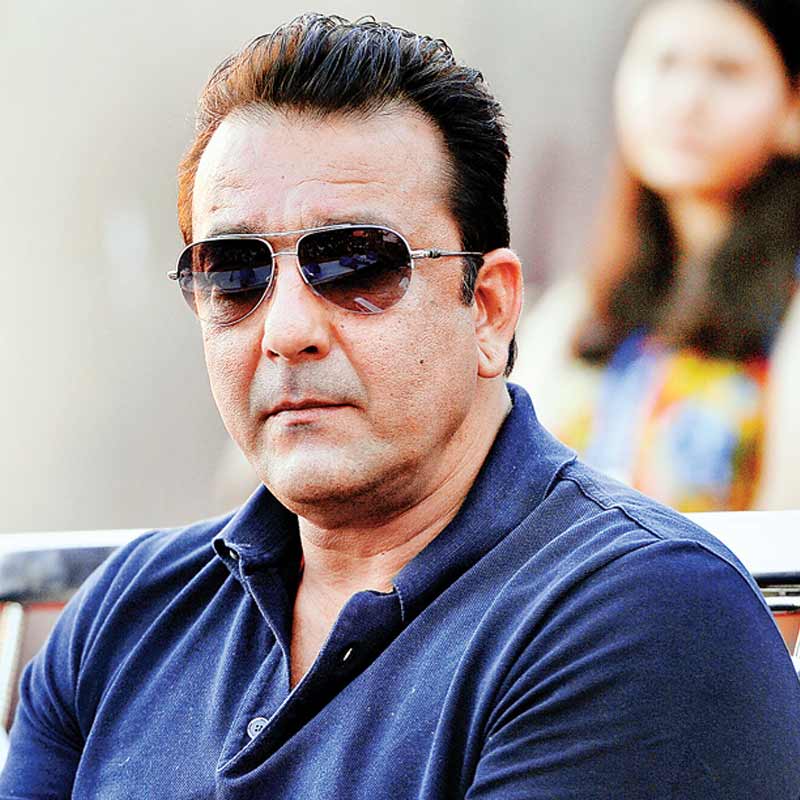
    New Delhi: The Supreme Court today gave some relief to actor Sanjay Dutt in the Mumbai blasts case as it commuted his jail sentence from six years to five years but would in effect be in jail for three and a half years.

    The actor was given a six-year jail term by the TADA court. The court took cognizance of the fact that the actor had already spent 18 months behind the bars during the trial.

    At the same time, the apex court rejected his probation plea and directed him to surrender within four weeks.

    Referring to Dutta, the court said: ‘the circumstances and nature of offence was so serious that he cannot be released on probation. “… (the) evidence and materials perused by the TADA court in arriving at the decision against Dutt was correct.”

    The actor had been convicted for illegal possession of a 9mm pistol and an AK-56 rifle, but was acquitted of more serious charges of criminal conspiracy.

    The Court also pronounced judgment in the case of others convicted for the blasts.

    After 10-month hearing that started on 1 November 2011, the Court had in August 2012 reserved its verdict in the case.

    On 12 March 1993, Mumbai was rocked by a series of blasts that killed 257 people and left 713 injured.

  • FTII to get Rs 800 mn for infrastructure development in 12th Plan

    FTII to get Rs 800 mn for infrastructure development in 12th Plan

    NEW DELHI: The Film and Television Institute of India (FTII) is expected to receive a sum of Rs 800 million under the 12th Plan for infrastructure development.

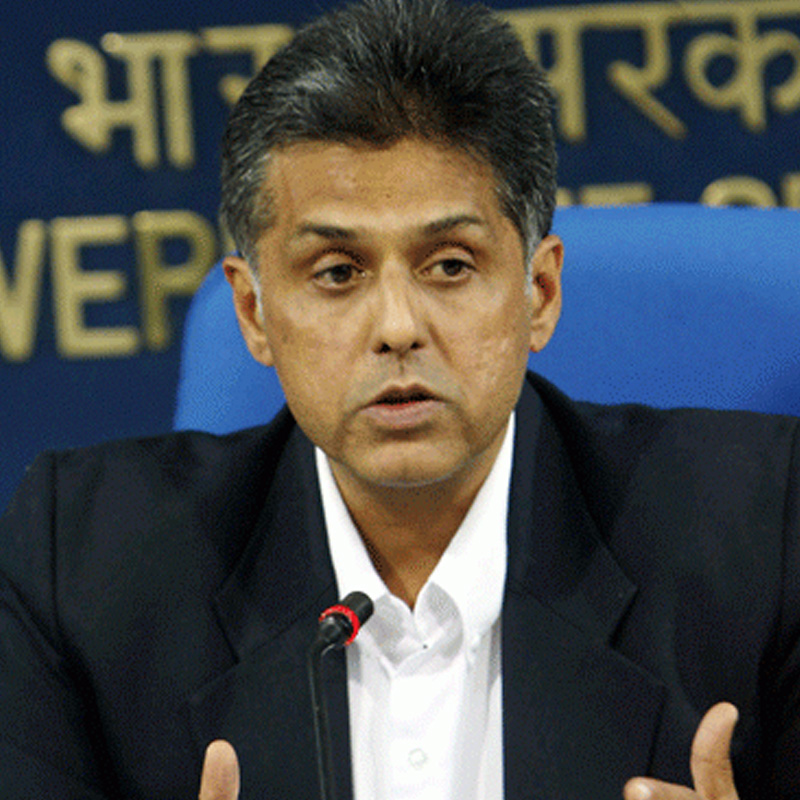
    Information and Broadcasting Minister Manish Tewari told Parliament that for the 11th Plan an amount of Rs 373.1 million was provided. Funds are provided under Plan and Non-Plan heads to the Institute.

    The Institute has reported an average teacher-student ratio of 1:7. The salaries of the staff and faculty are governed by Pay Commission recommendations. The development plans proposed by the Institute are taken up as part of Plan schemes and funds are provided accordingly. Every administrative/financial issue being brought to the notice of the Ministry is addressed at highest level.

    Courses are being conducted regularly from 2009 onwards. Due to backlog in completion of courses, a delay has occurred in awarding certificates. Notice has been issued for students who have successfully completed their courses, to collect their diplomas. FTII has also initiated steps to clear backlog in a time bound manner.

  • I&B frowns on news channels showing adult film content

    I&B frowns on news channels showing adult film content

    NEW DELHI: The Information and Broadcasting Ministry has asked news and current affairs channels not to show as part of news any clips from feature films that violate the Programme Code prescribed under the Cable Television Networks (Regulation) 1995.

    In an advisory issued by the Ministry, it took note of the fact that certain news channels were showing film clips not suitable for unrestricted public exhibition.

    It has been pointed out by the Ministry that Rule Six of the Cable Rules 1994 are clear that no programme or film scenes that are not suitable for unrestricted exhibition or have been certified by the Central Board of Film Certification as suitable for unrestricted exhibition will be shown.

    Furthermore, the Programme Code also makes this amply clear, the Ministry said in the advisory issued under Section 20 of the Act.

  • Several cases of paid news during assembly polls: Soni

    Several cases of paid news during assembly polls: Soni

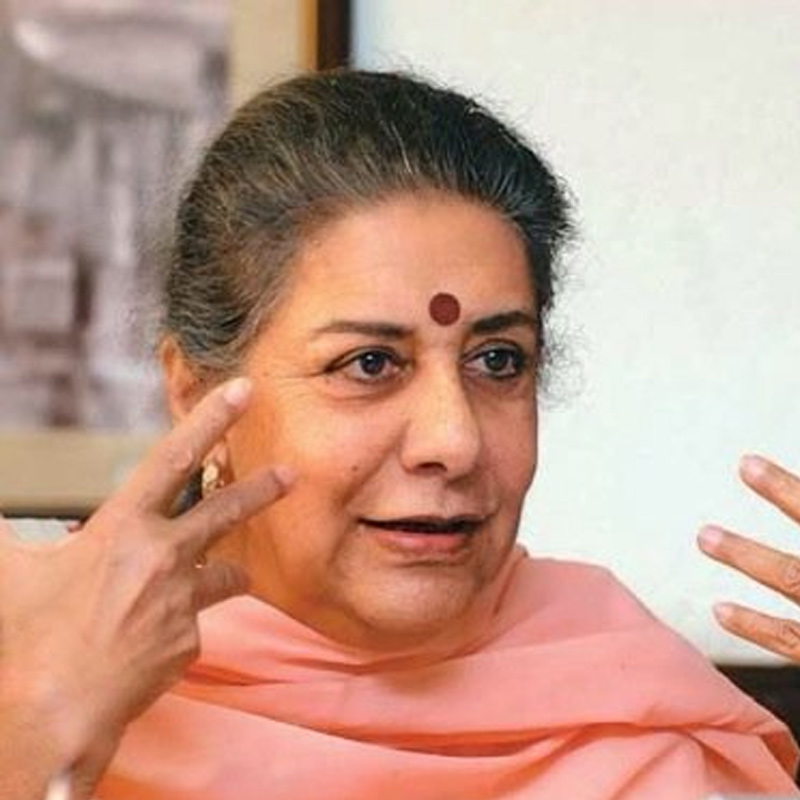
    NEW DELHI: Information and Broadcasting Minister Ambika Soni has said that the recent Assembly elections in five states had thrown up several cases of paid news.

    She said: “Special observers were appointed (by the Election Commission) to check the menace of paid news in the recent Assembly elections as well as in the elections in Tamil Nadu earlier. Some pink papers (business newspapers) have also been reported to have indulged in paid news.”

    Speaking on the sidelines of an event here, she drew attention to the large number of players in the electronic and print media, and its impact on news coverage.

    She regretted that the malaise of paid news which has grown especially since 2009, was not limited just to election time.

    “(Paid news) is something which weakens the freedom of the media, and all who argue for it,” Soni added.

  • Naved Abbasi wins Lucknow Radio City 91.1FM’s ‘City Ki Chaka Chak Bike

    Naved Abbasi wins Lucknow Radio City 91.1FM’s ‘City Ki Chaka Chak Bike

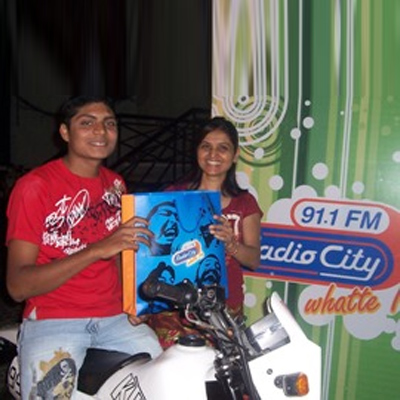
    MUMBAI: In a unique ‘Whatte Fun’ endeavour of sorts, Lucknow’s Radio City 91.1FM organized a 2 week City Ki Chaka Chak Bike contest that invited Lucknow’s bike enthusiasts to showcase their most innovatively modified bikes. With over 40 entries pouring in from all across Lucknow, 21 year old Naved Abbasi from Razman Bazaar, Cantt, Dilkusha, Lucknow bagged the City Ki Chaka Chak Bike winning exciting goodies courtesy Radio City. Helping the Radio City team identify the winner was Mr. Deep Saxena from Hindustan Times an automobiles enthusiast and an expert in information technology.


    Resonating Whatte Fun through the City of the Nawabs, Radio City 91.1FM ran the City Ki Chaka Chak Bike contest on-air for 10 days that witnessed 40 plus bike lovers come forth to flaunt their passion for the two-wheeler. The winning criterion was to shortlist the maximum modifications done keeping present trends in mind. The winning bike belongs to Naved, a computer engineer by profession who has been passionate about bikes since he was 17. He modified his 150 CC all terrain bike into a motocross bike ready for a mountain ride. Replacing the twin shockers on the bike’s mono suspension, he changed the fuel tank along with the body fibre as well. With changed mudguard and a short handle the bike is a real delight to eyes.


    Commenting on the response said Mr. Rana Barua, National Head Marketing & Programming, Radio City 91.1FM, “We, at Radio City, strive on enhancing our connect with our listener time and again. City ki Chaka Chak Bike was an initiative well received and supported by Lucknow’s Radio Cityzens. We are thankful to them for their overwhelming support and appreciation and shall continue to bring such exciting initiatives in the future!”


    Elated at winning the City Ki Chaka Chak Bike contest Naved Abbasi said, “This has been one of the most exciting initiatives by any company – not just because I won but due to the fact that City Ki Chaka Chak Bike was a different experience for the people of Lucknow! A biker’s passion is always his bike and giving a platform to showcase the prized possession is recognizing a talent of sorts. Three cheers to Radio City for making this a ‘Whatte Fun day’ for me!”


    Lucknow Radio City 91.1FM’s City Ki Chaka Chak Bike witnessed avid Radio Cityzens participating from all age brackets remodelling their two wheelers to acquire the title of the most alluring bike from their favourite radio station. It was quite a task to declare the winner with an array of bikes with spectacular modifications ranging from changes in the whole body fibre, modified fuel tanks, shockers and wheels. Other innovative modifications were the conversion of the CBZ into a Hayabusa, fixing revolving lights in the bike and installing a radio set tuned to Radio City 91.1FM in one of the bikes.


    A sustained focus on understanding listeners and leveraging the synergies of music expertise and innovative programming, allows Radio City to deliver a unique listening experience and be an integral part of the lives of listeners across markets. Aggressively looking at spreading the Radio City experience to new markets across the country, Radio City 91.1FM is committed to growing the market and creating superlative content for premium audiences.

  • Surat’s Radio City celebrates Children’s Day

    Surat’s Radio City celebrates Children’s Day

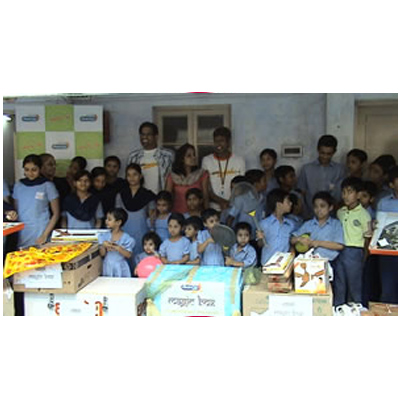
    MUMBAI: Surat’s Radio City 91.1FM today celebrated Children’s Day with great pomp and fervour! More than 100 lesser privileged children from Surat’s Shri Mahajan Anaath Baalashram were in for a treat as the Radio City along with RJ JJ and Leena (Radio City Breakfast Show) and RJ Rayhaan (Radio City Joyride) visited them with 7 Magic Boxes full of ‘Whatte Fun’ gifts from Surat city! After presenting the goodies to the children, the RJ spent quality time playing and interacting with them.


    Taking the lead to ensure a memorable Diwali and Children’s Day for the lesser privileged children of Surat, Radio City 91.1FM had organised a unique campaign ‘Diwali se Baaldivas Tak’ from 6-14 November. Extending the festive sparkle to one and all, Radio City encouraged the people of Surat to spare a thought for these deserving children and allocate a small portion of their Diwali budget towards buying something for them. Responding to this call, Surat contributed wholeheartedly with over hundreds of listeners coming into the studios to drop in brand new toys, clothes and gifts for the children at Shri Mahajan Anaath Baalashram.


    Speaking on the occasion, Mr. Rana Barua, National Head – Marketing, Radio City 91.1FM said, “It’s the simpler things in life which allow us to make a difference! We at Radio City have always made an effort to involve our listeners to actively contribute to society and give back in equal measure. Thanks to our listeners, our ‘Diwali to Baaldivas’ celebration this year has been a resounding success.”


    Deeply moved by the gesture, Dr. Harikrishna Joshi, Vice President, Shri Mahajan Anaath Baalashram said, “On behalf of our Trust and the children here, I would like to thank Radio City for their efforts in bringing Surat together for this unique Celebration. Thanks to the generosity of Surat’s Radio Cityzens, the Festival of Lights this year has been very memorable for all of us here. This has been a one-of-its kind initiative which has never happened in our city before.”


    A sustained focus on understanding listeners and leveraging the synergies of music expertise and innovative programming, allows Radio City to deliver a unique listening experience and be an integral part of the lives of listeners across markets. Aggressively looking at spreading the Radio City experience to new markets across the country, Radio City 91.1FM is committed to growing the market and creating superlative content for premium audiences.

  • ‘Cas is here to stay’ : Nripendra Misra – Trai chairperson

    ‘Cas is here to stay’ : Nripendra Misra – Trai chairperson

    Nripendra Misra is a suave IAS officer with a reputation of being completely above board, and perhaps lacking the ‘guile‘ that puts many others in the topmost slots of the bureaucracy, fellow officials say of him in a positive sense. After the first initial setback for Conditional Access System in 2003, it was during Misra‘s tenure that Cas was enforced in parts of Mumbai, Kolkata and Delhi. And it was war… MSOs had to be readied, LCOs trained to shift to higher technology, broadcasters‘ resistance to be broken down by assuaging their fears and yet, the court order had to be implemented within the deadline: 31 December 2006.

    It could not have been a pleasant task. Amidst all this, Misra and his dedicated but small team is going about handling one of the noisiest of industries in the country, issuing consultation papers, and ushering in new technologies.

    Misra took his stand on various contentious issues during an interview with indiantelevision.com‘s Sujit Chakraborty.

    Excerpts:

    It has been nine months since Cas was implemented in parts of Kolkata, Mumbai and Delhi, after Chennai was brought under Cas. Towards the beginning there were uncertainties, and some people even opposed Cas. So today, what is your assessment of Cas? Is it a success or a failure in numerical terms?
    Well, we never had a target in terms of penetration percentages. It was left to the subscriber who wanted to opt for choice, whether he wanted pay channels or FTAs and which are the ones he wanted. The latest numbers tell me that about six lakh (600,000) homes have opted for Cas in the mandated areas.

    That is out of a universe of around 1.6 million cable homes…?
    Yes, so that is about 30 per cent of subscribers. Then you have also a similar facility in DTH, which has also been accepted by many. In Kolkata particularly, the response has been poor because most of the popular channels are FTAs. So if the criterion is in terms of numbers, I think it has been a very satisfactory performance.

    But it is not the number that is important. Unfortunately, we are always missing the true substance when attempting to evaluate Cas.

    What is it we are trying to do? We are trying to set up a mode of digital transmission, which is more efficient and more accommodative. It is the global practice. Analogue is gradually getting out of the scene, and so we have to make a beginning. That was made into a kind of a pilot in these four areas.

    Today you have a choice, you have DTH and you have Cas. Tomorrow you may have HITS… which is another option. You have voluntary Cas. So a beginning has been made, a seed has been sown, which must someday fructify in terms of an all India feature. Success has to be measured in terms of whether it is a trendsetter or not, and not in terms of how many people have opted for it or not.

    So would you say that the target of becoming a trendsetter has been achieved?
    Oh yes! It is perhaps a watershed in that in the broadcasting industry, digital transmission has begun.

    But one main area that remains disturbing is the quality of service, which in many parts of the mandatory Cas zones remains highly dissatisfactory. Lots people are not getting the channels they have opted and paid for.
    Firstly, I do not want to defend the quality of service, and there are problems of channels being discontinued. But it is not just at the level of local cable operator. I think somewhere down the line, the MSO also has to take his role seriously. Unlike in non-Cas areas, the role of the broadcaster and MSO in implementing Cas is far more important than that of the LCO. So, if these things have happened, they have happened because of the inadequacy of the functioning of MSOs.

    When it started in January, we wanted to take a very liberal view. We did not want to enforce all the regulatory provisions in the first four or five months. They wanted time so that the consumer preference could be registered, and we gave them enough time. The subscriber register that has to be maintained was not complete to the extent we wanted. Therefore billing got delayed, payments also got delayed… subscribers have also not made payments. But we have made it clear that come 1st of July, we are not going to forgive anyone.

    But how do you enforce this, as it has clearly not happened in many places till now?
    There are three ways of how to enforce this. First is the awareness of the consumer. There is a quality of service regulation in the Cas area which is operational. Therefore the subscribers must reach to and judge the performance of the MSOs and cable operators. There are great details in the regulation about the kind of rebate that has to be given if the channels are not coming, or how much time it should take which kind of interruption, what should be the response time for the MSOs… these are all standardised and fixed.

    Broadcasters have been cooperative in rolling out Cas, despite serious reservations about the Rs 5 channel price

    But that brings us to a moot point…. The consumer is not truly aware and also does not seem to care about implementing his rights?
    It takes time…

    So you are saying that MSOs are primarily responsible for QoS, so where have they failed? Because there are lots of complaints about failure across the board.
    The MSOs initially were perhaps not ready with the level of demand. That has settled down, STBs have been imported and they are in plenty today. The second stage was to get the reference of the subscribers. Now, I know and it is correct to say that the MSO representatives have gone to the homes four or five times, asking the subscribers to fill up the forms. But the gentleman says, you have come at the wrong time, that he will have to consult his family.

    But gradually, that too has ceased to be a problem. Ninety percent of the subscriber registers have been completed and the choice is now there. Now the stage is where the subscribers must know what their right is. That is, the manual of practice of the MSOs must be made available to the subscribers. That manual of practice in most of the cases is not available. The contractual conveyance, that we have between us signed a contract, and this is our right, that message is still not being passed on, which is reflecting in the lack of awareness.

    Broadcasters have been extremely cooperative in rolling out Cas, despite serious reservations about the RS 5 channel price, and all the Reference Interconnect Offers are in place.

    So what have you told the MSOs about this?
    We have conveyed to them that look, we shall view very seriously if there are defaults. We have written to the state governments, because they are the enforcement machinery.

    So what is holding back the extension of Cas in the three metros?
    The Central government wanted us to report back on this, we have sent that report, we have said it will take six to eight months‘ time to implement after notification of the extension. But then the state governments said that it is better to evaluate before extending Cas. We on our own without waiting for such instructions have engaged some outside agency to advice us on the level of implementation.

    Has that audit been completed?
    It will take another two months, we are expecting the reports by the end of October or beginning of November.

    So it will further delay Cas extension by that much time?
    Well this has nothing to do with Cas extension, this is something we are doing independently, and as far as the government goes, they can extend Cas, and we have just said that it would take six months from the day of notification to implement the extension. It is for the government to take a view when they wish to notify.

    Resistance to Cas had been from the broadcasters, but even from the grassroots level, due to privileges of piracy and under declaration, there had been resistance from the cable operators as well, so have the realised that this is the business model of the future?
    I think they have realised this more than anybody else. Today there is demand from many, many parts of India that they be given the permission for implementing voluntary Cas.
    Like Ortel and Sristi in Orissa and West Bengal?
    Ortel is one, then Pune is another, and there is demand from Bangalore, Mumbai and many other places. Some have in fact gone ahead with the implementation of voluntary Cas. So what the LCOs know very well is that the competition from DTH is very strong. The LCOs thus know that of they have to remain in the industry, two or three things are required.

    First, investment is required, which is not come if the industry is so disorganised as it is today. Second, they know that there has to be some regulatory provisions to give stability, which will ensure certain amicable relations between them the broadcasters and the MSOs. So to answer your question as to why they are not implementing voluntary Cas, perhaps for that some regulatory initiative is required.

    Now, for that the expert committee had been set up, and it has suggested that voluntary Cas be rolled out in 55 cities and towns. But they have also said that you have got to have a regulatory regime for at least one year. Even for voluntary Cas, certain things are important, like Standard Interconnection Offer, what should be the connectivity, what should be the revenue sharing formula. So these are the issues we are looking at, and we are going to put up the paper on voluntary Cas.

    “Fixing of channel pricing in non-Cas is a challenge, but we shall come out with something that meets the expectations of both the high and low income groups”

    When is that likely?
    Oh any day, we are working on HITS and next is the paper on voluntary Cas.
    The consultancy paper on HITS is already out?
    Yes, but we have to now recommend the terms and conditions of licensing provisions to the ministry of Information & Broadcasting. Even the voluntary Cas paper is also in the pubic domain, and so we have to now concretise our views. And then specifics like what are the regulatory issues, what are the areas in which facilitation is required… perhaps some technical training is required, and the go ahead.
    But voluntary Cas would mean that channel prices will be dictated by the broadcasters and subscribers may suffer?
    Let‘s see. Voluntary Cas does not mean it cannot be regulated, and as such I do not have any views on the subject now.
    It follows that even in voluntary Cas you could regulate prices?
    If it requires so in the case of DTH I can regulate prices. In fact, there has been some judicial expectations on this, when TDSAT in one of its judgments asked that if channel price is regulated in Cas, why it is not there in DTH? We had our reasons, it is an infant industry, we wanted DTH to grow.
    But then Cas is also an infant system?
    The difference is that DTH is a new initiative, and I am of the view that there should be minimal regulation. Cas was a shift from the old cable industry.
    The cable industry has been insisting on a level playing field and they are pointing out to the IPTV and DTH consultation papers as proof that Trai is not creating that level playing field. And in Trai‘s own meetings on Cas in Kolkata and other places, LCOs and MSOs have accuse Trai of siding with broadcasters?
    There was never such an accusation. You may have been told so, but never, never has a single cable operator said that Trai is favouring broadcasters. It is all a matter of which platform you are utilising. You fix the price at RS 5, and someone will say, it is against broadcasters. If you do not do that, they will say you are favouring the broadcasters. There is a bogey being raised that in many of the countries channel prices are fixed. The truth of the matter is channel prices have not been fixed in a majority of the countries. And majority means, more than 90 per cent of the countries.
    So there, prices have panned out according to market pull and push?
    Of course.
    So how much time do you think we will need for market forces to create prices that are compatible with the pockets of the average consumer, who are the vast majority, that is, when would deregulation start and prices shape up as per market forces?
    It is already there, because in non-Cas it is already there according to the market forces. I haven‘t regulated prices there. The prices have been fixed by the cable operators and the subscribers. In 2004 when there was such a noise, there was an order on freezing the prices. You know that order was an interim measure. The ideal situation, which is there in our consultation paper, is it should go to forbearance. And I think that the day is not very far. The moment there is healthy competition and prices should be put on forbearance.

    There is the issue of price freeze versus price cap?
    That I won‘t answer because we have not issued the regulation on that so far.

    It is important for the cable industry to grow and I am not a great votary for centralised economic activity, or vertical integration, so franchise should be the mode.

    Is it in the offing?
    Yes, the next thing for the non-Cas areas.
    In recent meetings the ministry of broadcasting has said that content control in IPTV is not in their domain because that platform is under the ministry of telecom. Despite that Trai has said that it is I&B which should control content in IPTV, so do you think you have usurped some of the government‘s prerogatives?
    No, not all. It is a viewpoint. I can‘t say anything on content regulation, who will or who will not do. It is not within my powers. It is simply this, that we are of the view that the control of all content of all broadcasting and on all technological platform is best done by the broadcasting ministry. It is just a view point.
    So what are the forthcoming issues in the cable or rather the video-related industry?
    Well after introducing digitisation in non-Cas, there will be the issue of pricing. Then the other issue will be also of the structure of the cable operators. Can we contribute to their organisational strength? This comes from the understanding that there is the issue of investment, because we know there is an opportunity.
    But that investment with such small players would not be possible, so what does one do to ensure investment?
    In some manner it has to be there. Whether in the franchise mode, or through takeovers, or vertical integration. But I think that in countries such as India, perhaps there will be a role for everybody. I am not a great votary for a centralised form of economic activity. So it is better that we perhaps have a relationship in which franchise is the mode and there is mutually shared revenue principles.
  • Radio For The Community

    Radio For The Community

    Radio is theater of the mind. Once you get people laughing, they’re listening and you can tell them almost anything.

    That’s the motto of Radio MUST, Socho, seekho, bolo, badlo, chamka do duniya ko, jeeet lo is jahaan ko….

    (This motto has been composed into a tune by a few students and recently Shankar Mahadevan very cordially sung it for us)

    Community radio – as the name suggests – is radio for the community, by the community and of the community.

    Of course, the meaning of the word community is interesting and differs from person to person. Today, in the age of radio revolution, the airwaves may appear to be jam packed, but there is still a lot of space for a community radio.

    Essentially in India, the concept of community radio is still very unclear as it was never cultivated. But after the Supreme Court verdict that the airwaves are public property, many licences for community radios are being given all across the country. But still, for us Indians who still can’t properly differentiate between traditional radio and the new private radios, community radio is altogether a new concept. Many people will further ask, ‘do we really need another kind of radio? Or is there space for such kind of a radio?’

    The community radio movement has gained a lot of pace over the years in the US, UK South America and Australia. In places like Bolivia, there are community radios even for minors and are doing pretty well. It makes sense to have a dedicated community radio for say NRIs residing in a English county or a community radio that caters to the specific needs of the farmer community. Basically a community radio is a non profit, non commercial application used to share information among the given community.

    The traditional public radio broadcasting service is a strictly guarded and regulated medium of the government to provide information which they think is right. And we have the new players i.e. the private radio broadcasters for whom it’s a medium to invest in the long run and make money out of entertainment.

    Having stated the different types of radio, we need to understand a very basic thing and that is ‘radio par dikhta nahi hai’. One who truly understands this fundamental point will rule the airways. Maybe that’s the reason why most of the radio stations in the metros sound the same.

    But talking about community radio, in today’s world, it has a great role to play in terms of providing correct, precise and useful information to the people on a host of topics. Be it farming practices, garbage management, health consciousness, etc. Sounds pretty serious and gross… But if all this information can be transferred through the radio waves in an entertaining manner, the purpose is served. And that’s exactly what you mean by infotainment.

    Many universities across the country are now being given licences to operate community radios in their campuses. A community radio service can be heard across a 15 km area as it can have a maximum of 50W transmitter. Anna FM of the Annamalai University, Chennai, was the first campus community radio to be set up in India and it is still doing very well. Many universities have followed but have not been able to match up to the level of broadcast set by Anna FM.

    Last year, Mumbai University also got a license to operate an FM community radio from its campus. Not many people have imagined or tried to use the FM radio waves to provide academic information to the people. But Radio MUST @107.8FM (Mumbai University student’s transmission) will dare to explore the hidden treasure of infotainment through this community radio. In a city like Mumbai, which already has eight FM stations, what can a simple FM community radio offer or can it make a difference?

    With nearly 75 departments in the university, along with 400 colleges in and around Mumbai affiliated to the university, Radio MUST has huge potential. Also, being a part of the sesquicentennial celebrations (150 yrs) of the university, people have great expectations from Radio MUST. With the radio station coming up at the Kalina campus, this FM community radio needs to be handled with care and in an innovative manner.

    Here we would like to set a benchmark in terms of the programming. With Mumbaikars already having had a feel of what FM radio is all about, it will be a great challenge at Radio MUST to provide a similar kind of programming and packaging without the popular music.

    The content will be sheer infotainment. Information ranging from academic to social issues to civic responsibilities to slum redevelopment to career options to college festivals to exams and more. The possibilities are unlimited. Not just students but even ex students and volunteers can join in the bandwagon to share important and interesting information through this community radio.

    We at Radio MUST hope to utilize the radio waves efficiently with a lot of entertainment. This community radio will be a professionally managed non commercial radio and may just turn out to be the nursery for future radio professionals. This radio station will be run by all the students and these students will get a stipend paid by the university for all the work they do. So it becomes a double incentive for all.

    We also plan to upgrade out systems in the near future as the colleges affiliated to Mumbai University are spread over a large area geographically. Also, we plan to stream it live on the Mumbai University website for greater coverage.

    Already students from various colleges are working on a variety of programs. So you may soon be able to tune in to Munnabhai and Circuit discussing management fundas, Devdas and Chandramukhi talking about HIV AIDS awareness, James Bond talking about careers in forensic sciences. The list is pretty impressive… mixed together with information about exams, results, festivals, college happenings, social messages etc. this will be an open forum for all who want to make this city a better place to live.

    And who better than the future of the country, the youngsters, the students, to do the job. With all the rules and regulations for a FM community radio being followed, Radio MUST will become a must for all of us.

    Do you have an opinion on brands taking a social stance. Help Pankaj Athawale write the next chapter. Post your thoughts to editor@indiantelevision.com

    (The author is Mumbai University FM community radio head Pankaj Athawale)

    (The views expressed here are those of the author and Indiantelevision.com need not necessarily subscribe to the same)