Category: Regulators

  • TDSAT admits petition by LCOs wanting right of billing under DAS

    TDSAT admits petition by LCOs wanting right of billing under DAS

    NEW DELHI: Cable operators in the state of Maharashtra have got a head start regarding the billing system for cable television under DAS that MSOs are planning to put into effect. The Telecom Disputes Settlement and Appellate Tribunal (TDSAT) has accepted its petition and the case filed by the Nasik District Cable Operators Association of Maharashtra will come up for hearing on 22 November.


    Counsel Vikram Singh submitted that while the services were being provided by the local cable operators, the billing was meant to be done by the multi-system operators under the Standards of Quality of Service (Digital Addressable Cable TV Systems) Regulations 2012 of the Telecom Regulatory Authority of India.


    TRAI counsel Saket Singh sought to argue that LCOs cannot approach TDSAT as they are not service providers. However, the Bench of Member Kuldip Singh admitted the case for hearing and asked TRAI to file its counter-affidavit.


    It has also been stated in the petition that cable TV operations cannot be equated with telecom services since there was only one service provider for mobiles while there were the MSOs and the LCOs in television.


    Regulation 14 of the Regulations issued on 14 May 2012 says ‘Every multi-system operator shall offer cable TV services on both pre-paid and post-paid payment options to the subscriber and shall be responsible for generation of bills for the subscribers.’


    Regulation 15 says ‘Every multi-system operator either directly or through its linked local cable operator, as the case may be, shall give to every subscriber the bill for charges due and payable by such subscriber for each month or for such other period as agreed between the parties, for which such charges become payable by the subscriber.


    The LMOs in Maharashtra have been fighting against the alleged dominance shown by MSOs by imposing restrictions on them as well as dictating terms relating to billing practice. A cable TV blackout was also held in various parts of the state from 6pm to 9pm on 2 October as a sign of protest.

  • TRAI issues DTH licensing consultation paper; Dish TV given extension

    TRAI issues DTH licensing consultation paper; Dish TV given extension

    NEW DELHI : Currently, India has six pay DTH operators, apart from the free-to-air DD Direct Plus operated by Doordarshan. Dish TV, was the first DTH licencee which got the wireless operating licence (WOL) for starting its DTH services on 1 October 2003. The other five DTH operators got the WOLs during 2006 to 2008. Dish TV’s licence was due to expire on 30 September 2013. The DTH Guidelines are silent on the course of action to be adopted after expiry of the 10 year licence period.


    As the time left before the due date of expiry of the licence period for the first licencee (Dish TV) was ‘simply not sufficient for TRAI to follow the due consultation process,’ it suggested some interim measures on 11 September to the Minister for the protection of the interests of consumers and keeping in view the large subscriber base of the said licencee.


    It was suggested that, in the interim, the Ministry may consider allowing Dish TV to continue its operations/services on the existing terms and conditions subject to Dish TV renewing the existing bank guarantee and a suitable undertaking that once the final policy in this regard is laid down by the government, the said DTH operator will comply with that policy for the interim period also. Any financial obligations arising from the change in policy shall also be honoured.


    The existing DTH Guidelines provide for the issue of a licence for 10 years. They do not explicitly provide for an extension or a renewal, implying that at the end of the 10-year period of validity, the licence expires.


    TRAI has noted that ‘starting a DTH business entails a huge investment of resources. It would, therefore, be a reasonable expectation on the part of DTH licencees that, on the expiry of the initial 10 year licence, they would be eligible to apply for issue of a new licence so that they can continue their business.’


    DTH broadcasting services were opened up in the country in 2001. On 15 March 2001, the government issued the ‘Guidelines for obtaining licence for providing Direct-to-Home (DTH) broadcasting service in India’ (hereinafter referred to as ‘DTH Guidelines’). These guidelines prescribe the eligibility criteria, the procedure for obtaining the licence to set up and operate DTH services in India, and the basic terms and conditions/obligations reposed in the operators.


    After a company applies for a licence, the Ministry obtains the security clearance from the Home Ministry and clearance for usage of satellite from the Department of Space. Once the clearances are obtained, the player is asked to pay the entry fee of Rs 10 crore. On payment of the entry fee, the Ministry communicates its intent to the applicant to issue a licence, after which it needs to approach the Wireless Planning and Coordination (WPC) for Standing Advisory Committee for Frequency Allocation (SACFA) clearance. Once the SACFA clearance is obtained, the company has to give a bank guarantee of Rs 40 crore and sign the licence agreement with the Ministry.


    After this, the company has to apply to WPC for obtaining the WOL. The duration of the DTH licence is 10 years from the date of issue of the WOL. Licences to establish, maintain and operate the DTH platform are granted under Section 4 of the Indian Telegraph Act 1885, and the Indian Wireless Telegraphy Act, 1933.

  • Radio City Super Singer returns with Season V

    Radio City Super Singer returns with Season V

    MUMBAI: FM Bole Toh Radio City is back with Season 5 of Radio City Super Singer across India. Taking off from the super success last year, this time Radio City Super Singer assumes a scale larger than ever before.The winner gets felicitated with a prize money of Rs. 1 Lakh and a break with popular music directors across India. The mega talent hunt rolled out carpets on the 8th of September, across India.

    Radio City Super Singer is one of the biggest celebrations of music on an FM radio platform. For the first time, Radio City introduces a WAP site, where participants can upload their audio clips through a simple log-in (http://myradiocity.in) from any mobile phone. Other than this, interested contestants can avail of any of the traditional avenues of auditioning. They can either come and audition at our studios or upload / record voice clips on the Super Singer Tab on our Facebook page. The other options include the on-ground auditions (malls & colleges) & IVRS.

    The auditions are followed by short listing a few contestants who have an edge over the others. Rough edges will be polished off, as the shortlisted few get trained by musical geniuses. The final five across each city will fight it out for the title of ‘Radio City Super Singer’.

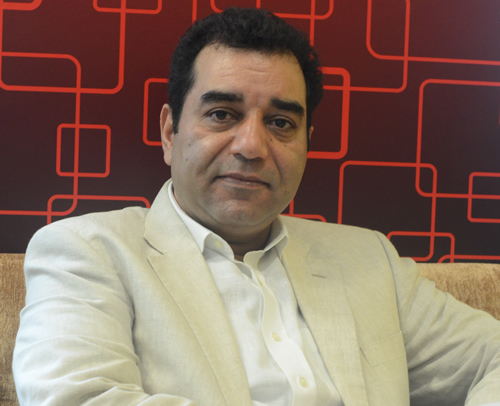
    Speaking about Radio City Super Singer, Ms. Apurva Purohit, CEO, Radio City 91.1 FM, says, “Radio City Super Singer started as an experiment & was the first ever talent hunt by a radio station. Through the years it has grown in stature & size to carve a niche & become one of the most awaited engagement activities. Last year we had over 80000 enthusiastic singers across the country registering & auditioning with us. The aim has always been to discover the amazing singing talent from across the country and provide a platform that befits the talent. By the sheer number of touch points we create, we reach out to people like no other property does. Moreover, this is the only singing talent hunt show in India that runs in 5 languages (Hindi, Telugu, Tamil, Kannada & Marathi) at the same time. The overwhelming success of the previous years not only justifies our aim but also makes us want to scale newer heights.”

    Radio City Super Singer has emerged as an incubator of talent through the years, bringing India’s latent talent to the limelight. This year, our winners get a head-start in the music industry, with the opportunity to work with eminent music directors across India. Additionally, they get featured on ‘Freedom Hour’ – an hour dedicated to unplugged music on Radio City. Radio City Super Singer wraps up on the last week of September.

    Radio City Super Singer pits singers of contemporary music across a cross-section of genres, to compete against each other.. Through the years, the talent hunt has carved out a fan-base of its own. This time, it just gets bigger and better.

    Stay tuned to Radio City 91.1 FM to get more updates on Radio city Super Singer, This year the hunt for the best voice takes place across Mumbai, Delhi, Bangalore, Chennai, Lucknow, Hyderabad, Pune, Jaipur, Baroda, Surat, Ahmednagar, Nagpur, Vizag, Coimbatore. Also log on to www.facebook.com/radiocityindia.

  • “We are hoping for a fair share of revenue in a digitised ecosystem”

    “We are hoping for a fair share of revenue in a digitised ecosystem”

    Cable TV digitisation has forced the entire television ecosystem to come face to face with some gut-wrenching changes. Each one of the players has come under the scathing gaze of either the ministry of information and broadcasting or the telecom regulator, the Telecom Regulatory Authority of India (TRAI). Some have even got a rap on their knuckles as the powers that be continue to work overtime on evolving a rickety old cable TV landscape into one capable of delivering top of the line world class digital services.

    Earlier this month, it was the aggregators that came under the scanner of TRAI which sent out a consultation paper which tries to reduce their importance in a digitised cable TV India. TRAI has said that aggregators tend to misuse the clout they have and need to have their wings clipped.

    The One Alliance, a  Discovery India-MSM joint venture which distributes 28 channels to the 30,000 or so cable operators nationally is one of the aggregators whose future and existence many are questioning.  But its president Rajesh Kaul, a scarred veteran of many a cable TV battle,  is hopeful things will get sorted out and work out well for him and others of his ilk such as MediaPro and IndiaCast.

    Even as The One Alliance has been celebrating the completion of 11 years of being in business, Kaul was busy preparing his responses to be presented to the regulator before the scheduled 27 August deadline. He still found some time to speak to Indiantelevision.com’s Seema Singh on trends in carriage and placement fees, the TRAI consultation paper and all things cable TV. Excerpts:

    Do you see the aggregators become more relevant or less in the coming years? Why or why not?

    We will be as relevant as we are right now. We are a very important link in the chain of the entire television ecosystem. We just hope that with digitisation we will get a fair share of revenue which we haven’t got for so many years.

    What is your take on the TRAI consultation paper, which if implemented will cut down on the aggregator’s clout?

    We are evaluating the entire paper for which we need to file replies.

    TRAI in all its open houses and interaction with stakeholders has maintained that the era of regulation should go now and that they want to deregulate. So the consultation paper came as a surprise. On one hand they talk of deregulation, while on the other they put us under more regulations.

    May be the regulators need some clarification on the same and we are working on it. I am unsure of the intensity of the complaints put by the MSOs. 

    All through we have been following the TRAI and Information & Broadcasting Ministry (MIB) guidelines, with not a single case of deviation.

    There are close to 700 channels today and this has led to huge competition. The situation is such that no one channel can behave unreasonably with an MSO or with consumers. We all need eyeballs from our consumers. The competition ensures that the channels’ content and rate is good. We have to ensure that everything is as per market dynamics so that they are more liked and watched. This is the age we should be talking of forbearance rather than regulation.

    As per the TRAI regulation we are supposed to offer our channels on a la carte rate as well and this is available to the MSOs. In this country, there is a ‘must provide’ for all broadcasters, according to which not a single channel can say “No”  to an MSO for providing the channel to them.  But the MSO has the option to not subscribe to our channels. Since all the channels are on a la carte rate as well, there is no question of forcing them to subscribe to our bouquet.

    Another point that needs mentioning is that the broadcasters have not been getting a fair share of revenue in subscription. We thought with digitisation things will change. We have been a very good stakeholder in this entire process and done all that the regulator wanted us to do, be it doing quick deals to help MSOs sell the set top boxes or curbing our ambitions to make profits.  We hope that we will bear the fruit of being responsible stakeholders in this entire stretch one day.

    TRAI had even in the past come up with such consultation papers, but always heard us and I am hopeful they will listen to us even in this case. We are going to them to present our thought process. May be some wrong impression and feedback has gone to them, our duty is to explain to the regulator.

    The second phase of DAS will conclude soon. Any problems that you faced in this switch? What is the percentage growth in revenue in phase two as compared to phase one?

    We are still waiting for a transparent system. With digitisation the consumer can chose what they want, and pay for it. This transparency has not come out so far. We are still not getting reports from the MSOs and do not know who is watching what. These are the bottlenecks that we face.

    We were looking at ambitious numbers when digitisation kicked off. We didn’t get that in the first phase. Also as responsible stakeholders we curbed our ambitions then because we knew it would be difficult to expect a huge jump in the beginning. We supported the MSOs, which is what the regulator wanted us to do.

    But with the completion of phase II, we should be inching towards that fair share, which should be around 35 to 40 per cent of the on-ground subscription revenue collected. This should happen by April 2014. Channels cannot survive only on ad sales, subscription money is a very important revenue stream for broadcasters, but unfortunately it hasn’t so far happened in India.

    Another problem that the broadcasters face is the high carriage fees. In an analogue system, due to capacity constraint, broadcasters had to pay huge carriage fees. But now with digitisation there is no question of any capacity constraint, so why have carriage fees?

    How are you playing out the carriage fee market? Will the carriage fees come down? How much has this come down, pre- and post-DAS?

     In the next three years there should be no carriage fees. Though carriage fees  have come down post DAS, we still have been paying some placement fees to support the MSOs as they make their transition. But, with the completion of digitisation, even this should go down.  I expect carriage and placement fees to disappear over the next two to three years. While these were expected to go down further by phase II of digitisation, it has only been to the extent of about 25 per cent.

    Earlier the subscription revenue share we (read: broadcasters) were getting from the cable TV ecosystem was about 10-15 per cent. Now it has gone up to maybe to 20 per cent on the overall. Some broadcasters may have got 25 per cent but others may have got lower amounts of the digital dividend.  Many of the channels don’t get any subscription revenues because in the analogue environment they could not afford to have that as a part of their business model. With digitisation all this could change.

    Do you plan to add more channels in the bouquet? What was your strategy to ensure that you had Times Network in your bouquet, when other news channels were walking out of the bouquet?

    We are not market shopping for channels and we are not desperate. Only if tomorrow we come across something good, we will think of adding it to our bouquet.

    We added Times Television Network to our bouquet this year. It was a mutual decision between the two of us. They fitted in our profile and also they wanted to be a part of our network. They are a premium channel and they deserve suitable revenues considering their performance and we at The One Alliance are working to get them those revenues.

    We are in the process of concluding deals for Times with other MSOs. We have finished with Hathway, GTPL, and some other MSOs. And more are coming.

    You had a dispute with Hathway going on for some time? How is that progressing?

    There were many issues like are bound to happen in the cable TV business and yes one of these issues was the one we had with Hathway. And one of the issues – amongst the many issues – we had with Hathway was The Times network, which we have been distributing. But we amicably resolved all the issues with Hathway this evening. And the One Alliance bouquet of channels should have come back on all of Hathway networks by this evening. (26 August).

    It’s been 11 years in the business, how has the journey been so far?

    The journey has been fantastic. While we started with three or four channels now we have a bouquet of 28 channels, with extremely powerful and premium channels. We have various genres, we have a solid name and repututation. It has a journey which has had  more ups than downs.


    Unfortunately, even with the IPL being the biggest sporting property in this country, we have not been able to monetise it well due to under declaration. But, now we have aggressive plans to monetise it for the next season..

    What are the key pointers that set The One Alliance apart from other aggregators? As compared to others aggregators you have less channels, is that a limitation. How do you see things going ahead?

    We are the most stable joint venture (JV) in the industry. All the other aggregators are just a couple of years old. Our partners are very much involved and keen to ensure that the stability continues. For us the quality of the channel is important. We have never been in the race of having 50-60 channels in our bouquet. 

    We have channels from different genres in our bouquet and most of them are amongst the top two or three ranking in their respective genres. There are many more who want to be a part of One Alliance, because they trust the JV. Also our dealings are very transparent. We can add two to three channels at any given time, but our policy doesn’t allow us to do that. We have always believed in quality and so want to have premium channels in our bouquet.

    Today we are the strongest, despite having 28 channels. Also we are the only one having a sports channel in our bouquet unlike the others. Considering we have most genres covered in the bouquet, I don’t see any limitation. Our revenue is far higher than the others.

    Are you selective about the channels you take in the bouquet? What are the criteria that a channel needs to fulfill to be a part of The One Alliance bouquet?

    The channel and the company backing the channel should have similar kind of values and ambitions like ours. We also look at the channels’ performance, which we understand on the basis of the weekly television viewership ratings.

    What is the reach of the bouquet and which is the largest channel in the bouquet?  

    We currently have 28 channels from different genres in our bouquet. Sony Entertainment has the largest reach and, during IPL, Sony Max gets the largest reach.
    IPL is the biggest sporting property that we have. What is interesting is that though most sporting properties are a simulcast with Doordarshan, IPL is the one property which is exclusive on Max. This makes it the most important property in the sporting channel world and we have it.

    We are present almost across the country. We would be there in around 90 per cent of the towns, which have cable and satellite, but through DTH our reach is 100 per cent. Close to some 6,000 cable networks across the country carry our channels. 

    What is the current strength of the organisation?

    One Alliance employs 125 people with offices in Delhi, Bengaluru, Kolkata, Indore and Mumbai. Apart from this, we also have a strong distribution network with distributors in Rajkot,  Pune, Ahmedabad, Guwahati, Patna, Ranchi and Lucknow among others. Like this we have offices in 60 cities. The distributors have their own employees. So, if we take a cumulative strength, we have around 350 people working for us.

    The major revenue for The One Alliance is dependent on IPL. So till how long will IPL be with Sony Max? How do you maintain subscription post IPL and also with so many controversies surrounding IPL, how will you deal with it?

     Unfortunately, even with IPL being the biggest sporting property in this country, we have not been able to monetise it well due to under declaration. But, now we have aggressive plans to monetise it for the next season.

    What are the future plans for The One Alliance?

    We have to lead the change and ensure that everybody gets their fair share.

  • TRAI adamant on 23 August deadline in Kolkata, blackout to follow

    TRAI adamant on 23 August deadline in Kolkata, blackout to follow

    KOLKATA: With the Telecom Regulatory Authority of India (TRAI) strictly adhering to the 23 August deadline for collection of the customer application forms (CAFs) to help in the implementation of Digital Addressable Cable TV Systems (DAS), 50 per cent of the 30 lakh cable television consumers of the Kolkata metropolis area, might see their television sets going blank.

    Till 3:00 pm on Friday, CAFs for around 45 per cent of the cable consumers had been completed, a TRAI official told indiantelevisioin.com. “By midnight we expect the details of around 50 per cent consumers,” the official added.

    However top placed industry sources said that a 14 member team from the TRAI office is likely to come to Kolkata on 26 August (Monday), to decide the fate of the customers who have not yet filled the forms with required details. “This simply proves that MSOs will not be asked to disconnect the TV subscribers,” he said.

    It should be noted that the broadcasting regulator had set a deadline of 23 August for cable TV viewers here for filling up the CAFs including choice of channels in the subscriber management system some 40 days ago and failing which services would be stopped, it notified not once but many a times, added the TRAI official. “In fact we had two meetings with MSOs in the last one month,” he further stated.

    “In this weekend the MSOs and operators will work harder and try to feed in as much details as they can,” said people associated with the cable industry.

    Manthan Broadband Services which has more than 6.5 lakh to seven lakh subscribers has managed to collect around 35 per cent of its CAFs. “We will abide by the law. South Kolkata has done well as compared to North and Central Kolkata in terms of form submission,” said Manthan Broadband Services director Sudip Ghosh.

    “However, we expect to receive more such details on coming Saturday and Sunday,” added Ghosh.
    While SitiCable which has set up around 11.5 lakh digital addressable systems here has achived 60 per cent collection of forms and is optimistic of reaching the 70 per cent mark by midnight.

    SitiCable director (Kolkata) Suresh Sethia informed that the MSOs have received a new format from TRAI and the MSOs have been asked to send the details to the regulator on an everyday basis. “Details like number of boxes switched off, number of boxes reactivated and CAFs received,” should be filed everyday said Sethia.

    While a Hathway Cable and Datacom official stated till 3:00 pm, they had received details of more than 57 per cent customers and will be looking at 80 per cent by tonight. “We will act as per the instruction of TRAI,” he said.

    TRAI member R K Arnold who was in Kolkata recently said: “We are not going to extend the deadline beyond 23 August. In this if subscriber details including channel preference is not done, his connection is liable to be disconnected.”

    Kolkata remains to be the last metro where DAS is yet to be implemented.

    Will TRAI ask the MSOs in Kolkata to disconnect the non complying subscribers from 24 August, if the subscriber data is not updated?

    If TRAI wanted the MSOs to switch off the TV connections, it would have informed the players by now but it seems that people will get some breathing space for some hours to complete the mandate, said an analyst.

    Even if the TV screens go blank, it can be connected in two hours to three hours, after the customers send all the details via their cable operators, concluded a MSO.

  • WB UDM Firhad Hakim pleads TRAI to extend deadline for CAFs

    WB UDM Firhad Hakim pleads TRAI to extend deadline for CAFs

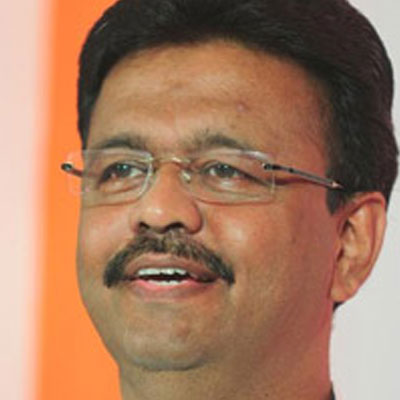
    KOLKATA: First it was Information and Broadcasting Minister Manish Tewari who appealed to the Telecom Regulatory Authority of India (TRAI) to delay implementation of ad cap for news channels till the completion of digitisation, and now it is the West Bengal Urban Development Minister Firhad Hakim who has appealed to the regulator to extend the deadline for customer application forms (CAFs) submission.

    Firhad Hakim has appealed to the regulator to extend the deadline for implementation of SMS rollout

    The request has come after TRAI confirmed last week that it will strictly adhere to the 23 August cut-off-date. “If subscriber details including channel preference is not done within this deadline, the operator’s connection is liable to be disconnected,” informed TRAI member R K Arnold.

    “After interacting with both the local cable operators (LCOs) and multi system operators (MSOs) at the ground level, we found that most of them are not aware about the registration work which they are mandated to do. TRAI before taking such decisions must spread awareness. I have spoken to the chief secretary to extend the deadline,” said Hakim exclusively to indiantelevision.com today.

    Hakim also said that TRAI must have an elaborate publicity campaign to inform the operators on the procedures involved. “How can TRAI ask the operators to disconnect its services without updating the operators about the whole process of CAFs,” he questions.

    Cable Operators Digitalisation Committee of the Association of Cable Operators convener Swapan Chowdhury informed, “So far only 30-35 per cent of cable consumers in the Kolkata Metropolitan Area have completed the form. It is not possible to meet the 23 August deadline.”

    TRAI officials who were in Kolkata last week said, “If not done within the set deadline, we will take action according to law,” said Arnold.

    Kolkata remains to be the last metro where DAS is yet to be implemented. Manthan Broadband Services director Sudip Ghosh when contacted said, “We will abide by the law and we are working towards meeting the deadline day and night.”

    While Hathway Cable managing director and CEO Jagdish Kumar G Pillai said the company is focused towards meeting the deadline.

    A MSO on the condition of anonymity said, “In the digitisation process, installation of set top boxes and offering of the channels account to more than 85-90 per cent of the work and remaining 10 per cent is clerical job which is letting the consumers to choose the channels. The LCOs have all the details of the customers, and now they just need to go and ask the customers to choose the package they want to go for. All this process will hardly take 10 minutes.”

    Can the cable operators breathe a sigh of relief after the appeal made by Hakim for the extension of deadline? Doesn’t seem like it is too easy to please TRAI, but they can only hope.

  • TRAI warns Kolkata MSOs to meet the 23 August deadline

    TRAI warns Kolkata MSOs to meet the 23 August deadline

    NEW DELHI: The Telecom Regulatory Authority of India (TRAI) has expressed serious concern over the slow progress in filling up of consumer details in Kolkata despite a deadline of 23 August for subscriber application forms (CAF).

    After a meeting in Kolkata with multi-system operators who are required to update their subscriber management system for supplying signals to cable operators, TRAI said only around 30 per cent of the subscriber information was available with the MSOs. The meeting was addressed by N Parameswaram, Principal Advisor (Broadcasting) in TRAI.

    ‘This situation is totally unacceptable and alarming’, a press note signed by Parameswaram said, adding that all MSOs have been asked to initiate immediate steps to remedy the situation.

    He said TRAI may be forced to take penal action against MSOs/ local cable operators in case the deadline is not met.

    While requesting subscribers to cooperate, he said that MSOs would have no option but to switch off signals to those subscribers who have not given complete CAFs by 23 August.

    Furthermore, he said MSOs who do not switch off the signals to offending subscribers would be in breach of the law.

  • About 300,000 illegal telemarketing companies axed by TRAI

    About 300,000 illegal telemarketing companies axed by TRAI

    NEW DELHI: A total of about 300,000 telephone connections of un-registered telemarketers have been disconnected by the Access Service Providers and the name and address of 25,295 such subscribers have been put into the blacklist.

    Minister of State for Communications and Information Technology Milind Deora told Parliament that this follows concerted action taken by the Telecom Regulatory Authority of India (TRAI).

    TRAI issued the Telecom Commercial Communications Customer Preference (Twelfth Amendment) Regulation on 23 May this year. This regulation provides for disconnection of all the telecom resources of subscribers sending unsolicited calls/SMSs, blacklisting of the name and address of such subscribers for two years, disconnection of telecom resources to such subscriber by the other service providers within twenty four hours of blacklisting of such subscriber. No telecom resources shall be allotted to such blacklisted subscriber by any Access Provider for two years.

    Through the Telecom Commercial Communications Customer Preference Regulation, 2010 TRAI has laid down a revised framework for addressing Unsolicited Commercial Communications (UCC) and these regulations came into force with effect from 27 September 2011. TRAI has also issued various amendments to these regulations and a number of directions to make the regulatory framework more effective.

    The Minister said complaints related to unauthorised telemarketing activity from un-registered telemarketers (who are not registered with TRAI), had increased during the last one year.

    To make the framework more effective an amendment to the Telecom Commercial Communications Customer Preference Regulation (Tenth Amendment) has been issued by TRAI on 5 November last year to further control the unsolicited commercial communications, especially relating to commercial SMS from unregistered telemarketers. One of the key provision of this regulation includes restricting unregistered telemarketers from sending bulk promotional SMSs using software applications.

    Through this regulation TRAI has mandated the Access Service Providers to put in place a solution, which will ensure that no commercial SMSs are sent having same or similar characters or strings or variants from any source or number. The solution will ensure that no more than 200 SMSs with such similar ‘signature’ are sent in an hour. 

  • Telemarketers penalised by TRAI for various violations

    Telemarketers penalised by TRAI for various violations

    NEW DELHI: Fifteen telemarketers have been blacklisted while another 245 have been issued notices by the Telecom Regulatory Authority of India for unwanted calls and text messages.

    The regulator has also deducted Rs 1.36 crore security deposit for violations of various norms. TRAI, which had implemented Telecom Commercial Communications Customer Preference Regulations from 27 September 2011, had laid down that telemarketers have to deposit some amount to their service provider as security deposit.

    The 15 telemarketers have been blacklisted from 27 September 2011 till 25 June this year, and the deduction of security deposit is for violations from 27 September 2011 to 30 July 2013.
    There is a provision of deduction from Rs 25,000 to Rs 2.5 lakh in case of violation by telemarketers under the regulations. Telemarketers are required to register with TRAI in order to send commercial communications to telecom consumers.

    Subscribers who have registered with the National Customer Preference Registry, earlier known as ‘Do Not Call Registry’ are not supposed to receive commercial communications.

    A different set of numbers starting with ’70’ were issued to telemarketers to help unregistered subscribers identify commercial calls and decide whether to accept or reject them. But TRAI has come across instances when the commercial communication was not sent by the registered telemarketers.

  • TRAI attempts to rein in TV channel aggregators in new consultation paper

    TRAI attempts to rein in TV channel aggregators in new consultation paper

    NEW DELHI: It has been saying it will bring some order to the TV channel aggregation and distribution business. And the Telecom Regulatory Authority of India (TRAI) is now showing that it means what it has been saying.

    It today issued a consultation paper attempting to regulate the distribution of television channels from broadcaster to platform operators and discipline the distributors (aggregators). The paper involves amendments to the Tariff and Interconnection orders, and Register of Interconnect Regulations, and so TRAI has given stakeholders time till 27 August to send in their comments.

    The essence of these is that it wants to clip the immense clout that the four main aggregators MediaPro Enterprises (distributes 75 channels), IndiaCast UTV Media Distribution (distributes 35 channels), Sun Distribution Services and MSM Discovery (distributeing 30 channels each) have on the TV ecosystem in India.

    The main points of the consultation paper are that:

    * Broadcasters and not the authorised distribution agency shall publish the reference interconnect offers (RIO) and enter into interconnection agreements with the distribution platform operators.

    * If a broadcaster appoints a person as its distribution agent, it shall ensure that –

    a) The authorised distribution agent does not change the composition of the bouquet formed by the broadcaster while providing it to the distributors of TV channels.

    b) The authorised distribution agent does not bundle bouquet or channels of the broadcasters with the bouquet or channels of other broadcasters. In other words, in case the authorised distribution agency represents more than one broadcaster, they shall not link offerings of broadcasters they represent.

    c) While acting as an authorised distribution agent, such person acts for, on behalf and in the name of the broadcaster.

    The regulator has also proposed that it will give broadcasters three months to rework the RIOs and to enter into fresh interconnect agreements and filing the same with it.

    Based on the above, it has issued several orders under which it has chosen to amend earlier orders issued by it.

    These include:

    * The Telecommunication (Broadcasting & Cable) Services (Fourth) (Addressable Systems) Tariff (Third Amendment) Order 2013 to amend The Telecommunication (Broadcasting & Cable) Services (Fourth) (Addressable Systems) Tariff Order 2010 (1 of 2010)

    * The Telecommunication (Broadcasting & Cable) Services (Second) Tariff (Tenth Amendment) Order 2013 to amend The Telecommunication (Broadcasting & Cable) Services (Second) Tariff Order 2004 (6 of 2004)

    * The Telecommunication (Broadcasting & Cable Services) Interconnection (Seventh Amendment) Regulations 2013 to amend The Telecommunication (Broadcasting & Cable Services) Interconnection Regulation 2004 (13 of 2004).

    * The Telecommunication (Broadcasting & Cable Services) Interconnection (Digital Addressable Cable Television Systems) (Second Amendment) Regulations 2013 to amend The Telecommunication (Broadcasting & Cable Services) Interconnection (Digital Addressable Cable Television Systems) Regulations 2012 (9 of 2012).

    * The Register of Interconnect Agreements (Broadcasting & Cable Services) (Fifth Amendment) Regulations 2013 to amend The Register of Interconnect Agreements (Broadcasting & Cable Services) Regulation 2004 (15 of 2004)

    Background to TRAI’s attempt to regulate Aggregators

    In the paper, the TRAI says that broadcasters, MSOs, cable operators, DTH, HITS and IPTV operators are recognised as entities in the policy guidelines and regulatory framework of the Ministry and TRAI respectively. Aggregators have not been specifically defined anywhere; neither in the law or the statutory rules, nor in the regulatory framework for the broadcasting and cable TV services sector.

    As on date there are around 233 pay channels (including HD and advertisement-free channels) offered by 59 pay broadcasters. These channels are distributed by 30 broadcasters/aggregators/ agents of broadcasters.

    In the broadcasting and cable TV sector, TV channels are distributed by the broadcasters themselves or through their authorised distribution agencies to the distribution platforms viz cable TV, DTH, IPTV, HITS etc. Many such agencies operate as authorised agents (aggregators) for more than one broadcaster. After obtaining the distribution rights from one or more broadcasters, such distribution agencies form bouquets, many of which also consist of channels of one or more broadcasters. They publish Reference Interconnect Offers (RIOs), negotiate the rates for these bouquets/channels with operators of various distribution platforms and enter into interconnection agreement(s) with them.

    As on date, the distribution business of around 73 per cent of the total pay TV market, including high definition (HD) TV channels, is controlled by a few authorised distribution agencies. These channels include almost all the popular pay TV channels. These authorised distribution agencies wield substantial negotiating power which can be, and is, often misused leading to several market distortions.

    Explaining its move, TRAI said the business of distribution of TV channels from the broadcaster to the consumer has two levels:

    i) Bulk or wholesale level – wherein the distribution platform operator obtains the TV channels from the broadcasters, and ii) Retail level – where the distribution platform operator offers these channels to the consumers, either directly or through the last mile operator.

    Even as TRAI was in the process of reviewing the regulatory framework for broadcasters and their authorised agencies, the Information and Broadcasting Ministry said there have been several complaints from Multi system operators (MSOs) about the modus operandi of such entities, e.g. it has been highlighted that MSOs are forced to subscribe to certain packages. Concerns have been vehemently voiced by various MSOs and LCOs regarding the monopolistic practices of such major authorised distribution agencies of broadcasters, in view of their control over a large number of popular channels.

    The MSOs have complained that the aggregators have abused their market power by forcing them to accept all the channels of the aggregator, fixed fee deals, charging based on the entire subscriber base and not as per actual uptake of channels, insisting on minimum guarantee and other unreasonable terms and conditions.

    The TRAI further adds, in the consultation paper, that in the absence of any regulatory framework for the aggregators (including possible restrictions on the authorised agencies), they started to bundle channels of more than one broadcaster and form bouquets. These bouquets, having popular channels of a number of broadcasters, provided a better marketing proposition. These bouquets grew larger and larger with time, as the aggregator started to piggy back more and more channels, especially those having lesser standalone market values.