Category: Regulators

  • Kolkata may bill cable TV consumers from 10 December

    Kolkata may bill cable TV consumers from 10 December

    KOLKATA: On 29 November,  indiantelevision.com  had reported that the Telecom Regulatory Authority of India (TRAI) pushed the deadline for MSOs to submit duly-filled CAFs (Consumer Application Forms) to 15 December, also asking them to implement gross/direct billing by December.

    The latest development is that Kolkata is likely to start the billing process from 10 December.
    Said Siticable Kolkata director Suresh Sethia: “We have been prepared for a long time but since some MSO’s were not ready, we had to wait.  Now, everyone has agreed to bill as per package from 10 November. We will put the bills on the system. The operators will distribute the same to subscribers. The bills will mention amusement tax and service tax components separately.”

    If all goes well, Kolkata will end up leading the pack as players in other metros are targeting January, in some cases even the last quarter of the current fiscal to start direct billing.
    Popular perception is that direct billing will bring transparency and order into an otherwise largely unorganised business.

    Director Manthan Broadband Sudip Ghosh said: “Billing is the first step to inform consumers of the changed ecosystem in a digitised environment.”

    However, several MSOs are opposing the process. Sources reveal that though Kolkata has some 30 lakh cable homes, MSOs like DEN and Digicable haven’t even started the package, let alone starting direct billing.

    Swapan Chowdhury, convener of the Cable Operators Digitalisation Committee of the Association of Cable Operators, too felt that with DAS not implemented properly in the city, packages not available and technical problems in the software and system used for direct billing, it could be said the government was simply putting pressure on the MSOs to collect taxes easily. “No one is concerned about the operators,” he said.

    Apurba Bhattacharya, general secretary, Cable Operators Sangram Committee too opined that everything was a hodge podge in DAS I.

    Cable TV analyst Mrinal Chatterjee pointed out that many customers weren’t paying the rentals. “Bill should be introduced. As the central and state government too is losing tax unless the bill is introduced. Some MSOs claim that they are ready with the bill and the backend system needed for it but they are not!” she said.

    Media analyst Namit Dave posed a very real question: “At a time when some CAFs are not filled in and customers are unable to see their favourite channels even after opting for the preferred bouquet as offered in the channel package, is the city ready to take on direct billing?”

  • TRAI cracks the whip again on DAS phase I MSOs

    TRAI cracks the whip again on DAS phase I MSOs

    MUMBAI: Consumer billing has been a major irritant for all those involved in the process of India’s cable TV digitisation. The Telecom Regulatory Authority of India (TRAI) has been hauling up all and sundry amongst the multi-system operators (MSOs) to issue bills to cable TV subscribers, but has not managed to get the process in motion as yet even in the DAS phase I metros of Mumbai, Delhi and Kolkata.

    Now it’s time for another warning from the TRAI. It has written to 29 MSOs in the DAS phase I areas, telling them that they have to get their act together on consumer billing for the month of November 2013. Bills should be dispatched to cable TV subscribers by either the MSOs or local cable TV operators by 15 December; and a compliance report submitted by 31 December. Earlier on 6 November, the TRAI had intervened asking the MSOs to send a compliance report for Delhi, Mumbai and Kolkata by 15 November.

    The direction comes from the powers conferred on the authority under section 13, read with sub clauses (i) and (v) of clause (b) of sub-section (1) of section 11, of the Telecom Regulatory Authority of India Act, 1997 (24 of 1997) and regulation 14, 15, 16 and 24 of the Standards of Quality of Service (Digital Addressable Cable TV Systems) Regulations, 2012 and to protect the interest of the consumer.

    As per the direction, the MSOs also need to ensure that a proper receipt is given by it or its linked LCO for every payment made by the subscriber. “The MSOs will have to offer cable TV services to its subscribers on both pre-paid and post-paid payment options and generate bills for subscriber. That apart, the MSO also has to provide to the pre-paid subscriber, at a reasonable cost, the information relating to the itemised usage charge showing actual usage of service,” states the TRAI direction.

    What is notable is that it is not mandatory for the MSOs or its linked LCO to provide to the subscriber the information for any period beyond six months, preceding the month in which the request is made by the subscriber. According to the direction, “Every MSO shall, on request from the subscriber, change his payment plan from pre-paid to post-paid or vice-versa, without any extra charge.”

    To make the billing process clearer, the regulator has, as per regulation 15 of the Standards of Quality of Service (Digital Addressable Cable TV Systems) Regulations, provided that every MSO should – either directly or through the LCO – “give to every subscriber the bill for charges due and payable by such subscriber for each month or for such other period as agreed between the parties, for which such charges become payable by the subscriber.”

    The subscriber will be billed, generally on a monthly basis, including the service tax registration number and the MSO’s entertainment tax registration number. “Every MSO or its linked LCO, shall give 15 days, from the date of the bill, to every subscriber for making payment of the bill and in case the subscriber fails to make payment after expiry of the due date of payment, the MSO or LCO may charge simple interest of 12 per cent per annum on the amount due for the delay in making payment,” states TRAI’s direction.

  • TRAI extends CAF deadline to 15 December

    TRAI extends CAF deadline to 15 December

    MUMBAI: The multi system operators (MSOs) have time till 15 December to submit Consumer Application Forms (CAFs). The Telecom Regulatory Authority of India (TRAI) principal advisor N Parameswaran has shown forbearance and given the MSOs another 15 days to submit 100 per cent CAFs. The earlier deadline to submit CAFs was today, 20 November.


    The extension comes after Parameswaran’s meeting with the national MSOs held today in New Delhi. Though the MSOs had their concerns to address, in the meeting that lasted for one and a half hours, TRAI concentrated on two key issues — one, meeting the deadline for submitting CAFs for phase II by 15 December, and another, implementing gross billing from December for phase I.


    The meeting was attended by Hathway Cable and Datacom, Siti Cable, InCable, DEN Network, Digicable and GTPL.


    “We spoke at length on the issues that each MSO faces in order to comply with the deadline,” says a MSO on request of anonymity. “With LCOs not cooperating with us for submitting duly filled CAFs, and also the ongoing court cases that LCOs have filed to ensure the consumer stays under them, achieving the deadline is difficult,” he says.


    “The regulator will show leniency in states like Hyderabad, Madhya Pradesh and Gujarat that face problems, but in others it will not act as a Santa Claus if the deadline is not met,” says IndusInd Media and Communications Limited MD Ravi Mansukhani.

    According to Mansukhani, the bills are being generated by the MSOs, but the LCOs are not delivering them to the subscribers. “The TRAI has asked us to ensure that the bills should reach the subscribers by December. The regulator has asked us to either convince the LCO to deliver the bills to subscribers or to send them directly to each subscriber,” says Mansukhani.


    About 30 to 90 per cent CAFs have been collected so far. “The regulator has taken an average of this figure, which is around 50 per cent, and has said it is not enough. We have been asked to comply with this final deadline,” he mentions.


    The MSOs spoke at length on improving their relations with LCOs. “We want each party to realise and reap the benefits of digitisation,” states a MSO.


    The MSOs also raised logistic issues they were facing for collecting CAFs. “Unlike phase I which involved the big five players, phase II has several small players involved as well. And this is creating hindrance,” opines Mansukhani.


    The MSOs only have a few days to convince the LCOs to get ahead with both CAFs and billing. “It is a tough task, but we will have to give our best,” concludes Mansukhani.


    Seems like a difficult Christmas for the MSOs if they fail to meet deadlines.

  • Industry speaks on cable monopoly

    Industry speaks on cable monopoly

    MUMBAI: The Telecom Regulatory Authority of India (TRAI) is now looking at ensuring a level playing field for both the multi system operators (MSOs) and the local cable operators (LCOs). The regulator on 26 November came out with a recommendation paper which put a cap of 50 per cent on MSOs stake in any state. The recommendation paper aims at curbing the monopoly of MSOs.

    “Currently there are no restrictions on the area of operation and accumulation of interest in terms of market share in a city, district, state or country by MSOs. It has been observed in some states that a single entity has, over a period of time, acquired ‘control’ of several MSOs and LCOs, virtually monopolising cable TV distribution in that market. Cases of market dominance by MSOs have been reported at various forums. Such monopolies/market dominance in the TV channel distribution market are not in the best interest of consumers and may have serious implications in terms of competition, pricing, quality of service and the efficient growth of the TV channel distribution market,” states the recommendation paper.

    The regulator has now recommended that market dominance should be determined based on market share in terms of the number of active subscribers of MSOs in the relevant market. To evaluate the level of competition or market concentration in a relevant market, the Herfindahl–Hirschman Index (HHI) should be used. The TRAI has also recommended that the threshold value for any individual/ ‘group’ entity contribution to the market, HHI should be not more than 2500.

    ABS 7 Star CMD Atul Saraf

    “We welcome the recommendation paper. If one has to see, there is monopoly of one or two players in few states like Punjab, UP etc. I feel 50 per cent is also huge; it should be reduced to 25 per cent to give a level playing field. The recommendation paper if implemented will give quality service to customers,” says ABS 7 Star CMD Atul Saraf.  

    According to Hathway Cable & Datacom MD and CEO Jagdish Kumar G. Pillai, the MSO, by definition, does not have a market share of more than 50 per cent. “We are not impacted by this. And then it is just a recommendation paper. What will be interesting is how the regulator will ascertain the percentage of one’s operation till the country is fully digitised. It is impossible to know one’s percentage share in the analogue phase,” says Pillai.

    He adds, “It will impact some MSOs that are dominant players in few states.”

    Hathway Cable & Datacom MD and CEO Jagdish Kumar G. Pillai

    The recommendation paper states that MSOs that currently have more than 50 per cent stake in any state need not reduce their share, but cannot get into any further mergers and acquisition (M&A). “By this, the regulator has ensured that the MSOs are also not affected,” informs Pillai.

    Through the recommendation paper, TRAI wants to ensure that there is no dominance of any player and that there is a level playing field for the LCOs, MSOs and the broadcaster.  

    The TRAI is laying down the rules for the future. “One never knows about the future in terms of technology and also the methods used by the MSOs to operate. The regulator has to think not for a couple of years, but 10-20 years down the line. The recommendation paper ensures that the LMOs and the MSOs on pan-India basis can co-exist and function rationally,” opines Maharashtra Cable Operators Federation president Arvind Prabhoo.

    Maharashtra Cable Operators Federation president Arvind Prabhoo

    The 50 per cent cap will ensure excellent quality service, healthy competition and also keep costs in check. “The 50 per cent stake is still high, the regulator should keep the cap at 30-40 per cent,” he says. 

    According to Prabhoo, it is a progressive move by TRAI. “The authority is ensuring that there is no monopoly – vertical or horizontal and at the same time, is also ensuring that the LMOs have a choice. The LMOs welcome the move,” he states.

    Ortel Communications president and CEO Bibhu Prasad Rath says, “As I understand, the authority, through this recommendation, is trying to restrict the building up of the market share by any individual /group entity through M&A/control of an entity over many MSOs and LCOs. This does not apply to us because of our differentiated business model being independent and expanding directly through last mile connectivity without going through any M&A or control of other MSO/LCOs.”

    Rath thinks that a 50 per cent market share in a state for any MSO will be fair from a competition perspective. “So we do not see much problem in this. However, we believe that the market share should always be calculated by combining cable TV and DTH together as both aim to serve the same set of customers. The regulator has dismissed this argument which we think is unfair,” exults Rath.

    Ortel Communications president and CEO Bibhu Prasad Rath

    Rath also opines that any such regulation can be implemented smoothly when digitisation is fully put into practice. “In an analogue era, it is not practical to implement this. We hope the MIB will take care of these issues before notifying the same,” he states.

    GTPL COO Shaji Mathews says that the monopoly guidelines have their origins from the analogue era when broadcasters had complained to the TRAI. Says he: “It was an issue which was faced by the broadcasters due to dearth of space on cable networks then; it is being addressed at a time when the country is moving towards digitization.”

    Mathews feel that the recommendation paper doesn’t address two key points — one, when the cable networks join hands to fight against the broadcasters and two, when the broadcaster joins hands with a particular cable network to help them monopolise. “Both these issues which are the root cause to monopoly have not been addressed in the recommendation paper,” says Mathews.

    Mathews also points out that though the recommendation discourages monopoly, it encourages those cable operators who are related to broadcasters to grow their base in areas where they until now had no base. “For the viewer to get good service and for the cable operators to exist and also run a profitable business, there needs to be a transparent and non-discriminatory system. The regulator needs to bring laws for content players,” concludes Mathews.

    TRAI recommendations on monopoly or market dominance in cable TV services
  • TRAI gives DTH players more time

    TRAI gives DTH players more time

    MUMBAI: The DTH players now have time until 5 December to furnish their views on the supplementary consultation paper on ‘Issues related to new DTH licences.’ The earlier deadline set by the Telecom Regulatory Authority of India (TRAI) for submitting views and comments was 25 November.


    It was on 14 November that the consultation paper was released by the TRAI.  The date  extension  has been given in keeping with the request of the stakeholders.  The regulator though has made it clear that no further extensions will be entertained.


    It is to be noted that the supplementary consultation paper was released as a follow up to the consultation paper it had issued on 1 October on issue/extension of DTH licences at the behest of the Ministry of Information and Broadcasting (I&B).


    The points raised in the supplementary consultation paper were:   Cross-holdings and control between a DTH licencee, broadcasting entities and TV channel distribution entities; Interoperability of DTH STBs; Licence fee and Migration fee.


    Stakeholders can send the comments in electronic form to TRAI advisor Wasi Ahmad.

  • TRAI issues supplementary consultation paper on DTH licensing

    TRAI issues supplementary consultation paper on DTH licensing

    MUMBAI: The Telecom Regulatory Authority of India (TRAI) issued a supplementary consultation paper on issues related to new DTH licences late 14 November evening.

    This follows up the consultation paper it had issued on 1 October on issue/extension of DTH licences at the behest of the Ministry of Information and Broadcasting (I&B).

    The new consultation paper seeks to get the views of industry stakeholders on the comprehensive review of the provisions in the existing DTH guidelines it is seeking to undertake.

    Among those are:

    Cross-holdings and control between a DTH licencee, broadcasting entities and TV channel distribution entities.

     
    It is seeking to modify clause 1.4 of the DTH guidelines from “The licencee shall not allow broadcasting companies and/or cable network companies to collectively hold 20 per cent of the total paid up equity in its company at any time during the licence period” to “the licencee shall not allow any entity controlling broadcasting and/or any TV channel distribution operator to control it…”

    Clause 1.5 is proposed to be changed from “The licencee company  not to hold or own more than 20 per cent equity share in a broadcasting and/or cable networking company”  to “any entity controlling the licencee should not control any broadcasting and/or any TV channel distribution operator.”

    The term TV channel distribution operator covers operators of cable TV, DTH, HITS, and IPTV.
    The consultation paper has defined what “control” can mean:

    *A company owns 20 per cent of another firm directly or indirectly though associate companies, subsidiaries and/or relatives

    * De jure control through having not less than 50 per cent of voting rights in second company; appointing 50 per cent of the members of the board of directors; controlling the management of affairs through decision-making in strategic affairs of the second company and appointment of key personnel.

    * Exercises de facto control by being a party to agreements, contracts or understandings…that enable it to control business decisions in the second company.

    The TRAI has said that if one were to go with this definition of control, then amendments will have to be made to laws relating to cable TV operators, broadcasters, HITS operators and some DTH operators will have to be given time to comply with the new provisions.
    Interoperability of DTH STBs

    The TRAI has stated that Clause 7.1 of the guidelines is open to interpretation. It states: “The open architecture (non-proprietary) set top box which will ensure technical compatibility and effective interoperability amongst different DTH providers shall have such specifications as laid down by the government from time to time.”

     
    It has emphasised that this could be modified to put the onus on the Bureau of Indian Standards and the government shall ensure that “the BIS specifications are based on open architecture and should incorporate the latest technological developments with respect to interoperability of DTH STBs taking into account its practicality as well as international experience.”

    Additionally, it states that “the BIS specifications should clearly specify the contours of interoperability between the STBs based on different technological standards.”

    Finally, it has pointed out that the licence conditions should be amended to mandate compliance to BIS specifications for the STB to be offered to all new subscribers within a suitable period of say six months.”

    Licence Fee:

    It has recommended that the licence fee and the definition of adjusted gross revenues (AGR) for the DTH sector be aligned with that specified in the Unified Licence. And that the licence fee may be charged at eight per cent of AGR. The AGR could be calculated “by excluding service tax on provision of service tax and sales tax actually paid to the government if gross revenue had included components of sales tax and service tax.”

    Under the current guidelines, DTH licencees have to pay an initial non-refundable entry fee of Rs 10 crore before the issue of the letter of intent by the licensor, and an annual fee of 10 per cent of its gross revenue in the particular financial year after the issue of the wireless operational licence by the WPC. The TRAI had in 2004 recommended that this be reduced by two per cent on AGR, and later to six per cent of gross revenues in 2008.

    Migration Fee:

    It has recommended an imposition of an entry fee on existing and new DTH operators moving to the unified licence regime. Existing operators should be given a rebate commensurate to the value of the licence for the remaining licence period, and that may be termed as the migration fee. The rebate could be calculated.

    The TRAI has asked stakeholders to give their views on the recommendations issued today by 25 November. Stakeholders also have to give their recommendations on the consultation paper dated 1 October 2013.

  • TRAI meets MCOF’s Prabhoo on LMO issues

    TRAI meets MCOF’s Prabhoo on LMO issues

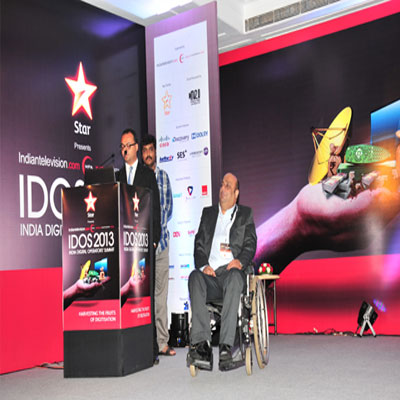
    MUMBAI: It was at indiantelevision.com & MPA’s (Media Partners Asia) India Digital Operators Summit (IDOS) that Mumbai-based cable TV heavyweight and MCOF (Maharashtra Cable Operators Federation) president Arvind Prabhoo first presented to India’s cable, DTH, regulatory and broadcast leaders the local cable TV operators’ perspective. Everyone was impressed including Telecom Regulatory Authority of India (TRAI)’s advisor N. Parameswaran, who said the regulatory body would like him to come and present at its headquarters in Delhi.

    The wheelchair bound Prabhoo did exactly that three days ago on 6 November when he presented the LMO’s viewpoint once again before the TRAI’s N Parmeshwaran, Wasi Ahmed, S K Singhal and G S Kesarwani.

    Prabhoo once again highlighted the issues that are bothering the LMOs and the role they can play in phase III and phase IV of digitisation.

    “There is a crisis in DAS I and II areas regarding LMO-MSO relationship,” says Prabhoo, adding that it was important to address the problems. Prabhoo has told TRAI that his major concern was the MSO-LMO-subscriber relationship. Subscribers belong to LMOs who collect money from them and give it to the MSOs who in turn pass it on to broadcasters. However, the MSOs believe that subscribers belong to them and not to the LMOs.

    Prabhoo also raised the issue of uneven pricing of packages in cities like Mumbai. He wants all MSOs to have similar packages so that it is convenient for a subscriber to migrate and that will even make money collection easier. At the same time, clarity on a-la-carte channels is missing even today.

    He also brought to fore the issue regarding the ownership of set top boxes (STBs). He thinks it is a big bone of contention. “On one hand, customers think they own the STBs, while the MSOs think that STBs are their property,” he remarks. “This disallows customers from migrating from one provider to another using the same STB when he shifts to a new place with a new provider and if he does, the LCO is held responsible for it. Because of this, many subscribers are shifting from cable to DTH, as it seems to be more convenient.”

    Since there’s no fixed revenue sharing deal between the MSOs and LMOs, Prabhoo came up with few solutions. He suggested that for an FTA (Free to Air) channel the sharing between MSO and LMO can be 20:80, while for pay channels it can be 75:25.

    He also suggested that the price of a STB can be reduced and a free basic broadband service be given to communicate by mail. Another suggestion was to rename the LMOs as Horizontal Connectivity Provider Agency (HCPA).

    Prabhoo also brought to TRAI’s notice the issue of entertainment tax. The 42B licenses of LMOs have not been renewed since two to three years and yet the tax is being collected from them. TRAI seemed to be unaware about the issue and has told to get in touch with the chief secretary of Maharashtra soon. They also said that as a regulator they had done everything they could.
    “There needs to be more interaction between LMO, MSO, broadcaster and TRAI if we need a proactive solution to address all our concerns,” concludes Prabhoo.

  • Marginal growth in broadband connectivity between August and September 2013

    Marginal growth in broadband connectivity between August and September 2013

    NEW DELHI: The total broadband subscriber base increased from 15.28 million at the end of August to 15.36 million at the end of September 2013, thus showing a monthly growth of 0.52 per cent.

    The yearly growth in broadband subscribers is 1.90 per cent during the last one year (September 2012 to September 2013).

    As on 30 September, there are 158 internet service providers (ISPs) which are providing broadband services in the country. 

    Out of these, 95 ISPs have provided broadband subscription data for the month of September 2013, for the rest of the ISPs data from previous month has been retained.

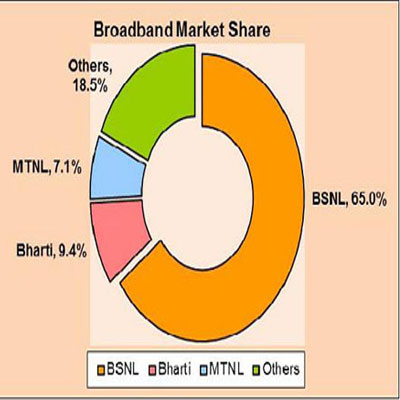
    The top five ISPs in terms of market share (based on subscriber base) are: BSNL (9.98 million), Bharti Airtel (1.44 million), MTNL (1.10 million), Hathway (0.37 million) and You Broadband (0.33 million).

  • EU welcomes India’s decision to open telecom to FDI, concern about in-house testing

    EU welcomes India’s decision to open telecom to FDI, concern about in-house testing

    NEW DELHI: The European Union has noted with satisfaction India’s recent decision not to use security as justification for domestic manufacturing preference policies in telecom and electronic goods; and not to extend restrictive measures to private procurement (e.g. of telecom operators as licensees for radio spectrum).


    The EU has also supported India’s decision to open up the telecom sector to foreign direct investment (foreign ownership had been limited to 74 per cent).


    During a meeting of the EU-India Joint ICT Working Group met in Brussels, EU expressed concerns about mandatory ‘in country’ testing and certification of telecom network elements by Indian labs and demanded that mutual recognition for example under the Common Criteria Recognition Arrangement (CCRA) should be accepted. India has also mandated compulsory registration of 15 groups of consumer electronics products in order to comply with Indian product safety standards.


    It was decided at the meeting that two sub-groups will be established: one on Market Access and ICT Manufacturing (lead: EU) and another on internet security (lead: India) which should focus on matters of network and information security and provide input to EU-India Cyber Security Consultations.


    Both sides highlighted the crucial role ICT research and innovation can play in tackling the economic and societal challenges of our time, and agreed to deepen cooperation in this area. Interest was expressed particularly in the areas of e-Infrastructures, High Performance Computing, Cloud Computing, Wireless Broadband Communications, Internet of Things, and Electronics. Cooperation was proposed, inter alia on standardisation and interoperability matters, for which follow-up is envisaged.


    The Indian delegation was referred to the High Level Dialogue on Migration and Mobility as the “one-stop shop” where concerns regarding the ease of mobility of Indian IT professionals could be addressed.


    India’s request for “data adequacy status” under the EU data protection legislation (which is of high importance for Indian services and business process outsourcing businesses), will need to be addressed to an expert group of national data protection authorities, which is ready to meet with Indian representatives in order to advance the dialogue.


    The EU delegation was led by Gerard de Graaf, Director, DG Connect, and the Indian side by Raj Kumar Goyal, Joint Secretary for International Cooperation in the Department of Electronics and Information Technology, within the Ministry of Communications and Information Technology.


    DigitalEurope had hosted the EU-India ICT Industry Dialogue, where leading industry experts from Europe and India met with delegations of the Government of India (Department of Electronics and Information Technology) and of the EU (European Commission – DG Connect and European External Action Service). There was a unanimous call by both Indian and European participants for global approaches and global solutions.

  • TRAI should reconsider Spectrum Trading, says DoT

    TRAI should reconsider Spectrum Trading, says DoT

        
    NEW DELHI: A Department of Telecommunications (DoT) committee has for the present turned down any proposal to permit spectrum trading.

    In a report to the Telecom Commission, this Committee has however admitted that this finds place in the National Telecom Policy (2012). It has said there is need for a more holistic view on the matter to prevent ‘some unintended consequences’.

    It feels that the Telecom Regulatory Authority of India (TRAI) should be asked to give a detailed recommendation in this regard. At present, only right-to-usage of spectrum is auctioned and the legal framework under which it can be treated as transferable and tradable in whole or part needs to be prepared, the Committee added.

    According to the report, any Presidential Reference on this issue should be in conformity with the Supreme Court order in the 2G spectrum allocation case.

    The Committee says there is need for assessment of market sale of spectrum. This would assume more importance in merger and acquisition (M&A) cases, for assessment of the fair value of spectrum, where the entire business might be taken over as a going concern along with the spectrum, without separate determination of the price. It should also have provisions to curb fly-by-night operators entering for only trading benefits.

    Earlier, the DoT had sought TRAI’s views on the conditions and timing for allowing trading of what got through auction, the quantity for trading by an operator, revenue payable and the legal, regulatory and technical framework. This followed a recommendation by Planning Commission Deputy Chairman Montek Singh Ahluwalia to Communications and Information Technology minister Kapil Sibal to allow trading of spectrum. The matter was also discussed in a meeting of the Empowered Group of Ministers (EGoM) on telecom headed by Finance Minister P Chidambaram.

    The DoT committee has said TRAI should reconsider sharing of spectrum. Guidelines are to be finalised for the sharing of spectrum in accordance with the TRAI suggestion on a spectrum management and licencing framework. However, the present recommendation for a flat spectrum usage charge would impact the previous recommendation, it felt.