Category: Regulators

  • TRAI issued notice on appeal by consumer body seeking proper regulation of ads on channels

    TRAI issued notice on appeal by consumer body seeking proper regulation of ads on channels

    NEW DELHI: The Telecom Disputes Settlement and Appellate Tribunal (TDSAT) has issued a notice to the Telecom Regulatory Authority of India (TRAI) on a petition by a consumers body demanding the proper regulation of advertisements on cable and satellite television channels.

    TDSAT said yesterday that it will hear the appeal after other related matters such as the appeal by the News Broadcasters Association have been heard.

    Consumer group MediawatchIndia had approached TDSAT with an appeal that had sought to ‘remind TRAI of its statutory responsibility to check the illegal and unfair practices of television broadcasters who had been indulging in ‘part-screen’ and ‘high-decibel’ ads.’


    The consumer group has complained that commercials played during programmes have a higher decibel level than the programme they are interrupting. Commercials as well as promotions of other shows keep appearing on the screen in the middle of the programmes thus distracting the viewer.

    Mediawatch in its appeal sought to “challenge the abrupt, unilateral and mala fide act of TRAI in omitting sub-regulations 3(5) & 3(6) Standards of Quality of Service (Duration of Advertisements in Television Channels) Regulations 2012 that deals with “distracting formats of advertisements (part-screen and drop down ads, scrolls etc. interfering the main programme)” and “loud commercials (high audio levels of advertisements vis-?-vis that of programme).”

  • Ad cap petitions adjourned till 11 November

    Ad cap petitions adjourned till 11 November

    NEW DELHI: The case challenging the adcap regulations sought to be implemented on television channels was today adjourned to 11 November by the Telecom Disputes Settlement and Appellate Tribunal.

    TDSAT Chairman Justice Aftab Alam and member Kuldip Singh also rejected the interventions filed by Zee, Star and Viacom18, with the Tribunal asking them to file separate applications.

    The News Broadcasters Association had moved TDSAT challenging the constitutional validity of the regulations of Telecom Regulatory Authority of India enforcing the ad cap.

    Several other broadcasters – mostly general entertainment channels – had later moved TDSAT, but the Tribunal had in 30 August accepted the argument by NBA that the cases of the general entertainment channels could not be clubbed with the petition of NBA.

     The news channels are seeking relief from the 10+2 ad cap regulation prescribed by TRAI.

    Senior Counsel Abhishek Manu Singhvi on behalf of the NBA sought time as the pleadings were not ready.

    Some regional channels from Kerala also wanted to intervene as petitioners, but TDSAT said their matter would be heard after the main hearing.

    Channels that sought to move to the court today included 9X, B4U, TV Vision and Pioneer Channel Factory of Mumbai, Sun TV Network of Chennai, E24 Glamour, Polimer Media, Reliance Big Network, Eenadu TV, Sarthak Entertainment and Raj TV.

    Later, some general entertainment channels including music channels had also approached TDSAT in various petitions and the Tribunal had decided to hear these matters after the NBA matter.

    Counsel for TRAI said that an anomalous situation had been created with some channels having accepted the adcap with effect from 1 October. It was therefore requested that the matter be resolved once for all.

    Meanwhile, TRAI had been forbidden on 30 August from taking any ‘coercive action’ against news channels who are not abiding by the agreement relating to advertisement time on news channels.

    The Tribunal also said that while the news channels will maintain weekly records of the advertising time per hour on a weekly basis, they will not be required to submit this to the regulator as being done at present and will only submit these to TDSAT at the hearing of the case.

    Counsel for the NBA A J Bhambani had said on 30 August that a delegation of the Indian Broadcasting Foundation had submitted a formula to the regulator but that did not preclude the broadcasters from challenging the validity of the Regulations. He also said that this was only a compromise reached between the broadcasters and the regulator and could not form the basis of penal action since it was not a regulation or legal provision. He had added that there were many members who were common to both the IBF and the NBA, and therefore the IBF had submitted a ‘proposal’ on 29 May this year, which the TRAI accepted. But this could not be construed as a regulation.

    Even otherwise, he argued that TRAI was only empowered by its own Act to make ‘recommendations’ on issues like advertisements and not bring about or enforce regulations and resort to prosecution.

    When the law was invoked by the Authority in May 2012, it was disputed by television broadcasters which had also challenged the jurisdiction of TRAI in this regard before the Tribunal.

  • I&B Ministry dictates channels to follow the programme code

    I&B Ministry dictates channels to follow the programme code

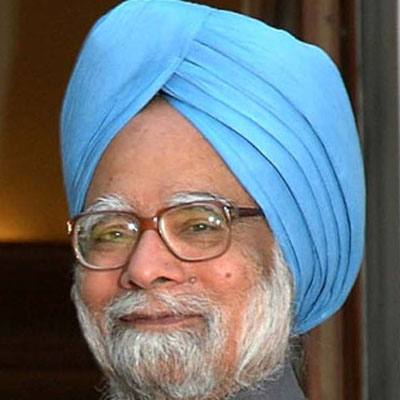
    NEW DELHI: Taking umbrage at constant comparisons of the speech of Prime Minister Manmohan Singh on Independence Day to that of other political leaders, the Information and Broadcasting Ministry today advised all News and Current Affairs TV Channels to follow the provisions of the Programme and Advertising Codes ‘scrupulously’.

    An advisory issued by the Ministry also said it was necessary to keep ‘the significance of the solemn days like Independence Day, etc. in view while carrying the speech of the Prime Minister and the President of India’.

    The Ministry said any further violation of the provisions of the Programme/Advertising Code would attract penal provisions stipulated in Section 20 of the Cable Television Networks (Regulation) Act 1995 and the terms and conditions of uplinking and downlinking guidelines.

    The advisory was issued in exercise of powers under Uplinking/Downlinking Guidelines issued by it, the terms of permission granted to the Channel to uplink or downlink TV Channels and under Section 20 of the Act.


    The Ministry said that the ‘telecast of this kind of programme on a day when the entire nation was celebrating its 67th Independence Day is highly objectionable. The Prime Minister spoke from the Ramparts of the Red Fort as the Prime Minister of the country and not as a leader of a political party.’

    ‘Therefore, on such a solemn day to put him in an artificial competition with anyone is not appropriate. On Independence Day when the Prime Minister addresses the nation and the country is united in the emotions of national integrity, patriotism and national fervor, the attempt by certain TV channels to denigrate the status of the Prime Minister can best be described as sensational against all norms of ethical journalism.’

    The Ministry pointed out that under Section 5 of the Act read with Rule 6 (1Xa) & (i) of the Cable Television Networks Rules 1994 as amended from time to time, ‘no programme can be transmitted/retransmitted on any Cable Service which contains anything offending against good taste or decency; and criticises, maligns or slanders any individual in person or certain groups, segments of social, public and moral life of the country.’

    It added that according to the basic conditions/obligations of permission/approval for
    Uplinking/Downlinking of TV Channels in India, the channels are bound to follow the Programme Code and Advertising Code as prescribed under the Act and rules framed there under. 

  • Election Commission to allot time to five state assemblies for poll broadcast on DD, AIR

    Election Commission to allot time to five state assemblies for poll broadcast on DD, AIR

    NEW DELHI: All India Radio and Doordarshan, which provides a platform to political parties for their poll broadcasts before election, will also organise panel discussions or debates at the Kendras/Stations for the forthcoming elections, for the state assemblies of Rajasthan, Madhya Pradesh, Chhattisgarh, Mizoram and the National Capital Territory of Delhi.

    The eligible party can nominate one representative for this programme, but only the Election Commission of India will approve the names of coordinators for the panel discussion and debates in consultation with the Prasar Bharati Corporation.

    The Commission, in the previous years, has worked out a schedule to provide different time slots for poll broadcasts to different parties.

    Only the ‘national parties’ and ‘recognised state parties’ will be eligible to avail the facility of the broadcast and telecast time.

    A base time of 45 minutes will be given to each party uniformly on the Regional Kendras  of  Doordarshan network and All India Radio network in the States/UT of Rajasthan, Madhya Pradesh, Chhattisgarh, Mizoram and NCT of Delhi. The additional time to be allotted to the parties has been decided on the basis of the poll performance of the parties in the last assembly election. The facilities will be available at the Regional Kendra of the All India Radio and Doordarshan in the states and then will be relayed by other stations within the states.

    In a single session of broadcast, no party will be allotted more than 15 minutes.

    The period of broadcast and telecast will be between the last days of filing the nominations and will end two days prior to the date of the poll. However, there will be no telecast or broadcast during the 48 hours before the polls close, as per specific provisions of the Representation of People Act, 1951.

    Prasar Bharati, in consultation with the Commission, will decide the actual date and time for broadcast and telecast. This will be subject to the broad technical constraints governing the actual time of transmission available with the Doordarshan and All India Radio.

    The guidelines prescribed by the Commission for telecast and broadcast will be strictly followed. The parties will be required to submit transcripts and recording in advance. The parties can get this recorded at their own cost in studios that meets the technical standards prescribed by Prasar Bharati, or at the Doordarshan/All India Radio Kendras.


    Alternatively, they can have these recorded in the studios of Doordarshan and All India Radio by advance requests. In such cases, the recordings may be done at the State Capital and at timings indicated by Doordarshan/All India Radio.

    Time Vouchers will be available in the denomination of five minutes with one voucher having time allotment from one to four minutes. The parties will be free to combine them suitably.

    Introduced for the first time for the Lok Sabha elections in 1998, the scheme of free broadcasts was extended by the Commission to the State Assemblies held after 1998 and General Elections to the Lok Sabha in 1999, 2004 and 2009.

    With the amendments in the Representation of People Act 1951, “Election and Other Related Laws (Amendment) Act, 2003”, and the rules notified in that, equitable time sharing for campaigning by recognised political parties on electronic media now has statutory basis.

    In exercise of the powers conferred by clause (a) of the Explanation below section 39A of the Representation of People Act, 1951, the Central Government has notified all such broadcasting media that are owned or controlled or financed wholly or substantially by funds provided to them by the Central Government, as the electronic media for the purposes of that section. Therefore, the Commission has decided to extend the said scheme of equitable time sharing on electronic media through Prasar Bharati Corporation to the ensuing General Elections to the State Legislative Assemblies.
  • TRAI gives MSOs another CAF extension till December end

    TRAI gives MSOs another CAF extension till December end

    MUMBAI: The Telecom Regulatory Authority of India (TRAI) has again shown forbearance towards multi-system operators (MSOs). The regulator has given another extension to the MSOs and asked them to submit 100 per cent consumer application forms (CAFs) by December end along with the compliance report. The regulator met the five national MSOs and a few state players today in New Delhi to get an update on the situation of DAS phase I and II cities.

    “TRAI has given us the extension looking at our performance since the last meeting held on 29 November. While we had achieved only 45 per cent CAF in DAS phase II areas when we met last, this time the figure stands at 65-70 per cent,” says one of the MSO who attended the meeting.

     The MSOs are confident of achieving the figure by the month end. “If TRAI continues its pressure and resolves to take some action against those not complying, I am sure we can achieve 100 per cent figure,” he says.

    Acknowledging the issues in Hyderabad, TRAI has shown leniency towards the city. “The 100 per cent CAF doesn’t include Hyderabad,” says the MSO.

    Apart from representatives of the five national MSOs, the others that attended the meeting chaired by TRAI principal advisor N. Parameswaran included: Manthan from Kolkata and Ranchi, UCN from Nagpur and MSOs from Vishakapatnam and Gujarat among others.

    The TRAI also reviewed the gross billing status in the DAS phase I cities. The MSOs had to start billing from December. “The subscribers need to get the bills as per their package plan from December.  The regulator has said that either the local cable operators (LCOs) or MSOs can bill the subscribers and has asked us to send the compliance report by 31 December,” informs the MSO.
    That apart, the MSOs in Kolkata and Delhi have decided to join hands and educate the consumers on gross billing. “While seven players in Kolkata will publish ads in leading newspapers in Kolkata, approximately three MSOs in Delhi have decided to come together for the print campaign,” he adds.

  • TRAI-MSO to meet on 16 Dec to assess CAF

    TRAI-MSO to meet on 16 Dec to assess CAF

    MUMBAI: The Telecom Regulatory Authority of India (TRAI) has called for a national multi-system operator (MSO) meeting on Monday, 16 December. The meeting has been called to assess the report on collection of consumer application forms (CAFs) in the 38 cities falling in Digital Addressable System (DAS) phase II. 

    Earlier, on 29 November, TRAI had met all the MSOs and had set 15 December as the deadline for submitting 100 per cent CAFs.

    We had to submit the CAFs, including subscriber details and package details by 15 December. TRAI has called for the meeting to assess the situation says SN Sharma

    “We had to submit the CAFs, including subscriber details and package details by 15 December. TRAI has called for the meeting to assess the situation. It is a follow-up of the meeting we had earlier with the regulator,” says DEN Networks CEO SN Sharma.

     The regulator has called for the meeting to review the progress made in the DAS phase II areas. “Though in the last meeting, we had asked for a one month extension to complete CAF, the regulator had given clear directions to complete CAFs in the specified period of 15 days,” adds Hathway Cable & Datacom MD and CEO Jagdish Kumar G. Pillai.

    The MSOs are struggling to meet the deadline. “Our national average for CAF is around 65 per cent. While in a few areas we have achieved 90 per cent CAF, there are also areas like Hyderabad where we have still not collected any CAF,” informs Pillai, who thinks that the collection can improve only if the Information & Broadcast Ministry announces Greater Hyderabad Municipal Corporation (GHMC) as DAS area.

    In the meeting held on 29 November, it was revealed that Gujarat Telelink Pvt Ltd (GTPL) is lagging behind in areas like Vizag and Solapur, Hathway is far behind in Vizag and Hyderabad and Den Networks had a low CAF collection in Uttar Pradesh. “We have achieved 80 per cent CAF in Gujarat, while catching up in other areas,” informs GTPL COO Shaji Mathews.

    Though in the last meeting, we had asked for a one month extension to complete CAF, the regulator had given clear directions to complete CAFs in the specified period of 15 days, says Jagdish Kumar Pillai

    The court cases related to the digitisation process that were on till quite some time in states like Madhya Pradesh, Andhra Pradesh and Gujarat have acted as a hindrance to smooth CAF collection, think the MSOs. “Digitisation in Vizag began only in September, so it will take more time for the MSOs to submit 100 per cent CAF there. Also, we are facing issues in Gujarat,” adds Mathews.

    The Gujarat Cable Operators Association has moved to the Gujarat High Court against TRAI and the case is pending in the court. “We will have to see if the TRAI gives us reprieve for customers who fall under these cable operators. If it doesn’t, then we may have to switch off signals, which will then be against court order. The situation is tricky in Gujarat and we are waiting for what the regulator has to say in the meeting,” says Mathews.

    We will have to wait and watch if TRAI comes up with another extension or penal action for non-compliance! MSOs await the meeting.

  • TRAI orders MSOs to deliver RIOs; tariff packages

    TRAI orders MSOs to deliver RIOs; tariff packages

    MUMBAI: The fear of Friday the thirteenth seems to be coming true for registered multi system operators (MSOs) as the Telecom Regulatory Authority of India (TRAI) has come out with two different directions for them today. And it has warned them that it is time for the stakeholders to buck up and act fast.

    The first direction issued today gives 118 registered MSOs just 10 days to submit their interconnection agreements entered with the broadcasters for re-transmission of channels on their cable networks in the Digital Addressable System (DAS) notified areas. Another direction, gives them seven days to submit the details of tariff packages along with the terms and conditions for supply and installation of the set top box (STB) to their subscribers.

    Of the 118 MSOs, a few well-known names that feature in the list are: Siti Cable Network, Seven Star Dot Com, Sagar E Technologies, Ortel Communication, Manthan Broadband, JAK Communications, IMCL, Hathway Cable & Datacom and Den Networks amongst others.

    “Every MSO, according to the Telecom Regulatory Authority of India Act, 1997 (24 of 1997) and regulation 5, 8 & 9 of the Telecommunication (Broadcasting and Cable Services) Interconnection (Digital Addressable Cable Television Systems) Regulation, 2012 (No. 9 of 2012), is required to have such interconnection agreement in DAS areas,” states the TRAI direction regarding interconnect agreement.

    According to regulation 5, it is mandatory for pay channel broadcasters to reduce the terms and conditions of the interconnection agreement into writing and deprive MSOs of their TV channel signals if no interconnect agreement is signed. Also, as per regulation 9, MSOs need to submit their interconnect agreement within the specified period to the authority.

    The TRAI direction had earlier said: “Every existing MSO shall submit to the authority by 31 July, 2012, all interconnect agreements entered into and amendments made therein prior to the date of notification of these regulations.”

    Regulation 8 gives power to the authority to intervene, inter alia, to protect the interest of the consumer and service provider. “The authority may, in order to protect the interest of the consumer or service provider or to promote and ensure orderly growth of the broadcasting and cable sector or for monitoring and ensuring compliance of these regulations, by order or direction, intervene, from time to time,” says the TRAI direction.

    With none of the MSOs so far caring to submit the tariff packages along with terms and conditions for supply and installations of STBs to their subscribers despite being ordered to do so under the Telecommunication (Broadcasting and Cable) Services (fifth) (Digital Addressable Cable TV Systems) Tariff Order, 2013 (No. 1 of 2013) issued on 27 May, the regulator has now cracked the whip on them to follow it and submit the packages within seven days from today. 

     
    It is to be noted that clause 5 of the tariff order states that every MSO has to report to the authority by 15 June 2013, the details of all the tariff packages and other terms and conditions for supply and installation of the STBs. According to this order, “Any change in the tariff package reported under sub-clause (1) and the introduction of a new tariff package for supply and installation of STB shall be reported to the authority at least seven days prior to such change or introduction, as the case may be.”

  • TRAI asks DTH operators to provide interoperability of STBs

    TRAI asks DTH operators to provide interoperability of STBs

    MUMBAI: In September this year, the licence of India’s oldest DTH provider Dish TV was to expire after a period of 10 years and then there was no provision for an extension. On 1 October the regulator came out with a consultation paper and on 14 November it issued a supplementary paper. 
    With the last date to provide feedback approaching, TRAI had an open house discussion (OHD) on 9 December with the leading DTH providers give suggestions on the consultation and supplementary papers released by TRAI.

    During the OHD, TRAI chairman Rahul Khullar said that set top boxes (STBs) should be inter-operable for the end consumer, either commercially or technically. He also told operators that the viewers should have the option to use the same STBs if they wished to change their service provider. But if operators found it to be a challenging prospect then they should be given an option of returning the STBs to their provider in exchange for money that could help them buy a new one.

    The Information and Broadcasting (I & B) Ministry had directed TRAI to set up new guidelines for obtaining DTH licenses in India. The OHD between TRAI and DTH players was to frame new recommendations regarding the same.

    During the OHD, DTH operators were asked to give views on issues such as entry fee and quantum thereof, licence fee, conditions governing cross holdings and period of extension. 

    Representatives from the industry said that new licences should be given for a reasonably long duration and the government should have the power to cancel these if operators violate rules.

    Khullar conveyed to operators that once the new licence rules come into effect, they will have two options: one, to either continue under their earlier terms and conditions till their licence expires or two, to change to the new system.

    Khullar has told DTH operators that they can submit any additional points till Friday.

  • TRAI asks Kolkata MSOs to start gross billing by next week

    TRAI asks Kolkata MSOs to start gross billing by next week

    KOLKATA: It was just last week that indiantelevision.com reported that Kolkata multi-system operators (MSOs) are likely to start the gross (consumer) billing process from 10 December following a directive by Telecom Regulatory Authority of India (TRAI).

    Now, TRAI met the MSOs again on 6 December and has asked them to start the billing process by 15 December.

    Kolkata has around 30 lakh cable television homes. As of now, an informal billing process is in place, but with effect from November, customers may have to pay the bill as per the package. “Collection may come in the next two-three months,” said Siticable Kolkata director Suresh Sethia.

    “Billing for the November package will start by 15 December. We will also advertise in newspapers and on our local channels to make our consumers aware about this development,” added Sethia.

    Siticable has around 10-11 lakh STBs in Kolkata Digital Addressable System-I (DAS-I) area.

    Explaining the details of the bill payment process, one of the MSOs informed that if a customer has chosen a package of Rs 180, he will have to pay Rs 180 + Rs 10 (amusement tax) + 12.36 per cent of Rs 180 (service tax) in the coming time.

    The billing system will bring transparency and organise the business, however, some operators are opposing it.

    But, the view of the majority is that only digitalisation can bring uniformity and a system in the so-called unorganised sector. Manthan Broadband director Sudip Ghosh said, “Billing is the first step to inform consumers of the changed ecosystem in a digitised environment.”

  • TRAI issues regulations for reducing security deposit and registration fees of telemarketers

    TRAI issues regulations for reducing security deposit and registration fees of telemarketers

    EW DELHI: The Telecom Regulatory Authority of India (TRAI) today issued regulations to encourage telemarketers to register by reducing the registration fees and the security deposit with the service provider.

    The Telecom Commercial Communications Customer Preference (Fourteenth Amendment) Regulations, 2013 says some of the major entities like banks and insurance agencies have requested the Authority to reduce the registration fees and also the security deposit with the service providers to remove the entry barrier for small dealers/ agents.

    Some of the major banks and insurance agencies have submitted that there are small dealers/ agents, in their business model, who do not have the means to afford the initial security deposit of   Rs 1,00,000 with service providers for taking telecom resources. Since the banks and insurance companies are compulsorily mandating their dealers/agents for registration as a telemarketer with TRAI, they have requested for reduction in the registration fee and the initial security deposit so as to motivate and provide opportunity for these small agents/dealers to register with TRAI as a telemarketer. 

    The Authority considered the issue and issued the Telecom Commercial Communications Customer Preference (Fourteenth Amendment) Regulations, 2013 to address these issues. The salient features of the 14th Amendment to the TCCCPR are:

    · The registration period is extended from three to five years.  The existing registered telemarketers can renew their registration by paying a renewal fee of Rs 5000. 

    · The Registration Fee is reduced from Rs 10,000 (Rs 1,000 Registration Fee + Rs 9,000 Customer Education Fee) to Rs 5,000, which will be a common Registration Fee, without any separate Customer Education Fee. 

    · This initial security deposit with the service provider is reduced Rs 1,00,000 to Rs 50,000.

    · The revised provisions of the regulations will come into effect after 30 days.