Category: Regulators

  • TDSAT & Ad cap: TRAI continues arguments

    TDSAT & Ad cap: TRAI continues arguments

    MUMBAI: Continuing to present its side to the Telecom Disputes Settlement Appellate Tribunal (TDSAT), the Telecom Regulatory Authority of India (TRAI) put forth its arguments to the bench consisting of Justice Aftab Alam and member Kuldip Singh.

    It started off continuing on yesterday’s argument trail saying that the law does not state that if the laying requirements are not fulfilled then it becomes void. That is, TRAI cannot execute its regulation on channels. That broadcasters are covered by both the Cable TV Networks Act and the TRAI act is a parliamentary mandate and there is nothing illegal in what it is doing. There are several precedents where a subject matter could be covered by more than one statute,  TRAI counsel  Rakesh Dwivedi stated.

    TRAI also claimed that it has a clear parliamentary mandate exercised through the central government to regulate advertisements. It contested the broadcasters’ arguments that TRAI has just a recommendatory role, by highlighting that it has an additional function under section 11 (1) (a) of the TRAI  Act and that does not mean its plenary functions under section (11) (1) (b) are taken away. Therefore, apart from its recommendatory function under (a), its powers also remain under (b). Both the sub clauses complement each other and there is no clash, the counsel stated.

    Reiterating that it has the authority, it said that what it is aiming to do is in perfect accordance with the powers the ministry and it has under section 7 (11) of the Cable TV Act. Likewise, the counsel, said it is not as if the government is seeking to have a higher allowance for advertising air time and is in disagreement with the limit of 12 minutes that the TRAI is seeking to impose.

    To support its argument, the counsel also read out various preceding judgments. According to the TRAI, broadcasters are licensees under the Telegraph Act and so the regulator has full power to ensure compliance within the licence term.
    Singh asked if TRAI can direct Google on the duration and number of ads it can run. To this, the TRAI counsel replied by saying: ‘I am the regulator and I will decide who, when and how much to regulate.

    Coming to the point raised yesterday about a statement TRAI had made in 2004 that “there should not be any regulation at present on advertisement on both FTA and Pay channels” it said that much water had flown under the bridge since it made its statement and the situation was different today. So, it can deem it appropriate to regulate since an expert opinion at one point of time does not mean that it will stay forever, the counsel stated.

  • TRAI presents its ad cap arguments

    TRAI presents its ad cap arguments

    MUMBAI: After nearly a week long argument from the News Broadcasters Association (NBA) and music channels – B4U, 9XM, Mastiii and M Tunes — it was time for regional players and the big daddy – the Telecom Regulatory Authority of India (TRAI) to present their side of the story on the ad cap.

    Among those who presented their case today were Polimer Media and south India biggie Sun TV. The channels brought to the fore a point from February 2011 when TRAI had confirmed that “there should not be any regulation at present on advertisement on both FTA and Pay channels.”

    It had taken this position in Petition No. 34(C) of 2011 in the TDSAT filed by a society called Utsarg against TRAI and several other broadcasters and content aggregators seeking a cap on television advertising time on the ground that these advertisements interfered with viewership of television programmes. The channels questioned the reversal in TRAI’s  stance today.

    Now, it was the turn of the TRAI to send its lawyer to make its deposition.  TRAI argued that it was right in taking recourse to  both the Acts – the Cable Networks Regulation Act 1995 as well as The Indian Telegraph Act 1885 and the TRAI Act – and it was empowered under both as broadcasters are licensees under the latter. To this, the bench comprising of Justice Aftab Alam and member Kuldip Singh said that if it already has the authority under the Cable TV Act then it should not have acted on the TRAI Act.

    However, TRAI argued that the Cable TV Act is applicable only to cable operators and the bench in turn responded that a broadcaster does not come under it then. TRAI claimed that they were merely interpreting section 7 (11) of the Cable TV Act of 1995 which says that the authority has the power to ‘seize equipment used for operating the cable television network’ if it is found to be breaching its other sections.

    On the laying of the ad cap regulation in Parliament, TRAI’s counsel said that it had submitted it to the relevant ministry. To this, the bench responded that the law decrees that it would become applicable only after it is accepted or rejected or modified in the house. All the actions TRAI takes won’t apply with retrospective effect. Hence if TRAI  prosecutes a broadcaster before laying in parliament would not that be a violation of fundamental rights was the question?  The argument was then that in such a situation it is beyond the jurisdiction of the TDSAT and comes under the ambit of the Supreme Court.

    One of the points raised by the petitioner channels was the possible misuse of the 12 minute ad cap regulation. It said that a broadcaster could have uneven advertising slots such as one minute of advertisement in the first 30 minutes while the next half an hour could have 11 minutes. Similarly the concept of clock hour too had its flaws. Hypothetically, a broadcaster could air 11 minutes of ads from7:49 pm to 8 pm and then another 11 minutes of commercials between 8:00 pm to 8:11 pm. That would mean TV viewers would be subjected to 22 minutes of commercials in an hour of television time, thus putting paid to TRAI’s mandate to maintain quality of service. To this, the TRAI claimed that all laws can be misused but then it doesn’t stop them from being made.

    TRAI will continue its arguments tomorrow.

  • What the music channels said on the ad cap issue

    What the music channels said on the ad cap issue

    MUMBAI: After the News Broadcasters Association (NBA) presented its side of the story, it was the turn of the music channels to present their case in the Telecom Disputes Settlement Appellate Tribunal (TDSAT) regarding the troublesome 12 minute ad cap regulation that is being enforced by the Telecom Regulatory Authority of India (TRAI).

    The hearing that went on for two days (Monday and Tuesday) had the music channels counsel speaking on behalf of the four music channels – 9XM, B4U, M Tunes and Mastiii. The main point raised was violation of Article 14 of the constitution of India by the TRAI. The Article states: “The State shall not deny to any person equality before the law or the equal protection of the laws within the territory of India Prohibition of discrimination on grounds of religion, race, caste, sex or place of birth”.
     
    According to counsel, the TRAI is violating Article 14 by putting all the channels in the same basket. There are different types of broadcasters delivering both free to air and pay channels in the genres of news, sports, music etc. It is inappropriate to be treating ‘unequals as equals’ by classifying all channels in the same category, counsel emphasized. To support his argument, he said that FTA channels don’t get subscription revenue and work on purely advertising while pay channels have the benefit of both.
     
    Apart from this, other issues raised during the hearing were similar to the ones the NBA counsel had raised such as the jurisdiction of the TRAI to come out with such a regulation, unregulated and high carriage fees and high cost of content production.
     
    There is a long list of channels that will now present their cases in front of the TDSAT bench of Justice Aftab Ahmed and member Kuldip Singh including Reliance Big Broadcasting, Sun TV Network, Raj TV, E24 Glamour, Eenadu Television and Polimer Media.
     
    After this, TRAI will defend itself. The hearing is set to continue today.
     
    This is surely one case that will take much time to resolve.

    To read about previous reports on the case scroll down.

  • Day 3 of TDSAT ad cap hearings

    Day 3 of TDSAT ad cap hearings

    MUMBAI: The queue of channels waiting their turn to present their individual cases on the so-called crippling TRAI 12 minute ad cap to the Telecom Disputes Settlement Appellate Tribunal (TDSAT) has not really got any shorter even as the hearings got into the third day. The reason: the News Broadcasters Association’s (NBA) lawyers continued with their arguments in the presence of TDSAT’s Justice Aftab Alam and member Kuldeep Singh.  

    And with their presentation referencing statutory laws as relating to the Cable Television Networks (Regulation) Act and the TRAI Act 1997 completed they have now progressed to bringing in references about media freedom as written in the Article 19A of the Indian Constitution. 

    The NBA counsel referred to the ‘Sakal Papers And Others vs The Union Of India on 25 September, 1961’ case. The Supreme Court had then affirmed that a newspaper should have the liberty to carry as many advertisements as it would want to because ‘curtailment of advertising is a curtailment of free speech as guaranteed by the Constitution of India.  

    The declaration of this case reads: ‘the state could not make a law which directly restricted one guaranteed freedom for securing the better enjoyment of another freedom. Freedom of speech could not be restricted for the purpose of regulating the commercial aspect of the activities of newspapers.’ 

    According to the NBA, since such a  ruling exists for print newspapers, it should also apply to the broadcast medium. However, Alam tended to disagree and opined that that the electronic medium is different from print.

    The NBA also contended that broadcasters don’t actually get a ‘license’ from the central government under The Telegraph Act 1885 but rather a ‘registration’ under the uplinking/downlinking policy guidelines. However, the justice  doubted that the broadcasters don’t get a licence, and he also felt that broadcasters don’t come under the cable TV act as the NBA is claiming. 

    During the 12 November hearing, the NBA had argued that TRAI had not done the laying requirements as per section 37 of the TRAI Act which it should have in order to carry out enforcement of ad cap and prosecution of erring channels.

    The hearings are slated to continue tomorrow morning with the NBA and its lawyers presenting their arguments.  For the other channels, the wait continues. To read about previous reports on the case scroll down.

  • TDSAT: Ad cap saga continues on Day 2

    TDSAT: Ad cap saga continues on Day 2

    MUMBAI: The hearings on TRAI’s proposed 12 minute ad cap regulation by the Telecom Disputes Settlement Appellate Tribunal (TDSAT) that began yesterday look unlikely to get over in a hurry. For the past two days it is the News Broadcasters Association (NBA) which has been presenting its case to the tribunal. Today, the NBA counsel raised the point that the TRAI had not fulfilled the laying requirements to the parliament as per section 37 of the TRAI Act which says that “the Regulations made by the TRAI have to be placed before the Parliament to seek its approval. Thus, there can be no dispute that the regulations framed by the TRAI have the force of law having been made through the process of subordinate legislation provided they are consistent with the Act and Rules.”

    Any law infringing the fundamental rights of the people needs to be laid before the parliament after which it can be either annulled or amended or approved by the parliament, says a counsel. A senior broadcaster who has been following the case closely says, “If anything is a law then it has to be passed by the legislature.”

    Therefore, the NBA said that TRAI is crossing its line by enforcing the ad cap and prosecuting channels that aren’t following it. TDSAT Justice Aftab Alam wanted to know from TRAI if they had laid it before parliament as it’s an issue that should have been dealt in the preliminary stages itself to which TRAI did not have a substantial reply.

    In yesterday’s hearing, one of the points put forth by the NBA counsel was section 2(G) of The Cable Act of 1995 according to which advertisements are a part of content. At this, TDSAT wondered how a broadcaster can come under this act. Counsel for NBA today validated the position under this act by stating that permission for uplinking falls under the Cable Act bringing broadcasters under this Act. It also says that channels adhere to the programme code.

    Since the Cable Act comes under the jurisdiction of the Information and Broadcasting (I & B) ministry, broadcasters fall under the purview of the I & B ministry and not TRAI.

    NBA also contended yesterday that TRAI does not have the authority to regulate content and its powers are restricted only to licensing and quality of service while content regulation falls under the ambit of the I & B ministry. Neither the TRAI Act nor the Indian Telegraph Act, under which TRAI works, gives the regulator the powers to deal with content.

    The case will continue tomorrow post noon when NBA will put forth more points in front of the TDSAT.

    Read here for yesterday’s hearing:
    TDSAT hearing on ad cap to continue tomorrow

  • Reproduce newspapers in electronic form: I&B Ministry

    Reproduce newspapers in electronic form: I&B Ministry

    NEW DELHI: The government intends to bring ‘reproduction of any newspaper in electronic form’ within the ambit of the Press and Registration of Books Act.

    In the amendments proposed to the PRB Act, the Information and Broadcasting Ministry (I&B) has also proposed inclusion of a section which says ‘paid news’ means publishing any news or analysis in the publication for a price in cash or kind as consideration.

    The amendments, which have been placed on the website of the ministry, also says that ‘facsimile edition’ of a publication means an exact replica in full or in part of the original edition of a foreign publication ‘in so far as the contents concerned and may not include title’, subject to the condition that any page is not published in part.

    The government also proposes to establish a Press and Registration Appellate Board to be constituted by the central government, by notification in the official gazette, consisting of a chairperson and another member, to be nominated by the Press Council of India, established under section 4 of the Press Council Act 1978 from among its members.

    It says any dispute relating to registration of newspapers or publications would be referred to a ‘specified appellate authority’ that may be prescribed by the central government.

    Under the amendments, publication means newspapers, magazines, journals or newsletters printed periodically and published in India ‘including its reproduction in electronic form or any syndication, facsimile edition, and Indian editions of periodicals published outside India.’

    While noting that the Press Registrar General will consider all applications of new titles ‘as soon as practicable’, the amendment says an application for a title may be rejected if it is ‘same or similar to that of a known foreign publication’, subject to the proviso that ‘the same or similar title shall not be rejected if the Indian entity seeking the title has a tie-up with the owners of the title of such a foreign publication’.

    The amendment further says that no publication shall be printed and published in India except with the prior approval of the central government granted if such publication is owned by or has investment from any individual who is not an Indian citizen or foreign unincorporated body of individuals or body corporate incorporated under the law of any country other than India.

    Furthermore, the Press Registrar General may reject, after giving the person concerned an opportunity of showing cause against the action proposed to be taken, and holding an inquiry into the matter, if he is satisfied that the publication mentioned in the declaration is found indulging or having indulged in the practice of ‘paid news’, on the basis of adjudication by the Press Council of India or any other quasi-judicial/judicial authority. Till a decision is taken, the Press Registrar General may suspend the publication of such publication.

    Furthermore, any person aggrieved by an order of a specified authority refusing to authenticate a declaration under section 10 or cancelling a declaration under section 19 (l) (a) to (d) may appeal within 60 days from the date on which such order is communicated to him to the Press and Registration Appellate Board and may entertain an appeal after the expiry of the said period, if it is satisfied that the appellant was prevented by sufficient cause from appealing on time.


    The Appellate Board may, after calling for the records from the specified authority and after making such further inquiries as it thinks fit, confirm, modify or set aside the order appealed against. The decision of the Appellate Board shall be final in respect of provisions given in sub section 19(1) (a) to (d).

    Any person aggrieved by an order of the specified authority for suspension of publication under the provision of section 19(1)(e) will still be free to approach a court of law.

    In case of change of name or place of press, a fresh declaration will not be necessary if this information is given to the specified authority within five days.

    It shall be the duty of the publisher, and owner in the absence of the publisher, of every publication ‘to furnish details of the advertisement revenue of the publication as and when asked for.

    Whoever prints or publishes any book or publication otherwise than in conformity with the provision of section 3 will have to explain the reasons for this and to complete the formalities as specified in this section.

    In its penal provision, the government has said that any contravention of sub-section (1) will invite a fine not exceeding Rs 5,000 in addition to suspension of the publication for a period of 30 days.

    Furthermore, whoever owns any press, other than in conformity with the provision of section 4 will have to explain for such activity and to complete the formalities as specified in that section. For contravention of sub section (1), the person shall be liable to a fine not exceeding Rs 5,000 in addition to sealing of the printing press for a period of 30 days.

    The amendment says that ‘In particular and without prejudice to the generality of the foregoing power’ such rules may provide for all or any of the following matters, namely: the period of suspension of the declaration under sub-section (i) of section 19 , and the manner of filing appeals to the specified appellate authority under sub-section (1) of section 20.

  • Govt. defends advisory to TV news channels on PM’s Independence Day Speech

    Govt. defends advisory to TV news channels on PM’s Independence Day Speech

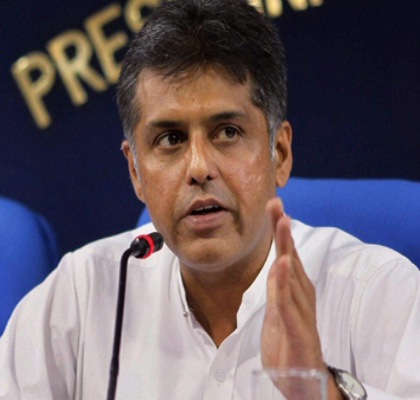
    NEW DELHI: Information and Broadcasting Minister Manish Tewari today staunchly defended the advisory issued by his Ministry asking news television channels to make a distinction between a speech delivered by the Prime Minister from the ramparts of Red Fort on Independence Day and speeches made by different political leaders.

    He said at a press meet here that the President’s address to the nation on the eve of Republic Day or the Prime Minister’s address on Independence Day were not speeches made as leaders of any party but as leaders of the nation. It was therefore wrong to draw parallels between these speeches and those made by leaders of different political parties.

    At the same time, he drew attention to the word ‘advisory’ and said the Ministry’s viewpoint was meant to be just that and not any dictat to the media.

    He said the present government had always stood for freedom of the media and would continue to do so.


    Referring to a question about a film on Sardar Patel, he said that the National Film Development Corporation would consider such a proposal if any filmmaker plans to do so.

    He reiterated that while the United Progressive Alliance had always given newspaper advertisements on the birth and death anniversaries of eminent leaders, but it was the previous National Democratic Alliance which had failed to do so, according to figures given by the Directorate of Advertising and Visual Publicity.

    Referring to the government’s view on opinion polls conducted by different media publications before the elections, he said that his party was not opposed to them but it could not be denied that such polls could be manipulated. He said the Congress party’s stand on this had been consistent. He said that the Central Election Commission had in fact sought the opinion of all political parties on this issue. While the stand of his party was consistent, the Bharatiya Janata Party had been opposed to opinion polls in 2004 but had supported these in its present view given to the Commission.    

  • Tewari issues clarification on Sardar Patel ad releases by govt

    Tewari issues clarification on Sardar Patel ad releases by govt

    NEW DELHI: The Government gave out 2164 newspapers advertisements on the occasion of the birth anniversary of Sardar Vallabhbhai Patel between 1998 and 2003.

    Interestingly, the Information and Broadcasting Ministry said in a statement in response to statements by certain political leaders that no advertisements were released during the years 1999, 2000 and 2001.

    However, 20,915 newspapers were given the advertisement between 2004 and 2013. No advertisement was given in the year 2008. 


    The Ministry said the Directorate of Advertising and Visual Publicity had been regularly releasing advertisements on the birth anniversary of prominent national leaders including Sardar Patel.

    In this context, I and B Minister Manish Tewari said: “The Ministry of Information & Broadcasting has always followed a policy to acknowledge the contribution of prominent national figures in nation building by releasing advertisements. The advertisements released on the birth anniversary of Sardar Patel are part of the continued policy of this Ministry of expressing gratitude to great leaders for instilling confidence and inspiration in the young minds.”  

  • The puzzling case of TRAI’s ad cap

    The puzzling case of TRAI’s ad cap

    MUMBAI: The Telecom Regulatory Authority of India (TRAI) found some unlikely supporters on the ad cap issue last week. On the one hand, Zee Entertainment, Star India and Viacom18 approached the Telecom Disputes Settlement and Appellate Tribunal (TDSAT) saying that they were in favour of a limit to how much advertising should be allowed per hour and that they would like to become respondents to the cases filed by other broadcasters. Among these figure the News Broadcasters Association (NBA), regional and music channels all of whom have been opposing the regulation and have sought relief from the tribunal. The other supporter of the ad cap is an NGO called MediaWatch which said the ad cap should be extended to cable TV also and that TRAI should also ensure that broadcasters don’t cross the line on audio levels of commercials and also specialised ad formats on the TV screen.

    Though the intervention filed by Zee, Star India and Viacom18 was rejected in the hearing that took place on 31 October, the tribunal has asked the networks to file a separate application, which would be heard only after the main case filed by NBA, music and regional channels, the next court hearing for which is 11 November.

    “Well! We had filed for an intervention which was postponed,” is what Star India president and general counsel – legal and regulatory affairs Deepak Jacob said when Indiantelevision.com contacted him to enquire more about the case. However, he refused to divulge any more on the matter.

    The three mainline Hindi GECs have been following the 10+2 ad cap regulation since 1 October, which was the deadline set by TRAI.

    Industry watchers are asking what is it that made the three networks come out so blatantly in support of the ad cap when fourth network Sony Entertainment has not been following the TRAI diktat at all?

    “They are in a position of strength as they have a tremendous share of viewer eyeballs,” says a media observer. “Hence, they can afford to take a hard stance in favour of the ad cap. Their belief is that advertisers have no alternative but to advertise on their channels. Their following the ad cap allowed them to jack up air time rates which more than made up for the drop in inventory. They would ideally like the status quo of lower advertising time to continue as it has benefited them and will continue to benefit them because paucity will result in better yields and rates.”

    Another media observer believes that the approaches that the leading GECs have taken will add to the chaos and confusion. “The TV broadcast industry seems to have learnt very well how to stall any disruptive regulatory changes,” says a media planner laughingly. “You have several opposing and pro-voices speaking up at the same time which tends to lead to policy paralysis.”

    She elaborates: “On the one side, the advertisers, agencies, news broadcasters, music channels and niche channels are against the TRAI ad cap. One of the major networks are also opposing it; while the other three are showing that they want it. It will be tough for anyone to decide which direction should things move. If the ad cap is on – in an election year – the news channels will take umbrage and the government cannot afford to have a negative fallout in an election year. If the ad cap is stalled for a while, that is good for everyone: the leading GECs have already got rate hikes of some sort; Sony can join in and hike rates and finally the news channels will not be faced with shriveling air time revenues. So they will be happy.”

    “We are also taking a leadership position by complying with the TRAI regulations,” says an executive with one of the three networks. “We believe the time for change on TV advertising is now and hence are supporting it.”

    What move will the telecom industry’s conscience – the TDSAT – and the regulator – TRAI- make next? Our guess is as good as any, but the ad cap game play is surely beginning to resemble a very complicated game of chess.

  • Allahabad HC asks government to form statutory forum for complaints against electronic media

    Allahabad HC asks government to form statutory forum for complaints against electronic media

    NEW DELHI: The Allahabad High Court has said that the government needs to provide a statutory forum for electronic-media where people can both approach and ventilate their grievances.

    In the petition filed by social activist Dr Nutan Thakur, Justice Devi Prasad Singh and Justice Ashok Pal Singh of the Lucknow bench said for any misconduct committed by the print media statutory forum is available in the form of Press Council of India but no such forum is available for the electronic media.

    The court felt that no such statutory forum is available and this does not seem to be proper in a country which is run by the rule of law and governed by the democratic polity and hence the union needs to provide statutory forum for electronic-media.

    The order said electronic media immediately affects peoples’ mind and it is well established that paid news items are often used by the media, which is an instance of abuse of power. Hence, prima facie electronic media should also be regulated and supervised by a statutory autonomous forum like the Press Council and the government should have provided some statutory forum to redress the grievance of the news items or other items of the electronic media.


    The order said electronic media immediately affects peoples’ mind and it is well established that paid news items are often used by the media, which is an instance of abuse of power. Hence, prima facie electronic media should also be regulated and supervised by a statutory autonomous forum like the Press Council and the government should have provided some statutory forum to redress the grievance of the news items or other items of the electronic media.

    The court directed the government to file an affidavit bringing on record its stand on this issue, within four weeks.


    The petition had been filed against the Information and Broadcasting Ministry and the News Broadcasters Association.