Category: Regulators

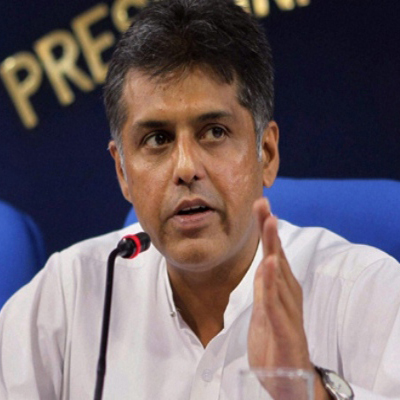
  • I&B minister  Manish Tewari inaugurates BES Expo 2014

    I&B minister Manish Tewari inaugurates BES Expo 2014

    NEW DELHI: The Information and Broadcasting minister Manish Tewari inaugurated the 20th International Conference and Exhibition on Terrestrial and Satellite Broadcasting – BES Expo 2014, today at New Delhi. Speaking on the occasion he said, “The last two decades have witnessed exponential growth in both the broadcasting and telecom sectors, giving rise to 800 plus television channels.”

    Commenting on the problems and challenges faced by the broadcasting sector due to competition for market share, he said the union cabinet has recently approved the proposal of the Ministry of Information & Broadcasting for a comprehensive regulatory framework in the form of guidelines for Television Rating Agencies in India. These guidelines cover detailed procedures for registration of rating agencies, eligibility norms, terms and conditions of registration, cross-holdings, methodology for audience measurement, a complaint redressal mechanism, sale and use of ratings, audit, disclosure, reporting requirements and action on non-compliance of guidelines. 

    Also speaking at the function, Ministry of Information & Broadcasting secretary Bimal Julka, said the ministry is planning to strengthen community radio movement in India, which would help in giving voice to the voiceless. 

    The BES expo is being attended by over 300 eminent broadcasters, media industry professionals and experts from India and abroad. The three day long expo will have deliberations on issues such as terrestrial broadcasting, future of TV, digitization, disaster broadcast systems for information dissemination, regulatory framework in broadcasting and other important issues related to the broadcasting industry. 

  • I&B ministry to take up cable TV monopoly recommendations

    I&B ministry to take up cable TV monopoly recommendations

    MUMBAI: The inter-ministerial committee in the information and broadcasting ministry (MIB) is likely to take up the Telecom Regulatory Authority of India’s (TRAI’s) recommendations on controlling monopoly/market dominance in the cable TV sector this week. These were released by the TRAI on 26 November 2013. This was revealed by MIB minister Manish Tewari to the Times of India (TOI) yesterday.


    According to the TRAI recommendations, a barometer known as the Herfindahl Hirschman Index (HHI) is to be used to measure monopoly of MSOs or cable TV service providers in a market which as defined as a state (with certain exceptions).


    The recommendations state that “the threshold value for any individual/group/entity contribution to the market HHI should be no more than 2500.”  According to the TOI report, this constitutes 50 per cent market share, the market being defined as a state.


    The TRAI recommendations further state that “any M&A among MSO(s) or between an MSO and LCO in a relevant market shall require the prior approval of the regulator. The decision on any proposal, complete in all aspects, shall be conveyed within 90 working days.”


    They go on to further add that in “the cases where any group’s contribution to HHI in a market is more  than 2500 as on the date of issue of guidelines, such legal entity/ ‘group’ shall take necessary remedial measures, within 12 months from the date of issue of guidelines, so as to limit  its ‘control’ in various MSO(s)/ LCO(s) in such a way that the  contribution to market HHI of that ‘group’ reduces to less than or equal to 2500.”


    Tewari told the TOI that the ministry was “seriously looking at introducing a cap on the market share of MSOs to stop monopolistic practices, whether due to political pressure or political ownership, to protect plurality and diversity of content.” 

  • TV ratings: Ownership & FDI questions

    TV ratings: Ownership & FDI questions

    MUMBAI: To have foreign direct investment (FDI) in TV ratings or not, that is the question. And the recently-cleared TV ratings guidelines by the Cabinet Committee of Economic Affairs (CCEA) have brought this to the fore by their silence on this score. While announcing that the CCEA had given the go ahead to the ministry of  information and broadcasting (MIB) last week to the Telecom Regulatory Authority of India (TRAI)-recommended  guidelines for a regulatory framework for TV ratings in India,  minister Manish Tewari had this to say.


    “In so far as FDI is concerned we would make a separate reference to TRAI with regard to the quantum and need of FDI that should be permitted in ratings agencies. After the TRAI recommendations, the question of allowing FDI would be looked at. So as we speak, no FDI will be permitted in TV ratings agencies till we don’t have a recommendation on it.”


    Although the 2013 recommendations do not have any mention of FDI, it is noteworthy to point out that TRAI’s 2008 consultation paper on TV ratings does. The paper says that stakeholders feel that FDI should be restricted to 20 per cent in a TV ratings agency.  It also goes on to suggest that since no security issues were involved and little or no competition was prevailing (only two agencies existed at that time – TAM and aMap  and no regulation existed), that it would be okay of no if no FDI limit was imposed.  “Generally FDI encourages world class technology and international best practices,” TRAI had stated in the paper.


    So even as the TRAI was of the opinion that FDI was all right in 2008, in 2013 it gave the issue an ignore. Currently FDI limits for broadcasters are 100 per cent  for non-news and current affairs channels, for news channels 26 per cent, for cable TV 74 per cent, for DTH 49 per cent, for print 26 per cent for general news etc.


    Tewari stated that the question of FDI would be looked at after the TV ratings guidelines are notified by the ministry. Could the earlier recommendation of 20 per cent work as a guideline today? Or is the government going to be averse to FDI totally?


    Let us take a look at the other major guideline of cross holding in the TV ratings provider. The guideline states very clearly:  ‘No single company/legal entity either directly or through its associates or interconnect undertakings shall have substantial equity holding that is, 10 per cent or more of paid up equity in both rating agencies and broadcasters/advertisers/advertising agencies.’


    If one looks at the holding pattern of Mediametrie – the French ratings agency – which is soon to be announced as the Broadcast Audience Research Council’s (BARC’s) ratings partner,  France Televisions holds 22.89 per cent equity in it, TF1  10.8 per cent, Radio France 13.5 per cent and Union des Annonceurs 11.77 per cent.


    France Televisions in turn owns 49 per cent of TV5 Monde while AEF (formerly called France Monde) that runs France 24 owns 12.6 per cent of France Televisions. Quite a convoluted holding structure, but clearly one where broadcasters could be owning more than 10 per cent equity in the TV ratings provider.


    However, BARC officials are quick to clarify that it is BARC which will be providing the ratings and not Mediametrie. The latter is only a technology supplier and ratings are being outsourced to it. It owns no equity in the ratings company which is BARC. Hence, the question of more than 10 per cent equity ownership by broadcasters in Mediametrie is irrelevant and there will be no violation of TRAI’s guidelines, they emphasise.


    BARC, on its part is a non-profit organisation under section 25 of the Companies Act, with nominated representatives from the Indian Broadcasting Foundation, Indian Society of Advertisers, and Advertising Agencies Association of India. In a response to TRAI’s consultation paper, BARC had stated that even though the three may have conflicting interests in the ratings process, its articles of incorporation clearly state that “each has an equal voice in the design, and monitoring of the rating system, and in the administration of BARC, irrespective of the funding pattern.”


    TAM, on the other hand, has woes on both fronts as it not only does not comply with the FDI guidelines it also is has issues on the cross holding guideline as it is owned jointly by the WPP group and AC Nielsen. It is even listed on the WPP site as one of its companies.


    The key question that everyone is asking at the time of writing is whether TAM Media will move court against the guidelines, as they have come into force so many years after it has been operating in India with the equity and cross holding structures that it has. Or will it give up the fight and pack up just like Coca-Cola did in the seventies, when the government ordered it to reduce the FDI in it to 40 per cent.

  • TRAI to hold open house on 800 MHz spectrum on 27 Jan

    TRAI to hold open house on 800 MHz spectrum on 27 Jan

    NEWDELHI: The Department of Telecommunications (DoT) has listed 15 January as the last date for submission of application for the 1800 MHz and 900 MHz under a revised schedule of the auction process.


    The DoT has issued the second amendment to the Notice Inviting Applications (NIA) for the spectrum auction of 1800 MHz band and 900 MHz band.


    Under the amendment, some changes have been made in some parts of clause no 2, 3, 4, 6, 8 and annexure 2A. The details of the amendment are available on the website of DoT.


    Meanwhile, as per the first amendment to the NIA, the department issued clarifications on the queries raised about the NIA on 2 January which are also available on the DoT website.


    The Telecom Regulatory Authority of India (TRAI) is to hold an open house discussion on reserve price for auction of spectrum in the 800 MHz band on 27 January in Delhi. The open house will be open to all stakeholders.

  • Cabinet gives go-ahead to TV ratings regulatory mechanism

    Cabinet gives go-ahead to TV ratings regulatory mechanism

    NEW DELHI:  The Union Cabinet today gave the go-ahead to the television ratings guidelines ,which had earlier been proposed by the Telecom Regulatory Authority of India (TRAI) in September 2013, cleared by the Ministry of Information and Broadcasting (MIB) in November. The ministry had then forwarded the proposed guidelines for the cabinet’s approval. With the cabinet’s clearance the MIB will now have regulatory control over TV ratings agencies in India.


    This was disclosed by MIB minister Manish Tewari after the cabinet meeting.


    The guidelines cover detailed procedures for registration of ratings agencies, eligibility norms, terms and conditions of registration, cross holding restrictions, methodology of audience measurement, a complaint redressal mechanism, sales and use of ratings, audit, disclosure norms, reporting requirements and action on non-compliance of guidelines etc.


    The guidelines state that TV ratings providers – including TAM Media which is the industry standard currently – will have to first get registered with the MIB. The registration will be given to them only if they comply with the rules the TV ratings guidelines have enumerated. Among these figure:


    * No single company / legal entity either directly or through its associates or interconnect undertakings shall have substantial equity holding that is, 10 percent or more of paid up equity in both rating agencies and broadcasters/advertisers/advertising agencies. 


    * The ratings agency should have a net worth of at least Rs 20 crore.


    * Panel homes for audience measurement shall be drawn from the pool of households selected through an establishment survey. A minimum panel size of 20,000 is to be implemented within six months of the guidelines coming into force. Thereafter the panel size shall be increased by 10,000 every year until it reaches 50,000. 


    * Ratings ought to be technology neutral and shall capture data across multiple viewing platforms viz. cable TV, Direct-to- Home (DTH), Terrestrial TV etc. 


    * Secrecy and privacy of the panel homes must be maintained. 25 percent of panel homes shall be rotated every year. 


     * The rating agency shall submit the detailed methodology to the Government and also publish it on its website. 


    * The rating agency shall set up an effective complaint redressal system with a toll free number. 


    * The rating agency shall set up an internal audit mechanism to get its entire methodology/processes audited internally on quarterly basis and through an independent auditor annually. All audit reports to be put on the website of the rating agency. Government and TRAI reserve the right to audit the systems /procedures/mechanisms of the rating agency. 


    * Non-compliance of guidelines on cross-holding, methodology, secrecy, privacy, audit, public disclosure and reporting requirements shall lead to forfeiture of two bank guarantees worth Rs 1 crore furnished by the company in the first instance, and, in the second instance shall lead to cancellation of registration. For violation of other provisions of the guidelines, the action shall be forfeiture of bank guarantee of Rs. 25 lakh for the first instance of non-compliance, forfeiture of bank guarantee of Rs 75 lakh for the second instance of non-compliance and for the third instance, cancellation of registration. 


    * A time of 30  days would be given to the existing rating agency to comply with the guidelines. 


    * The guidelines would come into effect immediately from the date of notification. 


    The Guidelines for Television Rating Agencies in India are designed to address aberrations in the existing television rating system. These guidelines are aimed at making television ratings transparent, credible and accountable. The agencies operating in this field have to comply with directions relating to public disclosure, third party audit of their mechanisms and transparency in the methodologies adopted. This would help make rating agencies accountable to stakeholders such as the Government, broadcasters, advertisers, advertising agencies and above all the people. 


    Television Rating Points (TRPs) have been a much debated issue in India since the present system of TRPs has reportedly not found favour with industry, consumer groups, broadcasters, agencies, government who have said they are riddled with several maladies such as small sample size which is not representative, lack of transparency, lack of reliability and credibility of data etc.


    In 2008, the MIB had sought recommendations of TRAI on various issues relating to TRPs and policy guidelines to be adopted for rating agencies. TRAI, in its recommendations in August 2008, had amongst other things recommended the approach of self-regulation through the establishment of an industry-led body, that is the Broadcast Audience Research Council (BARC). 


    The MIB had constituted a Committee under the Chairmanship of Dr. Amit Mitra, the then Secretary General FICCI, in 2010 to review the existing TRP system In India. The committee also recommended that self-regulation of TRPs by the industry was the best way forward. 


    Since, the BARC could not operationalise the TRP generating mechanism, the  sought recommendations of TRAI in September 2013 on comprehensive guidelines/accreditation mechanism for television rating agencies in India to ensure fair competition, better standards and quality of services by television rating agencies. TRAI recommendations on Guideline for Television Rating Agencies were received in September 2013. While supporting self-regulation of television ratings through an industry-led body like BARC, TRAI recommended that television rating agencies shall be regulated through a framework in the form of guidelines to be notified by MIB. It also recommended that all rating agencies, including the existing rating agency, shall require registration with MIB in accordance with the terms and conditions prescribed under the guidelines. 
     

  • SC to hear Mouthshut.com’s plea challenging IT Rules 2011

    SC to hear Mouthshut.com’s plea challenging IT Rules 2011

    NEW DELHI: Come 13 January and the writ petition filed by Mouthshut.com, challenging the Information Technology Rules 2011 will be up for hearing in the Supreme Court.  


    The plea seeks to declare the IT Rules as violation of Articles 14, 19, and 21 of the Constitution of India which guarantee freedom of expression. Mouthshut.com will be represented by senior counsel Harish Salve.


    Mouthshut.com, which is an online community for consumer reviews has asked the Court to rescind India’s Information Technology Rules 2011 that jeopardises the freedom of expression. The appeal declares the IT Rules to be offensive under Articles 14, 19 and 21 of the Constitution of India. “We are pleading with the highest court in the land to protect the rights of Indian citizens and consumers that are granted by the Constitution of India,” said MouthShut.com founder and CEO Faisal Farooqui.


    The portal has stuck to its own policy of taking down content only under legal coercion. But the IT rules state that ‘any affected person’ can simply send an email to request the removal of any content within 36 hours or they can lose their ‘safe harbour’ protection as an ‘intermediary, pay damages, legal fee and court time’. Web-based organisations need to have a difference between free expression and making feasible services.


    Farooqui further added, “We have been threatened with hundreds of legal notices, cybercrime complaints and defamation cases. At other times, officers from various police stations call our office, demanding deletion of various reviews or face dire consequences under the IT rules.”


    Farooqui said, “It is a privilege to be a citizen of a democracy like India, where an ordinary citizen can appeal to a powerful court. Laws are meant to ensure the well-being of the nation – its people and institutions. Despite good intentions, IT Rules fall short of doing that. This law has the potential to weaken or, worse, entirely corrode the robust protection that the constitution of India offers to the freedom of speech.”

  • Tewari believes internet represents the largest ungoverned space on earth

    Tewari believes internet represents the largest ungoverned space on earth

    NEW DELHI: While border control, visa regulations and immigration formalities were the ground realities in connecting the global youth, it is undeniable that the march of technology, through the use of the internet, has enabled them to become a part of the global conversation, Information and Broadcasting Minister Manish Tewari said today.


    Speaking at the Plenary Session of Youth Prasar Bharati Divas, Tewari said that internet represented the largest ungoverned space on earth and every two days more data is produced than since the dawn of civilisation to the year 2000. This technology has given rise to a virtual civilization that allows young people who have the desire and passion to connect with others with similar aspirations around the world.

    He said during his overseas travel in recent months, he has discovered that the younger generation has a common aspiration: to make a life for themselves and make the world a better place to live in. In this context, Tewari suggested that PBD should evolve a non-formal connect in an unstructured manner to allow the youth across the world to connect with one another seamlessly.

    The session provided insights into India’s fast emergence as a youthful and exuberant nation where approximately 50 per cent of the working population falls in the age group of 18- 35 years.


    There has been some reverse migration in which a number of experienced and educated NRIs are now returning home to use their knowledge to build an inclusive and economically sound future for the country.


    This has led to the creation of a unique synergy wherein young Indians worldwide are now set to shape the future of the Indian growth story. This synergy is expected to be directed by the core principle of inclusive prosperity and driven by innovation and technology.

  • TRAI Consultation Paper on 800 MHz Spectrum wants stakeholders’ opinion on pricing

    TRAI Consultation Paper on 800 MHz Spectrum wants stakeholders’ opinion on pricing

    NEW DELHI: The Telecom Regulatory Authority (TRAI) of India has asked stakeholders for their views on whether the value of 800 MHz spectrum should be derived on the basis of the value of 1800 MHz spectrum using technical efficiency factors.


    It has also sought to know the block size in the 800 MHz band and what should be the quantum of spectrum in the 800 MHz band that should be put up for auction.

    It has also asked if there is any case for application of a lower efficiency factor (1.3) over the valuation of 1800 MHz spectrum, for determining the valuation of 800 MHz, as was done in the previous auction and give detailed reasons for the same.


    The stakeholders have been asked if the value to be paid for 800 MHz spectrum should be based upon the potential growth in data services.


    The questions have been asked in a Consultation Paper by TRAI on the Reserve Price of the Spectrum for 800 MHz in response to a query in this regard by the Department of Telecommunications on 12 December.


    Written Comments on the Consultation Paper are invited from the stakeholders by 15 January and counter-comments by 22 January. As the issue has to be decided urgently, no extension will be granted. Comments and counter-comments will be posted on TRAI’s website www.trai.gov.in.


    Open House Discussion (OHD) on this consultation paper will be held on 27 January, 2014 in New Delhi. This may be treated as an advance notice for the OHD.


    Other questions include whether the value of spectrum in the 800 MHz band should be assessed on the basis of producer surplus on account of additional spectrum and reasons and calculations for the views given.


    TRAI also wants to know if the value of spectrum in the LSAs in India for 800 MHz should be determined by utilising the data on international prices or what other variables can be suggested for arriving at robust value estimates using the multiple regression approach.


    Apart from the approaches discussed in the paper, TRAI wants to know if there are any alternate approaches for valuation of spectrum in 800 MHz that you would suggest.


    It has also sought opinion on the ratio adopted between the reserve price for the auction and the valuation of the spectrum.

  • Centre gets notice regarding broadcast media regulation

    Centre gets notice regarding broadcast media regulation

    MUMBAI: The debate regarding the need of an external body to govern broadcast media has been raging since long. It has now reached the Supreme Court via a public interest litigation (PIL) filed by NGO Mediawatch.

    The SC has taken cognisance of the PIL seeking the establishment of an independent regulatory body to overlook broadcast media and issued a notice to the centre regarding it. The News Broadcasters Association (NBA), Association of Radio Operators for India (AROI) and the Advertising Standards Council of India (ASCI) have also been asked to submit their responses.

    The order was passed by a bench headed by chief justice P Sathasivam stating that the body is needed as the centre had failed to regulate content for the medium.

    The petition said: “For the last one and a half decades, the Ministry of I&B is perpetuating virtual anarchy in the realm of broadcast media regulation. Especially on the content regulation front, its broadcaster-appeasing and wait-and-watch policies marked by sheer ad-hocism and indifference to viewers’ interests are adversely affecting the rights of millions of broadcast media consumers. The Ministry as content regulator had failed completely in protecting the interests and basic rights of the audience. It has not constituted sufficient infrastructure and resources to ensure quick decision-making against offending channels and also not imposing deterrent penalties as provided by law.”

    The bench agreed to hear the PIL and clubbed it with a similar pending petition. The SC had on 29 November asked the Ministry of Information and Broadcasting, Ministry of Law and Justice, Ministry of Communications and IT as well as the Press Council of India to respond to the PIL asking for guidelines to regulate TV content.

  • TRAI releases its 2013 report card

    TRAI releases its 2013 report card

    MUMBAI: The year 2013 saw the Telecom Regulatory Authority of India (TRAI) cracking its whip on the broadcasters as well as every other party within the industry for its betterment. It released several papers and regulations in order to do so. The Regulator that released its activity report for the year gone by as the New Year kicked off, said that consumer interest has been one of its main mandates.

    To ensure good consumer experience, in 2013, TRAI amended ‘standards of quality of service (duration of ads in TVs)” of 2004. And what came into effect was the regulation that restricts advertising air time to 12 minutes for a clock hour. The regulator says that this practice is not uncommon in several countries and also goes along with the provisions of the Cable TV Network Rules (1994). “Excessive advertisement adversely affects the quality of viewing experience of the consumer. The objective behind the issue of these regulations was to ensure a better quality of experience for the consumer,” says the TRAI’s activity paper.

    But even after this amendment, not all the broadcasters have been following it and the current fate of the ad cap is in a limbo. Several broadcasters have even challenged it in the Delhi High Court including the News Broadcasters Association (NBA). When channels openly did not follow the rule, TRAI started prosecuting them for it. Complaints were filed against 14 broadcasters for non compliance with the regulation. With this, TRAI disappointed many channels as the regulation came at a time when advertising rates were dipping and digitisation had not even entered phase II.

    TRAI also came up with The Telecommunication (Broadcasting and Cable) Services Tariff Orders for cable TV and DTH services that provides standard tariff packs for supply and installation of STBs to consumers in DAS areas and Customer Premises Equipment (CPE) to DTH consumers.

    When India’s oldest DTH operator, Dish TV went to the regulator for extension of its 10 year licence that was to expire on 30 September, it woke up to the fact there were no guidelines/rules on  extension. The new consultation paper is reportedly coming out this month and meanwhile Dish TV has been allowed to continue on its existing terms and conditions.

    The issue of media ownership was also addressed with the Regulator coming out with a consultation paper that discussed points related to ownership of a media outlet, disqualification from the media sector and rules for mergers and acquisitions in the sector. Media monopoly issues were also taken up when the Ministry of Information and Broadcasting (MIB) asked TRAI to examine whether there was a requirement of restrictions on MSOs and LCOs to prevent them from monopolising cable TV markets.

    The TAM brouhaha that saw adamant broadcasters unsubscribe to its ratings system led to the TRAI coming up with its guidelines defining parameters for ratings agencies and ratings systems.

    Major steps were taken to strengthen the process of digitsation. Multi-system Operators (MSOs) and Local Cable Operators (LCOs) were ordered to bring a proper subscriber management system (SMS) in place and disconnect signals for those whose details were not entered.

    Pay TV channels were asked to have written interconnect agreements with MSOs. One of the provisions that protected broadcasters was that an MSO could not demand signals for a particular channel under the ‘must provide’ clause and ask for carriage fee.

    As India is progressing towards digitisation, a la carte channels should also be available along with packages, so that subscribers can opt for either a la carte or bouquets or a combination of both. 14 LCOs and a MSO were also taken to court for not following DAS regulations.