Category: Regulators

  • Tewari justifies rules for regulation of television audience rating agencies

    Tewari justifies rules for regulation of television audience rating agencies

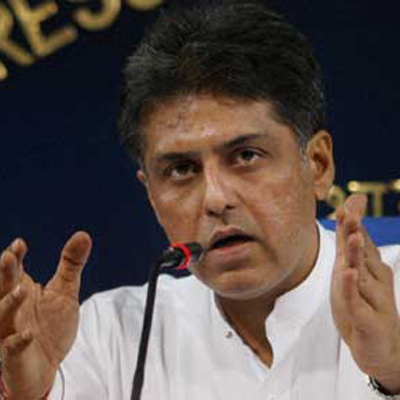
    NEW DELHI: Information and Broadcasting (I&B) Minister Manish Tewari today addressed the attendees of the fifth CEOs round table conference organised by the Confederation of Indian Industries today. He said that the television rating points rules are an attempt to make the process transparent, credible and accountable. At the same time, the endeavour was to address aberrations in the existing rating system.


    Tewari added that this initiative was based on the past recommendations of the Parliamentary Standing Committee for Information Technology, the Telecom Regulatory Authority of India (TRAI) and the Amit Mitra Committee.


    The Government had also been approached in the past by the industry stakeholders to rectify the existing flaws. The long term objective was an attempt to usher a system with defined rules within an existing framework.


    Meanwhile, he said the digitisation process during Phase III and IV would have to focus on the interest of the consumers in order to ensure that they were partners in the process rather than adversaries.


    For this purpose, the industry would have to run a focussed consumer awareness campaign, whereby the consumer would have to be sensitized about the benefits accruing from this process.
     

    Tewari said the campaign would have to focus on improved quality of viewing and related qualitative benefits accruing to the consumer as a result of the implementation process. The lessons of the implementation during Phase I and Phase II would also have to be taken into account while outlining the implementation roadmap for the remaining phases.


    For digitization to succeed, the industry would have to make efforts to ensure that the consumer was an integral component in the digitisation value chain. At the same time, the comprehensive approach would also ensure the emergence of viable business model for the industry.

    On the issue of monopolies in the cable TV sector, Tewari said that regulator had already made its recommendation and the issues involved were being examined by the Inter Ministerial Committee (IMC).


    The Minister also said that the regulatory framework ought to be stable and transparent for all stakeholders for the broadcasting sector to grow. This would ensure orderly growth for the sector in the long run

  • Noronha becomes DG of Field Publicity as I&B Ministry announces top-level changes

    Noronha becomes DG of Field Publicity as I&B Ministry announces top-level changes

    NEW DELHI: K Ganesan is being posted as the new director general of the Directorate of Advertising and Visual Publicity in the Information & Broadcasting (I&B) Ministry in place of G Mohanty, who has sought voluntary retirement.


    Mohan C Handak takes the place of Ganesan as press registrar as the Registrar of Newspapers in India (RNI).


    A P F Noronha will take place of Chandak as Director General of the Directorate of Field Publicity. Noronha was until now Director General (Media and Communications) in the Press Information Bureau (PIB) and also Officer on Special Duty in the Information & Broadcasting Ministry.


    All these officers are senior officers of the Indian Information Service.

  • TAM shareholder Kantar takes Indian govt to court on TV ratings guidelines

    TAM shareholder Kantar takes Indian govt to court on TV ratings guidelines

    MUMBAI: So Indian TV ratings agency TAM Media will not go down without a fight. At least if one goes by the action of one of its shareholders  Kantar Market Research Services. The latter approached the Delhi High Court on 20 January, filing a writ petition against the Union of India. The writ petition states that the government’s TV ratings agency registration regulations have put the existence of its venture TAM in jeopardy, and that too after it has been operating in India for more than 15 years.

    Diya Kapur, who appeared on behalf of Kantar – during the hearing today – appealed that TAM has been in the business for a very long time and the new guidelines on cross holding restrictions will mean that it will have to go out of business.

    Kantar Market Reserach Services Pvt Ltd, a shareholder of television rating agency TAM Media, was today directed by the Delhi High Court to file in a week an affidavit detailing its shareholding in any advertising/ broadcasting companies either directly or indirectly.


    A bench of justice Manmohan directed Kantar and its director Thomas Puliyel, who have challenged the guidelines for television rating agencies, to also mention “the Indian companies in which the petitoner (Kantar) holds shareholding.”

    High Court judge Justice Manmohan then asked Kantar to furnish documents relating to the shareholding pattern in TAM. “This would be in the form of an affidavit detailing its shareholding in any broadcasting firm/advertising agency, either directly or indirectly.The affidavit would also mention any other Indian company in which the petitioner holds any shareholding. It would also state that none of the aforesaid companies in which Kantar have shareholding in excess of 10 per cent has done business for any entity which was involved in any ratings exercise done by TAM. If that is not so, then the details of such instances shall be given,” the single member bench said.

    The court gave Kantar Media a week to come back with the documents and adjourned the hearing for 29 January.

    But already industry sources are questioning why did Kantar Market Research Services decide to approach the courts alone? Why did TAM Media not do so? And why did only one of the two shareholders seek legal redressal? Why wasn’t AC Nielsen also a party to the case against the Union of India?  These are questions to which indiantelevision.com has no answers to right now. But keep watching this space for further developments.

    Agencies and advertisers will be too. Various stakeholders – who need ratings to know how their money is being spent – have been urging TAM Media to take legal recourse as they are quite averse to a situation of a TV ratings dark period. But with now one of its stakeholders taking steps to try and remedy the situation, they have some hope.

    The ministry of information and broadcasting is quite clear that the course has been set and there is no going back. Speaking to indiantelevison.com MIB officials have been quite clear that they don’t want to be seen favouring anybody – especially TAM. “Industry and TAM have been given a long time to do course corrections on the ratings,” said a MIB official. “More than half a decade. Why did they not do so? Why complain now? In fact, we did not want a ratings blackout; based on industry feedback earlier – they had said BARC ratings would start rolling by March 2014 – we went easy on the TV ratings regulations and got government approval in mid-January 2014. TAM had 30 days to shape up; if it did not do so, then there would be a minimal rating blackout period, with BARC rolling out its ratings.”

    In fact, even as the Telecom Regulatory Authority of India (TRAI) had recommended a tranistion period of six months for TAM Media, the MIB had in its recommendations said zero days, but that was finally extended to 30 days by the Cabinet.

    The MIB has stated that it will take on any legal challenges, which are posed against the regulations.  Industry executives can expect some skirmishes ahead – at least in the courts.


  • MIB: Now on to DAS phase III & IV

    MIB: Now on to DAS phase III & IV

    MUMBAI: Within days of the Telecom Regulatory Authority of India (TRAI) giving out its fact sheet on how digital addressable system (DAS) phase I and II have progressed, the Ministry of Information and Broadcasting (MIB) directed all the stakeholders also known as  ‘the task force of digitisation’ to assess its progress and chart out a road map for the coming year.


    The meeting saw minister Manish Tewari, secretary Bimal Julka, additional secretary Supriya Sahu, leading MSOs such as Den CEO S N Sharma, The One Alliance president Rajesh Kaul, LCOs, News Broadcasting Association (NBA) secretary Annie Joseph, Indian Broadcasting Foundation (IBF) secretary Shailesh Shah and Tata Sky CEO Harit Nagpal. After speaking to everyone about the issues faced in DAS phases I and II and Sahu’s presentation on the value that digitisation was creating in the country, Tewari gave the go ahead to implement the next two phases.


    However this time it won’t be with two deadlines but rather a one stretch implementation across the remaining parts of the country with just one deadline of 31 December 2014. Although the ministry was of the opinion that two deadlines should exist, the TRAI had voiced its opinion in 2011 that phase III and IV could be achieved simultaneously.


    All the stakeholders brought out the issues they had faced in the first two phases to which the minister warned them to sort out their own problems internally or this would lead to a postponement of complete national digitisation – which would not bode well for the industry.  He also told everyone to keep working in coordination even now – and iron out any wrinkles or resolve all problems so that digitisation can progress further.


    Tewari said that the upcoming elections may slow down the process but digitisation is here for good and there’s no stopping it now.  The IBF and NBA have been asked to once again air promos highlighting the importance of digitisation.


    Now that the green signal has been given, all stakeholders can now attack the rest of the country without having any boundaries. But this is the toughest part as the issues they will face in the interiors will be much higher  and more difficult to resolve than metros and towns. Phase I and II saw nearly 25 million set top boxes being seeded while phase III and IV will see about 75 million more boxes being put in place.


    The minister has also assured support saying that the issues in the previous phases will be addressed as they move towards the next ones. 

  • MIB urges industry to buck up on implementing TV ratings

    MIB urges industry to buck up on implementing TV ratings

    NEW DELHI: There has been some hue and cry about the manner in which the Ministry of Information & Broadcasting (MIB) has apparently rushed to notify the latest policy guidelines for TV ratings. Following the notification, there have been fears that unless TAM goes to court and gets a stay order on the MIB’s guidelines, industry will most likely be without TV ratings for at least six to seven months. This is because Broadcast Audience Research Council (BARC) states that it will be ready to roll out its ratings only in the third or fourth quarter of 2014. 


    This has alarmed professionals such as Madison chairman Sam Balsara who has gone on record to state that the industry should plead with the Ministry to delay the implementation of the guidelines, and that the industry cannot do with a TV ratings-dark period. 


    MIB officials are pretty clear that this time it is for real. Says a senior Ministry official: “The entire TV ratings shouting match has been going on since 2007. Industry has been complaining that TAM’s methodology is flawed, and they have done nothing about it over the years. And the murmurings against it have been going on for more than a decade.” 


    He goes on to add, that MIB intervened only on the industry’s insistence and now the industry will have to drink its bitter dose of medicine, no matter what. 


    “We have given the industry and TAM enough time to rectify the situation and find an amicable authentic and reliable solution,” says another MIB official. “The Amit Mitra committee report indicated what needs to be done way back n 2010. Why wasn’t it followed and why were corrective steps not taken by TAM or the industry? TAM will have to follow the guidelines and register with us before 30 days are up, otherwise cease operating. We are not against individuals or companies; we are clear that a due process and the rules for TV ratings need to be followed so that transparency and credibility are associated with TV viewership ratings.” 


    In fact, another MIB official was quite critical of the industry-backed TV ratings body BARC too. 


    “It’s taken them three years to get here,” the senior official says. “First, BARC told us that the ratings will be up and running by June 2013, then they told us they would do so by March 2014, and now they are saying September or October 2014. This is simply not acceptable. We timed our rules and regulations based on the fact that BARC would be up by March 2014 and that industry would not have to be troubled by the absence of ratings.” 


    Another senior official appeals that the MIB cannot keep waiting forever for industry to get its act together. “The industry has been dragging its heels for a long time on the TV ratings issue. Now is the time for it to sprint to the finish line, and faster than ever before,” he says. The longer it takes to get its ratings going, the longer it will be without ratings.”


    The fact that TAM Media might challenge the Ministry’s notification in court has not disturbed the MIB at all. “If it goes to court, we will fight it tooth and nail,” says the MIB official. “Industry has to understand, the MIB means business. Let industry also be serious about its business.” 


    “It’s strange, isn’t it?” another official asks rhetorically with a smile on his face. “Industry complains when the ratings are there; they are complaining now that the ratings will not be there for some time. Let it realise that indeed there will be no ratings for a while and come up with a workable solution in their absence which works well for broadcasters, advertisers and agencies. The ball is in industry’s court now. ”

  • HC restricts TRAI from taking coercive action against Kalaignar TV

    HC restricts TRAI from taking coercive action against Kalaignar TV

    MUMBAI: Most of 2013 kept the industry preoccupied  with the 12 minute ad cap saga. After the Supreme Court passed a judgment that barred the Telecom Disputes Settlement Appellate Tribunal (TDSAT) from looking at appeals against the Telecom Regulatory Authority of India (TRAI) regulations, the appeals were then moved to the Delhi High Court.


    And the latter passed an interim order that forbade the TRAI from taking any coercive action against channels  that had appealed in the HC,  even if they did not adhere to the 12 minute per hour limit.


    Now, the Tamil GEC run by political party, DMK, Kalaignar TV has got a favourable order from the HC after it also appealed against the TRAI regulation. The HC has asked the regulator not to take any coercive action against the channel and has asked the latter to submit to it weekly ad duration data.


    In December, many channels had moved the court who were then given a hearing date of 13 March 2014. Kalaignar TV’s writ petition will also be heard along with the others on the same date. The channel was also a part of the list of appeals that had come up before the TDSAT but were told to move it to the Delhi HC after the SC judgement.  


    TRAI had passed a quality of service regulation for limiting advertising air time to 12 minutes per hour in mid-2013.

  • TRAI gives final deadlines for filling subscriber details in DAS Phase II cities

    TRAI gives final deadlines for filling subscriber details in DAS Phase II cities

    MUMBAI: The Telecom Regulatory Authority of India (TRAI) may have once again extended the rope for stakeholders of digitisation but with a warning that they would get no further extension. In a recently issued notice, fresh and “final” deadlines have been given out for entering the subscriber details in the subscriber management system (SMS) in DAS phase II cities.


    The regulator has already given two extensions of the deadlines earlier for collecting customer application forms (CAF) and entry of these details in the SMS. However, this comes as a warning from the regulator. It says that 23 cities (Rajkot, Surat, Vadodara, Faridabad, Mysore, Aurangabad, Nasik, Pimpri-Chinchwad, Pune, Sholapur, Amritsar, Ludhiana, Jaipur, Jodhpur, Agra, Allahabad, Ghaziabad, Kanpur, Lucknow, Meerut, Varanasi, Chandigarh and Howrah) have completed 90 per cent of the task and the MSOs in these cities have been ordered to cut off signals from 27 January to subscribers who haven’t given their CAFs.


    7 February is the last date for Bhopal, Indore and Jabalpur in Madhya Pradesh; while Vishakhapatnam and Srinagar have time till 28 February. However, state of Tamil Nadu and Hyderabad city have not been given any date due to litigation processes that are pending regarding DAS.


    Eight other cities (Patna, Ahmedabad, Ranchi, Bengaluru, Kalyan-Dombivali, Nagpur, Navi Mumbai and Thane) have been given 31 January as the last date. Subscribers have been requested to cooperate with the process and submit their CAFs, failing which MSOs will have to cut off signals to their TVs or will be in breach of law.


    MSOs will have to provide bills with exact breakup of charges and subscribers will have to insist for a bill and receipt or see blackout on their screens.


    Click here to read the full notice

  • High Court muzzles media against sexual harassment case against ex-judge

    High Court muzzles media against sexual harassment case against ex-judge

    NEW DELHI: In a directive that has not been taken kindly by the media, the Delhi High Court yesterday restrained the media from publishing and telecasting the contents of the law intern’s complaint of sexual harassment against former Supreme Court judge Justice Swatanter Kumar.


    Ordering deletion of alleged defamatory parts of the news items and the photograph of Justice Kumar within 24 hours, Justice Manmohan Singh, in his interim order, also asked the media not to carry the photographs of Justice Kumar, who is also the National Green Tribunal Chairperson in their future news reports.


    “The defendants number 1 to 5 (media houses and the law intern) are further restrained from telecasting and printing the photograph of the plaintiff (Justice Kumar),” the judge said while pronouncing the order in a packed court room.


    Interestingly, the Court order came a day after the Supreme Court issued notice to Justice Kumar on a petition filed by the law intern.


    The High Court also made it clear that its order will remain effective till 24 February, the next date of hearing, and issued notices to the woman intern, two English news channels, and a leading English daily.


    The court had earlier reserved its interim order on the plea of Justice Kumar seeking to restrain media from reporting, publishing or telecasting news relating to the law intern’s complaint against the judge, saying only court proceedings can be reported “nothing more, nothing less”.


    The plea had also sought a ban on repeat of the television programmes on the subject.

    Justice Kumar has also demanded Rs. 5 crore as damages from the law intern, who made the allegation against him, and three media groups that publicised her complaint.

    Senior advocate Mukul Rohatgi, appearing for the former judge, had said Justice Kumar has an “illustrious career spanning 43 years in the legal field as a lawyer and as a high court and the Supreme Court Judge and more over, his fundamental right of good name and reputation cannot be allowed to be blackened by the media.”


    The petition has also said, “pass a decree for damages in favour of the plaintiff and against defendant number 1 to 5 jointly and severally at least for an amount of Rs 5 crore only or for any higher amounts as this court may be pleased to determine…”

  • MIB issues order on guidelines for TV rating agencies

    MIB issues order on guidelines for TV rating agencies

    MUMBAI: The clock has started ticking as of yesterday, 16 January, when the Ministry of Information and Broadcasting (MIB) passed its order regarding TV rating guidelines. The ‘policy guidelines for television rating agencies in India’ have been issued by the Ministry after the cabinet approved it on 9 January.


    The guidelines will come into effect thirty days from the date of issuance of the order. Current rating agency TAM now has 29 days left to bring the guidelines into effect and comply with it.


    Attached below is the full annexure of the guidelines.


    Click here to read the annexure


    Await detailed report…


    Click here to read the earlier report

  • BARC updates the I&B ministry on its progress

    BARC updates the I&B ministry on its progress

    MUMBAI: The media industry went into a tizzy last week when the union cabinet accepted the Ministry of Information and Broadcasting (MIB)’s proposed regulatory framework for television rating agencies in India. 


    The most affected from this entire episode is the Broadcast Audience Research Council (BARC) as the pressure is building up on them to speed up the process and bring the new system for TV ratings in to place. 


    Hence, BARC board members met the MIB to present an update on the progress made so far. As per a highly placed source, the council members told the Ministry that the pilot testing has already begun. “There will be three-four phases of these testing sessions before the work officially starts.” 


    Elaborating the phases, the source remarks: “Firstly, the entire ratings system has to be tested how well the equipments work with the Indian technology and ecosystem. Secondly, we will have to see if all the elements are aligned properly. Thirdly, how accurate is the data collected; and lastly, the overall panel design.” 


    Another source reveals that the Ministry has been informed that the council will start signing contracts soon. “BARC is partnering with around six to seven tech organisations to complete the process,” the source claims.


    When asked about the Ministry’s reaction on the update, the council’s chairman of the technical committee Shashi Sinha says, “The Ministry is happy with the progress we are making and even we are happy with the way things are shaping up.”


    BARC has organised a press conference on 20 January in Mumbai to discuss further progress.