Category: Regulators

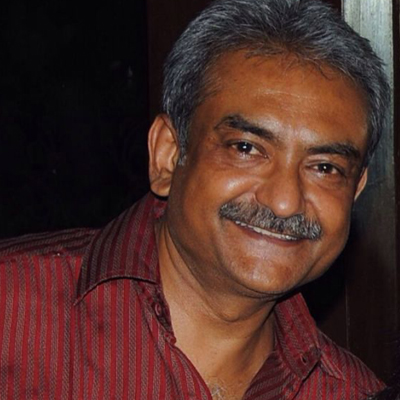
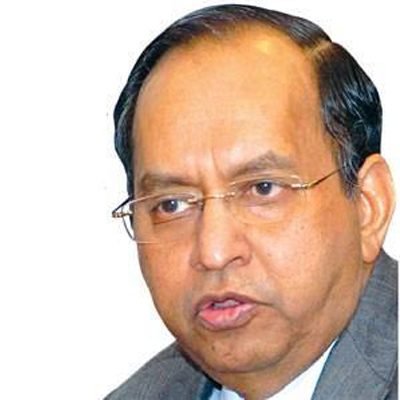
  • Former TRAI Chairman J.S. Sarma passes away

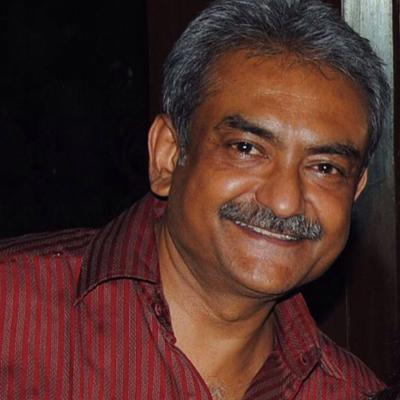
    Former TRAI Chairman J.S. Sarma passes away

    NEW DELHI: Senior Indian Administrative Service officer J S Sarma, who was a strong supporter of reforms in the telecom sector, has passed away.  


    Sarma also served as chairman of the Telecom Regulatory Authority of India (TRAI) from 14 May 2009 to 13 May 2012.


    Aged 65, Sarma passed away in Hyderabad on 28 February after a brief ailment.


    During his regime, mobile number portability was introduced, allowing customers to switch telecom operators without changing their mobile numbers. The per-second billing plan was also mandated during his tenure.


    During Sarma’s time at the helm of TRAI, the Supreme Court cancelled 122 2G licences and directed the regulator to recommend steps to auction the spectrum in the same manner as 3G airwaves were sold in 2010.


    A 1971 batch IAS officer from the Andhra Pradesh cadre, Sarma initiated the process to stop telecom operators from activating value-added services such as mobile internet and caller tunes without permission from the consumer.


    Although the direction was challenged by operators in court, Sarma’s successor and present Chairman Rahul Khullar implemented the regulation in July 2013 with a provision that entitles customers to refund of money deducted for value-added services provided without their permission.


    TRAI’s recommendations on ‘Spectrum Management and Licensing Framework’ in 2010 during Sarma’s tenure formed the basis of the new unified telecom licence regime under which spectrum was separated from permits. They also laid the ground for other telecom liberalisation measures such as spectrum auctions, sharing of airwaves and mergers and acquisitions.


    The TRAI’s recommendations for the 2G auction in 2012 drew criticism from the industry as the minimum price recommended by the regulator was a little above the rate companies paid for the 3G spectrum.


    But he retired before he could consider any amendments, six months before the auction was held in November 2012, attracting a poor response.


    Sarma was made a member of the Telecom Disputes Settlement and Appellate Tribunal in July 2008 and served as the Telecom Secretary before becoming TRAI chairman.


    Born in Vijayawada on 4 September 1948, Sarma graduated from Osmania University in 1966. He had an M. Tech degree in Applied Geology (1969) and a Doctorate in Public Enterprises (1982) from the University of Paris.


    He served at the centre first between the years 1977 and 1980 in the Defence and Chemicals & Fertilizers Ministries and returned to the centre in June 1997 when he was made Joint Secretary in the Rural Development Ministry till October 2002; Additional Secretary, Department of Personnel and later in the Department of Telecommunications between October 2002 and November 2004; Secretary, Department of Telecommunications and Chairman, Telecom Commission from June, 2005 to July 2006; and Secretary, Department of Fertilizers from July, 2006 to July, 2008.


    He also served in Andhra Pradesh in the Districts of Kurnool, Prakasam, Cuddapah, Guntur, and as Collector and District Magistrate, Chittoor. He held the posts of Managing Director of the Oilseeds Growers’ Federation, Commissioner of Municipal Corporation of Hyderabad, Commissioner of Land Reforms and Urban Land Ceilings, and Secretary in the Departments of Labour, Education and Planning.
  • TRAI plea in SC for raising pay channel tariff cap

    TRAI plea in SC for raising pay channel tariff cap

    MUMBAI: The Telecom Regulatory Authority of India (TRAI) has petitioned the Supreme Court to allow it to raise the ceiling on tariff for pay channels distributed in non-addressable areas.


    The tariff for pay channels in areas where cable TV is distributed through analogue technology has remained capped at the pre-2009 rates, following a direction by the Supreme Court in March 2009 for maintenance of status quo.


    TRAI says there is a need for reviewing the ceiling to adjust the tariff for pay channels in non-addressable areas for inflation.


    The court is likely to hear the TRAI plea towards the end of March.


    TRAI in its appeal to the SC says, “The present tariff was based on the figures of 2009 and the appellant is of the view that an across the board adjustments be provided in respect of tariff to compensate for increased costs on account of inflation.”


    The TRAI had amended the tariff order of 2007 by providing for a 7 per cent increase on account of inflation effective from the year 2009.


    TRAI says, “The authority since then has not been able to revise the tariff for non-addressable systems, even though more than five years have passed.”


    Before 2009, the tariff orders were amended periodically, thereby providing for adjustments for inflation.  No such exercise has been undertaken after 2009.


    The TRAI through its appeal has informed the Supreme Court that it had in its ‘Recommendations on Issues relating to Broadcasters and Distribution of TV Channels’ provided for a provision to periodically review the ceiling on tariff to make adjustments for inflation.


    “According to the Ministry of Commerce and Industry, a substantial increase in the price has taken place and the ceiling thus needs to be reviewed immediately,” reads TRAI’s appeal to the SC, a copy of which is with Indiantelevision.com.


    According to the current tariff ceiling, the subscriber for up to 20 pay channels and minimum 30 free to air (FTA) channels in A1 and A class cities has to pay not more than Rs 160, in B1 and B class cities not exceeding Rs 140 and in other areas not more than Rs 130.


    Likewise for more than 20 and up to 30 pay channels and minimum 30 FTA channels, the subscriber in A1 and A class cities has to pay not more than Rs 200, in B1 and B class cities not exceeding Rs 170 and in other areas not more than Rs 160.


    For viewing more than 30 and up to 45 pay channels, the subscriber as per the tariff has to pay not exceeding Rs 235 in A1 and A class cities, Rs 200 in B1 and B class cities and not exceeding Rs 185 in other cities.


    Also for viewing more than 45 pay channels and minimum 30 FTA channels, subscribers, according to the current ceiling on tariff, has to pay not more than Rs 260 in A1 and A class cities, Rs 220 in B1 and B class cities and Rs 200 in other cities.


    While the broadcasters would welcome over the appeal by TRAI, but cable operators feel the subscription charges for consumers in non-addressable areas will rise by as much as 36 per cent if the ceiling is approved.

  • Implementation of first two phases of cable TV digitisation has taught valuable lessons: Tewari

    Implementation of first two phases of cable TV digitisation has taught valuable lessons: Tewari

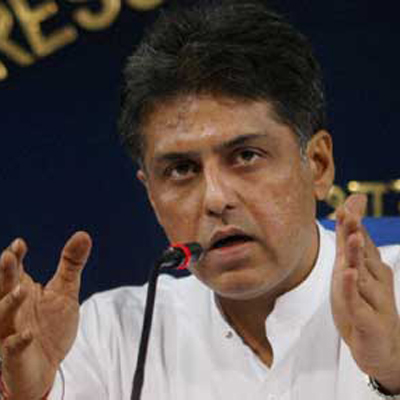
    NEW DELHI: Information and Broadcasting Minister Manish Tewari has said the first two phases of digitisation of cable television provided a learning experience as far as implementation of the process was concerned.


    Speaking at the 8th Indian Magazine Congress in the capital on the theme “Winning through Innovation”, he said these lessons would be incorporated while implementing the remaining two phases. The Minister reiterated that Digitisation was bound to be a game changer for the sector and would define contours of orderly growth.


    While providing qualitative choices to the consumer, digitisation would also ensure that the subscription revenues and skewed business models are rectified. The Government has already decided to merge phases III and IV and complete the entire process by December this year.


    While the first phase of digitisation covering the four metros had come into effect from November 2012 (though it was stayed in Chennai following a court order and was implemented marginally in Kolkata after initial reluctance), the second phase covering 39 cities was implemented by 31 March 2013.


    The Government is still considering the proposal to merge Phase III covering all urban areas (Municipal Corporations/Municipalities) and Phase IV covering rest of India to 31 December 2014. The present dates for these two phases are 30 September 2014 and 31 December 2014 respectively.


    Ministry sources told indiantelevision.com that if the government achieves its target, it will overtake countries like the United States and the United Kingdom which set long deadlines.

  • Filmmakers in India and Canada to explore co-productions

    Filmmakers in India and Canada to explore co-productions

    NEW DELHI: Filmmakers in India and Canada are expected to benefit in pooling their creative, artistic, technical, financial and marketing resources for the co-production in the years to come.


    This follows the signing of an India and Canada Audio-Visual Co-Production Agreement that will enable Indian and Canadian film producers to utilise a platform for collaboration on various facets of film making.


    The agreement is expected to lead to the transparent funding of Film Production and will boost export of Indian Films into the Canadian Market.


    The agreement is expected to deepen the engagement between the critical sectors of the film industries of both countries there by providing a new chapter of collaboration. The agreement was signed by Information and Broadcasting Ministry Secretary Bimal Julka and Canadian High Commissioner to India Stewart Beck.


    The agreement will also lead to exchange of art and culture among the two countries and create goodwill and better understanding among the people of both the countries which will boost cultural ties between the two countries.


    The agreement will provide an opportunity to create and showcase India’s ‘Soft Power’ and lead to employment generation among artistic, technical and non-technical human resources engaged in the film production including post-production and its marketing.


    Since the agreement is expected to boost the utilisation of Indian locales for shooting, it will increase the visibility/prospects of India as a preferred film shooting destination across the globe and will lead to the inflow of Foreign Exchange into the country.


    In the past, similar agreements have been signed with Italy and the United Kingdom in 2005, Germany and Brazil in 2007, France in 2010, New Zealand in 2011, and Poland and Spain in 2012.


    The co-production agreements signed so far seek to achieve economic, cultural and diplomatic goals. For filmmakers, the key attraction of a treaty co-production is that it qualifies as a national production in each of the partner nations and can access benefits that are available to the local film and television industry in each country. Benefits accruing from such agreements include government financial assistance, tax concessions and inclusion in domestic television broadcast quotas.


    India’s co-production agreements are unique for international producers as the country offers technically qualified film crew at reasonable rates, a large pool of talented actors and the multitude of shooting locations. The other benefits are that the co production is treated at par as a national film and is eligible for the National Film Awards and the Indian Panorama section of International Film Festival of India. Such films also get the opportunity to be released through the Indian distribution network, and hence co production opens up the Indian consumer market to the foreign producer.

  • TRAI recommendation on Migration from Phase II to Phase III

    TRAI recommendation on Migration from Phase II to Phase III

    MUMBAI: Telecom Regulatory Authority of India (TRAI) issued its recommendation for the much awaited ‘Migration of FM Radio Broadcasters from Phase II to Phase III’ on 20 January.  In Phase III, an additional 839 channels across 294 cities will be made available for auction.


    TRAI has recommended that minimum channel spacing of 400 KHz for FM Radio broadcast issued on 19 April 2012 will come into effect as it would help in increasing the number of FM channels in each city for auction.  Secondly, it has recommended the period of permission for the existing operators, who migrate from Phase-II to Phase-III, should be 15 years from the date of migration.


    The other point that will be of concern for most players is the cut-off date. As per the recommendation, the cut-off date for the existing FM Radio operators is to be fixed by the Ministry of Information and Broadcasting (MIB), after the completion of auction process for Phase-III of FM Radio. It also stated that the cut-off date for the same should not be later than 31 March 2015. TRAI recommended that an explicit provision needs to be incorporated in the Notice for Inviting Applications (NIA) to permit an existing Phase-II operator to bid for an additional channel (frequency) in existing cities, where it already has an operational FM channel. This is subject to the condition that if it is able to win another channel in the existing city, then it will have to move all existing channel(s) to Phase-III on such terms and conditions as may be prescribed by MIB.


    For the migration fee, cities have been categorised into three groups X, Y and Z. TRAI recommends that the migration fee for Group X cities (17 cities where no frequencies are available for auction) should be higher than – Phase-II average bid of the target Group X city multiplied by a factor of 1.5 or Phase-II highest bid of the target Group X city increased by the average increase in auction prices in Group Z cities (vis-?-vis their reserve prices) in the same category in Phase-III. 


    The fee for Group Y cities (26 cities where 1/3rd or less of the total frequencies are available for auction), should be higher than Phase-II average bid of the target Group Y city multiplied by a factor of 1.5; or Phase-II highest bid of the target Group Y 

  • Govt says TV industry to be Rs 50,140 crore in 2014

    Govt says TV industry to be Rs 50,140 crore in 2014

    NEW DELHI: With the general elections coming closer, the government is ensuring that the public becomes aware of the good work it has done in the 10 years of its regime. One of the departments flaunting its feat is the Ministry of Information and Broadcasting (MIB) that issued a statement today which claimed a paradigm shift in information dissemination and policy measures which has led to a vibrant information order in the last ten years.


    The Ministry says that with the growth of television channels from 130 in 2004 to 788 in 2014, India has become the third largest TV market with close to 154 million TV households, next to China and the United States. At the same time, the size of the TV industry has witnessed an exponential growth as well. The value of the TV industry is valued at Rs 50,140 crore in 2014 from Rs 18,300 crore in 2006.


    MIB says that the initiatives undertaken by it enabled the discourse of ‘India Story’ to be disseminated across different platforms. It also aimed at providing quality information to the masses, thereby ensuring that the inclusive growth perspective is spread. 


    The Ministry also claims to have pursued policies in order to utilise the benefits of technology and ensure that a framework is built enabling growth and change for the broadcasting landscape in the country. It says that the digitisation process has brought transparency in the system with 30 million STBs being installed in the first two phases.


    Some of the highlights of the decade have been the implementation of various guidelines including policy guidelines for uplinking and downlinking of TV channels (amended in 2011), policy guidelines for HITS broadcasting services (2009), policy guidelines for IPTV (2008), Revision of FDI Policy in five segments of broadcasting sector (2012), policy guidelines for TV rating agencies in India (2014) and policy guidelines on direct to home services (2001).

    In the film sector, the panel under the Chairmanship of Punjab and Haryana High Court retired Chief Justice Mukul Mudgal examined issues of certification under the Cinematograph Act 1952. The Committee reviewed major areas of concern pertaining to Advisory Panels; Guidelines for certification and issues such as portrayal of women, obscenity and communal disharmony; Classification of Films; Treatment of Piracy; Jurisdiction of the Appellate Tribunal; Review of the provisions of the Cinematograph Act, 1952.The committee has recently submitted its report which is being reviewed by the Ministry. 

    One of the key highlights of the film sector has been the National Museum of Indian Cinema (NMIC) showcasing India’s rich film heritage over the past 100 years. The Museum is situated in the 6,000 square-foot Gulshan Mahal – a heritage building. The museum is a ready-reckoner of the history of Indian cinema showcasing technological aspects of production and screening of films, as well as its social aspects during the past 100 years. Through its interactive galleries, it traces the evolution of celluloid from the Lumiere Brothers, Raja Harishchandra onwards, and showcases Indian cinema in three stages – silent era, golden era and the modern era.

  • I&B Ministry makes senior-level transfers of Indian Information Service Officers in media units

    I&B Ministry makes senior-level transfers of Indian Information Service Officers in media units

    NEW DELHI: As part of several senior-level transfers in the media units of the Information and Broadcasting Ministry (I&B Ministry), Indian Information Service officer of the 1993 batch R C Joshi has been transferred as Director in the Directorate of Advertising and Visual Publicity.


    Joshi replaces Y K Baweja who is being moved to take his position as director (Media and Communications) in the Press Information Bureau (PIB).


    Chitra Gupta, who is currently assistant director (Media and Communications) at PIB in Guwahati, will join as assistant director in DAVP in Kolkata. Additionally, she will also hold charge of Doordarshan Kendra in Kolkata.


    S Mathias, who is presently additional director general (news) in the News Services Division of All India Radio, will also work on ‘loan basis’ for Doordarshan News till further orders.


     M S Rajnikanth, who is currently deputy director (News) in Doordarshan News in Delhi is being moved to Bangalore as director (M & C) in PIB.


    A K Srivastava, on repatriation from the deputation post as comptroller and auditor general will move as deputy director in the Indian Institute of Mass Communications as assistant professor.


    Pragya Paliwal Gaur, director under order of posting after her services were surrendered by the Health Ministry, will move as Director (M&C) in PIB.


    Vijay Kumar, who is presently director (M&C) in PIB Patna, is moving as director in the Publications Division in Delhi.


    H Rehman and K K Pant, both deputy director (M&C) in PIB, Delhi, are being moved as deputy director DPR (Defence) and deputy director (News) in DD News in Delhi respectively.  


    Pravin Kavi, assistant director (News) in All India Radio in Lucknow is to take Rehman’s place in PIB.


    N C Juyal, assistant director (News) in DD News, will be the assistant director (M&C) in PIB.

  • A wrong to correct a wrong

    A wrong to correct a wrong

    MUMBAI: If you look back a few years it was the MSOs who were arm twisting the Broadcasters and carriage subsidies shot up to an estimate of about 1800-2000 crores so it was but obvious that the broadcasters had to resort to some countervailing power and adopted the age old saying of ‘in unity there is strength’ to fight back. Hence, the mergers and partnerships to create the Aggregator now termed the Aggressor!


    But the battle here is not between the MSO and the Broadcaster. Unfortunately, both have been caught in a situation and a created one at that. Both are responsible for this situation. The Broadcaster wanted distribution beyond available bandwidth, the MSO but naturally driven by common supply – demand market dynamics fleeced exorbitant carriage fees. To demand higher shares of which he started grabbing more territory. For doing so he gave significant concessions towards the subscription collections. Soon it reached a stage that they began to subsist on this easy money and forgot about the upward flow of subscriptions. So, the broadcasters were giving and getting back their own monies and plus or minus a little depending on the so called legacy of the channels rather than any rationale of popularity. That is where the business model started floundering. It’s not that the subscriber was getting a free view. Sure 20,000 + crore was getting collected and of course most of it in cash.


    So, where did all this money go? And why are both the Broadcasters and MSOs bleeding. One has to examine the value chain and leakages in the upward flow. The interface to the customer is the LCO/LMO the one who is making the collections. A reasonable share of this will need to flow upward to the broadcasters. Content too with all the competition is only getting more expensive especially with international formats and Bollywood hosts.


    How much should be a fair share is secondary. First, one needs to ensure that there actually is a streamlined reverse flow. The bottlenecks and leakages lie in the value chain and systems created by both the MSO and the broadcasters. In addition to the MSO in the middle between the LCO/LMO at one end and the Broadcaster at the other end, there are at least three more middlemen in the current system that prevails. The agent aggregator, their dealers and the distributor/JV partner of the MSOs. The money the consumer pays goes through five hands before what’s left will eventually reach the broadcaster. Obviously there are not one but two too many middlemen and this is where the ecosystem needs change.


    Now in all of this, how’s the consumer or subscriber faring? We are the cheapest cable market in the world and honestly without an iota of debate our consumers have been spoilt. For three to five dollars a month subscription, we get the most premium of content. (Given the way our rupee is depreciating we’ll soon be down to $2 subscriptions!) And for that an abundance of choice with half a dozen channels per genre. Live sports of pretty much every event around the world and movies within two months of theatrical release.


    Wow! Even if the Govt. is floundering in providing Roti, Kapda aur Makaan nobody is complaining about the 4th essential – Entertainment. Sure everyone’s complaining about the cost of electricity and fuel and multiple taxes but no one’s saying cut off my cable!


    Fortunately, we are also the 2nd largest cable and satellite market in the world and so can provide affordable entertainment and the best there is to offer. There’s enough to go around for legitimate stake holders we just need to get the business model right. Imbalances will correct themselves over time.


    As to the regulator and regulation, digital addressable system (DAS) is great, but for now let’s just focus on getting the boxes. Let it just be an exercise in technological evolution. Enjoy the digital experience and abundance of choice. We are a privileged lot. Trying to introduce addressability and ‘pay for what you want’ is only going to increase the consumer’s monthly outflow or severely restrict choice. When DAS gets to that stage of choosing and billing, it is not going to be a populist regulation.


    So Mr Khullar Sir, the aggregator has been disarmed (agent regulation), the MSO reigned in (max 50 per cent of state control) and the broadcaster chastised (12-minute ad cap). The LCO is still trying to figure out how by merely putting a box, the MSO claims the home whereas he’s the guy who has been upgrading the cables and amplifiers for over two decades. Let’s not add a confused customer to this. He’s happy leave him alone for now. Let the market dynamics come into play and let it all settle for a while. Average Revenue Per User (ARPUs) will increase but not at the cost of denying the consumer what he is already used to. Niche content, value added services and TV on the go are new revenue streams and customers will be willing to pay more for these. Affordable internet access is the key to this next phase of growth wherein traditional media and what we call new media need to converge. What will certainly be interesting is to see who will be the players here to emerge.


    (The author is a media observor and consultant, and the views expressed are his own.)

  • Kantar gets stay on cross-shareholding norms; TAM can continue publishing viewership ratings

    Kantar gets stay on cross-shareholding norms; TAM can continue publishing viewership ratings

    NEW DELHI: While declining to stay Policy Guidelines for Television Rating Agencies in India, the Delhi High Court today directed that the sections relating to cross-holding will not come into force till the conclusion of the petition by Kantar Market Research Services, a shareholder of TAM Media Research, the only television viewership rating agency in India.


    Fixing the next date of hearing for 6 March, Justice Manmohan also stayed sections 16.1 and 16.2 of the Guidelines, thus giving freedom to TAM to continue offering its ratings to its clients.


    Taking note of the undertaking by Mr Mukul Rohatgi, senior counsel for Kantar, the Court said TAM would get another two weeks to get registered as required by the Policy Guidelines.

    The Court also took note of the undertaking by Rohatgi that the full list of companies that are associated with TAM and their clients will be placed on the website within two weeks.


    The sections relating to cross-holding which state that the same company cannot hold shares in both TRP companies and the media are 1.7a and 1.7d.


    The earlier deadline for TAM Media Research to get registered under the Policy Guidelines was 15 February.


    When Rohatgi insisted on a stay of the policy guidelines till conclusion of this case, Justice Manmohan and Additional Solicitor General Rajeev Mehra said senior counsel Harish Salve who had argued on behalf of Kantar yesterday had made it clear that he was only fighting the issue of cross-shareholding. In fact, Justice Manmohan said Salve repeated this point at least five times.


    Rohatgi had sought to reiterate the point made by Salve that the policy guidelines had been issued through an executive action without any statutory authority of law.


    While Rohatgi filed an affidavit today listing companies that have a holding in Kantar, he assured the Judge that the list of clients would also be place shortly on the website and filed in the court.


    In his order, the Judge took note of the fact that both Salve and Rohatgi have argued that the guidelines are without the sanction of any statutory body.

    Kantar had argued yesterday that any action relating to fundamental rights had to be done through an act of Parliament and not by an executive order.

    Salve had said any attempt to regulate television rating agencies was tantamount to interfering with the freedom of speech and expression under Article 19(1)(a).


    The provisions of Policy Guidelines for Television Rating Agencies in India that have been stayed are:
     
    1.7 The company shall comply with the following cross holdings requirements.
     
     (a) No single company/ legal entity, either directly or through its associates or inter-connected undertakings, shall have substantial equity holding in rating agencies and broadcasters/advertisers/ advertising agencies.
     
     (d) A promoter company/member of the board of directors of the rating agency cannot have stakes in any broadcaster/ advertiser/advertising agency either directly or through its associates or inter-connected undertakings.
     
    16. PROVISIONS WITH RESPECT TO EXISTING RATING AGENCIES
     
    16.1 These guidelines shall also be applicable to the existing rating agencies.
     
    16.2 No rating agency shall generate and publish ratings till such time that they comply with the provisions of these guidelines.

  • TRAI’s toothless content aggregator regulations

    TRAI’s toothless content aggregator regulations

    The Telecom Regulaotry Auhtority of India  (TRAI) was right in both identifying and bringing in new regulation in an attempt to curb content aggregator aggression (read: broadcaster aggression). However, the restrictions are very minimal and on the face of it, they don’t seem to have too much teeth. Aggregators can get renamed as Agents but will TRAI’s effort at redoing and notifying regulations for them really act as an agent of change?


    There is no restriction on the ownership of agent companies or how many broadcasters they can represent. (Will need to be addressed in issue of cross media.) Broadcasters belonging to the same group can bundle channels. For the immediate future it is more likely to lead to a futile exercise in splitting existing contracts and  and overtime and consulting fees for the guys in black suits (read: lawyers).


    Already agreed terms including carrying weak channels and desired packages are the tradeoffs by which the DPOs negotiate to their advantage, so contrary to TRAI’s belief that they add to unwanted costs, they actually subsidize the DPOs costs – whether for carriage, packaging or for a preferred LCN.


    Restricting multi-broadcaster packages is not important. What is important are the DPO’s packages which are what subscribers eventually subscribe to. As mentioned, these are negotiation tradeoffs.


    In any case most of the channel pricing and bouquets evolved arbitrarily at a time when there were already existing TRAI restrictions on a-la-carte, bouquets, price freeze on existing channels etc and very often broadcasters introduced highly priced new channels to offset the freeze on existing channels pricing. Even internal allocations between various broadcasters within an aggregator skewed rationale on pricing.


    The new regulations have not addressed many potent issues which have been plaguing the business and continue to beg solutions. For starters, let us understand that the entity signing the RIO is of little consequence to the consumer.  Where are the guidelines for DPOs to price to consumers? Should the retail pricing be determined by the DPO or Broadcaster and who should communicate this to the consumer?  Same goes for the packages. Is the DPO the real content aggregator buying in wholesale and then retailing to consumers or is he merely offering his delivery infrastructure and payment gateway for a commission?  What is the business model TRAI envisages? Is it going to continue as a B2B or should there be complete transparency to consumer in a B2C approach? 


    Third party channels within aggregator/agent will be most likely impacted. The Stars and Zees are big enough bouquets by themselves, same goes for the TV18/Viacom18 group channels. (Presuming 50 per cent ownership qualifies to label a broadcaster a Group Company!). Yes, Sony and Discovery channels on paper need to be split but their distribution venture has survived many long years and they can resolve any internal issues without upsetting present equations.


    The onus is now on the various DPOs – whether DTH or MSO – to leverage the only real advantage and actually negotiate separately for each of the various broadcasters’ bouquets. Some positive effect of this is likely but it would take a while for the dynamics of negotiations to change. For now it will more likely be just a paper tiger.


    All of this makes sense only if the end objective of DAS is achieved: which is individual consumer choice and billing. For now it seems to be stuck in a farcical CAF exercise. No one has really asked the consumer if he is happy paying his 150-200 bucks (ARPU) and wants to continue having his unlimited thali and buffet! And if one were to do the maths on this basis for current pay TV homes and allocate say 40 per cent to content- well, everyone’s happy!


    (The author is a media observor and consultant, and the views expressed are his own.)