Category: Regulators

  • TRAI defreezes tariff ceiling in analogue cable TV areas

    TRAI defreezes tariff ceiling in analogue cable TV areas

    MUMBAI: The Telecom Regulatory Authority of India (TRAI) has revised the tariff ceilings for the non-addressable cable TV areas. The authority has allowed an overall 27.5 per cent inflation linked hike in the tariff ceilings. The announcement was made through a notification of the Tariff Order namely the ‘Telecommunication (Broadcasting and Cable) Services (Second) Tariff (Eleventh Amendment) Order, 2014’.


    The rise is based on the hike in the wholesale price index (WPI) over the past five years. “The Authority has come to a conclusion that an overall 27.5 per cent inflation hike is allowed. However, it is also of the view that a hike to the tune of 27.5 per cent in a single go would not be appropriate for the market and the consumer to adjust to. Therefore the Authority has prescribed this hike to be implemented in two installments,” says the TRAI release.


    While the first installment is of 15 per cent will be effective from 1 April 2014, the second installment for the remaining inflation linked increase will be effective from 1 January 2015. “This will give enough and reasonable time to all the stakeholders to adjust to these hikes,” says the release.


    Click here for the full notification

  • I&B asks IPTV operators to file self-declaration

    I&B asks IPTV operators to file self-declaration

    NEW DELHI: Operators of the Internet Protocol Television (IPTV) have been asked by the Information ad Broadcasting Ministry (I&B) to send a self-certified declaration to the Ministry, the Department of Telecommunication and the Telecom Regulatory Authority of India (TRAI) giving details as required.


     The declaration to be sent by 30 March should cover issues like license or registration under which IPTV service is proposed, the launch date, the area being covered and the details of the network infrastructure amongst others.


     The Ministry said the policy guidelines for IPTV issued in 2008 had in Clause (ii) provided that all telecom licensees or cable operators will have to give the self-declaration before providing IPTV.


    In compliance to this clause, this Ministry has already formulated a self certified declaration and placed it on the Ministry’s website mib.nic.in.


    According to this self declaration form, IPTV service providers will need to  give a declaration that they shall abide by all the conditions contained in the guidelines for provisioning of IPTV services and any future amendments, directions, orders and regulations that the Central Government or the TRAI may lay down.

  • MIB issues advisory to Colors for ‘Bigg Boss 7’

    MIB issues advisory to Colors for ‘Bigg Boss 7’

    NEW DELHI: The Information and Broadcasting Ministry (MIB) has issued an advisory to the general entertainment channel (GEC) Colors in connection with ‘Bigg Boss Season 7’ and a warning to Amrita TV for telecasting ‘Adults only’ certified film ‘The Don’.


    In the case of Colors, the Ministry has said that certain scenes of the series which commenced on 15 September last year ‘offended good taste and decency. The participants in the show used abusive and vulgar words with sexual overtones. The content also denigrated women. The programme even contained some potentially horrific and hazardous visuals which could be imitated by impressionable minds of children and it was not suitable for children and for unrestricted public exhibition.’


     It took note of an order that the Jammu and Kashmir High Court had on 24 September passed, in which it had asked the Ministry to examine the content of the series to ascertain if it was fit for telecast at 9.00 pm or after 11.00 pm.


     The Ministry had issued a show cause notice on 8 October to Colors in which it was brought out that prima facie Rule 6 (1) (a), (d), (k), (o) & Rule 6(5) of Programme Code contained in the Cable Television Networks Rules, 1994 appeared to have been violated by the channel.


     Colors had later in a letter dated 23 October told the I&B that it had not violated any provision of the Cable Television Network Rules 1994 and that ‘Bigg Boss’ was a reality show containing unscripted situations and actual occurrences between a group of people who live in a closed environment away from all external influences; this format was widely appreciated; and the show had been running successfully on Colors from the year 2008.


     The Inter-Ministerial Committee on 5 December also gave personal hearing that was accorded to the channel.


    Referring to an electric shock episode on 2 October, it was stated that this was part of various tasks that were intended to test the physical and mental strength of the participants.


     One particular housemate was assigned a task wherein she was to sit on a specific chair and bear a mild electric shock ‘to which she had voluntarily agreed’, and all the tasks assigned to the inmates of the house are pre-tested by the production team under strict supervision and controlled condition. The intensity of electric shock was very minimal since it was only of 15 volts.


    The Committee concluded that there was a need to depict some scenes carefully as the same could be risky and could be imitated by children. Thus, the channel should be careful with regard to content to be telecast on the channel keeping in view the fact that TV has a very wide reach and can create long lasting impression on the minds of viewers, particularly the children.


    The Ministry said the competent authority had come to the conclusion that though there was no grave violation of any provision of the Programme Code, care and caution was needed to be exercised by the channel while telecasting such nature of content within the framework laid down by the Cable Act and Rules. The channel should also ensure that the programme is suitable for unrestricted public exhibition and bear in mind the impression it could leave on the minds of children.


     Colors was therefore advised to adhere to the Programme and Advertising Codes and to be careful with regard to content to be telecast on the channel. “Strict compliance with the above direction should be ensured by the channel. Any violation shall entail such action against the channel as deemed fit in accordance with the Cable Television Network (Regulation) Act 1995 and the Rules framed there under as also the terms and conditions of the permission or approval granted under uplinking/downlinking guidelines,” the MIB said.


     Meanwhile, the Ministry has also warned Amrita TV to strictly adhere to the programme code prescribed under the 1995 Act and said any further violation may entail such action against the channel as deemed fit in accordance with the Act.


     The channel had telecast the film on 3 June 2012. A show cause notice had been issued to the channel on 28 May last year to the effect that ‘Rule 6(1)(o) of the programme code provides that no programme should be carried in the cable service, which is not suitable for unrestricted public exhibition. The Rule 6(1)(n) provides that no programme should be carried in the cable service, which contravenes the provisions of the Cinematograph Act 1952. Further, it stated that programmes unsuitable for children must not be carried at times when the largest number of children are watching.


    The channel had in its reply in June last year apologised and undertook that such incidents shall not be repeated in future. It said the film was shown erroneously and regretted the oversight. The channel claimed that when the agreement for this feature film was signed in 2006, it was not very conversant with the complexity of film protocols. The channel also claimed that it had edited out all the adult content in the film.


    The Inter-Ministerial Committee has therefore decided to let off the channel with a warning and expressed the hope that there will be no further violation of the Programme or Advertising Codes.

  • I &B Ministry asks broadcasters to update contact information

    I &B Ministry asks broadcasters to update contact information

    NEW DELHI: The Information & Broadcasting Ministry (I&B) has asked the broadcasters and teleport operators to provide full details relating to the companies operating them. The stakeholders will need to furnish the report by March end.


    The I&B has pointed out that it is the responsibility of the company to intimate any changes to the Ministry promptly.


    In a letter sent to all the television channels and teleport operators, the Ministry has asked among other things for contact details of the company including the registered address, any additional address, e-mail IDs, telephone and fax numbers.


    In addition, the channels and teleports have been asked to supply the name of the authorised representative with his/her e-mail ID and mobile number.

  • Broadband usage sees 3.09% increase for the period Dec-Jan

    Broadband usage sees 3.09% increase for the period Dec-Jan

    NEW DELHI: There were 56.9 million broadband subscribers in the country at the end of January 2014, showing an increase of 3.09 per cent as compared to the previous month.


    The total broadband (>512 Kbps) usage is based on the information provided to the Telecom Regulatory Authority of India (TRAI) by 144 broadband service providers.


    The top five broadband service providers constitute 82.57 per cent market share of total broadband subscribers. They are BSNL (16.54 million), Bharti (11.49 million), Reliance (7.07 million), Idea (6.26 million) and Vodafone (5.63 million).


     The top five Wired Broadband Service providers are BSNL (9.98 million), Bharti (1.39 million), MTNL (1.11 million), Hathway Cable (0.36 million) and Beam Telecom (0.36 million). The top five Wireless Broadband Service providers are Bharti (10.10 million), Reliance (6.96 million), BSNL (6.56 million), Idea (6.26 Million) and Vodafone (5.63 million).


     There has been a 0.08 per cent increase between December and January in the wired broadband segment to 14.55 million, while the wireless segment (mobiles and dongles) have shown a rise of 4.2 per cent in the same period with 41.05 million subscribers. There has been an increase of 1.66 per cent in this period to 0.4 million subscribers for Wi-Fi, Wi-Max, Point-to-Point Radio and VSAT


  • Ad cap hearing adjourned to 6 May

    Ad cap hearing adjourned to 6 May

    NEW DELHI: Even as the stay on implementation of ad cap continues, the Delhi High Court adjourned the hearing of the petition of News Broadcasters Association (NBA) and other channels to 6 May as the NBA wanted more time to file a rejoinder to the reply by the government.


    Acting Chief Justice B.D. Ahmed and Justice Siddharth Mridul gave the order after the plea by NBA Senior Council NK Kaul seeking adjournment.


    The petitions have been filed by NBA, Sarthak Entertainment, Pioneer Channel Factory Pvt Ltd, E24 Glamoru Ltd, Sun TV Network Ltd, TV Vision Ltd, B4U Broadband, 9X Media Pvt Ltd, Kalaignar Pvt Ltd, Celebrities Management Pvt Ltd, Eanadu Television Pvt Ltd and Raj Television Pvt Ltd.


    The Senior Counsel for Telecom Regulatory Authority of India (TRAI), Saket Singh sought to intervene to seek early hearing, but the Court said the matter will come up for hearing only in May.


  • “Broadcasters still haven’t got the benefit of digitisation”

    “Broadcasters still haven’t got the benefit of digitisation”

    MUMBAI: It’s been a chaotic couple of years for the media and entertainment industry marked by a lack of clarity – be it digitisation, ad cap or other regulations.


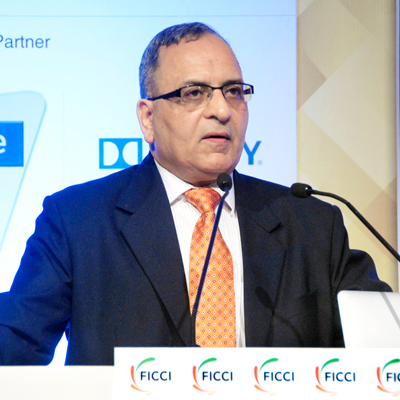
    Not surprisingly, this was the subject of a panel discussion on day one of FICCI FRAMES 2014, the 15th chapter of the annual convention.


    The panel – comprising Star India CEO Uday Shankar; Viacom18 Group CEO Sudhanshu Vats; FCC commissioner Ajit Pai; MIB secretary Bimal Julka; and Discovery Networks Asia-Pacific senior VP and general manager South Asia and head of revenue, pan-regional ad sales and South East Asia Rahul Johri and moderated by NDTV Group CEO Vikram Chandra – discussed ways and means by which the industry can overcome regulatory hurdles.


    The panel felt there should be clarity as to why regulations are needed in the first place and stressed on long-term solutions vis-a-vis short-term remedies. “The regulators need to know that there are certain ailments but immediate fixing is not a solution without knowing what the consequences will be,” said Shankar.


    Adding to this, Vats spoke about finding the purpose of regulations. “Media is in the consumer business and needs to run by what the consumer wants. Apart from this, there has to be transparency of data, accountability as well,” he said.


    Julka expressed the view that the media has come a long way from ‘license raj’ and is now moving towards partnerships and collaborations. “We must not forget that for us, our core target group is our viewers and listeners and we have to keep them in mind. So, whatever regulations we come up with, they have to benefit them. We don’t want to get into the revenue model or the business model. That’s TRAI’s jurisdiction and I think it is doing a fair job,” he said.


    Completing phases I and II of digitisation was a huge challenge considering the country’s demographics, he informed. “Thirty million set top boxes (STBs) have been installed and 110 million are yet to be seeded. It is a huge challenge for the industry as a whole. The government is just a facilitator.”


    However, Shankar countered Julka and said, “What is the objective of digitisation? When we started with the process, we all thought that it will increase the bandwidth, giving more space for channels and increase transparency as well. The only thing that has happened is that MSOs have placed boxes in certain households. The broadcasters still haven’t got the benefit of it.”


    Pointing out that the carriage fee is too high and the subscription rate too low, Shankar recalled the time he was heading Aaj Tak, “When I was heading AajTak, the carriage fee was zero but today, to run a channel, especially a news channel, one has to pay a huge carriage fee, which in turn harms the content on television.”


    Vats seconded Shankar and said, “The fundamental reason is addressability and that is far from over.”


    Johri drew attention to the fact that several developments were taking place, all at the same time, which should not be the case. “Digitisation needs to be completed first before other things are looked into,” he said. Readers may recall that indiantelevision.com had earlier reported how several people from the industry had said that matters like ad cap needed to be looked into after completion of the digitisation process by December 2014.


    While complimenting the government for pushing hard on finishing phases I and II of digitisation, moderator Chandra asked the panel for suggestions on how the industry can better overcome regulatory hurdles.


    To this, Vats suggested looking into the licensing issue first that would help get newer and better content players into the market. Secondly, he said digitisation needs to be completed at the earliest to settle the issue of addressability. Thirdly, he said the industry needs to give a second look to carriage fee. “There has to be transparency regarding the carriage fee and the amount needs to be open,” he said.


    Johri highlighted the need for an ecosystem that will nurture innovation. “Once digitisation is over, everything will fall in place,” he assured.
  • I&B in talks with ISRO to resolve transponder issue: Bimal Julka

    I&B in talks with ISRO to resolve transponder issue: Bimal Julka

    MUMBAI: Day one of FICCI FRAMES 2014, the 15th chapter of the annual convention, witnessed a couple of significant announcements by Information & Broadcasting Secretary Bimal Julka.


    “DTH operators have complained that the limited transponder capacity has led them to completely depend on the Ku band. We are engaged in discussions with ISRO (Indian Space Research Organization) and the Department of Space to ensure this problem is resolved at the earliest,” said Julka in an assurance that the I&B Ministry was seriously looking at DTH operators’ demand for more transponders.


    With taxes levied on DTH platforms currently including an average of 10 per cent of entertainment tax, licence fees, additional customs duty on set top boxes (STBs), service tax and spectrum charges, Julka touched upon DTH players’ demand for rationalizing taxes so as to help them boost investment in infrastructure development and customers’ activation. “We are in talks with the Ministry of Finance and a consultation on this is on its way. We should be able to resolve the issue soon,” he said.


    On the subject of applications for launching new channels pending with the Ministry, Julka said, “An inter-ministerial committee has been set up under the I&B Ministry to look at granting permissions. There are around 800-odd channels currently, while 245 applications are pending for grant of permission. On one side, we get complaints that there are not enough revenues for broadcasters, while on the other side, we are flooded with applications for grant of permission for channels.” He said that in times to come, there would be a large number of mergers and acquisitions among broadcasters. The I&B Ministry is also in talks with the Ministries of Home Affairs, Corporate Affairs and External Affairs to ensure a more smooth process for granting permissions. “At least now, the Ministry of Home Affairs has granted permission and security clearance for channels-to-be for a period of 10 years,” he said.


    During his speech, Julka highlighted the strong partnership the Ministry shares with various stakeholders. “We have come out with policies that bring in a paradigm shift in the Media and Entertainment (M&E) industry. We are at the cusp of a major change with digitization, and this will help India put its best foot forward. The change has to be supported by liberal progressive policies that will encourage investment and ensure sustainable business models, promote entrepreneurship and create innovations,” he said. India has 77 million cable TV homes, of which 29 per cent are serviced by DTH operators while Doordarshan’s Free Dish reaches out to nearly 9 million homes. There are roughly 396 non-news channels and 60,000 cable TV operators, 6000 multi system operators (MSOs) and approximately 360 broadcasters; he informed, pointing out that the first two phases of cable TV digitization had been completed in about 42 cities with over 30 million STBs installed. “This was a mammoth task which has been undertaken with the coordination of all stakeholders,” Julka said. “About 110 million STBs are required to be installed in phases III and IV of DAS. Unless these phases are completed, we will not be able to fully harness the fruits of digitization. This is an excellent industry for employment generation.” Lavishing praise on digitization, he said, “It will change the way television is consumed. It will put India in the league of advanced countries.”


    On entertainment tax, he informed that preliminary data from state governments reveals a two to three-fold increase in collection of entertainment tax. “The data from news broadcasters shows approximately 30 per cent reduction in carriage fees in phase I cities and data from MSOs shows increase in subscription fees of about 35 per cent to broadcasters,” he said. Stressing on the need to fill in consumer application forms (CAFs), he said, “This is an ongoing exercise. I hope that the MSOs and LCOs are engaged in this exercise and will soon finish it.”


    While digitization would bring in transparency which in turn would bring in foreign direct investment (FDI) in broadcasting, Julka didn’t shy away from acknowledging the challenges. “Filling of CAFs, choice of a la carte channels, computerized billing to consumers, and the revenue sharing module between MSOs, LCOs and broadcasters is taking some time, but I am sure it will be resolved soon,” he assured, adding that the government would step in at any time it deems fit. On the ongoing issue of credible ratings, he said, “We are glad that the BARC has been set up. I will request BARC to speed up its process so that we can generate ratings without any delay.”

    Julka stressed the importance of digitization. “We need to see complete digitization throughout the country. Also, there are issues of registration of MSOs, monopoly restriction on MSOs and LCOs, and content monitoring. While vertical monopoly and cross media holding is a big issue, it is also engaging the MIB. We will consult the stakeholders before taking a decision on this,” he said on a concluding note.

  • Number of news and non-news TV channels is almost equal in the country

    Number of news and non-news TV channels is almost equal in the country

    NEW DELHI: Six private television channels got the government’s approval in the past month. But the number of news and non-news channels remains almost equal. The Information and Broadcasting Ministry revealed that a total of 792 TV channels have got permission in the country.


    A statistics by the I & B Ministry released today, reveals that the number of news and current affairs channels is 392 while the number of non-news (general entertainment channels) is 400. Of the total, 669 TV channels including 372 news channels have been given permission to uplink and downlink from within the country.


    There has been no change in the past month in the total number of channels uplinked from overseas that are allowed to downlink into the country. Out of these 91 channels, 75 are general entertainment channels. In all, nine channels received permission in 2014, all for uplinking from India.


    A total of 32 channels (just one more than last time) including 28 general entertainment channels are allowed to uplink from India but not downlink – thus they are aimed at other countries.


    The channels that received permission in January this year are the GEC channel ‘Hastey Raho’ owned by Sangeet TV Network in Hindi, English and all other Indian Schedule Languages; the news channel Satlon News owned by Satlon Enterprises in Gujarati, Hindi and English; the Maha Movie channel owned by Teleone Consumers Products in Hindi, English and all other Indian languages; and the GEC channel Green TV owned by Nomad Films in English, Hindi and regional languages.   


    In February, the channels that received permission were the news channel NSN News owned by Bhole Baba Real Estate Developers in Hindi, English and all other Indian languages; the non-news Daati Ahsas owned by Bhole Baba Real Estate Developers in Hindi, English and all Indian languages; the non-news Satkar owned by Cobol Communications in English and all Indian languages; and the news channel Prabhatam LIFELINE owned by Naman Broadcastings and Telecommunications in Hindi, English and regional languages.


    The lone channel to get permission this month was the Bengali non-news channel Fatafati owned by Squoosh Entertainment.


    On its website, the Ministry also uploaded the names of the companies that own these channels, the language, and the date when the permission was granted.

  • Hearing on Kantar petition adjourned till 11 July

    Hearing on Kantar petition adjourned till 11 July

    MUMBAI: The Delhi High Court today adjourned hearing on a petition by Kantar Market Research Services challenging the government’s cross-shareholding norm for television rating agencies till 11 July.


    The court had earlier stayed operation of the cross-shareholding norm till the case is disposed of. And in accordance with the court’s directive, TAM Media Research, which is jointly owned by Kantar and Nielsen, last month applied to the Ministry of Information & Broadcasting for its registration as a television ratings service.


    The cross-shareholding norm, which came into effect from 15 February, debars shareholders owning more than 10 per cent of a television rating agency from having stakes in broadcasters and advertising agencies.


    TAM has also been allowed to continue publishing its television ratings till the court decides on the Kantar petition.


    Kantar had today sought adjournment of the case to April but the court decided to have the next hearing only in July.


    The election commission on Wednesday announced the dates for the 9-phase polling for Lok Sabha elections and the results would be announced on May 16.


    With the announcement of the election schedule, the election code of conduct came into effect which bars governments from taking any policy decisions.