Category: Regulators

  • Information and Broadcasting: An uphill journey all the way

    Information and Broadcasting: An uphill journey all the way

    NEW DELHI:  For any person who takes over the mantle of the information & broadcasting ministry (MIB), the handling of the portfolio will be full of potholes created by his or her predecessors, primarily because of the failure to take strong decisions.


    By some mischance or deliberate choice, the MIB has remained without a working head since Priya Ranjan Dasmunshi was forced to leave because of sickness. While Ambika Soni did her best to put into operation plans worked out by the ministry’s bureaucrats or the Telecom Regulatory Authority of India (TRAI), both she and her successor Manish Tewari remained primarily spokespersons of the ruling party.


    Perhaps this was not entirely their fault, but that of the party which failed to realise that the ‘Information’ portfolio does not imply giving party inputs or the media which insisted on only raising party issues whenever these two met the members of the fourth estate.


    There is also no gainsaying that the lower priority given to the MIB – from a full-fledged minister with assisting ministers of state to a single minister of state with independent charge – also contributed to this.     


    With the new government in place, the speculation about who the new minister will be and what expectations can be had will be of considerable interest.


    If the government decides to hand over the portfolio to someone who takes interest in the information and broadcasting sector, then the choice zeroes down to a handful of names. But it is clear that politicians of the standing of Sushma Swaraj or Arun Jaitley who have held this portfolio earlier will not go back to it, and Shatrughan Sinha who has earlier served in the government as minister in-charge of two ministries will agree only if made a full-fledged minister and the chances are that he will want a more important portfolio than the MIB.


    Consequently, the choice falls upon someone like Smriti Irani, unless the Bharatiya Janata Party picks on someone from its allies.


    I&B MINISTRY


    It would help the government if the decisions being taken by the MIB are transparent, and the concerned officials are easily accessible to the media which represents the aspirations of the people.


    While it is true that senior ministry officials are generally reluctant to speak during a session of Parliament, there is no reason for their not doing so at other times.


    Perhaps the secretary of the ministry should designate certain officers to be available to the media at certain hours every day, on phone, if not in person.


    PRASAR BHARATI


    Notwithstanding who will hold the portfolio, it is clear that it will be no less than being at the edge of the twin-edged sword. Interestingly, one of these two edges was conceived by the erstwhile Jana Sangh (now BJP) which was then part of Janata Party and L K Advani at the head of this MIB.


    Even as B S Lalli was removed from the post of CEO of Prasar Bharati under a cloud of corruption and mismanagement, his successor Jawhar Sircar has taken up cudgels against the ministry on the ground that the public service broadcaster is an autonomous body.


    On the other hand, the government feels that since it pays the salaries, has waived spectrum fee and given other concessions, and has initiated the laying down of rules and regulations regarding employees, it cannot be wished away and has to have a say in the working of the pubcaster.


    The new incumbent in the ministry will therefore have to work out certain ground rules within the ambit of the Prasar Bharati Act 1990 drawing clear lines about its role. Clearly, autonomy does not mean freedom to do anything, but at the same time lays certain constitutional norms or reasonable restrictions.


    In the light of Article 19(1)(a) about freedom of speech and expression, it becomes abundantly clear that the government should not have any control over the content broadcast by All India Radio or telecast by Doordarshan unless this violates the Reasonable Restrictions laid in the Constitution or the Codes under the Prasar Bharati Act or the Cable Television Networks (Regulation) Act 1995. But it may be difficult to stop the government being the financing agency from interfering in the management of the pubcaster.


    In view of this, it is also clear that the spending of the budget laid aside by the ministry for content creation should be left to DD and AIR without day-to-day monitoring by the ministry.


    Furthermore, there has to be greater transparency and quicker decision-making both by the government and by AIR and more particularly Doordarshan about the programmes it wants to commission or broadcast. It is understood that some proposals from independent producers have been pending in DD for almost a decade.   


    The Sam Pitroda Committee on Prasar Bharati is generally repetitive of the provisions of the Prasar Bharati Act, but may help to speed up some processes. The new Minister will therefore have to immediately hold wide-ranging consultations with all stakeholders and take action on the report.


    There is little doubt that DD and AIR are today broadcasting programmes that no private operator dares to do because of the loss of eyeballs (TRPs).


    DOORDARSHAN


    While Doordarshan has made appreciable progress in terms of popularity in semi-urban or urban areas even as it holds the top spot in rural India, there is urgent need to take steps to market the channel even better. While its programmes have become entertaining even as they serve the public by sending out direct or indirect messages, the general perception is to the contrary.


    DD also needs to bring certain channels that are only known in certain regions to the national level. These include DD Bharati, DD Urdu, DD Kashir, and the DD channels in the north east. Greater facility for dubbing popular serials in Hindi would help in this effort.


    AIR


    The audio wing of Prasar Bharati has been treated in a somewhat step-motherly fashion since DD began to grow. There is urgent need to reverse that by getting more people to tune in to radio just the way they tune in to DD.


    This can clearly be done by bringing All India Radio’s National channel and the popular Vividh Bharati channel onto the FM networks so that it is heard in the same way as private FM channels or FM Gold and FM Rainbow.


    AIR has already spent crores of rupees on creating the basic infrastructure for Digital Radio Mondiale, which can make medium-wave or short wave programmes accessible to listeners. The only lacunae appear to be the absence of reasonably priced receivers, and the reluctance of the present Prasar Bharati CEO to the growth of this medium.


    While manufacturers have come forward to produce reasonably priced receivers for use on mobiles, cars or at home, the Government is pushing ahead its programme for the third phase of FM Radio expansion and this is the right time to pursue as DRM sets are also FM compatible. 


    TELECOM REGULATORY AUTHORITY OF INDIA


    Of late, far too many cases have been going to the Telecom Disputes Settlement and Appellate Tribunal (TDSAT) with relation to broadcasting but the problem has been complicated further by the judgment of the Supreme Court that TRAI regulations should not be adjudicated upon by TDSAT.


    Clearly, there is need for TRAI to pay greater heed to its regulations relating to the broadcasting and cable sectors. But since its primary objective has always been telecom, the government will have to consider whether there is need for a separate Broadcast Regulatory Authority of India (BRAI), something which has been tossed around for the past 15 years.


    Allegations are that broadcasters tend to get the TRAI’s hearing more. But in recent times it has been reaching out to more and more cable TV operators when they come up with a logical discussion and argument flow. Perhaps a new BRAI – also provided for in the proposed Broadcast Services Bill – with clearer objectives may help overcome not only the prejudices that are alleged against TRAI.


    The new body could also look at the high taxation down the line – from that levied on manufacturers, broadcasters, cable and other service operators like DTH and HITS, and the consumers (viewers).


    BARC


    The Broadcast Audience Research Council aimed at replacing the outdated present TAM system needs to be expedited.  This may also help the broadcasting industry overcome the hurdles created by the 12-minute ad cap since it will bring in greater transparency.


    SELF-REGULATION


    Self-regulation is healthy as the TV channels will accept decisions of their own ilk more easily than those dictated by the government. It seems to be working well, and it’s best left like that. Content regulation is any way the MIB’s domain, and it can step in and bang its fist on the table if things get out of hand.

    One option being mentioned is that the Inter-Ministerial Committee of the Information and Broadcasting Ministry be vested with greater powers and also made more broad-based with representatives of more ministries, while permitting some civil society intellectuals apart from representatives of News Broadcasting Services Authority (NBSA), the Broadcasting Content Complaints Council (BCCC) or the Advertising Standards Council of India (ASCI) as ex-officio members.


    Furthermore, all the decisions taken by the NBSA, BCCC or ASCI should be finally whetted by the IMC before being made public. The primary purpose of this move would be to ensure that even channels that are not members of these bodies can be covered if the directive comes from the Ministry’s IMC.


    DIGITAL ACCESS SYSTEM


    There is little doubt that the experience of the first two phases of DAS has shown that around 30-40 per cent of the cities covered are still broadcasting on analogue mode. Clearly, there has to be re-think not only on whether the next two phases should be combined (as planned by the outgoing government) or relaxed into more phases with a greater time span, and on whether the regulations drawn up by TRAI in this regard need to be looked at again, since both the consumers and the cable operators appear unhappy.


    DAVP


    Presently, the DAVP gives advertisements to help small and medium newspapers or to propagandize the programmes of the government. It has also introduced short films for television channels or cinema houses, but the rates it pays to the media have remained almost static, since the increases are more symbolic than actual whenever a new advertising policy is announced. It may be worthwhile for the government to consult all stakeholders including the Press Council, ASCI, Indian Broadcasting Foundation, News Broadcasters Association, the Film Federation of India and other film bodies before bringing out the next advertising policy. The recent move by the Supreme Court of setting up a three-member panel to discuss what constitutes advertising and propaganda will be helpful.


    FM BROADCASTING


    The initiative to allow transmission of AIR news on private FM radio on a as-is-where-is basis is a welcome move, but guidelines can be drawn up to permit discussions on entertainment or sports etc. by the channels themselves.


    Even as the process of the third phase has begun, it should be ensured that while on the one hand it is expedited, and on the other it does not clash with the DRM programme since that would force viewers to buy two different receiver sets.


    Undoubtedly, the third phase will help cover almost the entire country, but it has to be ensured that once the auctions are over, the procedures for clearing the channels should not only be speedy, but the annual fee should be affordable.


    COMMUNITY RADIO


    While the pace of the growth of community radio has not been good, the new programmes to provide finance to prospective entrepreneurs may help.  The introduction of awards for Community Radio has been a welcome step.


    Similarly, All India Radio programmes can be made available either free of cost or on a barter basis to channels that make good programmes.


    FILM INDUSTRY


    Although the film industry was given the status of an industry, little else was done to follow this up with positive action. And although it is one of the highest taxed industries in the country, the government has paid little heed to help filmmakers come up with original work. For this reason, the studio system that ruled the industry till the late fifties appears to be coming back with large corporate producers funding and producing films and independent filmmakers still facing an uphill task to find funds.


    The National Film Development Corporation though led by a dynamic leader Nina Lath Gupta has been constrained by a crunch in funds from the MIB. Gupta totally restructure and reinvented NFDC a few years ago until some distrust from the MIB saw funds drying up last year. It needs to have more money at its disposal, and it should be allowed to live up to its mandate of encouraging independent film makers and build a pipeline of more films every year.


    To overcome Manish Tewari’s view that the Films Division (FD) has outlived its existence, it would be a good idea to convert the FD into both a production body for its own producers and a funding body for independent documentary, animation and short films.  The government has to implement the decision of the Apex Court given almost two decades earlier that film magazines of the FD have to be compulsorily exhibited in cinema houses.


    But perhaps the most important problem is the high taxation by the government which still treats cinema as a service industry under the Shops and Establishment Act which treats lotteries on the same footing. Lower taxes – and abolition of entertainment tax – will not only help filmmakers, but also bring in more entrepreneurs to build cinema houses which have depleted to just around 10,000 for a country which has a population that is much larger.  


    FILM CENSORSHIP


    The Film Certification Guidelines under the Cinematograph Act 1952 were last amended in December 1991. If films have become more lax in showing violence or sex-oriented scenes, it is because society all around has changed and so have the members of the Central Board of Film Certification. It is therefore necessary for the new Minister to ensure that the guidelines reflect the level of acceptance of certain norms in society that were a taboo two or three decades earlier.


    Phew! Undoubtedly, all this presents a daunting task for the government. But good governance is known by what it does, not by what it claims it will do.
  • Manish Tewari’s views on I&B appear to be thinking of a frustrated mind

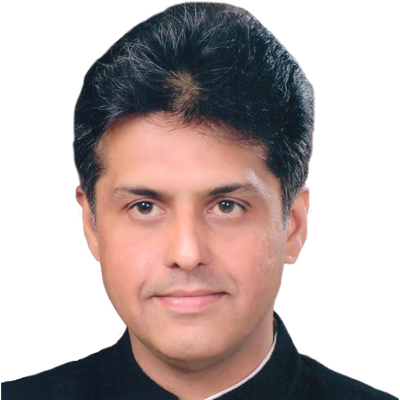
    Manish Tewari’s views on I&B appear to be thinking of a frustrated mind

    NEW DELHI: It is a well known truism that the administrative arm of the government is not run by politicians but by bureaucrats. And while there have been many cases where a minister had to bow because the bureaucracy in his own ministry did not support him or her, it is only seldom that the politician allows himself to be cowed down.


    One therefore wonders whether the statement by outgoing Minister Manish Tewari that there is no relevance of Information and Broadcasting Ministry (I&B) and that it belongs to ‘an era that is past’ is something that comes out of his own wisdom or his frustration in dealing with an ex-bureaucrat who now heads the public service broadcaster.


    Coming as it does on the eve of the government going out of office, the statement is either way misplaced. It is now open to the new government to decide whether this ministry needs to remain or go.


    And clearly, ‘Broadcasting’ does not mean just Prasar Bharati in a scenario where not only has the radio and television industry grown by leaps and bounds, but needs controls and regulations that only a Ministry can handle.


    At the same time, ‘Information’ does not just mean giving information to the people through the media and goes much beyond to an administrative regulatory role over various media units of the government. If this Ministry has no relevance today, one winders who will monitor the working of these media units!


    Experience of the past decades has shown that the role of the I&B Minister has probably been totally misunderstood by the heads of government. Because the designation says ‘Information’, the government thinks that it has to be led by a person who is well versed with the policies of not only the government but also the ruling party.


    Tewari, therefore, often found himself answering questions about the ruling party rather than his Ministry whenever he was mobbed by the media, particularly electronic media looking for sensational bytes!


    Factually speaking, questions about government policies should have been tackled by the Director General (Media and Communication) in the Press Information Bureau and those about the party by the official party spokespersons speaking in the respective party offices.


    Clearly, the government took ‘Information’ to mean ‘Information and PR’, which is the kind of designation given to ministers holding this charge in the states.


    Actually, the debate over whether one needs an Information and Broadcasting Ministry is not new.


    The issue had also come up about a decade earlier when Sushma Swaraj was in charge of the Ministry.


    At that time, a Group of Ministers had been set up under the chairmanship of the then Finance Minister Yashwant Sinha on the possibility of setting a Convergence Commission and also piloting a convergence bill. This was being considered as it was felt that Broadcasting and Information Technology were gradually merging.


    The issue could not be resolved even after several meetings of the GoM, and the whole thing was put in cold storage because of the change of government in 2004.


    While the then Communication and Information Technology Minister Pramod Mahajan and the then Law Minister Arun Jaitley appeared to be in favour of the Commission, it is understood that it was vehemently opposed by Swaraj.


    The possible reason for this is not far to seek: if a Convergence Commission (which would have also made the Prasar Bharati Act redundant) had been indeed approved, then the chances were that broadcasting ministry would have gone to the IT Minister and Swaraj would have been left with only Information and thus a reduced portfolio in terms of power – something no senior politician can afford to let go.


    As far as the broadcasting side goes, surely Tewari knows there is more to broadcasting than dealing with a former bureaucrat who insists that the government has backed out after creating an autonomous Prasar Bharati, by still keeping most powers to itself.


    The view of Prasar Bharati CEO Jawhar Sircar, who has also chosen the current time to express them in writing in an article in a popular magazine, may have its own merit. And while one could always argue on whether a public service broadcaster almost totally dependent for its existence and funds on the government can expect full autonomy!


    But he has deliberately chosen to air his views about ‘covert control raj’ to coincide with the entry of a new government and as well as the interview of Narendra Modi on Doordarshan. Interestingly, even DD News Director General S M Khan has gone on record to say that the decision to make cuts in the interview had nothing to do with the Ministry and were done internally by DD News staff as they wanted the interview to be more balanced.


    As a matter of fact, one wonders whether Prasar Bharati which was conceived at a time when only Doordarshan and All India Radio existed has a place in a scenario dominated by private radio and TV channels!


    And one can hardly deny that there are very few countries in the world which do not have radio or television channels of their own, and many even own news agencies and newspapers.


    In a country as large in population as India and with a low literacy rate, surely no one can deny that the government needs to have a channel to disseminate information about its programmes, and help people learn about their powers. And there is little gain saying the fact that both Doordarshan and All India Radio are today airing programmes which private channels running after TRPs and advertisers cannot do.


    Tewari’s view therefore about the “inherent redundancy” of the Ministry itself appears redundant.


    Perhaps his views about the Films Division can be judged on the same footing. While the Division has undergone various changes from the weekly news reviews to magazines and now short films, it is also an institution that is doing things no private agency would do and this is also becoming clear from the increasing number of National awards its films have been winning, apart from the fact that it was chosen by the Ministry itself to manage the country’s only Museum on Indian Cinema.


    The fate of private television and film training schools is also well-known as they end up as shops that want to give quick training but charge high fees. In that scenario, both the Film and Television Institute of India and the Satyajit Ray FTII have to remain under the I&B Ministry, though there one can hardly deny that greater participation of the private sector – particularly the film industry and TV channels – would help.


    In fact, Tewari himself had said in November 2012 that ‘however archaic its structure might be, I&B over a period of time seems to have got the nuances fairly right. It is to a very large extent, hands-off. If you were to abolish the ministry, what would you replace it with?’


    Interestingly, Tewari had initiated steps to grant more autonomy to it by constituting the Sam Pitroda Committee.


    Irrespective of which party comes to power, I&B is a subjects that will remain with the central government if there has to be a continuity of policy as far as the media and even freedom of speech and expression is concerned, especially in a country where business houses are waiting to gobble up whatever freedom the media enjoys today.

  • Broadband growth rate just around 5 % between Feb-Mar this year

    Broadband growth rate just around 5 % between Feb-Mar this year

    NEW DELHI: The total broadband (> 512 Kbps) subscription increased from 58 million at the end of February 2014 to 60.87 million at the end of March this year, showing a growth rate of just 4.95 per cent.

    Of this, wired broadband subscription is 14.86 million and wireless broadband subscription is 46.01 million.

    Segment wise broadband subscriber base are as below:

    The top five wired broadband service providers are BSNL (10 million), Bharti (1.38 million), MTNL (1.13 million), YOU Broadband (0.38 million) and Beam Telecom (0.38 million).

    The top five wireless broadband service providers are Bharti (10.98 million), Idea (7.23 million), Reliance (7.11 million), Vodafone (7.02 million) and BSNL (6.77 Million). 

  • TRAI suggests licence at 8 per cent of AGR for satellite phone usage

    TRAI suggests licence at 8 per cent of AGR for satellite phone usage

    NEW DELHI: The Telecom Regulatory Authority of India (TRAI) has recommended that the Bharat Sanchar Nigam Limited should be authorized by the Department of Telecom to establish gateway immediately under sui generis category for satellite telephony using INMARSAT.


    In Its recommendations, TRAI has suggested licensing at eight per cent of the AGR for these services.


    It has also said that the request of BSNL for waiver of entry fee, processing fee, and PBG should be considered by the DoT.


    At present, satellite phone services for land mobile are used primarily by the defence and paramilitary forces. TRAI feels there is urgent need for a state-of-the-art gateway catered to the defence and security forces in view of the retirement of some of the services of INMARSAT.


    The recommendations came in response to a letter in this regard from DoT in December last year.


    TRAI says it kept in view the security of the country while consulting various stakeholders before issuing its recommendations.  

  • Govt. seeks public view on advertising guidelines

    Govt. seeks public view on advertising guidelines

    NEW DELHI: The government has sought the views of the general public following a Supreme Court verdict that an Advertisement Code needs to be drawn up to differentiate between advertisements about government messaging and those that are politically motivated and designed to patronise media organization and get favourable media coverage.


    In its verdict on 23 April, the apex court set up a three-member committee for this purpose, to be coordinated by Information and Broadcasting Ministry secretary Bimal Julka, which held its first meeting on 5 May. The Committee has been asked to submit its report within three months, and so various stakeholders have been asked to submit their views within four weeks.     


    The Court wanted substantive guidelines to be laid down until the legislature enacts a law in this regard.


    The Court felt that the Advertising Code of the Directorate of Advertising and Visual Publicity did not draw this distinction.


    The petitions had been filed by Common Cause and the Centre for Public Interest Litigation. 

  • Government warns News channel for showing disturbing visuals in news bulletins

    Government warns News channel for showing disturbing visuals in news bulletins

    NEW DELHI: The government has sent a warning to DY 365 News channel for showing ‘extremely disturbing visuals of dead bodies and badly injured people including children’ that ‘were not only disturbing but may also hurt the sentiments of the viewers.’


    The Information and Broadcasting Ministry has asked the channel to strictly adhere to the terms of permission granted to uplink it on 30 July 2008 and under

    Section 20 of the Cable Television Network (Regulation) Act, 1995.


    The Ministry said it had issued the notice, after the channel had telecast News bulletins on 12 May 2013, 22 February 2013, 2 February 2013, 2 November 2012, 4 October 2O12, 2 September 2012, 26 July 2012, 22 July 2012, 9 July 2012 and 3 July 2012 in different bulletins visuals that were ‘neither morphed nor blurred in keeping with the sensitivities of the victim’s families as well as viewers.’


    Hence the Ministry found that these visuals appear to offend good taste and decency and do not appear to be suitable for children and for unrestricted public exhibition.


    A show cause notice was sent to the channel on 26 September last year in reply to which the channel took the excuse that the faces had been shown so that their relatives could identify them and ‘there was no deliberate or intentional motive of the channel to show faces of the deceased in the news programme’. The channel also offered an unconditional apology.


    In view of the reply, the Inter-Ministerial Committee in its meeting on 26 February this year gave a personal opportunity to the channel to present its case.


    The warning has been issued as the Committee was clear that the telecasts were in clear violation of the provisions of the Programme Code, particularly Rules 6(1Xa), 6(1)(o), and 6 (5) of CTNR, 1994. The IMC observed that even though the channel had accepted its fault and apologised for its mistake, it cannot escape the responsibility of ensuring content on the channel which must be in conformity with the Programme Code at all times.

  • TRAI extends date for views on consultation paper on Wireless Data Services

    TRAI extends date for views on consultation paper on Wireless Data Services

    NEW DELHI: Stakeholders concerned with the quality of service for Wireless Data Services Regulations 2012 have been asked by the Telecom Regulatory Authority of India (TRAI) whether the service provider should be mandated to inform the minimum download speed to customers along with each tariff plan.

    In its consultation paper on the subject, TRAI has said that stakeholders can send in their comments by 19 May and counter comments by 26 May with justification for their views.

    TRAI had earlier invited stakeholders to give their views on certain amendments to the Regulations by 5 May but has now extended the date in view of the importance of the issue.

    The Regulator has also sought views on prescribing benchmarks for minimum download speed.

    In order to provide clarity to the consumers opting for data plans using a certain technology and based on the data on minimum download speed reported by the TSPs in the last three quarters, the Regulator wants to prescribe a minimum download speed for wireless data services on technology basis.


  • MSM gets licence for two new HD TV channels

    MSM gets licence for two new HD TV channels

    NEW DELHI: AXN HD and SET HD, both from the Multi Screen Media (MSM) bouquet, are the only two private television channels permitted for downlinking into the country during 2014.


    All the other nine channels which got permissions in the first four months of 2014 are to be uplinked from within the country. These include the news channels NSN News, VIP News (earlier known as Prabhatam NSB), Satlon News and Prabhatam Lifeline.


    The general entertainment channels are: Daati Ahsaas, Satkar, Hastey Raho, the Bengali channel Fatafati and Maha Movie.


    With this, the total number of private channels uplinking from or downlinking into the country has gone up to 795.


    According to the statistics revealed by the Information and Broadcasting Ministry today, the number of news and current affairs channels is 393 while the number of non-news (general entertainment channels) is 402.


    Of the total, 669 TV channels including 372 news channels have been given permission to uplink and downlink from within the country.


    The Ministry also placed on its website the names of the companies which own these channels, the language, and the date when permission was granted.

  • TDSAT adjourns DTH licence fee case to 22 May

    TDSAT adjourns DTH licence fee case to 22 May

    NEW DELHI: The petition by private direct-to-home (DTH) operators challenging the notice of the government for clearing arrears of licence fees was adjourned by the Telecom Disputes Settlement and Appellate Tribunal (TDSAT) to 22 May.
     

    The DTH operators were given time by chairman Aftab Alam and Kuldeep Singh to file their rejoinders following the reply by the government.


    TDSAT also noted that the earlier assurance by the government that it will not pressurise the operators in this regard till the case is taken up for hearing will continue.

      
    Even as the petitioners have alleged that the demand by the Information and Broadcasting Ministry is contempt of court as the matter in this regard is pending in the Supreme Court, I&B secretary Bimal Julka had earlier told indiantelevision.com that the apex court had not issued any stay order.

     
    However, conscious that the TDSAT or the Supreme Court may be moved in the matter, a caveat had been filed by the Ministry in this regard.

     
    The Ministry had recently sent a notice to the six private DTH operators with regard to licence fee dues amounting to Rs 2,066 crore. The private operators are Tata Sky, Dish TV, Airtel Digital TV, Reliance Big TV, Sun Direct and Videocon d2h.

    According to the notice, the six private operators had been asked to pay the amount within 15 days.

     
    However, most of the operators contacted said they had cleared the dues of licence fee.

     
    The operators say the licence fee as demanded under the rules is on gross revenue (GR) whereas they have been asked to pay the fee on the basis of Actual Gross Revenue (AGR). The operators have said the fee should be only on subscription revenue and not on allied earnings such as dividend and interest income. 


    Meanwhile, Tata Sky late last month made a payment of Rs 383 crore to the Ministry to cover its license fee and other dues. A demand draft of the amount was submitted to the Ministry. Even as other operators had said that they would prefer to wait till the next hearing.

     
    This amount covers license fee for the year 2013-14 according to the rate specified for license as well as past dues, for which the Ministry had raised a demand note recently.


    TataSky MD and CEO Harit Nagpal had earlier said in a statement: “We hope that this will end the long standing dispute on the subject and pave the way forward for a constructive rationalisation of taxes with the support of our parent Ministry.” 

  • Ad cap case adjourned till 15 July

    Ad cap case adjourned till 15 July

    Updated: 05:04 pm


    NEW DELHI: The Delhi High Court today adjourned to 15 July the final hearing of a bunch of petitions challenging the ad cap sort to be imposed by the Telecom Regulatory Authority of India (TRAI), even as it said the regulator will not take any coercive action under the ad-cap regulations.
     

    The adjournment by Chief Justice G Rohini and Justice Rajiv Sahai Endlaw was allowed after counsel Neeraj Krishna Kaul representing the News Broadcasters Association (NBA) sought more time to file a rejoinder.


    The bar on coercive action by TRAI had been given in an earlier hearing and remains in force. However, the Court had said the petitioners have to submit a weekly report on the consumption of commercial airtime in a clock hour.


    TRAI Counsel Saket Singh opposed the adjournment noting that the matter had come up earlier before the Telecom Disputes Settlement and Appellate Tribunal (TDSAT) but has been transferred to the High Court after the Supreme Court ruled that TRAI regulations could not be adjudicated upon by the Tribunal.


    He said a lot of time had been, and in any case the Cable TV Networks (Regulations) Rules of 1994 were clear about the ad cap and TRAI had only sought to implement that.
     
    However, Kaul argued that the case involved important constitutional issues as they were cases where the freedom of the press and freedom of speech and expression are involved and the case cannot be decided without having all facts on record.
     
    Earlier in the hearing on 13 March, TRAI sought early hearing in the case on the ground that it had filed its affidavit and the court gave time to NBA to file its rejoinder.


    The NBA had challenged the ad cap rule, contending that TRAI does not have jurisdiction to regulate commercial airtime on television channels.


    Apart from the NBA, the petition have been filed by Sarthak Entertainment, Pioneer Channel Factory, E24 Glamoru, Sun TV Network, TV Vision, B4U Broadband, 9X Media, Kalaignar, Celebrities Management, Eanadu Television and Raj Television.


    The news and regional broadcasters fear that the capping of commercial airtime will curtail their ad revenues. They also argue that the ad cap must be brought only after the benefits of cable TV digitisation start kicking in.


    Earlier, the Court had also granted interim relief to Hyderabad-based MAA Television Network against the ad cap regulation. However, the court had also observed that the cap on advertisements is a ‘reasonable exercise’.


    The broadcasters had on 17 December challenged the ad cap rule in the Court after TDSAT had dismissed their appeal in the wake of the apex Court judgment that the tribunal does not have jurisdiction over TRAI regulations.


    Four major broadcast networks—Star India, Zee Entertainment Enterprises, Multi Screen Media and TV18 Group—are following the regulation.