Category: Regulators

  • Autonomy of the pubcaster would be protected: Javadekar

    Autonomy of the pubcaster would be protected: Javadekar

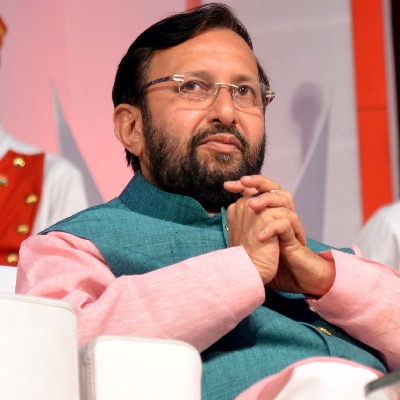
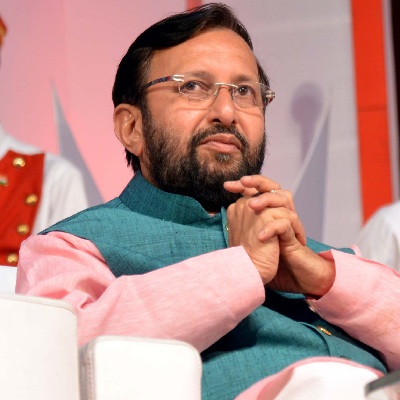
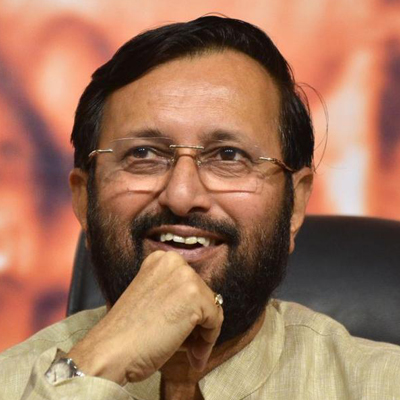
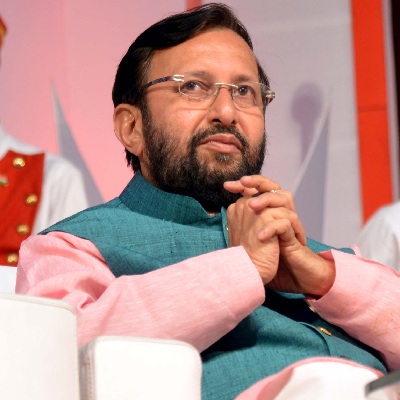
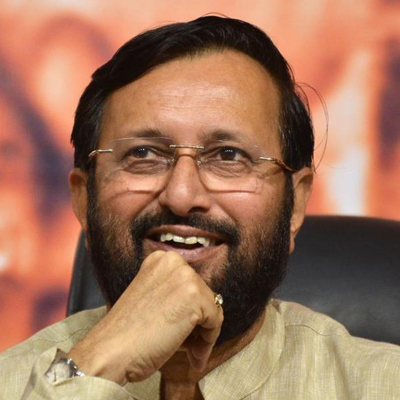
    NEW DELHI: Addressing a press meet at the Doordarshan Kendra in Worli, Mumbai, Information and Broadcasting Minister Prakash Javadekar said the government is committed to making Doordarshan the first choice of viewers across the country and a special provision will be made in the Union Budget for a total revamp of DD.


    Javadekar, who was in the western metropolis to make a full appraisal of the Mumbai Kendra of Doordarshan, held discussion with officials about future plans, said: “The blue print for revamp of national and regional channels of DD is being drawn and this will involve going for staff and artist recruitment on a large scale. I&B ministry is planning to change the look and feel of the national and regional channels of DD.”  
     

    The minister was however categorical that the automomy of the pubcaster would be protected.


    Apart from this, the government will shortly take a decision on permitting private channels to broadcast news of All India Radio. It may also consider permitting news of Press Trust of India or United News of India.


    Noting that the government gives huge half page or full page advertisements but they say very little, the minister said, “We are changing the operations completely. We will change all the designs to send across the maximum information that we can and also make it creative. We will crowd-source most of the advertisements where thousands of creative people or organisations will be asked to give their ideas about how to create advertisements. Then the best will be chosen and the top ten ideas will be awarded. This process will continue while designing most of the advertising campaigns.” 

    On a question relating to paid news, he agreed it was a ‘menace’, particularly during the run-up to the elections, but he would not comment as the matter was in the Court.


    “Stalwarts like Lokmanya Tilak had fought for the freedom of the press and their sacrifice should not be allowed to go waste,” he added.

  • Code of Conduct bars clearance of any new TV channels in May 2014

    Code of Conduct bars clearance of any new TV channels in May 2014

    NEW DELHI: Even though it is said that the government is run by bureaucrats and not by politicians, the change in government in the month of May brought stagnancy to the process of clearances of television licences.


    In fact, the month saw the first half being ruled by the United Progressive Alliance (UPA) and the second half by the National Democratic Alliance (NDA).


    A large number of new applications including Media Content and Communications Services (MCCS) that runs the ABP group of channels, Star India, Epic TV among others have been waiting in queue for a new licence.


    Information and Broadcasting Ministry secretary Bimal Julka says that the delay was primarily because of the Code of Conduct that had come into force. He adds, “There was clear mandate from the Election Commission that no action like clearances for new channels should be given without its permission.”


    The list of permitted private satellite TV channels in India remains constant at 795. Out of these 393 are news and current affairs channels while the remaining 402 are non-news and current affairs channels.


    The first four months of 2014 saw licences being given to nine channels including AXN HD and SET HD.


    The Ministry also placed on its website the names of the companies which own these channels, the language, and the date when permission was granted. 

  • M&E industry to meet I&B Minister next week

    M&E industry to meet I&B Minister next week

    MUMBAI: After the mammoth election, the new BJP-led NDA government took charge on 26 May and since then, the new Information & Broadcasting Minister, Prakash Javadekar, has been a busy man. From attending press conferences and ceremonies to meeting the various stakeholders, he has been on the move since he took the oath.


    The Minister has been vocal about his thoughts on what he expects from the industry and what needs to be done. On day one itself, he had announced his commitment towards freedom of press and there is no intention of regulating the media. This has given new hopes to the media industry which is currently caught-up in policy hurdles, implementation delays and controversies.


    As per industry sources, the Minister will be meeting the various associations of the Media & Entertainment industry together early next week.


    Though the dates aren’t clear yet and so is the agenda, but the various sources have hinted upon the following topics which will be discussed over the table.


    Digitisation – With the phase I & II over and III & IV in the pipeline, it will be one of the hot topic. The Minister, couple of days back had said that in a step to boost employment and small-scale industry, efforts will be made to encourage indigenisation of set-top boxes. The stakeholders could also discuss carriage fees, opportunities in the DTH and how digitisation can help broadcasters.


    Licences – More the merrier has been the slogan for large media houses. With more and more channels being launched by networks, many pending licence files have been gathering dust in the numerous Ministry offices.


    FDI – The Ministry is already looking for inputs from various stakeholders on whether to allow 100 per cent FDI in News media. Currently, the FDI allowed is up to 26 per cent in news and current affairs media, while 100 per cent is allowed in non-news media like trade publications and entertainment channels.


    Way forward – The industry has been in a limbo for a long say highly placed industry sources who are betting that the new Minister will be able to hurry up things and set a positive tone for the coming years.


    “The meeting is all about the big picture. Everyone has been wanting to meet the new Minister and discuss the grievances and hurdles they face,” says a source who believes a little pep talk and a push is needed to take things in a positive trend.


    Agreeing, another industry source adds, “Everyone will come with their own wish list in a hope to get things to work in their benefit and economically do better than what it has been doing so far.”


    One thing is clear that in the meeting set to be held early next week, the new I&B Minister will have his platter full, with M&E industry handing him a checklist.

  • TRAI issues consultation paper on tariff for commercial subscribers

    TRAI issues consultation paper on tariff for commercial subscribers

    MUMBAI: Three months ago, the Telecom Regulatory Authority of India (TRAI) revised the tariff rates for non-addressable cable TV areas which allowed a rise of 27.5 per cent in two stages. While this was for non-commercial subscribers, the regulator has now issued a consultation paper asking comments from stakeholders for the same with respect to the commercial subscribers.


    The consultation paper states that the tariff for commercial subscribers has been an issue since 2005 when associations of hotels and restaurants challenged the various tariffs imposed by broadcasters in the Telecom Disputes Settlement Appellate Tribunal (TDSAT). Even though the TDSAT disposed off the petition stating that such organisations cannot be called consumers, it asked the Telecom Regulatory Authority of India (TRAI) to think about whether or not to impose a tariff regulation on them.


    While the TRAI came up with two definitions for ‘ordinary cable subscriber’ and ‘commercial cable subscriber’, the appeal was challenged in the Supreme Court which then directed TRAI to frame separate tariff ceilings for non-commercial subscribers.


    Even though the Regulator had come up with definitions and categories of such commercial subscribers, it was challenged by the Federation of Hotel and Restaurants Associations of India (FHRAI).


    Now, TRAI has once again come up with a fresh definition for a ‘commercial subscriber’ and has asked stakeholders if they agree to it or if they have alternative suggestions. It says that a commercial subscriber means “any person, other than a multi system operator or a cable operator, who receives broadcasting service at a place indicated by him to a broadcaster or a cable operator or direct to home operator or multi system operator or head end in the sky operator or a service provider offering Internet Protocol television service , as the case may be, and uses such signals for the benefit of his clients, customers, members or any other class or group of persons having access to its commercial establishment.”


    “Commercial establishment” means any premises wherein any trade, business or profession or any work in connection with, or incidental or ancillary thereto is carried on and includes a society registered under the Societies Registration Act, 1860 (21 of 1860), and charitable or other trust, whether registered or not, which carries on any business, trade or profession or work in connection with, or incidental or ancillary thereto, journalistic and printing establishments, educational, healthcare or other institutions run for private gain, theatres, cinemas, restaurants, eating houses, pubs, bars, residential hotels, malls, airport lounges, clubs or other places of public amusements or entertainment but does not include a shop or a factory registered under the Factories Act, 1948 (43 of 1948).”


    “Shop” means any premises where goods are sold, either by retail or wholesale or where services are rendered to customers, and includes an office, a store room, godown, warehouse or work place, whether in the same premises or otherwise, mainly used in connection with such trade or business but does not include a factory, a commercial establishment, residential hotel, restaurant, eating house, theatre or other place of public amusement or entertainment.”


    TRAI says that with these definitions it is shifting its focus from how the commercial establishments use the cable connection to defining it as one who avails the service from a broadcaster or a distribution platform operator (DPO).


    In the earlier definition, the regulator had also divided commercial consumers into various sub-divisions of similarly placed entities depending on their size of business, paying capacity to clients etc. These were challenged several times in the past. Therefore, it has now asked stakeholders that if such a sub-division was not the right way to proceed, what would be an alternative way of dividing them into similarly placed groups.


    Furthermore, three models of dealings between the commercial user and DPO has been given by TRAI and stakeholders are expected to select any one or give their own alternative model.


    The first model is that the broadcaster publishes the rates for commercial tariff as a Reference Interconnect agreement (RIO) and then commercial subscriber negotiates. The second model is that the DPO publishes the rate and negotiations shall be done on the same. In the third model, both the aforesaid models shall be available to commercial customers wherein there shall be a competition among DPOs and between DPOs and broadcaster.


    Furthermore, four options as regard to what shall be the tariff price have also been given:


    First, the tariff for commercial subscribers is same as that for ordinary subscribers. Second, the tariff for commercial subscribers has a linkage with tariff for ordinary subscribers. Third, the tariff for commercial subscribers has no linkage with the tariff for ordinary subscribers but there are some protective measures prescribed to protect all the stakeholders. Fourth, the tariff for commercial subscribers is kept under total forbearance.


    In the case of the third option several provisions have been suggested such as – broadcasters be mandated to offer all their channels on a-la-carte and specify rates. In case a broadcaster directly makes the signal available to the subscriber then the sum of a-la-carte rates of the channels shall not exceed one and a half times the rate of the bouquet of which they are a part and the a-la-carte rate of each channel should not exceed thrice the average rate of a channel of that bouquet. In case of a DPO, apart from the earlier two provisions, a-la-carte rates for all FTA channels should be uniform. The regulator also suggested that it should receive the RIO by either the broadcaster or the DPO and that a provider shall not deny channel signals unless subject to technical feasibility. 


    If a stakeholder chooses the second option he/she has been asked to justify what the ceilings should be for each category of commercial subscribers.


    Stakeholders have been asked to give their views by 27 June at the latest.


    Click here to read full consultation paper
  • I&B Ministry to create online mechanism for all applications for TV channels, teleports

    I&B Ministry to create online mechanism for all applications for TV channels, teleports

    NEW DELHI: The Information and Broadcasting Ministry has once again asked prospective broadcasters to deal directly with the Ministry with regards to permissions for television channels or teleports and not appoint any intermediaries or consultants.


    In a public notice issued today by Joint Secretary (Broadcasting) Supriya Sahu, similar to the one issued late last year, the Ministry said anyone who wishes to apply for permission to start a television channel, teleport or various permissions under the Uplinking and Downlinking guidelines, can seek clarifications at the Open House held every month for the purpose and also get information on pending issues.


    The Ministry will not entertain any intermediary, consultant, advisor, consultancy organisation or firm to liaise with the Ministry on behalf of applicants and permission holders for following up on their requests.


    The Ministry follows an absolutely transparent and open process to grant various permissions to television channels, teleport operators, news agencies etc.


    In addition, the Ministry has also put in place a specialised software, Satellite Television Channels Application Tracking System (STATS), for those who have already applied to the Ministry for various permissions. An lD and password have been given to all of them to track the status of their pending applications.


    The Ministry is in the process of automating the entire Broadcasting Wing to ensure that an online mechanism is brought for various applications. Once in operation, this web enabled software will help applicants to apply online and also make payments of various fees etc., through the payment gateway.


    All applicants and permission holders have therefore been advised not to approach anyone who claims to be an advisor, consultant or facilitator on behalf of applicants. 

  • Javadekar condemns misuse of social media to create tensions

    Javadekar condemns misuse of social media to create tensions

    NEW DELHI: A day after airing his views on abolition of his own Ministry, Information and Broadcasting Minister Prakash Javadekar has said the government should not exercise control over media which should have its own mechanisms for this.

    Addressing members of Indian Women Press Corps (IWPC), he also said: the biggest challenge for Prasar Bharti was how Doordarshan becomes the first choice for the viewer.


    “In whichever model it works, we’ll choose that. We have given autonomy but result should also come,” he said. 

    Noting that freedom of press was the result of a long struggle, the Minister also stressed upon responsibility of the media.


    The government is in favour of infrastructure augmentation in border areas where people get to hear the propaganda of other countries but the voice of Indian government at times does not reach. 


    Javadekar said while answering a question that social media fell under the Information Technology Act which was not administered by his Ministry, but added that the freedom afforded by social media should be used responsibly. He said misuse of social media to create tensions in society is condemnable and should not happen.

    At one stage, Javadekar mentioned that his father had worked in a publication and that he had been a member of the Press Council which is often called a “toothless wonder”. 


    Javadekar said Prime Minister Narendra Modi had encouraged his ministers to be innovative. He said one innovative practice that the I&B and Environment ministries, which are both under him, will start is regarding advertisements they issue.


    He said it had been decided that people would be asked to provide ideas and designs for advertisements and the Directorate of Advertising and Visual Publicity will only release them. “We will recognise and award the good designs that are selected,” he concluded. 

  • Javadekar files nomination papers to Rajya Sabha from Madhya Pradesh

    Javadekar files nomination papers to Rajya Sabha from Madhya Pradesh

    NEW DELHI: Information and Broadcasting, Forest and Environment Minister Prakash Javadekar has filed his nomination papers for the Rajya Sabha elections from Bhopal.


    The Minister’s term as a Rajya Sabha member came to an end on 2 April this year. He had been a member of the Upper House since 3 April 2008.


    Accompanied by his ministerial colleague and state Bharatiya Janata Party president Narendra Singh Tomar and his wife Prachi Javadekar, the Minister filed two sets of nomination papers before the returning officer Bhagwandev Ishrani at the Madhya Pradesh assembly premises in the presence of party leaders over the weekend.


  • Ideologically I&B Ministry should be abolished: Javadekar

    Ideologically I&B Ministry should be abolished: Javadekar

    NEW DELHI: Virtually echoing the views of former Minister Manish Tewari, Information and Broadcasting Minister Prakash Javadekar said that he ‘philosophically’ and ‘ideologically’ favoured abolishing his Ministry.


    However, he justified this by noting that it was in keeping with Prime Minister Narendra Modi’s emphasis of ‘less government, more governance’. 

           
    “Philosphically or ideologically, I’ll be willing to do that,” he said, when asked if India needed an I&B Ministry when many major democracies do not have such a profile.


    Asked whether Modi was also “philosophically and ideologically” in agreement with his line of thinking, Javadekar said: “Absolutely”, during an interview by Karan Thapar on Headline Today’s programme “Nothing but the Truth.”


    The Minister agreed with the suggestion for hiring professional editors for Doordarshan and All India Radio.


    He was also open to discussion with stakeholders on more FDI in media.


    “I think you are giving a good line for us. But ultimately, when our Prime Minister Narendra Modi says that more governance and less government, so you are actually contributing to the idea of less government and more governance. That’s our focus, but to achieve that end we have to follow a process,” he said.


    The Minister said that as far as the public broadcaster is concerned, there are various models like the BBC and others available which would be studied. Javadekar said he was not in favour of a model where the public broadcaster is accountable to the minister “only”.


    Javadekar said in the years ahead, words like “government-run”, “government-controlled” or “government intervention” will be less heard of.


    “But I would like that government becomes less and less and freedom and market forces and at the same time social justice is achieved,” Javadekar concluded. 

  • Government to look at law for preventing attacks on press

    Government to look at law for preventing attacks on press

    MUMBAI:Prakash Javadekar has been making a lot of appearances since he took over as the new Information and Broadcasting Minister. For a man who is aiming to be a media-friendly rather than a media-shy I&B Minister,  Javadekar took the centrestage at the Red Ink Awards held in Mumbai on 7 June, to send across a message from the government to the media fraternity.


    He started off by stating that the essence of democracy is the freedom of press and the Modi government is fully committed to the full freedom of media and it is their cardinal principle. While he questioned whether press meant owners, editors, the journalists or the readers and viewers, he also reminded the media that “society expects accuracy, balance and fairness from the media.”


    According to Javadekar, self-regulation is better than censorship. “I don’t like the word regulation. It should be self-restraint. Media needs to think whether it will play only what the public is interested in viewing or if it will also play what is in the public’s interest,” he said.


    Attacks on the press are not unknown of and Javadekar in his speech did not fail to acknowledge it. “This needs to be prevented. We will surely see if there is a possibility of a central law for prevention of attacks on press,” he stated.


    Expectations from the new Minister are high and he is in no hurry to come up with a game plan on the various issues. “There are many issues pending such as foreign direct investment in media, FM news, social media, digital media, digitisation etc. These are issues we will talk to all the stakeholders and then come to a consensus. We don’t want to thrust some decision on the whole sector but evolve it by consensus.”


    He also stated that both the  print and the electronic media will flourish in the upcoming years. 

  • TRAI warns MSOs and LMOs to speed up billing in DAS areas

    TRAI warns MSOs and LMOs to speed up billing in DAS areas

    MUMBAI: Even after several deadlines being issued in January regarding implementation of billing in DAS areas, the Telecom Regulatory Authority of India (TRAI) has not seen much progress on this front.  And to now address the issue, the Regulator had called for a meeting of the multi system operators (MSOs) and last mile owners (LMOs) in Mumbai on 3 June.


    Taking note of all the issues being faced by both the parties, TRAI has asked both the MSOs and LMOs to resolve their issues and start the billing process as soon as possible. The Regulator has also taken inputs from them and will conduct an internal meeting soon.


    TRAI has directed the two parties to sign proper inter connect agreements with each other to ensure that money collected from subscriber goes through the right channel. “Because of their revenue sharing problem, the consumer is affected. If the two parties haven’t signed any agreement, how can they collect money from the consumer?” asks a TRAI official who was present in the meeting.


    Show cause notices have been sent to MSOs operating in Delhi and those in DAS phase II cities regarding billing process. “Channel aggregation is done by MSO and he also has the subscriber management system. So ideally he should be doing the work of billing,” says the official.


    The tug of war between MSOs and LMOs over ownership of subscribers has not yet been resolved. However, the official says that a subscriber is no one’s property and is free.


    The meeting comes a few days after TRAI issued a directive to MSOs to start billing in DAS phase I cities such that the bill reaches the consumer within 45 days by either hand, post or email along with an option to pay the money online.


    TRAI will look at holding such meetings in other parts of the country as well.