Category: Regulators

  • Delhi HC adjourns Kantar case till 26 August

    Delhi HC adjourns Kantar case till 26 August

    NEW DELHI: The Delhi High court today adjourned till 26 August the hearing in the matter relating to Kantar Media Research with regard to cross holding in TAM. 


    The adjournment came after justice Manmohan was informed that the new government had not appointed the advocate who would argue on behalf of the government.


    TAM can continue publishing its TV ratings till the court decides on the Kantar petition.


    The matter arose after the Information and Broadcasting Ministry directed all rating agencies to get themselves registered with the government and laid down conditions which barred cross holding.


     Kantar Media Research challenged the government regulation in view of the cross holding provision.

  • Terrestrial TV to be opened for private participation: Javadekar

    Terrestrial TV to be opened for private participation: Javadekar

    MUMBAI: Is the Modi government likely to pry open terrestrial television to private broadcasters?  Terrestrial TV has been the exclusive turf of public broadcaster Prasar Bharati, apart from a short stint where it leased out a programming block to Ozzie broadcaster Kerry Packer around 12-13 years ago.

    It is quite likely to, if one goes by the response of Information & Broadcasting Minister Prakash Javadekar to a question in the Parliament on 9 July. PTI quotes him as saying that Doordarshan is digitising its analogue terrestrial network.

    “Consequently the number of digitised channels would go up. DD would thereafter be in a position to invite private free-to-air TV channels for meaningful business plan in this regard,” he added.

    This was one of the options provided by the Sam Pitroda committee earlier this year.  The committee had recommended two options: one to totally move the pubcaster to satellite transmission via DD Direct. And, two, to upgrade its analogue terrestrial network to DVBT2 to meet its need to deliver content meeting both national and regional coverage needs.

    The report had recommended that DD could opt for selected use of DVB-T2/DVB-NGH terrestrial  technology in partnership with private players if commercially feasible in order to enhance the capacity of each transmitter to eight to 10 channels.

    The committee, however, had cautioned that DD would have to transform itself into two separate companies handling content creation and managing infrastructure to allow private participation. Additionally, it had added that DD would have to provide a subsidy to increase the affordability of DVBT2/DVB-NGH receivers as they are not readily available at affordable prices in India.

    Even the Telecom Regulatory Authority of India had in 2005 recommended that terrestrial television should be thrown open to private sector participation as is the case in most countries.

  • DTH licence fee case adjourned yet again

    DTH licence fee case adjourned yet again

    NEW DELHI: The petition by the private direct-to-home (DTH) operators challenging the notice of the government for clearing arrears of licence fees has been adjourned once again. Reason: the Telecom Disputes Settlement and Appellate Tribunal (TDSAT) wants to first decide on a similar case relating to actual gross revenue with regard to telecom.


    Earlier, chairman Aftab Alam and Kuldeep Singh had adjourned the matter from 23 May to 8 July as the operators had not filed their rejoinders to the reply by the government.


    The adjournment was allowed on a mention by the counsel for the various DTH operators.

     
    TDSAT also noted that the earlier assurance by the government that it will not pressurise the operators in this regard till the case is taken up for hearing will continue.


    The petitioners have alleged that the demand by the Information and Broadcasting Ministry is contempt of court as the matter in this regard is pending in the Supreme Court.


    However, Information and Broadcasting Ministry secretary Bimal Julka had earlier told indiantelevision.com that the apex court had not issued any stay order. However, the government had filed a caveat in this regard, conscious that the TDSAT or the Supreme Court may be moved in the matter.

     
    The Ministry had earlier this year sent a notice to the six private DTH operators with regard to licence fee dues amounting to Rs 2,066 crore. The private operators are Tata Sky, Dish TV, Airtel Digital TV, Reliance Big TV, Sun Direct and Videocon d2h.


    According to the notice, the six private operators had been asked to pay the amount within 15 days.

     
    However, most of the operators contacted said they had cleared the dues of licence fee.

     
    The operators say the licence fee as demanded under the rules is on gross revenue (GR) whereas they have been asked to pay the fee on the basis of Actual Gross Revenue (AGR). The operators have said the fee should be only on subscription revenue and not on allied earnings such as dividend and interest income. 
     
    Even as the matter was pending, Tata Sky had in April made a payment of Rs 383 crore to the Ministry to cover its license fee and other dues. A demand draft of the amount was submitted to the Ministry, even as other operators had said that they would prefer to wait till the next hearing.
     
    Tata Sky said the amount covered the license fee for the year 2013-14 according to the rate specified for license as well as past dues.


  • 219 private websites blocked for showing FIFA, Google does not figure in list

    219 private websites blocked for showing FIFA, Google does not figure in list

    NEW DELHI: The Delhi High Court has been informed by telecom player Airtel that it has already blocked 219 websites which were illegally streaming live the matches of 2014 FIFA World Cup.


    The Court had earlier on 23 June issued an injunction restraining over 400 private websites from showing the matches, following a petition by Multi Screen Media (Sony) that holds the exclusive rights for beaming the matches in India.


    Interestingly, the list given by Airtel does not list any Google website despite the fact that the Court had specifically cited two Google sites.


    The vacation bench of Justice V Kameswar Rao gave a directive to the Department of Information Technology and Telecom to ensure implementation of the order of the court. He also said that his directive would be forwarded to the concerned Ministry.


    The judge, who listed the matter to come up in the last week of July, gave the directive after hearing Saikrishna Rajagopal who was arguing on behalf of MSM.


    The sports arm of MSM, Sony Six is the official broadcaster of the football extravaganza, while its digital platform LIVSports.in has the exclusive rights to live stream the event.
     
    The network had moved the court after it found out that several unauthorised websites were streaming the World Cup matches illegally.


    MSM had said that it has the official rights to telecast matches in six channels in the Indian sub-continent, including Sony Six and offers live streaming on Sony Liv and Liv Sports (for mobile).


    The court order was revised on 1 July and the list of sites was modified after a list was submitted again by MSM. The High Court had also directed that the copy of the order must be sent to DoT and DIT, so that the Internet Service Providers can block the websites.

  • Prakash Javadekar takes oath as Rajya Sabha member from Madhya Pradesh

    Prakash Javadekar takes oath as Rajya Sabha member from Madhya Pradesh

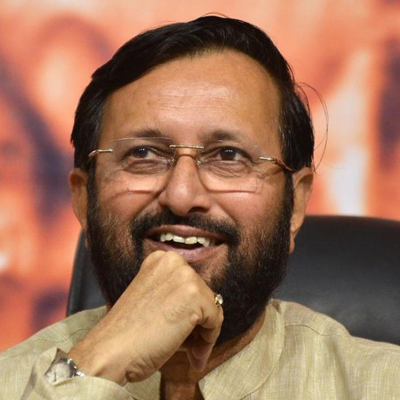
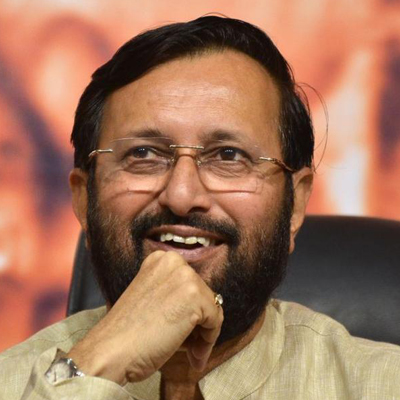
    NEW DELHI: Prakash Javadekar, who has been made Minister of State with independent charge of the Information and Broadcasting Ministry, today took oath as a member of the Rajya Sabha from Madhya Pradesh. 


    Javadekar, who had filed only a single nomination form, was elected unopposed.


    The Minister’s term as a Rajya Sabha member came to an end on 2 April this year. He had been a member of the Upper House since 3 April 2008.


    The by-poll was necessitated as the sitting BJP member and former Union Minister Faggan Singh Kulaste got elected to the Lok Sabha from Mandla (ST) seat following which he resigned from his membership of the upper house. 


    Like his immediate predecessor Manish Tewari, he has also been the spokesperson of the party he represents. (He has also been given charge of Environment and Parliamentary Affairs.)


    Javedekar has also been one of the nominated members from Parliament to the Press Council of India and hence has dealt with media issues such as paid news.  


    A member of the Rajya Sabha from Maharashtra, Javadekar was born in Pune on 30 January 1951 and became associated with the Akhil Bharatiya Vidyarthi Parishad in his young days.


    He commenced his professional life as an employee in the Bank of Maharashtra for 10 years from 1971 to 1981 and also worked in the Rural Development Department. Sick Unit Cell, Employment Promotion Programme of the Bank.


    His father Keshav Krishna Javadekar was a senior leader of Hindu Maha Sabha who worked as joint editor of Marathi Daily started by Lokmanya Tilak – Kesari before having stints with some other newspapers like Tarun Bharat and Kaal as journalist. He still occasionally writes his thoughts in some newspapers.


    Javadekar has been president of GLOBE India (Global Legislators Organisation for Balanced Environment; In-Charge, BJP Economic Forum and Cells related to Economy; President, NOINO (National Organisation of Insurance Officers); and president, KCKU (Khadi Commission Karmachari Union).


    As a member of the Parliament, he has served as member of the Press Council of India; the Public Accounts Committee; Standing Committee on Human Resources and Development; Consultative Committee for Ministry of Power; Committee on Subordinate Legislation and Committee on Wakf.


    He has earlier served as executive president of the State Planning Board in Maharashtra (1995–1999); been a  Member of the Maharashtra Legislative Council from Pune Division Graduate Constituency for 12 years from 1990; chairman of the Task Force on IT in Maharashtra (1977–1999) and chairman of the Working Group on “IT for Masses” of the Central Government.


    He has also led a delegation to Boston to Negotiate Media Lab Asia Project in 2000.


  • Biometric systems to check attendance in I&B Ministry, quotations invited

    Biometric systems to check attendance in I&B Ministry, quotations invited

    NEW DELHI: A few days after Information and Broadcasting Minister Prakash Javadekar had forced around 100 officers of the Ministry to take leave for the day for coming late to office, the Ministry has decided to install biometric device for Attendance System.


    The Ministry has called for quotations for such systems (through finger print/face detection/ smart card) with in-built time and attendance software in the Ministry in Shastri Bhavan, New Delhi.


    The quotations have to be filed by the end of this month and will be opened the same day in the presence of those who bid.


    The bid has to be furnished in a two-bid system: technical bid and financial bid. Details of the contents of these bids have been furnished on the website mib.nic.in.


    The financial bid of only those firms will be considered which qualify for the technical bid. 


  • TDSAT to hear appeals on cable tariff on 4 August

    TDSAT to hear appeals on cable tariff on 4 August

    NEW DELHI: Eight cable operator associations from all over the country have intervened in the appeal challenging the legality of tariff orders allowing the increase of 27.5 per cent inflationary rise in the wholesale prices prevailing as on 31 March 2004.


    Even as the Telecom Disputes Settlement and Appellate Tribunal (TDSAT) has listed the matter for further hearing on 4 August, the Telecom Regulatory Authority of India (TRAI) has also filed its response to the appeals and it is learnt that both Dish TV and Videocon d2h are filing interventions in the petition filed by Home Cable Network and the consumer organisation Centre for Transforming India.


    Meanwhile, the broadcasters will retain a separate account for any payment received as tariff, as this would be subject to the final order of the Tribunal.


    The appeals wanted TRAI to be directed to carry de-novo exercise in accordance with the statutory provision for price fixation for addressable system de-linking the same from the wholesale price of channels for non addressable system.


    Those who have filed interventions are cable associations of Gujarat, Greater Guwahati, Uttar Pradesh, Chandigarh, All Delhi Cable Operators Association, Sai Cable Operators Association, Karnataka State Cable Operators Association, and Amritsar Cable Operators Sangharsh Samiti.


    In the appeals, the legality of Tariff Order (Telecommunications (Broadcasting and Cable) Services (Second) Tariff (Eleventh Amendment) Order 2014 dated 31 March this year allowing the increase of 27.5 per cent inflationary rise in the wholesale prices prevailing as on 31 March 2004 has been challenged.


    The Appellants have also challenged the impugned tariff order dated 31 March 2014 on the ground that the same has been passed in violation of Section 11(4) without affording any hearing opportunity to the stakeholders and without considering the relevant material and reports.


    Furthermore, the impugned tariff order is without jurisdiction because it still provides for adhoc measure of price freeze as on 31 March 2014 even after 10 years of second tariff order dated 1 October 2004 while abdicating its regulatory duty to fix the tariff.


    The impugned tariff order has adversely impacted the interest of the addressable platform because the wholesale pricing of the addressable system is based on the wholesale pricing of the non addressable platform; Fourthly that the impugned tariff is heavily tilted towards broadcasters and seriously prejudices the interest of the consumers, MSOs and stifles orderly growth of the cable and broadcasting sector.


    It was earlier argued that TRAI ignored the fact that the wholesale pricing of non addressable system and addressable system are inter related. The wholesale price for addressable platform is derived from the wholesale price of non addressable system. By its order, TRAI indirectly and in substance increased the wholesale price for addressable platform / DAS notified area. The said increase in the wholesale price for addressable platform is affected in violation of section 11(4) of the Act.    


    TRAI completely disregarded the fact that by changing the content pricing and increasing the same by 27.5 per cent with reference to the price existed immediately prior to 31 March 2014, this will immediately increase the price of content for addressable platform. The authority did not provide any hearing opportunity to the stakeholders including the appellants to represent its view as a stakeholder in the consultation process.


    It was stated that TRAI in disregard of the valuable rights of the stakeholders including the appellant and the consumers provided under Section 11(4) of the Act, rushed to issue the impugned order thereby increasing the wholesale price for addressable platform by 15 per cent with effect from 1 April 2014. Thus the impugned order failed to take into account the inputs from such stakeholders.   

  • Stakeholders undivided on constitution of commercial subscriber

    Stakeholders undivided on constitution of commercial subscriber

    NEW DELHI: What constitutes commercial or non-commercial subscribers for broadcasting and cable TV services?


    This question remained largely unresolved in an open house discussion on tariff issues related to broadcasting and cable television services for commercial subscribers held later today.


    Broadcasters by and large were in agreement that anyone other than a domestic subscriber is a commercial subscriber.


    There was also division on who is responsible for the subscriber. While broadcasters feel they should know about the subscribers, the multi-service operators and cable operators said they are generally responsible for dealing with the subscriber and the broadcaster should not interfere.


    The Open House Discussion was called by the Telecom Regulatory Authority of India (TRAI) as it has to submit a proper tariff chart to the Supreme Court by 16 July.


    The meet was attended by senior officials of TRAI, the broadcasting fraternity including the Indian Broadcasting Foundation, and other stakeholders, apart from consumer organisations.


    The whole controversy rose after an order of the Telecom Disputes Settlement and Arbitration Tribunal of 28 May 2010 was challenged in the Supreme Court, which had on 16 April this year said: “…However, we direct that for a period of three months, the impugned tariff, which is in force as on today, shall continue. Within the said period, TRAI shall look into the matter de novo, as directed in the impugned judgment, and shall re–determine the tariff after hearing the contentions of all the stake holders….”


     TRAI had issued a consultation paper in this connection, and also invited comments from stakeholders by June-end. Though several stakeholders have already responded in writing, they were today given a final opportunity to send in their written comments by 8 July.


     On behalf of TRAI, the meet was attended by member R K Arnold, Dr Vijayalakshmy K Gupta, principal advisor N Parameswaran and secretary Sudhir Gupta. Others among the approximately 100 stakeholders who attended were IBF’s Sailesh Shah, Sony’s Naresh Chahal, Star’s Pulak Bagchi, a representative of Siticable and Cable Operators Federation of India’s Roop Sharma.


    Cable operator and journalist K K Sharma said most cable operators charged the same fee from commercial or non-commercial subscribers.


    A representative of the hotel industry said that it did not differentiate between a commercial or non-commercial subscriber. 


    Broadcasters representatives insisted that a lot of the investment went into production of content and so advertising was important, but some stakeholders said that encrypted channels should not be allowed to take commercials.


    Among the questions that the TRAI had asked in the consultation paper was whether stakeholders agreed with the definitions of ‘commercial establishment, ‘shop’ and ‘commercial subscriber’ given by TRAI; whether there was a need to further categorise commercial subscribers; tariff for commercial subscribers and whether it should be the same as for ordinary subscribers.
  • Apply once for security clearance, not for every new channel: MIB

    Apply once for security clearance, not for every new channel: MIB

    NEW DELHI: The issue of security clearance for directors of TV channels has cropped up once again, this time on a good note. In a notice, the Ministry of Information and Broadcasting (MIB) has said that applicants for new TV channels whose directors have already received security clearance will not have to apply for fresh security clearance from the Home Ministry (HM).


    However, this will apply to those applicants who have filed within the validity period of security clearance.


    In doing so, the MIB has restored a practice which was earlier in force but had been changed after the Home Minister, on 10 January this year, said that applications for new channels will require fresh security clearance though their tenure may be co-terminus with the 10 year licence period for the earlier channels owned by the same applicant.


    In its note today, the MIB said it had been ‘the experience of this Ministry that the entire process of grant of permission has slowed down considerably.’ The issue had also been raised in open house meetings and other meets, conducted earlier.


    Information and Broadcasting Minister Prakash Javadekar has also laid great emphasis on reviewing ‘such processes which cause avoidable delays and to streamline the same’.


    While the MIB had decided to restore the old practice to avoid delays, it has said that a copy of each cleared application would be sent to the HM for ‘its record and information’.


    The whole issue cropped up when the MIB had in June last year written a letter to the HM seeking clarification on the issue. In its reply in October last year, the HM had said that fresh security clearance would have to be sought and this would be valid for three years.   


    Later in December, the MIB had written to the HM that the new applications be made co-terminus with the 10 year licence that the original channel had received.


    The HM had in January this year agreed on the issue of being co-terminus, but said that fresh security clearance would have to be sought.

  • TRAI to host open house meet on cable and TV tariff issues

    TRAI to host open house meet on cable and TV tariff issues

    NEW DELHI: An open house discussion on tariff issues related to broadcasting and cable television services for commercial subscribers will be held later this week in the capital.


    The discussion has been called by the Telecom Regulatory Authority of India (TRAI) on 4 July.


    The meet is expected to be attended by senior officials of TRAI, Information and Broadcasting Ministry and stakeholders, apart from consumer organisations.