Category: Regulators

  • Centre ready to accept proposals from states to encourage film tourism

    Centre ready to accept proposals from states to encourage film tourism

    NEW DELHI: A proposal of the Chhattisgarh Government, ‘Producing Tourism Documentary Film and TV Commercials’, has been prioritised by the Tourism Ministry for grant of Central Financial Assistance (CFA) during the financial year 2014-15. 


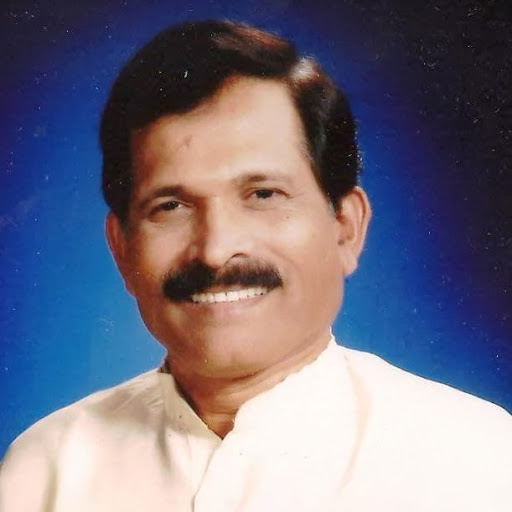
    Culture and Tourism Minister Shripad Yesso Naik told Parliament that the Ministry has recognised films as a powerful tool for promotion of tourism destinations and locations and has taken several steps to promote Film Tourism as an important Niche Tourism product. 


    The Ministry formulated guidelines for extending financial support to various State Governments/Union Territory (UT) Administrations, for promotion of Film Tourism.


    Under these guidelines, Central Financial Assistance (CFA) of Rs 2 lakh per film can be extended for a maximum of five films which include Feature Films, Documentaries, Tele-films and Television Serials during each financial year to every State Government/UT Administration. The CFA is granted for meeting the costs of space hiring/filming charges, facilitation fee etc. payable by the Filming Unit to the State Governments, UT Administrations, Government agencies etc.


    The films for CFA are selected based on the potential exposure they can provide for promotion of tourism destinations and locations. These guidelines have been circulated to all State Governments/UT Administrations and have been uploaded on the official website of the Ministry of Tourism.

    The Information and Broadcasting and the Tourism Ministries had signed a Memorandum of Understanding in February 2012 to establish India as a preferred filming destination and promote Film Tourism. The aim is to promote Cinema of India as a sub brand of “Incredible India” at various international film festivals and markets abroad, develop synergy between tourism and the film industry and provide a platform for enabling partnerships between the Indian and global film industry. 


    The Ministries jointly participated in the Cannes Film Festival and Market, International Film Festival of India (IFFI), Goa and Film Bazaar, Goa in 2013-14. 

    In January 2012, the then Tourism Minister wrote to the Chief Ministers of various State Governments/Administrators of various UT Administrations to recognise the potential of Film Tourism and constitute special bodies/cells to facilitate filming in the States/Union Territories. 

    The Tourism Ministry instituted a National Tourism Award in 2012, “Most Film Promotion Friendly State/UT”, to encourage the State Governments and Union Territories to facilitate filming in their State/UT. 
  • Inquiry ordered into crash of AIR FM tower servicing five private FM operators in Delhi

    Inquiry ordered into crash of AIR FM tower servicing five private FM operators in Delhi

    NEW DELHI: The government has ordered an inquiry into the reported crash during a storm on 30 May of the 149-meter high power FM transmitter of All India Radio in Kingsway Camp in north Delhi.


    The services of five private FM operators who were using this transmitter were ‘severely’ disrupted following the crash as the antennae and feeder cable were damaged.


    The tower was built by the Broadcast Engineering Consultants (India) out of funds provided by the government.


    The inquiry to be completed within 15 days and submitted to Information and Broadcasting Ministry secretary Bimal Julka will be conducted by former AIR chief engineer Mukul Tyagi, former TSL (Allahabad) chief manager A K M Tripathy, Prasar Bharati director (E) P Das, and Telecom Engineering Centre director (Radio) Bal Kishan.


    The Committee will go into the circumstances of the crash, and construction of the tower including site selection and awarding of tenders etc. Any expenditure involved in testing samples of the tower will be borne by the government.

  • Delhi HC adjourns ad cap case to 25 September

    Delhi HC adjourns ad cap case to 25 September

    Updated: 03:46 PM


    NEW DELHI: The Delhi High Court today once again adjourned – this time to 25 September – the final hearing of the bunch of petitions challenging the ad cap sort to be imposed by the Telecom Regulatory Authority of India (TRAI) as the authority has not finalised its rejoinder.


    In any case, Chief Justice G Rohini and Justice Rajiv Sahai Endlaw also noted that the Court did not have sufficient hearing at present for a final hearing in view of the large pendency of other cases.


    However, the assurance by TRAI given in an earlier hearing that it will not take any coercive action under the ad-cap regulations will continue.
     
    However, the Court had said the petitioners have to submit a weekly report on the consumption of commercial airtime in a clock hour.


    This matter had initially been filed before the Telecom Disputes Settlement and Appellate Tribunal (TDSAT) but fresh petitions were filed in the High Court after the Supreme Court ruled that TRAI regulations could not be adjudicated upon by the Tribunal.


    During the last hearing on 6 May, TRAI Counsel Saket Singh had said that the Cable TV Networks (Regulations) Rules of 1994 were clear about the ad cap and TRAI had only sought to implement that.
     
    However, Neeraj Krishna Kaul who represented one of the petitioners – News Broadcasters Association – argued that the case involved important constitutional issues as there were cases where the freedom of the press and freedom of speech and expression are involved and the case cannot be decided without having all facts on record.
     
    The case had been first heard in the High Court on 17 December last year and 13 March this year.


    The NBA had challenged the ad cap rule, contending that TRAI does not have jurisdiction to regulate commercial airtime on television channels.


    Apart from the NBA, the petition have been filed by Sarthak Entertainment, Pioneer Channel Factory, E24 Glamoru, Sun TV Network, TV Vision, B4U Broadband, 9X Media, Kalaignar, Celebrities Management, Eanadu Television and Raj Television.


    The news and regional broadcasters fear that the capping of commercial airtime will curtail their ad revenues. They also argue that the ad cap must be brought only after the benefits of cable TV digitisation start kicking in.


    Earlier this year, the Court had also granted interim relief to Hyderabad-based MAA Television Network against the ad cap regulation. However, the court had also observed that the cap on advertisements is a ‘reasonable exercise’.


    Four major broadcast networks—Star India, Zee Entertainment, Multi Screen Media and TV18 Group—are following the regulations.

  • Telecast of DD to be made mandatory on all cable and DTH platforms: Javadekar

    Telecast of DD to be made mandatory on all cable and DTH platforms: Javadekar

    NEW DELHI: Telecast of Doordarshan will be made mandatory on every direct to home and cable network, according to Information and Broadcasting Minister Prakash Javadekar.


    Speaking at a press meet in Ahmedabad, Javadekar said his aim was to make Doordarshan and All India Radio the first choice for viewers.


    Javadekar invited suggestions from the public in this regard. “I held a meeting with local officials and asked them to come with ideas to improve the content of DD and AIR,” he said. “To do that, we have decided to invite suggestions from people about what they would like to watch and listen,” he added.


    “We are taking steps to make Doordarshan channels available in all cable TV as well as direct to home platforms.”


    He stressed on the need to convert the Medium Wave (MW) frequency of Akashvani to FM, “as a majority of radio sets catch only FM signals these days.”


  • Reduced ceiling tariffs for Domestic Leased Circuits to boost broadband and e-governance

    Reduced ceiling tariffs for Domestic Leased Circuits to boost broadband and e-governance

    NEW DELHI: In a step aimed at boosting usage of broadband, Telecom Regulatory Authority of India (TRAI) has reduced ceiling tariffs for Point-to-Point Domestic Leased Circuits (P2P-DLCs) of E1 (2Mbps), DS3 (45 Mbps) and STM-1 (155 Mbps) capacities and has brought DLCs of STM-4 (622 Mbps) capacity under tariff regulation.


    The tariffs for a Domestic Leased Circuit (DLC) of less than E1 capacity have been left under forbearance. The revised tariff regime for DLCs will come into effect from 1 August.


    A leased circuit is a two-way link for the exclusive use of a subscriber regardless of the way it is used by the subscriber. A leased circuit having both its end-links within India is termed as DLC. Since DLCs provide the backbone for not only the telecommunication services sector but also a host of knowledge based industries, these are arguably key inputs for the economic growth of the country.


    Under the present licensing regime, both national long distance operators (NLDOs) and access service providers (ASPs) can provide DLCs. The DLCs form crucial building blocks for the delivery of various services like e-commerce, e-governance, Internet access for the masses and knowledge based industries like business process outsourcing (BPO), information technology (IT) and information technology enabled eervices (ITES) industries. Enterprises, having their offices spread out in the country, lease-in bandwidth capacities (i.e. DLCs) from the TSPs to carry their data and voice traffic.


    Besides, telecom service providers (TSPs) who do not own sufficient transmission infrastructure in any geographical area also lease-in DLCs in order to provide various telecommunication services to their customers.


    Since 1999, the tariffs for P2P-DLCs have been regulated in the form of ceiling tariffs on the basis of capacity and distance. The tariffs for DLCs were last revised in the year 2005. The present exercise to review tariffs for DLCs was initiated by TRAI earlier this year in the context of decline in per unit costs of providing DLCs due to (i) increase in demand, (ii) increase in transmission infrastructure and (iii) increase in the bandwidth carrying capacity of transmission media, and signs of lack of competition in some parts of the country.


    After following a comprehensive consultation process, the Authority, through the TTO (57th Amendment), 2014, has brought about the following changes in the tariff regime for DLCs:


    (a) Tariffs for DLCs of less than E1 capacity have been kept under forbearance.


    (b) Ceiling tariffs for DLCs of E1, DS-3 and STM-1 capacities have been reduced.


    (c) The DLCs of STM-4 capacity, tariff for which was under forbearance, have been brought under tariff regulation by way of prescription of ceiling tariffs.


    With the implementation of the reduced ceiling tariffs, the customers seeking DLCs on the thin routes connecting small cities, remote and hilly areas etc. (i.e. the routes which are not sufficiently competitive) would be benefited.

  • TRAI extends time on consultation paper on VAS by cable and DTH ops

    TRAI extends time on consultation paper on VAS by cable and DTH ops

    NEW DELHI: The Telecom Regulatory Authority of India today decided to give more time to stakeholders to respond to its consultation paper on regulatory framework for platform services.


    Stakeholders can now respond by 29 July with counter-comments by 5 August following request by stakeholders.


    Some of the issues the paper issued on 23 June had raised include questions on whether services issued by TV channels should be defined as broadcast channels or value-added services. TRAI is also seeking the stakeholders’ opinion on issues such as the kind of content that platform services should be allowed to transmit. Issues, registration process, security clearances, limits on geographical reach of these channels, compliance with advertising and content code, and conditions of imposing penal provisions in case of violations have also been raised.


    All cable TV and DTH operators offer different kinds of programming services that are only shown on their platform but not obtained from broadcasters. These are called platform services. These include movies, music or local news channels offered by the cable operator as well as value-added services such as ‘movie on demand’ and ‘pay per view’ services offered by the DTH players.


    The Regulator’s move to regulate platform services comes after the Information and Broadcasting Ministry expressed concern about the transmission of these local channels over a wide geographical area, like any other national or regional channel, without obtaining any permission from the Ministry.


    The Ministry note said it believed that a proper regulatory framework is required to govern these channels and value-added services since programming is similar to the programmes transmitted by regular TV channels. 

  • Lok Sabha passes TRAI amendment bill

    Lok Sabha passes TRAI amendment bill

    NEW DELHI: The appointment of former Telecom Regulatory Authority of India (TRAI) chairman Nripendra Misra as principal secretary to the Prime Minister got legislative sanction in the Lok Sabha when it passed the amendment to the TRAI Bill to remove the clause which bars appointment of former TRAI officers in government posts.


    The amendment was passed despite protests by the Congress. The Nationalist Congress Party which is an ally of the Congress had over the weekend said that it would support the amendment as this was not the first case of a retired government servant being re-employed in the government. The Trinamool Congress which had initially said it would oppose the bill decided to support it.


    The Bill replaces the ordinance issued on 28 May by the Bharatiya Janata Party which said it was based on merits while the Congress has criticised the government for showing undue haste in bringing a person specific ordinance.


    Under Parliamentary procedures, any ordinance has to be replaced by an Act within six weeks of the session that commences after the promulgation of the ordinance.


    The government strongly defended the move. Law and Telecom Minister Ravi Shankar Prasad said the government is in “full power to bring the bill” and the effort was to bring TRAI on par with other similar organisations like the Competition Commission.


    Misra, a 69-year old 1967-batch Indian Administrative Service officer of Uttar Pradesh cadre who retired in 2009, joined the Prime Minister’s Office the day the ordinance was promulgated. Before the Ordinance was promulgated, the TRAI Act prohibited its chairman and members from taking up any other job in central or state governments after demitting office.


    The TRAI Act 1997 says: “The chairperson or any other member ceasing to hold office as such, shall (a) be ineligible for further employment under the Central government or any state government or (b) not accept any commercial employment for a period of two years from the date he ceases to hold such office.”


    The amended section now reads: “The chairperson and the whole-time members shall not, for a period of two years from the date on which they cease to hold office as such, except with the previous approval of the Central government, accept “(a) any employment either under the Central government or under any state government; or “(b) any appointment in any company in the business of telecommunication service.”


    Although the BJP is in a minority in the Rajya Sabha, the Bill is expected to be passed in the Upper House as the Samajwadi Party and Bahujan Samaj Party apart from NCP and TMC are also supporting it.


    The bill will become a law after it is passed by the Rajya Sabha and assented to by the President.

  • Mobile usage shows increase in broadband subscribers between April-May

    Mobile usage shows increase in broadband subscribers between April-May

    NEW DELHI: There was an increase of 5.82 per cent in the number of broadband subscribers in May, as against a mere 1.45 per cent in the number of broadband subscribers between March and April this year.


    Data released by the Telecom Regulatory Authority of India (TRAI) shows that the total number of subscribers between April and May went up from 61.74 million to 65.33 million in all segments: wired subscribers, mobile device users (Phones + Dongles), and fixed wireless (Wi-Fi, Wi-Max, Point-to-Point Radio & VSAT).


    The largest change of 7.66 per cent was in the mobile segment, whereas wired subscribers showed an increase of 0.25 per cent and fixed wireless segment showed a change of 0.16 per cent.


    Top five broadband service providers constitute 84.35 per cent market share of total broadband subscribers at the end of May-14. They are BSNL (17.70 million), Bharti Airtel (13.84 million), Vodafone (8.23 million), Idea (8.19 million) and Reliance Communications Group (7.15 million).


    The top five Wired Broadband Service providers are BSNL (9.98 million), Bharti Airtel (1.40 million), MTNL (1.13 million), Beam Telecom (0.39 million) and YOU Broadband (0.39 million).


    The top five Wireless Broadband Service providers are Bharti Airtel (12.43 million), Vodafone (8.23 million), Idea (8.19 million), BSNL (7.72 million) and Reliance Communications Group (7.04 Million). 

  • Steps taken to prevent bullying of children on the internet, claims government

    Steps taken to prevent bullying of children on the internet, claims government

    NEW DELHI: About 18 per cent of children have said that they have been victims of bullying on internet.


    This is revealed by a survey report ‘Cyber Crime -2013 – Kids (India),’ published by software company Symantec which covered a sample size of just 203 kids.


    Parliament was told this week that a website (secureyourpc.in) for children, home users and elderly is available for safeguarding their computer systems and learning the risks on internet. 


    Communications and Information Technology Minister Ravi Shankar Prasad said there had been some media reports that children are becoming victims of depression because of cyber bullying.


    The Home Ministry had issued an Advisory on Preventing & combating Cyber Crime against Children on 4 January 2012, advising States/Union Territories to specifically combat the crimes in the forms of cyber stalking, cyber bullying, child pornography and exposure to sexually explicit material etc. 


    The Information Technology Act, 2000 has provision for dealing with cyber crimes targeting children. 

    The government has implemented Information Security Education Awareness (ISEA) programme including the programmes conducted by Confederation of Indian Industry (CII), Internet & Mobile Association of India (IMAI) and Data Security Council of India (DSCI) for security awareness and training in the area of information security.


    Specific workshops have been conducted for school children on making them aware about risks on internet and adopting safe internet browsing practices. In these programmes around 710 workshops have been organised across the country covering large number of organisations, schools, students and teachers. During the workshops, awareness kits have also been distributed. Security awareness material like posters, DVDs, cartoon/animation videos have also been developed and widely distributed.


    A dedicated website for information security awareness (www.infosecawareness.in) has also been developed and content is available in English and Hindi language. 

  • Government takes legislative step to accommodate Nripendra Misra in PMO

    Government takes legislative step to accommodate Nripendra Misra in PMO

    NEW DELHI: The change of government always brings about a shake-up of senior executives in various posts, and this is done even if it necessitates changing laws to accommodate an individual or an individual’s chosen one.


    The Telecom Regulatory Authority of India (TRAI) is being amended so that former TRAI chairman Nripendra Misra – a 1967-batch IAS officer who is now 69 years of age – can be appointed as principal secretary to Prime Minister Narendra Modi.


    A bill in this regard was introduced in the Lok Sabha to replace an ordinance brought out by the government to amend the act which prohibited its chairman and members from taking up any other job in the central or state governments after demitting office.


    Some Congress members told indiantelevision.com that this would open the Pandora’s Box as it would be used by every successive government to bring their favourites to key posts. Furthermore, this precedent may lead to amendments in other organisations where similar restrictions have been put in place.  


    With the Bharatiya Janata Party issuing a whip to its members to support the bill, it is bound to be passed. However, it may face a tougher task in the Rajya Sabha where the BJP does not have a majority.


    The TRAI (Amendment) Bill, 2014 was debated in the House today.


    According to the present TRAI Act: “The chairperson or any other member ceasing to hold office as such shall (a) be ineligible for further employment under the central government or any state government or (b) not accept any commercial employment, for a period of two years from the date he ceases to hold such office.”


    The ordinance amends this section to read as: “The chairperson and the whole-time members shall not, for a period of two years from the date on which they cease to hold office as such, except with the previous approval of the central government, accept “(a) any employment either under the central government or under any state government; or “(b) any appointment in any company in the business of telecommunication service.”


    Misra is an IAS officer from the Uttar Pradesh cadre and his appointment as principal secretary will be co-terminus with the term of the PM or till further orders, according to an order issued by the Ministry of Personnel. The principal secretary to the PM is a key post and acts as main link for coordination among Prime Minister’s Office, cabinet secretariat and secretaries of ministries.