Category: Regulators

  • Govt admits Pakistan TV signals available in border areas

    Govt admits Pakistan TV signals available in border areas

    NEW DELHI: Even as the government has been claiming for several years that it is giving priority to strengthen its communication towers on the borders to strengthen its signals, the Home Ministry and Prasar Bharati have admitted that the signals/coverage of Pakistan TV is available in the bordering districts of the country.


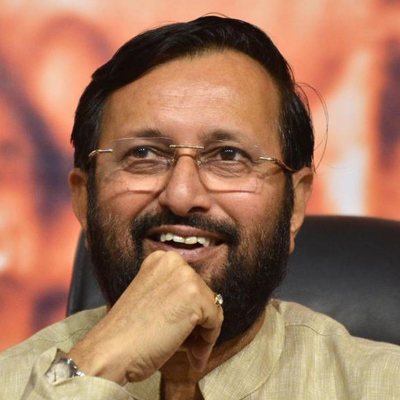
    However, Information and Broadcasting Minister Prakash Javadekar told Parliament that ‘no complaints have been received during the last three years regarding telecast of Pakistan TV in the bordering districts of the country.’


    He said strengthening of TV coverage of Doordarshan to counter the anti-India propaganda along border areas is an ongoing process. Doordarshan has been assigning priority for expansion of its coverage in the border areas of the country in various expansion plans formulated from time to time. Special packages for expansion and improvement of Doordarshan services in Jammu and Kashmir (J&K) have also been implemented in the past.


    At present, Prasar Bharati has informed that 112 TV transmitters of varying power are functioning in the districts near the Pakistan border.

    Javadekar said that to further strengthen TV coverage in J&K, a scheme was approved in the 11th Plan which includes projects of establishment of five high power TV transmitters in J&K (Kashmir region- 1; Jammu region-1; Ladakh region-1 besides 2 high power transmitters at Rajouri).


    These projects are expected to be completed in phases, in about two years, he added. 


    Meanwhile, DD sources told indiantelevision.com that all areas uncovered by terrestrial transmitters in border areas along with the rest of the country have been provided with multichannel television coverage through Doordarshan’s free-to-air direct-to-home platform Free Dish which can be received anywhere in the country with small sized dish receiver units.


    However, All India Radio and DD terrestrial coverage in the border areas in Jammu and Kashmir is being strengthened with an outlay of Rs 1 billion in the 11th Plan.


    A total of 273 TV transmitters of varying power are presently functioning in the border areas all over the country, DD sources told indiantelevision.com

  • DTH ops plea: Exclude content cost from AGR

    DTH ops plea: Exclude content cost from AGR

    MUMBAI: The Telecom Regulatory Authority of India (TRAI), last week, came out with the much needed recommendation paper on new DTH licences. The issue had come into light when India’s oldest DTH operator Dish TV was nearing the end of its 10 year licence that was given to it when it started operating.


    While the need for fresh and transparent rules came up, TRAI issued a consultation paper in October 2013 and it was just last week that it came up with its recommendation paper on the same. What most DTH operators were glad about was the reduction in the annual licence fee from 10 per cent of gross revenue (GR) to 8 per cent of adjusted gross revenue (AGR). This would mean that the DTH industry in all will save around Rs 200 crore to Rs 300 crore.


    The AGR is calculated after deducting service tax, sales tax and entertainment tax from the GR. TRAI states that since there has been growing convergence of telecom and broadcast, the 8 per cent is aligned to the unified licence (UL) in the telecom field. The recommendation paper states that in the UL, AGR is arrived at by excluding taxes and charges of ‘pass through’ nature. Even though TRAI states that there is no such charge of ‘pass through’ nature for DTH players, the latter disagrees.


    “We were hoping for either a 6 per cent of AGR or 8 per cent of AGR with ‘pass through’ of content cost,” says Videocon d2h CEO Anil Khera. When a few months ago, the Ministry had sent notices to all the DTH operators to pay the licence fee dues, they had taken the issue to court. Tata Sky CEO Harit Nagpal had then said that the Ministry of Information and Broadcasting had itself asked the Finance Ministry to reduce the fee from 10 per cent to 6 per cent.


    The paper says that two DTH operators had recommended that for calculating AGR, deduction should be made for not just service tax, sales tax and entertainment tax, but also for content costs, transponder costs, hardware sales revenue etc.


    Dish TV CEO and soon to be DTH Operators Association president RC Venkateish says that the fight for exclusion of content cost isn’t over yet. He says, “We will approach the Ministry of Information and Broadcasting to press for content cost to be excluded from the AGR. Like we had said, either it should be removed or else the licence fee should be brought down to 6 per cent of AGR instead of the recommended 8 per cent of AGR.”


    The parliament was told in April 2013 that six private DTH operators paid Rs 307.8 crore as licence fee to the government for the year 2011-12. According to figures furnished in the reply to the Parliament, Tata Sky paid licence fee of Rs 79.3 crore in 2011-12 as against Airtel Digital’s Rs 61.87 crore and Dish TV’s Rs 30 crore. Sun Direct paid Rs 36 crore, Reliance Big TV paid Rs 9.5 crore, and Videocon d2h paid Rs 5 crore.


    For now, the recommendations are pending with the Ministry for approval.

  • Three complaints of TV shows promoting superstition & blind belief registered in 2013-2014

    Three complaints of TV shows promoting superstition & blind belief registered in 2013-2014

    NEW DELHI: Information and Broadcasting Minister Prakash Javadekar has said there were only three complaints of television channels promoting superstition and blind belief in 2013 and 2014.


    He told Parliament that the existing provisions contained in the Programme and Advertisement Codes and existing mechanism are considered adequate to regulate content.  


    However, advisories were issued in November 2011 and June last year to all channels not to promote such programmes.


    The complaints on which warnings were issued include: ‘Ladkiyon Ka Gumnaam Bodyguard’ which promoted superstition and blind belief on Bansal News last year and ‘Rahasya’ for promoting superstition and blind belief on India News earlier this year.


    An advisory was issued following telecast of ‘Aaj No Mahima, Desh Ni Gruh Dasha’ showing superstition and blind belief on Sandesh News (Transmedia News) in June last year.


    Javadekar said the Cable Television Networks (Regulation) Act 1995 and the Rules framed thereunder do not provide for any pre-censorship of such programmes.


    However, programmes telecast on such TV channels are required to conform to the Programme Code prescribed under Rules 6 of Cable Television Network Rules 1994. Specifically, Rule 6 (1) (j) of the Programme Code provides that no programme should be carried in the Cable Service which encourages superstition and blind-belief.


    Appropriate action is taken against the channel, if violation of the Programme Code is established. 

  • Over 100 additional MSOs get 10 year licences, 16 fail to get clearance

    Over 100 additional MSOs get 10 year licences, 16 fail to get clearance

    NEW DELHI: A total of 104 multi-system operators (MSOs) all over the country have been granted permanent registration for 10 years to operate the digital addressable system while the licences of 16 MSOs have been cancelled.


    The MSOs in both the approved and the cancelled list had been given provisional permission earlier.


    Those who have got permission include IndusInd Media and Communications, Hathway Cable & Datacom, Manthan Broadband, Den Network, Home Cable, Digicable Network, Delhi Distribution Company and Asianet Satellite Communications.


    Kolkata based MSO Digicable Communications has been denied permission after the break-up of the joint venture with Mumbai based Digicable Networks, which has received permission for Greater Mumbai, National Capital Territory of Delhi and Greater Kolkata.


    Digicable Network India managing director & CEO Jagjit Singh Kohli said that they would ask for a stay on MIB’s decision to cancel the licence in the court. 


    Other cancelled permissions include Skynet Digital Services, Jai Maa Vaishno Entertainment, Intermedia Cable Communications, Supersonic Networks and Godfather Communications.


    Industry sources said that the approved list was in addition to the 140 whose names had been approved in March last year.


    The Ministry website mib.nic.in has added information about the approved MSOs, listing the areas for which they have been given permission.


    The website also contains the reasons in brief for the denial of permission to those which have failed to get the licences. In most cases, it is due to failure to get clearance from the Home Ministry.


    The new list is the outcome of Open Houses held by the Ministry with various MSOs, while some have come as a result of court cases. 

  • Over 1400 designs received from general public for DAVP ads: Javadekar

    Over 1400 designs received from general public for DAVP ads: Javadekar

    NEW DELHI: Information and Broadcasting Minister Prakash Javadekar has said that the government has received 1470 designs from the general public for advertisements to be issued by the Directorate of Advertising and Visual Publicity (DAVP).


    The Minister said in an informal chat that the response of the public came after the Ministry sought public participation on 15 July. Earlier, all the advertisements were designed by the DAVP.


    He said the top advertisements will be awarded by the Ministry with cash awards, but did not disclose the amount.


    He also said that this will be an ongoing process but the theme will be given by the DAVP or the Ministry. 

  • CBFC has powers to issue multiple certificates on various versions of films

    CBFC has powers to issue multiple certificates on various versions of films

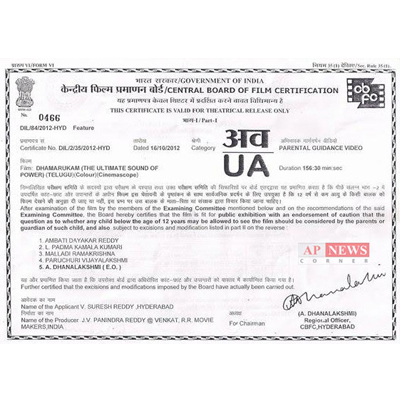
    NEW DELHI: The Delhi High Court has been informed that the Central Board of Film Certification can issue multiple “certifications” with respect to various versions of a film. 


    In its affidavit filed before a bench of Chief Justice G Rohini and Justice R S Endlaw, the Information and Broadcasting Ministry said the certificate is issued on the content as and when it is changed while being shown on TV channels. 

    The submission was in reply to a public interest litigation opposing issuance of universal certificates to an adult movie after deletion of some contents. The petition was also against the practice of conversion of ‘A’ films into ‘U/A’ and ‘U’ to enable their telecast on TV channels. 

    “Provision of the Cinematograph Act and Rules clearly provide for multiple certifications being issued with respect to various versions of one particular film.


    “Under the Cinematograph Act, the certification is done of the content and when there is change in content, recertification is required and is done,” the Ministry said. 

    The CBFC “has absolute power to certify films and it is also a competent authority to entertain applications seeking certificate of films which are altered by way of deletion/addition of certain scenes/dialogues.” 

    The plea was filed by Edara Gopi Chand, vice-president, Media Watch-India through advocate Gaurav Kumar Bansal. 

    The petitioner said children and adolescents are exposed to ‘adult’ film material like drug use, adultery, extramarital affairs, ribald comedy, intimate scenes of romance and sexuality, ‘item songs’ with vulgar lyrics and dance sequences, scenes involving rape and other heinous acts against women, films with extreme violence, films of horror and thriller genres etc. 


    “The adverse impact of such content on the impressionable minds of children and adolescents is well-established by various research studies at national and international levels. By such exposure, the due right of minors to be protected from harmful/age-inappropriate media content is being violated,” the plea said. 

  • TRAI to study how interoperability in DTH can be made effective

    TRAI to study how interoperability in DTH can be made effective

    NEW DELHI: The Telecom Regulatory Authority of India (TRAI) that released a recommendation paper on the new DTH licensing regime amongst other things also covered the issue of set top box (STB) interoperability. In the paper, the Authority has said that STB interoperability is not possible because of the different technologies adopted by the operators due to them entering the market at different times.


    TRAI thus, has asked the bureau of Indian standards (BIS) to regularly keep updating the standard of STB technology.


    Just one day after the recommendation paper, the Authority has now been asked by the Information and Broadcasting Ministry (I&B) to give its recommendations on how the portability of direct-to-home (DTH) set top boxes can be done easily.


    Stating this, I&B Minister Prakash Javadekar today told Parliament that the interoperability of DTH customer premises equipment has not so far proved to be effective due to various techno-economic reasons.


    The interoperability had been envisaged in the DTH licence conditions, he said.


    The portability in DTH service can be achieved through technical interoperability or through commercial interoperability.

  • DTH licensing recommendations: TRAI restricts vertically integrated broadcasters from owning more than one DPO

    DTH licensing recommendations: TRAI restricts vertically integrated broadcasters from owning more than one DPO

    MUMBAI: The Telecom Regulatory Authority of India (TRAI) has come out with some rules and regulations regarding a host of issues including crucial ones such as DTH licences and cross holding. In a recommendation paper that it gave out, it has said that certain restrictions be placed on vertically and horizontally integrated broadcasters and distribution platform operators (DPOs).


    A vertically integrated broadcaster will be permitted to control only one DPO while a vertically integrated DPO will be restricted from controlling any other DPO of other category in the relevant market. For this it has defined the meaning of cross holding and control to be as: ‘a broadcaster includes the broadcaster itself, its subsidiary companies /associate companies/ companies of its relatives, its holding company and subsidiary companies /associate companies/ companies of its relatives of its holding company and any other broadcaster in its control. Similarly, a DPO includes the DPO itself, its subsidiary companies /associate companies/ companies of its relatives, its holding company and subsidiary companies /associate companies/ companies of its relatives of its holding company and any other DPO in its control.’


    In its paper, TRAI states that ‘In order to ensure orderly growth of the broadcasting and distribution sectors and to avoid compromises or limitations on competition, certain cross-holding restrictions may be required to be put in place. Accordingly, the Authority recommends uniformity in the policy of cross holding /control between broadcasters and DPOs and amongst DPOs in the broadcasting and distribution sector.’


    Depending on the shareholding patterns as prescribed by TRAI, companies will have to restructure their operations within one year. Industry sources say that the only two probable companies that are likely to be affected are the Zee group with Siti Cable and Dish TV and the Sun group with Sumangli Cable and Sun Direct.


    However TRAI also states that there can’t be cross holding amongst DPOs of different categories. The paper states, ‘there cannot be any cross holding/control between an MSO (A), MSO cum HITS operator (B) or a HITS operator (C) and a DTH operator (D), while there could be controlling stakes amongst A, B and C subject to market share restrictions, as specified from time to time.’


    DPOs have been given set parameters for market share/dominance. For DTH operators, the relevant market would be the entire country while for an MSO it is the state. The market share of a DPO would be the number of active subscribers of that DPO as a percentage of the total number of active subscribers of that category of DPOs.


    On the DTH side, most operators are glad with the outcome of the paper that will now go through the Ministry of Information and Broadcasting (MIB). Says DTH Operators Association of India president and Tata Sky CEO Harit Nagpal, “We are glad with the outcome. There were two main issues that needed to be addressed: continuity of DTH licences and licence fee. The paper has made both amply clear, the migration process included. When the licence fee of 10 per cent was introduced there wasn’t any additional service and entertainment tax on it. We had been asking for relief on the licence fee to be calculated on adjusted gross revenue rather than gross revenue.”


    The period of DTH licence has been extended from the current 10 years to 20 years while the one time entry fee has been retained at Rs 10 crore. The big relief is the reduction of licence fee from 10 per cent of gross revenue (GR) to 8 per cent of adjusted gross revenue (AGR). An industry source said that the DTH industry earns anywhere between Rs 8000 crore to Rs 9000 crore annually, pegging the savings that will come due to the 2 per cent relief at nearly Rs 200 crore. “The reprieve on overall taxation is the highlight point. Although industry would have liked it to be 6 per cent of AGR, this isn’t bad at all,” said the source.


    Speaking on the new guidelines, Videocon director Saurabh Dhoot says, “This is a step in the direction towards encouraging industry riddled with high taxation and double taxation. However, content cost not included in deduction remains a concern area.”


    Supporting the extension of DTH licence, TRAI states that though the guidelines are silent on the provision of extension, it could not be its intent to disallow them from continuing their business post 10 years of existence. ‘Starting a DTH business entails a huge investment of resources. It would, therefore, be a reasonable expectation on the part of DTH licensees that, on the expiry of the initial 10 year licence, they would be eligible to apply for issue of a new licence, so that they could continue their business,’ it states.


    The new DTH licensing regime has been brought to bring fair degree of stability in the sector, to proper overall growth of the sector as it will create a conducive environment for investment from strategic investors. This will in turn spur innovation in terms of adoption of better technology and services.


    The DTH Operators Association had requested TRAI to consider initial licence of 20 years which it has agreed to give on the lines of Telecom licence while its second request of a 20 year extension has been kept to 10 years. ‘The Authority also recommends that the renewal shall be on the terms and conditions, including renewal fee, specified by the Licensor (MIB), in consultation with the TRAI.’


     AGR is calculated by excluding service tax, entertainment tax and sales tax/VAT paid to the government from the GR. The annual licence fee shall be subject to a minimum of 10 per cent of the entry fee while the licence should have a provision that prescribes that the licensor has the right to modify the licence fee as a percentage of AGR any time during the currency of the agreement.


    The earlier rule of providing a bank guarantee (BG) of Rs 40 crore has been changed. Licencees will have to furnish a BG for an amount that is equal to payable licence fee for two quarters and other dues not otherwise securitised.  The BG has to be valid for a year and renewed on a year on year basis in a way that it will be valid for the entire licence period. New entrants will have to give a fixed BG of Rs 5 crore for first two quarters and then continue in the manner prescribed above.


    Those DTH operators that are serving their time in the existing regime can migrate to the new regime any time during its current licence period. Before migrating, it has to however clear dues and fulfill obligations under the old regime as well as clear legal cases. The ones who want to migrate will have to pay the entry fee again for a new licence but a rebate, commensurate to the remaining licence period may be granted to them.


    The quantum of migration fee will be as follows:


    Migration fee = [Entry fee in the new DTH licensing regime – (Entry fee under existing License/existing license period i.e. 10 years) x (No. Of years remaining in the existing regime at the time of migration)]. In this formulation part of a year is not to be counted.


    Currently, STB interoperability isn’t possible because of the different technologies being adopted by the operators due to their entering the market at different times. Therefore, the bureau of Indian standards (BIS) has been asked to regularly keep updating the standing of STB technology, in consultation with TRAI. A tariff order for DTH was recommended by TRAI last year that allowed an easy exit option to subscribers, ensuring availability of consumer–premises-equipment (CPE – that primarily consists of STB and Dish antenna) at reasonable prices, easy to understand terms and conditions and at the same time, protecting the interests of the service providers. This order is sub-judice in TDSAT.
  • TRAI recommendation on media and ownership including cross-media issues expected next month

    TRAI recommendation on media and ownership including cross-media issues expected next month

    NEW DELHI: More than 15 months after its second consultation paper on media ownership, the Telecom Regulatory Authority of India (TRAI) is expected to come out with its recommendations on media control and ownership including the tricky issue of cross-media ownership next month.


    TRAI chairman Rahul Khullar has said that he hopes the final recommendation will be out in early August but says that at the latest it would be available before the end of the month.


    TRAI had in 2008 and in its consultation paper in February 2013 given its view on the matter in which it ruled out state and government ownership leading to a furore since states like Tamil Nadu and West Bengal have applied for state ownership of either television channels or TV signal distribution. After issuing the paper, TRAI had also organised several Open House meets with stakeholders in different parts of the country. Open Houses were in Ahmadabad, Hyderabad, Delhi, Bhubaneswar and Indore.

    It has gained urgency with Tamil Nadu once again raising the issue of Arasu licensing for Digital Access Systems.

    While bodies like the Delhi Union of Journalists have suggested dismantling of existing monopolies and cross media empires, Times Television Network wants a ban on entry of lobbyists having association with public relations or political parties, religious bodies, urban and local administrative bodies, central government ministries and departments, and central government owned companies undertakings.


    However, the Indian Newspaper Society feels TRAI should stay out of this as this will mean placing restrictions on the print media with which TRAI is not authorised to deal.

     
    Besides media companies, industry bodies including Cable Operators Association of India, CII, CASBAA, FICCI and IAMAI also participated in consultation process.


    In its paper issued in February last year, TRAI had sought comments on devising ownership rules for vertical integration between broadcasting and distribution entities.

     
    The paper was expected to devise rules/restrictions in case of mergers and acquisitions in the media sector, and media ownership rules within and across media segments.


    Methodology to measure ownership or control of an entity over a media outlet, identification of genres to be considered while framing media ownership rules and prescribing norms for mandatory disclosures by media entities are some other issues.

     
    TRAI also discussed in its paper issues relating to identification of media segments wherein media ownership rules are to be prescribed, and identification of relevant markets for evaluating various parameters to be used for devising ownership rules and the methodology for measuring these parameters.

     
    At the outset, TRAI said the paper had been issued at the request of the Information and Broadcasting Ministry earlier last year following a report of the Administrative Staff College of India, in Hyderabad.


    TRAI said that it was felt that reasonable restrictions may need to be put in place on ownership in the media sector, to ensure media pluralism and to counter the ills of monopolies. It pointed out that such restrictions do exist in many international markets.


    In the Open Houses, a majority of the participants in the fifth Open House on Media Ownership in Indore today alleged that the media in the country was in the hands of just a handful of large corporate houses.

  • Revised guideline for rational pricing of satellite transponders soon, says Govt

    Revised guideline for rational pricing of satellite transponders soon, says Govt

    NEW DELHI: The government is processing a revised policy guideline for allocation and pricing of transponders based on the review and approval of INSAT Co-ordination Committee (ICC) and Space Commission.


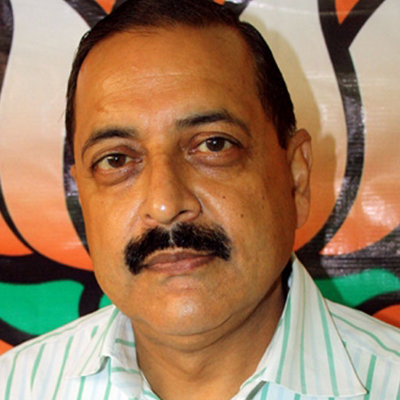
    Parliament was told on 23 July by Department of Space Minister in charge Jitendra Singh that the new guideline envisages a rational classification structure for users such as strategic, government including societal, not-for-profit PSUs and commercial to form a basis for allocation and pricing of transponders. 

    At present, there are 12 INSAT/GSAT satellites in orbit, out of which 10 are communication satellites and two are meteorological satellites. In INSAT/GSAT satellite system there are 41 government users and 59 non-government users are utilising the capacity in C band, extended C band and Ku band to the extent of 152 transponders (36 MHz equivalent each). 

    At present, a uniform pricing policy is implemented for all categories of users. However, a multi-pricing policy for transponders is under the consideration of the government as INSAT systems transponders are utilised for non-profit purposes viz. governmental, societal, strategic as well as for commercial purposes.