Category: Regulators

  • TDSAT directs Taj TV to restore Zee signals to Hathway; to hear MSOs plea late next month

    TDSAT directs Taj TV to restore Zee signals to Hathway; to hear MSOs plea late next month

    NEW DELHI: Taj Television has been directed by the Telecom Disputes Settlement and Appellate Tribunal (TDSAT) to restore with immediate effect the signals of Zee TV channels to Hathway Cable and Datacom, pending final hearing of the petition by the latter.


    TDSAT Chairman Justice Aftab Alam and member Kuldip Singh also directed Hathway as an interim measure to make payment of the monthly subscription fees from 1 April 2014 (in case of Kolkata and Digital Addressable System – II areas) and from 1 May 2014 (in case of Delhi and Mumbai) up to 31 July at the rate of Rs 21.60 cost per subscriber basis.


    The Tribunal has asked Taj to reply to the petition filed by Hathway in three weeks and asked Hathway to file a rejoinder if any, two weeks thereafter.


    Zee channels were earlier being distributed to Hathway by Media Pro but the latter was not in a position to renew the agreements in view of the regulations issued by the Telecom Regulatory Authority of India around the same time the earlier agreements came to end.


    Thus, the Zee group of channels came to be handled by Taj Television. But when discussions between Hathway and Taj Television for Zee TV channels failed to yield any results, Taj TV on 26 June sent the RIO based agreement executed from its side. There was delay on the part of Hathway in executing the RIO based agreement and in the meanwhile, Taj Television issued the disconnection notice under regulation 6.1 on 8 July 2014 and the public notice under regulation 6.5 on 11 July 2014.


    On 28 July 2014, Hathway counter-signed the RIO based agreement and sent it back to Taj Television.  On the same day, Hathway also sent a cheque dated 31 July for Rs 16.8 crore.  


    According to it, this amount was in full payment of the arrears of the monthly subscription fees for the period 1 April to 31 July 2014, calculated at the rate specified under the fixed fee agreements with Media Pro that had expired on 30 March and 30 April.


    However, Taj did not accept the cheque and sent it back and deactivated the signals on 31 July.


    This led to the present petition by Hathway. During arguments, Hathway maintained that the RIO agreement can only come into effect prospectively and for the past period it can only be asked to make payment on the basis of the fixed fee agreement with Media Pro and at the rates as specified under the earlier agreements.


    The Tribunal has identified three main issues for decision:


    (i) Whether the RIO based agreement and the rates prescribed under the RIO would apply retrospectively from the date immediately following the expiry of the earlier agreement or prospectively from the date it was executed by both sides?


    (ii) Whether in the facts of this case, Hathway’s liability to make payment on RIO rates would arise from 26 June 2014 when the agreement was signed by Taj Television and it was sent to it for its counter signature?


    (iii) What would be Hathway’s liability towards payment of monthly subscription fee for the period immediately following the expiry of the earlier agreement and the date on which the RIO agreement between the two sides came into effect?
  • Hathway to provide Zee, Turner channels on a la carte

    Hathway to provide Zee, Turner channels on a la carte

    MUMBAI: It was three weeks ago when Taj Television, the distribution arm of Zee and distribution agent for Turner channels had issued a public notice against Hathway Cable and Datacom. It had had informed consumers that the Zee and Turner channels may be pulled off from Hathway’s network if the multi system operator (MSO) did not clear the pending subscription fees and sign the interconnection agreement. The deadline came to an end on 31 July, and immediately after that Taj Television switched off signals to Hathway.


    This resulted in Hathway moving the Telecom Disputes Settlement Appellate Tribunal (TDSAT) on 1 August. “As per the law, we had signed the interconnect agreement with Taj Television, but had raised a few objections, which wasn’t acceptable to the distribution arm of Zee. So they pulled off signals and we approached TDSAT today,” says a source close to the development.


    As per the source, Hathway wanted to sign a RIO deal and provide all the Zee and Turner channels on a la carte. This was unacceptable to the distribution arm.


    In its order today, TDSAT has asked Taj Television to restore the channel signals. Also, starting August, until any further order from the regulator,  Zee and Turner channels will be available on a la carte only on Hathway in the DAS I and II areas.


    As for the pending payment from April to July, the MSO will pay Rs 21.60 per set top box to the broadcaster. “The payment has to be made on an immediate basis,” the source reveals.


    The sports arm of Zee- Ten Sports however, remains unaffected since the MSO has its agreement with the sports broadcaster till 2015.


    Hathway on its part is also working out packages which will ensure that the consumer is not burdened with heavy cable bills. 


    The next hearing for the case has not yet been announced.  

  • Just over 37 million of the 65 million DTH subscribers active: TRAI

    Just over 37 million of the 65 million DTH subscribers active: TRAI

    NEW DELHI: The six private direct-to-home (DTH) operators were serving a total of 64.82 million registered subscribers at the end of the first quarter of the calendar year 2014.

    However, the number of active subscribers was 37.19 million, according to a report by the Telecom Regulatory Authority of India (TRAI).

    Apart from this, a large number of subscribers are served by Doordarshan’s DTH service.

    A total of 187 satellite television channels were encrypted (pay) out of the total 793 permitted by the Information and Broadcasting Ministry at the end of the first quarter ending March 2014. The number of pay channels is as reported by the broadcasters for which the rates have been taken on record.

    The maximum number of TV channels being carried by any of the reported MSOs was 387 in DAS areas, whereas the maximum number of channels carried is 100 in conventional analogue form.

    Apart from All India Radio, there are 242 private FM Radio stations in operation at the quarter ending March 2014. The status of operationalised private FM Radio stations is listed on the website of the I and B Ministry.

    The total number of internet subscribers has increased from 238.71 million at the end of December 2013 to 251.59 million at the end of March 2014, showing a quarterly growth of 5.4 per cent. Of these, the wired internet subscribers are 18.50 million and wireless internet subscribers are 233.09 million.

    The number of broadband internet subscribers increased from 55.2 million at the end of December 2013 to 60.87 million at the end of March 2014, showing a quarterly growth of 10.28 per cent.

    The number of narrowband internet subscribers increased from 183.51 million at the end of December 2013 to 190.72 million at the end of March 2014 with quarterly growth of 3.93 per cent.


  • TRAI to hold seminar on OTT with stakeholders in the capital

    TRAI to hold seminar on OTT with stakeholders in the capital

    NEW DELHI: A seminar is being organised by the Telecom Regulatory Authority of India (TRAI) in the capital to exchange views on key issues related to over the top (OTT) service.


    The seminar titled ‘Regulatory Framework for OTT Services’ will provide a platform for discussing key issues relating to OTT such as new developments in OTT, impact of OTT on telecom service providers (TSPs) and their counter measures, legal and regulatory framework for OTT.


    The meet will be held on 5 August at the PHD Chamber of Commerce in south Delhi. Eminent experts in this field and representative from the industry will take part in the seminar.

  • TRAI issues paper aimed at resolving controversial AGR for broadcast, telecom

    TRAI issues paper aimed at resolving controversial AGR for broadcast, telecom

    NEW DELHI: Following a multitude of cases by both telecom and broadcast operators, the Telecom Regulatory Authority of India (TRAI) has initiated a review of the definition of Gross Revenue (GR) and the permissible deductions to arrive at Adjusted Gross Revenue (AGR) in the context of the National Telecom Policy 2012.


    In a Consultation Paper on the subject, the Authority has examined the components of GR, AGR and minimum presumptive AGR, rates of Licence Fee and Spectrum Usage Charges, formats of statements of revenue and licence fee and audit and verifiability of revenue and licence fee.


    Stakeholders are expected to respond to the 24 questions raised in the Consultation Paper by 1 September and counter-comments by 8 September. TRAI has made it clear that there will be no extension to these dates.


    The paper on Definition of Revenue Base (AGR) for the Reckoning of Licence Fee and Spectrum Usage Charges will also examine the changes made in the licensing regime, the transition from the administrative allocation regime towards market-determined prices for spectrum, and the conclusion of tenure of many licences. The paper provides the relevant background information on the subject covering various issues involved.


    On the definition of AGR specifically, the Authority had in 2012 recommended that only the revenue from the wireless services shall count towards AGR calculation for the limited purpose of calculation of Spectrum Usage Charges (SUC) that would continue to be determined on service area basis, and should be levied only in respect of those service areas where the Licensee holds any access spectrum.


    TRAI wants to know whether there is a need to review/revise the definition of GR and AGR in the different licences at this stage; the guiding principles for designing the framework of the revenue sharing regime; and whether the rate of licence fee (LF) be reviewed instead of changing the definitions of GR and AGR, especially with regard to the component of USO levy, in the interest of simplicity, verifiability, and ease of administration.


    The paper also wants to know whether the revenue base for levy of licence fee and spectrum usage charges include the entire income of the licensee or only income accruing from licenced activities if the definitions are to be reviewed/revised.


    It has asked whether LF be levied as a percentage of GR in place of AGR in the interest of simplicity and ease of application, and should the revenue base for calculating LF and SUC include ‘other operating revenue’ and ‘other income’.


    The Government prepared a draft licence agreement for International Long Distance (ILD) services in September, 2000 containing a provision that LF was payable as a percentage of revenue. For the Public Mobile Radio Trunk Service (PMRTS) too, the revenue share regime was made applicable from 1 November 2001.


    The definition of AGR has been litigated since 2003. TSPs questioned the inclusion of various components of revenue in the reckoning of AGR as well as the legality of the definition before TDSAT. In 2006, TDSAT, after noting that revenue from non-licensed activities needed to be excluded from the reckonable revenue, asked TRAI to make recommendations on the inclusion or exclusion of the disputed items in the AGR. TRAI made its recommendations on 13 September 2006 and the Tribunal gave its final order in the matter on 30 August 2007 after accepting most (but modifying some) of TRAI’s recommendations.


    In the course of finalising the recommendations of the Authority on the reference from TDSAT, the views of DoT were obtained by the Authority through its representative and incorporated in the “Recommendations on components of Adjusted Gross Revenue” dated 13 September 2006. The Authority was informed that the basic rationale adopted by the Government while formulating the definition of AGR was that it should be easy to interpret – so as to pose fewer problems in application and less disputes and litigations, and to make it less prone to reduction in LF liability by way of accounting jugglery; and it should be easy to verify.


    The TDSAT’s judgment of 30 August 2007 was taken in appeal by DoT to the Supreme Court and was set aside by its judgment on 11 October 2011 on the grounds, among others, that TDSAT had no jurisdiction to decide the validity of the terms and conditions of the licence including the definition of AGR incorporated in the licence agreement. It was for DoT – and not TRAI and TDSAT – to take a final decision on the definition of AGR. The Supreme Court also held that a licensee can raise a dispute about the computation of AGR relating to a particular demand and that TDSAT can then examine whether the demand was in accordance with the licence agreement and the definition of AGR.


    The judgment of the Supreme Court settled important points of law and has clarified the nature of the contractual relationship between the Government as licensor and the TSPs. The judgment also laid down the parameters of institutional responsibility in arriving at the contractual terms and conditions; it held that: litigation regarding the computation of LF continues before the TDSAT in the case of individual demands made on TSPs. It has also been reported that writ petitions re-agitating the revenue share definition have been filed by TSPs in different High Courts. 

  • Star cannot disconnect HD signals to Hathway till next hearing: TDSAT

    Star cannot disconnect HD signals to Hathway till next hearing: TDSAT

    MUMBAI: The order for the Hathway versus Star India case puts things in order. The Telecom Disputes Settlement Appellate Tribunal’s (TDSAT) interim order states that as per an earlier order issued, multi system operator (MSO) Hathway Cable & Datacom has provided Star India with the subscriber management system (SMS) report for the period April to June 2014. Till the case is resolved, the Tribunal has carved out an interim financial measure to settle the dispute regarding Star’s entertainment and sports channels.


    Just as Star and Hathway had agreed to enter into a RIO deal for its sports channels, the broadcaster moved the TDSAT again claiming that Hathway had not made any payments after expiry of the earlier agreement between the MSO and MediaPro (which was then handling Star channels).


    Star had sent out disconnection notices against Hathway for its entertainment channels on grounds of nonpayment of dues. During the hearing, Star’s contended that since the MSO had taken its sports channels on RIO, the same must be followed for its entertainment channels without partiality. ‘Hathway cannot be permitted to indulge in duality and take some of Star’s channels on RIO terms and some other channels on negotiated terms; again Hathway cannot take the same channels in different parts of the country on different terms,’ claimed Star.


    Post this, the MSO said that it is willing to take its entertainment and sports channels at a cost per subscriber (CPS) basis of Rs 22 while Star asked for Rs 31. TDSAT as an interim measure has said that taking the mean of the two would be ideal. Therefore, from 1 August, Star will raise invoices on Hathway for monthly subscription fees for both genre channels at Rs 27 CPS basis.


    “It will be open to Star to take into account each and every set top box by means of which any Star channel is viewable. Hathway shall put any sports channels of Star in any of its bouquet as it may deem appropriate,” states the TDSAT order.


    Meanwhile for the period April to July, TDSAT has given permission to Star to raise invoices for its entertainment channels at the rate of Rs 23 CPS basis in the DAS areas of Mumbai and Delhi, where the agreement ended on 30 April 2014 and DAS areas of Kolkata and DAS II areas where the agreement came to an end on 31 March 2014. For the sports channels, invoices will be raised on RIO basis. The total of this, Rs 26.5 crore has been paid by Hathway on 30 July.


    These arrangements have been made for Star’s SD channels. Directions on its HD channels will be made in the next hearing, which is on 11 August and till then the broadcaster has been told not to disconnect its HD signals to Hathway.


    In the end, TDSAT makes it clear that this is only an interim arrangement as per current circumstances and will not operate as a precedent for any other case or parties.

  • Hathway pays Rs 26.5 crore to Star India

    Hathway pays Rs 26.5 crore to Star India

    MUMBAI: On 28 July, the Telecom Disputes Settlement Appellate Tribunal (TDSAT) had issued an order directing MSO Hathway Cable & Datacom to clear its four month dues of Rs 26.5 crore to Star India. The TDSAT had directed Hathway to make the payment by 30 July to which it obliged.


    The amount was to be calculated as the sum of Rs 23 per subscriber for Star India’s entertainment channels and RIO for the sports channels. However, a Star official has claimed this to add up to Rs 27 crore.


    As per the order, the two parties have been asked to settle the quarrel by entering into a cost per subscriber (CPS) deal from August. The MSO will have to pay Rs 27 per subscriber to Star. Hathway is allowed to bundle channels on its own given that at least one Star channel is available in one/any bouquet it offers to subscribers.


    The interim order was only to settle business issues between the two, even as the case continues and will be heard on 11 August next.


    The business discussion reached TDSAT when Hathway decided to remove Star Sports channels from its bouquets and offer it separately in a sports pack or as a-la-carte.

  • New govt issues licences to three new channels

    New govt issues licences to three new channels

    NEW DELHI: With the Government expediting the process of clearing permissions for new television channels after a lapse of almost three months in view of the Model Code relating to the General Elections, three new television channels have received permissions as on 28 July taking the total to 798.


    However, there has been some change in the tally of the channels. The total number of news channels has gone up from 393 to 397 while the number of non-news and current affairs channels (general entertainment channels) has come down from 402 to 401.


    To speed up the clearance process, the Information and Broadcasting (I&B) Ministry now holds the open house meetings with stakeholders twice every month instead of once.


    At present, the number of TV channels permitted for uplink from and downlink to India is 671 (of which 375 are news channels); while channels permitted for uplink from India but not permitted to downlink in India are 34 (of which 28 are GECs).


    93 channels including 77 GECs have been permitted to only downlink into India as they are uplinked from abroad.


    The three new channels permitted in June and July are the non-news Peace of Mind owned by God Media, the Punjabi news channel ABP Sanjha by Media Content and Communication Services, Patrika TV Rajasthan owned by Rajasthan Patrika which will beam news in Hindi, English and all other languages.


    A large number of new applications are pending including those of Star India for its second Tamil channel and Epic TV. Sources say that nearly hundred applications are pending clearance at various stages either with the I&B Ministry, Home Ministry or the Department of Telecom.


    The first four months of 2014 saw licences being given to nine channels including AXN HD and SET HD.

  • Hathway can bundle Star channels: TDSAT

    Hathway can bundle Star channels: TDSAT

    MUMBAI: The Star India and Hathway Cable & Datacom case regarding the former’s various channels has got an interim relief from the Telecom Disputes Settlement Appellate Tribunal (TDSAT). 


    As per the order passed on 28 July, TDSAT has asked both Hathway and Star India to enter into cost per subscriber (CPS) deals, starting August. According to this deal, the multi system operator (MSO) will pay Rs 27 per subscriber to the broadcaster for its entire bouquet, which includes entertainment and sports.


    It can be noted that earlier Hathway had two separate deals with the broadcaster- one for its sports channels handled separately and the other for the entertainment channels, which was handled by the now dissolved joint venture MediaPro.


    The Rs 27 CPS deal is a mid way arrangement proposed by TDSAT as against Hathway’s demand for Rs 22 per subscriber deal and Star’s Rs 31 per subscriber deal.  This means that the MSO has to pay an additional amount for the sports channels now, on a set top box deal, as compared to the RIO deal earlier.


    In its interim order, TDSAT has also clarified that Hathway has all the right to bundle the channels the way it feels right. However, the MSO will have to include at least one channel in one/any bouquets that it offers to its subscribers. 


    The issue had gained magnitude when Hathway decided to remove Star Sports channels from its base pack to create a separate sports pack and also provide them a-la-carte. The broadcaster objected to this move and took the MSO to the court.


    Meanwhile, the court has asked Hathway to clear its dues from April to July this year. This can be calculated at Rs 23 per subscriber for its entertainment channels and RIO for its sports channels together. While Star claims that this amounts to a total of Rs 27 crore, according to Hathway officials, the price is still being worked out. The total amount has to be paid by 30 August. A Hathway official says, “We are disappointed with this particular point as we believe that Rs 23 is much higher than the amount we would have actually paid to Star India as per the agreement between Star and Zee for price sharing after the split of MediaPro.”


    A source from Star India says, “Hathway was not paying us because of lack of clarity in the payment deals of sports and entertainment together. With this order, the integrated CPS has been recognised.”


    However, both parties agree that this case cannot be taken as a basis for future deals with others. According to officials from both Hathway and Star, the Rs 27 CPS deal cannot be applied to other distribution platform operators.


    The case will next be heard on 11 August.

  • Delhi High Court stays EC’s paid news notice to Ashok Chavan

    Delhi High Court stays EC’s paid news notice to Ashok Chavan

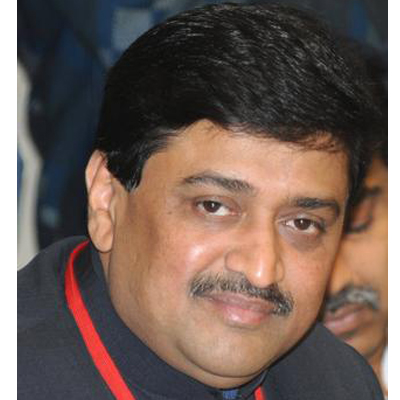
    NEW DELHI: Former Maharashtra chief minister Ashok Chavan has received an interim relief with Delhi High Court putting a stay on the show cause notice issued by the Election Commission to the Congress politician.


    The Court also issued notice to BJP leaders Mukhtar Abbas Naqvi, Kirit Somaiya and one independent candidate who had filed complaint against Chavan to the EC.


    The poll panel in the notice on 13 July had asked Chavan who had stood from Nanded in Maharashtra as to why he should not be disqualified for not giving correct details of his 2009 poll expenses.


    A fortnight ago, the Commission had set a 20-day deadline for Chavan to respond to the notice, saying he had “failed to lodge his account of election expenses in the manner required by the (Representation of the People) Act and rules.”


    Chavan had moved the court against the EC’s order, saying the panel had not followed the procedure laid out in the Representation of People Act prior to giving its findings.


    He had also said that the expenses that he had allegedly not declared pertained to some advertisements that were released in October 2009 regarding a meeting that was to be held between the members of United Progressive Alliance (UPA).


    Senior advocate Kapil Sibal appeared for Chavan and argued that the ex-CM did not know who had issued the advertisements.


    Chavan had won the 2009 assembly election from Bhokar in Maharashtra’s Nanded Lok Sabha constituency. He won the recent Lok Sabha polls from Nanded.


    It was contended that Chavan had incurred an expense of over Rs 16,000 for attending the UPA meeting that was advertised and that he had cited the same while filing his poll spends.