Category: Regulators

  • TRAI releases recommendations on media ownership

    TRAI releases recommendations on media ownership

    MUMBAI: The Telecom Regulatory Authority of India (TRAI) has released the much awaited recommendations on media ownership.


    Here are the highlights of the recommendation paper:

    – The news and current affairs genre will be most important and relevant genre in the product market for formulating cross media ownership rules.

    – The relevant geographic market should be defined in terms of the language and the state in which the language is spoken majorly.

    – A combination of  reach and volume of  consumption  metrics should  be used for  computing market shares for  the  television segment. For calculating market shares, the GRP of a channel should be compared with the sum of the GRP ratings of all channels in the market and the market share of an entity would be the sum of the market shares of all channels controlled by it.

    – The    Herfindahl   Hirschman   Index   (HHI)    be    adopted   to    measure concentration in  a media segment in a relevant market.

    – The   cross-media  ownership  rules  be   reviewed three  years  after  the announcement of  the   rules by  the   licensor and  once every   three years thereafter. The  existing entities in  the  media sector which are  in  breach of  the  rules, should be  given  a maximum period of  one  year to  comply with  the  rules.

    – Mergers and  Acquisitions (M&A) in the   media sector will  be  permitted only  to the  extent that the  rule based on  HHI is not  breached.

    As far as vertical integration is concerned, the TRAI sticks to the ones given in the ‘Recommendations on Issues related to  New DTH Licenses’

    The regulator states that six years have passed without any concrete action on its recommendations of 2008 and 2012. It suggests that these be looked at as well.

    – The     entities   (political  bodies,   religious   bodies,   urban,    local, panchayati raj,  and other publicly funded bodies, and Central and state government ministries, departments, companies, undertakings, joint ventures and government-funded entities and affiliates to be barred from entry into broadcasting and TV channel distribution sectors.


    – That in  case permission to  any such  organisations have already been granted an appropriate exit  route is to be provided;

    – That the arm’s length relationship between Prasar Bharati and the government  be   further  strengthened and  that  such measures should ensure  functional independence and  autonomy of  Prasar Bharati

    – That  pending enactment of  any new   legislation  on   broadcasting, specified disqualifications for  the  entities in  (a) above from  entering into broadcasting and/ or TV channel distribution activities should be  implemented  through  executive decision  by  incorporating the disqualifications    into     rules,  regulations and  guidelines as necessary.

    – Even  surrogates of the entities listed above should be  barred from  entry into  broadcasting and TV channel distribution sectors.


    “Advertorials”, or  for  that matter any  content which is paid   for,  a clear disclaimer should be mandated, to  be printed in  bold  letters, stating that the  succeeding content has been   paid   for.  Placing such a disclaimer in fine print will not suffice. Action on advertorials and other material which is paid  for may  be taken immediately.


    On grounds of the inherent conflict of interest, ownership restrictions on corporates entering the media should be seriously considered by the Government and the  regulator. This may entail restricting the  amount  of equity holding/ loans by a corporate in  a media company, viz.,  to comply with  provisions relating to control.

    Editorial   independence   must    be     ensured   through   a   regulatory framework.

    With respect to a ‘media regulator’ it recommends the following:


    – Government should not  regulate the  media


    – There should be single regulatory authority for TV and print mediums


    – The regulatory  body  should  consist  of   eminent  persons  from different walks of life, including the  media. It should be manned predominantly by eminent non-media persons;


    – The  appointments to  the  regulatory body  should be done through a just, fair,  transparent and impartial process;


    – The “media regulator” shall inter alia entertain complaints on “paid news”; “private treaties”; issues related to editorial independence; etc,  investigate the complaints and shall have the power to impose and enforce an appropriate regime of penalties.

    The  Authority also recommends that a commission, perhaps headed by  a retired Supreme Court Judge,  be  set up to  comprehensively examine the various issues relating  to   the  media, including the  role   and  performance of  various existing institutions,  and  the   way   forward.  

     

    Click here for the recommendation paper

  • Dispute deepens between Star India and Hathway

    Dispute deepens between Star India and Hathway

    MUMBAI: The case is up for a long hearing, with no resolution coming out soon. Star India and Hathway Cable & Datacom have emerged from another round of the Telecom Disputes Settlement Appellate Tribunal (TDSAT) hearing with just another date in their hand.


    While the earlier interim order still applies, the broadcaster feels that there is an issue of under declaration of subscriber numbers. Earlier last week, Hathway had submitted to Star, its subscriber management system (SMS) report for April to July which according to sources is an average of 4.4 million.


    However, a Star India executive informs that it wasn’t satisfied with the declaration and had filed a clarification application regarding number of active subscribers. To this, Hathway responded today in TDSAT that the declared numbers were indeed active subscribers. The MSO had also responded to the application that it had already furnished the required SMS report, post which the broadcaster withdrew it.


    Hathway had paid Rs 26.5 crore for DAS I areas of Mumbai and Delhi, DAS areas of Kolkata and DAS II areas. However, the Star executive feels that the MSO has omitted the subscribers of its sports packs and the amount paid should be higher.


    “We have now given the details to our auditor to evaluate and then we will be raising invoices on the same,” says the executive.


    The case has now been postponed to another date.


  • IIS rules amended for a principal DG position in six media units of I&B Ministry

    IIS rules amended for a principal DG position in six media units of I&B Ministry

    NEW DELHI: Seven posts in six media units of the Information and Broadcasting Ministry will be headed by officials of the rank of principal director general, though only one will be in the higher grade and the others will be in the selection grade.


    Although it has still not made any official announcement about changes made in the top posts of some its media units including the Press Information Bureau (PIB), the Ministry has now placed on its website a copy of the Indian Information Service (Group A) amendment rules 2014 as notified in the official gazette late last month.


    According to the amendments, one post in each of the six media units – news services division of All India Radio (AIR), director general of Doordarshan, the Registrar of Newspapers in India, the Directorate of Advertising and Visual Publicity, Directorate of Field Publicity, and two posts in the Press Information Bureau (PIB) will be held by principal director generals.


    The designation of the incumbent holding the higher grade will be principal director general and it will remain unchanged irrespective of the media unit, except in the Registrar of Newspapers of India where the post will be designated as press registrar.


    The insertion of the amended rules comes within two days of the announcement of Neelam Kapur, who had been holding the post of principal director general of media and communication of the PIB, being shifted to the directorate of field publicity and being replaced by Frank Noronha who had been posted in DFP. In another significant change, Archana Dutta who is director general of news in AIR was given additional charge of DD News, whose head SM Khan was placed on compulsory wait.


    The amendment also detailed the necessary changes that were being made in the rules of 2013.


    Highly placed sources had told indiantelevision.com that while Kapur has not been demoted as she retains her position as principal DG which is of secretary level; the DFP is seen as an office lower in stature to that of PIB, as the head of that office serves as the official spokesperson of the government.

  • TDSAT expresses displeasure over Hathway-Taj TV squabble, agrees to hear matter next week

    TDSAT expresses displeasure over Hathway-Taj TV squabble, agrees to hear matter next week

    NEW DELHI: The Telecom Disputes Settlement and Arbitration Tribunal (TDSAT), which earlier this month gave a lengthy order settling a dispute between Hathway Cable & Datacom and Taj Television, has expressed its ‘deep displeasure over the manner in which both sides are sniping and chipping at each other giving rise to completely futile litigations.’


    The comment by TDSAT chairman Aftab Alam and member Kuldip Singh came following a new miscellaneous application on the issue by Hathway on 8 August and the announcement by Taj Television that it was also filing a miscellaneous application. The Tribunal listed the matter for further hearing on 13 August.


    Earlier this month, TDSAT had directed Taj Television to restore with immediate effect the signals of Zee TV channels to Hathway pending the final hearing of the petition by the latter.


    It had also directed Hathway as an interim measure to make payment of the monthly subscription fees from 1 April 2014 (in case of Kolkata and Digital Addressable System – II areas) and from 1 May 2014 (in case of Delhi and Mumbai) up to 31 July at the rate of Rs 21.60 cost per subscriber basis.


    The Tribunal asked Taj to reply to the petition filed by Hathway in three weeks and asked the MSO to file a rejoinder if any two weeks thereafter.


    However, following a new miscellaneous application by Hathway objecting to certain advertisements and scrolls being carried on Zee channels, TDSAT said, “Having regard to the amounts of revenue that is generated by the broadcasting industry, the vast social space occupied by it and the social role it claims to play, one should have expected the two sides, each of them major players in the industry, to act responsibly and show a modicum of restraint in their dealings with each other but they seem to be freely indulging in unseemly squabbles. What is more, they seem to show no regard much less any respect for the proprieties of judicial proceedings.”


    While TDSAT noted that Taj Television counsel Pratibha Singh was prepared to withdraw the advertisements and even invited Hathway counsel Arun Kathpalia to have a discussion with her on the issue, she said that distribution arm for Zee was preparing a miscellaneous application for recall or modification of the Tribunal’s order of 1 August.


    The Tribunal said: “It is surprising that an application is proposed to be filed for recall/modification of the order even before our signatures on the order are yet not fully dried. The reason stated for filing the application is even more surprising; it is stated that on that date, the local people at Taj Television and the counsel representing it were not fully posted with the facts, especially in regard to the placement agreements between the two sides.”


    Noting that “no party can be stopped from filing an application,” the Tribunal insisted that both parties must be present at the next hearing in person. 


    Zee Channels were earlier being distributed to Hathway by Media Pro but the latter was not in a position to renew the agreements in view of the regulations issued by the Telecom Regulatory Authority of India around the same time the earlier agreements came to end.


    Thus, the Zee group of channels came to be handled by Taj Television. But when discussions between Hathway and Taj Television for Zee TV channels failed to yield any results, Taj Television on 26 June sent the RIO based agreement executed from its side. There was delay on the part of Hathway in executing the RIO based agreement and in the meanwhile Taj Television issued the disconnection notice under regulation 6.1 on 8 July 2014 and the public notice under regulation 6.5 on 11 July 2014. However, Hathway later counter-signed the RIO based agreement and sent it back to Taj Television which refused to accept a cheque sent by Hathway. This led to the petition by the MSO. 

  • Neelam Kapur moved from top post in PIB, DD News ADG SM Khan put on compulsory wait

    Neelam Kapur moved from top post in PIB, DD News ADG SM Khan put on compulsory wait

    NEW DELHI: Neelam Kapur, who has been holding the post of principal director general of media and communication of the Press Information Bureau (PIB), has been shifted to the directorate of field publicity (DFP).


    Highly placed sources said Frank Noronha, posted in the DFP as director general, has been brought in her place.


    These sources said that while Kapur has not been demoted as she retains her position of principal DG which is of secretary level, the DFP is seen as an office lower in stature to that of PIB, where she was the official spokesperson of the government.


    Kapur had taken over in December 2008 after Deepak Sandhu’s retirement. Kapur’s removal could be seen as a move made because she was appointed at the time of the united progressive alliance government.


    Frank Noronha, a 1982-batch officer of the Indian Information Service, was earlier in PIB.


    There has been no formal announcement so far of these changes.


    He has worked as information officer in various ministries and has served as deputy press secretary in the Rashtrapati Bhavan during his long tenure, apart from heading the directorate of advertising and visual publicity immediately prior to his posting in DFP.


    Doordarshan News additional director general SM Khan who was heading DD News has been put on compulsory wait, and Archana Dutta who is director general (News) in All India Radio, has been given additional charge of Doordarshan News.


    During the run-up to the elections, Khan was reported to have delayed the transmission of Narendra Modi’s interview to Doordarshan. Answering a query about editing out certain portions, he had said this was done only because of references made about people who had not been given an opportunity to have their say.

  • Government won’t interfere in media: Prakash Javadekar

    Government won’t interfere in media: Prakash Javadekar

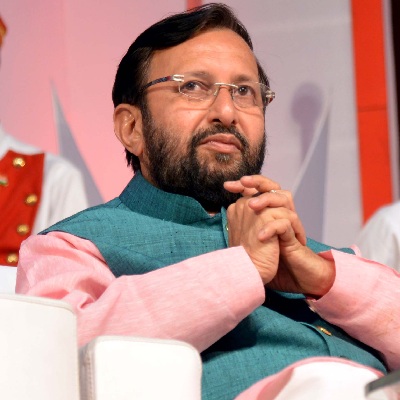
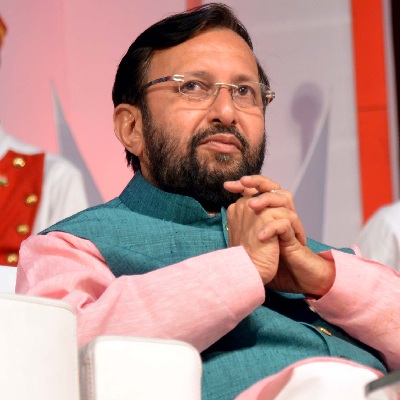
    MUMBAI: The new government has always been questioned about the freedom of media in the country. Responding to a question in the Rajya Sabha, Information and Broadcasting Minister Prakash Javadekar said that the government is committed to protecting the independence of the press, reports PTI.


    However, he also reiterated that freedom comes with responsibility and so media needs to look at itself by its own mechanisms. But what is needed is ‘improvement’ in these mechanisms with penal consequences for irresponsible reporting.


    As far as social media is concerned, Javadekar said that though there is a need to evolve a mechanism for regulating it, it comes under the information and technology law.


    Recently, two Telangana channels were blocked by MSOs- ABN Andhra Jyoti and TV9. On Javadekar’s query the state government said that it had nothing to do with the blocking. Asserting that media is independent, he said that MSOs can’t resort to such censorship. If the Ministry comes to know of any such case, it is empowered to take action.

  • Your WhatsApp could cost you, soon

    Your WhatsApp could cost you, soon

    MUMBAI: Telecom operators are worried with the increasing number of over the top (OTT) services that are using their bandwidth to provide share audio, video and text. Therefore, the Telecom Regulatory Authority of India (TRAI) decided to pacify everyone with a seminar to discuss the issue.


    The telecom industry claims that it is suffering huge losses due to platforms such as Skype, Whatsapp and Viber that provide similar services at no cost but the internet service charge. PTI reports Cellular Operators Association of India director general TV Ramachandran stating during the seminar, “We want some kind of regulatory help to get a level-playing field. There are so many regulations binding on us but the same don’t exist for OTT players. We can do a lot more if level-playing field is given to us.”


    According to data by PricewaterhouseCoopers managing consultant Neeraj Kataria, Skype usage is costing the telecom industry around $36 billion a year globally.


    On the other hand, when WhatsApp picked up speed in the country, several other such services such as Hike, Line, WeChat, Snapchat etc also emerged to eat a share of the pie.


    Ramachandran also shared his concern that OTT services can switch calls over the web outside India but telecom ops have to pay interconnect charges.


    Association of Unified Telecom Service Providers of India (AUSPI) president CS Rao said that OTT service providers have no rule regarding quality of service and consumer commitment. “If 20 per cent of our customers start using OTT service then burden on network will increase $55 per subscriber,’ he added.


    A report in Business Today states that telcos currently are losing around Rs 5000 crore per year due to these OTT services that will cross Rs 16,400 crore in next two years.


    On the other hand, Internet and Mobile Association of India president Subho Roy stated that TRAI should keep out of it since it is a business to business issue. But the TRAI secretary Sudhir Gupta is reported to have said that the purpose of the seminar is not to see if OTT services are cutting into telecom operators’ revenue but whether there is a need for regulating such service or not.


    Amid all this, Facebook India has also joined the Cellular Operators Association of India to ‘focus on mobile technology, access and its continued desire to work in collaboration with the industry to increase connectivity.’


  • TRAI wants to know if methods used for earlier spectrum auctions need change

    TRAI wants to know if methods used for earlier spectrum auctions need change

    NEW DELHI: The Telecom Regulatory Authority of India (TRAI) wants to know from stakeholders if additional spectrum in contiguous form in the 900 MHz and 1800 MHz band should be made available and whether only contiguous blocks of minimum 5 MHz spectrum should be put for auction.


    In a consultation paper on Valuation and Reserve Price of Spectrum: Licences expiring in 2015–16 issued today, TRAI has also asked what the block size should be to auction the spectrum in (a) 900 MHz band and (b) 1800 MHz band.


    The paper, which poses several questions for stakeholders, has to be replied to by 8 September with counter-comments if any by 15 September, after which an Open House would be held on the issue on 22 September in Delhi.


    The paper has been issued following a query by the Department of Telecommunications in April this year.


    Stakeholders have been asked to give views on what should the minimum quantum of spectrum in the 900 MHz and 1800 MHz band that (a) a new entrant and (b) an existing licensee should be required to bid for.


    It also wants to know if the licensee whose licences are due for expiry in 2015 and 2016 should be treated as an existing licensee or as a new entrant and should the valuation exercise for 1800 MHz spectrum be undertaken afresh for all the 22 LSAs.


    TRAI wants to know if the prices revealed in the February 2014 auction for 1800 MHz spectrum auction be taken as the value of 1800 MHz spectrum for the forthcoming auction in the respective LSA, and whether it would be appropriate to index it for the time gap (even if this is less than one year) between the auction held in February 2014 and forthcoming auction.


    The regulator wants to know the criteria for defining a ‘market clearing price’ and whether the valuation of spectrum and determination of reserve price should be done only for those LSAs where market clearing price was not achieved for 1800 MHz spectrum in February 2014 auction.


    Should the auction determined price for LSAs where market clearing price was achieved in February 2014 be taken as equal to the value of spectrum and should the market determined price be taken as the value of spectrum in all LSAs, TRAI wants to know.  


    It also wants to know the value of spectrum in the LSAs where market clearing price was not achieved by correlating the sale prices achieved in similar LSAs where market clearing price was achieved with known relevant variables.


    Should the value of spectrum in 1800 MHz band be assessed on the basis of producer surplus on account of additional spectrum, and is there any need for a change/revision of any of the assumptions adopted by the Authority in producer surplus, asks TRAI.


    It also wants to know whether the revenue surplus approach should be used to arrive at the value of 1800 MHz spectrum and should the values contained in the report of 8 February 2011 for spectrum up to 6.2 MHz be incorporated after indexation in the calculation of the average value of the 1800 MHz spectrum in the current exercise.


    Would it be appropriate to value 1800 MHz spectrum as the simple mean of the values thrown up in all the approaches and should the value of 900 MHz spectrum be derived on the basis of the value of 1800 MHz spectrum using technical efficiency factors (1.5 times and 2 times), it wants to know.


    Can there be any other method that could be used for arriving at the valuation of the 900 MHz spectrum, it asks. 

  • Gov asks Prasar Bharati to work out action plan for implementing Sam Pitroda Committee report: Javadekar

    Gov asks Prasar Bharati to work out action plan for implementing Sam Pitroda Committee report: Javadekar

    NEW DELHI: Prasar Bharati has been asked to prepare an action plan for undertaking the studies/reviews/audits on recommendations of the Sam Pitroda Committee.


    Information and Broadcasting Minister Prakash Javadekar told Parliament today that the pubcaster had been asked to apprise the Ministry about the outcome reports.


    In his reply, the Minister said that the report included recommendation of a study of independent sources of finances of Prasar Bharati.


    Meanwhile, a senior Prasar Bharati official who did not want to be named said that the Ministry should first clarify whether it has accepted or rejected the Pitroda report.


    The Pitroda Committee set up to review the working of Prasar Bharati had in its report in January this year stressed the need for constituting a Parliamentary Committee, as originally envisaged in the Prasar Bharati Act 1990 to ensure that the pubcaster discharges its duties in accordance with the provisions of the Act and Government defined duties.


    In the report submitted to the then Information and Broadcasting Minister Manish Tewari, it had recommended reorganisation of the pubcaster’s Board to make it a professionally managed body and make it more effective in guiding the organisation.


    Pitroda noted that Prasar Bharati’s vision must be to become a genuine ‘public broadcaster’ as against a ‘government broadcaster’.


    The report said there is need to effectively complete transfer of ownership and management of assets and human resource to Prasar Bharati ‘to make the organisation administratively and financially autonomous of government.’


    A regulatory body has to be set up to ensure public accountability of Prasar Bharati with respect to all content broadcast on its television and radio networks. The regulatory body should be a sub-committee of the Prasar Bharati Board.


    Interestingly, the Committee has suggested setting up of Prasar Bharati Connect (PBC) as the third arm of the public service broadcaster, independent of Doordarshan and All India Radio, to expand the social media. PBC should be mandated to manage the various social media initiatives of all the wings of Prasar Bharati. It also wants a social media strategy of Prasar Bharati.


    The Committee was set up on 28 January last year and had decided to set up 11 working groups on different issues and has now come out with a report on eight main areas: governance and organisation, funding, human resource, content, technology, archiving, social media and global outreach.


    It has said that in addition to the public broadcasting function, there is a distinct requirement for the state to broadcast messages and accomplishments of public interest which can be met by using existing public and private broadcaster infrastructure.


    The Committee suggests amending the 1990 Act was necessary so as to impart genuine and effective autonomy to the organisation.


    Apart from Pitroda who is advisor to the Prime Minister of India on Public Information Infrastructure & Innovation and chairman of the National Innovation Council, the other members include additional secretary and nominated Prasar Bharati Board member J S Mathur. National Innovation Council member Shekhar Kapur, former I&B secretary Asha Swarup, Vikram Kaushik who is a business strategist and brand advisor and part-time member on the Prasar Bharati Board; M P Gupta from the Indian Institute of Technology in Delhi, B K Gairola who is mission director (e-Governance) and Prasar Bharati CEO Jawhar Sircar who was the convener.

  • MSOs warned again not to approach middlemen or touts for licence applications

    MSOs warned again not to approach middlemen or touts for licence applications

    NEW DELHI: Applicants for registration as multi-system operators (MSOs) in digital addressable systems have been warned by the Information and Broadcasting Ministry not to be misled by middlemen.


    Reiterating that it uses a very transparent system, the Ministry has said it has come to its notice that there a few who are approaching MSO applicants with false claims for providing MSO licences and demanding some gratifications/bribe to get the work done.


    The Ministry says MSO applications with all details furnished are forwarded to Home Ministry for obtaining Security clearance and processed.


    All MSO applicants have therefore been asked not to deal with such unauthorised/mischievous persons.


    The Ministry organises Open House Meetings, every Tuesday at 11.00 am in Room No.662, A Wing in Shastri Bhavan, New Delhi. For any doubt or enquiry about status of their applications, MSOs may participate/ attend the Open House Meeting by sending an email at obpandl@qmail.com or at das.mib@gmail.com