Category: Regulators

  • Appreciable increase in broadband subscribers between May and June this year

    Appreciable increase in broadband subscribers between May and June this year

    NEW DELHI: As compared to marginal increases in the previous months, broadband subscribers grew by 5.35 per cent between May and June this year, according to the Telecom Regulatory Authority of India (TRAI).


    The total number of subscribers went up from 65.33 million to 68.83 million in all segments: wired subscribers, mobile device users (phones + dongles) and fixed wireless (wi-fi, wi-max, point-to-point radio and VSAT).


    Unlike previous months, the largest change of 6.93 per cent was seen in the mobile segment, while there was a change of 2.51 per cent in the fixed wireless category and only 0.13 per cent in the wired subscribers.


    The top five broadband service providers constitute 84.98 per cent market share of total broadband subscribers at the end of June. They are BSNL (18.53 million), Bharti (14.76 million), Vodafone (10.30 million), Idea Cellular (8.78 million) and Reliance Communications Group (6.11 million). TRAI said that the wireless subscribers with less than 1MB data usage in a month are not considered as internet/broadband subscribers by Reliance and Idea.


    The top five wired broadband service providers are BSNL (9.98 million), Bharti (1.39 million), MTNL (1.13 million), Beam Telecom (0.40 million) and YOU Broadband (0.39 million).


    The top five wireless broadband service providers are Bharti (13.38 million), Vodafone (10.30 million), Idea Cellular (8.78 million), BSNL (8.55 million) and Reliance Communications Group (6.00 Million).


    In telecom, private operators hold 89.85 per cent of the wireless subscriber market share whereas the public-sector operators BSNL and MTNL hold only 10.15 per cent market share.
  • MIB warns TV channels to not show ads as found ‘violative’ by ASCI

    MIB warns TV channels to not show ads as found ‘violative’ by ASCI

    MUMBAI: The Ministry of Information and Broadcasting (MIB) has come out sharply against ads that have been found ‘violative’ of the rules by Advertising Standards Council of India (ASCI). In an advisory, the MIB has warned TV channels not to carry such ads.


    It states that non-compliance of ASCI’s code of self regulation was a violation of rule 7 (9) of the Advertising Code contained in the Cable Television Network Rules (1994) which states that ‘no advertisement which violates the code of self regulation in advertising, as adopted by ASCI for public exhibition in India, from time to time, shall be carried in the cable service.’ Therefore, the ASCI decisions are not just bound for compliance by advertisers but also by TV channels. Any violation of ASCI rules implies violation of the advertising code enshrined in the CTN Act 1995 and rules 1994.


    Also, the Inter- Ministerial Committee (IMC) observed that ASCI has pointed to possible violation of the provision of drug and magic remedies (objectionable advertisements) Act 1954 and rules 1955. Therefore it has recommended that TV channels do not telecast such ads. The recommendation has already been accepted by MIB.


    Click here to read the list of violative ads

  • TRAI paper on broadband next month

    TRAI paper on broadband next month

    MUMBAI: The Telecom Regulatory Authority of India (TRAI) will come out with a comprehensive consultation paper on broadband next month. It will invite views of public on issues related to roll out of broadband in the country.


    Inaugurating the “Eighth Mobile India Summit: Broadband Highway-Driving India’s Growth” organised by Assocham, TRAI chairman Rahul Khullar said, “The authority has been working on broadband issues, and hopefully, we will come out with a paper on broadband, may be by the end of next month.” He also admitted that India’s progress in terms of broadband has been very limited and disappointing.


    “Of 1.8 lakh kilometres (kms) cable that has been ordered 15,000 has been delivered which is just about eight per cent, of six lakh kms for ducting actual achievement is about 2,000 kms which is about 0.3 per cent, the optical fibre cable pulled is about 250 kms which is less than 0.05 per cent of the target and all this has been achieved in past two years,” he added.


    He further stressed the need for targeted approach to achieve broadband policy objectives. He also focused on the scope to use available private infrastructure in conjunction with already existing public infrastructure


    TRAI is also planning to issue a consultation paper soon to discuss regulatory framework around Over-the-top (OTT) players like WhatsApp, Skype, Viber, WeChat etc.


    The OTT players facilitate free calls and messaging services, making it affordable for consumers to use them. Telecom subscribers are required to pay only internet charges to their operators for using OTT services.


    The authority had recently organised a seminar on ‘Regulatory Framework for OTT Services’ with the aim to provide a platform for exchanging views on key issues related to OTT and also rejected the proposal put forward by telcos to charge popular apps.

  • TDSAT to hear IBF case on tariff in November

    TDSAT to hear IBF case on tariff in November

    MUMBAI: It has been a busy week for the courts. While on one hand, the Telecom Disputes Settlement Appellate Tribunal (TDSAT) on 21 August heard a case from the Indian Broadcasting Foundation (IBF), Viacom 18 and MSM India challenging the tariff order amendment of 16 July that was passed by the Telecom Regulatory Authority of India (TRAI). On the other, Star India’s case challenging the TRAI order dated 18 July was heard in the Delhi High Court.


    Taking into account the Delhi HC order for the Star India case which came out on 19 August, the TDSAT today postponed the next hearing date for 18 November.


    The Federation of Hotel and Restaurants Association of India (FHRAI) had asked for refund from broadcasters for deals signed before the order came into existence that will be applicable for the current duration. However the IBF counsel stated that the order only talks of deals taking place in the new regime and the deals for which the FHRAI is asking for refunds have been done in advance.


    Considering the Delhi HC order and also IBF’s proposition that in a 2012 judgment, the TDSAT had itself said that when an arrangement is ongoing between parties and a tariff order is issued, it is not applicable with retrospective effect unless mentioned in the order.


    Therefore, the current deals signed will be dormant but not terminated till the end of the case. It has asked both parties to ensure all their pleadings are in place by 28 October so that a final verdict can be given on 18 November.


    Star India’s case is set for its next hearing on 26 September where it has challenged the regulation itself to which Zee is also a party.


    Click here to read order

  • All TV channels asked to facilitate feed to EMMC by 25 August

    All TV channels asked to facilitate feed to EMMC by 25 August

    NEW DELHI: All television channels have been given a deadline of 25 August to provide one set of professional IRD for each TV channel which can give SD-SDI output (in case the channels are HD then HD-SDI output) along with one spare IRD per bouquet to the electronic media monitoring cell (EMMC).


    Additionally, the pay TV broadcaster / service provider should provide viewing card (VC) with matching CAM module for interface with demodulators to decrypt and demodulate the channels over lP.


    This reminder by the Information and Broadcasting Ministry is in furtherance of the earlier letter of 22 July.


    The Ministry informed all TV channels that any failure to provide the module to EMMC within the time schedule will be viewed seriously.


  • Commercial TV subscriber tariffs: Broadcasters, Star take battle to courts

    Commercial TV subscriber tariffs: Broadcasters, Star take battle to courts

    MUMBAI: It’s the battle of the bill – the commercial cable TV bill, that is. The Telecom Regulatory Authority of India (TRAI) on 16 July 2014 issued an amendment to its earlier 2004 broadcasting and cable TV tariff order. The amendment brought in new customer categories such as commercial establishments and commercial subscribers. And it also stated that as far as cable TV rates are concerned, there shouldn’t be any differentiation on an ordinary and commercial subscriber and charges for both should be on a per TV set basis.


    That amendment has not gone down well with the Indian broadcast community as they have been lobbying for differential rates for commercial subscribers for a long time and the global practice is that commercial establishment and subscribers pay more than common subscribers.


    Its representative body, the Indian Broadcasting Federation (IBF) decided to challenge the tariff order for non-digital addressable areas (DAS) in the Telecom Disputes Settlement Appellate Tribunal (TDSAT). And industry leader Star India decided to file a writ petition against the TRAI challenging the order for both non DAS and DAS and other addressable systems in the Delhi High Court.


    Coincidentally both the cases came up for hearing on the same day. While the HC declined to give a stay order on the 16 July 2014 tariff order amendment, it has served notices to both the TRAI and the Federation of Hotels and Restaurants Association of India (FHRAI).


    The matter has been posted for a full-fledged hearing on 26 September. Till then, the order is maintainable. Meanwhile, the TDSAT has said that it will wait till the HC decides on the case to take any further action.


    What Star India has challenged in the HC is that the 16 July 2014 amendment order denies broadcasters the right to directly deal with the hotels. Star India has also appealed that it will have to unnecessarily depend on distribution platform operators DPOs to strike content deals as for commercial establishments, which might be treated as ordinary subscribers unless they specifically charge customers for cable TV subscribers. The broadcaster can only give a differentiated rate to those hotels that categorically mention TV as one of the services, thereby being deeming it fit to be called a commercial subscriber.


    The TRAI and FHRAI have been asked to respond to notices by the next hearing.


    Click here for the High Court order

  • BECIL asked to audit Den Networks’ systems following dispute with Sun Distribution Services

    BECIL asked to audit Den Networks’ systems following dispute with Sun Distribution Services

    NEW DELHI: The Telecom Disputes Settlement and Appellate Tribunal (TDSAT) today directed the Broadcasting Engineering Consultants India Ltd (BECIL) to undertake an audit of the systems of Den Networks following a dispute with Sun Distribution Services.


    TDSAT chairman Aftab Alam and member Kuldip Singh said that KPMG engaged by Sun had undertaken an audit of Den’s head-end in Delhi following an earlier order of the Tribunal, but the report of the auditing agency cast some doubts with regard to the working of Den’s system. 


    The Tribunal therefore said: ‘Without going into the details of that report, we think it would be fit and proper to have an audit of the petitioner’s system made by BECIL as provided under the provison to clause 3.4 of the Telecommunication (Broadcasting & Cable Services) Interconnection (Digital Addressable Cable Television Systems) Regulations 2012. ‘


    The Tribunal also noted that Den ‘undeniably failed to submit any subscribers’ reports whatsoever’ to Sun, with regard to its various channels for the period November 2012 to July 2013. It also noted that Sun’s counsel had said Den was supplying all its channels without any restriction to all the set top boxes seeded by it to its subscribers, the number of which would run into several lakhs.


    After July 2013, the petitioner has been submitting on a monthly basis certain figures relating to the subscribers’ base of the respondent’s different channels, but those too do not conform to the statutory requirements concerning the monthly subscriber management system (SMS) reports, counsel said.


    Listing the matter for 29 August, TDSAT listed the issues that BECIL may examine during its audit:

    – Whether or not the CAS and the SMS systems at the petitioner’s head-end are properly integrated and whether or not, it is possible to verify the SMS figures with reference to the data generated from the CAS system.

    – Whether it is technologically possible to find out the true subscriber base for the different channels of the respondent for the period November 2012 to July 2013 by retrieving the relevant data from the petitioner’s CAS system or by any other means.

    – In case it is not possible to find out the true subscriber base for the different channels of the respondent for the period November 2012 to July 2013 with reference to the data retrievable from CAS, what process BECIL might suggest for arriving at a reasonable estimate of the subscriber base for the respondent’s different channels for the period November 2012 to July 2013?

    – Whether or not it is possible to verify the correctness of the subscribers’ figures supplied by the petitioner to the respondent for the period August 2013 to June 2014 with reference to the data retrievable from the petitioner’s CAS system or by any other means. 

    – In case those figures are not verifiable with reference to the data retrievable from the petitioner’s CAS system, what should be the approach for verifying their correctness?


    Having regard to nature of the controversy, the BECIL is requested to complete the audit and submit its report within two weeks from the date of receipt of the copy of this order.  Needless to say that Den shall accord full cooperation to BECIL in conduct of the audit and shall also bear the entire cost of the audit. 


  • Kolkata HC puts stay order on Digicable Comm Service’s license cancellation till 29 August

    Kolkata HC puts stay order on Digicable Comm Service’s license cancellation till 29 August

    KOLKATA: Granting relief to Digicable Comm Services, the Calcutta High Court has put a stay order on the cancellation of the registration of Kolkata-based multi-system operator (MSOs) till 29 August.


    In the order that was passed on 12 August, it states that “The petitioners having been in business for quite some time would suffer irreparable loss and injury, unless appropriate ad-interim protection is granted to them.”


    It continues to say, “The operation of the order dated 17/18 July, 2014 shall remain stayed till 29 August 2014”.


    Last month, the Ministry of Information and Broadcasting (MIB) had cancelled the registration of Digicable.


    The Digicable counsel had argued in the court that the MIB had only stated the reason for cancellation of registration as not receiving security clearance from the Home Ministry. However, it did not give the reason for denial of security clearance. The counsel from the ministry side stated that the reason for clearance not being given cannot be disclosed to Digicable for security reasons.


    The court also observed that when the company was given the DAS licence in 2013, that was subject to the security clearance from Home Ministry and the same has been denied in the order passed last month. They were subsequently asked to stop operations within 15 days.


    Digicable Comm was hopeful that after appealing to the Home Ministry and moving the High Court, the decision would be in favour of the MSO.


    The company is a joint venture between Digicable (51 per cent) and Kolkata-headquartered Multicar Group (49 per cent) was formed in the year 2009, to gain the foothold in the West Bengal market.


    “We will follow the mandate. We are hopeful that the authorities would consider the minute details presented by us,” said Digicable Comm director Dileep Singh Mehta.


  • TDSAT to hear Hathway and Taj TV on their ‘aggressive’ dispute later this month

    TDSAT to hear Hathway and Taj TV on their ‘aggressive’ dispute later this month

    NEW DELHI: The Telecom Disputes Settlement and Appellate Tribunal (TDSAT) today fixed for final disposal on 25 August the ‘deep-rooted’ dispute between Hathway and Taj TV in public interest, noting that this would require interpretation of certain clauses of some of the statutory regulations.


    TDSAT chairman Aftab Alam and member Kuldip Singh said: ‘Unfortunately, the dispute between the two sides is playing out in a highly aggressive way and one may add in a rather unpleasant manner. It seems to be affecting a large number of people in viewing their favourite TV channels. The disputants themselves are approaching the Tribunal on a weekly basis complaining against the actions of each other and seeking some interim directions of the Tribunal consuming a lot of time on arguments on miscellaneous applications.”


    The Tribunal noted that both sides have assured the Tribunal that they would avoid issuing the offensive advertisements against each other.


    In the order today, the Tribunal directed Taj TV to file their respective replies in petitions nos 319(C) of 2014 and 47(C) of 2014 by 20 August 2014. In case Hathway wishes to file any rejoinder, it should serve a copy of the rejoinder on the other side by 23 August subject to which it may file the rejoinder on 25 August.


    The Tribunal noted that the dispute has arisen at a stage when the earlier fixed fee agreement between the parties has come to end and they were unable to come to agreed terms for a fresh agreement and under the circumstances the MSO has no option but to take the broadcasters’ channels on their RIO terms.


    Earlier this month, TDSAT had directed Taj Television to restore with immediate effect the signals of Zee TV channels to Hathway Cable and Datacom pending the final hearing a petition by the latter. The broadcaster had switched off signals to the MSO stating that the two hadn’t reached a solution to their problems.


    It had also directed Hathway, as an interim measure to make payment of the monthly subscription fees from 1 April 2014 (in case of in case of Kolkata and Digital Addressable System – II areas) and from 1 May 2014 (in case of Delhi and Mumbai) up to 31 July at the of Rs.21.60 cost per subscriber basis.


    Zee channels were earlier being distributed to Hathway by Media Pro but the latter was not in a position to renew the agreements. In view of the Regulations issued by the Telecom Regulatory Authority of India around the same time the earlier agreements came to end.


    Thus, the Zee group of channels came to be handled by Taj Television. But when discussions between Hathway and Taj Television for Zee TV channels failed to yield any results, Taj TV on 26 June sent the RIO based agreement executed from its side. There was delay on the part of Hathway in executing the RIO based agreement and in the meanwhile Taj Television issued the disconnection notice under regulation 6.1 on 8 July 2014 and the public notice under regulation 6.5 on 11 July 2014. However, Hathway later counter-signed the RIO based agreement and sent it back to Taj Television which refused to accept a cheque sent by Hathway. This led to the petition by Hathway. 

  • Project Management Unit set up in MIB to monitor DAS

    Project Management Unit set up in MIB to monitor DAS

    NEW DELHI: A project management unit has been set up in the Information and Broadcasting Ministry to monitor digitisation of cable television networks in the country.

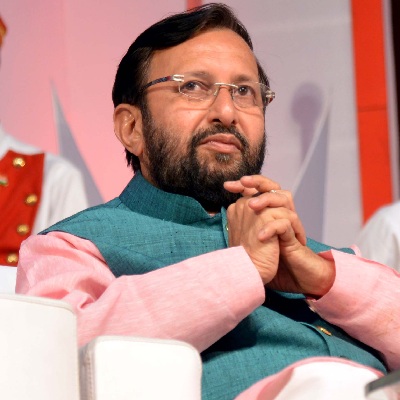
    Information and Broadcasting Minister Prakash Javadekar told Lok Sabha that this is in addition to the task force constituted earlier to steer phase III and phase IV of digital addressable systems, which has to be completed by December, this year.

    He said intensive monitoring of digitisation was undertaken by the Ministry earlier with the support of Prasar Bharati officials and the Broadcasting Engineering Consultants India (BECIL).

    The first phase was set at March 2012 covering the four metros (though DAS was later stayed in Chennai) under the Cable TV Networks (Regulation) Amendment Ordinance 2011, which is an amendment of the Cable TV Networks (Regulation) Act 1995.

    The target date for completely digitising cable sector in cities with population of more than one million was 30 March 2013, all urban areas by 30 September 2014, and the whole country by 31 December 2014.