Category: Regulators

  • I&B Ministry may relax FTA channels from proposed 10+2 ad cap

    I&B Ministry may relax FTA channels from proposed 10+2 ad cap

    NEW DELHI: The News broadcasters, music channels as well as a few general entertainment channels are still fighting the case against the 12 minute advertising cap per hour proposed by the Telecom Regulatory Authority of India (TRAI). While they await the decision of the Delhi High Court, news is that the Information and Broadcasting Ministry (I&B) may consider a relaxation in the proposed ad cap for the Free to Air (FTA) channels as these channels depend only on commercials for survival.


    A source from the Ministry confirmed the news to indintelevision.com while adding that the ad cap fixed under the Cable Television Networks (Regulation) Act, 1995, was in view of the international practice in other countries.


    It was in March 2013, when the TRAI had notified the regulations, which restricted advertising time on TV channels to a maximum of 12 minutes per hour. The Regulator had then said that the move was to protect the interest of consumers and quality of service being offered to them.  


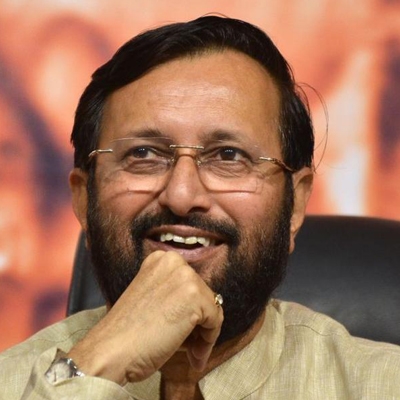
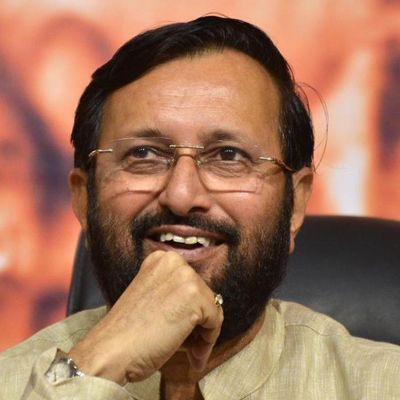
    I&B Minister Prakash Javadekar has assured the FTA channels at various forums that he would favourably consider their plea of scrapping the proposed 12 minute ad cap.


    The FTA channels claim that as they are pitted against pay channels, that also get subscription fee, there is a need for the government to intervene to create a level-playing field.


    Of the 810 channels approved by the government as of 31 August 2014, close to 548 are FTA, which include both news and non-news channels.

  • Regulations skewed against broadcasters: Star India counsel Dwivedi

    Regulations skewed against broadcasters: Star India counsel Dwivedi

    NEW DELHI: Noting that the Telecommunications (Broadcasting and Cable) Interconnection (Digital Addressable System) Regulations 2012 ‘are skewed’ against the broadcaster in every respect’, Star counsel Rakesh Dwivedi said today that there are provisions only for ‘must provide’ and not ‘must carry’.


    Thus, the broadcaster does not get paid by a multisystem operator (MSO) for providing the channels, but only when a subscriber wants to take it from the MSO.


    Furthermore, Clause 5 is clear that no broadcaster can compel a MSO to provide his channel to the subscriber and gives an option to the subscriber to choose the channel he wants, Dwivedi said in the ongoing hearing before the Telecom Disputes Settlement and Appellate Tribunal in the cases linked to Taj TV signals for Turner and Zee TV.


    The Regulations also say that if a broadcaster insisted on a placement of his channel, it would amount to unreasonable terms. The same applied to creation of bouquets by the broadcaster.  


    Referring to the charge that the RIO does not mention bouquet, Dwivedi said there is no question of a bouquet, adding that there would be no point in creating bouquets if the MSO has the right to unbundle it.


    Furthermore, offering all the channels of the broadcaster does not amount to a bouquet, because even the dictionaries define ‘bouquet’ as an assortment out of which the subscriber can choose.


    Even in the case of MediaPro, Dwivedi said no bouquets had been offered and if MediaPro on its own offered any channels in the form of bouquets, it said so.


    Referring to the arguments advanced on behalf of the MSOs, he said there was no reference to being reasonable in clause five which was confined to mutual negotiations and this reference was only with reference to the Reference Interconnect Offer.


    He said that it was also necessary to understand that an RIO was only an offer and not an agreement or contract and therefore ‘cannot be judged on the anvil’.


    Even otherwise, the MSOs had not challenged the RIO but that it should have been brought in only after negotiations fail. 


    At the outset, Dwivedi said the charge against Star and Zee was that they were conspiring with other MSOs because of the closeness to Den and to drive the petitioner MSOs out of business. He also denied the contentions made by the petitioner MSOs that certain other MSOs were being given greater discounts.

  • TRAI extends deadline for pre-consultation paper on standards of QoS amendments

    TRAI extends deadline for pre-consultation paper on standards of QoS amendments

    MUMBAI: Nearly a week after issuing the notification that the Telecom Regulatory Authority of India (TRAI) is looking at making amendments to the Standards of Quality of Service (digital addressable cable TV systems) (amendment) regulation 2012 (12 of 2012) for ensuring better billing practices by MSOs and LCOs, it has decided to extend the date for receiving comments from stakeholders.


    The earlier deadline of 8 September 2014 has been extended to 12 September 2014 on the request of stakeholders. However it states that no further extensions will be entertained.


    The amendment, when approved, will come into effect 30 days from the date of publication and will be called Standards of Quality of Service  (digital addressable cable TV systems) (amendment) Regulations 2014.


    TRAI says that the main purpose of issuing this new amendment was because it kept receiving complaints from subscribers about not getting proper bill and receipt. The regulator feels that financial disincentives should be levied on non-compliant MSOs and LCOS, similar to how it happens in the telecom field where this action has yielded result.

  • TRAI extends deadline to respond to consultation paper on AGR

    TRAI extends deadline to respond to consultation paper on AGR

    MUMBAI: The Telecom Regulatory Authority of India (TRAI) has given a fresh lease of life to stakeholders to respond to its consultation paper on ‘Definition of Revenue Base (AGR) for the Reckoning of Licence Fee and Spectrum Usage Charges.’


    The extension has come after some stakeholders  requested for additional time of two weeks to complete the discussions among themselves to develop a unified approach by resolving various contentious issues.


    The  Authority has  considered their request and   decided  to  extend the  last date for  submission of  written comments to  15 September and   for counter  comments,  if  any,   to  22 September. TRAI has also clarified that there is no change in the date of the Open House Discussion on the consultation paper and will be held on 1 October in New Delhi.  


    It can be noted that the Authority had issued the consultation paper on  ‘Definition of Revenue Base  (AGR) for the  Reckoning of Licence  Fee and Spectrum Usage Charges’ on 31 July 2014 inviting comments  by  1 September and counter-comments by  8 September.

  • Javadekar’s personal website launched by Jaitley

    Javadekar’s personal website launched by Jaitley

    NEW DELHI: In keeping with the new initiatives on social media, Information and Broadcasting Minister Prakash Javadekar has launched a personal website whereby he can interact with the youth in the country.


    The website, launched by Finance Minister Arun Jaitley has among its features a News Update button which gives event wise information.


    The website prakashjavadekar.com also contains the Minister’s tweets, press releases, photographs, speech and audio-visual package about an event.           


    The youth can interact with the Minister through the ‘Connect with Me’ section.


    The Minister’s corner, Minister’s contact details and social media profiles are other areas which help easy interaction with the Minister.


    Google news, Youtube Crawler have also been linked with the website to reflect real-time updates, as are all major Social Media platforms of the Minister.

  • Broadcaster or distributor has to give reasons for differential rates for different MSOs: Naveen Chawla

    Broadcaster or distributor has to give reasons for differential rates for different MSOs: Naveen Chawla

    NEW DELHI: While stressing that negotiated settlements had also been provided for in the regulations other than an agreement under the Reference Interconnect Order (RIO), two multi system operators (MSOs) apart from Hathway Cable & Datacom contended today that Star had failed to give reasons for having different rates for them as compared to Den or Siticable.


    Naveen Chawla, counsel for MSO Bhaskar, which operates in Jabalpur and Scoda which operates in Navi Mumbai and Mumbai, said his contention was for a reasonable and non-discriminatory rates and he was not challenging the concept of RIO.


    He said according to Clauses 3(1) and 3(2) of the Telecommunications (Broadcasting and Cable) Interconnection (Digital Addressable System) Regulations 2012 were clear that any agreement has to be reasonable and non-discriminatory and all MSOs will be treated equally.  In fact, the provision 3(2) clearly indicated that an RIO that is discriminatory and unreasonable is not acceptable.


    ‘Reasonable’ can mean the rate provided by law or the rate that is negotiated with a client in keeping with market forces.  Thus, RIO itself has to be reasonable and in relation to market conditions, Chawla said in the ongoing hearing before the Telecom Disputes Settlement and Appellate Tribunal (TDSAT) in the cases linked to Star signals for Turner and Zee TV.


    A RIO may be a la carte or bouquet, but has to be linked to the subscriber, he said. He also said it was the responsibility of the broadcaster and not the MSO under Clause 3(3) to provide RIO agreements or to give reasons within 60 days for any demands.


    Clause 4 was clear that it was the broadcaster who had to submit the RIO or agreement to the authorities and also publish it on its website.


    Stressing that his main contention was that the RIO agreement given to him by Star was unreasonable and discriminatory, he said TDSAT had in 2006 held that there should be parity in the rates charged and broadcasters have to give reasons in case the rates are different.


    Meanwhile, Chawla quoted from a judgment of TDSAT of August 2005 in which the Tribunal had said that an MSO cannot be an agent of the broadcaster and thus not a competitor to other MSOs, and this view had been upheld by the Supreme Court in 2007. He quoted other judgments to say that broadcasters cannot create exclusivity or monopoly of particular MSOs as that would be discriminatory.


    He said the only way to judge whether an agreement was not discriminatory or unreasonable was to go by the previous judgment between the parties.

  • Hathway being asked to pay more by broadcasters as against other MSOs: Kathpalia

    Hathway being asked to pay more by broadcasters as against other MSOs: Kathpalia

    NEW DELHI: Even as it said that an agreement under the Reference Interconnect Order (RIO) should be for both ala carte and bouquets, Hathway today questioned why multisystem operators like Den and Siticable were being given greater discounts by Taj TV for distribution of their channels.


    Hathway counsel Arun Kathpalia said that the DAS Regulations of 2012 also provided for negotiations that were non-discriminatory, transparent and on reasonable terms and did not merely insist on an RIO.   


    In the ongoing hearing before the Tribunal in the cases linked to Taj TV signals for Turner and Zee TV, Kathpalia said the Regulation says that the broadcaster or distributor ‘may’ seek inter-connection but also provides for mutual agreement within 60 days of request.


    In any case, RIO is not confined to ala carte or bouquets but refers only to commercial terms, whereas Taj TV was offering Hathway RIO only on ala carte. He said under the RIO regime, both ala carte and bouquets can be offered and these have to be mentioned.


    He also said that the Regulations are clear that RIO can come into play only when there is no first agreement, while the issue here was about renewal.  


    He regretted that despite being the largest MSO, it was being offered the smallest discounts by Taj TV and the broadcasters. While Den and Siticable were being charged Rs 30.50 per subscriber, Hathway was being charged Rs 35.


    He alleged that at one stage, Star had wanted the sports channel to be on RIO but the general entertainment channels to be on negotiable terms. “There should be a level playing field,” he said. There was no consistency of relevant factors, he claimed.


    Hathway had wanted that the starting point for negotiations should be the old agreement, whereas Taj TV insisted that the old agreement was only a promotional offer but this was not true, Kathpalia said.


    At one stage, he said that every carrier including DTH was at a loss with the exception of Den.

  • MIB warns MSOs against disconnection signals to LCOs

    MIB warns MSOs against disconnection signals to LCOs

    MUMBAI: The Government today warned multi-system operators against disconnecting signals of local cable operators without due notice specifying reasons and said any violation of this would viewed seriously and action against erring MSOs.


    The directive comes even as more than twenty cases are pending before the Telecom Disputes Settlement and Appellate Tribunal (TDSAT) relating to disconnection of signals by distributors to MSOs or MSOs to LCOs.


    The Information and Broadcasting Ministry said Chapter V of Standards of Quality of Service (Digital Addressable Cable Systems) Regulations 2012 issued by Telecom Regulatory Authority of India (TRAI) is clear that ‘no multi system operator (MSO) shall disconnect the signals of a TV channel of a linked local cable operator, without giving three weeks’ notice to such local cable operator, clearly specifying the reasons for the proposed disconnection.’


    The Regulation further says notice of disconnection of signals of TV channels is also required to be published in two leading local newspapers of the State in which the service provider is providing the services, out of which one notice shall be published in the newspaper in the local language of the area.


    The Ministry said it had been brought to its notice that some MSOs are disconnecting signals to cable subscribers without giving any notice in violation of the Regulation.


    The Ministry said this is also in violation of the undertaking given by MSOs in form 2 of their application which states: ‘We shall ensure that my/our cable television network shall be run in accordance with the provisions of the Cable Television Network (Regulations) Act 1995 and the rules made thereunder, regulations, orders, guidelines or the directions issued by the Central Government or the Authority from time to time.’

  • TRAI asks stakeholders to give views on AGR

    TRAI asks stakeholders to give views on AGR

    NEW DELHI: The Telecom Regulatory Authority of India (TRAI) has asked the stakeholders to give their views on their definition of adjusted gross revenue (AGR).


    In a pre-Consultation Paper on ‘Delinking of license for networks from delivery of services by way of virtual network operators,’ TRAI has also sought the views by 17 September on what will the model of agreement be between Network Service Operator (NSO) license and Service Delivery Operator license created under the draft National Telecom Policy 2011.


    It has asked if this would be left to the market or regulated like mandating NSOs to provide services to SDO licensees and mandating charges etc.


    In its Policy, Department of Telecom had said NSOs would be licensed to set up and maintain converged networks capable of delivering various types of services e.g. voice, data, video, broadcast, IPTV, VAS etc. in a non-exclusive and non-discriminatory manner.


    SDOs would be licensed to deliver the services e.g. teleservices (voice, data, video), internet/broadband, broadcast services, IPTV, Value Added Service and content delivery services etc.


    In its latest reference to TRAI, the DoT has envisaged the entry of Virtual Network Operators (VNOs) for delivery of services by delinking them from licensing of networks.


    Virtual Network Operators (VNOs) are SDO licensees who do not own the underlying network(s) but rely on the network and support of the infrastructure providers, telecommunications operators (who are owner(s) of towers, radio access networks, spectrum etc.) for providing telecom services to end users/customers. As these operators do not have their own networks, they are termed as Virtual Network Operators. VNOs can provide any telecom service being provided by the network providers viz. tele-services (voice, data, video), internet/broadband, IPTV, Value Added Services, content delivery services etc. The most popular among VNOs are Mobile Virtual Network operators(MVNOs).


    India is a diverse country, large in size and had very poor telecom networks when the government decided to open the sector to private participation.


    Therefore, in order to ensure development and proliferation of telecom infrastructure across the length and breadth of the country, the government took a conscious decision that all TSPs would have their own network for providing services to their customers. To meet this end, each TSP was mandated to comply with certain roll-out obligations and even sharing of infrastructure was not permitted initially. To encourage tower sharing amongst operators, the government initiated a project ‘Mobile Operator Shared Tower (MOST)’ in March 2006, and later on, in April 2008 sharing of active infrastructure, except spectrum, was also permitted.


    At present, most access providers are integrated operators who have their own infrastructure for both access and long distance services. Having already established their networks, the issue to deliberate upon is whether delinking the network from service delivery will have any effect on the working of these TSPs. The new licence regime has come into existence only about a year back.


    In the proposed licencing framework, based on the VNO model, one issue could be whether the existing TSPs, will have to obtain a NSO licence or both NSO & SDO licences on migration to the new licensing regime.


    A linked issue for deliberation will be about the necessity of changing the licensing regime at all, at such a short interval since UL was introduced.


    At present, there are 7-13 licensees in various service areas. Therefore, another issue for deliberation could be about the need for introduction of more competition in the form of VNOs.


    Apart from access services, for other services like V-SAT, PMRTS/CMRTS, GMPCS, it needs to be deliberated whether any business case/revenue potential exists for a standalone Virtual Operator for these services.


    In India, the TSPs have infrastructure, including spectrum, which is just about sufficient to cater to their own requirements. Would they really be able to spare their infrastructure for new SDOs, TRAI wants to know.


    It can also be deliberated whether the reference of DoT envisaged an entirely new licensing regime or could be considered to mean that a chapter may be added to the existing UL for facilitating licenses to the VNO.
  • 100 days of the I&B Ministry

    100 days of the I&B Ministry

    NEW DELHI: The Narendra Modi led NDA government has completed 100 successful days in power. And in these days, the Information & Broadcasting (I&B) Ministry has done its bit to woo the Media and Entertainment industry.


    Listing the achievements was I&B Minister Prakash Javadekar, through a press meet in Delhi.


    The government is launching a new 24×7 channel for the northeast called Arun Prabha in order to provide a strong platform for expression of cultural identities and for creating greater awareness regarding the region.


    Even as a Task Force has been constituted to steer the remaining two phases i.e. phase III and phase IV of digitisation in India, the government has made efforts towards fulfilling the long pending demand of domestic manufacturers of Set Top Boxes to get tax concession (C Form benefit) in order to compete with imported STBs.


    He said this will pave the way for implementation of digitisation initiative in India and see digitisation of about 80 million Cable TV homes in India. It is also a step towards the Prime Minister’s dream of a Digital India as digitisation will enable quick penetration of broadband connectivity in India.


    The Minister talked of initiatives taken in different sectors aimed at enhancing the outreach of policies and programmes across platforms. Some of the initiatives undertaken have been innovative involving people’s participation, enhancing government’s presence on the social media platforms and strengthening communication at the grassroots.


    He said Rs 100 crore had been allocated to Kisan Channel, which will disseminate real time information to the farmers regarding new farming techniques, water conservation, organic farming etc.


    In order to facilitate Ministries/Departments in registering their presence on social media the Ministry had organised a half day training workshop on 11 July.


    The Telecom Regulatory Authority of India (TRAI) has on the request of the Ministry given recommendations on migration of FM Radio Broadcasters from phase-II to phase-III which is under examination.


    Goa has been declared the permanent destination for the International Films Festival of India to develop the “Brand IFFI” on the lines of other International Film Festivals. Although the decision to move IFFI to Goa was taken in 2004 when the National Democratic Alliance was in power, a fresh Memorandum of Understanding was being signed year-to-year for the Festival.


    The three-day North East Film Festival held in Delhi recently will henceforth be an annual feature organised by the Directorate of Film Festivals.


    The Film and Television Institute of India and the Satyajit Ray Film and TV Institute are to be institutes of National Importance and an Act of Parliament will be passed for this. The proposed Bill would enable both the Institutes to award its own degrees and diplomas and start new activities on the lines of IITs and IIMs.


    The office of the Registrar of Newspapers for India (RNI) has streamlined its Single Window Public dealing mechanism at its office. RNI has achieved 100 per cent success in online e-filing of annual statements by publishers for 2013-14.


    Under the Rs 100 crore set aside for “Supporting Community Radio Movement in India,” 600 community radio stations will be set up across the country in the 12th Five Year Plan. This major initiative of the new government will strengthen the link with the population living in rural and marginalized areas.


    The Home Ministry has agreed to the proposal of the Ministry for not seeking security clearance for such channels whose security clearance have already been sought earlier along with the Board of Directors. This decision has paved the way for speedy clearance of additional television channel permissions, which will benefit the broadcast industry in a big way.  After the decision was taken, 23 TV channels have already been permitted by the Ministry.


    The proposal has been cleared for Rs.600 crore National Film Heritage Mission (NFHM) to preserve India’s film legacy by the Expenditure Finance Committee in the Finance Ministry. The draft Cabinet Note has been circulated to the concerned Ministries and the Note will shortly be submitted for approval of the Cabinet.


    To ensure people’s participation in Government Advertising through Crowd-Sourcing of Advertisements, the advertisement for important events are to be designed by the people. The Independence Day advertisement designed on these lines and DAVP has invited suggestions for the proposed advertisement to be brought out on 5 September to observe “Teachers Day”.


    For Independence Day, the advertisements were crowd sourced for the first time and Independence Day coverage was extended to all media platforms. Similarly, a series of press conferences being organised to highlight the initiatives of the Government and the same approach is being adopted to ensure information dissemination across all platforms.