Category: Regulators

  • Govt sending wrong signals to foreign investors by delaying digitisation: Rahul Khullar

    Govt sending wrong signals to foreign investors by delaying digitisation: Rahul Khullar

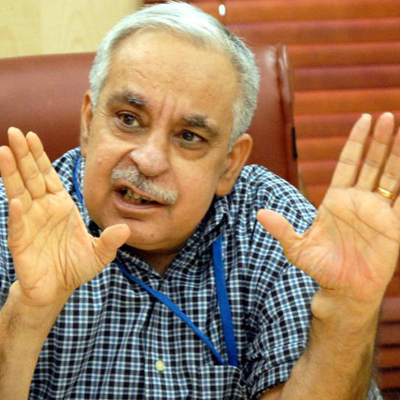
    MUMBAI: Recently, a letter written by Telecom Regulatory Authority of India (TRAI) chairman Rahul Khullar pointed out that the government was committing a mistake by extending the deadline for digitisation. Khullar has many more points to present on the regulator and the industry.


    In a conversation with Bloomberg, he said that his views on digitisation were very clear. “It is a very bad decision to defer it. It is bad for digital India, broadband delivery and not in public interest,” he said.


    While the government says that its main aim is to push indigenous production of seven crore set top boxes (STBs) in two years, Khullar feels that this is a ‘pipe dream.’


    Khullar said that last year several investors met him and conveyed that it was a miracle that they managed to get two crore boxes digitised. They also asked that by when will digitisation be completed because they are desperately interested in investments in cable. “By delaying digitisation, you are sending a signal to foreign investors that India isn’t ready for investment yet. This does great harm to public credibility,” he said.


    Meanwhile, rumours are afloat that the government is mulling creation of a ‘super regulator’ that will oversee the communications sector. Khullar believes that it is necessary to keep content and carriage separate. “If your aim is to strengthen TRAI then you don’t need a super regulator, just empower the existing one. But if it is to regulate carriage and content, this is an experiment that hasn’t succeeded in the world,” he said.


    According to him, issues concerning content immediately ‘stir up a hornet’s nest’ that usually involves freedom of speech. “My own sense would be to keep carriage and content separate and ensure that the content regulator has nothing to do with the government. Then you have some sort of fighting chance of regulatory survival,” he said.


    Broadband is a growing medium of revenue that is catching the attention of all in media space. The TRAI is due to come out with a paper on ‘policy issues relating to broadband’ in the next 10 days. “Broadband and convergence is still five to 10 years away. If we are to deliver broadband we need to know how to do it in the cheapest way, who should be involved, what to be done in terms of application and software development,” he highlighted. It will focus on building infrastructure and delivering content.
  • I&B Ministry explains to PMO its reasons for postponing digitisation dates

    I&B Ministry explains to PMO its reasons for postponing digitisation dates

    NEW DELHI: The Information and Broadcasting Ministry feels that digitisation is a tool to empower the people and not create difficulties, and therefore does not agree that it will create any setback to the Digital India Plan.


    Ministry sources told indiantelevision.com that this had been conveyed by the Ministry to the Prime Minister’s Office (PMO) in response to the communication to PMO by Telecom Regulatory Authority of India chairman Rahul Khullar.


    The sources also pointed out that the pace of digitisation had slowed down over the past year due to lack of adequate publicity and paucity of fund allocation. 


    The Ministry said cable TV digitisation was only a small though major part of Digital India.


    The main purpose was not to delay digitisation of cable television networks but to encourage greater indigenisation of both set top boxes and other equipment, the sources informed.


    The dates proposed by the Ministry were only the outer limit and every effort would be made to ensure digitisation of cable TV is achieved before that. It was also pointed out that the consumer’s capacity to pay was of great importance in the last two phases which were reaching out to semi-urban or rural areas.


    It was also emphasised that TRAI was being consulted on the proposal about the new dates and the views of the regulator would be taken into account.


    Khullar in his note to the PMO has said staggering implementation of the cable TV digitisation plan will be a major setback to the Digital India plan.


    He said, “For the last six months, we have been working on phase-III and phase-IV. If implementation is now staggered, it will be a body blow to the project, primarily because momentum will be lost and it is truly very difficult to enforce compliance countrywide.”


    Under the current plan, the third phase of the cable TV digitisation plan is expected to end on 30 September, and phase IV by 31 December this year, while the Ministry feels the new dates should be December 2015 and December 2016 respectively.


    “Should this happen, it will be a major setback to digitisation in the country. Further, a huge effort was made by TRAI to enforce compliance. We encountered significant difficulties in ensuring that phase I and phase II were effectively completed,” the TRAI chief wrote.


    There are 100 million homes with cable TV connection of which 20 million are digital. In addition, there are 56 million DTH homes. This is more than the fixed line telephony subscriber base. Digitisation would enable cable TV networks to be used for two-way communications, a pre-requisite for internet services.


    TRAI said that digitisation offers much cheaper means of providing broadband to consumers compared to the National Optical Fibre Network project, which aims to roll out fibre cables across the country as broadband is the main supplier of TV signals in all developed countries. 

  • Delhi HC extends stay on Kantar, case pushed to Feb 2015

    Delhi HC extends stay on Kantar, case pushed to Feb 2015

    MUMBAI: The hearing on the case between Kantar Market Research and the government of India has been put off to 12 February 2015.


    The case that was last heard on 8 September saw a notice of the application by the Indian Broadcasting Foundation (IBF) being accepted by the Kantar counsel that has been asked to file a response within two weeks. After this, an advance copy of the same will be given to the IBF who may then file a response in two or three weeks’ time.


    The case has been put off to 12 February 2015, on account of the personal reasons of the Kantar counsel, who had prayed for a date in January 2015.


    Meanwhile, the interim order on the case will continue that will allow Kantar’s subsidiary TAM Media Research to publish ratings till the verdict on the case is out.


    Kantar had challenged the cross-holding norm in the policy guidelines for TV rating agencies for which it had got the HC’s stay order. However, the research agency still hasn’t received any response from the Ministry of Information and Broadcasting on its application to be registered as a TV ratings service.


    Apart from the IBF, the News Broadcasters Association (NBA) has also joined the respondents in favour of the guidelines.

  • Not much growth in broadband in July: TRAI

    Not much growth in broadband in July: TRAI

    NEW DELHI: Broadband subscribers grew by a mere 2.87 per cent in the month of July to 70.81 million in the country.


    The Telecom Regulatory Authority of India (TRAI) said the number of subscribers at the end of June were 68.83 million.


    For the second month in a row, the largest growth was seen in mobile device users (Phones + Dongles) with a growth of 3.56 per cent. The change in wired subscribers was a mere 0.45 per cent and the growth in fixed wireless (Wi-Fi, Wi-Max, Point-to-Point Radio & VSAT) was 1.54 per cent.


    The top five broadband service providers constitute 85.12 per cent market share of total broadband subscribers at the end of July. They are BSNL (18.14 million), Bharti (15.61 million), Vodafone (11.23 million), Idea Cellular (9.06 million) and Reliance Communications Group (6.23 million).


    The top five Wired Broadband Service providers are BSNL (9.98 million), Bharti (1.40 million), MTNL (1.13 million), Beam Telecom (0.40 million) and YOU Broadband (0.40 million).


    The top five Wireless Broadband Service providers are Bharti (14.21 million), Vodafone (11.23 million), Idea Cellular Ltd (9.06 million), BSNL (8.16 million) and Reliance Communications Group (6.12 million).


    Wireless subscribers with less than 1MB data usage in a month are not considered as internet/broadband subscribers by Reliance Communication Group and Idea Cellular.

  • Star India commits to renew agreements with MSOs only on basis of RIO, hearing concludes

    Star India commits to renew agreements with MSOs only on basis of RIO, hearing concludes

    NEW DELHI: Judgment was reserved today by the Telecom Disputes Settlement and Appellate Tribunal (TDSAT) in the ‘deep-rooted’ dispute between Hathway and Taj TV, after the hearing that commenced on 25 August and continued on a day-to-day basis.


    Before the Tribunal reserved its order, Star India filed an affidavit in which it said it would ‘henceforth’ enter into agreements under the Reference Interconnect Order on a year-to-year basis with all multi-system operators.


    It said the RIO would commence three months after the expiry of the erstwhile agreement and would only be on the basis of a published RIO.


    It also said it will sign any new agreement on cost per subscriber basis with MSOs operating at national level.


    However, it listed eight MSOs working at regional or state level with which it already has CPS agreements and said these will continue for the term for which they are valid and thus last the full term.


    The eight MSOs are Inspire Infotech of Delhi, Novabase Digital Entertainment of Delhi, E-Infrastructure and Entertainment, Bangalore, Satellite Channels, Poona Cables Systems and Services of Pune, Sky Channel of Delhi, Home Cable Networks of Chittore District in Andhra Pradesh and City TV of Coimbatore.


    In reply to certain queries by the Tribunal in reference to the statement made in paragraph-3 of the affidavit, Star India counsel Saikrishna on instructions received from duly authorised officers present in court stated that in DAS notified areas, any new interconnect agreement with any MSOs operating under a national license or a regional/local license would only be on the basis of the RIO of M/s Star India Pvt. Ltd. and it would not enter into any interconnect agreement in the DAS areas with anyone on fixed fee or on CPS basis for a period of one year.


    Primarily, the Tribunal would have to decide on two matters: the first is an interpretation of the date of renewal under Clause 5(16) of the Telecom (Digital Addressable Systems) Interconnect Regulations relating to renewal of agreements, and the other is about the rates according to the arguments put forth by the various parties.


    Earlier, counsel Tejveer Singh Bhatia who had been asked by TDSAT chairman Aftab Alam and member Kuldip Singh to assist the Tribunal in clarifying certain issues said the Regulations were clear that if certain channels were provided to one MSO, they had to be provided to any other MSO that asked for them. However, this did not mean that the terms would be the same for all MSOs.


    Furthermore, even if channels were put in bouquets, the rates could not be the same as some were regional channels meant for specific areas and others were national channels and the charges would depend on eyeballs. Hence, the negotiation may differ from region to region. But this also meant creation of RIO agreements for every region depending on number of eyeballs.


    He also claimed that the Interconnect Regulations allowed him to change the terms and conditions from time to time.


    But he was categorical that a RIO could not be thrust upon him as it was only an offer. Clause 5(10) provides the remedy in case the broadcaster turns down a RIO agreement.


    He said that the ‘must carry; clause did not mean automatically that the broadcaster will be paid for every channel he beams. It would depend to the number of channels that the subscriber decides to take.


    During the hearing, the Tribunal heard various counsel on behalf of Taj TV and Zee TV, Star India, Hathway, Bhaskar (MSO) from Jabalpur and Scod, an MSO from Mumbai and Navi Mumbai.


    When listing the case for 25 August, the Tribunal had said: “Unfortunately, the dispute between the two sides is playing out in highly aggressive way and one may add in a rather unpleasant manner. It seems to be affecting a large number of people in viewing their favourite TV channels. The disputants themselves are approaching the Tribunal on a weekly basis complaining against the actions of each other and seeking some interim directions of the Tribunal consuming a lot of time on arguments on miscellaneous applications.”


    The Tribunal noted that both sides had assured that they would avoid issuing the offensive advertisements against each other.


    In the order last month, the Tribunal directed Taj TV to file their respective replies in petitions nos.319(C) of 2014 and 47(C) of 2014 and asked Hathway to file its rejoinder.


    The Tribunal noted that the dispute has arisen at a stage when the earlier fixed fee agreement between the parties has come to end and they are unable to come to agreed terms for a fresh agreement and under the circumstances the MSO has no option but to take the broadcasters’ channels on their RIO terms.

  • Publication division needs to adopt new technology, e-commerce: Javadekar

    Publication division needs to adopt new technology, e-commerce: Javadekar

    NEW DELHI: Information and Broadcasting Minister Prakash Javadekar has asked the publication division to adapt itself through technological tools, e-commerce, business models, online publications etc.


    According to the Minister, crowd sourcing has become a principal tool to involve people in bringing about change and innovation and enhancing outreach through people’s involvement.


    The Minister has invited suggestions from youngsters regarding the future role of publication division in the changed scenario where it has undergone a drastic change both in content and technology.


    Presenting the Bhartendu Harishchandra Awards for promotion of Hindi writers for the years 2011 and 2012, Javadekar said the growing literacy in the country was a catalyst to promote relevant contemporary writings.


    The role of publication division was much more beyond mere publishing. As a Government institution the future road map lay in identifying benchmarks so as to ensure people had access to good quality publications. Literature remained the principal catalyst to promote creativity across different sections of society. This was a time tested exercise and it provided the people a sense of satisfaction across all age groups.


    The Minister also called upon the publication division to explore the possibility of starting a special series/collection of prominent books/works on eminent personalities. 


    He also said while the prize money of Bhartendu Harishchandra Awards would be enhanced, a special category of awards to promote original writings focusing on all round development of adolescent girls would be instituted from next time. The objective of the new awards was to encourage the spirit of women empowerment from the adolescent stage of growth for girls.


    The Minister also announced that the award function would be held every year on 9 September being the birth anniversary of the eminent writer. These awards were presented on the birth anniversary of renowned Hindi writer Bharatendu Harishchandra for the first time this year.


    One of the key initiatives of the Ministry was to promote books and manuscripts original writing in Hindi, the Bharatendu Harishchandra Awards have been presented by the publication division annually since 1983. Bharatendu Harishchandra paved the renaissance for Hindi language and literature.


    The awards were initially given in Journalism and Mass Communication. The other three categories, viz., National Integration, Women’s Issues and Children’s Literature were added in 1992. Original writing in Hindi by Indian authors is the eligibility criteria for the award. 


    For the year 2011, the first prize in the Journalism and Mass Communication category was awarded to Vijay Dutt Shridhar for his manuscript ‘Pehla Sampadakiya’. Harish Chandra Barnwal’s book ‘Television ki Bhasha’ has been chosen for the second prize in this category. The third prize went to Santosh Kumar Nirmal for his book ‘Filmein aur Prachar: Tab se ab tak’. 


    In the Women’s Issues category, the award was conferred on Gitashri for her manuscript ‘Aurat ki Boli’ while for National Integration went to Dr. Navratan Kapoor for the book “Tyoharon Tatha Melon ki Vichitratain, Jansanchar Maadhyam aur Rashtriya Ekta”. 


    The first prize in Children’s Literature category for the same year was given to Bano Sartaj for her book ‘Pakya aur Parichham’ and the second prize to Rajiv Saxena for ‘Professor Khurana ka Clone’. 


    For 2012, the first prize in Journalism and Mass Communication category was awarded to Vijaya Lakshmi Sinha’s ‘Maine Awaaz ko Dekha’, while the second and third prize was conferred on Madhav Hada for his book titled ‘Seedhiyaan Chadhta Media’ and Suresh Kumar’s ‘Online Media’ won the third prize. 


    In Women’s Issues category in 2012, Urmila Kumari’s book ‘Jaar Jaar Taar Taar’ was selected for the first prize while Dr. Sanjula Thanvi’s book ‘Manavaadhikar, Panchayati Raj Se Sashakt Naari’ was selected for the second prize. 


    In Children’s Literature category Dr. Mohammed Arshad Khan’s book ‘Mickey Mouse’ won the first Prize and the book ‘Phoolon se Pyar’ by Pavitra Agrawal received the second prize.   

  • Prakash Javadekar confirms the new digitisation deadline

    Prakash Javadekar confirms the new digitisation deadline

    MUMBAI: The first deadline for complete digitisation in the country, 31 December 2014 has been pushed to 2015 and 2016, as first reported by indiantelevision.com.


    Now, the Information and Broadcasting (I&B) Minister Prakash Javadekar has assured stakeholders who were present at the Indian Broadcasting Foundation’s (IBF) annual general meeting that “Digitisation is on track and will happen as per new schedule.”


    Phase III of digitisation is scheduled to be completed by December 2015 and phase IV by December 2016.


    Javadekar once again emphasised that one of the key reasons for pushing digitisation to a further date was to allow time for Indian set top boxes (STBs) to be manufactured.


    Regarding industry rating body Broadcast Audience Research Council (BARC), the Minister said that the government was also keen to have its rollout to have multiple agencies for ratings.


    A meeting to discuss carriage fees is also likely to happen sometime soon between Javadekar and members of the IBF.


    The Home Ministry has also given the I&B Ministry approval to treat files pending with it for more than three months as ‘cleared’ to speed up channel licence clearances.

  • Digicable Network among MSOs denied permanent licence, three new MSOs get licence this month

    Digicable Network among MSOs denied permanent licence, three new MSOs get licence this month

    NEW DELHI: While 115 multisystem operators (MSOs) have been granted permanent licence as on 3 September, Digicable Network and Kal Cables are among the prominent MSOs whose licences have been cancelled following refusal of security clearance by the Home Ministry.


    However, the Madras High Court has quashed the cancellation of provisional licence of Kal Cables on the ground that the Information and Broadcasting Ministry had not issued any show-cause notice, before cancelling the permit. The court also said that the MSO should be given another chance to respond. The Kalanidhi Maran owned Kal Cables had opposed the 20 August order, saying that it is just a MSO and not a channel. And if the I&B Ministry had issued a notice, it would have cleared the doubts.


    The MSO was given a permanent licence to operate in Chennai in June 2012, while a provisional licence was given to operate in DAS notified areas in phase II cities in March 2013.  


    The licence of Digicable Network India was cancelled on 3 September because of denial of security clearance by the Home Ministry. The MSO had applied on 11 May 2012 for DAS notified area of NCT of Delhi, Municipal Council of Greater Mumbai and Kolkata in phase-I and on 28 January and 6 March last year for 38 cities of phase II.


    Siddhi Digital Services of Sholapur was also not given a licence and its ‘case closed as Company is no longer interested in registration.’  


    The application of Silverline Entertainment of Allahabad for operation in DAS notified areas of Agra, Allahabad, Ghaziabad, Kanpur, Lucknow, Meerut and Varanasi was also cancelled early this month following denial of security clearance by the Home Ministry.


    Earlier, MSOs Godfather Communication of Punjab and Intermedia Cable Communication had also got stay orders issued by the Punjab High Court and Delhi High Court respectively on cancellation of their licences.


    The MSOs which got permanent licences early this month were Koduri Satyanarayana, Sri Sai Star TV Services for the Khammam district of Telengana; Abhilash Communications of Adilabad for notified areas of phase – II and phase – III cities pan India and JPR channel of Mumbai for Mumbai (phase – I) and phase – II areas in the state of Maharashtra and Gujarat. 

  • MSOs prepared to accept RIO if broadcasters assure parity, MSOs’ counsel tell TDSAT

    MSOs prepared to accept RIO if broadcasters assure parity, MSOs’ counsel tell TDSAT

    NEW DELHI: An agreement under reference interconnect offer (RIO) is acceptable if there is parity to all, Hathway counsel Arun Kathpalia and Bhaskar Networks counsel Navin Chawla told the Telecom Disputes Settlement and Appellate Tribunal (TDSAT) in the cases linked to Taj TV signals for Zee and Turner and Star India’s signals to Hathway and other multi-system operators (MSOs).


    Earlier, both Star India counsel Rakesh Dwivedi, on behalf of the case against Hathway and counsel Amit Sibal appearing on behalf of Star India in the petition by Bhaskar Networks of Jabalpur indicated that they were prepared to give affidavits with the assurance of parity.


    However, counsel were divided on when the agreements should commence and wanted the Tribunal to decide the matter in the light of clause 5(16) of the DAS interconnect regulations.


    Dwivedi said that since the last agreement ended in June, any agreement will only be till June irrespective of the date when it commences. He said there had been delay only on the part of Hathway in proceeding with the negotiations. Sibal also said there could be no concession on the date.


    Kathpalia however said that the agreement will be for one year from the date it commences. However, he said this was subject to the interpretation given by the Tribunal to clause 5(16).


    At one stage, Kathpalia argued that Star India wanted to give RIO agreement to all MSOs whereas Hathway had been negotiating on the basis of cost per subscriber (CPS).


    Referring to Star Sports’ feed to Bhaskar, Sibal said that MediaPro wrote to all MSOs asking them to approach the broadcasters individually. Star India had on 19 May written to Bhaskar to negotiate for a new agreement, but had not mentioned RIO since clause 5(3) provides for negotiations or RIO.


    He said Bhaskar did not respond till 2 July when Star India disconnected the signals and insisted that the broadcaster should have given one month’s notice. A fresh notice was given on 1 August for terminating channels.


    Siblal said Bhaskar’s case appeared to be that the rate of Rs 39 for the sports channel was not reasonable. He said this figure cannot be a benchmark as it was not the basis for negotiation. 


    At one stage, Justice Aftab Alam said RIO defines the parameters of the limitation of the figure. Member Kuldeep Singh asked why MSOs should have any objection if there was no discrimination in the RIO.

  • Star and Zee not conspiring to drive Hathway out of business: Star India counsel Rakesh Dwivedi

    Star and Zee not conspiring to drive Hathway out of business: Star India counsel Rakesh Dwivedi

    NEW DELHI: Admitting that Star India and Zee Turner had created MediaPro, Star counsel Rakesh Dwivedi said that the arrangement had been dismantled and “MediaPro is dead in the sense that it is no longer an authorised agent of Star India.”


    Arguing before the Telecom Disputes Settlement and Appellate Tribunal in the cases linked to Taj TV signals for Turner and Zee TV and Star India signals to Hathway and other multi-system operators, Dwivedi said that Star had no stake in Den Networks or Zee and had no problems with Siticable.


    Referring to the Regulations which refer to being non-discriminatory and reasonable, he said the petitioners (Hathway and the other MSOs) had not been able to show how Star India was discriminatory.


    In any case, he said Star India was treating all MSOs at par, adding that there was no challenge to the reasonableness of the Reference Interconnect Offer agreement. He said it was also incorrect to say that the RIO was not in consonance with market rates.


    He also pointed out that on the one hand Star India had been accused of only offering packages and not giving the channels on a la carte, the petitioners themselves then bundled some channels into various packages.


    He quoted both the Regulations of the Telecom Regulatory Authority of India and the Competition Commission of India to show that MSOs hold a more dominant position in the cable industry.  


    Dwivedi also said that the previous agreement with MediaPro cannot form the basis of the agreement with Hathway or other MSOs as “they proceed on different methodologies.”


    He again denied the charge that Star and Zee were conspiring with other MSOs to drive the petitioner MSOs out of business.