Category: Regulators

  • TRAI seeks to exempt small Internet Service Providers from tariff reporting requirement

    TRAI seeks to exempt small Internet Service Providers from tariff reporting requirement

    NEW DELHI: The Telecom Regulatory Authority of India (TRAI) has proposed exempting any Internet Service Provider (ISP) from the reporting requirement during a financial year if the total number of its subscribers is less than 10,000 on the last day of the preceding financial year.


    In a draft amendment to the Telecommunication Tariff Order 1999 for comments of the stakeholders, it has also sought to extend the existing exemption given to access providers in respect of tariff schemes offered to bulk customers in response to a tender process or as a result of negotiations between the access provider and such bulk customer to the ISPs also.


    Stakeholders have been asked to send in their responses by 14 October.


    TRAI is concerned that only 60.87 million broadband connections had been achieved against a target of 175 million connections by 2017. It says the country is nowhere near meeting the target for a service which is considered almost a basic necessity in many developed countries. Broadband is helping to deliver a wide range of services, from services directly related to the Millennium Development Goals set by the United Nations, to services in support of broader citizen participation or services leveraged across different sectors to bring more people into the formal economy. Therefore there is an urgent need to review the present policies and its implementation initiated to build infrastructure required for penetration of broadband in the country.


    The Digital India project aims to offer a one-stop shop for Government services which would use the mobile phone as the backbone for its delivery mechanism. The Rs 1,13,000-crore initiative seeks to transform India into a connected knowledge economy offering world class services at the click of a mouse. Plans to digitally connect the country will be supported by modules on digital literacy in regional languages which the Government plans to run in the next few years.

  • Concerned at slow growth of broadband in India, TRAI wants stakeholders to give suggestions

    Concerned at slow growth of broadband in India, TRAI wants stakeholders to give suggestions

    NEW DELHI: Concerned that only 60.87 million broadband connections had been achieved against a target of 175 million connections by 2017, the Telecom Regulatory Authority of India (TRAI) has issued a Consultation Paper to probe the reasons for this slow growth.


    One of the questions posed in the 78-page paper is to know the specific reasons that Internet Service providers are proactively not connecting with the National Internet Exchange of India (NIXI) set up in 2002 and what measures are required to achieve this.


    TRAI wants to know if the hosting of content within the country helps in reduction of the cost of broadband to a subscriber and what measures are required to encourage content service providers to host content in the data centre situated within India.


    It has also sought to know if public sector undertakings are ideal choices for implementing the National Optical Fibre Network (NOFN) project.


    The regulator has asked the stakeholders to send their comments 14 October and counter comments by 21 October. TRAI has also said that no further extension will be given.


    In its initial remarks, the Paper noted that the country is nowhere near meeting the target for a service which is considered almost a basic necessity in many developed countries. Broadband is helping to deliver a wide range of services, from services directly related to the Millennium Development Goals set by the United Nations, to services in support of broader citizen participation or services leveraged across different sectors to bring more people into the formal economy. Therefore there is an urgent need to review the present policies and its implementation initiated to build infrastructure required for penetration of broadband in the country.


    The objective of the Paper is to discuss issues contributing to the poor broadband penetration in India and solicit stakeholders’ views on actions required to be taken both by the Government and the service providers to accelerate the proliferation and use of broadband in the country.


    It says India has the intrinsic strengths for an Internet transformation, but concerted efforts are required to address key gaps in the Internet ecosystem.


    Consumers, entrepreneurs, enterprises and the Government can play a pivotal role in building a strong Internet ecosystem driven by the country’s young Internet-savvy population and strong local consumption, entrepreneurship and innovation, and a large pool of technically trained human capital. Identification of the impediments to expansion of this ecosystem and addressing these impediments to create an environment to encourage broadband growth is the need of the hour.


    The Digital India project aims to offer a one-stop shop for Government services which would use the mobile phone as the backbone for its delivery mechanism. The Rs 1,13,000 crore initiative seeks to transform India into a connected knowledge economy offering world class services at the click of a mouse. Plans to digitally connect the country will be supported by modules on digital literacy in regional languages which the Government plans to run in the next few years.


    But to be successful, a broadband policy needs to reflect the requirements of different communities across the country. This means taking a holistic approach and leveraging the opportunities provided by wireline and wireless technology in each part of the network i.e. backbone, backhaul and local access. The implementation of broadband plans and strategies needs to be monitored. Monitoring should be an integral part of broadband plans and strategies – providing an information base for the initial development of plans and strategies as well as for checking the progress of particular policies and programs, and for the evaluation and reassessment of priorities and strategies.


    The regulator wants to know what immediate measures are required to promote wireline technologies in access networks and what is the cost per line for various wireline technologies and how can this cost be minimised.


    What are the impediments to the deployment of wireless technologies in the access network and how these deployments can be made faster, it wants to know.


    TRAI recently released recommendations on Microwave backhaul and it wants to know if some issues were left out to ensure availability of sufficient Microwave backhaul capacity for the growth of broadband in the country.


    The pricing of Domestic Leased Circuits (DLC) had been reviewed in July 2014. Apart from pricing, TRAI has asked if there are any other issues which can improve availability of DLC.


    Should the awarding of EPC turnkey contracts to private sector parties through International Competitive Bidding (ICB) be considered for the NOFN project, the regulator wants to know.


    It also asked if there are any ways in which infrastructure development costs can be reduced and is it possible to piggyback on the existing private sector access networks so as to minimize costs in reaching remote rural locations.


    It wonders if the private sector can do something to reduce delivery costs.


    It wants to know the major issues in obtaining right of way for laying optical fibre and the applicable charges/ constraints imposed by various bodies who grant permission of right of way.


    It wants to know if the Government should consider framing guidelines to mandate compulsory deployment of duct space for fibre/ telecommunications cables and space for telecommunication towers in all major physical infrastructure construction projects such as building or upgrading highways, inner-city metros, railways or sewer networks.  


    Do cable operators face impediments to the provision of Broadband by them, it wants to know.


    TRAI has asked what measures are required to reduce the cost and create a proper eco system for deployment of FTTH in the access network.


    It wonders if there are any regulatory issues in providing internet facility through Wi-Fi Hotspots and the business model for these.


    What other spectrum bands which can be unlicensed for usage of Wi-Fi technology or any other technology for provision of broadband, it seeks to know, also wondering how much spectrum will be required in the immediate future and in the long term to meet the target of broadband penetration and what initiatives are required to make available the required spectrum.


    How can Government agencies be encouraged to surrender spectrum occupied by them in IMT bands and what should be the time frame for auctioning the spectrum in 700 MHz band, it asks.
  • TDSAT directs TV9 to stop airing defamatory and inflammatory programmes

    TDSAT directs TV9 to stop airing defamatory and inflammatory programmes

    MUMBAI: The Telecom Disputes Settlement Appellate Tribunal (TDSAT) has disposed off the case between Associated Broadcasting Companies (ABC) that runs the channel TV9 and multi system operators (MSOs) Hathway Cable and Datacom and Siti Vision Digital Media regarding a show that had been telecast on the channel which had made defamatory remarks against the new Chief Minister (CM) K Chandrashekar Rao of the state.


    The programme telecast on 12 June was carried by the MSOs and LCOs in Telangana and according to the tribunal was ‘highly defamatory’ of the CM leading to a serious law and order problem. Therefore, MSOs and LCOs stopped carrying TV9.  As the petition filed by ABC involved Constitutional rights and public order, The Union of India through the Information and Broadcasting secretary and Telangana home secretary were directed to be impleaded as respondents in the case.


    Although the broadcaster stopped the broadcast of the offending programme and issued a public apology for it, MSOs did not resume transmission and the channel was literally taken off air in Telangana.


    The TDSAT had in an earlier order this month directed the MSOs to commence showing the channel. Siti Vision started showing it on 3 September in the evening but had to take it off the very same day as it received threatening calls. ABC went ahead and filed an EA in the tribunal.


    On reading the transcript of the programme, TDSAT stated that it found the content ‘extremely defamatory, offensive and inflammatory and the product of a sick mind.’


    Counsel for the government, K Parameshwar, informed TDSAT that the I&B Ministry had written a letter to the Telangana chief secretary to ensure that the tribunal’s orders are complied with. The letters of the same had been submitted to it.


    A similar case is pending before the Privilege Committee of the Telangana Assembly for which no proceedings have begun either under the Cable Television Networks (regulation) Act 1995 (CTN) section 19 or any other law. However, counsel for Siti Vision and Telangana additional advocate J Rama Chandra Rao pointed out that Rule 5 (A) of the CTN Act (1994) casts an obligation on the MSOs and LCOs to not carry programmes which might be in violation of the programme code and/or the advertisement code prescribed under rules 6 and 7 of the CTN Act.


    According to TDSAT, the MSOs have also changed their stance for stopping the broadcast of TV9. While earlier it was fear of public violence, now it is due to non renewal of interconnect agreement that expired on 31 March 2014. To this the counsel for the government stated that this was merely an excuse to not show the channel for fear of public anger. Rao assured TDSAT that the state of Telangana would do all that is required to provide sufficient security to the MSOs and LCOs, as long as the channel does not telecast any defamatory statements against Telangana, its people and the government.


    The TDSAT has directed TV9 to strictly abide by the Programme Code and the Advertisement Code from rules 6 and 7 of the Cable Television Networks Rules (1994) and that it won’t make any false or malicious references to the state of Telangana or its people or government or its elected representatives. Subject to this, the MSOs are directed to carry the broadcaster’s channel.


    It also clarified that this order would not come in the way of the proceedings in the Telangana Assembly nor would it stand in the way of the authority to take legal action against TV9 under section 19 of the Regulation or any other provision of the law.

  • “DoT should regulate carriage and I&B can look at content”: Rahul Khullar

    “DoT should regulate carriage and I&B can look at content”: Rahul Khullar

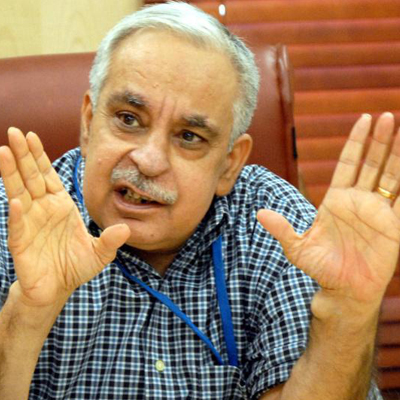
    NEW DELHI: The Telecom Regulatory Authority of India (TRAI) chairman Rahul Khullar has once again spoken loud and clear. The 62-year-old Khullar has proposed that while the Department of Telecom should exclusively focus its attention on carriage and carriage related issues while the Information and Broadcasting Ministry (I&B), considering its history, should be only regulating content.


    “And I think that is the way we need to go,” he said while addressing the gathering at the recently concluded CII Big Summit 2014.


    He also came down heavily on the politicians and political parties. He said, “The Supreme Court through its ruling has clearly stated that airwaves are not the monopoly of the state.”


    So, while Prasar Bharati must exist and it must be independent; politicians, governments, state governments and their organs have “absolutely no business whatsoever to be in broadcasting space,” he announced and suggested that the government must announce this as an integral part of the National Media Policy.


    Khullar also gave his perspective on the other components of the National Media Policy. “Firstly, there must be a clear articulation that we want a free media, unhampered and unrestricted by the government in any way possible,” he said while also suggesting that the media itself must be subject to safeguards. “It could come from other forms of independent regulators. You cannot have an institution which has rights but no duties,” he added.  


    Secondly, there must be commitment in National Media Policy to uphold plurality of views and opinion. “And this must be a commitment,” he said.


    Thirdly, time has come that we start talking about infrastructure. “If this National Media Policy is actually going to work, are we or are we not going to be in a digitised world? We cannot be flipping and flopping the dates as we send out wrong signals to the rest of the world about your credible commitment towards any policy,” he stated.


    Khullar also pointed out the issues with spectrum availability. “It is a nightmare to deal with ISRO. The organisation neither gives you a transponder nor does it allow you to get a transponder of your own,” he informed.  

  • Phase III of digitisation likely to begin from April 2015: Javadekar

    Phase III of digitisation likely to begin from April 2015: Javadekar

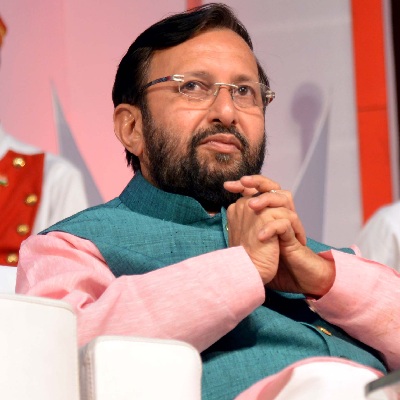
    NEW DELHI: Just two days after the Information and Broadcasting (I&B) Minister Prakash Javadekar officially announced the extension of deadlines for phase III and phase IV of digitisation, he has now announced that the phase III of digitisation is likely to begin from April 2015 and will end the same year in December. “And phase IV will commence as soon as the phase III is completed,” Javadekar said.


    The I&B Minister made the announcement at the ongoing CII Big Summit 2014. “There is some confusion with regards to the extension of digitisation dates.  Tentatively, it will start from 1 April 2015, the final decision on this will be taken soon,” he added.


    The Ministry will also form a committee consisting of all the stakeholders. “So unlike what people feel, we are not delaying digitisation. Our commitment is having a ‘Digital India’. Even a household in a remote village has the right to experience digital viewing,” he informed.


    He also asked the direct to home (DTH) and multi system operators (MSOs) to advertise to the consumers how they are selling expensive set top boxes at cheaper rates. “If the customers understand that they are benefitting with digitisation, they will be supportive of the action,” said Javadekar adding that digitisation is on track.


    Elaborating on the theme of the summit: ‘Monetising strategies: The tryst for a $100 billion Indian M&E industry’, he said, “Aiming low is a crime. So an industry which in 2014 is already a $50 billion industry, cannot say that by 2020, it will become a $100 billion industry. This is not correct. We must aim high. This industry has immense potential to grow.”


    Javadekar in order to boost the fraternity said that no one had thought in 1992 when cable TV started that so many crore of households will be connected to cable, but it happened. No one had also thought that people would pay anywhere between Rs 200 to Rs 500 for entertainment, but people are paying. “Entertainment has become a necessity today and so people are ready to spend. So $100 billion is achievable and so we need to aim high,” he said.


  • Total number of TV channel goes up to 813

    Total number of TV channel goes up to 813

    MUMBAI: Within a fortnight, three more channels have been added to the entire list of channels that can be viewed in India. This includes 400 news and current affairs channels and 413 non-news and current affairs channels, as on 15 September 2014.


    The number of TV channels that can uplink from and downlink to India is 685 (earlier 682).This includes 378 news (earlier 376) and 307 (earlier 306) non-news channels.


    As for the channel that can only uplink and only downlink, the number remained constant at 35 and 93, respectively. The new channels include Kalinga TV, Epic TV. The latter, started by former Disney MD Mahesh Samat, has been waiting for more than a year to get a licence approval from MIB.


    At a recent function, Information and Broadcasting Minister Prakash Javadekar had said that the ministry is working towards clearing licences of all the pending channels that had been deliberately kept pending by the earlier government. Near about 14 channels were to be listed.


    The ministry has also simplified the process of security clearance for broadcasters.

  • TRAI extends date for stakeholders’ views on AGR and on licensing of NSOs and SDOs

    TRAI extends date for stakeholders’ views on AGR and on licensing of NSOs and SDOs

    NEW DELHI: The Telecom Regulatory Authority of India (TRAI) has extended till 7 October the date for written submissions on a pre-consultation paper on ‘delinking of license for networks from delivery of services by way of virtual network operators’.


    In this paper, stakeholders have been asked by the TRAI to give their views on their definition of adjusted gross revenue.


    The paper is on what the model of agreement is between network service operator (NSO) license and service delivery (SDO) operator license created under the draft National Telecom Policy 2011 will be.


    It has asked if this would be left to the market or regulated like mandating NSOs to provide services to SDO licensees and mandating charges etc.


    In its policy, the Department of Telecom (DoT) had said that NSOs would be licensed to set up and maintain converged networks capable of delivering various types of services such as voice, data, video, broadcast, IPTV, VAS etc in a non-exclusive and non-discriminatory manner.


    SDOs would be licensed to deliver the services such as teleservices (voice, data, video), internet/broadband, broadcast services, IPTV, VAS and content delivery services etc.


    In its latest reference to TRAI, the DoT has envisaged the entry of virtual network operators (VNOs) for delivery of services by delinking them from licensing of networks.


    VNOs are SDO licensees who do not own the underlying network(s) but rely on the network and support of the infrastructure providers, telecommunications operators (who are owner(s) of towers, radio access networks, spectrum etc) for providing telecom services to end users/customers. As these operators do not have their own networks, they are termed as VNOs. They can provide any telecom service being provided by network providers viz teleservices (voice, data, video), internet/broadband, IPTV, VAS, content delivery services etc. The most popular among VNOs are mobile virtual network operators (MVNOs).


    India is a diverse country, large in size and had very poor telecom networks when the Government decided to open the sector to private participation. Therefore, in order to ensure development and proliferation of telecom infrastructure across the length and breadth of the country, the Government took a conscious decision that all TSPs would have their own network for providing services to their customers. To meet this end, each TSP was mandated to comply with certain roll-out obligations and even sharing of infrastructure was not permitted initially. To encourage tower sharing amongst operators, the Government initiated a project ‘Mobile Operator Shared Tower (MOST)’ in March 2006, and later on, in April 2008 sharing of active infrastructure, except spectrum, was also permitted.


    At present, most access providers are integrated operators who have their own infrastructure for both access and long distance services. Having already established their networks, the issue to deliberate upon is whether delinking the network from service delivery will have any effect on the working of these TSPs. The new licence regime has come into existence only about a year back.


    In the proposed licencing framework, based on the VNO model, one issue could be whether the existing TSPs, will have to obtain an NSO licence or both NSO and SDO licences on migration to the new licensing regime.


    A linked issue for deliberation will be about the necessity of changing the licensing regime at all, at such a short interval since unified licencing (UL) was introduced.


    At present, there are 7-13 licensees in various service areas. Therefore, another issue for deliberation could be about the need for introduction of more competition in the form of VNOs.


    Apart from access services, for other services like V-SAT, PMRTS/CMRTS, GMPCS, it needs to be deliberated whether any business case/revenue potential exists for a standalone virtual operator for these services.


    In India, the TSPs have infrastructure, including spectrum, which is just about sufficient to cater to their own requirements. Would they really be able to spare their infrastructure for new SDOs, TRAI wants to know.


    It can also be deliberated whether the reference of DoT envisaged an entirely new licensing regime or could be considered to mean that a chapter may be added to the existing UL for facilitating licenses to the VNO.

  • Government notifies new dates of phase III and phase IV of DAS

    Government notifies new dates of phase III and phase IV of DAS

    NEW DELHI: The Government has finally issued the notification postponing the dates of phase III and phase IV of implementation of digital addressable system (DAS) to December 2015 and December 2016 respectively.


    Indiantelevision.com was the first to break the news about the postponement of the dates for DAS phase III and IV. Speaking to indiantelevision.com I&B secretary Bimal Julka had confirmed that ‘the government had decided to delay the digitisation deadline by a full year in order to give all those involved enough opportunity to overcome all the unseen hurdles that had come up after the UPA government mandated  DAS and the various analogue sunset dates.’


    The notification says that the change has been done ‘on being satisfied to do so in public interest’.


    The DAS notification has been issued by way of amendment to the notification issued on 11 November 2011 which had made it “obligatory for every cable operator to transmit or re-transmit programmes of any channel in encrypted form through digital addressable system.”


    Although the Government had announced its decision to postpone DAS in phase III and phase IV to encourage greater indigenisation of set top boxes, no action could be taken until issuance of the notification.


    Until now, the deadline for phase III was September 2014 and for phase IV December 2014.


    In the first two phases of digitisation, which included cable TV households in the four metros and other major cities, most of the STBs that were installed had been imported from other countries.


    After he took over as Information and Broadcasting Minister, one of the major areas of focus of Prakash Javadekar has been indigenisation of STBs and Ministry sources said the new dates are in keeping with inputs supplied to the Minister in this connection.


    The ministry has made efforts to get STBs declared as Telecommunication Network Equipment which will enable domestic manufacturers to get exempted from certain taxes, an official said.


    Nearly 110 million STBs are required to be installed in cable TV households in the remaining two phases of digitisation and the extended deadline will ensure that the domestic manufacturers prepare themselves and meet this demand, officials said.

  • DoT challenges TDSAT judgment on 3G roaming services in Supreme Court

    DoT challenges TDSAT judgment on 3G roaming services in Supreme Court

    NEW DELHI: The Department of Telecom has moved the Supreme Court challenging tribunal TDSAT’s judgment that allowed Airtel, Idea and Vodafone to offer 3G services under a roaming arrangement in areas where not all of them own 3G spectrum.


    “Legal opinion has favoured challenging TDSAT judgement dated 29 April on 3G intra-circle roaming. DoT has sent petition to Supreme Court registry around a week ago for appeal against the judgement,” an official source told.


    The Telecom Disputes Settlement and Appellate Tribunal had overturned a government ban on offering 3G mobile services beyond their licensed zones through roaming pacts, saying that it was in national interest to allow better utilisation of scarce radio frequency.


    The three operators – Airtel, Vodafone and Idea Cellular – benefitted from this judgment as they were facing a penalty of Rs 1,200 crore for entering into pacts with each other to offer 3G services in regions where they did not win spectrum in the 2010 auction.


    Airtel had won the 3G spectrum in 13 out of 22 telecom service areas for Rs 12,295.46; Vodafone in 9 for Rs 11,617.86 and Idea Cellular in 11 circles for Rs 5,768.59 crore.


    DoT issued notices to Airtel, Vodafone and Idea on 23 December 2011 asking them to stop 3G ICR within 24 hours and report compliance but the order was challenged by them.


    Tata Teleservices and Aircel too had signed 3G ICR but immediately called off their agreement after DoT issued notice to them.


    Following the TDSAT judgement, Airtel, Vodafone and Idea have extended service under their 3G ICR at pan-India level except Odisha.


    Reliance Communications also entered in similar agreement with Tata Teleservices to provide 3G services in Karnataka, Andhra Pradesh, Tamil Nadu, Kerala and UP-East telecom Circles.

  • Govt. reconstitutes task force for DAS phases III and IV

    Govt. reconstitutes task force for DAS phases III and IV

    MUMBAI: Days after Information and Broadcasting (I&B) Minister Prakash Javadekar announced that digitisation in the country will progress as per the new deadlines; the government has come up with a reconstituted task force for implementation of digital addressable system (DAS) in phases III and IV.


    The new task force will constitute I&B additional secretary chairperson, Telecom Regulatory Authority of India (TRAI) principal advisor for broadcast and cable satellite, I&B Ministry joint secretary broadcasting, representative from the MSO Alliance, five independent MSOs one each from north, south, east, west and north east regions, five registered LCO associations one each from north, south, east, west and north east regions, representatives from the Indian Broadcasting Foundation, News Broadcasters Association, Association of Regional Television Broadcasters of India, DTH Association, FICCI, CII, ASSOCHAM, CEAMA, Department of Telecommunications, Department of Electronics and Information Technology, DG: Doordarshan, DG: All India Radio, BECIL, BIS, five prominent consumer organisations one each from north, south, east, west and north east regions and 33 state level nodal officers one each from the states/union territories governments.


    The task force would act as an interface between the government and the industry in matters related to implementation of DAS in the cable TV sector and monitor the implementation of DAS. It also will have to analyse the roadblocks that may come in the way of digitisation and suggest measures.