Category: Regulators

  • TV9 signals still not on air in Telangana

    TV9 signals still not on air in Telangana

    MUMBAI: A few days ago, the Telecom Disputes Settlement Appellate Tribunal (TDSAT) ordered MSOs in Telangana to carry TV9’s signals. This came after the latter decided to give an apology for telecasting ‘defamatory’ content.


    The case was disposed off two weeks ago after which TV9 filed an EA. However, counsel for TV9 (Associated Broadcasting Company) stated that despite the order, the channel’s signals continue to be off air while distributors claim that they are still receiving threat calls from unruly elements.


    The TDSAT had asked the state government to provide protection to the MSOs, which the counsel for Telangana had also agreed to.


    The case is now put up for 10 October when TDSAT has ordered Telangana additional advocate general J Ramchandaran Rao to be present in court.


    In the earlier order, it had ordered TV9 to refrain from telecasting such content in future and to strictly abide by the Programme Code and the Advertisement Code from rules 6 and 7 of the Cable Television Networks Rules (1994).

  • Viewers of pay TV channels should not be burdened with ads: Javadekar

    Viewers of pay TV channels should not be burdened with ads: Javadekar

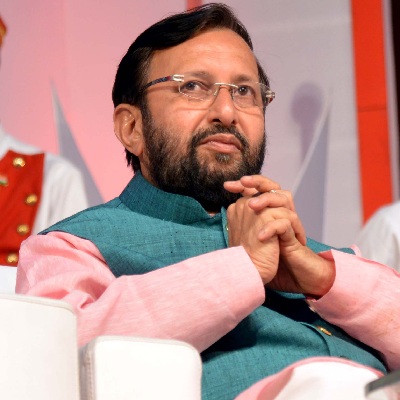
    NEW DELHI: Even as a few broadcasters continue to grapple with the ad cap issue in the Delhi High Court, Information and Broadcasting Minister Prakash Javadekar today said pay channel viewers should not be burdened with advertisements.


    He said that while the government felt the logic of permitting advertisements was logical in the case of free-to-air channels, it would shortly decide whether this kind of restriction should also apply to pay channels who also earned through subscriptions. FTA channels have no other means of revenue apart from advertisements.


    The Minister was answering a question relating to the 10+2 ad cap presently permitted to all television channels. 


    The News Broadcasters Association and other stakeholders have already challenged the 10+2 formula in the Delhi High Court and it is pending hearing.


    While the NBA contends that news broadcasters being free to air do not earn any other revenue, the government has reiterated that the ad cap was part of the Cable TV Networks Regulations 1994 and the Cable TV Networks (Regulations) Act 1995. 


  • Govt will provide all facilities to local STB manufacturers for DAS: Javadekar

    Govt will provide all facilities to local STB manufacturers for DAS: Javadekar

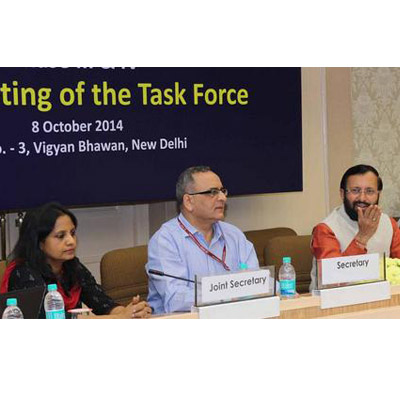
    NEW DELHI: Information and Broadcasting Minister Prakash Javadekar today clarified that the new dates for Phase III and IV for digital addressable system were the outer limits but all attempts would be made to achieve the target well before that.


    Reiterating that the main aim of the new deadlines was to encourage DAS with use of India-made set top boxes, he told the first meeting of the DAS task force for the final two phases here today that the Government has facilitated C form issue for indigenous manufacturers.


    At the outset, he said the entire digitisation programme was an integral part of Prime Minister Narendra Modi’s Digital India plan.


    He also pointed out that he represented the viewer and consumer, who had no voice unlike the other stakeholders who were present at the meeting.


    Javadekar said the cable TV digitisation process aimed at providing the consumer with greater choices and affordable and qualitative options. The overall objective was to be sensitive to the needs and choice of the consumer. The choice of the consumer was paramount in defining the inputs, strategies and roadmap for the remaining phases of the digitisation process.


    He called upon the manufacturers to innovate and explore new technologies for addressing the different consumer tastes and needs.


    The Minister added that in the next phase of digitisation, the price mechanism offered to the consumer would be a key determinant of the process, particularly as DAS was being extended to rural areas. As a consequence, it was mandatory for all stakeholders to sensitise the consumers on the benefits of the process in view of the rural outreach of the programme. 

    Regarding the indigenisation of STBs, the Minister said that the concerns of the industry had been taken up with the Finance and Communications and IT Ministries and STBs were declared as part of ‘telecommunication network’.


    The Minister said the task force ought to identify timelines for implementation so as to ensure the timely completion of Phase III and Phase IV. All issues concerning the key stakeholders needed to be debated at length so as to ensure the mainstreaming of the process with the existing policy. The need of portability of set top boxes so as to provide the option of interoperability to the consumers was an issue that could be looked into by the concerned stakeholders.


    Every meeting of the task force was critical as it identified critical inputs so as to ensure the effective implementation of the timelines and processes. Every viewer should be able to get the best viewing experience over the next two years, he added.


    He also wanted portability for STBs on the lines of portability for mobile phones and said the government and the task force will study this issue.


    Earlier speaking on the occasion, I and B secretary Bimal Julka said the task force provided an important platform to debate and overview issues related to the digitisation implementation. It also provided an opportunity to understand the concern of stakeholders.


    The experience of such meetings during the first and second phase of implementation of the programme had been extremely useful in streamlining the roadmap for effective implementation. He said the consumer is the judge of what he gets to see and content rules. He said a lot of complaints had been received from stakeholders during the implementation of the first two phases but he hoped to get more suggestions as well.


    The meeting saw various stakeholders raise issues concerning them. Taxation was raised by STB manufacturers and auditing was requested by consumer groups. The broadcaster suggested that the deadline should be reduced to 2015 for both phases. No TRAI member attended the meeting.


    Javadekar also assured that there will be sub committees that will monitor the process of digitisation.  

  • DAS task force to meet on 8 October amidst protests

    DAS task force to meet on 8 October amidst protests

    NEW DELHI: Almost a month after its constitution, the task force set up for the implementation of digitisation in the country and particularly overseeing the execution of the last two phases of Digital Addressable System (DAS) is expected to meet on 8 October at 10:30 in Delhi.


    However, local cable operators who have already expressed their protest at not being given a voice in the Task Force have not been invited to the meeting.


    Talking about the meeting, Information and Broadcasting Ministry secretary Bimal Julka told indiantelevision.com that all the stakeholders named in the task force order of 12 September had been nominated and are expected to be at the meeting. Although an official of the Information and Broadcasting Ministry denied this.


    LCOs who form the backbone of the cable television system in the country said no organisation of LCOs had been included in the task force or invited in the meeting.


    Meanwhile, ASSOCHAM Media and Entertainment Committee co-chairman Sujatha Dev informed the industry body that she is unaware of how a representative of ASSOCHAM was nominated to the task force.  


    National Cable & Telecommunication Association president Vikki Choudhry has in a letter to the I&B Minister Prakash Javadekar alleged that “In spite of all your endeavours taken to clean up the mess that had been created on account of DAS by the previous UPA government, few officials still attached to the MIB are bent on misleading and misguiding you on this much controversial DAS issue.”


    He has also pointed out that certain categories had not been invited to the task force meeting despite them being directly involved in implementation of DAS which included five Independent MSOs one each from North, South, East, West and North East region, five registered LCO associations one each from North, South, East, West and North East regions, a representative of the Association of Regional Television Broadcasters of India/ Regional News Broadcasters Association, five prominent consumers organisations, one each from North, South, East, West and North East regions, a representative of ASSOCHAM and a representative of Telecom Equipment Manufacturers Association of India (TEMA).


    Choudhry added that while there had been mention of these in the order of 12 September constituting the task force, no persons had been nominated for these categories.


    Additionally, he also revealed that there was no representation / invitation sent to Conditional Access System Vendors (an integral part of the entire DAS) and Subscriber Management System (SMS) that controls the entire DAS ecosystem after integration with the CAS.


    According to the 12 September order, the new task force was to be headed by I&B additional secretary as chairperson, with Telecom Regulatory Authority of India (TRAI) principal advisor for broadcast and cable satellite, I&B Ministry joint secretary broadcasting, representatives from the MSO Alliance, five independent MSOs one each from north, south, east, west and north east regions, five registered LCO associations one each from north, south, east, west and north east regions, representatives from the Indian Broadcasting Foundation, News Broadcasters Association, Association of Regional Television Broadcasters of India, DTH Association, FICCI, CII, ASSOCHAM, CEAMA, Department of Telecommunications, Department of Electronics and Information Technology, DG: Doordarshan, DG: All India Radio, BECIL, BIS, five prominent consumer organisations one each from north, south, east, west and north east regions and 33 state level nodal officers one each from the states/union territories governments.

    The task force was to act as an interface between the government and the industry in matters related to implementation of DAS in the cable TV sector and monitor the execution of DAS. It also will have to analyse the roadblocks that may come in the way of digitisation and suggest measures.


    While NBA and IBF will be participating in the meeting, representatives of cable operators associations from different states are protesting against the exclusion of LCOs and MSOs from the meeting. 


  • TRAI to finalise views on AGR in four to five weeks

    TRAI to finalise views on AGR in four to five weeks

    NEW DELHI: The Telecom Regulatory Authority of India (TRAI) has sought a time of three to four weeks for finalising its views on the definition of Revenue Base (AGR) for the Reckoning of Licence Fee and Spectrum Usage Charges.


    TRAI Chairman Rahul Khullar said in an Open House Discussion (OHD) on the subject that the regulator had issued a consultation paper in July-end at its own insistence since the matter was important. Most of the stakeholders present felt that AGR should not apply to those stakeholders who do not need to apply for licences to operate.


    The OHD was attended largely by telecom players and internet service providers. From the TRAI, member Vijayalakshmi Gupta and principal advisor N Parameshwaram were present.  


    The paper had been issued following a multitude of cases by both telecom and broadcast operators to review the definition of Gross Revenue (GR) and the permissible deductions to arrive at Adjusted Gross Revenue (AGR) in the context of the National Telecom Policy 2012.


    It was also aimed at examining the components of GR, AGR and minimum presumptive AGR, rates of licence fee and spectrum usage charges, formats of statements of revenue and licence fee and audit and verifiability of revenue and licence fee.


    The paper on Definition of Revenue Base (AGR) for the Reckoning of Licence Fee and Spectrum Usage Charges will also examine the changes made in the licensing regime, the transition from the administrative allocation regime towards market-determined prices for spectrum, and the conclusion of tenure of many licences. The paper provides the relevant background information on the subject covering various issues involved.


    On the definition of AGR specifically, the authority had in 2012 recommended that only the revenue from the wireless services shall count towards AGR calculation for the limited purpose of calculation of Spectrum Usage Charges (SUC) that would continue to be determined on service area basis, and should be levied only in respect of those service areas where the licensee holds any access spectrum.


    TRAI wanted to know whether there is a need to review/revise the definition of GR and AGR in the different licences at this stage; the guiding principles for designing the framework of the revenue sharing regime; and whether the rate of licence fee (LF) be reviewed instead of changing the definitions of GR and AGR, especially with regard to the component of USO levy in the interest of simplicity, verifiability, and ease of administration.


    The paper also wanted to know whether the revenue base for levy of licence fee and spectrum usage charges include the entire income of the licensee or only income accruing from licenced activities if the definitions are to be reviewed/revised.


    It has asked whether LF be levied as a percentage of GR in place of AGR in the interest of simplicity and ease of application, and should the revenue base for calculating LF and SUC include ‘other operating revenue’ and ‘other income’.


    The government prepared a draft licence agreement for International Long Distance (ILD) services in September 2000 containing a provision that LF was payable as a percentage of revenue. For the Public Mobile Radio Trunk Service (PMRTS) too, the revenue share regime was made applicable from 1 November 2001.


    The definition of AGR has been litigated since 2003. TSPs questioned the inclusion of various components of revenue in the reckoning of AGR as well as the legality of the definition before TDSAT. In 2006, TDSAT, after noting that revenue from non-licensed activities needed to be excluded from the reckonable revenue, asked TRAI to make recommendations on the inclusion or exclusion of the disputed items in the AGR. TRAI made its recommendations on September 13, 2006 and the Tribunal gave its final order in the matter on August 30, 2007 after accepting most (but modifying some) of TRAI’s recommendations.


    In the course of finalising the recommendations of the authority on the reference from TDSAT, the views of DoT were obtained by the authority through its representative and incorporated in the “Recommendations on components of Adjusted Gross Revenue” dated 13 September  2006. The authority was informed that the basic rationale adopted by the government while formulating the definition of AGR was that it should be easy to interpret – so as to pose fewer problems in application and less disputes and litigations, and to make it less prone to reduction in LF liability by way of accounting jugglery; and it should be easy to verify.


    The TDSAT’s judgment of 30 August 2007 was taken in appeal by DoT to the Supreme Court and was set aside by its judgment on 11 October 2011 on the grounds, among others, that TDSAT had no jurisdiction to decide the validity of the terms and conditions of the licence including the definition of AGR incorporated in the licence agreement. It was for DoT – and not TRAI and TDSAT – to take a final decision on the definition of AGR. The Supreme Court also held that a licensee can raise a dispute about the computation of AGR relating to a particular demand and that TDSAT can then examine whether the demand was in accordance with the licence agreement and the definition of AGR.


    The judgment of the Supreme Court settled important points of law and has clarified the nature of the contractual relationship between the Government as licensor and the TSPs. The judgment also laid down the parameters of institutional responsibility in arriving at the contractual terms and conditions.


    Litigation regarding the computation of LF continues before the TDSAT in the case of individual demands made on TSPs. It has also been reported that writ petitions re-agitating the revenue share definition have been filed by TSPs in different High Courts. 

  • Julka asks M&E Industry to contribute to ‘Swacch Bharat Mission’

    Julka asks M&E Industry to contribute to ‘Swacch Bharat Mission’

    NEW DELHI: The Government has asked the media and entertainment industry to contribute towards creating awareness and showing effective action in the ‘Swacch Bharat Mission’.


    Information and Broadcasting Ministry Secretary Bimal Julka said that the Media and Entertainment industry could help in reaching out to people with the right content and effective messaging which would ensure community participation in the ‘Swacch Bharat Mission’.


    He added “the M&E Industry has an important role to play in order to make Swacch Bharat a mass movement.  It is essential for all stakeholders to be partners in the drive towards this initiative.”


    Julka held a meeting with the stakeholders of the M&E Industry on the Mission here. The stakeholders of the Industry included representatives of News Broadcasters Association (NBA), Indian Broadcasting Foundation (IBF), representatives of FM radio, community radio, Digital Media, Entertainment channels and National Broadcasters including the Public Broadcaster Prasar Bharati.


    Quoting the example of Digitisation of Cable TV, where all stakeholders have themselves taken initiatives towards creating awareness, Julka suggested that the Entertainment Industry should bring leading stars together to communicate messages through TV on Swacch Bharat to households.


    For the FM radio industry and community radio stations, Julka appealed to create region specific and event specific programmes on the Swacch Bharat Mission.


    He has also appealed to the Digital Media Industry to play Swacch Bharat messages across various theatre screens in the country, to make people aware about the initiative.


    Representatives of the industry extended their support to carry forward the initiative and shared their views and suggestions in order to create an effective multi-media campaign which would translate ‘information into action’ towards fulfilling the Prime Minister’s vision on “Swacchchhata”.

  • LCOs threaten to boycott TRAI OHD meet on 29 September

    LCOs threaten to boycott TRAI OHD meet on 29 September

    NEW DELHI: The Telecom Regulatory Authority of India (TRAI) has called an Open House Discussion (OHD) on the draft amendment Registration India International regulations, the Standards of Quality Service (Digital Addressable Cable TV Systems) (Amendment) Regulations 2014.


    The meeting is being held in Delhi on 29 September and local cable operators and other stakeholders have been asked to register by 26 September evening.


    However, most local cable operators from different parts of the country have decided to boycott the meet, alleging that TRAI ‘management ran away’ in the last Open House Discussion.


    Several organisations of LCOs from Gujarat, West Bengal and other parts of the country pointed out that many LCOs had come to Delhi on 24 September and alleged that ‘the management of TRAI does not have respect towards this religious faith’ and has given a deadline of 26 September for the next OHD despite the Navratri festival.


    It was pointed out to indiantelevision.com that even the next OHD was clashing with the festive season and not enough time was given to the LCOs to be able to get bookings to come back to Delhi.


    LCOs alleged that ‘there was no discussion and no LCO was allowed to share in a fair or justified way in the last OHD and it looked like some dictatorship where the authority only wants to levy amendment on the LCOs’.

  • TDSAT directs Hathway to enter into RIO pacts with Zee, Star India

    TDSAT directs Hathway to enter into RIO pacts with Zee, Star India

    NEW DELHI:  After a fiery battle that lasted over seven months, Hathway Datacom and Star India have been are directed to execute an interconnect agreement based on Star’s Reference Interconnect Offer for Star general entertainment channels and Star Sports channels by 30 September.


    The Telecom Disputes Settlement and Appellate Tribunal (TDSAT), which had reserved orders in the ‘deep-rooted’ dispute between Hathway and others and Taj TV after a hearing that commenced on 25 August and continued on a day-to-day basis, also said Zee would also execute the RIO by 30 September in case it had not so far countersigned the RIO sent to it duly signed on behalf of Hathway.


    TDSAT Chairman Aftab Alam and member Kuldip Singh in a 51-page judgment said in case Hathway has any objections to any of the clauses in the RIOs of Star and/or Zee, it would be open to it to make representations in that connection to TRAI. But the clauses under representations would continue to be binding upon it unless and until those are set aside or modified by TRAI.


    Hathway has also been asked make payment of licence fees to the broadcasters at the RIO rates from the date of execution of the RIO based agreement.


    For the interregnum between the expiry of the previous agreement and coming into existence of the new RIO based agreement, the Tribunal said Hathway will pay for the Star GEC channels and Zee at the rate of Rs 23 cost and Rs 21.50 respectively per subscriber. The licence fee on CPS basis as directed will be computed by taking into account every set top box by means of which any Star channel is viewable.


    Hathway will pay the licence fee to Star Sports at the rate of Rs four cost per subscriber for the interregnum between the expiry of the previous agreement and coming into existence of the new RIO based agreement. The licence fee on CPS basis as directed will be computed by taking into account every set top box by means of which any Star Sports channel is viewable.


    Taking into consideration the payments made earlier by Hathway, the payments will be made following reconciliation of the accounts.


    Before parting with the case, the Tribunal said it was “constrained to observe that the TRAI has failed to examine the rates quoted in the RIO submitted before it from the point of view indicated above. In an earlier judgment [Petitions nos.836(C)/2012 & 382(C)/2011 – Dish TV India vs. ESPN Software India, we had asked the TRAI to pay attention to this aspect of the matter but unfortunately our observations failed to receive due attention. We reiterate the urgent need for TRAI to examine the RIOs submitted to it, especially the rates quoted by broadcasters and MSOs, to make these serve the purpose as intended in the regulations.”


    The Tribunal “categorically rejected” the submission made on behalf of the broadcasters that publication of their RIO on their websites satisfies the condition to act non-discriminatingly. However it added that though this may be the ideal, it can never be accepted as valid having regard to the way RIOs are being framed by the broadcasters and the MSOs at present. “In the state in which we find the RIOs at present, this argument becomes a ploy to turn the RIO into a coercive tool and a threat to the seeker of the TV channels, and it undermines the essence of the regulations, which is to promote healthy competition by providing a level playing ground”, the Tribunal added. 


    The Tribunal also clarified that its observation was not directed to the broadcasters in this case alone, but found true not only of most of the broadcasters but also of multi-system operators in their dealings with the seeker of the signals below them in the distribution line. “We find, in case after case, an MSO or an LCO complaining that it was being required (by the broadcaster or the MSO, as the case may be) to take the signals at the price quoted by the provider or to sign on the dotted lines in the RIO.”


    It noted that the “Reference Interconnect Offer”, as defined under the Regulations, is a positive concept and if framed properly it should go a long way in ensuring a level playing ground. In Europe, and in an increasing number of jurisdictions worldwide, incumbent operators and/or those with significant market power are required to produce a RIO. This Specimen offer provides a common and transparent basis for all agreements for the provision of interconnection services subject to regulation. It also helps to ensure that new entrant operators can be confident of gaining terms which will not be less favourable to those applied to others (including the interconnection provider’s own retail operation).


    The RIO may therefore be said to define the parameters of negotiations for arriving at an agreement on mutually acceptable terms. It may be argued that the RIO must contain the details and rates relating to all the bases on which the maker of the RIO intends to enter into a negotiated agreement, the Tribunal said.


    It noted that ‘unfortunately’, RIOs are framed in India seemingly in negation of these attributes. “RIOs mostly give only a-la-carte rates and even those rates are fixed with reference to the maximum permissible under the tariff orders. But in reality the maker of the reference would be giving signals to most parties, or at least its favoured ones, at rates far lower than those stated in the RIO. In other words, the RIO rates are completely divorced from the market rates. The vast difference between the realistic market prices and the rate in the RIO gives the provider a free hand to quote a price much higher than the market price to a new seeker or one in disfavour, a price that would be commercially unviable and force the seeker either to accept that price or to accept the RIO.”


    Furthermore, Clause 4(1) of the DAS Regulations requires the RIOs to be submitted to the TRAI and clause 6 requires that any amendments in the RIO must also be similarly submitted to the Telecom Regulatory Authority of India. The Regulations thus imply the endorsement of the RIOs by TRAI and that gives the RIOs a certain degree of sanctity. “


    Before the Tribunal reserved its order on 10 September, Star India had filed an affidavit in which it said it would ‘henceforth’ enter into agreements under the RIO on a year-to-year basis with all multi-system operators. It said the RIO would commence three months after the expiry of the erstwhile agreement and would only be on the basis of a published RIO. It also said it was sign any new agreement on cost per subscriber basis with MSOs operating at national level.


    However, it listed eight MSOs working at regional or state level with which it already has CPS agreements and said these will continue for the term for which they are valid and thus last the full term.


    The eight MSOs are Inspire Infotech Pvt Ltd of Delhi, Novabase Digital Entertainment Pvt Ltd of Delhi, E-Infrastructure and Entertainment Pvt (India) Ltd of Bangalore, Satellite Channels Pvt Ltd, of Delhi, Poona Cables Systems and Services of Pune, Sky Channel of Delhi, Home Cable Networks of Chittore District in Andhra Pradesh, and City TV of Coimbatore.


    During the hearing, the Tribunal heard various counsel on behalf of Taj TV and Zee TV, Star India, Hathway, Bhaskar (MSO) from Jabalpur and Scod, an MSO from Mumbai and Navi Mumbai.


    When listing the case for 25 August, the Tribunal had said: ‘unfortunately, the dispute between the two sides is playing out in highly aggressive way and one may add in a rather unpleasant manner. It seems to be affecting a large number of people in viewing their favourite TV channels. The disputants themselves are approaching the Tribunal on a weekly basis complaining against the actions of each other and seeking some interim directions of the Tribunal consuming a lot of time on arguments on miscellaneous applications.”


    The Tribunal noted that both sides had assured the Tribunal that they would avoid issuing the offensive advertisements against each other.


    In the order last month, the Tribunal directed Taj TV to file their respective replies in petitions nos.319(C) of 2014 and 47(C) of 2014 and asked Hathway to file its rejoinder.


    The Tribunal noted that the dispute has arisen at a stage when the earlier fixed fee agreement between the parties has come to end and they are unable to come to agreed terms for a fresh agreement and under the circumstances the MSO has no option but to take the broadcasters’ channels on their RIO terms.


    Earlier last month, TDSAT had directed Taj Television to restore with immediate effect the signals of Zee TV channels to Hathway Cable and Datacom pending the final hearing a petition by the latter.


    It had also directed Hathway as an interim measure to make payment of the monthly subscription fees from 1 April 2014 (in case of in case of Kolkata and Digital Addressable System – II areas) and from 1 May 2014 (in case of Delhi and Mumbai) up to 31 July at the of Rs.21.60 cost per subscriber basis.


    Zee Channels were earlier being distributed to Hathway by Media Pro but the latter was not in a position to renew the agreements In view of the Aggregator Regulations issued by the Telecom Regulatory Authority of India in February this year, around the same time the earlier agreements came to end.


    Thus, the Zee group of channels came to be handled by Taj Television. But when discussions between Hathway and Taj Television for Zee TV channels failed to yield any results, Taj TV on 26 June sent the RIO based agreement executed from its side. There was delay on the part of Hathway in executing the RIO based agreement and in the meanwhile Taj Television issued the disconnection notice under regulation 6.1 on 8 July 2014 and the public notice under regulation 6.5 on 11 July 2014. However, Hathway later counter-signed the RIO based agreement and sent it back to Taj Television which refused to accept a cheque sent by Hathway. This led to the petition by Hathway.

  • Ad Cap case adjourned till 20 November

    Ad Cap case adjourned till 20 November

    MUMBAI: The Delhi High Court once again adjourned the ad cap case, this time to 20 November.


    The News Broadcasters Association (NBA), the lead petitioner in the matter, had sought 10 days adjournment as senior counsel S Ganesh, was not present in view to other pending cases in Mumbai.


    “We had requested to accommodate the case for 10 days as the senior consel had to go to Mumbai,” said the lawyer for NBA.


    However, the HC postponed the case till 20 November since it didn’t have any dates before that to hear the case.


    The Telecom Regulatory Authority of India (TRAI) advocate Saket Singh emphasised that the matter has already been pending for more than 10 months.


    During the last hearing on 15 July, the HC had adjourned the case as the final hearing of the bunch of petitions challenging the ad cap sort to be imposed by TRAI as the authority has not finalised its rejoinder.


    The case had been previously heard in the High Court on 17 December last year and 13 March this year.

     
    The NBA had challenged the ad cap rule, contending that TRAI does not have jurisdiction to regulate commercial airtime on television channels.

     
    Apart from the NBA, the petition have been filed by Sarthak Entertainment, Pioneer Channel Factory, E24 Glamoru, Sun TV Network, TV Vision, B4U Broadband, 9X Media, Kalaignar, Celebrities Management, Eanadu Television and Raj Television.

     
    The news and regional broadcasters fear that the capping of commercial airtime will curtail their ad revenues. They also argue that the ad cap must be brought only after the benefits of cable TV digitisation start kicking in.
     

    Earlier this year, the Court also granted interim relief to Hyderabad-based MAA Television Network against the ad cap regulation. However, the court had also observed that the cap on advertisements is a ‘reasonable exercise’.

     
    Four major broadcast networks—Star India, Zee Entertainment, Multi Screen Media and TV18 Group—are following the regulations.

  • Additional time for comments on regulatory framework for platform services as Delhi OHD ends abruptly

    Additional time for comments on regulatory framework for platform services as Delhi OHD ends abruptly

    NEW DELHI: An Open House Meeting in New Delhi on issues relating to the regulatory framework for platform services operated by television distribution platform operators ended abruptly when a set of cable TV operators insisted that other problems relating to LCOs should also be discussed.


    TRAI chairman Rahul Khullar assured the operators that time would be given after the agenda items were over, but the meet was ended abruptly after 45 minutes when no heed was paid to his plea and because of ‘sustained disturbance’.


    Later, local cable operators held a demonstration outside the venue and also filed a police complaint against TRAI officials including Khullar, saying he first invited them but refused to listen to them, and called the police to keep them under control. They also alleged he was only interested in appeasing the broadcasters lobby. 


    TRAI later said the meetings for the other three regions – Mumbai on 12 September; Bangalore on 16 September; and Kolkata on 19 September – were constructive wherein not just the issues on the agenda but also other matters relating to development of the cable industry, including digitisation, were discussed.


    In view of the abrupt ending and to enable stakeholders to make other recommendations relating to the regulatory framework for platform services operated by TV distribution platform operators, TRAI has decided to permit stakeholders to give any additional comments by 29 September. Platform services include the local channels shown on cable TV.


    The meeting in Delhi, organised for the stakeholders in the Northern region, was the last of a series of four open house discussions organised in different parts of India.


    The four OHDs were to enable the Authority obtain first hand information regarding the views and opinions on the issues involved from a wide cross-section of the stakeholders.


    Representatives of the local cable operators; multi-system operators; broadcasters; DTH operators; HITS operators; content creators; consumer organisations, research institutions etc. came for the OHDs.