Category: Regulators

  • Roadmap soon on converting IIMC into Communication University: Javadekar

    Roadmap soon on converting IIMC into Communication University: Javadekar

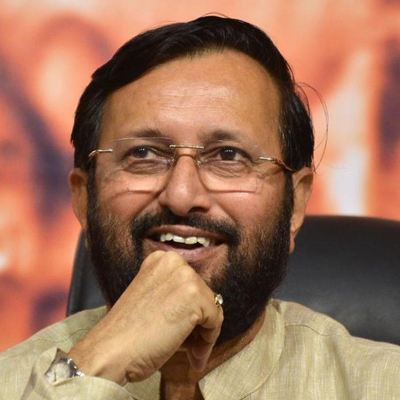
    NEW DELHI: Information and Broadcasting Minister Prakash Javadekar has said steps are being initiated shortly to upgrade the Indian Institute of Mass Communication into a ‘Communication University.’
     
    A roadmap would be prepared soon by the Ministry, he said, inviting suggestions from the public especially the young generation.
     
    Javadekar said a specific corner would be developed on the I&B Ministry’s website for these suggestions to be placed for the perusal of the Ministry. The entire process was part of the Prime Minister’s Communication Vision which laid emphasis on ‘Participative Communication’- a process which linked the key stakeholders including the media fraternity.

     
    The Minister stated this while delivering the address at the 47th Convocation Ceremony of the Indian Institute of Mass Communication and the launch of the Golden Jubilee Celebrations of the Institute in Delhi.

    Javadekar said press freedom came with an element of responsibility. Throughout history, the responsibility of the press had been flagged on different occasions. He exhorted the students who were conferred diplomas to avoid sensationalism at all costs and fight the menace of paid news. A young journalist ought to work with passion, compassion in a mission mode without commission. He called upon the students to balance information taking into account the sourcing of information from different media sources which included new and traditional media streams. These aspects would lay down the architectural framework for ethical journalism in the future.


    He called upon the IIMC to undertake studies to understand the different aspects of elections related to the communication process and the electoral system. The Minister also unveiled the new logo to commemorate the golden jubilee celebrations of IIMC. He inaugurated the new bilingual website of IIMC.

    IIMC has the distinction of being universally recognised as a centre of excellence in the field of journalism, media and mass communication teaching, training and research. A total of 341 students were conferred with their Diplomas at this Convocation which included students from six Centres of IIMC, at New Delhi and Dhenkanal, as well as at the newly opened Regional Centres at Aizawl in Mizoram, Amravati in Maharashtra, Jammu in J&K and Kottayam in Kerala. The PG Diploma courses were conferred in Journalism Hindi and English, Advertising& Public Relations, Oriya Journalism and Urdu Journalism. Special awards were also conferred in different categories to 31 students across all courses. 

  • Growth in mobile broadband spurs internet use in August

    Growth in mobile broadband spurs internet use in August

    NEW DELHI: There was a sizeable increase in the number of broadband subscribers to 74.31 million by August-end as compared to 70.81 million subscribers by July-end, thus showing a monthly growth of 4.95 per cent.
     
    The largest growth rate in broadband was in the mobile devices users (phones and dongles) which went up by 6.29 per cent from 55.34 million to 58.82 million. The growth in fixed wireless subscribers (Wi-Fi, Wi-Max, Point-to-Point Radio & VSAT) was 2.75 per cent from 430,000 to 440,000. The growth in wired subscribers was a mere 0.06 per cent from 15.04 million to 15.05 million.
     
    The top five wired broadband service providers at the end of August were BSNL (9.97million), Bharti Airtel (1.39 million), Mahanagar Telephone Nigam (1.13 million), Beam Telecom (0.40 million) and YOU Broadband (0.41 million).
     
    The top five wireless broadband service providers at August-end were Bharti Airtel (15.14 million), Vodafone (12.51 million), Idea Cellular (9.85 million), BSNL (8.35 million) and Reliance Communications Group (6.53 million).


  • TRAI’s Khullar lashes out at DoT for delay in giving spectrum to Airtel and Vodafone

    TRAI’s Khullar lashes out at DoT for delay in giving spectrum to Airtel and Vodafone

    NEW DEHI: The Telecom Regulatory Authority of India (TRAI) has lashed out at the Department of Telecom (DoT), noting that it is “unable to understand the reasons for the inordinate delay in the assignment of spectrum despite the clear provision in the notice inviting applications fo the assignment of spectrum and after the payment has been made by the licencees.


    In a letter by TRAI chairman Rahul Khullar to Telecom secretary Rakesh Garg, it has been stated that the Authority is seriously concerned that this delay on the part of WPC in assigning spectrum in the 1800 MHz band may lead to a partial breakdown of services offered by  Airtel and  Vodafone especially in Delhi, the national capital.

    This will inconvenience consumers greatly. Both these operators have around 20 million subscribers in Delhi which constitute around 45 per cent of the total subscriber base of Delhi Licence Service Area. It is apprehended that in December 2014, there will be a serious deterioration in the quality of service to these subscribers because of call drops, network congestions etc.
     
    The Authority has suggested that the DoT should immediately call a meeting of both Telecom Service Providers and arrive at a feasible solution so that consumers’ inconvenience can be avoided.
     
    At the outset, Khullar said in the three metros of Delhi, Mumbai and Kolkata, the first two CMTS/UAS licences given in 1994 are due to expire on 29/30 November 2014. These “expiry” licensees were holding spectrum in the 900 MHz and 1800 MHz band which was put to auction in the February 2014 auctions. Except Loop which did not participate in the auctions, other “expiry” licensees.  and Vodafone were successful in re-acquiring spectrum in these LSAs.
     
    In the Delhi LSA, Airtel and Vodafone, which were both having 8MHz in 900 MHz, could re-acquire only 6 and 5 MHz of 900 MHz band respectively in the auctions. Moreover, the spot frequencies now assigned to them are almost entirely different from the earlier different from the earlier assignment.  To make up for the shortfall int eh 900 MHz band, these TSPs have acquired additional spectrum in the 1800 MHz band, but it will require sufficient time to build a new network in the 1800 MHz spectrum.  In addition, in the Delhi LSA, Idea has acquired 5 MHz in the 900 MHz band, which has to be assigned to it after getting it vacated from these two TSPs.
     
    As reported by these TSPs, this whole exercise of change over of frequencies will need to be carried out in two stages. First, these TSPs will have to build a new network of 1800 MHz spectrum by putting new BTSs and augmenting the capacity of the existing ones. In the second stage, they will have to reduce their holding in the
    900 MHz band in steps and carry out swapping of spectrum andreleasing spectrum to the new entrant (Idea). Both of them will berequired to do rigorous planning and work in tandem. The above change  over  will be  a huge challenge  as all these changes are to be carried out on a live network catering to millions of subscribers and any lapse may result in service interruption and serious deterioration in quality of service.
     
    Anticipating the above challenges in mind, the Authority, in its recommendations on ‘Auction of Spectrum’ dated 23 April 2012 had recommended that the 900 MHz spectrum be auctioned at least 18 months in advance so as to enable the winning bidders to be ready with the deployment plans. According to the NIA of 12 December 2013 for the auctions of February 2014 in case of bidders whose licenses were about to expire in 2014, the effective date of spectrum assignment in 1800 MHz band, will be the preferred date of allotment of spectrum indicated by the successful bidders which in no case shall be later than date of expiry of existing licenses in the respective service area.
     
    Khullar noted that media reports had reported and Vodafone and Airtel had told the Authority that there has been inordinate delay in the assignment of spectrum in the 1800 MHz band. Vodafone says it has been assigned spectrum only on 10 October 2014, that is, after almost 8 months from the February 2014 auctions despite a number of representations to the WPC.
     
    In its representation of 16 October, Vodafone has indicated that it would require at least one week for the deployment of new frequencies assigned in the 1800 MHz band and 9 weeks for freeing up the excess 3MHz in the 900 MHz band in a progressive manner.  Subsequently, it would require another three weeks’ time for swapping of its frequencies in the 900 MHz band with Airtel.
     
    However, only seven weeks are left before the expiry of licences, Khullar noted.


  • TRAI brings out detailed paper on spectrum auctions

    TRAI brings out detailed paper on spectrum auctions

    NEW DELHI: The government should immediately take back the unused 900 MHz from the Bharatiya Sanchar Nigam Limited (BSNL) and from the Defence Ministry the unused spectrum in the 1800 MHz band, the Telecom Regulatory Authority of India (TRAI) has said.

    In its recommendations on “Valuation and Reserve Price of Spectrum: Licences expiring in  2015-16”, TRAI has also asked the Department of Telecom (DoT) to have a fresh look at the implementation of E-GSM band.

    The entire 2×60 MHz in the 2100 MHz  band should be made available for commercial use.
     
    The government should announce the roadmap for the auction of spectrum in 700 MHz band. This   should be done before the   conduct of  the   upcoming auctions in 900/1800 MHz band.
     
    The MHz spectrum in 900 MHz band should be taken back from  BSNL from all the   Licence Service Area (LSAs), where licences expire in 2015-16 except in Punjab. In lieu, BSNL should be assigned 1.2  MHz in the  1800 MHz band only  in  those LSAs where its spectrum holding in  that band is  less  than 3.8  MHz in  this   band that is, in Gujarat, Rajasthan and West Bengal.
     
    Unused spectrum in the Defence band should not be kept idle. In the LSAs, where spectrum assigned to Defence  in  the 1800 MHz band is  more than 20 MHz, DoT should coordinate with  Defence  for the vacation of spectrum held by Defence in excess of 20 MHz.
     
    A dialogue needs to be held at the  level of the  Finance Minister, the  Minister of Communications and IT and  the  Defence  Minister to ensure the  availability of additional spectrum for commercial use.
     
    At the outset, TRAI said the DoT had in April 2014 communicated that some of the Telecom Service Providers’ (TSPs)  licences are due to expire during December 2015  and early 2016 and sought TRAI’s recommendations on  the applicable reserve price for  all  the service areas for  auction of   spectrum in 900  MHz   and  1800  MHz   bands. After getting further information from DoT on certain points, TRAI had issued a consultation paper and received responses apart from an Open House Discussion.
     
    The Authority has highlighted that the upcoming auction is critical for the Telecom Service Providers (TSPs) whose licences are due to expire in 2015-16. In  the 900 MHz  band, only  the spectrum held by  them is av ailable for  the  auction.
     
    These licensees will have to win back this spectrum to ensure business continuity in a LSA; if they  don’t, it places the  large  investment made in  the LSAs in jeopardy. The  continuity of services to millions of customers is also  at stake. In   this    backdrop, the   authority has  emphasised  the   need  to   make available additional spectrum before conducting the  auction.
     
    TRAI now wants that the auction should be carried only after  a clear roadmap is  available for vacating spectrum in  2100 MHz  band from Defence  and in  900 MHz  band from BSNL.
     
    The   forthcoming auction  should  be  scheduled  after   the   issues  related  to supply constraints are   resolved. Auctions in  the  800 MHz,  900 MHz,  1800 MHz and 2100 MHz band conducted simultaneously.
     
    Auctions should not be held in Maharashtra and West Bengal for 1800 MHz spectrum at this stage as spectrum is  available in very  few districts in these LSAs.
     
    The authority has reiterated its recommendation that the  frequency rearrangement in the  same band, from  within the  assignments made to the  licensees, should be permitted amongst all  licensees irrespective of  whether the   spectrum is liberalised or not. However,  the  use of spectrum shall be liberalised only if the entire spectrum holding of a licensee in a particular band is liberalised.
     
    All efforts should be  made to make available spectrum in  contiguous form. In its recommendations, the authority demonstrated how  such contiguity can  be achieved in 7  LSAs in  the  900  MHz band. Nevertheless, the  entire available spectrum should be put to auction.

    Spectrum should be  put to  auction in a block size of 2×200 KHz in both the 900 and 1800 MHz bands.
     
    In  the 900 MHz band, the bidders should be required to  bid  for a minimum of
    2×3.6 MHz in those LSAs where spectrum being put to  auction is  10 MHz or more and 2×2.4 MHz in the  remaining  LSAs.
     
    Fresh valuation of  1800 MHz  spectrum for  all LSAs  is the  preferred way  to determine value and reserve price  of 1800 MHz  spectrum (and  for  900  MHz spectrum also)  for the  forthcoming auction.
     
    The  average expected valuation of 1800 MHz spectrum of each LSA should not be lower than the  price realized in February 2014 auction in that LSA.
     
    The value of  900 MHz  spectrum in each LSA  is  subject to  condition  that average expected value in  LSA should not   be  more than  twice  the  value of
    1800 MHz spectrum in that LSA.
     
    The reserve price for  1800 MHz spectrum in Rajasthan LSA should be fixed  at a discount of 30%  on  the reserve price calculated due to availability of partial spectrum (as was done in  the February 2014 auctions).
     
    The   forthcoming auction  should  be scheduled after the issues related to supply constraints are  resolved. Auctions in  the 800 MHz, 900 MHz, 1800 MHz and 2100 MHz band conducted simultaneously.

    Spectrum should be  put to  auction in a block  sjze  of 2×200 KHz in  both the
    900 and 1800 MHz bands.

    In  the 900 MHz band, the bidders should be required to  bid  for a minimum of 2×3.6 MHz in those LSAs where spectrum being put to  auction is  10 MHz or more and 2×2.4 MHz in the  remaining  LSAs.
     
    Fresh valuation of  1800 MHz  spectrum for  all LSAs  is the preferred way to determine value and reserve price of 1800 MHz  spectrum (and for 900  MHz spectrum also)  for the  forthcoming auction.

    The  average expected valuation of 1800 MHz spectrum of each LSA should not be lower  than the  price realized in February 2014 auction in that LSA.
     
    The value of  900 MHz  spectrum in each LSA  is  subject to  condition  that average expected value in  LSA should not   be  more than  twice  the  value of 1800 MHz spectrum in that LSA.
     
    The reserve price for  1800 MHz spectrum in Rajasthan LSA should be fixed  at a discount of 30%  on  the reserve price  calculated due to availability of partial spectrum (as was  done in  the February 2014 auctions)
     
    To  accelerate the pace of investment, and to give  a fillip  to  the  penetration  of telecom services, the   reserve price   for  North   East LSA has been fixed   at a discount of 50%  on  the  reserve price  calculated.
     
    The Recommended reserve prices for 1800 MHz and 900 MHz spectrum are  as tabulated  below.
     
    RECOMMENDED RESERVE PRICE (PER MHz)
     
    (Rs  in crore)


    Orissa    c    23    47
    *Reserve Price   not   recommended as spectrum is available in very few districts of LSA.
     
    @ 900 MHz spectrum is not available j  not likely to be available in  Delhi, Mumbai, Kolkata and J&K  LSAs.  Hence, the reserve price has not been g1ven.


  • New central service officers need to be tech-savvy: Bimal Julka

    New central service officers need to be tech-savvy: Bimal Julka

    NEW DELHI: Information and Broadcasting secretary Bimal Julka has said that young officers training in central services need to be tech-savvy and to keep pace with the rapidly changing information and communication scenario.

    The challenge is to respond swiftly and firmly in real-time basis, he added, noting that the electronic media was developing at a very fast pace.

    “Reaching out to the masses at the grass-root and involving them in the development process is one of the biggest challenges before the Government”, he said while delivering his address at the valedictory function of induction training for the officer trainees of Indian Information Service (IIS) – 2013 and 2014 batch – at Indian Institute of Mass Communication.

    Julka said that the role of information service officers was critical in meeting this challenge as it enabled the bridging of the gap between people and the government. He exhorted the officer trainees to develop specialised communication strategies and tools for the successful implementation of various flagship programmes of the government such as Prime Minister’s Jan-dhanYojana, Swachh Bharat Mission, Beti Bachao, and Shramev Jayate Karyakram.

    Julka said his Ministry acts as a facilitator and enabler of government communication


  • LCO forums appeal to Minister Javedekar for their inclusion in new task force

    LCO forums appeal to Minister Javedekar for their inclusion in new task force

    KOLKATA: The local cable operators (LCOs) have once again appealed to the Minister for Information & Broadcasting Prakash Javedekar that the last mile owners (LMOs) associations/federations from all the four corners of the country must be a part of the new task force.


    The task force was set up for the implementation of digitisation in the country and particularly to oversee the execution of the last two phases of digital addressable system (DAS).


    It should be noted that on 8 October, when all the stakeholders met, the LCOs expressed their view of not being given a voice in the task force.


    “We have requested our president Arvind Prabhoo to communicate to the Minister and to ensure that MCOF be a part of the new task force and that LMO associations/federations from north, south, east and west of India must be part of the new task force,” said Maharashtra Cable Operators Foundation (MCOF) core committee member Bobby Shah.


    He added, “The Minister himself has noticed and mentioned that more than two to four LMO association/federation must be in the task force.”


    Reiterating the new government’s plan to transform the country into Digital India with the ideology ‘saabke sath saabke liye’, Kolkata-based Cable & Broadband Operators’ Welfare Association’s secretary Swapan Chowdhury said the forum has sought government’s intervention to the system, which would work in a transparent manner with a scope of protecting the livelihood of millions of people of our country.


     “We appreciate government’s endeavors to re-look and re-construct the digital addressable cable TV system and accordingly take up time to reconstruct the task force,” the LCOs said.


  • Centre asks States to ensure Right of Way to cable ops for implementing DAS

    Centre asks States to ensure Right of Way to cable ops for implementing DAS

    NEW DELHI: In a move that will give a sigh of relief to cable operators all over the country, the Centre has written to state governments to give ‘right of way’ to cable operators who want to lay cables or erect posts to complete the work of digital addressable system (DAS).

    In a letter, the Information and Broadcasting Ministry said that Section 48 of the Cable television Networks (Regulation) Act 1995 is clear in this regard.

    The letter notes that Phase I and II of DAS have been successfully completed and efforts are on to implement the next two phases which have been modified to 31 March 2015 for all other urban areas (Municipal Corporations/Municipalities) and rest of India by 31 December 2015.

    Additional secretary Jitendra Shankar Mathur has in his letter asked the chief secretaries in all states to issue instructions to field officers to extend the facility of ‘right of way’ to the cable operators.

    He has also suggested that copy of his letter may be appended to the instructions to be sent to field officers, and said he was prepared to answer any queries in this regard.

    Sec 48 of the Cable Television Networks (Regulation) Amendment Act 2011 regarding Right of Way (RoW)


    (1) Subject to the provisions of this Act, any cable operator entitled for providing cable seNices may from time to time lay and establish cables and erect posts under, over, along, across, in or upon any  immovable  property  vested  in or  under  the  control  or  management  of a public authority.

    (2) Any public authority under whose control or management any immovable property is vested may, on receipt of a request from a cable operator,  permit the cable operator  to do all or any of the following acts, namely:-

    a)   to place and maintain underground cables or posts; and

    b)   to enter on the property, from time to time, in order to place, examine, repair, after or remove such cables or posts.

    (3)   The facility of right of way under this section for laying underground cables, and erecting posts, shall be available to all cable operators subject to the obligation of reinstatement or restoration of the property or payment of reinstatement or restoration charges in respect thereof at the option of the public authority.

    (4) When the public authority, in public interest considers it necessary and expedient that the underground cable or post placed by any cable operator under the provisions of this section, should be removed or shifted or its position altered, it may require the cable operator to remove it or shift it or alter its position, as the case may be, at its own cost in the time frame indicated by public authority.

    (5)  The  Central  Government  may  lay  down  appropriate  guidelines  to enable  the  State Governments to put in place an appropriate mechanism for speedy clearance of requests from cable operators for laying cables or erecting posts on any property vested in, or under the control or management of, any public authority and for settlement of disputes, including refusal of permission by the public authority.

    (6) Any permission granted by a public authority under this section may be given subject to such reasonable conditions as that  public  authority thinks fit to impose as to the payment of any expenses, or time or mode of execution of any work, or as to any other matter connected with or related to any work undertaken by the cable operator in exercise of those rights.

    (7)  Nothing in this section shall confer any right upon any cable operator other than that of user for the purpose only of laying underground cable or erecting posts or maintaining them.


  • Citizens’ Charter of MIB makes commitments for ensuring certain services

    Citizens’ Charter of MIB makes commitments for ensuring certain services

    NEW DELHI: The Information and Broadcasting Ministry today undertook to facilitate sustained annual growth rate of 13 percent for the media and entertainment sector and ensure free flow of information to the public and safeguard freedom of press and media.


    In a Citizen’s Charter released by it, the Ministry also said the aim was to effectively disseminate information on the policies, programmes and achievements of government using emerging technologies, promote development of broadcasting industry in India; strengthen the public service broadcaster and work towards universal digitisation of broadcasting by 2017.


    The aim was also to expand FM radio network to all cities of 100,000 and above by 2014-15 and community radio service for empowering local communities.


    The Ministry undertook to create a policy framework for the development of value based content for healthy entertainment of people of all ages; and restore, digitalise, preserve and enhance public access to the archival wealth of films, video and audio resources.


    It would support digital conversion of Indian films by 2016-17 and upscale human resources development and set up centers of excellence for the media and entertainment sector.


    The Charter not only contains the names and contact details of officers concerned but also the maximum time limit for various activities being handled by it, documents required and the entry fee. It also includes details of service standards, number of months to be taken for various activities, and the addresses of media units.  


    The Ministry said the aim was to create an enabling environment for sustained growth of media and entertainment sector, facilitate value based wholesome entertainment and effectively disseminate information on government policies, programmes and achievements.


    The services mentioned in it include issue of Issue of license for providing DTH services to prospective licensee, Issue of License to Multi System Operators, Issue of license for providing HITS services to prospective licensee, Registration of Television Rating Points (TRP) Agencies to operate in India, Setting up teleports by TV Channels for up linking/ down linking, Issue of permission for Up linking/ Down linking of TV Channels uplinked from India, Issue of Permission for Down linking of TV Channels uplinked from Abroad.


    The details have been placed on the website of the Ministry mib.nic.in.


  • TDSAT wants to hear all MSOs on common date for RIOs, lists matter for 30 October

    TDSAT wants to hear all MSOs on common date for RIOs, lists matter for 30 October

    NEW DELHI: The Telecom Disputes Settlement and Arbitration Tribunal (TDSAT) today issued notice to multi-system operators Siti Cable and Den Networks to file their viewpoint on a petition by Hathway Cable & Datacom seeking a common date for implementation of reference interconnect order (RIO) agreements.


    The date suggested by Hathway was 1 October, but Star India against whom the application had been filed argued that the matter had already been settled in the judgment of the Tribunal on 25 September in the Taj TV case.


    However, chairman Aftab Alam and member Kuldip Singh fixed the matter for further hearing on 30 October, while at the same time calling upon other MSOs to implead themselves in the matter so that it could be resolved.


    After a fiery battle that lasted just over seven months, Hathway and Star India had last month been directed to execute an interconnect agreement based on Star’s Reference Interconnect Offer for Star general entertainment channels and Star Sports channels by 30 September.


    The Tribunal had also said Zee would also execute the RIO by 30 September in case it had not so far countersigned the RIO sent to it duly signed on behalf of Hathway.


    Before parting with the case, the Tribunal said it was “constrained to observe that the TRAI has failed to examine the rates quoted in the RIO submitted before it from the point of view indicated above. In an earlier judgment [Petitions nos.836(C)/2012 & 382(C)/2011 – Dish TV India. Ltd. Vs. ESPN Software India Pvt. Ltd.], we had asked the TRAI to pay attention to this aspect of the matter but unfortunately our observations failed to receive due attention. We reiterate the urgent need for TRAI to examine the RIOs submitted to it, especially the rates quoted by broadcasters and MSOs, to make these serve the purpose as intended in the regulations.”


    The Tribunal “categorically rejected” the submission made on behalf of the broadcasters that publication of their RIO on their websites satisfies the condition to act non-discriminatingly. However it added that though this may be the ideal, it can never be accepted as valid having regard to the way RIOs are being framed by the broadcasters and the MSOs at present. “In the state in which we find the RIOs at present, this argument becomes a ploy to turn the RIO into a coercive tool and a threat to the seeker of the TV channels, and it undermines the essence of the regulations, which is to promote healthy competition by providing a level playing ground”, the Tribunal added.  

  • Tariff orders in case of DTH operators set aside by TDSAT

    Tariff orders in case of DTH operators set aside by TDSAT

    NEW DELHI: The Telecom Disputes Settlement and Appellate Tribunal (TDSAT) has set aside the tariff orders drawn up by the Telecom Regulatory Authority of India (TRAI) in the case of direct-to-home operators.


    The judgment follows two separate petitions filed by Dish TV and Bharat Business Channel, in which TDSAT chairman Aftab Alam and member Kuldip Singh clarified that it will be open to TRAI to issue a fresh tariff order after taking into consideration the inputs provided by the appellants and addressing the issues raised by them.


    The Tariff Order had been issued by TRAI on 27 May 2013 under the Telecom Regulatory Authority of India Act 1997 read with notification of 9 January 2004.

     
    The petitioners have alleged that TRAI has no jurisdiction to fix the tariff for the supply of set top boxes (STBs) and there is basis for arriving at the price of STBs. Furthermore, it was alleged that even if TRAI had such powers to fix the tariff or rental for STBs, it has not been exercised lawfully, reasonably and in a non-arbitrary manner and after considering the relevant matters which are required to be considered in price fixation.

     
    Clause 4 of the impugned Tariff Order prescribes tariff for supply and installation of customer premises equipment.

     
    The stand of TRAI is that the operators are offering the services in a bundled form and can spread its costs on the bundled services which include the programming service. TRAI said ‘In view of this fact, the expenditure side of the hardware (CPE) cannot be seen in isolation of the pricing of the bundled service which includes programming service.”

     
    The Tribunal said there was an apparent contradiction in this stand and the main objective of the tariff order which is commercial interoperability. In other words, if a subscriber is not satisfied with the service of an operator or wants to change the operator due to any reason, it is not stuck with the cost of the CPE, it can return the CPE and get its security back at any time.

     
    “In our opinion, one way to address this issue can be to permit the DTH operators to supply recovered/refurbished CPE under the standard tariff order and the subscribers may not insist on new CPE if they want this tariff. However, we may clarify that this is just one example and the respondent is free to address the various issues as it may deem fit. Though all these issues have been raised by the appellants, in our view the same have not been satisfactorily addressed TRAI.”

     
    In view of the above, we find that some elements of cost have not been taken into account and issues raised by the appellants have not been fully addressed by TRAI.