Category: Regulators

  • I&B sets deadline for MSOs interested in DAS phase III

    I&B sets deadline for MSOs interested in DAS phase III

    NEW DELHI: All multi-system operators interested in distributing digital cable television services through the local cable operators in areas covered under phase III have been asked to apply by 21 December, this year.


    Phase III Digital Addressable System comes into effect from 31 December 2015, according to the revised deadlines.


     This phase will cover all remaining Municipal Corporations and Municipalities.


     The application in Form 6 (in triplicate) duly filled in and complete in all respects along with enclosures/documents and processing fee etc., has to be submitted to the Information and Broadcasting Ministry.


     It must contain details of the company/firm, directors/key executives and shareholding pattern etc in the prescribed Proforma.


     Application can also be submitted in person during Open House Meeting held on every Tuesday between 11 AM to 12 noon after sending request by email at das.mib@qmail.com or sobpandl@omail.com .


     The application form (Form 6) and Proforma for details of company etc can be downloaded from Ministry’s official websites: www.mib.nic.in or www. digitalindiamib.com.


     Applications received after 31 December 2014 will not be accepted/entertained for phase lll areas till cutoff date of phase lll is over. Incomplete applications will not be accepted.


     Queries in this regard can be addressed to das.mib@omail.com or contact Section Officer (DAS) on telephone no. 011-23381478.

  • EC issues detailed guidelines for forthcoming state assembly polls

    EC issues detailed guidelines for forthcoming state assembly polls

    NEW DELHI: Even as the Model Code has come into effect for the elections to the Jharkhand and Jammu and Kashmir assemblies, the Election Commission today prohibited conduct of Exit poll and dissemination of their results during the period mentioned therein, that is, from the hour fixed for commencement of polls in the first phase and half hour after the time fixed for close of poll for the last phase in all the States.

     
    The directive was issued under Section 126A of the Representation of Peoples Act 1951 and Section 133 A of the J&K R.P. Act, 1957.

     
    The Commission reiterated that the TV/Radio channels and cable networks should ensure that the contents of the programme telecast/broadcast/displayed by them during the period of 48 hours referred to in Section 126 of R.P. Act 1951 and Section 133 of J&K R.P. Act, 1957 do not contain any material, including views/appeals by panelists/participants that may be construed as promoting/prejudicing the prospect of any particular party or candidate(s) or influencing/affecting the result of the election. This among other things includes display of results of any opinion poll and of standard debates, analysis, visuals and sound-bytes.
     

    At the outset, the Commission said there are sometimes allegations of violation of the provisions of Section 126 of the RP Act 1951 by TV channels in the telecast of their panel discussions/debates and other news and current affairs programmes. The Commission said it has clarified in the past that Section 126 prohibits displaying any election matter by means of television or similar apparatus during the period of 48 hours ending with the hour fixed for conclusion of poll in a constituency.

     
    “Election matter” has been defined in that Section as any matter intended or calculated to influence or affect the result of an election. Violation of the aforesaid provisions of Section 126 is punishable with imprisonment upto a period of two years, or with fine or both.

     
    During the period not covered by Section 126 or Section 126A, of R.P. Act, 1951 and Section 133 and 133 A of J&K R.P. Act 1957 concerned TV/Radio/Cable/FM channels are free to approach the state/district/local authorities for necessary permission for conducting any broadcast related events which must also conform to the provisions of the model code of conduct and the programme code laid down by the Information and Broadcasting Ministry under the Cable TV Networks (Regulation) Act 1995 with regard to decency, maintenance of communal harmony, etc. They are also required to stay within the provisions of Commission’s guidelines dated 27 August 2012 regarding paid news and related matters. Concerned Chief Electoral Officer/District Election Officer will take into account all relevant aspects including the law and order situation while extending such permission.

     
    The Commission also drew attention of the media to the guidelines issued by the Press Council of India and the News Broadcasting Standards Authority with regard to elections.


  • Google and partners launch www.hindiweb.com, Javadekar hails initiative

    Google and partners launch www.hindiweb.com, Javadekar hails initiative

    NEW DELHI: Information and Broadcasting Minister Prakash Javadekar has said the widespread use of mobile phone and internet is proof of the adaptive style and skills of people to successfully ensure the perfect blending between technology use and the masses at large.


    The Indian mindset with its ingrained adaptive skills ensured the prolific use of technology across different sectors, blending with the needs and requirements of people related to information use.


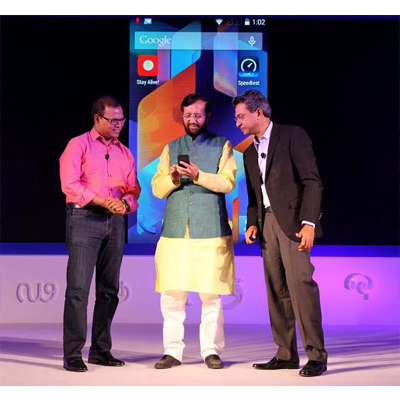
    Javadekar said this while launching the Indian Language Internet Alliance (ILIA), an initiative by Google and other Internet industry partners here today. 

    The Minister said the rise of internet was not a threat to traditional media platforms as all sectors of media had been growing rapidly and simultaneously along with the Internet. Javadekar extended the support of the government to the Alliance with key policy initiatives that would enable faster growth of Internet and mobile based services. 

    As the first initiative of the Alliance, the Minister launched the website www.hindiweb.com, which would be a platform for Hindi speaking internet users to discover Hindi content across websites, apps, videos and blogs. The new initiative would expedite good quality online-content generation in Indian languages and that it would provide an inclusive platform for non-English speaking users to break language-barriers and access online information easily, Javadekar added. 


    Indian Language Internet Alliance (ILIA), a consortium of 18 Internet industry partners along with Google, was committed to promote the growth of Indic-language content online which would enable 300 million Indian language speakers to become highly engaged in internet by 2017.  


  • Government to issue advisory over usage of social media

    Government to issue advisory over usage of social media

    NEW DELHI: The government is expected to issue an advisory/circular with respect to government usage of social media over the internet.


    This was indicated by additional solicitor general Sanjay Jain in the Delhi High Court during the hearing of a public interest litigation by former Bharatiya Janata Party leader K N Govindacharya challenging the use of private American-based sites such as Yahoo and Gmail for sending out government information.  


    Jain said, “Service categorised as sale of time and space for advertisements over Internet was earlier in negative list but with effect from 1 October 2014, it has been put back on the positive list and is now a taxable service.”

    He said that he would on the next date of hearing on 28 November  make a categorical statement with respect to taxation issue raised in the petition.


    Meanwhile, the Court has asked why the use of private email accounts like Yahoo and Gmail by government officials should not be stopped as it would lead to public/official records being taken outside the country which is a violation of the law.

    Justices Badar Durrez Ahmed and Siddharth Mridul said, “Public records are going outside India. Are you (Centre) willing to say there is no difficulty in government documents going to US servers? You should stop usage of non-NIC email accounts by government officers.

    “On the one hand we are complaining against National Security Agency (of US) snooping and on the other hand, we are allowing it (public records) to go out.”


    The court, however, took on record the submission of additional solicitor general (ASG) Sanjay Jain that “immediate steps will be taken to ensure there is no violation of Public Records Act with a view that all electronic official communication is not taken out of India, insofar as email communication of public records is concerned”.

    The ASG also submitted in court that a draft email policy of the government has been finalised for presentation before the Cabinet in two to three weeks, and it only needs approval of the minister concerned.

    The submissions were made in response to the query regarding the status of the government’s email policy and what would be the interim measures that would be put in place to prevent official records from going outside India till all the government departments are provided accounts in servers run by National Informatics Centre.

    The ASG also said that they have increased capacity of NIC servers to handle one million accounts from the earlier limit of five lakhs and would be further expanding the same.

    The Court agreed with contention of advocate Virag Gupta, appearing for Govindacharya that the Public Records Act does apply in the present case. “You cannot have it (public records going outside India), its against the law,” the bench said to the ASG.

    Govindacharya in his PIL has sought that the government be directed to use only NIC servers for sending official emails, instead of using the services of foreign sites like Google and Yahoo.

    The petition has contended that government departments like Delhi Police and the Indian Railways are not entitled to create accounts on social networking sites.


    It has also sought recovery of taxes from the websites on their income from operations in India.

    The petition has also alleged that the sites have no mechanism for protection of children from online abuse, claiming that children below 18 years are entering into an agreement with the social networking sites to open accounts, which is against the Indian Majority Act, the Indian Contract Act and also the Information and Technology Act.

    Facebook and Google had earlier submitted affidavits in the court detailing the protective measures available on their sites to ensure their product is not misused. They had said their statement of rights and other terms and conditions prohibit children below 13 years of age from registering an account and creating more than one personal account.

    They had said they also have strict policies in place to delete any objectionable or misleading content they come across on their sites.


    The petition has alleged that due to non-verification of users, more than eight crore of Facebook users across the world were found to be “fake”, which the website admitted before a US authority. 

     

  • Calcutta HC extends stay order on Digicable Comm’s licence cancellation till 28 Nov

    Calcutta HC extends stay order on Digicable Comm’s licence cancellation till 28 Nov

    KOLKATA: Granting relief to Digicable Comm Services once again, the Calcutta High Court has further extended the interim stay on the cancellation of the registration of the Kolkata-based multi system operator (MSO), till 28 November.


    As reported earlier, the MSO had got a stay order on the cancellation of the registration of its license till 29 August, which was later extended till 31 October.


    The case was again up for hearing today. “The matter was heard and the stay has been further extended till 28 November 2014,” said Digicable Comm Services VP – operations and technology Lokesh Agarwal.


    Around two months ago, the Ministry of Information and Broadcasting (MIB) had cancelled the registration of Digicable Comm.


    Digicable counsel had earlier argued in the court that the MIB only stated the reason for cancellation of registration as not receiving security clearance from the Home Ministry. However, it did not give the reason for denial of security clearance. The Ministry counsel, in his response said that the reason for non- clearance cannot be disclosed to Digicable for security reasons.


     The court observed that when the MSO received its DAS licence in 2013, it was subject to security clearance from Home Ministry and the same has been denied in the order passed last month. Subsequently, Digicable Comm was asked to stop operations within 15 days.


     Digicable Comm however appealed to both the Home Ministry and High Court in order to put a stay on the cancellation.


  • TDSAT gives a nod to Star’s 10 Nov deadline to MSOs for signing RIO deals

    TDSAT gives a nod to Star’s 10 Nov deadline to MSOs for signing RIO deals

    MUMBAI: In the Hathway Cable & Datacom versus Star India case, the Telecom Disputes Settlement and Appellate Tribunal (TDSAT) has asked all the multi system operators (MSOs) in the DAS I and II areas to sign the Reference Interconnect Offer (RIO) by 10 November 2014.


    Failing to comply with the deadline, Star India will disconnect its services from MSOs who do not sign the RIO deal. 


    Hathway, which was directed to implement the RIO by the Tribunal had filed a case stating that other MSOs were not following the RIO deal. Subsequently, TDSAT had asked MSOs Den Networks and Siti Cable to implead into the case. The case then came up for hearing on 30 October and has been disposed off without the need for any impleading. 

  • Three-tier committees set up by Election Commission to monitor paid news

    Three-tier committees set up by Election Commission to monitor paid news

     NEW DELHI: Following the announcement of elections to the state assemblies of Jharkhand and Jammu and Kashmir next month, the Election Commission of India on 23 October said that it had put into force a mechanism to deal with the issue of ‘paid news’.


     The mechanism provides for three-tier Media Certification and Monitoring Committees (MCMC) at district, state and ECI level.


     It has also placed on its website eci.gov.in revised comprehensive instructions on paid news.


    Necessary instructions have been issued to the CEOs of the poll going states to ensure briefing of political parties and media in the districts about ‘Paid News’ and the mechanism to check paid news. The MCMCs of all states have been trained to do their job.


     With the model code of conduct coming into effect immediately, the Commission has made elaborate arrangements for ensuring their effective implementation and any violation of these guidelines would be strictly dealt with. The Commission re-emphasises that the instructions issued in this regard from time to time should be read and understood by all political parties, contesting candidates and their agents/representatives, to avoid any misgivings or lack of information or understanding/interpretation.


     The commission attaches great importance to preparation and implementation of a perfect communication plan at the district/constituency level for the smooth conduct of elections and to enable concurrent intervention and mid-course correction on the poll day.


    It has directed the chief electoral officers of the polling going states to coordinate with the officers of the Telecommunication Department in the state headquarters, BSNL authorities, the representatives of other leading service providers in the states so that network status in the states is assessed and communication shadow areas be identified. The CEOs have also been advised to ensure best communication plan in their states.


    All critical events will be video-graphed. District election officers will arrange sufficient number of video and digital cameras and camera teams for the purpose. The events for videography will include filing of nominations, scrutiny thereof and allotment of symbols, first level checking, preparations and storage of electronic voting machines, important public meetings, processions etc. during campaign, process of dispatching of postal ballot papers, polling process in identified vulnerable polling stations, storage of polled EVMs, counting of votes etc.


     Webcasting, videography and digital cameras will also be deployed inside polling booths wherever needed.


    CDs of video recordings will be available on payment to anyone who wishes to obtain a copy of the same.


     The elections will take place in five phases in both states from 25 November onwards and the counting will be done simultaneously on 23 December.

  • TRAI to host open house meet on broadband issues and how this can be speeded

    TRAI to host open house meet on broadband issues and how this can be speeded

    NEW DELHI: An Open House Discussion (OHD) will be held next week on how broadband can be delivered quickly and what the stakeholders or the government needs to do for this. The OHD is being organised in the capital on 30 October by the Telecom Regulatory Authority of India (TRAI) on a Consultation Paper issued earlier by it on this subject.


    It had earlier sought comments by 14 October and counter-comments by 21 October on the questions raised by it. In the paper, TRAI had asked what immediate measures were required to promote wireline technologies in access networks and how the cost per line for various wireline technologies can be minimised.


    It also wanted to know the impediments to the deployment of wireless technologies in the access network. Referring to its recommendations on Microwave backhaul, it asked whether there were any other issues which needed to be addressed to ensure availability of sufficient Microwave backhaul capacity for the growth of broadband in the country.


    The pricing of Domestic Leased Circuits (DLC) was reviewed in July 2014 and the Regulator wanted to know if there were any other issues which can improve availability of DLC. It sought the specific reasons that Internet Service Providers are proactively not connecting with NIXI, the National Internet Exchange of India.


    It asked if the hosting of content within the country help in reduction of the cost of broadband to a subscriber. It also wondered if public sector units were ideal choices for implementing the National Optical Fibre Network (NOFN) project.


    It also wanted to know if it is possible to piggyback on the existing private sector access networks so as to minimize costs in reaching remote rural locations. In this connection, it sought views on the major issues in obtaining right of way for laying optical fibre.


    TRAI wondered if the Government should consider framing guidelines to mandate compulsory deployment of duct space for fibre/telecommunications cables and space for telecommunication towers in all major physical infrastructure construction projects such as building or upgrading highways, inter-city metros, railways or sewer networks.


    What were the impediments to the provision of Broadband by Cable operators, the regulator asked and whether there were any regulatory issues in providing internet facility through Wi-Fi Hotspots.


    TRAI, which recently gave its views on spectrum and also sought some clarifications from the Department of Telecom, asked how much spectrum would be required in the immediate future and in the long term to meet the target of broadband penetration.


  • TRAI  seeks clarifications with regard to spectrum allotted to Defence

    TRAI seeks clarifications with regard to spectrum allotted to Defence

    NEW DELHI: The Telecom Regulatory Authority of India (TRAI) has asked the Department of Telecom (DoT) to clarify whether discussions with Defence to release one block of 5 MHz is for the same block which has been already auctioned in five out of 22 LSAs or the discussion would result in release of one more block of spectrum, thus, making two blocks of spectrum available
    for auction.
     
    The letter from TRAI Secretary Sudhir Gupta follows a letter received from the WPC Wing asking TRAI to provide recommendations on: (a) Applicable reserve price for 2100 MHz, 2300 MHz and 2500 MHz bands for all the service areas in both the cases, that is, spectrum available in entire service area and spectrum partially available in any service area; (b) Auction of the right to use of spectrum in a band with varying validity periods (less than 20 years) so that expiry of validity period of right to use of spectrum in a band in a service area occurs at same time.
     
    TRAI has asked the DoT to provide information/ clarifications relating to the 2100 MHz band.
     
    The WPC has informed that at present no vacant spectrum is available with the DoT in 2100 MHz band and discussions with Defence are underway for release of one block of 5 MHz of spectrum. In its recommendations on ‘Valuation of Reserve Price of Spectrum: Licenses Expiring in 2015-16’ dated 15 October, TRAI had mentioned that the DoT has assigned the fifth block of 5 MHz in the 2100 MHz band in 5 LSAs and in the remaining 17 LSAs, the spectrum is available with the DoT.
     
    The Authority in its recommendations also recommended that entire 2X60 MHz in the 2100 MHz band should be made available for commercial use. If required, Defence may be assigned spectrum in the 1900 MHz band (1910-1920/1980-1990 MHz). It was further recommended
    that this matter is of utmost importance, therefore it must be taken up at the highest level and the vacant 3G slots should be put to auction along with the spectrum in 900 and 1800 MHz bands.
     
    In the letter, Gupta says TRAI will not be in a position to go ahead with the consultation process in the absence of full information with regard to total availability of the spectrum in the 2100 MHz band. Therefore, DoT is requested to indicate the decision regarding the above at the earliest.
     
    With regard to 2300 MHz band, the auction was conducted in June 2010 and two blocks across the 22 service areas were sold. However, even after four and half years of assignment of spectrum, no Telecom Service Provider has actually done any worthwhile rollout.
     
    Therefore, the Authority would like to know if in spite of such poor utilisation of earlier auctioned spectrum even after more than four years, the DoT believes that there will be takers for this spectrum at this point of time.
     
    TRAI had in a letter on 8 March 2013 informed DoT that in ten service areas, the guard band available between the spectrum assigned to different BWA spectrum holders is just 2.5 MHz, and this may result in severe interference in asynchronous TOO networks. TSPs have also suggested that the solution to the problem of interference in such a scenario can either be achieved by use of similar frame configuration (for uplinking and downlinking) or rearranging the assigned frequencies, so as to have a wider guard band.
     
    According to the present proposal of DoT, in 6 more LSAs, the guard band between different
    TSPs will reduce to 2.5 MHz.
     
    TRAI has also said that DoT may like to inform whether any study in this regard has been conducted to examine the concerns expressed by TSPs; and if so, DoT’s decision on this issue.
     
    Referring to the 2500 MHz band, TRAI says this band is very important and unique in the sense that it provides a substantial amount of spectrum (190 MHz) that has been allocated on a primary basis in all three International Telecommunications Union regions for terrestrial mobile communication. As per ITU-R recommendations there are three recommended frequency arrangements in this band. Most countries have followed an approach aligned with ITU Option I band plan (C1). The frequency spots in 2500 MHz band as shown in the annexure to the DoT letter are at variance with the Option I band plan of ITU which may result in the non-optimal use of the spectrum for all time to come. The decision on harmonisation of this band is pending for an inordinately long time.
     
    TRAI says there is urgent need to decide the issue so that this band can be used optimally for commercial as well as strategic purposes.
     
    According to current trends, the 700 MHz/800 MHz spectrum band known as the digital dividend frequencies and these bands are the ideal complement to 1800 MHz and 2600 MHz spectrum band using carrier aggregation techniques for LTE and LTE advanced technologies. The Authority in its recommendations of 15 October 2014 has recommended that the Government should announce the roadmap for auction of 700 MHz band before conduct of the upcoming auctions. The DoT may decide whether it wants to go ahead with the auction of spectrum in 2500 MHz band before conducting the auction in 700 MHz band.
     
    The letter says that DoT may also please confirm that it would like to go for auction without harmonising the band, in spite of the aforementioned implications.
     
    Referring to the validity period of right to use spectrum, TRAI has requested DoT to inform the ‘effective date’ of spectrum assignment for both administratively-assigned spectrum and auction-assigned spectrum for all TSPs in each of the service areas. It has also been noted that rollout obligation of TSPs is linked with the spectrum assignment that has been allocated for 20 years. Changes in the validity period will disturb the rollout obligations linked with the various spectrum auctions since 2010. DoT may indicate how rollout obligations are going to be ensured, going forward.


  • Govt. denies reports of imposition of penalty on Google

    Govt. denies reports of imposition of penalty on Google

    NEW DELHI: The Government today clarified that the Competition Commission of India (CCI) has not imposed any penalty on Google Inc. for allegedly failing to provide information in a probe into its alleged unfair trade practices in India.
     
    It said that media reports on the order of the Commission being stayed by the Delhi High Court are erroneous, since no such penalty (reported by the media as Rs one crore) had been imposed.
     
    The Corporate Affairs Ministry said the Writ Petition No. 7084 of 2014 was filed by Google Inc. with respect to the case No. 06 of 2014 in which CCI has not imposed any penalty and therefore there is no question of stay of penalty.
     
    The case related to issue of confidentiality and an order was passed by the Court after hearing the Counsels of the parties.
     
    Meanwhile, the Court last week restrained the CCI from disclosing any information, considered as confidential by Google Inc, during its probe into a complaint lodged by an entrepreneur who also runs a website.
     
    Justice Vibhu Bakhru in his order also issued notice to CCI and sought its response within four weeks on the plea of Google Inc.
     
    “In the meantime, it is clarified that any information if submitted to CCI as well as to the Director General by the petitioner Google Inc, which the petitioner considers to be confidential, shall not be disclosed to any party and shall be kept strictly confidential,” the court said, and fixed the plea for hearing on 9 March 2015.
     
    Google said that it had challenged the jurisdiction of the CCI in its appeal relating to a complaint filed by entrepreneur Vishal Gupta before the panel.
     
    “The CCI lacks the territorial jurisdiction” and therefore was wrong to order a probe against Google Inc, it said.
     
    Google also said that its action to terminate AdWords account, meant to promote its Remote Tech Support services, of Vishal Gupta/Audney Inc has “no impact on competition in India” and it has “legitimately” been suspended.