Category: Regulators

  • TRAI clears platform services offered by local cable ops, subject to conditions and payments

    TRAI clears platform services offered by local cable ops, subject to conditions and payments

    NEW DELHI: The Telecom Regulatory Authority of India (TRAI) has recommended the establishment of an online system by the Information and Broadcasting Ministry to register all the platform services being offered and the registration is on the basis of a simple set of information and at a nominal registration fee of Rs 1000 per channel.

     
    According to the recommendations on the ‘Regulatory Framework for Platform Services’ issued by it, TRAI said distribution platform operators (DPOs) desirous of providing platform services must be incorporated as a company under the Indian Companies Act 2013.

     
    TRAI had issued a consultation paper on ‘Regulatory framework for Platform Services’ on 23 June and the recommendations are based on the responses received from stakeholders. TRAI said there is an urgent need to ensure that these programming services are brought within the four corners of a robust and fair regulatory system that addresses all concerns adequately.


    The Ministry in a letter to TRAI on 17 January 2013 sought recommendations of TRAI under section 11 (1) (a) (ii), (iii) and (iv) of TRAI Act, 1997 on the issues related to local ground-based channels of cable TV operators. In addition, through an earlier letter of 2 February 2009, the Ministry had also sought TRAI’s recommendations about such kind of programming services being offered by DTH service providers to their subscribers as well as on the issue of carriage of FM radio channels on the DTH platform.

     
    The Regulator also issued a letter in this connection to the secretary in the Ministry, Bimal Julka.

     
    TRAI has also said a time of 12 months should be given to the DPOs to comply with the guidelines to be issued by the Ministry in this regard.

     
    Prior clearance is required from the district authorities of any local information and local affairs bulletins that may be transmitted.

     
    Platform Services (PS) are programming services/ channels that are owned by the DPO; available only to the subscribers of the DPO’s network; advertisements, if any, on these channels is inserted by the DPO and ad-revenues, therefore, accrue to it. Regular TV channels, howsoever transmitted, and Doordarshan channels which appear on the TV networks, cannot be included in PS. Further, foreign TV channels not registered in India cannot be included in PS.

     
    A maximum number of five PS channels may be offered by the cable operators in non-DAS areas. In DAS areas and for all other platforms, a maximum of 15 PS channels may be offered by the DPOs. These numbers are the number of PS channels to be made available at the subscribers’ end.

     
    In addition to the recommendations on Platform services, the Authority has suo motu made recommendations for a regulatory framework for ground based broadcasters as well. This has been done to ensure that any TV channel that is distributed on any TV network in India is covered by a regulatory framework, whether it is obtained from a satellite-based broadcaster; produced by the network operator or sourced from a terrestrial broadcaster.

     
    The recommendations for the ground-based broadcasters are largely the same as that for the satellite broadcasters, barring the requirements of seeking spectrum and approvals in that regard from Department of Telecom and the Department of Space.

     
    Retransmission of FM radio channels on TV channel distribution networks has been recommended provided that all the legal rights to do so are obtained. However, the Authority has said that this matter will be revisited at a later point in time, once the FM radio industry fully develops in India.

     
    These recommendations have been issued in view of ground based channels being operated at the level of cable TV operators and regarding the kind of programming services being offered by the DTH service providers to their subscribers.

     
    The Authority recommends that no change in the existing FDI limits and Net-worth requirements be made for DPOs offering PS.

     
    In so far as carrying local news and current affairs bulletins on PS is concerned, the following categories will be treated as non-news and current affairs broadcast and will, therefore, be permissible:

     
    (i) Information about local events and other local affairs, sourced locally and not obtained from news agencies or from broadcast news channels/ sources;

    (ii) Information pertaining to sporting events, excluding live coverage. However live commentaries of sporting events of local nature may be permissible, if broadcasting rights for the same are not held by anyone else;

    (iii) Information pertaining to Traffic and Weather;

    (iv) Information pertaining to and coverage of cultural events, festivals;

    (v) Coverage of topics pertaining to examinations, results, admissions, career counseling;

    (vi) Availability of employment opportunities; and

    (vii) Public announcements pertaining to civic amenities like electricity, water supply, natural calamities, health alerts etc. as provided by the local administration.

     
    There are four distinct kinds of channels, though variously described, and with a variety of content, that are being carried on DPO networks. For analytical ease and simplicity these are classified in terms of the source of the channel:  

     
    (a) Private Satellite Channels: These are the traditional satellite broadcast channels, governed by the Uplinking/ Downlinking Guidelines of the Ministry. They carry all genres of programme content.

    (b) Doordarshan Channels: These are the Public Broadcaster’s channels, some of which the TV networks are mandated to carry under the Cable Television Networks (Regulation) Act 1995.

    (c) Platform Services (PS) Channels: These are channels owned and operated by the DPOs and distributed to their own subscribers. They are of several kinds and, depending on the design of the network, may or may not be interactive. They offer a fairly wide variety of content to their subscribers. Content generally offered includes local affairs information/news; movies; general entertainment; music; education and religion. The DTH networks offer on-demand services for which the subscriber has to pay extra. These channels include movies/ video on demand, educational channels, interactive channels, etc. While such on-demand channels are at present distributed only by the DTH operators, in the DAS environment MSOs too can provide them.

     
    (d) Ground-based Channels: These channels are akin to the traditional broadcast channels, but with a strong local focus. In the comments received they have generally been referred to as ‘local-channels’ and the producers of such channels have been described as ‘local-channel operators’. In reality they are ground-based broadcasters. These channels offer a variety of content such as local news and information; regional movies and music; religious content, etc. The ground-based broadcaster channels are an integral part of most cable TV networks. Like traditional TV channels, these channels may also be carried on more than one DPO network simultaneously. The owners of these channels transmit the content terrestrially to the headend of the cable TV network, i.e., there is no uplinking or downlinking of the channel and the DPOs retransmit them on commercial terms to the subscribers. Like traditional TV channels, these local-channels also carry advertisements and the ad-revenue obtained usually accrues to the ground-based broadcaster. Consequently, they own the rights for the content carried and are responsible for the same. At present, such channels are not specifically covered under any regulatory framework and the ground-based broadcasters are not formally recognised as a ‘broadcaster’.

     
    The Authority recommended that any DPO offering PS retain, with itself, a recording of all PS channel programmes for a period of 90 days; a written log/register should also be maintained about such programme for a period of one year from the date of broadcast. The recording and the register can be examined by the Authorised Officer and the State/District Monitoring Committee appointed by the MIB as, when and if required. For PS distributed on a pan-India basis MIB should be the monitoring agency.

     
    The Authority recommends that the first violation of the PS Guidelines should lead to prohibition on transmission of the PS channel for a period of up to 30 days; for the second violation, the prohibition on transmission of the PS channel should be for a period of up to 90 days; for the third violation the registration of the PS should be revoked and the PS channel concerned should not be allowed to be transmitted. Consequently, the number of PS channels that the DPO can transmit thereafter will be appropriately reduced.

     
    Considering the smaller reach of some of the ground-based broadcasters, the Authority recommends that a State should be taken as a unit and a reach in 15 or more States should be taken as a pan-India presence. The States that are members of the North Eastern Council (NEC) could be considered to be equivalent to one State, for this purpose.
     

  • Pressure of work before HC leads to adjournment of ad cap hearing to 21 January

    Pressure of work before HC leads to adjournment of ad cap hearing to 21 January

    NEW DELHI: The ad cap case has been adjourned yet again – this time to 21 January – in view of a large number of pending cases before the High Court.

     
    During the last hearing on 25 September, News Broadcasters Association counsel Nisha Bhambani had sought adjournment in view of the senior counsel S Ganesh not being in Delhi.

     
    Earlier on 15 July, the Court had adjourned the case as the final hearing of the bunch of petitions challenging the ad cap sort to be imposed by TRAI as the authority had not finalised its rejoinder.

     
    The case had been previously heard in the High Court on 17 December last year and 13 March this year.

     
    While TRAI had earlier given an assurance that it would not take any action against any channel pending the petition, the Court had at the regulator’s instance directed that all channels keep a record of the advertisements run by them.

     
    The NBA had challenged the ad cap rule, contending that TRAI does not have jurisdiction to regulate commercial airtime on television channels.

     
    Apart from the NBA, the petition have been filed by Sarthak Entertainment, Pioneer Channel Factory, E24 Glamoru, Sun TV Network, TV Vision, B4U Broadband, 9X Media, Kalaignar, Celebrities Management, Eanadu Television and Raj Television.

     
    The news and regional broadcasters fear that the capping of commercial airtime will curtail their ad revenues. They also argue that the ad cap must be brought only after the benefits of cable TV digitisation start kicking in.

     
    Earlier this year, the Court also granted interim relief to Hyderabad-based MAA Television Network against the ad cap regulation. However, the court had also observed that the cap on advertisements is a ‘reasonable exercise’.

     
    Four major broadcast networks—Star India, Zee Entertainment, Multi Screen Media and TV18 Group—are following the regulations.


  • I &B sets format for Home Ministry Security clearance for TV channels

    I &B sets format for Home Ministry Security clearance for TV channels

    NEW DELHI: In view of new clearances and those who need fresh security clearance for next 10 years, the government has set out the format in which applications should be sent by news and non-news television channels seeking Home Ministry security clearance to uplink or downlink.


     The applications have to be sent to the Information and Broadcasting Ministry within 15 days.


     The companies owning channels have to furnish the details of the company and its Board of Directors (in four additional sets) in the prescribed format listed out in the Ministry’s website mib.nic.in.


     The details required are details of the company/firm for whom clearance is sought; names of firms/bidders, registered office address, date of incorporation, details of the Directors/Key Executive in respect of whom clearance is sought, name/parentage, date of Birth, Present Position held and complete address including e-mail and websites etc.

  • TDSAT to hear IBF case on tariff on 12 December

    TDSAT to hear IBF case on tariff on 12 December

    NEW DELHI: The Telecom Disputes Settlement Appellate Tribunal (TDSAT) has adjourned to 12 December the petition by the Indian Broadcasting Foundation (IBF), Viacom 18 and MSM India challenging the tariff order amendment of 16 July that was passed by the Telecom Regulatory Authority of India (TRAI).


    Chairman Aftab Alam and member Kuldip Singh adjourned the matter as TRAI has still not filed its reply on the matter.


    Earlier when the case had come up in August, TDSAT had adjourned the hearing in view of Star India’s case challenging the TRAI order dated 18 July in the Delhi High Court.

     
    The Federation of Hotel and Restaurants Association of India (FHRAI) had then asked for a refund from broadcasters for deals signed before the order came into existence. However the IBF counsel stated that the order only talks of deals taking place in the new regime and the deals for which the FHRAI was asking for refunds were done in advance.

     
    Considering the Delhi HC order and also IBF’s proposition that in a 2012 judgment, the TDSAT had itself said that when an arrangement is ongoing between parties and a tariff order is issued, it is not applicable with retrospective effect, unless mentioned in the order.

     
    The court had in the earlier hearing also asked both parties to ensure all their pleadings were in place by 28 October so that a final verdict could be given on 18 November, which now has been postponed to 12 December.


  • TRAI issues regulations relating to VAS for pre-paid consumers

    TRAI issues regulations relating to VAS for pre-paid consumers

    NEW DELHI: Realising that its earlier regulations relate only to subscription-based value added services, the Telecom Authority of India (TRAI) has directed all access service providers to ensure that the value added service (VAS) for products embedded in the SIM application Tool Kit (STK) of SIM card is provided to the consumer only after obtaining the explicit consent of the consumer in accordance with a procedure specified by the regulator.


    The directive has to be implemented by all access service providers including the Bharat Sanchar Nigam Ltd (BSNL) and Mahanagar Telephone Nigam Ltd (MTNL) within sixty days.


    The new directive has been issued under section 13, read with sub-clauses (i) and (v) of clause (b) of sub-section ( 1) of section 11 of the TRAI Act 1997 and clause 11 of the Telecom Tariff Order 1999 to ensure compliance of terms and conditions of license and to protect the interest of consumers.


    The process of providing value added service for products embedded in the SIM card:


    (a) For obtaining explicit consent through consumer originated SMS:


    Step 1: The consumer explores the VAS link in the SIM Application Tool Kit (STK) of the SIM card and clicks the link.


    Step 2: The service provider after receiving the message/information shall inform consumer through SMS  regarding the  value added service requested; its validity; the  charges thereof and the consumer shall be asked to confirm the request within sixty minutes by sending ‘yes’ to the specified number;


    Step 3: If no confirmation is received from the consumer, the request of the consumer shall not be processed;


    Step 4: If the consumer confirms his   request, the value added service platform of the service provider shall deliver the product on the mobile number of the consumer and the consent logs shall be stored in the system of the service provider in an un-editable format;


    Step 5: The consumer shall receive an SMS immediately after delivery of the product to the consumer, informing the consumer about charges deducted and the balance remaining;


    (b) For obtaining explicit consent through third party consent gateway:


    Step 1: The consumer explores the VAS link in the SIM Application Tool Kit (STK) of the SIM card and clicks the link.


    Step 2: The service provider after receiving the message/information shall inform the   consumer through SMS regarding  the value added service requested; its validity; the charges thereof, and the consumer shall be forwarded to the “Consent Gateway” set up by the service provider and managed by a third party;


    Step 3: The “Consent Gateway” shall seek the second consent of the consumer;


    Step 4: The consumer shall give his consent by pressing the relevant key, and the consent logs shall be stored in the system of the service provider in an un-editable format;


    Step 5: The “Consent Gateway” shall forward the consent of the consumer to the value added service platform of the service provider;


    Step 6: The value added service platform of the service provider shall deliver the product on the mobile number of the consumer;


    Step 7: The consumer shall receive an SMS immediately after delivery of the product to   the consumer, informing the consumer about the charges deducted and the balance remaining.


    TRAI said the genesis of some of the complaints is that a number of value  added  service products are embedded in  the SIM card and in many cases the consumer accidentally or unknowingly clicks these  products and the customer is immediately charged  for the service, without being                                    provided with any information regarding the applicable charges and also without being offered any opportunity to give consent as to whether he wants to proceed or not.


    The regulator said this emerged during its monitoring the compliance of the directions pertaining to the activation and deactivation of value added services and while examining some of the complaints received by the Authority relating to activation of value added services without consent. 

  • Use the power of cinema and other modern tools to spread knowledge and learning, says Jaitley

    Use the power of cinema and other modern tools to spread knowledge and learning, says Jaitley

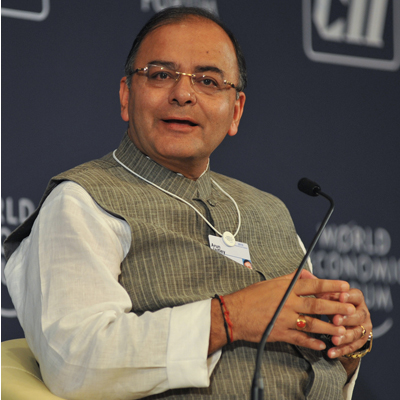
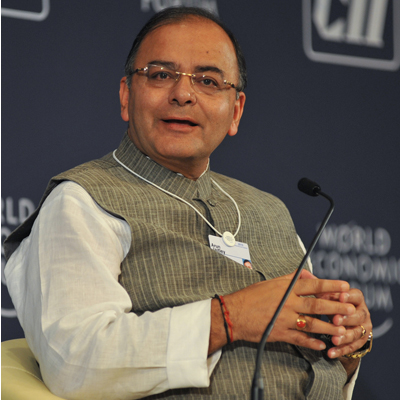
    NEW DELHI: Information and Broadcasting Minister Arun Jaitley said today that filmmakers and creative people should use modern tools like cinema to spread knowledge and learning.

    Referring to the Bal Swaccha Abhiyaan launched today on the occasion of the 125th birth anniversary of Pandit Jawaharlal Nehru, he said ‘Swachhta’ should be instilled as one of the core moral values in childhood so that children practice the habit of cleanliness as part of their childhood and personality.
     
    Inaugurating the first Rashtriya Bal Film Mela which coincided with Children’s Day, he stressed that celluloid media had become a powerful source of knowledge in the Information age and cinema had been emerged as a powerful tool for education in addition to its manifest function of entertainment.
     
    The Rashtriya Bal Film Mela would help in instilling values of cleanliness practiced and propagated by Mahatma Gandhi, the Minister added.
     
    Jaitley called upon the young children to watch the films made by veteran film director Shyam Benegal, who was present, including ‘The Making of Mahatma’ and ‘The Discovery of India’.  

    I&B secretary Bimal Julka said around three million watch films made by the Children’s Film Society, India, which has organised this three-day Festival.

    He pointed out that this will be held every second year, alternating with the International Children’s Film Festival (Golden Elephant) held in Hyderabad every alternate year by the CFSI which was set up at the initiative of Nehru as a soft power to unite children.
     
    He said the Ministry was carrying forward the vision of Prime Minister Narendra Modi regarding Swachh Bharat through this festival on the theme of ‘Swachhta.’
     
    Eminent sportsperson Sania Mirza, who recalled that she had always looked forward to the Gold Elephant as a child in Hyderabad, asked the children present to take a pledge with her to keep the country clean.

    Actresses Dia Mirza and Sakshi Tanwar also demonstrated how it was easy to keep the environment clean by regularly cleaning their own neighbourhoods. Kunal Roy Kapur and Divya Dutta have anchored the show.
     
    The three day festival would provide an opportunity for children to appreciate high-quality film content, experience value-based entertainment, and to trigger their imagination about environment conservation and cleanliness.

     
    The festival would showcase a bunch of internationally acclaimed children’s films on the theme of cleanliness. CFSI’s latest production, Pappu Ki Pugdandi was the inaugural film in the festival.


    Other films that would be screened in the festival include Kaphal which won the National Award for Best Children’s Film, Shortcut Safari which will be premiered for the first time, The Goal, Ek Ajooba (CFSI productions), Karamati Coat, Summer with the Ghost, Sunshine Berry & Disco Worms, Yeh Hai Chakkad Bakkad Bumbe Bo, The Boot Cake, Hawa Hawaii, Krish Trish Baltiboy- 3, and Goopi Gawaiiya Bhaga Bajaiiya.


    The festival would feature interactive workshops on film making with experts from the Film and Television Institute of India and the Satyajit Ray FTI in Kolkata, film appreciation, animation, Charlie Chaplin’s Mimes, and storytelling. Live dance performances, magic act, sand act, and puppetry along with various competitions such as painting on the theme, ‘Swachhta’, and digital collage on the theme ‘Clean India’ and the craft of making utility items from waste materials, were being organised on the sidelines of the festival.
     
    The inauguration was followed by a cultural programme with school children, the Prince Dance Troupe, Shiamak Davar’s Junior Group which included some disabled children, and the renowned artist Vilas Nayak giving performances.


  • TRAI to hold Open House Discussion in Delhi on migration to IP-based networks

    TRAI to hold Open House Discussion in Delhi on migration to IP-based networks

    NEW DELHI: Following the receipt of some responses to its Consultation Paper on the issue, the Telecom Regulatory Authority of India (TRAI) has organised an Open House Discussion on 2 December on migration to IP-based networks.  
     
    TRAI sources said the OHD had been organised as the matter of migration to IP-based networks and requirement of regulatory intervention in IP based interconnection required urgent decision.
     
    The paper had been issued by TRAI on 30 June and later time for responses had been extended to 19 August with counter-comments, if any by 26 August.
     
    The Consultation Paper wanted the opinion of stakeholders on interconnection requirement for application and content service providers; quality of service issues; and various other operational issues- sharing of network elements, emergency numbering etc
     
    Traditional telecommunication systems are migrating towards more powerful and viable internet protocol based telecommunication systems.  Migration to IP based network will result in co-existence of legacy network along with IP based network. The new IP based network as well as its co-existence with legacy network will give rise to several operational, interconnection and quality of service issues which needs to be addressed for the successful migration to IP based networks.
     
    Traditional telecommunications systems are nearing the end of their product lifecycles, and worldwide, operators are strategising whether to repair/ replace these systems or head down a completely new and potentially more viable path — migration towards an Internet Protocol (IP)-based telecommunications systems.


    Modern digital technology allows different sectors/services viz. telecom, data, radio and television, to be merged together. This phenomenon, commonly known as convergence, is taking place on a global scale and is drastically changing the way in which both people and devices communicate. The backbones for making such convergence possible are IP-based networks. The opportunities presented by IP based networks are immense and will help the telecom service provider (TSPs) to converge their network infrastructures, provide huge bandwidth, consolidate terminating traffic and reduce long-distance charges.
     
     Integrated consumer devices for providing various services such as telephony, entertainment, security or personal computing are constantly being designed and developed. These are based on communication standard that is independent from the underlying physical connection.


    Legacy networks are based on circuit switched technology. In circuit switched networks, calls are routed through a hierarchy of several layers of exchanges. A circuit-switched network creates a dedicated between two nodes in the network to establish a connection. The established connection is thus dedicated for the period of communication between the two nodes. This uses a variety of transmission media; as a result they are technically and operationally complex. This in turn, makes the maintenance and operational costs of legacy networks expensive.
     
    Service providers face a considerable risk in committing significant investment in upgrading the infrastructure for migration towards IP based networks in the current regulatory environment. Service providers who do not migrate to IP based networks face the risk of becoming less competitive, as their costs would be higher in comparison to an operator running a single converged network. Therefore, the migration to IP based network offers both a huge opportunity to service providers, as well as poses some risks.
     
    Major TSPs in India have implemented IP based core transport network for carrying voice and data traffic, by deploying IP/Ethernet elements extending into access and aggregation networks. Data networks are already IP/ Multi-protocol label switching (MPLS) based, with major parts of the network being optical (Dense Wavelength Division Multiplexing (DWDM) or Ethernet instead of Synchronous Digital Hierarchy (SDH)). The present world scenario indicates that IP has become a ubiquitous means of communication, and the total volume of packet-based network traffic has surpassed traditional voice (circuitswitched) network traffic.
     
    Full text of the Consultation Paper is available on TRAI’s website www.trai.gov.in.


  • TDSAT wants to know who maintains monthly log of activation of a channel

    TDSAT wants to know who maintains monthly log of activation of a channel

    NEW DELHI: Who is meant to maintain the monthly log of the activations of a particular channel: the multi system operator (MSO) or manufacturer, vendor or the supplier of the system?

     
    The Telecom Disputes Settlement and Appellate Tribunal (TDSAT) has asked the Telecom Regulatory Authority of India (TRAI) and the Broadcast Engineering Consultants India Limited (BECIL) for certain clarifications on the role of a MSO in the matter of maintaining monthly log of the activations of a particular channel.

     
    Listing the matter for 1 December, chairman justice Aftab Alam and member Kuldip Singh said BECIL will also clarify its finding on the point as to whether the system was not capable of generating the monthly log of activations on a particular channel or on a particular package or the system was not capable to do so without the matter being referred to its provider, that is to say, its manufacturer or supplier.

     
    The issue arose in a case of Den Networks against Sun Distribution Services wherein BECIL had carried out an audit of Den and given a report.

     
    Den submitted that though the provision of monthly log of the activations on a particular channel or on a particular package is indeed an obligation of the MSO, the use of the word ‘system provider’ makes it clear that the capability to provide monthly log of the activations on a particular channel or on a particular package should only lie with the manufacturer, vendor or the supplier of the system and the petitioner, which is an MSO, using the system can only obtain it from its vendor or ‘supplier’ of the system.

     
    TDSAT did not accept this submission and said, “Normally, the system in use in the hands of the MSO should itself be capable of providing monthly log of the activations on a particular channel or on the particular package without the matter being referred every time to the vendor, manufacturer or the supplier of the system.”

     
    The comments from TRAI and BECIL should reach the TDSAT within two weeks from the date of receipt of a copy of the order.


  • “Digitisation will bring quality and transparency in subscriber base”: Arun Jaitley

    “Digitisation will bring quality and transparency in subscriber base”: Arun Jaitley

    NEW DELHI: Information and Broadcasting Minister Arun Jaitley has emphasised the importance of the digitisation programme in providing better quality of service, wider choice of content and its important role in bringing about transparency within the subscriber base.

     
    As a process it had also brought about a change in the broadcasting landscape as well as enabled broadband penetration within the country, he told the first Consultative Committee Meeting of Members of Parliament attached to his Ministry.


    The meeting devoted its deliberations to the issue of digitisation of cable TV network in phase III and IV.  Minister of State for I&B Col. Rajyavardhan Singh Rathore was also present in the meeting.


    A presentation was made on behalf of the Ministry giving an overview of the digitisation process. The presentation highlighted the steps taken during phase I and II and the proposed road map for phase III and IV.

     
    Specific reference was made to the initiatives undertaken by the Ministry including the discussions with stakeholders and the campaign to sensitise masses.


    Members of the Committee gave suggestions to ensure that the concerns of all stakeholders were addressed. It was also emphasised that MSOs should operationalise grievance redressal mechanisms to address the concerns of cable subscribers. They emphasised that quality of domestically manufactured Set Top Boxes (STBs) must be ensured.

     
    The issue of digitisation, plan of Doordarshan terrestrial network and the steps being taken to implement the process was also deliberated upon.

     
    It was also mentioned that the Ministry needed to take proactive steps to ensure timely registration of MSO applications so as to ensure the large presence of MSOs to implement the digitisation programme during phase III and phase IV.


    During the discussions emphasis was laid on the efforts being made by the Ministry to integrate the domestic STB manufacturers with the ‘Make in India’ programme. Specific reference was made to the initiative of the Ministry in resolving the long pending issue of ‘C’ Form to create a level playing field for domestic STB manufacturers. Members were also informed that interactions were being held with the STB fraternity to ensure that they utilised their capacity to fulfill the demand for STBs during phase III and phase IV.


    The Members of Parliament who attended the meeting included Dr. Jayakumar Jayavardhan, Tapas Paul, V. Sathyabama, M P Achuthan, P Rajeeve, Pawan Kumar Varma and Vivek Gupta.


  • I&B Ministry to study why MSOs are not taking indigenous STBs

    I&B Ministry to study why MSOs are not taking indigenous STBs

    NEW DELHI: The Information and Broadcasting Ministry (I&B) will facilitate a meeting of manufacturers of indigenous set top boxes (STBs) and multi-system operators (MSOs) next week in view of complaints by the manufacturers that no orders were being placed for their STBs.


    This was decided at a meeting of the Task Force which will oversee the next two phases of digital addressable system (DAS) and which met under the chairmanship of Ministry Additional Secretary J S Mathur here today.


    Earlier this week, the manufacturers had met Ministry secretary Bimal Julka and made the same complaint.


    The participants were apprised that around 3.5 households had to be covered in the third phase of digitisation.


    A Ministry source told indiantelevision.com that the meeting discussed various roadblocks on the road to full digitisation and ways to overcome these hurdles.


    Star India legal & regulatory senior vice president Pulak Bagchi, who is also the representative of the broadcasters said emphatically that broadcasters would support voluntary transition to DAS as long as there were some ground rules.


    He also said that broadcasters were prepared to give concessions to operators switching over to DAS provided the operators totally stopped analogue transmission.


    Bagchi also said that it should be made mandatory that any MSO or local cable operator who switches over to DAS should switch off analogue and not run both systems.


    The meeting was attended by around 20 people and included representatives of trade bodies like FICCI and CII, apart from MSOs, LCOs and DAS advisor Yogendra Pal.