Category: Regulators

  • IPR Think Tank invites suggestions from stakeholders

    IPR Think Tank invites suggestions from stakeholders

    NEW DELHI: The Think Tank constituted by the Department of Industrial Policy and Promotion to draft the National Intellectual Property Rights Policy has sought views from stakeholders for the first draft.
     
    The group set up on 19 December headed by Justice (Retd) Prabha Sridevan to head and advice the Department of Industrial Policy and Promotion on IPR issues wants to receive comments on ipr@nic.in on or before 30 January.
     
    Other members of the IPR Think Tank are: Senior Advocate Pratibha M Singh; advocate  Punita Bhargava; Unnat Pandit of Cadila Pharmaceuticals; and Rajeev Srinivasan who is Director of Asian School of Business in Thiruvananthapuram. WIPO retired DDG Narendra K. Sabarwal will serve as Convener.
     
    The IPR Think Tank will draft a National Intellectual Property Rights Policy; identify areas in the IPRs where study needs to be conducted and to furnish recommendations in this regard to the Ministry; provide views on the possible implications of demands placed by the negotiating partners; keep the Government regularly informed about the developments taking place in IPR cases which have an impact upon India`s IPR Policy; advise the Government on best practices to be followed in Trademark Offices, Patent Offices and other Government Offices dealing with IPR in order to create an efficient and transparent system of functioning in the said offices; prepare periodic reports on best practice followed in foreign countries; highlight anomalies in the present IPR legislations and to advice possible solutions to the Ministry; give suggestions on the steps that may be taken for improving infrastructure in IP offices and Tribunals; and examine the current issues raised by industry associations and those that may have appeared in media and to give suggestions to the Ministry on such issues.


  • MSOs applying for DAS may get extension of four or five weeks, Task Force informed

    NEW DELHI: The deadline for multi-system operators (MSOs) wanting to apply for digital addressable systems (DAS) licence for phase III and IV may be extended by four to five weeks.


    This was indicated during the Task Force meeting on DAS held today, presided over by Ministry Additional Secretary J S Mathur and attended among others by the Adviser for DAS, Yogendra Pal.


    MSOs were asked to provide detailed seeding plans for the third phase which concludes in December next year.


    MSOs who want to complete DAS in their areas even before the last date on a voluntary basis were asked to negotiate directly with broadcasters, and with the subscribers in their respective areas.


    When some MSOs and cable operators referred to some ‘cable-dark’ areas – areas not reached by cable operators, the Ministry wanted the MSOs and other stakeholders to identify such areas.


    The meeting was held in keeping with an assurance last month that the meeting would be held every month.


    In the last meeting that was held on 21 November it was told that a total of 11 crore set top boxes will be needed for the third and final phase of digital addressable system of which only three crore will be for direct-to-home platforms.


  • TRAI extends date for comments on delinking of license for networks by way of VNO

    TRAI extends date for comments on delinking of license for networks by way of VNO

    MUMBAI: The   Telecom  Regulatory  Authority  of India  (TRAI) which had issued  a  consultation paper  on   ‘Delinking  of   the  license  for networks from delivery of service by  way  of virtual network operators (VNO)’ on 5 December 2014 inviting comments by 5 January 2015, has today given some relief to the stakeholders.


    The decision was taken after the stakeholders requested for extension of the date for sending their inputs/comments so as to give a comprehensive response to the paper.  The Authority has considered their request and has extended the last date for submission of written comments to 15 January 2015.  TRAI has also said that there will be no further extension of date for submission of comments.


    The Authority has asked all stakeholders to submit their inputs/comments on or before the revised date i.e. 15 January 2015 and counter comments, if any, by 22 January 2015.    


    TRAI had issued the consultation paper to know if there was any need to introduce more competition in service delivery by the way of introduction of VNO and whether this will pose any threat to Network Service Operators (NSO).


     In its consultation paper, the Authority had also asked how Mergers & Acquisitions should be dealt with in the VNO/NSO licensing model and should the recently announced M&A guidelines issued by the Government for existing players be extended to cover VNOs.


    Prior to the consultation paper, TRAI had released a pre-consultation paper on “Delinking of the license for  networks from delivery of  services by  way of  Virtual Network Operators” on 3 September 2014 highlighting some of the issues associated with the proposed licensing framework by the DoT and had solicited inputs and comments of the  stakeholders on these issues or any other issues involved in the proposed  framework.

  • Delhi HC wants to know if DTH players can run FM channels and VAS

    Delhi HC wants to know if DTH players can run FM channels and VAS

    NEW DELHI: The Delhi High Court has sought a response of the Information and Broadcasting Ministry and six direct-to-home (DTH) operators on a public interest litigation seeking to restrain DTH service providers from carrying any channel or value added service (VAS) which are not registered with or permitted by the government.

    The court passed the order on the plea of Hyderabad-based NGO Media Watch-India (MWI) which alleged that DTH service providers carry self-promotion advertisements in violation of uplinking and downlinking guidelines.

    Listing the matter for 4 March next year, a bench of Chief Justice G Rohini and Justice P S Teji issued notice to the Ministry as well as six DTH providers – Bharti Telemedia, Tata Sky, Dish TV, Sun Direct TV, Reliance Big TV and Bharat Business channel.

    Counsel Gaurav Kumar Bansal said that value added services like ‘movie on demand’ or games are provided without specific licence from the Ministry. The NGO has said that even FM radio channels are being illegally provided and has sought orders restraining the DTH operators from providing these services.

    The petitioner contended that the Ministry instead of taking action against these entities has been playing the role of a spectator while “statutory guidelines are being flouted with impunity by the private DTH operators”.

    Meanwhile, the Telecom Regulatory Authority of India (TRAI) had recently issued a consultation on regulating platform services of service provider including MSOs cable operators and DTH operators and has also given the recommendation on 19 November which are under consideration of the Ministry.


  • TRAI to issue consultation paper on HD channel subscription charges?

    TRAI to issue consultation paper on HD channel subscription charges?

    MUMBAI: The year 2015 could not be as welcoming as the direct to home (DTH) platforms would be expecting it to be. As per PTI  reports, the Telecom Regulatory Authority of India (TRAI) is looking at reviewing the freedom it has given to the DTH operators in deciding subscription charges for high definition (HD) channels.

    While the first HD channel was launched in 2010 with Movies Now HD, general entertainment channels (GECs) like Star Plus and Zee TV too launched their HD channels in 2011. Today there are about 40 HD channels in the country and DTH operators charge a premium price for them compared to normal standard definition (SD) channels.

     “TRAI is mulling reviewing forbearance regime on HD channels. Consultation paper on the same will be floated next month,” reports PTI. The decision has been taken as the regulator does not find much difference between the SD and HD viewing experience.

     “There is also little difference in the number of advertisements between the two,” the report adds.


  • DeitY celebrates Good Governance Day

    DeitY celebrates Good Governance Day

    KOLKATA: The Department of Electronics and Information Technology (DeitY) organised a mega event and an exhibition at the Manekshaw Centre, New Delhi on 25 December to celebrate Good Governance Day.

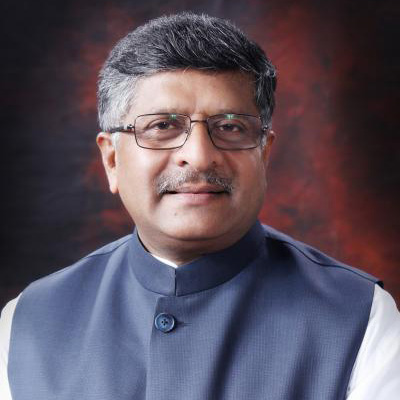
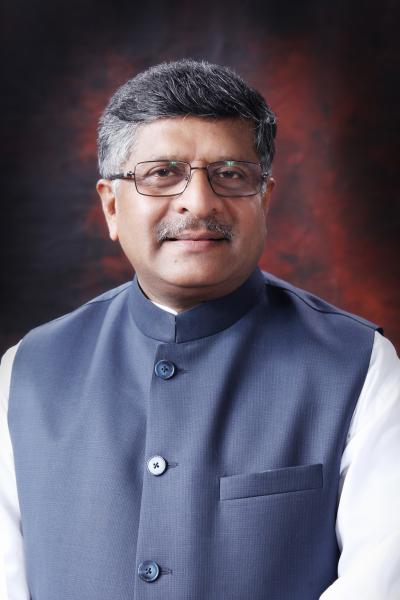
    The event was inaugurated by Union Minister of Communications & Information Technology Ravi Shankar Prasad, and attended by officials of central government and its agencies, industry partners, interested netizens, and electronic and print media.

    In his keynote address at the event, the Minister said, “Based on the pillars of participation, accountability, transparency, responsiveness and efficiency, Good Governance can be effectively achieved through the vision of Digital India of Digital Infrastructure as a utility to every citizen, Governance and services on demand and digital empowerment of citizens.”

    The Minister further emphasised that simple and inclusive technology has transformative power and is the source of good governance.

    “In the last six months, the government has taken a number of landmark initiatives. The Digital India programme, unveiled by Prime Minister Narendra Modi, is committed to take the cause of Good Governance forward in letter and spirit,” the Minister added.

    He in his concluding remarks directed all the officials of the ministry of communications and IT that we must ensure that the vision of Digital India becomes a reality!

    The Minister launched a number of Good Governance projects initiated by Department of Electronics and Information Technology, Department of Telecommunication, Department of Posts and their organisations.

    On the other hand DeitY secretary RS Sharma said, “The department has taken a number of initiatives like MyGov (Citizen participation platform), Aadhaar Enabled Biometric Attendance System, Jeevan Pramaan, e-Greetings, e-Sampark, National Digital Literacy Mission, e-Governance Competency Framework etc to promote good governance in the country.”


  • Standing Committee wants complete digitisation before amending act on illegal channels

    Standing Committee wants complete digitisation before amending act on illegal channels

    NEW DELHI: A Parliamentary Standing Committee has opposed any amendments to the Cable Television Networks (Regulations) Act 1995 with regards to illegal channels.

     
    Information and Broadcasting Ministry sources told indiantelevision.com that the Committee on Information Technology in its 36th report observed that the requirement of amending legislation may not be feasible in view of the ongoing process of digitisation of cable network as it can provide solution to address the issue of showing illegal / unregistered channels on the cable networks.

     
    The Ministry had been informed by security agencies about carriage of some unregistered foreign channels by cable operators.

     
    To address the problem of carriage of unregistered channels by cable operators, the Ministry had introduced the Cable Television Networks (Regulation) Second Amendment Bill, 2011 in Lok Sabha on 15 December 2011 but this was referred to the Standing Committee.


    There are 93 private satellite TV channels which are Uplinked from outside India and have been granted permission to downlink in India under the policy guidelines for Downlinking of Television Channels.


    The scheme of enforcement envisaged under this Act is primarily through the authorized officers who are district magistrate, sub divisional magistrate and the commissioner of police of the State Governments.
     

    Whenever a complaint is brought to the notice of the Ministry, they are sent to the authorized officers since the action as per the Act primarily remains in the domain of authorized officers, the sources said.


  • Expert group set up by Home Ministry to check cyber crimes

    Expert group set up by Home Ministry to check cyber crimes

    NEW DELHI: Following a sharp increase in cyber crimes, an expert group consisting of academicians and professionals of repute to prepare a roadmap for effectively tackling the cyber crimes in the country and give suitable recommendations on all facets of cyber crime.

    Various issues relating to Cyber Crimes have been flagged at various forums including Parliament, as the country with a fast growing economy is susceptible to international and domestic cyber attacks. There has been almost 40 per cent annual increase in cyber crimes registered in the country during the past two to three years.  

    The five-member expert study group comprises of Pune-based CDAC director general Dr. Rajat Moona, professor Krishnan of the Indian Institute of science in Bengaluru, Dr. Gulshan Rai who is director general of Cert-In, Dr. Manindra Aggarwal who is professor Computer Science in Indian Institute of Technology in Kanpur and Dr D. Dass, professor IIIT, Bengaluru. Home Minister joint secretary (Centre State) Kumar Alok will be the Convenor.

    The Terms of Reference of the expert group are:

    1. To prepare a roadmap for effectively tackling the cyber crime in the country and give suitable recommendations on all its facets.

    2. Recommend possible partnerships with public and private sector, NGOs, international bodies and international NGOs.

    3. Any other special measures/ steps the expert group may like to recommend with regard to tackling cyber crimes.


  • Rs 18000 crore worth investments received for ‘Digital India’: Prasad

    Rs 18000 crore worth investments received for ‘Digital India’: Prasad

    NEW DELHI: The Prime Minister Narendra Modi’s mandate of ‘Digital India’ will be a game changer for the country and will have a cascading effect on the entire system said Communications and Information Technology Minister Ravi Shankar Prasad.


    Chairing the consultative committee meeting attached to his Ministry, he informed the members that about 700,000 kilometer of cable for broadband is proposed to be laid in the next three years as against one million kilometers already laid in the country, so far.


    The Minister informed members that 50,000 gram panchayats will be provided broadband facility in the first tranche and 2.5 lakh in the next three years. Prasad also assured the members that the government is giving priority to the production of electronic goods as part of the ‘Make in India’ programme.


    Reacting to the concern of some of the members about poor services of the BSNL network in the country, he said more funds are proposed to be provided to the public sector telephone service providers during the VII phase to improve their functioning and make them commercially active.


    The Department of Electronics and Information Technology secretary RS Sharma, made a presentation on the ‘Digital India’ programme before the members of the consultative committee. Earlier at the FICCI, Prasad said Rs 18000 crore worth investments proposals have been received till now for the ‘Digital India’ programme, of which Rs 4000 crore worth have been approved and more are in the pipeline.


    Speaking at the session on ‘The role of ICT and ‘Digital India’ initiative in India’s growth’ at the 87th AGM of FICCI, Prasad said that while there are issues of spectrum to provide high speed connectivity and regulatory control, India will become an exciting place as far as ‘Digital India’ is concerned. E-commerce, he said, was worth billions of dollars and will help increase India’s GDP in a big way.


    Prasad said that the huge postal network can be used for various services like banking, insurance etc. The postal services earn Rs 280 crore from e-commerce, he said, and urged the private sector to take the initiative to develop India digitally.


    Stating that digital connectivity is needed for good governance, Prasad said India had more than $100 billion turnover in IT industry. All fortune companies connect with India’s IT. India has the potential of becoming number two after China and surpass the United States.


    Spelling out the initiatives that have already been taken under the Digital India Programme, the Minister said mygov.in portal has been launched to allow India to interact on various government programmes. Suggestions received on various programmes like ‘Clean Ganga’, ‘Swachh Bharat’ through the portal and designing, logo, slogan etc have been prepared. Under the ‘Jan Dhan Yojna’ – name for the programme was coined with the help of suggestions received through the portal, eight crore bank accounts have been opened till now with a total deposit amount of Rs 8000 crore. This is an ideal example of financial inclusion through digital technology.


    Additionally, programmes such as ‘Jeevan Pramaan’, a  biometric-enabled digital service for pensioners has been launched. Besides, through IT, two lakh schools were connected (two crore children) on the eve of Teacher’s Day.


    Prasad said the digital divide between those who have and those who don’t needs to be plugged. For this the government has initiated the programme – National Optical Fibre Network (NOFN) – which proposes to connect seven lakh kilometers optical fiber to be laid to connect 250 gram panchayats in three years. Wi-fi spots will be provided around the clusters after that and all villages to be provided with internet connectivity.


    He said that to promote ‘Digital India’ it is proposed to set up a broadband duct which is a pre-requisite for getting sewer, water and electricity connections.
  • Broadband target by government needs to be evaluated, says Khullar

    Broadband target by government needs to be evaluated, says Khullar

    MUMBAI: Telecom Regulatory Authority of India (TRAI) chairman Rahul Khullar said the target set by the government for providing broadband network for all was unrealistic and called for evaluating it. He said it would be simpler to first connect the metros and then look at connecting cities and talukas in a gradual manner.

     “Right now we are sort of deluding ourselves by saying we will achieve 100 per cent and all of you know exactly what has been achieved,” said Khullar. “This can’t be an infrastructure project. Focus on just building the infrastructure is wrong. The entire ecosystem – from applications to services — needs to be developed. The approach should be more practical and realistic,” Khullar added.

     The government plans to link 2.5 lakh village panchayats across the country by December 2016 through the national optical fibre network (NOFN) programme, while promoting initiatives like e-governance, e-education and e-health. The project also aims to ensure that all villages in India have high speed internet.

     In an interview with the Economic Times in August this year, telecom minister Ravi Shankar Prasad had said the government of Prime Minister Narendra Modi wants to ensure a smartphone in the hands of every citizen by 2019. Currently, nearly 74 per cent of the population has mobile phones, most of which though are in the hands of urban Indians.