Category: Regulators

  • Major initiatives of the I&B Ministry in 2014

    Major initiatives of the I&B Ministry in 2014

    The Ministry of Information & Broadcasting (I&B) has undertaken key initiatives in the different sectors aimed at enhancing the outreach of policies and programmes across platforms. Some of the initiatives undertaken have been innovative, involving people’s participation, enhancing government’s presence on the social media platforms and strengthening communication at the grassroots. Some of the key initiatives are as under:


    Initiatives under Swachh Bharat Mission

    As part of the Swachh Bharat Mission, the Ministry initiated a 360 degree multimedia campaign to enhance the outreach and impact of the Mission. All media units were involved in outlining audience specific content, tools and action plan. Intensive discussions were held with key stakeholders of the mission and innovative strategies were incorporated across media platforms for greater visibility and impact. Some of the key initiatives undertaken by the Ministry are as follows:
     

    Three Day Rashtriya Bal Film Mela on the theme “Swachhta”

    Organized by the Children’s Film Society of India (CSFI) on the occasion of National Children’s Day celebrations, the three day festival provided an opportunity for children to appreciate high-quality film content, experience value-based entertainment, and to trigger their imagination about environment conservation and cleanliness. The festival showcased a bunch of internationally acclaimed children’s films on the theme of cleanliness.

    The Festival featured interactive workshops on film-making, film appreciation, animation, Charlie Chaplin’s Mimes and storytelling. Live dance performances, magic act, sand act, and puppetry along with various competitions such as painting on the theme, ‘Swachhta’, and digital collage on the theme ‘Clean India’ and the craft of making utility items from waste materials, were being organized on the sidelines of the festival.


    1. Creation of Audio-Visual Spots on Swachh Bharat Mission.
    2. Animation / short video competition (less than three minute duration) organized on the digital volunteer platform of the Ministry with 15 October as deadline.
    3. Launch of Photo-Competition depicting “before and after pictures of cleanliness” on the digital volunteer platform with 15 October as deadline.
    4. Creation of an animation film by New Media Wing
    5. Crowd sourcing for the design of print advertisements
    6. Developing platform specific content on social media
    7. Creation of banners, logos and e-mailers for spreading of the message through social media
    8. Jingles on All India Radio
    9. Community Radio Mobilization to effectively reach the grass root communities
    10. Advisory to private TV & FM channels to become part of the campaign so as to enhance impact and outreach of the mission
    11. Anchor based and in-house serials on DD & AIR
    12. News bulletins through special success stories on DD & AIR
    13. Interactive programmes on DD & AIR
    14. Public Information Campaigns to focus on the core issues of the mission.
    15. Interpersonal communication strategies through field units of the Ministry.


    Launch of the DAVP Calendar, “Clean India, Green India”: The year 2015 calendar has been developed on the theme of “Clean India Green India” with focus on “Swachhta” and environment issues. The January page of the Calendar displayed the launch of the “Swachh Bharat Mission by Hon’ble Prime Minister Shri Narendra Modi. While the February page carried the message of ‘Swachh Vidyalaya’ and ‘Bal Swachhta Abhiyan’, the March page was designed on the theme, ‘Rejuvenating Rivers.’ The April Page of the Calendar portrayed “Clean Hospitals: A Healthy India,” May depicted the cleanliness drive of Railways, June focused on Rejuvenation of the River Ganges, ‘Namami Gange’, and July on people’s participation in Swachh Bharat Movement. The August page was on the theme of Clean Villages; the month of September highlighted Solar Energy as clean and renewable source of energy; October depicted Wind Power as pollution free source of energy and November emphasized the need to preserve Himalayan Ranges. Wildlife conservation was the theme for December.


    For the first time ever, a mobile app of the calendar has been developed. The mobile App would provide access to the latest tweets from the PMO, the YouTube channel of the Ministry of Information and Broadcasting, and the press releases on the PIB website. In addition to being a window for all websites of Government of India, this informative application would serve as a planner to the users bringing news updates from AIR and DD News. The mobile app was developed for Android platforms initially, which would be made available on other mobile platforms also in due course of time.


    Organising Press Conferences to highlight achievements and initiatives of the Government:The strategy adopted has been extremely successful in positioning the visibility of Government’s initiatives across media platforms.


    Multimedia Exhibition on Former Prime Minister Shri Atal Bihari Vajpayee:The Ministry of I&B has mounted a multimedia exhibition under the aegis of DAVP on the former Prime Minister Shri Atal Bihari Vajpayee. The exhibition would serve as an inspiration and learning to the people in understanding the life and contributions of Shri Vajpayee as a politician, statesman, and poet. The exhibition was inaugurated by Union Minister of Finance, Corporate Affairs, and Information & Broadcasting Shri Arun Jaitley on 20 December, 2014.


    The exhibition portrays the life of Shri Vajpayee, through a display of around 250 photographs, which reflect his vibrant personality. These rare pictures not only take the visitors through the political journey of this visionary leader, but also provide a glimpse into the diverse phases of his life – as a poet and a great thinker. At this event, different facets of his life will be showcased through photo and electronic exhibition. Scrollers, translites, LED walls, large fascia and title boards are the major attractions of the exhibition. The exhibition was open to public from 20 – 25 December, 2014.


    Establishment of Social Media Presence of Government of India: In order to facilitate Ministries/Departments in registering their presence on social media by utilizing the services of the Communications Hub established by the Ministry of Information & Broadcasting, the ministry organized a half day training workshop on 11 July, 2014 at the National Media Centre. The response was very encouraging as about 150 officers representing 59 Ministries/Departments attended the workshop. An interactive Q&A session was also held before concluding the workshop and induction material including a handbook on social media was also distributed to all the participants.


    Third and fourth phase of digitization: A Task Force has been constituted with the approval of MIB to steer the remaining two phases i.e., Phase III and Phase IV of digitization in India. The Task Force is headed by the Additional Secretary of the Ministry and comprises stakeholders from various ministries, departments and industry representatives. The constitution of the Task Force paves the way for implementation of digitization initiative in India, which will see digitization of about 8 crores cable TV homes in India. This will bring India in the league of developed nations. It is also a step towards the Prime Minister’s dream of a Digital India, as digitization will enable quick penetration of broadband connectivity in India.


    Government of India vide Notification dated 11 September, 2014 has revised the timeframe for digitization for Phase-III and IV of the Cable TV. As per revised guidelines, Phase-III and IV of Cable TV would be completed by December 2015 and December 2016 respectively.


    Third phase of FM radio auction: The Cabinet Note on third phase of FM has been moved for cabinet approval. This decision of the Ministry of I&B will pave the way for e-auction of FM Phase-III channels.


    Goa declared the permanent destination for International Films Festival of India: In order to develop the “Brand IFFI” on the lines of other international film festivals, Goa has been declared as the permanent destination for International Films Festival of India (IFFI). The IFFI platform propagated the theme “Green India, Clean India” at all the major events organized under its banner.


    North East Film Festival: For the first time, a three-day North East Film Festival was held in Delhi (Siri Fort Complex) on a grand scale. It will henceforth be an annual feature, a prominent event in the film festival calendar of the Directorate of Film Festivals. The Festival concluded on 24 August, 2014.


    FTII, SRFTII to be institutes of national importance: In order to provide statutory backing through an act of Parliament to declare both the institutes as Institutes of National Importance the government has proposed a Bill. The proposed Bill would enable both the institutes to award its own degrees and diplomas and start new activities on the lines of IITs and IIMs. Cabinet Note has been moved.


    Meeting with stakeholders related to Set-Top-Boxes to promote indigenization of digitization: Efforts were taken to fulfill the long pending demand of domestic manufacturers of Set-Top-Boxes (STBs) to get tax concession (C Form benefit) in order to compete with imported STBs. A letter was written by Hon’ble MIB to Hon’ble Finance Minister to resolve the issue of C-Form concession to domestic manufacturers. This was followed by a meeting by Hon’ble MIB with senior officials from Ministry of Finance, Ministry of Commerce, Ministry of Micro, Small and Medium Enterprises, Department of Electronics and Information Technology, Department of Telecom, Bureau of Indian Standards etc., and other industry stakeholders like indigenous STB manufacturers, DTH Association and MSO Associations etc. As a result of continuous follow up, Department of Telecom has confirmed Set Top Box as “Telecom Network Equipment”. The proposal has also been approved by the Ministry of Finance and a letter has already been issued to all the State Governments, Commissioners of Taxes and other concerned that STB will get the facility of ‘Form C’.


    e-initiatives: The Office of Registrar of Newspapers for India, M/o I&B has streamlined its Single Window Public dealing mechanism at its office. The RNI has achieved 100% success in online e-filing of Annual statements by publishers for 2013-14. The software module has been finalized for online filing of title verification application. It has also started sending automatic SMS intimation about status of title and registration application to publishers.


    Boost to Community Radio movement in the Country:Hon’ble MIB has been given a lot of emphasis on reaching out to the people especially in rural and marginalized areas with effective development communication. Community Radios are one of the best tools to touch the lives of millions of people as it is the platform, which provides an opportunity to community to not only receive messages from Government but also provide its feedback, which ensures two-way communication. An announcement has been made by Hon’ble Finance Minister in his budget speech allocating an amount of Rs 100 crores for “Supporting Community Radio Movement in India.” This would enable setting up of 600 community radio stations across the country in the 12th Five Year Plan. The resources would also be utilized for enhancing awareness, building capacities of community radio operators and promoting innovations in the sector. Funds would also be provided to various CR operators as a matching grant for setting up /upgrading community radio stations. At present 170 community radios are operating in various parts of India and about 200 are in the pipeline. This major initiative of the new government will strengthen the connect with the population living in rural and marginalized areas.


    A monitoring mechanism is also being set up to monitor community radio stations live at Electronic Media Monitoring Centre.


    Simplification of Procedures for granting Television licenses for starting additional television channels: Ministry of I&B grants permission to private television channels in India. At present about 800 TV channels have already been permitted by the Ministry of I&B. India has a huge broadcasting industry, thanks to the large number of television channels providing news and entertainment in various languages both at the national and regional level. Many companies desirous of starting new television channels have been approaching the Ministry to simplify procedures for launch of additional television channels. The issue of grant of additional television channels had become complicated as previously it was decided that for starting every additional TV channel security clearance would be required even for the same company and same set of Directors, who had been security cleared earlier, within the period of validity of such security clearance.


    Proposal cleared for Rs 600 crore National Film Heritage Mission (NFHM) to preserve India’s film legacy: The revised EFC proposal for a Rs 600 crore National Film Heritage Mission project to preserve India’s filmic legacy was cleared by the Expenditure Finance Committee in the Ministry of Finance on 3 July, 2014. The modalities are being worked out to launch it at the earliest.


    Peoples’ participation in Government Advertising through Crowd-Sourcing of Advertisements: The advertisement for the important events being designed on the crowd-sourcing model. Independence Day advertisement designed on these lines and DAVP has invited suggestions for the proposed advertisement to be brought out on 5 September to observe “Teachers Day”.


    Adopting 360 degree approach to information dissemination: Designing integrated campaigns based on the 360 degree approach, the core theme touching all tools including the contemporary as well as new media. For Independence Day, the advertisements were crowd-sourced for the first time and coverage was extended to all media platforms.


    Transparency Steps have also been taken by the Ministry to enhance transparency and expedite approvals for which Open House Meetings have been started for Community Radio applicants on the first of every month. For Multi System Operators (MSOs), Open House meetings are held every week on Tuesday. For television applicants, Open House meetings are held every fortnight i.e., on 5th and 20th of every month. This provides an opportunity to applicants to have a direct interaction with the Ministry officials and clarify their doubts as well as to get the status of their pending applications. This has enhanced transparency and accountability in the grant of various permissions to applicants of Community Radios, television channels, MSO permissions etc.


    Screening of rare archival footage: A half an hour film, “Road To Freedom,” was produced by the Ministry of Information & Broadcasting, based solely on rare archival footage. It was screened on DD (National) on 15 August, 2014. More such films will be produced and screened on days like 2nd October, 26th January and such like.


    Organisation of One Day Workshop on ‘Crisis Communication’:  In pursuance of the decision taken in Committee of Secretaries (CoS) meeting held on 1 July 2014 to consider measures to upgrade the efficacy of control and response system of Government in crisis situation, Ministry of Information organized a one day training session for senior officers of various Ministries/ Departments on ‘Communicating with Media’ through Indian Institute of Mass Communication (IIMC) on 22 September, 2014 at National Media Centre.


    (These are purely personal views of I&B Ministry secretary Bimal Julka and indiantelevision.com does not necessarily subscribe to these views.)

  • “Digital has emerged as alternative platform for information dissemination”: Arun Jaitley

    “Digital has emerged as alternative platform for information dissemination”: Arun Jaitley

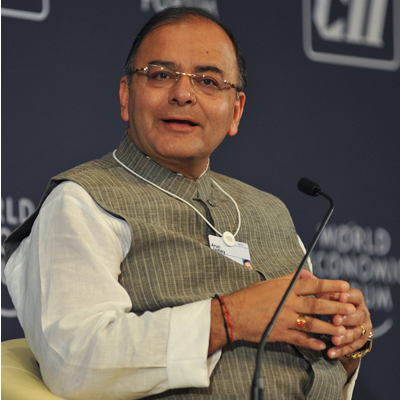
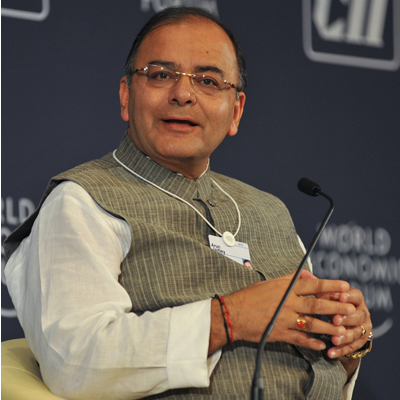
    MUMBAI: The Minister for Finance, Corporate Affairs and Information & Broadcasting, Arun Jaitley has said that in the last two decades, conventional contours of the issues pertaining to freedom and responsibility of media had changed due to changes in the nature and content of media and the definition of news. 


    According to the Minister, news in the electronic media today is being defined by what the camera could capture. “In the current paradigm, technology has become a driving force for these changes. The impact of technology was profound as information dissemination was taking place 24×7 across different technological tools and media platforms including the digital space,” he added.


    Jaitley stated this while delivering the first Justice J. S. Verma Memorial lecture on the ‘Freedom & Responsibility of Media’ organised by the News Broadcasters Association.  


    Elaborating further, Jaitley said that technological developments had defied the contours of censorship and the challenges for the media lay within, in the context of ownership patterns, financial sustainability and financial models, which led to aberrations such as paid news.


    According to Jaitley, the challenges before the media were to ensure quality, credibility along with the responsibility to play the role of an educator in handling sensitive issues. The challenge also lay in maintaining high ethical standards on the issue of conflict of interest where media needed to be very careful.


    Regarding digital media, the Minister said the financial models would evolve as the medium matured. The digital platform also needed to evolve its own standards of responsibility as it had emerged as an alternative platform for information dissemination.  


    The Minister further mentioned that media responsibility was critical in addressing matters related to security, social tension, privacy of the individual and the issues that involved a subjudice connotation. “Media needs to avoid the conduct of parallel trials in reporting matters that were subjudice,” he said, adding that constructive deliberations on all issues relating to media freedom and responsibility needed to be initiated amongst all stakeholders. 


    During the course of his address, Jaitley recalled the outstanding contribution of Justice J. S. Verma in the domains of Human Rights, gender equality, probity and media freedom as the conscience keeper of the society. 


  • US and Indian experts agree to work on strengthening Digital India

    US and Indian experts agree to work on strengthening Digital India

    NEW DELHI: Indian and American experts have agreed to continue exploring opportunities for collaboration on implementing India’s ambitious Digital India initiative, with the goal of enhancing digital infrastructure, deploying e-governance and e-services, and expanding the diffusion and use of ICT as a tool to expand economic opportunity, boost productivity, create jobs and empower citizens. 


    This was decided at the meeting of the United States-India Information and Communication Technology (ICT) Working Group, which promotes development in the ICT sector for mutual benefit was held in Washington, D.C. earlier this week.


    The participants noted that the ICT Working Group aims to strengthen collaboration between the governments and private sectors of the two countries in the field of Information and Communications Technology. 


    During the two-day working group meeting, US and Indian government representatives held extensive discussions on ICT and telecommunication policy issues, focusing on accelerating broadband deployment, aligning spectrum policy for the mobile era and exchanging views on internet governance and best practices in ICT and telecommunications regulatory policy.


    They also discussed issues relating to the international mobility of Indian skilled professionals. The joint government-and-industry discussions included panels on promoting manufacturing and investment; IT and telecom policy developments; Internet governance; mobility of skilled professionals and other issues related to trade, investment, and the ease of doing business. A panel of non-government experts also shared insights on strategies that may help India achieve the goals outlined in the ‘Make in India’ and ‘Digital India’ initiatives. 


    Broad agreement was reached on the importance of policies that promote innovation in the ICT sector, facilitate the flow of data across borders, and foster the global and open nature of the Internet as a platform for economic growth. 


    Participants agreed to continue discussion of policies that stimulate rapid diffusion and use of ICT products and services and facilitate cross border trade that reduces costs to consumers and businesses. In this context, the US side noted the Indian concerns with regard to mobility of skilled Indian professionals, and agreed that the US government will continue to engage on visa issues for skilled professionals. In addition, the Indian side noted the US concerns relating to equipment testing and certification, and agreed to engage on issues relating to equipment testing. 


    Ambassador Daniel A. Sepulveda, who is Coordinator for International Communications and Information Policy at the US Department of State, and R S Sharma who is secretary of the Department of Electronics and Information Technology, Communications and Information Technology Ministry, led their respective delegations. 


    The United States-India ICT Working Group was hosted by the US Department of State and included representatives from the Federal Communications Commission, the National Telecommunications and Information Administration (NTIA), the National Institute of Standards and Technology (NIST), the Office of the US Trade Representative, the US Trade and Development Agency, the US Department of Homeland Security, and the Federal Bureau of Investigation. The Indian delegation included officials from the Department of Electronics and Information Technology (DeitY), the Department of Telecom, and the Embassy of India to the United States. 


    The United States and India plan to hold the next US-India ICT Working Group in India later this year.


  • Censor Board members who quit are “rebels without a cause”: Arun Jaitely

    Censor Board members who quit are “rebels without a cause”: Arun Jaitely

    MUMBAI: The theatrics between the government and Central Board of Film Certification (CBFC) continues. After the resignation of CBFC chief Leela Samson and thirteen other board members, Minister of Finance, Minister of Corporate Affairs and Minister of Information and Broadcasting Arun Jaitely has now called all of them ‘Rebels Without A Cause.’


    In a note put up on social media, Jaitely acknowledged that the chairperson of the Censor Board – Samson – sent her resignation to the Government as have some other members, alleging interference by the Government and corruption in the Board.


    “Along with my colleague Shri Rajyavardhan Singh Rathore, I look after the Ministry of Information & Broadcasting. At no point either of us have communicated with any Member of the Censor Board or desired that any bureaucrat to do the same. I have not met or spoken to any Member of the Censor Board nor authorised anyone to do the same. It is the UPA appointed Central Censor Board, which has since continued. If there is any corruption, the UPA appointees have themselves to blame. I only wished that the fact of corruption had been communicated even once by the Chairperson of the Censor Board to me. The non-functional Chairperson never did so. The charge that meetings of the Censor Board are not being held is a self condemnation. The meetings are to be convened not by the Minister or the Secretary but by the Chairperson. If the meetings are not being convened, it is for those responsible for non-functioning who must blame themselves. I have checked up from officials of the Ministry who informed that the funds for the Censor Board have been returned to the Ministry as unspent by the Board,” Jaitely lashed out in this no-holds-barred note.


    He further went on to say that the legal regime with regard to the functioning of the Censor Board is clear. “It is the Censor Board alone which decides issues within its jurisdiction. The aggrieved producer has a right to move to the Appeal Tribunal. The Congress Party has politicised even membership of the Appeal Tribunal. We have restored its dignity by appointing a former judge of high credibility as Chairperson. If an Appeal Tribunal disagrees with the Board, it is a part of the due process of law and not an onslaught on Board’s autonomy. Can a subordinate judicial authority ever cry foul if its decision upset by an appellate authority? The NDA Government maintains arms length distance in all matters relating to film certification,” he wrote.


    Lashing out at the UPA Government, Jaitely said that the UPA had politicised the Censor Board. “In 2004 they dismissed the existing Censor Board headed by an eminent film actor Anupam Kher merely on the ground that he was appointed by the earlier Government. We did not wish to do that. It is regrettable that the UPA appointees have decided to politicise routine issues,” he said.


    As was reported earlier by Indiatelevision.com, the controversy arose over the film ‘Messenger of God’ (MSG), made by and starring Dera Saccha Sauda head Gurmeet Ram Rahim Singh.


  • I&B ministry earmarks Rs 20 crore to strengthen TV channels’ monitoring

    I&B ministry earmarks Rs 20 crore to strengthen TV channels’ monitoring

    NEW DELHI: An amount of Rs 20 crore has been allocated in the current financial year 2014-15 for facilitating augmentation of the monitoring capacity of the Electronic Media Monitoring Centre (EMMC).


    Information and Broadcasting Ministry (I&B Ministry) sources told Indiantelevision.com that a sum of Rs 90 crore had been earmarked in the 12th Plan 2012 to 2017 to enhance the monitoring capacity of the centre.


    EMMC is a subordinate office under the Ministry of I&B and has been set up with state-of-the-art facility with effect from 9 June, 2008. EMMC monitors the content of the private satellite TV channels with regard to violation of Programme and Advertising Codes as enshrined in the Cable Television Networks (Regulation) Act, 1995 and Cable Television Network Rules, 1994.


    The government hopes to increase the capacity of the EMMC to 1500 by 2017, which currently monitors around 300 television channels.


    These channels are chosen randomly out of the 839 channels beaming into Indian homes. The aim is to first achieve the target of monitoring 600 channels within a few months.


    The Programme Code provides that no programme should be carried which (a) offends good taste or decency (b) contains anything obscene, defamatory, deliberate, false and suggestive innuendos and half truths (c) criticizes, maligns or slanders any individual in person or certain groups, segments of social, public and moral life of the country (d) denigrates women through the depiction in any manner of the figure of a woman, her form or body or any part thereof in such a way as to have the effect of being indecent or derogatory to women, or is likely to deprave, corrupt or injure the public morality or morals (e) denigrates children (f) is not suitable for unrestricted public exhibition (g) is unsuitable for children. Action is taken against defaulting channels whenever any violation of the said codes is noticed or brought to the notice of the Ministry.


    The Ministry also has an Inter Ministerial Committee (IMC) to look into the violations of the Programme and Advertisement Codes. IMC has representatives from the Ministry of home affairs, defence, external affairs, law, women and child development, health and family welfare, consumer affairs and a representative from the industry in Advertising Standards Council of India (ASCI). IMC meets periodically and recommends action against violations.


    The Ministry issues advisories from time to time on various issues, which are also relevant to reality shows. These are available at Ministry’s website www.mib.nic.in.


    In addition, the National Commission for Protection of Child Rights (NCPCR) has formulated the ‘Guidelines for Media Reporting on Children,’ which has been circulated by this Ministry among all TV channels/NBA/IBF on 23 November, 2012. The guidelines lay down provisions to be followed by broadcasters/producers in case child participants are taken in their shows.


    Besides, as part of self-regulation by industry, Indian Broadcasting Foundation (IBF), which is a representative body of non-news and current affairs TV channels, has set up Broadcasting Content Complaints Council (BCCC) to examine the complaints about television programmes. BCCC has also issued some Advisories on various issues related to reality shows to their member channels, which are available at their website Indian Broadcasting Foundation (IBF).


  • I&B Ministry denies interference in CBFC as Leela Samson quits over movie

    I&B Ministry denies interference in CBFC as Leela Samson quits over movie

    NEW DELHI: Following the controversy over the clearance to the film Messenger of God, made by and starring Dera Saccha Sauda head Gurmeet Ram Rahim Singh, Central Board of Film Certification (CBFC) chief Leela Samson has put in her papers.


    Asked if she was aware of media reports that the nod has been given by Film Certification Appellate Tribunal (FCAT) to the film’s screening, Samson said, “I hear so. Yet, it is a mockery of CBFC. My resignation is final. I have informed Information and Broadcasting Ministry (I&B) secretary Bimal Julka.”


    The Censor Board had referred the issue of clearance to Messenger of God to FCAT. The film was slated to hit the screens on Friday.


    Asked why she has decided to quit, she did not specifically refer to the reported clearance to the film but said the reasons cited are alleged “interference, coercion and corruption of panel members and officers of the organisation who are appointed by the ministry.”


    Refuting allegations of interference, coercion and corruption levelled by Censor Board chairperson Samson, the government today said that it has always maintained a distance from the entire process of film certification.


    With Samson deciding to resign amid a row over controversial film Messenger of God, Minister of State (MoS) for Information and Broadcasting Rajyavardhan Rathore said, “We have respected the Censor Board all along. In fact when the issue of the previous film came up, we respected the decision of the Censor Board. We kept a hands away distance from its decisions.”


    He also said that if evidence was provided that any particular member had been coerced, the government would take appropriate action.


    Dismissing Samson’s allegations, Rathore said due process was being followed in all cases including  the case of Messenger of God.


    “Now when this particular film has come into discussion, the Censor Board would realise that the final call lies with the FCAT, the film appellate tribunal,” Rathore said.


    Asked whether the Ministry had received Samson’s resignation, “No, we are not aware. We heard this on TV, and we are briefing you so that the public is not misled.”


    He said very eminent persons constitute the appellate tribunal and emphasised that the government does not interfere in the entire process of film certification.


    “There is a retired justice heading the tribunal. There is a Supreme Court advocate in the appellate tribunal. There is a senior journalist in the tribunal, they take decision, whatsoever, which will be made public very soon,” he said.


    The Minister also emphasised that the present Board and its members were placed by the previous government and current regime had not put in any additional member.


    Meanwhile, Samson told the media, “Having to manage an organisation whose Board has not met for over nine months as the ministry had no funds to permit the meeting of members.” She said the term of all the members and the Chairperson of the Censor Board “are over but since the new government failed to appoint a new Board and Chairperson, a few were given extension and asked to carry on till the procedure was completed.”


    “However, recent cases of interference in the working of the CBFC by the ministry, through an ‘additional charge’ CEO, and corrupt panel members has caused a degradation of those values that the members of this Board of CBFC and Chairperson stood for,” Samson alleged.


    Meanwhile, a spokesman for Sirsa (Haryana)-based Dera Sachcha Sauda said, “As per our information, FCAT has cleared the movie for release. But a written order is awaited.”


    Her resignation led to comments from the film industry, where veteran Mahesh Bhatt observed, “I don’t know whether the corruption charges are true… but I’d like to make an appeal to I&B minister Arun Jaitley – when he follows a system of liberal values and freedom of speech, his ministry should also be reflective of that.”


    Award-winning filmmaker Onir said, “I hope her resignation brings about a positive change. She has a lot of respect in the industry and her resignation explains the hypocritical approach that the Censor Board has. It does come as a shock, but I hope filmmakers are not harassed anymore.”


    Mary Kom director Umang Kumar said, “If Samson took a stand, there must be a reason. After all, she was put in that position because she was considered capable of using her discretion wisely.”


  • Dispute between Taj TV & Meghbela Cable goes to Mediation Centre under TDSAT order

    Dispute between Taj TV & Meghbela Cable goes to Mediation Centre under TDSAT order

    NEW DELHI: The Telecom Disputes Settlement and Appellate Tribunal (TDSAT) has directed Kolkata based multi system operator (MSO) Meghbela Cable and Broadband Services and Taj Television to get their financial dispute resolved before the Mediation Centre.

     
    Senior representatives of both parties have been asked to appear before the Centre on 23 January.

     
    Meanwhile, Meghbela’s counsel Vineet Bhagat has handed over five cheques aggregating to the sum of Rs 16,45,580 to to Taj TV counsel Upendra Thakur towards payment of earlier dues.


    Bhagat stated that the payment was without prejudice to the rights and contention of his client.


    Thakur suggested that the matter may be referred to the Mediation Centre where the parties may have a reconciliation of their accounts and further try to resolve their disputes. Bhagat had no objection to the course suggested by Thakur.

     
    TDSAT chairman Justice Aftab Alam and member Kuldip Singh said in their order, “Needless to say that both sides will be represented by officers who are in a position to take decisions on behalf of their respective principals in course of the mediation proceedings.”

     
    When the issue had come up before the Tribunal last year following Meghbela challenging a disconnection notice, it had been suggested to the parties to hold discussions to reconcile the amounts. Taj TV had also been asked not to carry a scroll against the MSO on its channels. However, a joint meeting on 26 December failed to result in any compromise.

  • TRAI reiterates earlier view, opposes partial auction of 2100 MHz

    TRAI reiterates earlier view, opposes partial auction of 2100 MHz

    NEW DELHI: The Telecom Regulatory Authority of India (TRAI) has opined that clubbing the 2100 MHz band spectrum with the spectrum of other bands for auction in February will be defeated if sufficient spectrum is not made available in the 2100 MHz band.
     
    “A split auction of 2100 MHz (one in February 2015 and remaining, say, in December 2015 after availability from Defence Ministry) will artificially increase the market price of 2100 MHz in February because of the severe supply constraint. The 15 MHz of spectrum in the 2100 MHz spectrum being vacated by Defence Ministry should be auctioned in view of the in-principle agreement reached with MoD, even if it is not available immediately,” TRAI said today.

    The Authority reiterated that in the upcoming auction of 2100 MHz band spectrum, an auction-specific cap should be placed that no bidder would be permitted to bid for more than two blocks in a local service area (LSA) if three to four blocks are available in that LSA.
     
    TRAI said there is no change in the reserve prices for spectrum in the 2100 MHz bands from what were recommended earlier.
     
    It said the Department of Telecom is responsible to ensure that the spectrum being auctioned is either interference free or to share information upfront about the areas where interference is likely to occur so that the telecom service providers participating in the auction can take informed decision.
     
    These views were given to the DoT in Clarifications/Reconsideration of Recommendations on ‘Valuation and Reserve Price of Spectrum: 2100 MHz Band.’

    TRAI had sent its recommendations on ‘Valuation and Reserve Price of Spectrum: 2100 MHz Band’ on 31 December, 2014 to the DoT. On 8 January, 2015, the DoT sought clarifications/reconsideration on many of the recommendations.
     
    After considering the comments given by the DoT, TRAI has furnished its response to the Government. The Authority, has reiterated its earlier recommendations with detailed reasoning.
     
    As highlighted in the Authority’s recommendations on ‘Valuation and Reserve Price of Spectrum: Licences Expiring in 2015-16’ dated 15 October, 2014, it is vitally important to auction spectrum in the 2100 MHz band along with spectrum in the 900 MHz band. The same sense of urgency was echoed by the DoT when, through its letter dated 27 November, 2014, it requested TRAI to expedite the process for its recommendations on the reserve price of 2100 MHz band and related issues so that the auction of spectrum being released by Defence could be conducted along with the auction of spectrum in the 800 MHz/900 MHz/1800 MHz bands scheduled to be held in February 2015. Heeding DoT’s request, TRAI delinked the 2100 MHz band from other bands – 2300 MHz and 2500 MHz band – which were part of the DoT’s reference of 16 October, 2014, and issued its recommendations specifically for 2100 MHz band on 31 December, 2014.
     
    In its back-reference of 8 January, 2015, the DoT has not indicated the exact amount of spectrum in the 2100 MHz band that will be put to auction. However, media reports suggest that only 5 MHz is likely to be put to auction. The swapping of spectrum leading to release of an additional 15 MHz will be carried out later after the DoT notify the Defence band.
     
    Quoting the Communications & IT Minister, the media has reported that the notification is likely to be done in the next 45 days. Media reports also mention that the swapped spectrum in 2100 MHz may be put to auction in December 2015.
     
    These media reports are neither a positive development nor particularly encouraging. The whole purpose of clubbing the 2100 MHz band spectrum along with spectrum of other bands for auction in February 2015 will be defeated if sufficient spectrum is not made available in the 2100 MHz band. Moreover, it was emphasized by the Authority that, if swapping has been agreed in principle, the spectrum can be put to auction and the actual assignment made after the auctions viz. once the release of spectrum is cleared by MoD. This remains a distinctly feasible option because time is on DoT’s side: actual assignment can wait till end 2015, close to a year away.
     
    The MoD has informed TRAI that the proposal for release of 15 MHz of spectrum in 2100 MHz band on a pan-India basis in lieu of an equal amount of commercial spectrum in the 1900 MHz band has been agreed to in principle and this has also been conveyed to the DoT. In its back-reference, the DoT has not assigned any reason for not putting this spectrum to auction in February 2015. In the absence of any plausible reason to hold back this spectrum, the Authority is not in a position to review its recommendations and, therefore, stands by them.
     
    The Authority would also take this opportunity to sound a note of caution. If media reports are to be believed and if spectrum is auctioned in two chunks, one in February 2015 and remaining, say, in December 2015 after availability from Defence, the result would be a split auction. A split auction of 2100 MHz will artificially increase the market price of 2100 MHz in February 2015 because of the severe supply constraint. What is more, that will then become the anchor price for the next 2100 MHz auction. This situation can be averted by putting all the available spectrum for auction in February.
     
    The full text of the response to the Government has been placed on TRAI’s website www.trai. gov.in


  • TRAI pulls up broadcasters, MSOs on DAS implementation

    TRAI pulls up broadcasters, MSOs on DAS implementation

    NEW DELHI: Broadcasters were taken to task for their failure to file reports relating to subscribers while multi-system operators (MSOs) were rapped for failure to meet their commitments relating to billing in two separate meetings held with senior officials of the Telecom Regulatory Authority of India (TRAI) held in the first fortnight of this month.
     
    The meeting, with selected broadcasters earlier this month, also saw TRAI officials asking the broadcasters about agreements with MSOs under the reference interconnect offer (RIO).
     
    Broadcasters were also urged to step up awareness among subscribers in phase III and phase IV so that the transition to digital addressable system (DAS) is smooth.
     
    TRAI also urged broadcasters to highlight problems faced by them in the switch-over to DAS and issues relating to connectivity.
     
    In the meeting with MSOs earlier this week, problems relating to issuance of licences were also taken up.
     
    The MSOs were also asked to provide a list of areas not reached by them, an issue that had also been raised at the last DAS Task Force meeting.
     
    A TRAI official told Indiantelevision.com that issues relating to set top boxes were not taken up as they are being dealt with directly by the Information and Broadcasting Ministry.


  • Reliance Jio Media applies for pan-India license, over 200 others in queue for phase III of DAS

    Reliance Jio Media applies for pan-India license, over 200 others in queue for phase III of DAS

    NEW DELHI: Reliance Jio Media, a subsidiary of Reliance Jio Infocomm, has applied for a pan India cable television multi system operator (MSO) license as part of its step to enter the broadcast distribution sector.
     

    Confirming this to indiantelevision.com, an Information and Broadcasting Ministry official said that around 200 MSOs are in the queue for phase III of digital addressable system (DAS) license at present. Following the recent extension in date for registration of MSOs for phase III, the official said it was expected that this number may go up by another 70-80 MSO applicants.
     

    At least 50 per cent of these applicants including Reliance Jio are expected to get clearances by March 2015.
     

    Reliance Jio, the telecom arm of Mukesh Ambani led Reliance Industries, is the only company to have pan-India Broadband Wireless Access spectrum that can be used for 4G services. Reliance Jio has plans to start 4G services across most of the telecom circles by March 2015.
     

    Reliance Industries has already announced that it will launch commercial 4G telecom service of Reliance Jio in 2015 entailing investment of Rs 70,000 crore. It will initially cover about 5,000 towns and cities accounting for over 90 per cent of urban India, as well as over 215,000 villages in India.
     

    The company is focusing on convergence space and has bagged Broadband Wireless Access spectrum in 2010 and Internet Service Provider license was bagged through acquisition of Infotel Broadband Services in 2010.
     

    The company has also showcased a ‘Jio Television’ that can be delivered through 4G network.
     

    All these services will help Reliance Jio to offer broadband services through wireless media, wireline media and cable TV media thereby focusing on all types of broadband services pan-India.
     

    Reliance Jio in February 2014 acquired airwaves in 1800 MHz band across 14 out of 22 service area in the country. The spectrum in this band can also be used for providing 4G services. The company already holds Unified Licence (UL), which allows it to use any technology to provide telecom services.

    Under UL, sources said, Reliance Jio can offer Fiber-To-The-Home services and high speed broadband services to home and enterprise users.

    An MSO license will help Reliance Jio to offer cable TV services through optical fiber thereby providing triple play service as done by large MSOs in the country say Hathway, Siti Cable, IN cable, DEN and others.