Category: Regulators

  • MIB takes action against 97 cases of violation of various codes by TV channels

    MIB takes action against 97 cases of violation of various codes by TV channels

    NEW DELHI: Around 240 applications for new television channels are pending at various stages of clearances in consultation with various Departments/Ministries.

    Meanwhile, Information and Broadcasting Ministry sources told indiantelevision.com that action had been taken in 97 cases in the past three years and the current year wherein the channels were issued warnings /advisory/ directive to run apology scroll or taken off air in a few case for a period ranging from 1-10 days.  

    The sources said that permission holder companies are reviewed from time to time for compliances of Uplinking and Downlinking Guidelines and action is taken whenever such violations of guidelines are brought to the notice of the Government.

    The Ministry announced last week that the number of permitted satellite television channels has gone up marginally to 826 with five new channels getting cleared during December 2014.
    The number of channels in November-end was 821 as compared to 798 in July following streamlining of clearance procedures by the Information and Broadcasting Ministry.
    The cleared channels include one news channel taking the total to 405 news and current affairs channels and four non-news channels taking the total to 421 general entertainment channels.

    The statistics show that 697 channels (including 382 news channels) are permitted to uplink and downlink from within the country, and 36 (including seven news channels) are uplinked from India for beaming overseas and not in the country. There is no change in channels uplinked from overseas and downlinked into India with the number remaining static at 93 (including 16 news channels).
     

  • Calcutta HC extends Digicable Comm interim stay till 6 April

    Calcutta HC extends Digicable Comm interim stay till 6 April

    KOLKATA: Granting relief to Digicable Comm once again, the Calcutta High Court has extended the interim stay till 6 April 2015.

    Previously, the Calcutta High Court had put the stay order on the cancellation of the registration of Kolkata-based multi-system operator (MSOs) till 17 January 2015, citing that Digicable Comm, having been in business for quite some time and would suffer irreparable loss and injury, unless appropriate ad-interim protection is granted to them.

    Jishnu Saha, a senior advocate for the petitioners, did hope for an extension of the interim order. An extension was also sought to file the affidavit-in reply since affidavit-in-opposition had been filed out of time. “Interim order already granted is extended till 6 April, 2015 or until further order, whichever is earlier,” said DigiCableComm Services operations and technology VP Lokesh Agarwal, quoting the letter.

    As hoped, time to file affidavit-in-reply has been extended till 27 January, 2015, he further said.

    It should be noted that in July last year, the Ministry of Information and Broadcasting (MIB) had cancelled the registration of Digicable Comm. Services.

    Digicable Comm, a joint venture (JV) between Digicable (51 per cent) and Kolkata-headquartered Multicar Group (49 per cent) was formed in the year 2009, to gain the foothold in the West Bengal market.

    Digicable Comm is hopeful that after appealing to the Ministry of Home Affairs (MHA) and moving to the High Court, the decision would be in favour of the MSO. “We are happy to get the stay order extended from the High Court. Slowly we will expand in the region,” added Agarwal.

    MHA cancelled the company’s permanent registration on 18 July due to denial of security clearance.

    Cable TV experts when asked to comment on the reason for the denial of security clearance by authorities said this might be due to Amit Nag who was the then chief executive officer (CEO) and on the board and the application for DAS (digital addressable system) had his signature.

    Now, going forward what happened with the MSO here is not hidden from anyone. Nag not only resigned from Digicable but had convinced around 412 of the 600 cable operators affiliated to Digi Cable to switch to Hathway along with him. More than 400 LCOs affiliated to DigiCable when switched to Hathway did not think that they would have to spend sleepless nights and some even behind bars, cable TV sources said.

    At present, Digicable Com which boasted more than four lakh connections in the KM area is left with less than 50,000 set top boxes (STBs).

    “We will follow the mandates. We are hopeful that the authorities would consider the minute details presented by us,” said Agarwal.

  • Use of educational broadcasting channels should be via Prasar Bharati: TRAI

    Use of educational broadcasting channels should be via Prasar Bharati: TRAI

    NEW DELHI: The Telecom Regulatory Authority of India (TRAI) has reiterated its earlier recommendations regarding further strengthening the maintenance of an arm’s length relationship between Prasar Bharati and the government and ensuring functional independence and autonomy of Prasar Bharati.


    TRAI said that the non-commercial use of direct-to-home by the central and state governments for educational purposes should be done through the Prasar Bharati route through suitable agreements between Prasar Bharati and the concerned central/ state governments.


    Responding to a letter from the Information and Broadcasting Ministry in this regard on 31 October last year, TRAI said Prasar Bharati should ensure that content dissemination through such non-commercial educational channels comply with the code and conduct of broadcasting established in India such as Programme code, AIR code etc. and the content disseminated through such channels should be such that it can form part of any regular Prasar Bharati channel.


    As the transponder capacity is a scarce resource, the allocation of transponder capacity to central/state governments for running DTH educational channels on a non-commercial basis should be done in a very careful and judicious manner, said TRAI.


    It should not lead to a situation where transponder capacity is kept idling on one hand when on the other hand service providers are kept waiting for the same, thereby adversely impacting the expansion and improvement of quality of their services.


    The authority had given its recommendations to the government on the issues relating to entry of certain entities into broadcasting and distribution activities on 12 November 2008 and subsequently on 28 December 2012 in response to the references received from the Ministry. The original recommendations and the clarifications provided later clearly opposed the entry of central and state governments in the broadcasting and distribution activities. These recommendations of the authority were arrived at taking into consideration the relevant constitutional provisions, constituent assembly debates, judicial pronouncement of the Supreme Court, report of the Sarkaria Commission on Centre State Relations, international practices and the views of stakeholders.


    The Ministry’s reference was about the use of a specific technology for a specific application by the central / state governments and ‘in essence boils down to enabling broadcasting/ distribution by the central and state governments.

  • N Srinivasan can’t contest BCCI 2015 polls: Supreme Court

    N Srinivasan can’t contest BCCI 2015 polls: Supreme Court

    MUMBAI: After a prolonged period of waiting, the Supreme Court has finally pronounced its verdict on the Board of Control for Cricket in India (BCCI) president N Srinivasan’s conflict of interest case. Amongst other things, the court said that Srinivasan cannot contest the BCCI polls till he gives up commercial interest in the Indian Premiere League (IPL) franchise – Chennai Super Kings (CSK).


    A bench of Justices including TS Thakur and FMI Kalifulla, which heard the counsel for BCCI and Srinivasan on one side and rival Cricket Association of Bihar (CAB) on the other, had on 17 December reserved its verdict on Srinivasan’s re-election plea but had indicated that the judgment could formulate accountability standards for ill-managed sports bodies to eliminate nepotism and conflict of interest.


    The key points of the 130 page judgment read by the Supreme Court includes:


    * N Srinivasan or any administrator having commercial interest in cricket cannot contest for BCCI till they have those interests.

    * Supreme Court sets up three-member panel headed by ex-CJI R M Lodha to decide quantum of punishment against Meiyappan and Kundra

    * BCCI did not adhere to prescribed procedures while conducting probe in IPL spot-fixing and betting scandal

    * Charges of cover-up against BCCI president-in-exile N Srinivasan not proved

    * Amendment in BCCI rules allowing Srinivasan to own IPL team, is bad

    * The highest Court of the country said conflict of interest in cricket leads to great confusion

    * SC framed seven questions on which it has passed its verdict

    * Rajasthan Royals owner Raj Kundra and Srinivasan’s son-in-law Gurunath Meiyappan’s role in betting stands proved 


    The panel of judges also asked BCCI to hold fresh elections within six weeks. An independent panel would  decide the fate of multimillionaire franchises Chennai Super Kings and Rajasthan Royals.

  • Ad cap case adjourned to 24 March

    Ad cap case adjourned to 24 March

    NEW DELHI: The Delhi High Court today adjourned the petition by the News Broadcasters Association (NBA) and others challenging the advertising cap of 12 minutes per hour sought to be imposed by the government to 24 March.


    The bench was unable to hear the case today in view of the pendency of large number of part-heard matters.


    The assurance given by TRAI to not take any action against any channel pending the petition, will continue and the Court has, at the regulator’s instance, directed that all channels to keep a record of the advertisements run by them. It can be noted that the ad cap case was adjourned to 21 January, 2015 when it last came up for hearing on 20 November, 2014.


    During the hearing on 25 September, NBA counsel Nisha Bhambani had sought adjournment in view of the senior counsel S Ganesh not being in Delhi.


    Earlier on 15 July, the Court had adjourned the case as the final hearing of the bunch of petitions challenging the ad cap sort to be imposed by TRAI as the authority had not finalised its rejoinder.


    The case had been previously heard in the High Court on 17 December, 2013 and 13 March, 2014.


    The NBA had challenged the ad cap rule, contending that TRAI does not have jurisdiction to regulate commercial airtime on television channels.


    Apart from the NBA, the petition have been filed by Sarthak Entertainment, Pioneer Channel Factory, E24 Glamoru, Sun TV Network, TV Vision, B4U Broadband, 9X Media, Kalaignar, Celebrities Management, Eanadu Television and Raj Television.


    The news and regional broadcasters fear that the capping of commercial airtime will curtail their ad revenues. They also argue that the ad cap must be brought only after the benefits of cable TV digitisation start kicking in.

  • I&B Ministry gives clearance to five new channels; private TV channels increase to 826

    I&B Ministry gives clearance to five new channels; private TV channels increase to 826

    NEW DELHI: The number of permitted satellite television channels has gone up marginally to 826 with five new channels getting cleared during December 2014.


    The number of channels in November-end was 821 as compared to 798 in July following streamlining of clearance procedures by the Information and Broadcasting Ministry.


    The cleared channels include one news channel taking the total to 405 news and current affairs channels and four non-news channels taking the total to 421 general entertainment channels.


    The statistics show that 697 channels (including 382 news channels) are permitted to uplink and downlink from within the country, and 36 (including seven news channels) are uplinked from India for beaming overseas and not in the country. There is no change in channels uplinked from overseas and downlinked into India with the number remaining static at 93 (including 16 news channels). 

     

    The new entrants were: R-Vision (a non-news channel in all Indian languages) and Krishna Showbiz Services’ three channels – Dilagiri, Tak Dhina Din and Maula Masth (Hindi non-news channels for uplinking and downlinking). The Arabia news channel in Malayalam is the sole channel for uplinking only.


    The largest gainer is Krishna Showbiz Services Pvt Ltd, which gets three Hindi GEC channels. The year 2014 has thus seen the clearance to more than 30 channels.


    To expedite the process, which had remained stagnant after March-end, the Ministry now holds the Open House meetings with stakeholders two time every month instead of once.

  • Lemon News warned for airing programme promoting superstition & blind belief

    Lemon News warned for airing programme promoting superstition & blind belief

    NEW DELHI: Lemon TV has been warned by the Information and Broadcasting Ministry for telecasting a programme ‘Khauf ke 10 Destinations’ on 11 December, 2013 referring to 10 places in Mumbai, which it claimed are haunted and where there was dominance of evil spirits and invisible powers.


    The Inter-Ministerial Committee, which had received a reply to its show-cause notice and even heard channel representatives in October last year said ‘strict compliance’ may be ensured by Lemon News TV Channel. 


    Any further violation shall entail such action against Lemon News TV channel as deemed fit in accordance with the Cable Television Network (Regulation) Act, 1995 and the Rules framed thereunder as also the terms and conditions of the permission/approval granted under uplinking/downlinking, the MIB said.


    The channel, in its reply to the show-cause notice, said it had not only clarified in the programme that it did not believe in such superstitions, but had interviewed people who said these stories related to the past. When asked to appear before the IMC, the channel representatives had tendered an apology.


    However, the IMC said the channel presented the so-called incidents in an overtly sensational manner thereby appearing to instill superstition in the minds of viewers. It was noted by IMC that the channel created horrifying sound effects and also created images of ghost during the telecast of this programme giving the whole programme a horrendous look.


    The IMC thus observed that the telecast of the programme seemed to promote blind belief and superstition and there was clear violation of the provisions of the programme code, particularly Rules 6(1)(a), 6(1) (i) and 6(1) (o).


    The IMC noted that even though the channel had apologized for the lapse, it could not escape the responsibility of ensuring content on their channel, which must be in conformity with the programme code at all times.


    Lemon TV had shown a number of stories connected with evil spirits and also telecast bytes of local people who seem to have experienced these incidents. The reporting appeared to be intended to generate fear, anxiety and phobia in the minds of the viewers. Telecasting such programme in a news channel appeared to sensationalise  with little news value. This programme appeared to offend good taste and decency, encourages superstition or blind belief as also, the programme did not appear suitable for unrestricted public exhibition, the IMC said.


  • MIB asks broadcasters to apply 15 days in advance for live telecast permission

    MIB asks broadcasters to apply 15 days in advance for live telecast permission

    NEW DELHI: The Information and Broadcasting Ministry has asked non-news television channels, needing temporary permission for uplinking various events, to apply at least 15 days in advance to the proposed event for permission for uplinking.


    Reiterating this, the Ministry has warned that it ‘may not be in a position to entertain such requests’ if applications are not filed on time.


    Reasonable time is also needed for permission from the WPC Wing of the Communications and Information Technology Ministry after the clearance by the I&B Ministry, it was pointed out.


    “Strict compliance to these instructions will ensure smooth functioning at both Ministries in order to process the broadcasters requests well in time,” the I&B Ministry said.


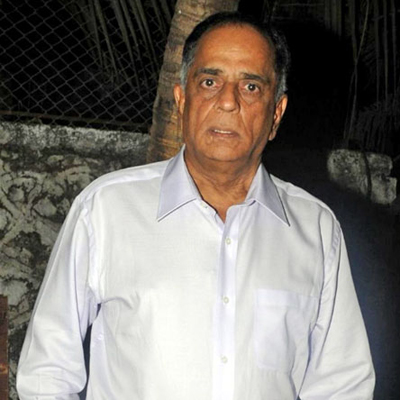
  • Pahlaj Nihalani appointed new Censor board chairperson

    Pahlaj Nihalani appointed new Censor board chairperson

    MUMBAI: After last week’s fiasco, which saw Censor Board chief Leela Samson and nine members quitting over clearance been given to the controversial movie ‘MSG:Messenger of God’, the body has got a new chairperson in filmmaker Pahlaj Nihalani.


    According to the government release, “In exercise of the powers conferred by sub-section (1) of section 3 of the Cinematograph Act, 1952 (37 of 1952) read with rule 3 of the Cinematograph (Certification) Rules, 1983, the Central Government is pleased to appoint Shri Pahlaj Nihalani as Chairperson of the Central Board of Film Certification in an honorary capacity from 19th January, 2015 for a period of three years or until further orders, whichever is earlier.”


    The statement added, “Further, in exercise of the powers conferred by sub-section (1) of Section 3 of the Cinematograph Act, 1952 (37 of 1952) read with rule 3 of the Cinematograph (Certification) Rules, 1983, the Central Government is pleased to appoint the following persons as members of the Central Board of Film Certification with immediate effect for a period of three years and until further orders.”


    Nine other members have also been appointed.


    The new members are: Mihir Bhuta, Syed Abdul Bari, Ramesh Patange, George Baker, Chandra Prakash Dwivedi, Jeevitha, Vani Tripathi Tikoo, S Ve Shekhar and Ashoke Pandit.

  • Ad cap conflicts with fundamental rights: Arun Jaitley

    Ad cap conflicts with fundamental rights: Arun Jaitley


    NEW DELHI: Reiterating that the government is not inclined to interfere in the content or the business of media entities, Information and Broadcasting minister Arun Jaitley has said he is not in favour of a cap on advertising for TV or print media. 

    In the first J S Verma Memorial Lecture, Jaitley wondered how a 12-minute cap could be reconciled with the fundamental right of freedom of speech.

    “It will be music to the years of media persons. My ministry, a couple of years ago, came out with a statutory law that no channel will telecast advertisements beyond so many minutes. I have been struggling, in my own mind, since then as to how this meets the challenge of Article 19(1)A,” Jaitley said. 

    The ad cap law brought in by the Telecom Regulatory Authority of India (TRAI) has been legally challenged and the matter is pending in court. 

    Jaitley was also in favour of increasing FDI in media from the current cap of 26 per cent, saying when foreign newspapers were anyway available online in India, there was no point opposing the move. He said, “The debate over whether foreign media should be allowed to establish in the country and the extent of foreign equity has been made irrelevant by technology. Today, sitting here, I can access any newspaper in the world over internet.” 

    Referring to the financial pressure on modern media, he said, “The financial model of most media organizations is becoming challenging. The cost of news distribution has become huge. Cost of circulation is high. Most are unable to sustain. This is leading to consolidations and mergers. Those with deep pockets are acquiring media.” 


    The minister said that the media, in the spirit of fairness, must carry a disclaimer with respect to news where there was a conflict of interest. 

    Jaitley said financial pressure on media affected the quality of news and its credibility. Because of this, media houses spend less and less on news collection, hire less reporters who are not paid well, he said.


    He stressed on the challenge posed by digital media to the traditional forms of news dissemination and pointed out how newspapers and magazines abroad were shutting down in favour of digital platforms. He, however, said that the revenue model for digital media was not clear and it was still evolving. 


    He also raised the issue of cross-media ownership and said in his concluding remarks that it was an issue that needed to be debated. “Most jurisdictions world over ban cross-holdings in the media. Can all mediums be vested with one person? How is larger public interest going to be impacted by this? It should be debated,” Jaitley said.