Category: Regulators

  • Mobile subscribers continue to contribute to broadband growth in the country

    Mobile subscribers continue to contribute to broadband growth in the country

    NEW DELHI: Thanks to a growth of 5.16 per cent among mobile device users (phones and dongles) during December 2014, there was a growth of 4.28 per cent with the number of broadband subscribers increasing from 82.22 million at the end of November 2014 to 85.74 million at the end of December 2014.


    The subscribers of mobile subscribers grew from 66.56 million to 69.99 million, according to a report by the Telecom Regulatory Authority of India ITRAI) based on inputs by service providers.


    There was a minimal growth of 0.56 per cent from 15.23 million to 15.32 million amongst wired subscribers, while the number of fixed wireless subscribers remained static at 430,000.


    The top five service providers constituted 87.24 per cent market share of total broadband subscribers at the end of December 2014. These service providers were Bharti Airtel (19.19 million), BSNL (18.90 million), Vodafone (16.65 million), Idea Cellular (12.95 million) and Reliance Communications Group (7.11 million).


    (Wireless subscribers with less than 1MB data usage in a month have not been considered as internet/broadband subscribers by Reliance Communication Group and Idea Cellular)


    As on 31 December 2014, the top five Wired Broadband Service providers were BSNL (9.98 million), Bharti Airtel (1.41 million), MTNL (1.13 million), Atria Convergence Technologies (0.61 million) and YOU Broadband (0.42 million).


    The top five Wireless Broadband Service providers were Bharti Airtel (17.78 million), Vodafone (16.64 million), Idea Cellular (12.95 million), BSNL (8.92 million) and Reliance Communications Group (7.00 million). 

  • TRAI seeks views on methodology for calculating reserve price of FM phase III

    TRAI seeks views on methodology for calculating reserve price of FM phase III

    NEW DELHI: The Telecom Regulatory Authority of India (TRAI) has recommended that the reserve price for FM radio channels in phase III should be 0.8 times of the valuation of FM radio channels in that city.


    In a consultation paper on the subject of reserve price at the request of the Information and Broadcasting Ministry, TRAI suggests reserve price of Rs 5 lakh per city, for FM radio channels in 11 border cities in phase-III.


    The regulator has also asked if stakeholders agree with the proposed   approach/methodology for determination of the valuations of FM Radio channels in 253 new cities in phase-III.


    The Ministry sent a reference dated 16 December 2014 to the Authority seeking recommendations  of TRAI on reserve prices for 831 FM radio channels in 264 new  cities in the phase-III. With this, the private FM radio operations would be permissible in 350 cities.


    Comments/views of the stakeholders on the issues related to estimation of the reserve prices for auction of FM radio channels in new cities should be sent latest by 25 February.


    TRAI has said that for FM channels in 253 new cities, the Reserve Price can be fixed at 80 per cent of the derived valuations.


    For 11 new cities classified in the ‘Others’ category, no reference price is available from phase-II as no city was available in this category in that phase. These cities have population figures of less than one lakh and are located in the border areas of Jammu and Kashmir (J&K) and the North- Eastern (NE) States. The Cabinet approved the RP for each of these 11 cities as Rs 5 lakh.


    These cities are of strategic importance. The availability of FM radio broadcasting service in these far-flung areas can also be used for Emergency Warning Services (EWS) with the specific approval and guidance of the local district administration. When the reserve price of Rs 5 lakh per city set for these cities in phase-III, the policy is compared with the proposed RPs for ‘D’ category cities of NE and J&K, it appears to be reasonable to encourage the participation of a large number of prospective bidders. The inherent design of an ascending e-auction process would anyway ensure that the true market value of the FM radio channels in each city is discovered during the process of auction. So the RP for each of these 11 new cities may be Rs 5 lakh.


    The Consultation Paper noted that the non-refundable one time entry fee (NOTEF) for FM radio channels in all the cities coming up during phase III is to be discovered through an ascending e-auction. The phase-III policy guidelines provides the mechanism for migration of existing FM radio operators from phase-II to phase-III regime.


    According to the decision of the Empowered Group of Ministers (EGoM), the Ministry had in April 2013 sought recommendations of TRAI on the migration fee to be charged from existing phase II operators on their migration to the phase-III regime of FM radio. Broadcasting authority sent its recommendations on ‘Migration of FM Radio Broadcasters from phase-II to phase-III’ on 20 February 2014.


    The methodology for determination of the reserve prices for auction of FM Radio channels   was already finalised by the Government. In its recommendations of 20  February 2014, the Authority recommended that the methodology for determining the reserve prices for fresh (new) cities (where no private FM radio channels are operational) in phase-III should be reconsidered as the current methodology might jeopardize the auction.


    Thereafter, MIB decided to seek fresh recommendations of the Authority on reserve prices for new cities in phase-III and also make the 2011 census data applicable for identification and categorisation of the new cities. Based on the 2011 census data, MIB has identified 37 additional cities where 112 private FM radio channels are proposed to be put up for auction. This is in addition to the already identified 227 new cities earlier earmarked for FM radio expansion as per the 2001 census data. Further, based on the 2011 census data, MIB has also upgraded the category of 11 new cities that were already mentioned in the phase-III policy guidelines dated 25 July 2011. Thus, there are now, in 264 (227+37) new cities, a total of 831 FM radio channels that are to be put up for auction.

  • Delhi HC bars DD from sharing 2015 World Cup feed with cable ops

    Delhi HC bars DD from sharing 2015 World Cup feed with cable ops

    NEW DELHI: Delhi High Court has barred public broadcaster Doordarshan from sharing the live feed of the 2015 Cricket World Cup, of which ESPN and Star have the exclusive broadcasting rights, with cable operators.


    A bench of Justice Badar Durrez Ahmed and Sanjeev Sachdeva passed the order on the plea of Board of Control for Cricket in India (BCCI), ESPN and Star who had contended that cable TV operators were getting live feeds through DD channels free of cost, resulting in loss of revenue for them.


    The Court however refused to grant relief of striking down a 2000 notification issued by Prasar Bharati which made it mandatory for cable operators to carry DD National and DD News channels. Simultaneously, the Court also rejected the additional prayers by ESPN Star to strike down section 3 of the Sports Act, which makes it mandatory for them to share with Prasar Bharati the live feed of sporting events of national importance.


    A DD official who did not want to be named told indiantelevision.com that under the Sports Broadcasting Signals (Mandatory Sharing with Prasar Bharati) Act 2007, DD could show the matches only on its terrestrial network and via its direct-to-home platform, Freedish. “The directive by the Court appeared to be a precautionary measure aimed at warning cable operators who pirate the signals and not Doordarshan,” the official said.


    A legal expert dealing with broadcasting laws told indiantelevision.com that since the ‘must-carry clause’ had not been struck down, it would be very difficult to prevent the local cable operators from showing the matches. The expert indicated that DD may need to approach the Court to seek clarity on the order.


    In the order, the Court said: “The appeal as well as writ petition (civil) 8458/2007 are allowed to the extent that the live broadcasting signal shared by ESPN/STAR by virtue of the Sports Act with Prasar Bharati, shall not be carried in the designated Doordarshan channels under the must carry obligation cast by the Cable TV Network Act on cable operators. This shall operate prospectively.”


    In its directive, the Court observed that while the advertisement revenue received by DD in respect of the shared content of the sports channels was to be shared in the ratio of not less than 75:25, “it still does not cater to the loss of subscription revenue” by ESPN and Star.

    BCCI, Nimbus Communications and the two sports channels (ESPN and Star) had challenged the High Court’s single judge November 2007 order rejecting their pleas that no cable television network, Direct-to-Home (DTH) Network, multi-system network or local cable operator could broadcast such sports events without a licence from the content owners.

  • Technological touch points leading to convergence in media: Jaitley

    Technological touch points leading to convergence in media: Jaitley

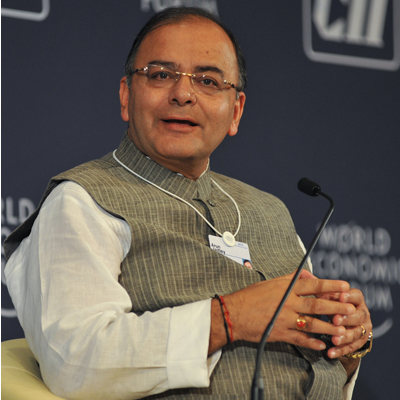
    NEW DELHI: Information and Broadcasting Minister Arun Jaitley has said that the future belonged to digital media due to its reach, scale, variety and accessibility as technology influenced change in the communication landscape.


    The technological thrust also impacted the nature of information dissemination in view of changes taking place globally across platforms. These rapid changes had led to a convergence of technological touch points in the media space, impacting the nature and flow of information dissemination.

     
    Jaitley said the nature and character of news dissemination had undergone change due to the challenges thrown by 24×7 television consistently. The camera today had become the prime mover for defining content and setting the agenda, thereby impacting the flow of news.


    The remarks were made while inaugurating the workshop on ‘Streamlining Government Communication’ organised by Press Information Bureau under the aegis of the Ministry here.


    On the relevance and importance of government communication in the changed communication paradigm, Jaitley said the environment today offered a tremendous opportunity to stakeholders within the government to disseminate credible, factual, relevant and reader friendly information. A large constituency even today existed which required authentic and credible information from the government. The Minister called upon the participants to package data, facts and information keeping in mind contemporary tools and trends, media requirements and content for opinion makers and analysts in the media space.


    Regarding the packaging of Government information, the Minister emphasized that Government Departments needed to optimally utilize their websites to place accurate and credible information. The website platforms were an important medium to address concerns of stakeholders who required information related to the policies and initiatives of the Government. The content of the website needed to be in a language which was easy to read and understand. Each Ministry also needed to cultivate the mechanism of reaching out to those stakeholders who constituted the wider assembly of people including representatives of the people/civil society, etc.


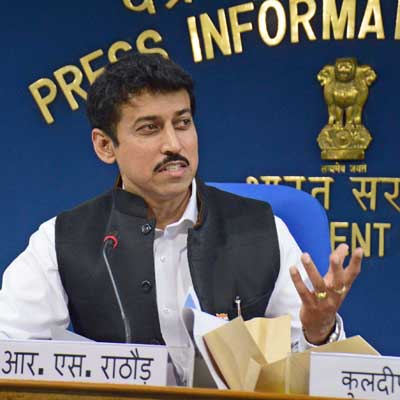
    Jaitley also referred to the need to utilize different tools available in the social media space i.e. Twitter, Blog, Facebook to enhance the reach of Government communication. During the course of the address, the Minister also mentioned that the media needed to take a comprehensive view of the decision making process while highlighting the decisions taken by the Government. In his remarks to the participants, Minister of State Rajyavardhan Singh Rathore said the current communication perspective was driven by speed, accuracy, brevity and clarity of thought. It was imperative to utilize new tools of communication for enhancing outreach to a wide range of stakeholders. Perception management had also become a critical tool in the communication paradigm and needed to be addressed in totality.


    In his opening remarks, I&B secretary Bimal Julka gave an overview of the efforts being made by the Ministry of I&B to position the communication approaches of the Government. Julka outlined the key initiatives undertaken by the Ministry to address the new challenges in the context of adopting a 360 degree approach, integrated media planning and initiatives undertaken in the social media space. Julka also outlined the specific initiatives undertaken for Swachh Bharat Mission, Beti Bachao, Beti Padhao and PM’s Jan Dhan Yojana along with efforts of the Ministry in addressing the crisis situation. Emphasizing the need of integrating the IEC component within proposals for consideration/approval, secretary called upon the participants to formulate the Cabinet proposals wherein the IEC component was an inbuilt part of the said proposal. This would enhance the communication efforts and address the budgetary requirements.


    In his welcome address, PIB director general (Media and Communications) Frank Noronha referred to the critical role being played by PIB in view of the paradigm shift in the media space and the needs and requirement of stakeholders. He also highlighted the need for synergy among various Ministries/Departments for better outreach of Government policies/programmes.


    The one day Workshop discussed various perspectives/issues on Changing Media Scenario viz Emergences of Social Media, Communication of Financial Policy of the Government to Regional Media’, and ‘PMO Perspectives on Media Communication among others through Technical Sessions, Panel Discussions, Open-house Discussions, Question & Answer Sessions, etc. The Workshop is being attended by officers of the level of Joint Secretary and above along with Private Secretaries to Ministers from various Ministries and Departments. The Workshop aims to integrate the enhanced role of Government communication through various media platforms.  


    Cabinet Secretary Ajit Seth said in the new communication environment, there was a need to integrate and synergise government efforts in a professional and calibrated manner. This was critical in view of the change in the mode, nature and content of communication. The need of the hour was to device modalities to deliver services and access to information. This would enable the government to engage with citizens and receive feedback. Ministries and departments need to be geared up to address the challenges of information dissemination especially in the social media space. There was a need to put in place strategies to utilise social media as a tool to interact with the people.


    Seth added that in the recent past, efforts had been made to mainstream communication in addressing disaster and emergency situations as there is a dearth of information in such situations. The challenge was also in view of the different communication requirements of concerned stakeholders and recipients. The officers of Press Information Bureau need to be empowered and given timely information.


    Elaborating, the Cabinet Secretary mentioned that in view of the recent initiatives of the government such as “Digital India”, the crowdsourcing method had been adopted. This in turn reiterated the need to have a strategy for addressing issues in totality. In view of the framework adopted for the current workshop, states should be encouraged to organise such workshops on a similar pattern.


    Inviting suggestions for the forthcoming Civil Services Day on how to equip civil servants professionally in order to discharge their responsibilities better, he mentioned that one of the areas for discussions could be enhancing the ability of civil servants to communicate.

  • CBFC mulling online methods to expedite film certification process: Nihalani

    CBFC mulling online methods to expedite film certification process: Nihalani

    NEW DELHI: Even as the Central Board of Film Certification (CBFC) is facing flak on social media for asking singer Mihir Joshi to beep the word ‘Bombay’ from the lyrics of one of his songs from the album ‘Mumbai Blues;’ the newly appointed chairman of the Board – Pahlaj Nihalani is clear on his stance as far as certification goes. 


    Speaking to Indiantelevision.com, Nihalani said that one of the major tasks that he faced before him was to ensure speedy clearances of films submitted to the Board. “We will be looking at using more online methods to expedite this process with the least interference in the work of the film’s producer. The process will include introduction of an online ‘tatkal’ system to expedite the process of clearing films. The online system will be adapted to ensure that the board functions in a completely transparent manner and films can get certificates without much hassles,” he said. 


    What’s more, Nihalani, who has been appointed in an honorary capacity for three years from 18 January, also said that he would tender his resignation if he was unable to enforce the censorship guidelines while certifying films. “The guidelines don’t permit the use of vulgar or abusive language that I have seen in many films and it will be my attempt to stop the use of such language,” he stressed.


    He went on to add that while people on the CBFC changed and the society as a whole was assuming a different profile with a greater population of younger people, Indian cultural values remained as strong as ever and would continue to guide him. 


    He urged filmmakers to use their freedom of expression, but “do not rape free expression.”


    Nihalani said that while trailers of adult films were not being shown on television channels, he was conscious of trailers of films certified with U/A certificates being shown even during day time.


    “It is unfortunate that YouTube and other media are also being used for showing films, since it makes it easier for filmmakers to use filthy language. Stars on live shows on television are using abusive language but this is a matter that should be dealt with by the Inter-Ministerial Committee of the Information and Broadcasting Ministry,” he said.


    A matter that concerns Nihalani is that both social media channels and television channels were being seen by people of all ages.  

    Nihalani is also of the opinion that there was urgent need to amend the Cinematograph Act in view of the newer forms of screens coming up. “Although an amendment was contemplated by the previous government and put on the website, there may be need for greater change in view of fast advancements of technology,” he said.


    In India, there have been cases galore when political or social bodies turn vandals and take to the streets opposing certain films that were already certified by the CBFC. Nihalani stressed that as per the Courts, “there should be no interference once a film has been cleared by the Board.”


    When queried about the suggestion by actor and former chairperson Anupam Kher to permit adult films in late night hours on TV, Nihalani said, “This is a matter of policy relating to TV channels and it does not fall in the ambit of the CBFC.”


    According to him, certain suggestions were being formulated, which will then be sent to the government.


    Speaking about his priorities as the new CBFC chief, Nihalani said, “We need to request the Centre to implement the recommendations of the Justice Mudgal committee, which was set up in 2013 after the government felt the need to update the Cinematograph Act, 1952, in the wake of a controversy over the release of the Kamal Hasan starrer Vishwaroopam.”


    Along with Nihalani, nine other members were appointed to the Board recently in the wake of the erstwhile chief Leela Samson resigning. The new members are Mihir Bhuta, Prof. Syed Abdul Bari, Ramesh Patange, George Baker, Chandra Prakash Dwivedi, Jeevitha, Vani Tripathi Tikoo, S Ve Shekhar and Ashoke Pandit. Nihalani said that the Ministry was also working towards filling vacancies in the Board.


    Referring to the ‘mass resignations’ by Samson and other members, he said that their term had in any case ended several months earlier and they were continuing on extension pending new appointments.


    Nihalani is a Hindi film producer since the 1980s, who produced his first film Hathkadi in 1982, starring Sanjeev Kumar, Shatrughan Sinha and Reena Roy. His last film titled Khushboo released in 2008. He was also the President of Association of Motion Pictures and TV Programs Producers for 29 years until 2009.


    Claiming that he had made 24 films of which none had faced any censor problems, Nihalani said that he had taken a break from film-making in recent years. However, one of the films he is currently making is under production, while two others were in the planning stage.
  • Indian films are carriers of culture across the world: Rajyavardhan Rathore

    Indian films are carriers of culture across the world: Rajyavardhan Rathore

    NEW DELHI: Minister of State for Information and Broadcasting Rajyavardhan Rathore said that the Ministry was keen on organising Indian Film festivals all over the world as films are carriers of culture, tradition and values.


    Indian films have been a soft medium to reach out to a global audience. More film festivals would be organised in the future and at the same time, there would be enhanced participation in the Film festivals abroad. 


    Inaugurating the Indian Panaroma film festival and the renovated facilities at the Siri Fort auditorium complex in Delhi, he claimed that the upgraded projection and sound facilities at Siri Fort Auditorium had positioned the venue amongst the top 50 auditoriums within the country that screened films for public viewing.


    Organised by Directorate of Film Festivals, Ministry of Information and Broadcasting, the festival would screen 26 Feature Films and 15 Non-Feature Films. The Opening Film of the Festival was Gour Hari Dastaan – The Freedom File directed by Ananth Narayan Mahadevan. The eight day festival would showcase all the films selected in the Indian Panorama section as part of the 45th International Film Festival of India, IFFI 2014. The Director of the opening film and lead actor Vinay Pathak were present on the occasion.


    The renovated infrastructure reiterated the vision of the Ministry to establish world class viewing facilities for screening films that incorporated technical brilliance in totality. The Siri Fort auditorium had set high standards which were normally found in the corporate domain. The digital projection and Dolby sound system would enable cinema lovers to enjoy a memorable viewing of movies.


    He said the films representing the Indian Panaroma section had a profound impact on the different International Film Festivals abroad. The effort would now focus on mainstreaming the impact of Indian Culture through the medium of Cinema.


    I&B secretary Bimal Julka said the Indian Panaroma showcased high quality films abroad. The Panaroma section reiterated the power of Indian regional cinema. Films were the appropriate medium to celebrate India’s unity and diversity. The renovated facilities at Siri Fort had been done keeping in mind the needs of good viewing for cinema lovers. 


    The Siri Fort Auditorium has lately gone through a complete make-over with state-of-the-art equipments being installed in the complex. In the Plan Scheme 2013-2017, Ministry of Information & Broadcasting has made these efforts to modernize the Projection and Sound System of all the Four Auditoriums here. In Audi-1 & 2, high-end Digital Cinema Projectors of 4K resolution have been installed, while other two small auditoriums (AUDI 3 & 4) now have the latest Digital Cinema Projectors of 2K resolution. Besides projection system, Cinema sound and PA systems have also been upgraded. The Ministry has spent nearly Rs five crore to make this prestigious Auditorium Complex of International standards. 


    Audi-2 is now equipped with the best digital cinema projection technology along with Silver Screen, 3-D Projection System and Dolby Atmos Sound System. Dolby Atmos is considered to be the best sound effects presently available in the globe and only a few theatres in India have this sound system. Besides, Siri Fort Complex has preserved the traditional 35 mm and 16 mm analogue projection to enjoy the old classics of Indian Cinema which are available in analogue format only. It makes the Complex equipped to project films in both digital and analogue formats.Besides technical upgradation, the security arrangements, auditorium roofs and sanitary fittings have also gone through re-modulling. Aesthetical upgradation of Auditorium –II has been done by providing new chairs, carpet and projection friendly look. 

  • TDSAT directs Taj TV to give signals to Fastway Transmission in Karnal

    TDSAT directs Taj TV to give signals to Fastway Transmission in Karnal

    NEW DELHI: The Telecom Disputes Settlement and Appellate Tribunal (TDSAT) has directed Taj Television – the distribution arm of Zee Entertainment Enterprises Limited (ZEEL) – to provide its signals to multi-system operator (MSO) Fastway Transmission in Karnal in Haryana as an interim measure.


    The Tribunal has said that the final order will be passed post the resolution of a pending dispute where another New Delhi based MSO – Indiverse Broadband has claimed that both Siti Cable and Fastway are indulging in piracy and taking away its subscribers.


    It said the interim order was being given “having regard to the fact that due to non-supply of the signals, Fastway may be losing the market on a daily basis.”


    Even as it appointed Mansoor Ali Shoket as the advocate-commissioner to record the submissions of all the parties, the Tribunal said that Fastway will pay a monthly sum of Rs 17 lakh to the Tribunal and the first month’s fee will have to be deposited in the Tribunal by 3 February.  


    TDSAT chairman Aftab Alam and member Kuldip Singh said, “The supply of signals by virtue of this direction shall not create any equity in favour of Fastway. It is further directed that while enlisting any LCOs or subscribers, Fastway should bear in mind that in case its petitions are finally dismissed, the supply of signals by Taj Television may come to a sudden end without any notice. It is further made clear that as a result of disconnection of the supply of signals, Fastway alone will be responsible for any monetary claims raised by any LCO or subscriber or any civil or criminal liability.”


    The order further said, “Even while the Tribunal proceeds to consider the rival cases of the parties on their merits, it is made clear that the pendency of the petitions before the Tribunal shall not, in any manner, come in the way of any other authority or court having jurisdiction to proceed in the matter.”


    The Tribunal said the cases will be listed on 2 February for framing of issues. On that day, the counsel for all the parties shall jointly submit an agreed list of issues. In case there are issues on which there is no agreement between the parties, the decision will be taken by the Tribunal. All the three sides shall file their respective evidence affidavits by 10 February.


    Fastway shall then produce its witnesses for cross-examination before Shoket – appointed by mutual consent – on 12 February. After cross-examination of Fastway’s witnesses, cross-examination of the Indiverse witnesses will take place following which the cross-examination of Taj Television witnesses will take place. The Advocate-Commissioner and all sides shall ensure that cross-examination of all the witnesses is over by 5 March.


    Shoket will be paid honorarium at the rate of Rs 7,500 per day. The payment for the days on which the cross-examination of any party takes place, will be made by that party. The three cases will be listed for hearing on 19 March.


    The Tribunal noted that in these cases, “We are faced with the issue of piracy of TV channels, that is to say, in case it is established that an MSO is engaged in unauthorised transmission of channels on a large scale and in an organised manner over a long period of time, what would be its liability and what would be the remedies available to the broadcaster whose channels are re-transmitted without legal sanction.” 


    Even though clause 3.2 of the Interconnect Regulations 2004 expressly mentions “default in payment” as the ground for denial of signals, “the question that needs to be examined is whether an MSO indulging in organized large scale piracy over a long period of time would still be entitled to claim the supply of signals as of rights in terms of the Regulations. The ancillary question is what remedies are available to the broadcaster and the other MSOs suffering losses on account of the piracy,” the Tribunal noted.


    Fastway Transmissions had come to the Tribunal seeking a direction to Taj Television, to give its channels for re-transmission in Karnal. Earlier, Indiverse had filed its petition seeking a direction to Taj Television to agree to a substantial reduction in its subscriber base on the plea that the unauthorised entry of Fastway and another MSO, Siti Cable in Karnal, has greatly eroded its subscriber base.


    Taj Television resisted the demands of its channels by Fastway primarily on the allegation that the latter is engaged in rampant piracy of its signals in the area of Karnal. Indiverse also makes the same allegation and states that even though it held dominant position as an MSO in Karnal, as a result of unauthorised entry of Fastway and Siti Cable, another MSO there, and the rampant piracy by them, it is reduced to a state where 90 – 95 per cent of its network is taken over by the two MSOs.

  • Broadband continues upward spiral as narrowband declines in June-Sept 2014

    Broadband continues upward spiral as narrowband declines in June-Sept 2014

    NEW DELHI: The number of narrowband Internet subscribers declined from 190.31 million at the end of June 2014 to 178.67 million at the end of September 2014, showing a quarterly decline of 6.12 per cent.


    However, the quarterly report of the Telecom Regulatory Authority of India (TRAI) ending September 2014 shows the number of Broadband Internet subscribers increased from 68.83 million at the end of June to 75.73 million at the end of September with a quarterly growth of 10.03 per cent.


    The report says as at the end of September 2014, there were a total of 187 pay channels as reported by broadcasters for which the wholesale channels rates have been taken on record. During the quarter ending September 2014, the rate of Raj Music Kannada channel was taken on records.


    In non CAS areas, the maximum number of television channels being carried by any reporting multi-system operator was 400, whereas the maximum number of channels being carried by any reporting MSO was 100 in conventional analogue form.


    Apart from All India Radio, there were 243 private FM radio stations in operation at the quarter ending September 2014, according to information supplied to TRAI by the Information and Broadcasting Ministry.


    Apart from the free DTH service of Doordarshan, Freedish, there are six private DTH operators. All the six private DTH operators are offering pay DTH services.


    The total numbers of registered and active subscribers being served by these six private DTH operators as reported to TRAI were 70.33 million and 39.13 million respectively as on 30 September 2014.

  • TDSAT asks Star India to not disconnect signals to Siti Cable for Mumbai

    TDSAT asks Star India to not disconnect signals to Siti Cable for Mumbai

    NEW DELHI: The Telecom Disputes Settlement and Arbitration Tribunal (TDSAT) has directed broadcaster Star India to cancel its disconnection notice to Siti Cable Network after the multi-system operator (MSO) handed over a cheque of Rs 10 crore for settlement of the payment dispute pending mutual negotiations. 


    TDSAT chairman Aftab Alam said, “We hope and trust that the two sides will be able to resolve their disputes through negotiations; in case any issues survive, those will be adjudicated by the Tribunal.” 


    The matter, if not resolved, will be listed for 5 February. Star India has been given two weeks to reply to the petition. 


    Star India had claimed that Siti Cable was in arrears of Rs 26 crore, which was disputed by the MSO. However, the MSO did admit there were some arrears. 


    Counsel Meet Malhotra for Siti Cable said his client would submit within two days the information required by Star India on its indicating “on an email to the petitioner, the materials, including the SMS reports that it wishes from the petitioner.”


    Star India counsel Salman Khurshid had also alleged that Siti Cable was indulging in piracy in as much as it is taking its signals outside the area covered by the interconnect agreement. Malhotra did not deny the fact that his client was retransmitting the signals to certain suburbs of Mumbai, which fall outside the area of the agreement but submitted that the petitioner had duly informed the respondent on the very day it started retransmitting the signals outside Mumbai and in any event, all the subscribers viewing the respondent’s channels whether within the area of the agreement or outside the area of agreement, will be recorded in its SMS and will be duly reflected in the SMS reports.

  • Prakash Magdum takes over as director of NFAI, Pune

    Prakash Magdum takes over as director of NFAI, Pune

    NEW DELHI: Indian Information Service officer Prakash B Magdum has been made the new director of the National Film Archives of India (NFAI). He belongs to the 1997 batch.


    IIS officer D Murali Mohan, who is currently director (News) in the regional news unit in Guwahati has been asked to hold additional charge of the post of director in the Directorate of Field Publicity in Guwahati vacated by Magdum. However, he will not get any extra remuneration for this.


    Alpana Pant Sharma, who is director of media and communications in Press Information Bureau in Pune stands relieved of the additional charge of NFAI, which she was holding for the past few months.