Category: Regulators

  • SC adjourns Doordarshan’s telecast of WC 2015 case to 19 Feb

    SC adjourns Doordarshan’s telecast of WC 2015 case to 19 Feb

    NEW DELHI: Prasar Bharati was asked today by the Supreme Court to examine the feasibility of starting a new Doordarshan channel exclusively to telecast 2015 World Cup cricket matches without the compulsion of the must-carry clause.


    The bench sought this view on a suggestion made by Star and ESPN who had won a case in Delhi High Court to the effect that Doordarshan should not share the World Cup Cricket telecasts with cable operators.


    During the hearing of the appeal by Prasar Bharati which was adjourned to 19 February, Justice Ranjan Gogoi and Justice Pinaki Chandra Ghose asked Prasar Bharati to examine the technical feasibility and otherwise of starting a new channel, subscription of which could be regulated for the cable operators.


    The Court meanwhile extended the interim order allowing DD to telecast all matches till the next hearing.


    The bench also asked Star, ESPN and the Board of Control of Cricket in India (BCCI) to give an estimate of losses they were likely to suffer in case DD was permitted to beam matches after sharing live feeds with cable operators.


    During the hearing, the bench observed that it wanted people to enjoy cricket matches without any hurdles and that the revenue dispute should be resolved amicably between the parties.


    The Court also accepted an intervention by multi-system operator Home Cable through Vikki Choudhary and asked him to file an additional affidavit on the formula suggested by ESPN and Star Sports.


    While admitting the case last week, the Apex Court had said in its interim order: “This arrangement of DD showing free feed has been there for the last seven years. Let it continue.” 


    In its judgment, the High Court had refused to strike down the must carry clause of 2000 under which cable operators have to carry signals of Doordarshan, and also the Sports Broadcasting Signals (Mandatory Sharing with Prasar Bharati) Act 2007.


    A bench of Justices Badar Durrez Ahmed and Sanjeev Sachdeva passed the order on the plea of BCCI, ESPN and Star who had contended that cable TV operators were getting live feeds through DD channels free of cost, resulting in loss of revenue for them.

  • Rathore promises inquiry into AIR re-tweets on Indo-Pak match

    Rathore promises inquiry into AIR re-tweets on Indo-Pak match

    NEW DELHI: Minister of State for Information and Broadcasting Rajyavardhan Singh Rathore has promised to look into the case of All India Radio’s (AIR) Twitter handle on Sunday re-tweeting obnoxious anti-Pakistan tweets by some of its followers after India beat Pakistan in their opening World Cup cricket match.


    In its response, the Twitter handle of News Service division of AIR has denied there was anything obnoxious in its re-tweets but said it is open to any inquiry.  


    AIR invited tweets wishing team India the best when the India-Pakistan World Cup match was under way in the Adelaide Oval on Sunday afternoon.


    “Give your best wishes to #TeamIndia for #CricketWorldCup using #WCFirSe. Best will get re-tweet from us,” said a tweet.


    “This is within the scope of Prasar Bharati. Whoever is handling the Twitter account must have done it in excitement. People tend to get excited, but a certain grace must be maintained,” Rathore said.


    “India’s explosive win over Pakistan at #AdelaideOval. Hindustan decides Pakistan’s #GharWapsi #WCFirSe,” a tweet originally in Hindi, which was re-tweeted by the AIR News’ verified account @airnewsalerts read. The handle is the “Official account of News Services Division, All India Radio.” 

  • MPs push for fresh guidelines to promote India as film destination

    MPs push for fresh guidelines to promote India as film destination

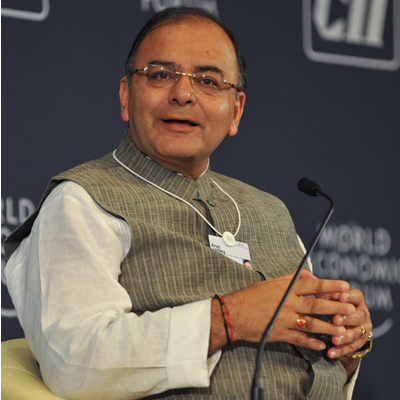
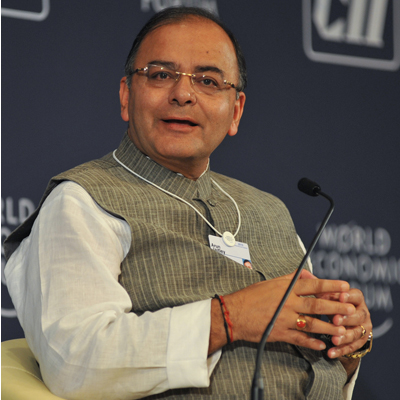
    NEW DELHI: Information and Broadcasting Ministry (I&B) Arun Jaitley said that all efforts need to be taken to give the concept of India as a film destination a strong ‘Brand Push’ to promote India as a soft power.


    The branding could be undertaken by creating and promoting a capsule that incorporated the key features of India’s professional ability, that is skills, human resources, diverse locales, filming support from institutional structures and core strengths of India’s film industry. This capsule needed to be showcased at all major international film festivals as part of the efforts to promote the ‘filming destination concept.’


    The Minister was chairing a meeting of the Consultative Committee of Members of Parliament attached to the I&B Ministry to discuss the issue of “India as a soft power – As a Filming Destination.” Minister of State Rajyavardhan Singh Rathore was also present in the meeting.


    Jaitley said the topic for discussion was extremely important in view of the efforts being made to project India’s ability and standing as a soft power and a filming destination. The concept would not only facilitate the contours of growth of the film industry but would also promote the diversity of India to the world through the medium of films and cinema. This initiative and proactive stance would boost the inflow of tourism in India from other countries. Jaitely also emphasized that there was a need to simplify procedures and rules in order to promote the idea in letter and spirit.


    A presentation was made on behalf of the Ministry giving an overview of the steps and initiatives undertaken so far to promote India as a soft power. The presentation provided an overview of the processes involved to promote filming in India with reference to the multi pronged strategy adopted by the Ministry. Specific references were made to promotion to film festivals and film bazaars, co-production units, the proposed legislative framework and policy initiatives to promote skill development in the film industry.


    Members of the Committee gave suggestions to ensure that the concerns of the stakeholders were addressed and the idea was implemented in totality. It was emphasized that skill development was a critical area and necessary measures needed to be taken by the Government and the industry together.


    It was also suggested that rules and guidelines for promoting the destination concept required a relook. Laws and rules needed to be in sync with contemporary technological tools. It was also mentioned that the concept required collaboration and partnership between the ministry and the state governments and other stakeholders.

  • Subscription rates in DAS phase III & IV expected to be half of that in first two phases

    Subscription rates in DAS phase III & IV expected to be half of that in first two phases

    NEW DELHI: The subscription revenue from phase III and IV areas of Digital Addressable System (DAS) is expected to be between 20 to 30 per cent as compared to 70 to 80 per cent from phase I and phase II areas.


    Therefore, channel pricing in phase I and II areas need to be decided for areas under phase III and phase IV so that multi-system operators can plan operation in these areas.


    This was stated during the fifth Task Force meeting on phase III and IV held recently under the chairmanship of Information and Broadcasting Ministry additional secretary J S Mathur and attended among others by DAS adviser Yogendra Pal.


    Pal informed the meeting that while the centre had sought from all states and union territories (UT) the district wise data of urban areas to be covered in phase III with number of households, only Chhatisgarh and Uttar Pradesh had responded.


    Similarly, only around 15 states and UTs had responded to the query about nodal officers, both at State level and district level.


    Only Gujarat had responded to the query about nomination of one LCO association from each State and UT for the LCO sub-group.


    The states of Maharashtra and Andhra Pradesh are still to respond to the query about nomination of a local cable operator association to the Task Force.


    Mathur directed that copies of the letters written to State Governments in this regard may be provided to the nodal officers present in the meeting to expedite the pending nominations/data.


    Referring to procurement plans and stock of Set Top Boxes (STB) requirements of phase III, the MSOs said they had limited inventory of STBs. Procurement of STBs is taking place according to earlier orders and no new orders have been placed by the national MSOs either with foreign suppliers or indigenous STB companies.


    The MSOs stated that they are making arrangements for finances for procurement of STBs for phase III. The position with regard to availability of funds would be clear by the end of February.


    At the outset, Mathur said digitisation in phase I and II has been possible due to active cooperation and support of State Governments.


    A Representative of Consumer Electronics and Appliances Manufacturers Association stated that they had called a meeting with MSOs in December 2014 but the response was not good. None of the major MSOs attended this meeting. He mentioned that indigenous STB manufacturers are ready to discuss all issues with MSOs anywhere and anytime.


    Mathur advised the MSOs to have a meeting with indigenous STB manufacturers to sort out all the issues. He said the Ministry was also planning to hold a meeting with the Small Industries Development Bank of India (SIDBI) on the demand of long-term financing.


    When MSOs raised the difficulty of signing agreements with broadcasters, a representative of the Telecom Regulatory Authority of India (TRAI) stated that broadcasters cannot deny signal to MSOs once they are DAS compliant. He suggested MSOs should make a formal written request to the broadcasters for the signal according to the regulations. He added that broadcasters should enter into agreements with MSOs for distribution of content without waiting for the cutoff date.


    A representative of a consumer forum stated that computerized billing was not happening in phase I and II areas. He added that CAF forms should be filled before installation of an STB.


    For publicising the extension in date for applying for MSO registration for operation in phase III areas, it was suggested that broadcasters run a scroll on their channels. It was also suggested that MSOs download a video spot made by the Ministry and play it on their local channels.


    The MSO representatives were told to share the data of existing MSOs operating in analogue regime with the Ministry. The representative of ASSOCHAM wanted that the broadcasters should be apprised for the same.


    Regarding publicity campaign, Joint Secretary (Broadcasting) R Jaya said all stakeholders must contribute in spreading awareness about ongoing digitisation in the country. She suggested MSOs should run audio visual ads on their local channels. She also suggested spreading awareness through handbill or printed ads on monthly bills issued by LCOs to the consumers. She called upon broadcasters to plan publicity campaign on their channels.


    FICCI, Cll and ASSOCHAM were asked to draw up a plan for workshops for public awareness campaign.


    Mathur re-emphasized the need to mount an awareness campaign by all stakeholders particularly the broadcasters. He also asked all the MSOs to begin discussions with indigenous STB manufacturers to meet the deadlines of phase III of December 2015 and phase IV of December 2016.
  • IBF asked to file affidavit in Kantar case; matter put off to 12 May

    IBF asked to file affidavit in Kantar case; matter put off to 12 May

    NEW DELHI: The Indian Broadcasting Foundation (IBF) was today formally impleaded in the Kantar case in Delhi High Court and asked to file its affidavit in the matter.


    Thereafter, Kantar Market Research will file its rejoinder and the matter has been fixed by Justice Rajiv Shakder to 12 May.


    The case had been filed by Kantar Market Research challenging the Policy Guidelines for Television Rating Agencies in India, and in particular on the clause relating to cross-media ownership. The matter had come up last in September 2014.


    Meanwhile, the interim order on the case will continue that will allow Kantar’s subsidiary TAM Media Research to publish ratings till the verdict on the case is out.


    Although TAM and Broadcast Audience Research Council (BARC) were the only two applicants under the guidelines as of December 2013, TAM has still not received any response from the Information and Broadcasting Ministry on its application.


    The News Broadcasters Association (NBA) has been impleaded early in the case in favour of the guidelines.


    While declining to stay the Guidelines in February last year, Justice Manmohan had stayed sections 16.1 and 16.2 of the Guidelines, thus giving freedom to TAM to offer ratings to its clients.


    The sections relating to cross-holding, which state that the same company cannot hold shares in both TRP companies and the media are 1.7a and 1.7d.


    Kantar had argued that any action relating to Fundamental Rights had to be done through an act of Parliament and not by an executive order. Any attempt to regulate television rating agencies was tantamount to interfering with the freedom of speech and expression under Article 19(1)(a), it had argued. 

  • SK Gupta moved to broadcasting in TRAI, N Parameswaran to look after network services

    SK Gupta moved to broadcasting in TRAI, N Parameswaran to look after network services

    NEW DELHI: S K Gupta, who was until now looking after broadband issues in the Telecom Regulatory Authority of India (TRAI), has been made the Principal Advisor in charge of Broadcasting issues.


    He thus takes the place of N Parameswaran, who will now be looking after network services and licensing as Principal Advisor.


    Telecom Ministry sources confirmed that the term of Parameswaran in TRAI is to expire later this year. He has been in the telecom sector since January 1980. He played a key role in the liberalisation of the telecom sector in India. He was the first executive director of the Information & Communication Technologies Authority, Mauritius, wherein he set up the Authority and facilitated the liberalisation of the ICT sector. He has held various positions in Department of Telecom and MTNL.  He joined TRAI in 2007 and was looking after broadcasting since 2009.


    The term of TRAI chairman Rahul Khullar is also expiring in May this year. A 1975 batch IAS officer of Delhi cadre, Khullar succeeded J. S. Sarma in May 2012 for a three-year term. 

  • Fresh attempt underway to study convergence of communications & broadcasting

    Fresh attempt underway to study convergence of communications & broadcasting

    NEW DELHI: More than a decade after the then Union government, headed by Atal Bihari Vajpayee, failed to agree on a Convergence Commission of India, a new attempt is being finalized to establish a single regulatory framework for communications, IT and broadcasting sectors.


    The Department of Telecom is likely to make a presentation on the proposed Communications Convergence Bill to the Prime Minister’s Office on 15 February.


    A Group of Ministers headed by then Finance Minister Yashwant Singh had held several meetings on the possibility of a Convergence Commission of India but failed to reach consensus. Members included Arun Jaitley (then Law Minister), the late Pramod Mahajan (then Telecom and IT Minister) and Sushma Swaraj (then Information and Broadcasting Minister). A draft had in fact been prepared in 2000 but it was then learnt to have been shelved because of differences between the then Telecom and I&B Ministers.


    According to Department of Telecom sources, the presentation being prepared by it will be made before Principal Secretary Nripendra Misra on 15 February and those expected to be present will include Telecom Secretary Rakesh Garg, Telecom Regulatory Authority of India chairman Rahul Khullar, and I&B secretary Bimal Julka.


    The new Bill proposes a super regulator – Communications Commission – with defined powers, procedures and functions for regulatory and licensing functions, and an Appellate Tribunal.


    The aim is to replace all old and redundant legislations, which include the Telegraph Act of 1885, as well as Indian Wireless Telegraphy Act 1933, Cable TV Networks (Regulation) Act 1995, and IT Act 2000.


    The super regulator is proposed to be a six-member body with a chairman who will have a five-year tenure. Members will include one each from sectors like telecom, broadcasting, finance, management, accountancy and either law or consumer affairs.

  • Centre’s opinion sought on YouTube uploads; notice issued on AIB case

    Centre’s opinion sought on YouTube uploads; notice issued on AIB case

    NEW DELHI: The Bombay High Court has asked the Information and Broadcasting Ministry’s opinion on the screening mechanism of YouTube uploads.


    This followed a public interest litigation (PIL) against the AIB Roast programme by law professor Sharmila Ghuge, who sought guidelines for a screening mechanism to keep a check on obscene and vulgar videos uploaded on YouTube.


    AIB (All India Bakchod) filed an intervention application in the matter. “We oppose this petition. It was a humorous show for a private audience. None of the private audience found it offensive. The language was excessive, but within the bounds of humour,” AIB’s senior counsel Mahesh Jethmalani told the division bench of Justices V.M. Kanade and Revati Mohite Dere.


    The court admitted the intervention plea. AIB will file a reply, if any, to the petition within the next two weeks. The Union of India too has been directed to file its opinion within two weeks. The court will hear the matter next on 3 March.


    Along with the PIL, the petitioner also submitted a copy of the CD about the programme, which was conducted in Mumbai in December last year. Its videos were uploaded on YouTube later. The petitioner also transcribed the excerpts of the show, and told the court that the content was objectionable.


    When the court said that only those who are defamed can file a defamation suit, Ghuge’s advocate Shyam Dewane said, “This (programme) has crossed the limits of morality. The language used is such that it crosses the limit of decency. It is obscene to the core, and it particularly affects the minds of the youths.”


    In the PIL, Ghuge said, “Whereas, the film stars have made a deliberate attempt to lower the dignity of women by showing their insensitive attitude towards the most heinous crime of rape by passing several jokes on rape and gang rape enjoying the flavour of humour for the most unfortunate act any women can ever face in her life. Not only this, cracking jokes on gays, race, rape, ebola and making homophobic jokes is an absolute insult to not only to women but all the individuals.”


    She has said such remarks will adversely affect the youth of the country. “That such a rapid augmentation of audience to this video is unquestionably aiming to adversely affect the youth of this nation. Particularly the sway and influence of these film stars is beyond imagination on the youth. These celebrities are youth icons and the young generation blindly follows them which indeed is misleading and disgraceful for the nation in such incidences.”


    Dewane said there was need for a mechanism to filter out vulgar and obscene videos from YouTube. The court thereafter sought Union government’s say on the matter.


    “That the video of the AIB show, which has been uploaded on 28 January, 2015 has not been verified by any of the authorities, whether the content of the video is suitable to be thrown open to public at large. The said video has been uploaded by the organisers of the AIB show as evident from the titles of the video. Neither the organisers nor the respondents felt the need and importance of verifying the content before putting the video on air, which needless to state has gone viral amongst people, more particularly youths,” the PIL has stated. 

  • Arun Jaitley bats for making printed material available in digital medium

    Arun Jaitley bats for making printed material available in digital medium

    NEW DELHI: Information and Broadcasting Minister Arun Jaitley today stressed that books and other knowledge products presently in printed format ought to be made available through digital medium in view of the shift in technology paradigms.


    The new digital medium would provide enhanced accessibility and affordability of information to a wider audience.


    The publication India 2015 brought out by Publications Division and New Media Wing reflected a great tradition of authentic and updated information on different aspects of India’s development.


    Jaitley said the digital version of ‘The Making of the Constitution of India’ documentary was a fine instance of utilizing the digital media for archival and preservation of knowledge traditionally held in printed form. Digitization of printed books having valuable information on India’s development would be useful reference material for the youth and to the audience worldwide.


    Despite multiple platforms, the relevance of the traditional formats still existed as in the case of India/Bharat 2015 Reference Annual.


    As a rich repository of relevant information, India/Bharat 2015 Reference Annual would be a good addition to all the libraries, the Minister added. Minister of State Rajyavardhan Rathore was also present on the occasion. 


    Speaking earlier, I&B secretary Bimal Julka said the unique feature of this year’s Reference Annual was the addition of a special chapter on flagship programmes of the Government such as Swachh Bharat Mission, Make in India and Pradhan Mantri Jan Dhan Yojana. A diary of national events have also been added this year.


    To ensure mobility and easy accessibility, the e-version of the Reference Annual would be made available in the next year. Digitizing, archiving, and preserving rich knowledge content available in print format would be given priority. 


    India/Bharat – 2015 holds place of pride among the annual publications of this genre as being an exhaustive and authentic repository of information about the activities, progress and achievements of various ministries and departments of Government of India during the year. The publication deals with all aspects of developments from rural to urban, industry to infrastructure, science and technology, art and culture, polity, economy, health, defence, education and mass communication.


    The 59th year of publication of Reference Annual has seen an increase in its print order to 11,5000 copies this year up from 37,000 copies in 2007.

  • ‘Mann Ki Baat’ expected to centre around students’ exams; Modi invites suggestions

    ‘Mann Ki Baat’ expected to centre around students’ exams; Modi invites suggestions

    NEW DELHI: Prime Minister Narendra Modi has invited suggestions and inputs for Mann Ki Baat that will be broadcast on All India Radio (AIR) in February 2015. 


    “Was thinking about this month’s radio programme and thought… why not share Mann Ki Baat with students preparing for board and competitive exams. I urge students, parents and teachers to share exam experiences that would inspire youngsters and even motivate them in exam preparation,” Modi said. 


    He added, “Like always, I will share some of your thoughts, inputs and anecdotes during the programme. Do share them here. http://mygov.in/groupissue/inputs-for-mann-ki-baat-february-2015/show.


    AIR sources said the monthly broadcast was expected to be broadcast either in the third week or the last week of this month.