Category: Regulators

  • TRAI suggests interoperability methods for DTH consumers; issues draft tariff order

    TRAI suggests interoperability methods for DTH consumers; issues draft tariff order

    NEW DELHI: The Telecom Regulatory Authority of India (TRAI) has issued a draft Tariff Order (TO) for consultation with stakeholders prescribing a framework for commercial interoperability of Customer Premises Equipment (CPE) offered by the Direct-to-Home (DTH) operators to their subscribers.


    In the DTH sector, as on date, CPEs deployed by one operator may not be compatible with the network of another operator and a subscriber cannot migrate to another operator or platform without re-investing in another CPE.


    TRAI has placed the Draft on its website along with a Consultation Paper and wants views of stakeholders by 13 March, 2015.


    DTH services in India have been growing at a rapid pace since they were introduced in 2003. As on December 2014, the number of registered pay DTH subscribers has reached a figure of 73 million. The number of private DTH operators has also grown from one operator in 2003 to six operators today. These operators have launched their services at different points of time, deploying different transmission and compression standards and encryption solutions.


    In DTH services, a subscriber needs Customer Premises Equipment (CPE) to be connected with the television set for reception of programmes as the signal received at his premises is in digital form and encrypted. CPE consists of an outdoor unit comprising a dish antenna, Low Noise Block Converter with Feed-horn (LNBF), cable and connectors. The indoor unit primarily comprises a Set-Top-Box (STB) along with a remote control. Since variegated technologies co-exist, the CPEs deployed by one operator may not be compatible with the network of another operator, hampering migration of the subscriber from one operator to another; in case the subscriber wishes to migrate, he cannot do so without re-investing in another CPE.


    The Authority says the interests of subscribers in this regard can be largely protected through the provision for commercial interoperability of CPEs. Commercial interoperability provides for a viable exit option to the subscribers in case they want to switch operator /platform.


    The draft is aimed at striking a balance between the interests of the consumers and that of the service providers, as well as to curb piling up of e-waste on account of CPEs.


    The draft provides for declaration of the price of all types of CPEs, installation and activation charges and applicable taxes on CPEs by the DTH operators; mandatory offering of standard scheme for all type of CPEs on a standalone basis by DTH operators, specifying separately the price of CPE, taxes, other charges etc; flexibility to DTH operators to offer other schemes; and flexibility to DTH operators to offer brand new as well as refurbished CPEs.


    This paper also refers to provision of buy-back/refund option in all the offered schemes, including bundled schemes for CPEs; mechanism for buy-back/refund in the standard and other schemes for CPEs; provision of lock-in period for the purpose of refund in the offered schemes for CPEs if the subscriber wants to switch from one operator to the other; applicability of buy-back/refund option for all types of offered CPEs; option for the DTH operators to redeploy the surrendered CPEs; mechanism for registration of request for surrender of connection; and time-limit to settle refund/buy-back claims of the subscribers.

     

    Click here to read the full consultation paper

  • FM Radio phase III: TRAI to hold Open House on reserve price for auction

    FM Radio phase III: TRAI to hold Open House on reserve price for auction

    NEW DELHI: An Open House meet will be organised on reserve price for auction of FM Radio channels in new cities in Delhi on 9 March.


    This follows a consultation paper by the Telecom Regulatory Authority of India (TRAI) on 6 February. It has already received some comments.


    TRAI recommended that the reserve price for FM Radio channels in phase III should be 0.8 times of the valuation of FM Radio channels in that city.


    The authority body suggested a reserve price of Rs 5 lakh per city, for FM Radio channels in 11 border cities in phase III.


    The regulator also asked if stakeholders agree with the proposed approach and methodology for determination of the valuations of FM Radio channels in 253 new cities in phase III.


    The Ministry sent a reference dated 16 December, 2014 to the Authority seeking recommendations of TRAI on reserve prices for 831 FM Radio channels in 264 new cities in the phase III. With this, the private FM Radio operations would be permissible in 350 cities.


    Comments and views of the stakeholders on the issues related to estimation of the reserve prices for auction of FM Radio channels in new cities were to be sent latest by 25 February.


    TRAI said that for FM channels in 253 new cities, the reserve price can be fixed at 80 per cent of the derived valuations.


    For 11 new cities classified in the ‘Others’ category, no reference price is available from phase-II as no city was available in this category in that phase. These cities have population figures of less than one lakh and are located in the border areas of Jammu and Kashmir (J&K) and the North- Eastern (NE) States. The Cabinet approved the RP for each of these 11 cities as Rs 5 lakh.


    These cities are of strategic importance. The availability of FM Radio broadcasting service in these far-flung areas can also be used for Emergency Warning Services (EWS) with the specific approval and guidance of the local district administration. When the reserve price of Rs 5 lakh per city set for these cities in phase III, the policy is compared with the proposed RPs for ‘D’ category cities of NE and J&K, it appears to be reasonable to encourage the participation of a large number of prospective bidders. The inherent design of an ascending e-auction process would anyway ensure that the true market value of the FM Radio channels in each city is discovered during the process of auction. So the RP for each of these 11 new cities may be Rs 5 lakh.

  • No role in CBFC’s decision to put list of offensive words on hold: I&B

    No role in CBFC’s decision to put list of offensive words on hold: I&B

    NEW DELHI: Even as the Central Board of Film Certification (CBFC) has put on hold the list of 28 “objectionable and abusive” words to be banned from Indian films, the Information and Broadcasting Ministry has denied any role in this.


    A Ministry official told Indiantelevision.com that any decision in this regard may have been taken at the level of the Board or by its chairman Pahlaj Nihalani, who had issued the list, leading to protests from some members.


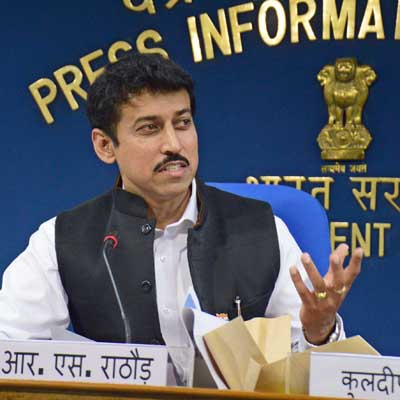
    Interestingly, in reply to a question in the Rajya Sabha in this regard on 24 February, Minister of State for I&B Rajyavardhan Rathore had said, “CBFC under the Ministry certifies films for public screening in accordance with the Cinematograph Act, 1952 and Cinematograph (Certification) Rules, 1983. Section 5B of the Cinematograph Act, 1952 provides principles for guidance in certifying films. Guidelines for certification of films notified under the Cinematograph (Certification) Rules lay down among other things that CBFC shall be guided by the following principles in this regard: (i) human sensibilities are not offended by vulgarity, obscenity or depravity; and (ii) such dual meaning words as obviously cater to baser instincts are not allowed.”


    Interestingly, the Minister refrained from making a comment on the list issued by Nihalani.


    Meanwhile, it is learnt that Nihalani will be meeting Ministry officials in New Delhi in the next few days.


    Earlier in a circular to the producers’ association and regional officers, the Board listed several “objectionable words” that are being used in films and directed its regional officers to ensure a ban on the list of cuss words. It also aimed to seek more conformity from directors and scriptwriters on cultural matters and political correctness. It also said ‘Mumbai’ should be used in place of ‘Bombay’ in films.


    The list led to a Twitter war where some members said Nihalani had taken the decision unilaterally.


    However, Nihalani told Indiantelevision.com that he was within his rights to issue the list as he was only following the powers given to him under the Cinematograph Act and was only referring to words that the Certification Guidelines do not allow.


    It is learnt that during a several-hours-long meeting of CBFC in Mumbai earlier this week, several members of the board opposed the move to impose such a ban. It is understood that status quo would be maintained and the list will be put on hold, the source said.


    The letter by Nihalani directed its regional officers not to issue certificates to films, which use these words, which are abuses in Hindi and English, and it has also been specified that double meaning words, violence against women and glorification of bloodshed should not be allowed.

  • ‘Festivals of India’ to focus on Digital India & its gains: Culture Ministry

    ‘Festivals of India’ to focus on Digital India & its gains: Culture Ministry

    NEW DELHI: Digital India and its gains will form a highlight of the next round of ‘Festivals of India’ during 2015-16.


    The Culture Ministry has set the ball rolling for holding the next round of ‘Festivals of India’ abroad with Culture secretary Ravindra Singh holding a video conference with Ambassadors/High Commissioners of South Korea, Australia, Mauritius and Myanmar in this regard. Similar festivals have already been organised successfully in various countries like Malaysia, China, Indonesia, South Africa and Japan among others. 


    The secretary emphasised that social media should be utilised to the maximum extent possible. Discussing the details with the Ambassadors and High Commissioners, the secretary pointed out that these festivals can be used to showcase Indian art, culture, life and achievements.


    The Ambassadors and High Commissioners favoured the idea of projecting the face of modern India by showcasing the rise of Digital India and other modern technological developments in the field of space. They were also of the opinion of showcasing the journey of Indian civilization from 5000 years ago to the modern India. Singh shared the experience of the festivals held in other countries recently like South Africa and China and various themes of these festivals like Buddhism, Yoga, exhibitions on cricket etc. He also asked these countries to collaborate among themselves and schedule the activities in such a way that the artistic performances and exhibitions being run in a particular country can be presented in the neighboring countries too. Each country decides the events and themes of a festival. Ambassador to South Korea was in favour of festival theme based on Buddhism since it has a large Buddhist population.


    Ambassador to Myanmar emphasised that the Yoga and Ayurveda can be of special interest in Myanmar. Representative of Indian High Commission in Australia favoured the theme based on Tribal Art. The ambassadors were of the opinion that the states should also be involved actively in these festivals. 


    Senior officials of the Ministry of Culture and representatives from National Museum, National Council of Science Museums, National Gallery of Modern Art and other organizations involved in these festivals were also present during the Video Conference.  

  • English ads on TV only a small fraction as compared to Hindi & regional ads: Rathore

    English ads on TV only a small fraction as compared to Hindi & regional ads: Rathore

    NEW DELHI: The audio-visual medium received 55.7 per cent of the government advertisements in Hindi as compared to 32.38 per cent in the print medium in rupee terms during 2014-15 until 13 February.


    Minister of State for Information and Broadcasting Rajyavardhan Rathore told the Parliament that only 2.79 per cent advertisements were given in English to the audio-visual medium as compared to 28.53 per cent in the print medium.


    The regional electronic media received 41.49 per cent of the advertisements as against 30.09 per cent to the print medium.

  • Directive given to ensure display of amended Preamble of Constitution

    Directive given to ensure display of amended Preamble of Constitution

    NEW DELHI: Following the controversy that arose when a government advertisement relating to Republic Day reproduced the original Preamble to the Constitution, the Government has given directions that only the amended version of the same should be reflected if an ad displays the Preamble.


    Information and Broadcasting Minister Arun Jaitley told Parliament today that directions in this regard have been issued to the Directorate for Advertising and Visual Publicity for strict compliance.


    The controversy had arisen as the amended Preamble has the words ‘Secular’ and ‘Socialist,’ which did not appear in the advertisement.


    DAVP annually issues print advertisements to all empanelled publications on the occasion of Republic Day to commemorate the date and the moment when India became a Republic by adopting the Constitution. This year also a similar practise was followed and six different designs were given to all the empanelled publications.


    In one of the advertisement designs issued, the photograph of the original calligraphic representation of the Preamble to the Constitution has been used in the background as a water-mark for enhancing the aesthetic and artistic value. The calligraphic representation has been sourced from the website of the Parliament Museum, New Delhi. The Calligraphic representation and decorated preamble as available in the Parliament Museum is the only such decorated copy till date. The intention of using it as a watermark was to enhance the aesthetic value of the design.


    The photo of the original Preamble was a way of honouring founding fathers of the Constitution and there was nomala fide intention to the publication of the un-amended version.


    The same original calligraphic representation and decorated Preamble of the Constitution was used in an advertisement commemorating Dr B. R. Ambedkar on the occasion of his birth anniversary on 14 April 2012, he said.

  • President Pranab Mukherjee outlines Govt’s policy initiatives in electronic media & IT

    President Pranab Mukherjee outlines Govt’s policy initiatives in electronic media & IT

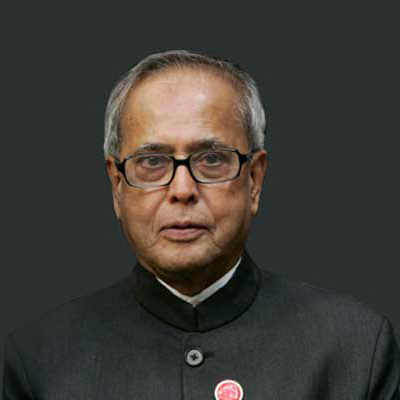
    NEW DELHI: President Pranab Mukherjee has said that the government is committed to deeper penetration of electronic media in remote and distant areas. In his address to the joint sitting of Parliament at the start of the Budget Session, he said auctions will be conducted for 135 vacant channels in 69 existing cities of FM Phase-II as part of first batch of FM Phase-Ill.


    In an hour-long speech that outlined the policies of the government, he said that this would also facilitate migration of FM Phase-II to FM Phase-Ill.


    Mukherjee said that this will take private FM radio to cities having population of more than 100,000 and border towns of Jammu and Kashmir, North-eastern region and island territories in a phased manner.


    He said the government had envisioned an ambitious umbrella programme, Digital India, to prepare the country for technology based transformation and citizen centric transparent governance with service orientation. Aadhar based attendance system and Jeevan Praman, Aadhar based Digital Life Certificate Portal, had shown that innovative use of technology can make enormous difference.


    Measures were being taken to accomplish digital inclusion in rural areas, small towns, north-east and other remote areas, opening up immense job opportunities in these areas. Promoting manufacturing of electronic goods has been an area of thrust, he added.


    According to him, the government was committed to using space technology and its applications in governance, social and economic development and resource management. A satellite was to be launched shortly for the use of SAARC countries to foster greater partnership and development of South Asian Region.


    In this context, he referred to Mangalyaan, which had been placed in the Mars Orbit on 24 September, 2014, making India the first country to do so in the first attempt. The country also successfully launched the first experimental flight of GSLV Mark-Ill on 19 December, 2014, which will enable launch of heavier satellites in the near future.


    The Government had taken major initiatives for improving ‘Ease of Doing Business’ through simplification and rationalization of existing rules and procedures, Mukherjee said. Leveraging IT and use of modern technologies is a key strategy. Single window in a Hub-Spoke model is being made a reality.


    He said Maximum Governance, Minimum Government was the guiding principle and with an aim to take governance to the doorstep of the poorest of the poor in remotest areas, focus is on simplification of official procedures and reducing the decision-making levels in government by leveraging technology. The system of Group of Ministers has been dispensed with, and emphasis is on swift decision-making. While introducing stricter and sterner measures to deal with corruption; effort is being made to ensure that sufficient safeguards are in place to protect bona fide decisions taken in public interest and to inspire confidence in the civil service.


    The government was firmly committed to engage people in the process of governance and policy-making. A new initiative My Gov Online Platform has been launched. This platform has ensured public participation in decision-making and ideation of various national flagship programmes like Swachh Bharat Mission, Namami Gange, Pradhan Mantri Jan Dhan Yojana and NITI Aayog.


    The Government had formulated the National Sports Talent Search Scheme for encouraging sporting talent amongst children in the age group of 8 to 12 through National Sports Development Fund and Target Olympic Podium.

  • FCC chief Tom Wheeler to address NAB Show in Las Vegas

    FCC chief Tom Wheeler to address NAB Show in Las Vegas

    NEW DELHI: Federal Communications Commission (FCC) chairman Tom Wheeler is expected to provide insights into the FCC’s policy and regulatory objectives related to broadcasting, technology and communications law generally at the 2015 Show of the National Association of Broadcasters (NAB) in Las Vegas.


    The address will be held on 15 April.


    “This is a great opportunity for NAB Show attendees to hear first-hand from the FCC Chairman on the FCC’s progress on the TV spectrum incentive auction and a host of other items currently under consideration at the Commission,” said NAB President and CEO Gordon Smith.


    Wheeler became the 31st chairman of the Federal Communications Commission on 4 November, 2013. He was appointed by President Barack Obama and unanimously confirmed by the United States Senate.


    For over three decades, Wheeler has been involved with new telecommunications networks and services, experiencing the revolution in telecommunications as a policy expert, an advocate, and a businessman. As an entrepreneur, he started or helped start multiple companies offering innovative cable, wireless and video communications services. He is the only person to be selected to both the Cable Television Hall of Fame and The Wireless Hall of Fame, a fact that caused President Obama to nickname Wheeler “The Bo Jackson of Telecom.”


    Prior to joining the FCC, Wheeler was managing director at Core Capital Partners, a venture capital firm investing in early stage Internet Protocol (IP)-based companies. He served as president and CEO of Shiloh Group, LLC, and co-founded SmartBrief, the internet’s largest electronic information service for vertical markets.


    From 1976 to 1984, Wheeler was associated with the National Cable Television Association (NCTA), where he was president and CEO from 1979 to 1984. Following NCTA, Wheeler was CEO of several high tech companies, including the first company to offer high speed delivery of data to home computers and the first digital video satellite service. From 1992 to 2004, Wheeler served as president and CEO of the Cellular Telecommunications & Internet Association (CTIA).


    Wheeler is a graduate of The Ohio State University and the recipient of its Alumni Medal.

  • Supreme Court to hear Cricket World Cup live telecasts appeal in July

    Supreme Court to hear Cricket World Cup live telecasts appeal in July

    NEW DELHI: The Supreme Court has directed that the special leave petition to appeal by Prasar Bharati against the order of the Delhi High Court with regard to World Cup Cricket telecasts will come up for hearing on a Tuesday in July “in view of the importance of the matter.”


    According to the order of Justice Ranjan Gogoi and Justice Prafulla C Pant, which became available today, the Court said ‘we are of the view that the interim order passed earlier to the effect that the impugned order dated 4 February of the High Court shall remain suspended should continue until further orders.’


    The judges also said, “It is our considered view that at this stage we ought not to consider the submissions made on behalf of the parties on the merits of the controversy as the same may have the effect of prejudicing either of the parties.”


    However, the Court said it was ‘not inclined’ to consider the suggestion made by Star Sports that Doordarshan should set up an extra/special channel, which has been contended by Prasar Bharati to be unviable and technically unfeasible within any reasonable period of time.


    “Though an offer has been made on behalf of respondent No. 4 (Star India) to make available its expertise and personnel to aid Prasar Bharati, we are not inclined to consider the said offer made on behalf of the respondent. The first suggestion put forward therefore does not merit acceptance,” the Court said.


    On the second suggestion about putting up a scroll to the effect that “the channel displaying the sports event (concerned ICC World Cup 2015 matches) is meant only for Doordarshan,” the Court said, ‘acceptance of the said suggestion would be understanding the provisions of Section 3 of the Sports Broadcasting Signals (Mandatory Sharing with Prasar Bharati) Act 2007 and Section 8 of the Cable Television Networks (Regulation) Act 1995 in a particular manner, which is not warranted at this stage of the proceedings. We, therefore, decline to accept the said second suggestion advanced on behalf of the respondents.’


    Meanwhile, the judges said the parties may exchange pleadings, if required.


    In an additional affidavit filed at the instance of the apex court, Star India had said that it was losing around Rs 290 crore every year by sharing its sports signals with Doordarshan every year and was expecting to lose around Rs 120 crore by sharing the telecast of the World Cup this year. (Under the Act, the rights holder gets 75 per cent of the revenue from the telecast on DD which keeps the balance 25 per cent.)


    On the suggestion by Star Sports that DD should run a separate channel without the signals of the World Cup for cable operators or run a scroll that the World Cup telecasts are not meant for cable operators, Attorney General Mukul Rohatgi had pointed out that DD had 1400 transmitters all over the country of which most were unmanned and it was technically not feasible for DD to run a separate channel.


    The Delhi High Court had declined to set aside the must carry clause as well as the Act of 2007 in its judgment.


    SUPREME COURT ORDER IS ATTACHED BELOW

  • DD to continue showing World Cup 2015 matches: Supreme Court

    DD to continue showing World Cup 2015 matches: Supreme Court

    NEW DELHI: Disposing off the application by Star Sports seeking vacation of an interim stay ordered earlier, the Supreme Court today ruled that Doordarshan will continue to show the World Cup 2015 cricket matches and share the feed with cable operators. 
     
    The apex Court had on 10 February stayed a judgment of the Delhi High Court of 4 February, which had said that Prasar Bharati cannot share its signals with cable operators.
     
     
    The Supreme Court directive came on an appeal by Prasar Bharati, which had taken the plea that the law was clear as far as the Sports Broadcasting Signals (Mandatory Sharing with Prasar Bharati) Act 2007 and the must carry clause were concerned. Even the High Court had refused to strike down the Act or the must carry clause.
     
     
    The order today is by way of disposing the application by Star Sports seeking a vacation of the stay order. However, the matter will now come up for hearing in due course for detailed arguments. It is learnt from legal sources that the case may come up for further arguments in June.
     
     
    In an additional affidavit filed at the instance of the apex court, Star Sports had said that it was losing around Rs 290 crore every year by sharing its sports signals with Doordarshan and was expecting to lose around Rs 120 crore by sharing the telecast of the World Cup this year. (Under the Act, the rights holder gets 75 per cent of the revenue from the telecast on DD. The remaining 25 per cent is retained by DD.)
     
     
    On the suggestion by Star Sports that DD should run a separate channel without the signals of the World Cup for cable operators or run a scroll that the World Cup telecasts are not meant for cable operators, Attorney General Mukul Rohatgi had yesterday pointed out that DD had 1400 transmitters all over the country and it was technically not feasible for DD to run a separate channel. Rohatgi told the court that it was mandatory for a private channel under the Sports Act and the Cable TV Network Act to share the feeds of matches of “national importance” with Prasar Bharati for providing it on DD’s free-to-air terrestrial channels.
     
    The apex court had on 17 February asked the pubcaster to give its response on the possibility of launching a separate channel. Justice Ranjan Gogoi and Justice Pinaki Chandra Ghose extended the interim order allowing Doordarshan to telecast the matches. 
     
    Senior advocate P. Chidambaram on behalf of ESPN and Star Sports said Prasar Bharati could create a mirror image of the World Cup telecast, which does not go to cable operators.
     
     
    Star Sports said its experts could help Prasar Bharati in creation of a channel that only carried entertainment programmes minus the World Cup telecasts.
     
    In its judgment, the High Court had refused to strike down the must carry clause of 2000 under which cable operators have to carry signals of Doordarshan, and also the Sports Broadcasting Signals (Mandatory Sharing with Prasar Bharati) Act 2007.
     
     
    A bench of Justices Badar Durrez Ahmed and Sanjeev Sachdeva passed the order on the plea of Board of Control for Cricket in India (BCCI), ESPN and Star who had contended that cable TV operators were getting live feeds through DD channels free of cost, resulting in loss of revenue for them.
     
     
    In the order, the Court had said: “The appeal as well as writ petition (civil) 8458/2007 are allowed to the extent that the live broadcasting signal shared by ESPN/STAR by virtue of the Sports Act with Prasar Bharati, shall not be carried in the designated Doordarshan channels under the must carry obligation cast by the Cable TV Network Act on cable operators. This shall operate prospectively.”
     
     
    In its directive, the Court had observed that while the advertisement revenue received by DD in respect of the shared content of the sports channels was to be shared in the ratio of not less than 75:25, “it still does not cater to the loss of subscription revenue” by ESPN and Star.

    BCCI, Nimbus Communications Ltd and the two sports channels (ESPN and Star) had challenged the high court’s single judge November 2007 order rejecting their pleas that no cable television network, Direct-to-Home (DTH) Network, multi-system network or local cable operator could broadcast such sports events without a licence from the content owners.