Category: Regulators

  • Paid news to be checked under amendments to Press & Registration Act: Rathore

    Paid news to be checked under amendments to Press & Registration Act: Rathore

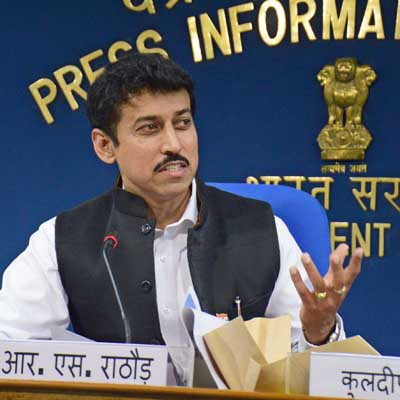
    NEW DELHI: The Government will include provisions for checking the menace of paid news in the amendments to the Press and Registration of Books Act.


    Minister of State for Information and Broadcasting Rajyavardhan Rathore told the Lok Sabha that based on the recommendations of the Standing Committee on Information Technology, inclusion of provisions in the Act “would also be pursued as per extant guidelines”.


    In the amendments proposed to the PRB Act, the Ministry has also proposed inclusion of a section which says ‘paid news’ means publishing any news or analysis in the publication for a price in cash or kind as consideration.


    Earlier in November 2013, the Government had said it intended to bring ‘reproduction of any newspaper in electronic form’ within the ambit of the Act.


    The amendments, which have been placed on the website of the Ministry, also says that “facsimile edition” of a publication means an exact replica in full or in part of the original edition of a foreign publication ‘in so far as the contents concerned and may not include title,’ subject to the condition that any page is not published in part.


    The Government also proposes to establish a Press and Registration Appellate Board to be constituted by the central government, by notification in the official gazette, consisting of a chairperson and another member, to be nominated by the Press Council of India, established under Section 4 of the Press Council Act 1978 from among its members.


    It says that any dispute relating to registration of newspapers or publications would be referred to a “specified appellate authority” that may be prescribed by the central government.


    Under the amendments, publication means newspapers, magazines, journals or newsletters printed periodically and published in India ‘including its reproduction in electronic form or any syndication, facsimile edition, and Indian editions of periodicals published outside India.’

  • CBFC took unilateral decision to put list of offensive words on hold: Rathore

    CBFC took unilateral decision to put list of offensive words on hold: Rathore

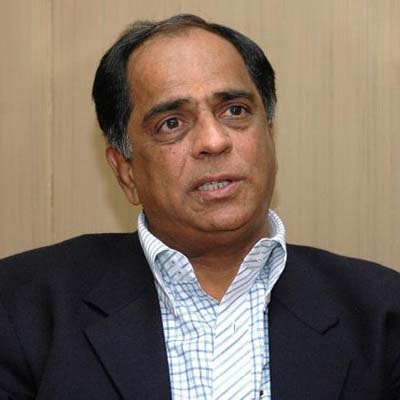
    NEW DELHI: The Parliament was informed on 13 March that the list of 28 “objectionable and abusive” words suggested for banning from Indian films by Central Board of Film Certification (CBFC) chairman Pahlaj Nahalani was held back. This, because a need was felt to consult on the same with people from different sections of society.


    Minister of State for Information and Broadcasting Rajyavardhan Rathore told the Lok Sabha today that the decision in this regard had been taken by the Board in a meeting on 23 February.


    The Minister also said that the list of objectionable words circulated by Nihalani on 12 February this year had been compiled by regional offices of the CBFC in 2003.


    Meanwhile, a Ministry official told Indiantelevision.com last month that any decision in this regard may have been taken at the level of the Board or by its chairman, who had issued the list leading to protests from some members.


    Rathore had earlier said, “CBFC under the Ministry certifies films for public screening in accordance with the Cinematograph Act, 1952 and Cinematograph (Certification) Rules, 1983. Section 5B of the Cinematograph Act, 1952 provides principles for guidance in certifying films. Guidelines for certification of films notified under the Cinematograph (Certification) Rules lay down among other things that CBFC shall be guided by the following principles in this regard: (i) human sensibilities are not offended by vulgarity, obscenity or depravity; and (ii) such dual meaning words as obviously cater to baser instincts are not allowed.”


    In a circular to the producers’ association and regional officers, the Board had last month listed several “objectionable words” that are being used in films and directed its regional officers to ensure a ban on the list of cuss words. It also aimed to seek more conformity from directors and scriptwriters on cultural matters and political correctness. It also said Mumbai should be used in place of Bombay.


    The list led to a Twitter war of words, where some members said Nihalani had taken the decision unilaterally.


    However, Nihalani told Indiantelevision.com that he was within his rights to issue the list as he was only using the powers given to him under the Cinematograph Act and was only referring to words that the Certification Guidelines do not allow.

  • IFFI to highlight films from NE; FD commissions films from region: Julka

    IFFI to highlight films from NE; FD commissions films from region: Julka

    NEW DELHI: Information and Broadcasting secretary Bimal Julka has said that the forthcoming International Film Festival of India (IFFI) in November will have a special section on the North East to expose the feature and non-feature films made in Meghalaya. 


    In addition, the Films Division has implemented a special component under a Plan Scheme for production of short films from the North East. The Division has commissioned 54 films from the North East in the past five years. 


    Julka was speaking after inaugurating the third edition of the Indian Panorama Film Festival at U Soso Tham auditorium in Shillong last evening. The festival opened with the screening of the award winning Marathi film Dr. Prakash Baba Amte: the Real Hero, directed by Samruddhi Porey.


    A host of film personalities including director Anjan Dutt were present at the inaugural ceremony, which was also attended by Meghalaya chief minister Dr. Mukul Sangma and Meghalaya Information and Public Relations minister A.L. Hek. 


    Julka said that the Ministry has been focusing on showcasing films from the North East to encourage production of films in the region. A North East Film Festival was also held in New Delhi recently.


    Appreciating film productions by young film makers from the North East, Julka said numerous short and non-feature films from the region have received National Awards.


    Julka informed that in 2014-2015, a week-long film-making workshop was also organized in Aizawl in Mizoram and another workshop is currently being conducted in Silchar in Assam. In this endeavour, the Films Division plans to conduct four such film making workshops every year in the North East, to familiarize film makers from these states with the latest technology in film making. 


    Eight feature films and three non-feature films will be screened over three days. The film festival is being organised by the Directorate of Film Festivals in collaboration with the state Government.


    Other feature films to be screened during the festival are Drishyam (Malayalam), December 1 (Kannada), Kuttram Kadithal (Tamil), Ankhon Dekhi (Hindi), Othello (Assamese), Ri (Khasi), Teenkahon (Bengali) and Ranjana Ami Ar Ashbona (Bengali). Non-feature films to be screened during the festival are Songs of the Blue Hills by Utpal Borpujari (Nagamese/English), A Dream Never Dies (Assamese) and Ek Hota Kau (Marathi). 


    Indian Panorama Film Festival is being held in Shillong for the last two years and this will be the third edition of the festival.

  • Nine million broadband subscribers added between Dec 2014 – Jan 2015

    Nine million broadband subscribers added between Dec 2014 – Jan 2015

    NEW DELHI: There was an increase of approximately nine million broadband subscribers between December 2014 and January 2015 with the number going up from 85.74 million to 94.49 million. According to reports received by the Telecom Regulatory Authority of India (TRAI) from service providers, this signified a monthly growth rate of 10.21 per cent.

    As in previous months, the largest growth was seen in the mobile devices users (phones and dongles) segment with 78.66 million subscribers by January end as compared to 69.99 million a month earlier, signifying a monthly growth rate of 12.38 per cent.

    Fixed Wireless subscribers (Wi-Fi, Wi-Max, Point-to-Point Radio & VSAT) showed a growth of 1.59 per cent, going up from 430,000 to 440,000.  


    Wired subscribers increased by 0.49 per cent from 15.32 million to 15.39 million.


    The top five service providers constituted 83.41 per cent market share of total broadband subscribers at the end of January 2015. These service providers were Bharti Airtel (20.29 million), BSNL (19.07 million), Vodafone (17.86 million), Idea Cellular (14.12 million) and Reliance Communications Group (7.47 million).


    Wireless subscribers with less than 1MB data usage in a month have not been considered as internet/broadband subscribers by Reliance Communication Group and Idea Cellular Ltd.


    As on 31 January, the top five wired broadband service providers were BSNL (9.98 million), Bharti Airtel (1.42 million), MTNL (1.14 million), Atria Convergence Technologies (0.63 million) and YOU Broadband (0.43 million).


    Whereas the top five wireless broadband service providers were Bharti Airtel (18.87 million), Vodafone (17.86 million), Idea Cellular (14.12 million), BSNL (9.09 million) and Reliance Communications Group (7.36 million) by January-end.

  • Delhi HC refuses to lift ban on ‘India’s Daughter;’ says media trial influences judges

    Delhi HC refuses to lift ban on ‘India’s Daughter;’ says media trial influences judges

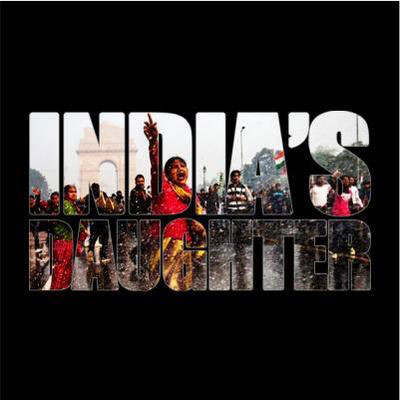
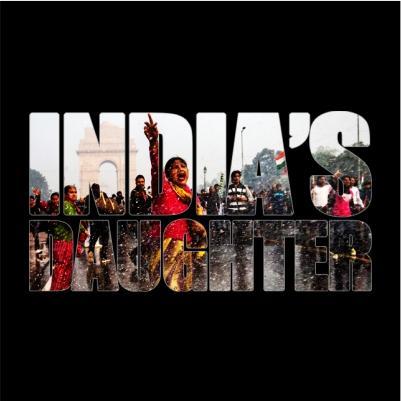
    NEW DELHI: The Delhi High Court today refused to stay the ban on BBC’s documentary India’s Daughter by British filmmaker Leslee Udwin on the Nirbhaya gang rape of December 2012, saying the case was sub judice in Supreme Court and allowing its display in the masses could affect the case.
     

    Justices BD Ahmed and Sanjeev Sachdeva said media trials tend to influence judges by subconsciously creating pressure. Although the judges said they were prima facie not opposed to airing of the documentary, it should be released after the Supreme Court decides the appeals of the convicts in the matter.
     

    “Media trials do tend to influence judges. Subconsciously a pressure is created and it does have an effect on the sentencing of the accused/ convict,” it said in support of its observation.


    The bench was of the view that the documentary could “interfere with the justice system” but refused to pass any interim orders. “Had it been originally placed before us, we would have asked you to place material before us on why the ban should be lifted. But it has come here from the roster bench of Chief Justice, so we will not pass any interim orders.”


    Observing that airing of the video could make or ruin the case of one of the rape convicts, Mukesh, it said, “Whether he has shown remorse or not would be considered at the time of his sentencing. Why not wait till the Supreme Court decision?”


    On the contention that ban on airing of the video till the apex court judgement could also lead to gag on reporting of all sub judice matters, the bench said, “We agree.” It said that earlier media had a self-imposed code of not reporting sub judice matters, but now “media has thrown it (the code) to the winds.”


    The Central government represented by advocate Monika Arora opposed airing of the documentary saying it would give a platform to the convict to air his views and that it also contains derogatory statements against the victim. 

    She also said that the Information and Broadcasting Ministry only issued an advisory to cable TV networks to abide by the magisterial court’s order banning airing of the documentary.

    The petitioners claimed that since the documentary was freely available on the Internet, and its viewing by lakhs of people had caused no untoward or law and order situation, there are no grounds for banning the video. The petitioners also said that parts of the convict’s interview are already part of the judgment in the case by the trial court and High Court and thus are public records.

    The court had earlier refused to give urgent hearing after three law students –Vibhor Anand, Arun Menon and Kritika Padode– in their two separate PILs said “fundamental right of freedom of speech and expression have been infringed due to government’s illegal action to ban the broadcast.” They had approached the High Court after a trial court on 4 March had banned until further orders the broadcast of the interview of 16 December, 2012 gangrape convict Mukesh Singh, allegedly conducted in July 2013 inside Tihar jail.


    Earlier, a trial court had restrained the media from broadcasting or publishing the interview of Mukesh Singh after the Delhi Police moved the court seeking the restraint. The Information and Broadcasting Ministry had also issued an advisory to all television channels not to broadcast the film or excerpts from it.


    The pleas had sought lifting of the ban on the ground that it is “a look at the mindset of one of the convicted rapists.” One of the pleas had also sought direction to the Bar Council of India to expedite action against the two lawyers — advocate AP Singh and ML Sharma — who had allegedly made derogatory anti-women remarks in the documentary. It also claimed that the parents of the gangrape victim have not objected to the telecast of the documentary.


    Meanwhile, Udwin told the Los Angeles Times that the Indian government should hang its head in shame for banning her film. 

    However, the government claims she was permitted to interview the convicts in jail when she said was doing research and would not use the film for commercial purposes. The film has already been aired in several countries including the United States and the BBC4 in the United Kingdom. NDTV was to have aired the film on International Women’s Day but could not do so in view of the ban.

  • Two new part-time members appointed to Telecom Regulatory Authority of India

    Two new part-time members appointed to Telecom Regulatory Authority of India

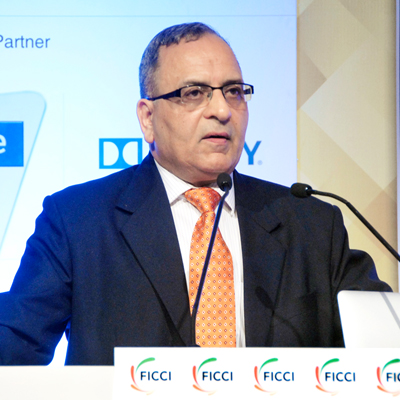
    NEW DELHI: Indian Institute of Technology Professor Dr. M. Jagadesh Kumar and former National Human Rights Commission secretary general Rajiv Sharma have been appointed part-time members of the Telecom Regulatory Authority of India (TRAI).


    The two members will hold office for a period of three years from the date on which they assume office or until they attain the age of sixty-five years, whichever is earlier.


    Orders to this effect were issued in exercise of powers under the Telecom Regulatory Authority of India Act 1997.


    A TRAI source told indiantelevision.com that the two persons have been appointed as members of the Authority’s top decision-making unit, and therefore will not be given specific assignments of telecom or broadcasting.


    Meanwhile, TRAI has already advertised for filling the post of chairman as the term of Dr Rahul Khullar is ending on 14 May. The chairperson is appointed for a term of three years or until the age of 65, whichever is earlier.

  • Open House for applicants of new TV channels on 20 March

    Open House for applicants of new TV channels on 20 March

    NEW DELHI: There will be an Open House meeting on 20 March for applicants for new television channels and those seeking changes in their uplinking or downlinking options.


    The Information and Broadcasting Ministry today asked those who wish to send in any requests or issues they want discussed to the Ministry by 11 March. 


    The meeting will be conducted by Director (Broadcasting) Neeti Sarkar in the Ministry premises. 


    The Ministry also said requests received after 11 March will be discussed in the next Open House meeting.


  • Applicants to FM phase III permitted to withdraw if necessary via amendment in NIA

    Applicants to FM phase III permitted to withdraw if necessary via amendment in NIA

    NEW DELHI: Operators of FM radio who had applied for migration to phase III FM but changed their minds, will be given an opportunity to withdraw the option to migrate within five days of intimation of the Non-refundable One Time Migration Fee (NOTMF).


    This follows an amendment to the Notice Inviting Applications issued on 2 March.


    The amendment has been made at the specific request of Association of Radio Operators for India (AROI) Secretary General Uday Chawla.


    The original paragraph seven reads: “The option so exercised shall be considered final and binding.”

  • MIB mulls amendments permitting live coverage of counter-terrorism measures by security forces

    MIB mulls amendments permitting live coverage of counter-terrorism measures by security forces

    NEW DELHI: The Information and Broadcasting Ministry (I&B) is considering a proposal to prohibit live media coverage of counter terrorism operations by security forces. 


    Minister of State for I&B Rajyavardhan Rathore told Parliament that the Home Ministry wants amendments in the existing laws in this regard.


    The issue of coverage by television channels is presently part of the self-regulation guidelines drawn up by the News Broadcasting Standards Authority of the News Broadcasters Association. The Press Council of India had issued similar guidelines with regard to print media. 


    These guidelines were drawn up after the 26 November, 2008 attacks in Mumbai. Following a controversy that live telecasts of the counter-terrorism operations were in all likelihood been seen by the masterminds in Pakistan who had planned the attacks.


    As far as Prasar Bharati is concerned, it is governed by the Programme and Advertising Code which is also part of the Cable TV Networks (Regulation) Act 1995 and therefore equally applicable to private television channels.


    The Inter-Ministerial Committee examines complaints under the Act and the Rules drawn up a year earlier in 1994.

  • Early hearing on ‘India’s Daughter’ ban refused; HC to hear case on 11 March

    Early hearing on ‘India’s Daughter’ ban refused; HC to hear case on 11 March

    NEW DELHI: Even as the film continues to be available on internet, the Delhi High Court refused to give urgent hearing to a public interest litigation (PIL) seeking lifting of the ban on telecast of a controversial documentary India’s Daughter featuring an interview of one of the four convicts in the 16 December gang rape case.  


    A bench of justices B.D. Ahmed and Vibhu Bakhru said there is no such urgency in the matter and it will be heard on Wednesday (11 March). 


    The court’s response came after two law students — Arun Menon and Kritika Padode — sought urgent hearing in their PIL, saying the ban on the documentary is a clear violation of their fundamental rights under Article 19 of the Indian Constitution.  


    The Information and Broadcasting Ministry also issued an advisory to all television channels to not broadcast the documentary.


    The government has sought an explanation from Tihar jail authorities over how the convict was interviewed while being in judicial custody.  


    A similar petition was filed last week, by a law student, who sought lifting of the ban on the ground that it is “nothing but an honest look at the mind and mindset of one of the convicted rapists of the young woman.”


    Today’s plea also sought direction to the Bar Council of India to expedite action against the two lawyer — advocate A.P. Singh and M.L. Sharma — who had allegedly made derogatory anti-women remarks in the documentary. 


    The plea also said that a direction be issued to the Supreme Court registry to constitute a three judge special bench to hear the appeals of the four death row convicts, which is pending since 25 August, 2014. The apex court in July had stayed the execution of the four convicts in the gang-rape and murder case.


    The other petition prepared by Vibhor Anand said that the public at large wanted to see the documentary as within 24 hours of its being put up on YouTube, it was viewed by more 2.86 lakh people. 


    Meanwhile, another bench of the High Court hearing another case relating to rape pulled up the Central and Delhi government for failing to make even a single documentary or use the visual medium in any manner to educate people about the nature of sexual offences and the stringent punishments involved.


    It also noted the ‘disgusting’ trend of people in high positions to make ‘vile’ statements while voicing their tasteless anti-women opinions. “What is in bad taste are the irresponsible and vile statements made very often by erudite people who hold reputable positions and place in diverse fields, and show no signs of shame while voicing their warped and misogynistic ideals,” said the court. 


    “We express our disgust and displeasure at the apathy and insensitivity of the Union of India and Delhi Government for having failed to take steps to produce even a single documentary or for that matter take the help of any other visual media to educate the people of Delhi, about the nature of sexual offences concerning women and child and create awareness amongst them about the existing laws and stringent punishments provided against such offences despite several directions having been given by this Court,” observed the division bench consisting of Justice Kailash Gambhir and Sunita Gupta, while also comparing this apathy to the efforts of a foreigner.


    “In contrast, one individual, a British filmmaker, could make a documentary film on the brutal gang rape that has managed to kick up a storm and trigger a furore in India,” said the court while hearing an appeal against a judgement sentencing a rape accused.


    The court further noted that the freedom of expression guaranteed under the Constitution was not absolute. “Clause (2) of Article 19 of the Indian Constitution enables the legislature to impose certain restrictions on free speech. And, these reasonable restrictions should be kept in mind by one and all before giving vent to their opinions and views.”


    Meanwhile, the news channel NDTV on International Women’s Day (8 March) showed a  blank screen at the time slated for the telecast with only a visual of a lamp, the words ‘India’s Daughters’ and a scroll running beneath it putting out statements issued by the Editors Guild of India and others. 


    The Guild slammed the government’s move to ban the film, calling the ban wholly unwarranted and based on misunderstanding of the power and the message behind the film.