Category: Regulators

  • I&B asks stakeholders to arrive at consensus on difficult issues for successful digitisation

    I&B asks stakeholders to arrive at consensus on difficult issues for successful digitisation

    NEW DELHI: Information and Broadcasting Ministry (I&B) additional secretary J S Mathur, who heads the Task Force for Phase III and IV of Digital Addressable Systems (DAS) for cable television has urged all stakeholders to come together and resolve issues, if targets have to be met.


    Noting in the sixth meeting held on 13 March that only seven out of 100 multi-system operators (MSOs) had given the seeding plans for Phase Ill areas.


    The data provided by them indicated that about 3.1 million set top boxes had been seeded by them with about 550,000 STBs in their stock and about 2.35 million STBs under orders of purchase. He remarked that the seeding so far was very low vis-a-vis the target.


    He said, “Each day counts towards progress in digitisation.” He also said that progress would be slow without public awareness campaign by the stakeholders.


    He said there was lack of mutual connect between broadcasters and MSOs with each stakeholder wanting to maximize self interests. There was need for coming to a consensus.


    He added that the data on subscription revenue and carriage fee from the Indian Broadcasting Foundation and News Broadcasters Association was still awaited, despite assurances.


    He emphasised that broadcasters have to contribute by mounting awareness campaign on their channels as was done by them during Phase I and Phase II and the MSOs have to contribute in this campaign. He said broadcasters should start a dialogue with MSOs immediately.


    He welcomed the initiative taken by Telecom Regulatory Authority of India (TRAI) to hold a meeting with broadcasters and MSOs to resolve the issue of interconnect agreements.


    However, the stakeholders should themselves get their act together and put in their utmost effort to ensure that such issues do not come in the way of achieving the goal of digitisation.


    He said that as pointed out by some members of the Task Force, digitisation has begun to benefit all stakeholders. Activity on the ground needs to be accomplished from now itself as it is not a matter that can be put in place overnight.


    Representative of MSOs said there were issues of content costing, due to which they were finding it difficult to plan digitisation in new areas. Seeding plans can be firmed up by MSOs only after knowing content cost. Till then, the MSOs can only give their seeding projections instead of seeding plans.


    They also stressed that revenue from Phase Ill and Phase IV areas is about 20 to 30 per cent of the total revenue from the country. So content cost in Phase Ill and Phase IV areas cannot be same as that in Phase I and Phase II areas and this has to be taken into account by all stakeholders.


    MSOs also complained that broadcasters were not entering into interconnect agreements with the MSOs for Phase Ill areas.


    Unless the input cost is known, MSOs cannot educate the consumers about the rates and there are issues of local taxation levied by some State Governments apart from local cable operators switching over to analogue when the digital signal to them is cut off by the MSO.


    Broadcasters’ representatives on the other hand said MSOs had not approached the broadcasters for entering into interconnect agreements in new areas. The broadcasters felt that this was because MSOs do not have concrete plans.


    Seeding was done by MSOs in Phase I and Phase II without first entering into interconnect agreements with broadcasters and this should not be an issue now, some of the broadcasters said.


    They claimed that channel prices had gone up due to technical upgradation from SD to HD, but there had been no increase in the advertisement rates.


    A TRAI representative said that according to a TDSAT judgment, MSO/LCO providing cable TV services were free to provide digital cable service in new areas unless it trespasses other areas. He impressed upon the broadcasters to enter into interconnect agreements with MSOs who approach them for content in Phase Ill and Phase IV areas.


    Representative of consumer forums mentioned that pricing is the main issue which the consumers are facing. He added that consumers should know the price before he switches over to digital.


    Representative  of  CEAMA  stated  that  they  approached  as  many  MSOs  as possible to clear their doubts about indigenous set top boxes. However the response from the MSOs has not been encouraging. He reiterated that they have the capacity to meet the requirements of Phase Ill and Phase IV.


    A representative of the Uttar Pradesh Government mentioned that CAF forms should be filled by the MSOs before changing to digital mode in Phase Ill and Phase IV areas. He added that the State Government was not having complete seeding data of Phase II cities.


    The representative of Jammu and Kashmir wanted consumers to be informed about the set top box price. 

  • Two lawyers issued notice for anti-women remarks on ‘India’s Daughter’

    Two lawyers issued notice for anti-women remarks on ‘India’s Daughter’

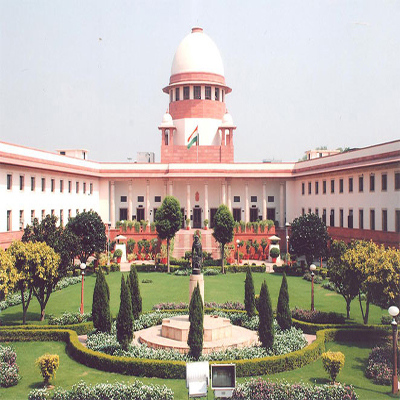
    NEW DELHI: The Supreme Court today asked the two advocates representing the 16 December gangrape convicts to respond to the charges that they allegedly made derogatory remarks against women in a BBC documentary India’s Daughter by Leslee Udwin.


    Justices V Gopala Gowda and C Nagappan issued notices to the two advocates M L Sharma and A P Singh and sought their response in two weeks following a petition by the Supreme Court Women Lawyers Association.


    “We have heard the argument, pleadings and grievances urged in the petition. The matter requires consideration in view of the factual and legal submissions,” the Court said.


    The Association had sought restriction on the entry of the two advocates in the apex court premises, alleging that their remarks in the controversial documentary were “inhumane, scandalous, unjustifiable, biased, outrageous, ill-minded” and are a “direct affront to and in violation of the dignity of women,” especially those practicing in the Supreme Court. The Supreme Court Bar Association (SCBA) supported the plea of Women Lawyers association.


    Senior advocate Vibha Datta Makhija representing the Women’s Association urged the Court to lead from the front and show zero tolerance for such views. “We need an environment where we are fearless,” she said and added that the two advocates need to be sensitised.


    Senior advocate Dushyant Dave, appearing for SCBA, submitted that there should be a meaningful and proper implementation of gender sensitisation regulation. He said, “SCBA has taken a unanimous decision to take action against Sharma.” 


    The petition had sought protection of fundamental rights, guaranteed under the Constitution, of the female advocates practicing in the apex court to work with dignity and without any gender bias.


    The petition filed through advocate Mahalakshmi Pavani has made Chairperson of Gender Sensitisation Committee and Registrar of the apex court as parties and submitted a transcript of the two lawyers’ comments.


    It also sought the court’s direction to make Sharma and Singh issue a public apology in the media for holding and making public views, which are “absolutely derogatory to the dignity of women” and refraining from issuing such statements in future. The two advocates also be directed to retract their statements and their apology should also be included in the BBC documentary, the petition had said.


    The Association represented by secretary Prerna Kumari had said in the petition that the remarks made by the two advocates showed they do not have respect for any woman and do not see them as more than an object. It had added that the conduct of these lawyers showed complete absence of any concern for society and utter disregard of the Constitutional values and human rights of women besides the ethics and etiquette of the Bar.


    The petition said the lawyers should retract their statements and their apology should be included in the BBC documentary.


    It had added that the conduct of these lawyers showed complete absence of any concern for society and utter disregard of the Constitutional values and human rights of women besides the ethics and etiquette of the Bar. It is much more than a crime, the petition said. 


    Although it has been banned in India and NDTV could not screen the film as slated on 8 March, it continues to be available on the Internet and has been aired more than two times by BBC4, which is not seen in India, apart from some other countries have screened the film on International Women’s Day.


  • Supreme Court scraps ‘draconian’ Section 66A of IT Act

    Supreme Court scraps ‘draconian’ Section 66A of IT Act

    MUMBAI: In a landmark judgement the Indian Supreme Court today scrapped the ‘draconian’ Section 66A of the IT Act, which provides the power to arrest a person for posting allegedly offensive content online.


    The court ruled that the controversial Section 66A of the Information Technology Act was unconstitutional.


    The move comes in the wake of multiple arrests that have been made over the last year of citizens for posting their personal views on social media websites like Facebook and Twitter. The latest was the arrest of a teenager from Bareilly, Uttar Pradesh last week. The Class 12 student was arrested and sent to jail for a Facebook post about senior Uttar Pradesh minister Azam Khan.


    The order was delivered by a two-judge bench of the Supreme Court on petitions filed by civil rights groups and a law student, who argued that Section 66A violated people’s fundamental right to freedom of speech and expression. In the judgment, the Supreme Court said, “There is a difference between discussion, advocacy and incitement. Discussion and advocacy, no matter how annoying, is allowed.”


    The Supreme Court’s move has been lauded by members of the film and media fraternity online, who took to Twitter to express their views on the verdict.


    Journalist turned filmmaker Pritish Nandy tweeted, “Section 66A of the IT Act, the noxious, draconian law has been struck down by the Supreme Court. Restores our faith in democracy. What an achievement! @karunanundy #66A, the black act goes.”


    Director Madhur Bhandarkar said, “Landmark judgement by Hon Supreme Court as it strikes down Sec 66A of IT Act. Freedom of thought & expression rightly upheld in a democracy.”


    Filmmaker Shekhar Kapur added, “As Supreme Court has quashed #Sec66A, its time for every1 to realise growing power of #socialmedia… a powerful tool 2 be used responsibly.”


    Actress Suchitra Krishnamurty tweeted, “Yippee #Sec66A has been scrapped. So our freedom of speech is back. Can we have a law to scrap/challenge bans imposed by Govt too?”


    Journalist Sagarika Ghosh expressed her views by tweeting this, “Now that #Sec66A gone, in same spirit will GOI apologise to Priya Pillai, allow Wendy Doniger, un-ban books, stop calling media anti-national?”


    India Today consulting editor Rajdeep Sardesai tweeted, “The only exception to free speech must remain hate speech and incitement to violence. Defamation/slander as per common law. #Sec66A”


  • Adcap case adjourned to 24 July; broadcasters hope govt will reverse earlier order

    Adcap case adjourned to 24 July; broadcasters hope govt will reverse earlier order

    NEW DELHI: The Delhi High Court has adjourned the petition by the News Broadcasters Association (NBA) and others challenging the advertising cap of 12 minutes per hour sought to be imposed by the government to 24 July.


    The NBA and regional broadcasters along with music channels informed the court about recent developments vis-?-vis the new government and highlighted the fact that they were awaiting the government’s response against their joint representation.


    The Court agreed to the adjournment in order to give some more time for the aggrieved broadcasters and government to represent and decide an amicable solution amongst themselves.


    The order that the Telecom Regulatory Authority of India (TRAI) will not take any action against any channel pending the petition will continue. In an earlier hearing, the Court had, at the regulator’s instance, directed that all channels keep a record of the advertisements run by them.


    TRAI sought to tell the Court that the matter had been pending for long, but the bench headed by Chief Justice G Rohini said if the matter could be resolved, then it was better to give more time.


    For the broadcasters, this is a major relief even Information and Broadcasting Minister Arun Jaitley recently voiced his views against an ad cap on broadcasters.


    The NBA had challenged the ad cap rule, contending that TRAI does not have jurisdiction to regulate commercial airtime on television channels.


    Apart from the NBA, the petition have been filed by Sarthak Entertainment, Pioneer Channel Factory, E24 Glamoru, Sun TV Network, TV Vision, B4U Broadband, 9X Media, Kalaignar, Celebrities Management, Eanadu Television and Raj Television.


    The news and regional broadcasters fear that the capping of commercial airtime will curtail their ad revenues. They also argue that the ad cap must be brought only after the benefits of cable TV digitisation start showing.


  • Sonowal wants implementation of Sports Code, Jaitley pushes for emphasis on core sports

    Sonowal wants implementation of Sports Code, Jaitley pushes for emphasis on core sports

    NEW DELHI: Youth Affairs Minister Sarbananda Sonowal has urged the states to help the centre in bringing transparency and accountability in sports by implementing the Sports Code.


    Speaking at the concluding session of the Conference of Ministers of States/ UTs in-charge of Youth Affairs and Sports here on 21 March, he said his Ministry has taken several initiatives to keep sports free from controversies and corruption and it is his sincere request to State/ Union Territories to implement these initiatives particularly in reference to various NSFs.


    Sonowal said his Ministry is working on Prevention of Sports Fraud Bill in its continuing efforts for cleansing of sports in the country. 


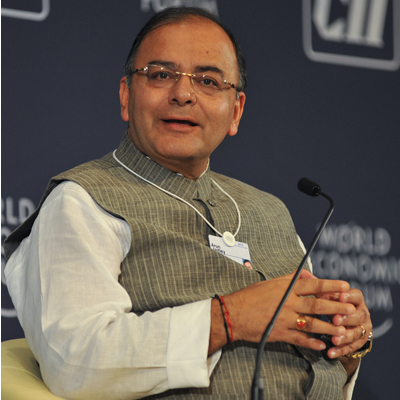
    On the other hand, Information and Broadcasting Minister Arun Jaitley suggested that concentration on sports of core competence such as hockey, wrestling, archery, badminton, boxing and shooting can produce better results for the country in international sports events like Olympics.


    In his address, he said past experience has shown that all countries cannot excel in all sports and a focused approach on sports of core competence has yielded better results for the countries world over. 


    Jaitley said that an adequate infrastructure is needed and a system has to be created where Government and sports federations need to contribute to create infrastructure at least up to the district level for creating talent in Sports. Giving the example of cricket, the Minister said, “Cricket Stadiums are owned by Federations / associations and this practice has to be extended to other sports to meet the shortage of the sports infrastructure. State resources, efforts of the federations and CSR funding can do a lot for betterment of sports and sportspersons in the country.”


    Referring to the issue of Management in sports, Jaitley said that while sports is a state subject, the Centre gives representation to the country in international sports. However, the actual management of sports is with Sports Federations. He urged the Federations to professionalize their structure for better management of sports in the country.


    The Minister said that Delhi had adequate sports infrastructure due to various international events held in the past. “However, this infrastructure is underutilized. With a liberal approach people in Delhi and NCR should be encouraged to utilize these facilities properly for sporting purposes after making a reasonable payment,” he said.


    Sonowal added that the Union budget has provided funds for innovative schemes. Funds have been allocated for setting up National Sports University at Manipur. He said, “Manipur is the nursery of sports talent and has given many internationals and Olympians. This will go on a long way in promoting sports in the North Eastern region.”


    Similarly, Finance Minister has given a special package for promotion of sports in Jammu & Kashmir, which had suffered a lot. Sonowal said his Ministry will do its best to channelize the youth of Jammu & Kashmir to join the main stream and bring laurels for the country.


    He also said that the aim was to tap young talent at school level and the Budget provided funds for launching of National Sports Talent Search Scheme to tap this talent with sports potential from schools and provide them support to achieve their peak of excellence in sports.


    Another pioneering effort that is being launched is to identify medal prospects for the Olympic Games 2016 and 2020 and has given us the scheme called ‘Target Olympic Podium’(TOP) Scheme. The Finance Minister has further extended his support to TOP scheme by arranging a contribution of Rs 10 crore per annum for the next three years through a PSU under him, the Minister added.


    The two-day meeting of State/Union Territory Ministers and Secretaries, which began from 20 March, discussed among other things schemes of Department of Youth Affairs and Department of Sports. During the course of the meeting deliberations have taken place on Rajiv Gandhi Khel Abhiyan, National Sports Talent Search Scheme, Nehru Yuva Kendra Sangathan, National Young Leaders Programme and National Programme for Youth and Adolescent Development etc.


  • Shemaroo obtains John Doe order from HC to protect ‘Hunterrr’ from piracy

    Shemaroo obtains John Doe order from HC to protect ‘Hunterrr’ from piracy

    MUMBAI: Shemaroo Entertainment has obtained a John Doe order from the Mumbai High Court to protect its latest release Hunterrr from the menace of piracy. The order, not only restricts piracy on cable, digital and physical medium but action can also be taken against a person watching the film from an illegal source.


    Shemaroo Entertainment has sent a copy of the order to various MSOs, LCOs and ISPs. Further, the court has directed all police authorities to act on the order.


    The order restrains any person from “downloading from internet, telecasting, broadcasting and distributing or putting on the cable TV network, disseminating, reproducing or otherwise making available to the public, the film Hunterrr or “from (i) making a copy of the said film, (ii) to sell or give on hire, or offer for sale or hire, any copy of the said film (iii) to communicate the film to the public in any manner whatsoever including by way of but not limited to telecasting and/or re telecasting the said film, or even otherwise dealing with the rights in the said film which vest exclusively in the Plaintiff, in any manner whatsoever.” The order also restrains others “from communicating or making available or distributing, or duplicating, or displaying, or releasing, or showing, or uploading, or downloading or exhibiting, or playing, and/or defraying the movie Hunterrr in any manner from the Plaintiff or in any other manner, which would violate/infringe the Plaintiff’s copyright in the said film Hunterrr.”


    Hunterrr stars Gulshan Devaiah, Radhika Apte and Sai Tamhankar and is produced by Anurag Kashyap’s Phantom Films.


    A John Doe order is defined as an action instituted by a party who seeks the aid of the Court in fear of some future probable injury to his rights or interest and the action is brought to prevent a wrong that is apprehended.


  • Website hacking on a rise in last four years: Ravi Shankar Prasad

    Website hacking on a rise in last four years: Ravi Shankar Prasad

    NEW DELHI: A total number of 21699, 27605, 28481 and 32323 websites were hacked by various hacker groups spread across the world from 2011 to 2014, clearly showing an increase in incidents of hacking.


    According to the Indian Computer Emergency Response Team (CERT-In), these also include a total number of 308, 371, 189 and 155 Government websites hosted under ‘gov.in’ and ‘nic.in’ domains during the year 2011 to 2014. 


    Among the comprehensive measures to tackle the problem, the Government says all Central Government Ministries / Departments and State / Union Territory Governments have been advised to conduct security auditing of entire Information Technology infrastructure.


    All the new government websites and applications are to be audited with respect to cyber security prior to their hosting. The auditing of the websites and applications is to be conducted on a regular basis after hosting also. CERT-In provides necessary expertise to audit IT infrastructure of critical and other ICT sectors.


    It has been mandated that all government websites are to be hosted on infrastructure of National Informatics Centre (NIC), Education and Research Network (ERNET) or any other secure infrastructure service provider in the country. 


    NIC, which hosts the government websites is continuously engaged in upgrading and improving the security posture of its hosting infrastructure. NIC has been directed not to host websites, which are not audited with respect to cyber security. 


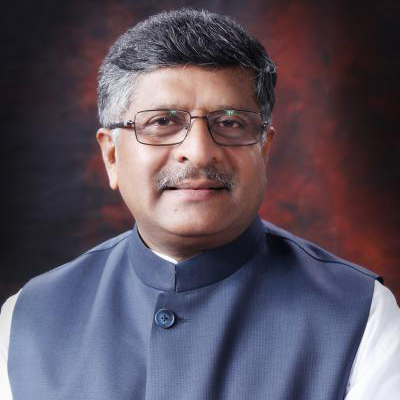
    All major websites are being monitored regularly to detect malicious activities, Communication and Information Technology Minister Ravi Shankar Prasad told Parliament today. 


    CERT-In issues alerts and advisories regarding latest cyber threats and countermeasures on regular basis and has published guidelines for securing the websites, which are available on its website (www.cert-in.org.in). It also conducts regular training programmes to make the system administrators aware about secure hosting of the websites. 


    The hacking of websites is tracked on a 24×7 basis and alerts issued to the concerned website owners to restore the hacked websites and taking further actions to secure the websites.

  • TV channels urged not to air live coverage of anti-terror ops

    TV channels urged not to air live coverage of anti-terror ops

    NEW DELHI: The Government has advised all television channels in public interest to safeguard innocent lives, to ensure that no operations-linked information reaches the terrorists and their handlers, and in the interest of national security, live coverage of counter-terrorism operation by the security forces should not be telecast.


    The advisory was placed on the site of the Information and Broadcasting Ministry.


    Earlier this month, Minister of State for I&B Rajyavardhan Rathore had told Parliament that the government was considering a proposal to prohibit live media coverage of counter terrorism operations by security forces and the Home Ministry wanted amendments in the extant laws in this regard.


    After the carnage in November 2008, the Ministry on 27 November, 2008, 3 December, 2008 and 20 November, 2009 had issued such advisories in public interest and in the interest of national security not to focus on or report the location, strength, movement, strategy and other related operations being followed by the Security forces engaging with the terrorists so as to avoid any adverse impact on rescue operations.


    The advisory was issued as the Ministry said it had come to its notice that some TV channels have covered live the ongoing anti-terrorist operations on 20 March, 2015.


    The advisory says that the media coverage may be restricted to periodic briefing by an earmarked official till the operation is concluded.


    Attention was drawn to clauses 5.9 and 8.1 of the Uplinking guidelines and Clauses 5.8 and 6.1 of the downlinking Guidelines as well as applicable provisions of the Cable TV Networks (Regulation) Act 1995 and Rules thereunder in this regard.


    The issue of coverage by television channels is presently part of the self-regulation guidelines drawn up by the News Broadcasting Standards Authority of the News Broadcasters Association. The Press Council of India had issued similar guidelines with regard to print media.


    These guidelines were drawn up after the 26 November, 2008 attacks in Mumbai. Following a controversy that live telecasts of the counter-terrorism operations were in all likelihood been seen by the masterminds in Pakistan who had planned the attacks.


    As far as Prasar Bharati is concerned, it is governed by the Programme and Advertising Code, which is also part of the 1995 Act and therefore equally applicable to private television channels. The Inter-Ministerial Committee examines complaints under the Act of 1995 and the Rules drawn up a year earlier in 1994.


  • Govt earns Rs 7.41 crore as processing fee from MSOs since 2011

    Govt earns Rs 7.41 crore as processing fee from MSOs since 2011

    NEW DELHI: The Government has earned Rs 7.41 crore as processing fee from multi system operators from April 2011, the Lok Sabha was informed on 20 March.


    Minister of State for Information and Broadcasting Rajyavardhan Rathore said a process fee of Rs 1 lakh was collected from MSOs at the time of submission of application for registration for providing digital addressable system.


    A sum of Rs 4.79 crore was earned till 27 January this year during 2014-15 as processing fee from MSOS.


    In comparison, the processing fee received in previous years was Rs 79 lakh in 2013-14, Rs 1.8 crore in 2012-13, and Rs 3 lakh in 2011-12.


    In addition, some states have levied entertainment tax collected directly by them, and MSOs also have to pay service tax and any other applicable taxes to the central government, the Minister said.


  • FM Radio Phase III first batch to have e-auction of 135 channels

    FM Radio Phase III first batch to have e-auction of 135 channels

    NEW DELHI: A total of 135 private FM radio channels will be auctioned in the first batch covering 69 cities in Phase III based on the reserve price formula approved by the Cabinet in 2011, the Parliament was informed on 20 March.


    This covers towns and cities, which already have FM but have vacancy for more, apart from areas which do not have FM Radio.


    Information and Broadcasting Ministry officials told Indiantelevision.com that the process would be completed by April-end.


    Speaking in the Lok Sabha, I&B Minister Arun Jaitley said that apart from news that will be taken from All India Radio (AIR) under conditions to be mutually agreed with Prasar Bharati, Phase III will consider as non-news and current affairs live coverage of sports events of local nature, information pertaining to weather and traffic, cultural events and festivals, topics relating to examinations, results, admissions, career counsel availability of employment opportunities and public announcements pertaining to civic amenities.


    In addition, categories not permitted at present, may subsequently be permitted by the Ministry from time to time, the Minister said.


    In reply to a separate question, Minister of State Rajyavardhan Rathore said that there is no proposal for community radios before the Ministry.


    The largest beneficiaries of the first batch are Maharashtra including Mumbai with 26 channels in 13 towns, Uttar Pradesh comes next with 22 channels in eight cities, followed by nine channels in six towns of Rajasthan and eight channels in five cities in Tamil Nadu.