Category: Regulators

  • Bollywood slammed for barring women make-up artists despite order

    Bollywood slammed for barring women make-up artists despite order

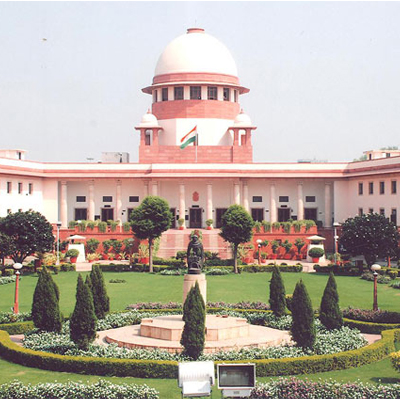
    NEW DELHI: Slamming gender discrimination against women in Bollywood, the Supreme Court demanded to know why its directive of 10 November, 2014 quashing a bylaw of the Costume and Make-Up Artists and Hair Dresser Association had not been followed.


    However, the Court was assured that Association had accepted the application of Charu Khurana and would issue her a membership card in due course, making her the first member of the male-dominated make-up fraternity.


    Until now, women were only allowed to work as hairstylists and the work of make-up was left to men.


    “Such shocking discrimination on the basis of gender is violative of constitutional values. Earlier, the fee (for association membership) was only Rs 5,000 and now you are asking for Rs 1 lakh. These are clearly ways to keep women away even after our order quashing your discriminatory clause,” an angry Justice Dipak Misra told the association’s lawyer. 


    “The societal mindset must change. The male community in several spheres devises ways to keep women away from particular areas of employment,” Misra added. 


    The court was hearing a plea filed by a group of women make-up artists headed by Khurana, after they were refused admission by the make-up artists’ associations in Maharashtra, Karnataka, Andhra Pradesh and Kerala. 


    Thirty-two-year-old Khurana, who lives in New Delhi, said women artists had to either abandon the profession or work illegally, often giving credit for their work to male colleagues so that the union of makeup artists would not find out.


    After being fined Rs 25,000 for working on a Tamil movie, Khurana had sought legal recourse. The apex Court vindicated her stand by instructing the Maharashtra chapter of the Cine Costume Make-up Artists and Hair Dressers Association to allow women to take membership as makeup artists and without the need to hold a domicile certificate of Maharashtra, another prerequisite that prevented those from outside the state from working in Bollywood.


    “The Supreme Court had directed the union to remove the clause pertaining to women and domicile within 10 days,” said Jotika Kalra, the lawyer who represented Khurana in the case.


    For Khurana, the verdict was a vindication of her fight against the misogyny that she and other women artists have faced in the film industry, both in Bollywood and in southern India.


    “We have to do makeup in vans, or in hotel rooms, because the union could raid the sets anytime and fine us. Our names never appear in the credits and there is always a male makeup artist on set, even though he may not be working,” Khurana said in an interview in November.


    In the early years, Bollywood did not have too many women working behind the scenes. Men handled costumes and makeup and even played the role of women up until the 1950s because working in films was not considered an honourable profession.


    Even after women started working in films, the union rules only allowed them to register as hairdressers, never as makeup artists, thus depriving them of rightful wages and the chance to expand their skills.


    A makeup artist can earn anywhere between Rs 5,000 to Rs 25,000 a day, Khurana said, adding several qualified female artists had to turn away from the film industry and settle for weddings or other events because of the archaic rule.


    In its arguments last year, the union boasted of 1,780 makeup artists in Maharashtra alone but said men had always been makeup artists and women always the hairdressers. “That’s just the way things were. We were not against women as such,” said Maharashtra chapter President Sharad Shelar had then said.


  • MIB gets BSI’s ISO certification for Quality Management Systems

    MIB gets BSI’s ISO certification for Quality Management Systems

    NEW DELHI: The Information and Broadcasting Ministry (I&B) has been conferred the certificate of registration by the British Standard Institute (BSI) for the Quality Management System as required under ISO 9001:2008 in respect of various permissions / licenses issued by the Ministry for the broadcasting, print and films sectors.


    These include permission / license for satellite television channels, teleports, multi-system operators, community radio stations, direct-to-home services, publication of Indian editions of foreign, technical and scientific foreign magazines of news and current affairs sector and facsimile edition of foreign newspapers and grant of permission for foreign film producers. 

    The Ministry has been taking several initiatives to bring in more transparency and efficiency in the processes relating to grant of various permissions / licenses to the eligible applicants.


    The Ministry has put in place a well defined procedure and measures for ensuring quality of services offered to the customers on the basis of ISO 9001:2008. This will ensure delivery of services by the Ministry in a qualitative manner.  

  • Composition of Sports Committees, awards eligibility criteria announced

    Composition of Sports Committees, awards eligibility criteria announced

    NEW DELHI: The composition of various Indian sports committees as well as the eligibility criteria for sports awards have been announced.

    The chairman for the Arjuna Award selection committee will be headed by a retired judge of the Supreme Court or High Court. Additionally, other sports committees including Rajiv Gandhi Khel Ratna Award, Dhyan Chand Award, and Dronacharya Award will be headed by persons nominated by the Youth Affairs and Sports Ministry.


    Sports Minister Sarbanand Sonowal told Parliament that the Rashtriya Khel Protsahan Puruskar committee will be headed by the Secretary in the Ministry.


     The composition of the committees will be:


  • TDSAT rejects Star India’s applications against Indusind, Goldstar

    TDSAT rejects Star India’s applications against Indusind, Goldstar

    NEW DELHI: The Telecom Disputes Settlement and Appellate Tribunal (TDSAT) has rejected four miscellaneous applications relating to five cases against it to the effect that an endorsement made by the petitioners at the end of agreements left ‘the door open to the petitioners to walk out of any clause.’


    Four petitions had been filed by Indusind Media and one by Goldstar Noida Network Pvt. Ltd., U.P.


    Star India Pvt. Ltd. Counsel Salman Khurshid said that while executing the interconnect agreement in pursuance of the order passed by the Tribunal, the petitioners made the endorsement that the execution on its behalf was “without prejudice.” He said the whole agreement was put in a state of uncertainty because of the endorsement at the bottom of the agreement.


    However, counsel Vandana Jaisingh for the petitioners stated that the endorsement “without prejudice” relates only to the 15 per cent increase in the subscription fee and to no other clause in the agreement, including the clauses relating to the additional areas.


    It was made clear in the order by which the two sides were directed to execute the agreement that the 15 per cent increase in subscription fee will be subject to the result of a petition pending before the Tribunal. In any view, therefore, the endorsement “without prejudice” is redundant, she said.


    TDSAT chairman Aftab Alam and member Kuldip Singh said in the order that no further directions need be passed in these applications in view of the clarification made by Jaisingh.

  • TV Today Network approaches High Court for speedy decision on Oye FM

    TV Today Network approaches High Court for speedy decision on Oye FM

    MUMBAI: TV Today Network Ltd informed the BSE that it has approached the High Court with regards to the delay by the Ministry of Information and Broadcasting’s (MIB) approval to sell the company’s FM radio business-Oye FM (seven radio stations) to Entertainment Network (India) Limited (ENIL).


    According to the note published on BSE, TV Today Network Ltd stated that the Board noted “that in relation to the proposed sale of seven radio stations to Entertainment Network (India) Limited, since time is of essence and with approval of the MIB getting delayed, hence in order to expedite the matter, an urgent writ petition in the High Court is listed for hearing, to seek necessary relief.”


    TV Today CEO Ashish Bagga, refused to comment on this decision taken by the company.


    The application was filed by the company to MIB on 16 February, 2015.


    Click here to read full report

  • TRAI sees role of local cable operators in helping broadband grow

    TRAI sees role of local cable operators in helping broadband grow

    NEW DELHI: The Telecom Regulatory Authority of India (TRAI) has called for an audit by an independent agency of all allocated spectrum, both commercial as well as spectrum allocated to various PSUs/Government organizations. Stressing the urgency, it has said this ought to be a national priority and must be undertaken within three months.


    In its recommendations on “Delivering Broadband Quickly: What do we need to do?” prepared after consultations with stakeholders, TRAI has noted that current availability of spectrum in local service areas (LSAs) is about 40 per cent of that available in comparable countries elsewhere. There is therefore ‘a crying need for assignment of additional spectrum for commercial telecom services.’ There is need to align spectrum bands with globally harmonized bands to achieve interference-free coexistence and economies of scale.


    There is a need to lay down a clear roadmap for spectrum management, which should state the requirement and availability of spectrum for each LSA as well as for the whole country. This roadmap should be made available publicly to ensure transparency.


    Wireless Planning Commission


    In a far reaching recommendation, it has said that Wireless Planning Commission (WPC) should be converted into an independent body by de-linking it from the present Department of Telecom ‘hierarchy and either converting it into a statutory body responsible to Parliament or transferring it to an existing statutory body.’ 


    ‘Even in a more limited role of assigning solely commercially available spectrum, there is a strong case for an institutional overhaul of WPC to realise goals of institutional efficiency, transparency in decision-making and full disclosure of decisions,’ it says.


    Right of Way


    There is a need for enunciating a National Right of Way Policy to ensure uniformity in costs and processes. 


    Role of Local Cable Operators (LCOs)


    In another major recommendation, it said cable television operators should be allowed to function as resellers of Internet Service Provider (ISP) license holders to enable them to take advantage of their cable network to provide broadband. Implementation of digitisation of cable services to Phase II and III cities should be done in a time-bound manner.


    Satellite Regulations


    There is need to separate Licensor, Regulator and Operator functions in the satellite space domain to conform to best international practices of free markets. The issue of coordination of additional spectrum in the 2500-2690 MHz band with the Department of Space needs to be addressed urgently, so that this band can be optimally utilised for commercial as well as strategic purposes.


    NOFN


    The ‘multi-layered structure for decision making’ for national project NOFN for laying optic fibre is ‘just not suitable for a project that needs to be executed in mission-mode’ and the structure needs immediate overhaul.


    There is need for Project implementation on Centre State Public-Private Partnership (CSPPP) mode by involving State Governments and the private sector. The award of EPC (turnkey) contracts by BBNL to private parties through international competitive bidding needs to be planned. Such contracts can be given region-wise with clear requirements for interconnection with other networks, as well as infrastructure sharing with other operators who would like to utilise this network. A commercial model around this will need to be suitably deployed.


    Telecom Towers


    Referring to towers, it said single-window, time-bound clearance should be encouraged for installation of towers to ensure the rapid development of national networks. Extensive consumer awareness and education programmes should be organised so that consumers fully understand the latest scientific information on EMF radiation and its potential impact on health.


    Referring to Right of Way, it said single-window clearance is an imperative for all Right of Way proposals at the level of the States and in the Central Government. All such clearances have to be time-bound so that Telecom Service Providers and infrastructure providers can move rapidly to project execution. Ideally, single-window clearance should be administered online with a defined turnaround time. The reasons for denial of RoW permission should be recorded in writing.


    To promote fixed line BB, the license fee on the revenues earned from fixed line broadband should be exempted for at least five years. The infrastructure of PSUs is lying unutilised and thus they should be mandated to unbundle their network and allow sharing of outside plant (OSP).


    The Government needs to encourage local and foreign companies to build ‘Data Centre Parks’ on the lines of industrial parks, SEZs etc. by providing them land, infrastructure and uninterrupted power supply at affordable rates.


    Both Central and State Governments will have to act as model users and anchor tenants through delivery of e-Government services including e-education, e-governance, m-health, m-banking and other such services. Schools are the ideal and convenient point for early initiation to broadband services. Government schools in the rural and remote areas can be provided subsidy from the USOF for broadband connectivity. The cost of CPE (desktop/laptop/tabs etc) is a major barrier to the adoption of broadband services. TSPs may be allowed to offer CPE bundled tariff schemes. Revenues from such offers ought to be exempted from the applicable license fee at least for a certain number of years (say for three years). 


    In addition, there are a large number of recommendations of the Authority on which decisions of the Government are still awaited. The Government needs to act quickly on these recommendations as we have already lost too much time. These include, inter alia, on Spectrum Trading, Spectrum Sharing, Open Sky Policy, Infrastructure Sharing, Microwave Access and Backbone Spectrum.


    The Authority had issued the Consultation Paper on “Delivering Broadband Quickly: What do we need to do?” on 24 September last year to discuss issues contributing to broadband penetration in India and to solicit stakeholders’ views on action required to be taken both by the Government and the private sector to accelerate the proliferation and use of broadband in the country. The comments and counter-comments received from the stakeholders were placed on the TRAI’s website. An Open House Discussion was held on 30 October 2014 in New Delhi with the stakeholders. 


    The Authority noted with serious concern the slow penetration and adoption of broadband in the country.  India ranks 125th in the world for fixed broadband penetration with only 1.2 per 100 inhabitants having access to fixed broadband; the global average is 9.4 per 100 inhabitants. In terms of household penetration within developing countries, India is ranked 75th with a penetration of 13 per cent. In the wireless broadband space too, India is ranked 113th with a penetration of 3.2 per 100 inhabitants. In terms of ‘ICT access, ICT use and ICT skills’, India ranks 129th out of total 166 countries. Indonesia (106), Sri Lanka (116), Sudan (122), Bhutan (123), Kenya (124) are ranked above India. India is categorised in the Least Connected Countries Group of 42 countries that fall within the low IDI group.
     

  • Majority of MSOs await security clearance held up by Home Ministry

    Majority of MSOs await security clearance held up by Home Ministry

    NEW DELHI: Nine of the 13 multi-system operators (MSOs) who attended the last two open house meetings for MSOs in the Information and Broadcasting Ministry were told that their cases are awaiting security clearance by Home Ministry, even as the Ministry has now decided to consider the cases afresh.


    Reliance Jio Media’s representative was informed that details of Reliance Jio CEO K. Jayaraman were being sent to the Home Ministry.


    Others in the queue for Home Ministry who turned up in the meetings on 30 March and 7 April are Seven Star, Infinite Television & Telecom, K Net, GTPL Hathway, Shirdi Sai Digital, Sahyog Telelink, Om Systems and Subhodhaya Communication.


    The cases of Subhodhaya Communication, Technobile System, Akshaya Diginet Cable, Technobile Systems and Bhaskar Cable Network have also been held up for other reasons including policy decisions.

  • 169 MSOs get 10-year licenses under DAS

    169 MSOs get 10-year licenses under DAS

    NEW DELHI: With the addition of eleven more multi-system operators (MSOs) after 25 March, the number of MSOs who have been granted permanent registration for ten years to operate the digital addressable system (DAS) has gone up to 169, even as the Home Ministry has been forwarded the names of 82 MSOs who have been awaiting security clearance for a long time.


    Most of these MSOs had been given provisional permission earlier. The new list is as on 10 April.


    The MSOs who have received permission after 25 March are: M C Transmission of Bhatinda for Punjab; Skyvision Master Channel for In Yanam and East Godavari District; Arohon Cable TV Network of West Bengal for 24 paraganas (south) which includes Amtala, Bishnupur, Daulatabad, Gabberia, Julpia, baruipur, Mruogranut, Srichanda, Bhasa, Bibirhut, Pailan, Roypur, Fatehpur, Sirakol, Sibanipur, Falta etc. and District of Howrah in the state of west Bengal under Phase III and IV; Machillipatnam Communication for entire Andhra Pradesh under Phase III & IV; Uday Infosys of Dhansura for Aravalli, Kheda and Sabarkantha districts; United Cable Communications of New Delhi for pan India; Radiant Digitek Network of Kota for Phase II, III, IV of entire Rajasthan; N T Broadcasting of Perambdur for Perambalur, Cuddalore, Salem, Villupuram, Trichy and Ariyalur districts in Tamil Nadu; SR Digital of Madhya Pradesh in the State including cities/towns/villages under Phase ll, lll and lV; Mahathi Warangal Communications & Cable TV Network for Warangal and Karimnagar Districts; and Yelamanchil Cable Network Pvt. Ltd of Vishakapatnam for Phase III in the State of Andhra Pradesh and Telangana.


    With the rejection of an application by Digi Navi Mumbai Network of Andheri (East), the list of MSOs who have been refused permission as on 10 April has gone up to 28. Some of those in the cancelled list applied as early as March 2013.

  • TRAI chairman wants debate to settle net neutrality not spars between companies

    TRAI chairman wants debate to settle net neutrality not spars between companies

    MUMBAI: The Telecom Regulatory Authority of India (TRAI) chairman Rahul Khullar has said that there is a need for a democratic debate on net neutrality, especially against the backdrop of a big corporate war between a media house and a telecom operator.


    “There are passionate voices on both sides of the debate. And if that was not enough, there’s a corporate war going on between a media house and a telecom operator, which is confounding already difficult matters,” Khullar told The Indian Express.


    The authority has received over 800,000 mails since it floated a consultation paper on regulatory framework for over-the-top (OTT) services and applications on 27 March. TRAI requested stakeholders to comment on its paper by 24 April and offer counter comments by 8 May. It is also likely to hold an open house discussion on the issue soon. Stand up comedy group All India Bakchod (AIB) and other net neutrality activists were the prime reason behind so many mails sent to the Authority. 


    According to Khullar, there are people who are passionately concerned about net neutrality. “They have a moral anchor… Equally, there are others on the opposite side. But there are many others in between that one should not ignore despite the passionate nature of the debate between the two extremes. We need a democratic debate on the issue, not shrill voices,” he said.


    The regulator has heard arguments on both sides. For instance, telecom service providers have pointed out the contradiction in the government’s digital inclusion agenda, which may not be achieved if they strictly adhere to the net neutrality principle, because they will be unable to raise any additional resources for rolling out networks and infrastructure. On the other hand, OTTs argue that if telecom operators are allowed to pick and chose, they might build alliances with the big OTTs at the cost of the nascent ones.

  • Naqvi urges Maharashtra govt to review entertainment tax policy

    Naqvi urges Maharashtra govt to review entertainment tax policy

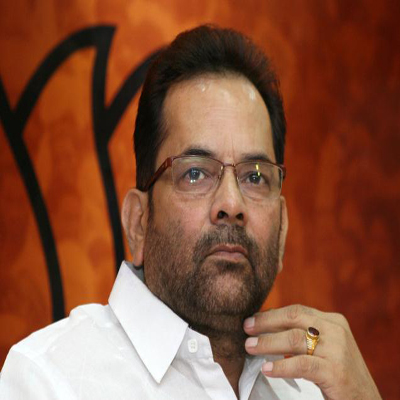
    NEW DELHI: Minister of State for Parliamentary Affairs and Minority Affairs Mukhtar Abbas Naqvi has appealed to the Maharashtra Government to review its entertainment tax structure, noting that a 40 per cent entertainment tax is levied in the state.


    A former Minister of State for Information and Broadcasting, Naqvi also stressed on the need to encourage documentary culture in India as short films and documentaries have proved to be a medium to enhance knowledge of people on different social economic and culture issues.


    He was speaking at an event in Mumbai to mark the 100 short film concept, written by him on “personalities of India” and the screening of film My Life in Mumbai over the weekend.


    He said there are significant short and documentary filmmakers and they need to be encouraged. Naqvi expressed that through short and documentary films social values, tradition and culture can be effectively showcased.


    Documentaries on issues like social, economic, political environment, human rights, education, health, gender equality, women empowerment and poverty can create an awakening in society at large.


    He added that infotainment channels in the country should have dedicated slots for showcasing short films and documentaries.