Category: Regulators

  • Initial licence should be for 10 years as VNO is new concept: TRAI

    Initial licence should be for 10 years as VNO is new concept: TRAI

    NEW DELHI: Virtual Network Operators (VNO) in the telecom sector should be permitted for all segments of voice, data and video as well as for all services notified in the unified license (UL) for a period of ten years, extendable by ten years at a time. 


    The Telecom Regulatory Authority of India (TRAI) in its recommendations has said VNO should be introduced through proper “licensing framework” in the Indian telecom sector.


    For introduction of VNO in the sector, there should be a separate category of license namely UL (VNO). Like UL authorization, only pan-India or service area-wise authorizations may be granted under a UL (VNO) license.


    The recommendations were given after the Department of Telecommunications (DoT) through its reference of 7 July last year had sought recommendations of TRAI on the subject.


    TRAI said that VNOs are service delivery operators, who do not own the underlying core network but rely on the network and support of the infrastructure providers for providing telecom services to end users and customers. 


    VNOs can provide any or all telecom services, which are being provided by the existing telecom service providers.


    VNO should be introduced in the network based on the basis of mutually accepted  terms and conditions between NSO and the VNO. The terms and conditions of sharing the infrastructure between the NSO and VNO are left to the market to determine.


    VNOs should be permitted to set up their own   network equipment where there is no requirement of interconnection with other NSO.  However, they should not be allowed to own/install equipment where interconnection is required with another NSO.


    Local Cable Operators (LCOs) and Multi Service Operators (MSOs) can become VNO and are permitted to share infrastructure with VNOs.


    There should not be a restriction on the number of VNO licensees per service area and there should be no restriction on the number of VNOs parented by an NSO.


    Customer verification and number activation shall be the responsibility of a VNO for its own customers.


    VNOs that enter the network would do so based on arriving at a mutual agreement between an NSO and a VNO.


    The Authority recommended that VNOs should be permitted for all services notified in the UL.                                            


    TRAI recommended that the terms and conditions of sharing of infrastructure between the NSO and VNO should be left to the market i.e. on the basis of mutually accepted terms and conditions between the NSO and the VNO.       


    The Authority recommended VNOs be permitted to set up their own network equipment viz. BTS, BSC, MSC, RSU, DSLAMs, LAN switches, where there is no requirement of interconnection with other NSO(s). Therefore, they should not be allowed to own/install equipment viz. GMSCs, Soft-switches and TAX.


    Equipment permitted to be owned/installed by VNOs should conform to the technical standards prescribed by standardization bodies like TEC and ITU.


    VNOs may also be allowed to create their own service delivery platforms in respect of customer service, billing and VAS. MSOs and LCOs who want to provide broadband services through their cable network may do so by obtaining a VNO license. MSOs/LCOs may also share their cable infrastructure with VNOs, after the MSO/LCO register themselves as an IP-I service provider.


    There should be a separate category of license namely UL (VNO). This UL (VNO) will contain similar authorizations for services and service areas as provided in the existing UL.


    An operator who wishes to provide telecom services to its customers utilizing the underlying network and/or access spectrum of an existing NSO will have to obtain UL (VNO) license. 


    The Authority recommended that resale of IPLC presently under the UL shall be shifted from the existing UL to UL (VNO) licensing in order to make a clear distinction among the class of operators.


    A VNO should be a company registered under the Indian Companies Act 1956 (as amended). The entry fee for UL (VNO) with a given authorisation will be 50 per cent of the entry fee prescribed for the UL. Financial Bank Guarantee will be equal to the amount of two quarter license fee. Minimum equity and minimum networth may be kept at 40 per cent of the amount prescribed under UL. 


    The Authority recommended that under UL(VNO) the provision for restriction of 10 per cent or more equity cross holding to be applicable between (i) a VNO and another NSO (other than VNO’s parent NSO) and (ii) between a VNO and another VNO authorized to provide access services using the access  spectrum of different NSO in the same service area.                                                                         

    A VNO shall be liable to pay LF as a percentage of AGR at the same rate as that of the parent NSO.


    VNO shall also be liable to pay the SUC for the wireless service(s) it offers to the customers. The SUC rate will be same as that of the parent NSO.


    Since Quality of Service is in the exclusive domain of TRAI, the Authority will put in place comprehensive regulations on QoS parameters to be complied separately by NSOs and VNOs.
  • Govt. issues urban TV households’ list to be covered in DAS Phase III

    Govt. issues urban TV households’ list to be covered in DAS Phase III

    NEW DELHI: A total of 38,799,074 television households will be covered in 7,709 urban areas in 630 districts in 35 states and union territories in Phase III of Digital Addressable System (DAS) expected to be completed by the end of this year.


    The list is based on the Census Report of 2011 carried out for the government of India.


    The list mentions two other areas: Delhi and Chandigarh, where it says DAS was completed in Phase I.


    Tamil Nadu tops the list of urban areas with 1095, primarily because DAS was stayed in Chennai after Madras High Court orders. 


    Uttar Pradesh comes next with 906, followed by West Bengal with 858 and Maharashtra and Kerala with 524 and 520 districts respectively.


    The Ministry website gives details of each state and union territory and also lists every urban area along with TV households. 

  • Home Ministry asks for updated directors list of downlinked TV channels to enable 10 year renewal

    Home Ministry asks for updated directors list of downlinked TV channels to enable 10 year renewal

    NEW DELHI: The Home Ministry has asked all television channels and those managing teleports, whose downlinking permissions have expired after five years or is in the process of expiring by December this year, to furnish details afresh about their Board of Directors and key executives.

    As per a notice on the website of the Information and Broadcasting Ministry, the required information has to be filed by 10 May for the channels and teleports to apply for extension of their permissions.

    The website lists 60 TV channels whose downlinking permission is over and six channels whose permission is expiring this year.

    Channels whose permissions have expired include Sony Entertainment Television and its related channels, Zee Trends, B4U movies, BBC World, Bloomberg, DW TV, TV 5 Monde, various channels of the Discovery group, channels of Star Sports, channels of Nat Geo, AXN, NHK World, Ten Sports, Disney, CNN, Pogo, HBO, WB, Zee Café and Zee Studio.

    The six whose downlinking permissions are expiring include Al Jazeera, France 24, ESP News and Grenada TV.

    Asked why the period mentioned was five years and not ten as already stipulated, I&B secretary Bimal Julka told Indiantelevision.com that the period of licence was five years until 2011 but has since been increased to ten years. Thus, all these applicants will get renewals for ten years.

    He also said that the period had been ten years for those who uplinked and downlinked, and the aim of the 2011 change was to make the downlinking permission co-terminus with the licence period. Thus, all renewals will be for ten years.

    Julka also said that the Home Ministry had assured him that cases held up for security clearances as far as multi-system operators (MSOs) were concerned would be speeded up as the officials were until now tied up with the Nepal rescue work.

  • TRAI proposes more data pack usage for mobile users; Khullar non-committal on net neutrality

    TRAI proposes more data pack usage for mobile users; Khullar non-committal on net neutrality

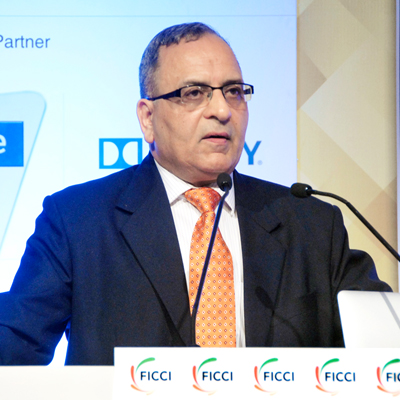
    NEW DELHI: The Telecom Regulatory Authority of India (TRAI) wants telecom service providers to provide ample information about subscribed data pack usage.


    TRAI said in the draft ”Telecom Consumers Protection (Eighth Amendment) Regulations, 2015” that it proposes to mandate the service providers to provide information, through SMS or unstructured supplementary service data (USSD), to mobile users, who have subscribed to data connection other than through data packs about quantum of data used and the tariff thereof after every 5,000 kilobytes of data usage.


    The draft was released on 29 April and comments of stakeholders can be submitted till 12 May.


    TRAI has been receiving several complaints from consumers regarding non-availability of information relating to the amount of data used during a data session.


    The service providers offer concessional tariff for data, up to a certain limit, through special tariff vouchers or combo vouchers (data packs) and also through certain tariff plans. The tariff for any usage beyond the specified limit is substantially higher, and in case the customer does not know about reaching the limit for concessional tariff, it results in substantial charges levied, leading to sudden bill shock or unexpected deduction of balance amount.


    ”The consumers have also voiced their concern about activation of internet service on mobile phones without their consent and knowledge leading to sudden deduction of charges for data usage,” the statement said.


    TRAI has examined these complaints and has felt that measures need to be taken for addressing these genuine concerns of customers. In this regard, TRAI proposes to amend the Telecom Consumers Protection Regulations, 2012.


    The regulator also proposed to mandate the service providers to provide the mobile subscriber who has taken data connection through data packs or through tariff plan with discounted tariff up to certain limit, an alert through SMS or USSD, whenever the limit of data usage reaches 50 per cent, 90 per cent and 100 per cent of data limit.


    ”Also when the usage reaches 90 per cent of the limit, information about the applicable tariff beyond the data limit shall also to be communicated,” the statement added.


    It is proposed that data services should be activated or deactivated only with the explicit consent of the subscriber through toll free short code 1925, following the prescribed procedures for obtaining explicit consent of the consumer and for deactivation data.


    In fact, TRAI chairman Rahul Khullar recently said that TRAI is likely to announce new parameters for improvement of quality of service for telecom operators in a month’s time to tackle call dropping and other problems being faced by customers.


    He was speaking at the 2nd National Summit on ‘IT & Mobile Banking: Digital Transformation of Indian Banking. Enabling Financial Inclusion,’ organised by the Associated Chambers of Commerce and Industry of India.


    Regarding the ongoing debate on net neutrality, Khullar said, ”The consultation process on network neutrality is still on till that consultation is complete, I will not make any statement.”


    Khullar also said that financial inclusion could be deeply achieved by harnessing new technology, which does not cater exclusively to those who are already banked or those living in urban areas.


    ”Do not delude yourself into believing that merely because technology exists, it will be suddenly harnessed for everybody’s good. The way it has worked so far at least, it has been harnessed for the good of a very few as it’s only those having devices and are electronically savvy who are in good shape,” he added.

  • SC Committee suggests setting up ombudsman to monitor govt ads

    SC Committee suggests setting up ombudsman to monitor govt ads

    NEW DELHI: The Government has spent over Rs 780 crore by way of advertisements, of which a major part went to audio-visual advertisements, during the past six months till March this year.

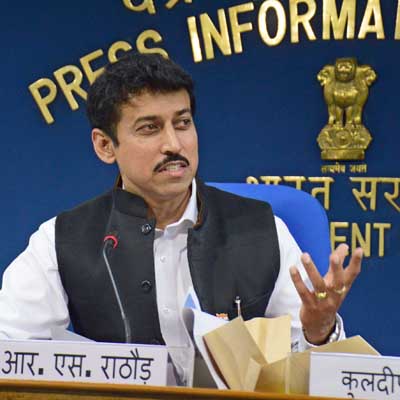
    Minister of State for Information and Broadcasting Rajyavardhan Rathore said these advertisements were issued through the Directorate of Advertising and Visual Publicity.

    Rathore said in Parliament that a Committee set up by the Supreme Court for suggesting the guidelines on Government funded advertisements following a writ petition filed had advocated appointment of an ombudsman to receive complaints of violation of guidelines prepared by them and to recommend action in accordance with the guidelines.

    The Committee also suggested that the ombudsman could recommend suitable changes to the Guidelines to deal with new circumstances and situations. Supreme Court took up the concerned writ petition for hearing on 17 February, 2015 when it reserved its judgment.

    The details of the expenditure by DAVP in the last six months are:


  • TDSAT sets aside 27.5% inflation-linked hike for addressable & non-addressable systems

    TDSAT sets aside 27.5% inflation-linked hike for addressable & non-addressable systems

    NEW DELHI: The Telecom Disputes Settlement and Appellate Tribunal (TDSAT) today set aside the amendments in two tariff orders, which had sought to put an inflation-linked hike of 27.5 per cent on addressable and non-addressable systems, opening the doors to a re-think on the entire policy of tariff orders.


    TDSAT chairman Aftab Alam and member Kuldip Singh said in their order today that the ‘The Telecommunication (Broadcasting & Cable) Services (Second) Tariff (Eleventh Amendment) Order, 2014’ and ‘The Telecommunication (Broadcasting & Cable) Services (Second) Tariff (Thirteenth Amendment) Order, 2014’] were ‘untenable.’


    The Tribunal also said it thought the Telecom Regulatory Authority of India (TRAI) “will be well advised to have a fresh look at the various tariff orders in a holistic manner and come out with a comprehensive tariff order in supersession of all the earlier tariff orders.”


    “While doing so, it may consider all the agreements and relevant data available with it. It may consider differentiating between content which is of a monopolistic nature as against that the like of which is shown by other channels also.”


    “It may also consider classifying the content into premium and basic tiers. It may identify the major cost components so that increase or decrease in such costs may be suitably factored while working out the inflationary hikes. Increase in costs of such components as may be available in indexes such as WPI, GDP deflator etc. can then be applied. While working out the tariffs, the effort should be to encourage a correct declaration of SLR. While carrying out the exercise, it may take the inputs from various stakeholders and give a reasoned order for accepting or rejecting the same. We want to be amply clear that the above are only some suggestions and TRAI being an expert body may arrive at suitable tariffs independently; it is up to it to consider the above and/or any other factors,” the Tribunal said.


    The tariff hike was challenged by Home Cable Network, the Centre for Transforming India, Lucknow 9 Cable Network, Good Media News India Pvt Ltd, Sikkim Digital Network and Cable Combine Communication Siliguri.


    Later, the Indian Broadcasting Federation (IBF) supported the order as intervener while the other interveners comprising Direct to Home (DTH) operators, Multi System Operators (MSOs) and Association of Cable Operators/Cable Operators opposed the order on the same grounds as the Appellants.


    TRAI had allowed a 15 per cent hike from 1 April, 2014. The second installment of 12.5 per cent tariff hike came into effect from 1 January, 2015.


    TRAI said the inflationary increases given by it are based on increase in the Wholesale Price Index (WPI). In the Explanatory Memorandum with the Second Amendment to the Principal Tariff Order, it was explained that for making adjustments for inflation Wholesale Price Index (WIP) had been used. It was explained that Consumer Price Index (CPI) was not used as latest information for this was not available and further this related to certain specific consumption baskets. As per the Explanatory Memorandum to the impugned Tariff Order, the WPI has increased by 43.69 per cent and giving a pass through of 63 per cent, an inflation linked increase of 27.5 per cent is allowed.


    Appearing for the appellants, advocate Vivek Sareen, who is a former employee of Tata Sky and is therefore from the industry, had argued the case on economic modules from all over the country, which in fact showed that the prices had actually come down according to the GDP Deflator, and therefore the hike was unjust.


    Senior counsel for the appellants Arun Kathpalia said the original exercise on which tariff fixation is predicated is not a tariff exercise and therefore all tariffs fixed on that basis are not tariff fixation exercises. He added that the entire increase is arbitrary as it is on an ad-hoc and interim fixation, as such itself arbitrary in the first place. The increase is otherwise also wholly arbitrary and suffers from non-application of mind. He also said the tariff order has been issued in complete violation of section 11(4) and there is no transparency whatsoever in the process adopted by the TRAI.


    It was also submitted that despite availability of all the relevant information for price fixation in Digital Addressable System (DAS), TRAI arbitrarily linked ceiling of rates in DAS with analog regime vide 4th Tariff Order dated 21 July, 2010. The upward revision by 27.5 per cent in wholesale price for Non-DAS area will automatically result in revision of the ceiling of corresponding prices in DAS regime. TRAI has created another ad-hoc regime for DAS by linking the ceiling of charges of DAS with analog, it was argued.


    TDSAT said, “It was argued that the tariff based on historical costs is one of internationally accepted methods. We find that even that is required to be based on a proper exercise conducted for the purpose. We may note that in the United States following the Cable Television Consumer Protection and Competition Act of 1992, US Congress asked Federal Communications Commission to ensure that rates for basic services tier are reasonable. FCC decided to go for price caps and the first thing it did was to collect data on rates being charged by cable operators operating in competitive as well as non-competitive areas. We can understand the freezing of rates being charged on a particular date as an interim measure but we fail to understand why TRAI did not examine the rates being charged in the agreements at the time of giving inflationary hikes.”


    The Tribunal had in May last year asked broadcasters to maintain a separate account for the additional subscription amount that they have collected from distribution platforms as a result of the tariff hike as this would be subject to the outcome of the case.

    Sareen had argued that the impugned tariff order had adversely impacted the interest of the addressable platform because the wholesale pricing of the addressable system is based on the wholesale pricing of the non-addressable platform. He said the impugned tariff was heavily tilted towards broadcasters and seriously prejudiced the interest of the consumers, MSOs and stifles orderly growth of the cable and broadcasting sector.


    Sareen argued that TRAI ignored the fact that the wholesale pricing of non-addressable system and addressable system are inter related. The wholesale price for addressable platform is derived from the wholesale price of non-addressable system. By its order, TRAI indirectly and in substance increased the wholesale price for addressable platform / DAS notified area. The said increase in the wholesale price for addressable platform is affected in violation of section 11(4) of the Act.   


    TRAI completely disregarded the fact that by changing the content pricing and increasing the same by 27.5 per cent with reference to the price existed immediately prior to 31 March, 2014, this would immediately increase the price of content for addressable platform. The authority did not provide any hearing opportunity to the stakeholders including the Appellants to represent its view as a stakeholder in the consultation process.


    It was stated that TRAI, in utter disregard of the valuable rights of the stakeholders including the Appellant and the consumers provided under Section 11(4) of the Act, rushed to issue the impugned order thereby increasing the wholesale price for addressable platform by 15 per cent with effect from 1 April, 2014. Thus the impugned order failed to take into account the inputs from such stakeholders.

  • Media fraternity welcomes GST; few pose doubts over implementation

    Media fraternity welcomes GST; few pose doubts over implementation

    MUMBAI: Amidst strong controversy, Arun Jaitley led finance ministry of India tabled the Goods and Service Tax (GST) in the parliament for further debate. GST is often termed as India’s most ambitious indirect tax reform plan by economists, which aims to stitch together a common market by dismantling fiscal barriers between states. It is a single national uniform tax levied across the country on all goods and services.


    The indirect tax system in India is currently mired in multi-layered taxes levied by the Central and State governments at different stages of the supply chain such as excise duty, central sales tax (CST), value added tax (VAT) and octroi tax, among others. In GST, all these will be subsumed under a single regime. 


    Even as the entire opposition party, led by Sonia Gandhi, posed a walk out from the Parliament in protest against the procedure and particulars of the amendment, Indiantelevision.com took the opportunity to seek reactions of the vanguards of the media, cable and Direct-to-Home (DTH) industries on GST. While industry stalwarts welcomed the thought behind GST unanimously, a few posed doubts over its successful implementation.


    Dish TV CEO RC Venkateish says, “It will be good for the DTH sector. At present we are victims of multiple taxation system where we pay various taxes in entertainment tax, service tax etc. With GST, it will all get rolled under one. If the GST is approved and rolled out, we will have a tax reduction of three to 3.5 per cent and hence it will be a good move for the sector.”


    Welcoming GST wholeheartedly, Videocon D2H CEO Anil Khera opines, “GST is a welcome move. It will help the DTH sector to prosper. DTH is the biggest victim of multiple taxation policy and GST will simplify that. The industry needs a uniform taxation system and the sooner it comes the better it is.”


    Explaining why GST is good for the economy in the long run, Times Network CEO MK Anand says, “GST brings uniformity and transparency and therefore better administration. However, in the short term, there are expected to be issues. Broadcasting will move from CST, which we believe will be lower than GST as we expect and that is going to put pressure on our pricing. The broadcast ecosystem at the bottom end has elements like consultants or local operators, who may try to push for absorbing into prices. The other thing is the state wise registration and filing of GST as against the current centralised filing. This is also an additional activity that we will now have to account for and so it increases costs to some extent.”


    GTPL Hathway COO Shaji Mathews supports the concept behind GST but has doubt on its successful implementation. He explains, “Taxation has been the biggest issue when it comes to digitisation. With digitisation, often only three stakeholders are associated namely: multi system operators (MSO), broadcasters and local cable operators (LCO). However in actuality, there are two more parties involved – the government and consumers. Government has been the major gainer so far from digitisation and they have been trying to shift the tax burden on to the consumer. However the consumer is not ready to take it and hence operators have been bearing the brunt of it all. With GST, the concern is over entertainment tax, which varies from state to state. No clear information is provided whether entertainment tax will be included in GST and if yes, then at what slab. So overall, while the thought behind GST is good, there are a lot of question that are still unanswered. Moreover, since the government hasn’t made any efforts to rationalise taxation, the implementation is something that remains to be observed closely. The problem is with the mechanism that the government follows, where they don’t consider the tax payers’ point of view while implementing an amendment.”


    Another senior official from the cable fraternity asserts, “GST has the potential to emerge as a blessing in disguise. As we proceed with digitisation, uniformity in taxation is the least that we can expect. It has been very harsh on us, as we operate across different states and at times we end up paying tax for an already taxed item, which is not something that we should be facing. Overall, I welcome GST and see it as an encouraging move though only time will unfold the real story.”


    NDTV executive vice chairperson KVL Narayan Rao adds, “Frankly, GST deals more with Goods and Service providers and doesn’t impact us directly but I consider it as a beneficial move. For example, if I have to set up a new studio at a new location, GST will help me as I won’t pay multiple taxes and hence it affects the pricing.”


    Backing GST, entrepreneur Ronnie Screwvala opines, “A business friendly environment had to be developed in India and taxation is a key element to that. With the Goods and Service Tax, service tax will come down to 16 per cent, which solves many problems. Hence GST is a firm step forward towards developing a business friendly scenario in India and it will surely help the country to ensure economic growth.”


    As per information available, the government is expected to rollout GST by April 2016.With absolute majority in the Lok Sabha, it will not be a challenge for the government to pass it through in the lower house. However the bigger obstacle will come from the Rajya Sabha as Jaitley and company will have to penetrate through a larger opposition. The entire business fraternity will keenly observe the next few days of proceedings in both houses of the Parliament.

  • Mobile Apps to help passengers for railways, taxi services

    Mobile Apps to help passengers for railways, taxi services

    NEW DELHI: Despite fears that the growth of Internet is not as fast as it should be, social media and apps appear to be pervading all spheres of live.


    Taking a cue from the heavy dependence of social media and mobile on people’s lives, the Railway Ministry has launched a portal on Complaint Management in English and Hindi to address needs of the consumers. However, the mobile application is available only in English on Android platform.


    The public complaints and suggestions are being monitored on a real time basis. Necessary instructions have been issued to concerned officials to finalize the complaints at the earliest. However, no time frame has been set to redress the complaints.


    Minister of State for Railways Manoj Sinha told the Parliament that bona fide passengers could also send their suggestions through this newly launched portal.


    The details of the Railway Mobile App have been given wide publicity through Indian Railways’ sharing details on its social networking sites such as Facebook and Twitter.


    Meanwhile, the Road Transport & Highways Ministry has finalised a draft advisory for the State Governments in consultation with stakeholders with regard to taxi-hailing services using mobile apps.


    The taxi hailing services or the on-demand transport aggregating services in question are covered under Section 93 of the Motor Vehicles Act, 1988.


    The State Governments have the power to regulate such service providers under Section 93, Minister of State for Road Transport & Highways Hon Radhakrishnan told Parliament today. 

  • 178 applications for new TV channels pending: Rajyavardhan Singh Rathore

    178 applications for new TV channels pending: Rajyavardhan Singh Rathore

    NEW DELHI: A total of 178 applications for new TV channels have been pending with the Government of India since 2012.


    Information and Broadcasting Minister of State Rajyavardhan Singh Rathore said, “The grant of permission to private TV channels is dependent upon requisite clearances from various ministries and departments. After receipt of all clearances, the ministry takes up the case for grant or rejection of permissions.”


    The Minister further added that the matters were being taken up regularly with various departments and ministries at various levels for early clearance so that the permission to the TV channels could be granted.


    Giving details on the pendency, Rathore said that there were 36 applications in 2012, 59 in 2013, 56 in 2014 and 27 in 2015.


    The Minister said that the Ministry, at present, granted permission to 832 TV channels out of which 406 were news and 426 were general entertainment channels (GECs). Religious channels and sports channels are included in the GEC category.

  • TRAI asks MSOs, b’casters to sign MoU on interconnect agreements in phase III

    TRAI asks MSOs, b’casters to sign MoU on interconnect agreements in phase III

    MUMBAI: The Telecom Regulatory Authority of India (TRAI) has given time till 30 April, 2015 to both broadcasters and multi system operators (MSOs) to enter into a memorandum of understanding (MoU) with regards to interconnect agreements in phase III of digital addressable system (DAS) areas.  


    During the seventh task force meeting for successful completion of phase III and IV of digitization, a representative from TRAI informed that in case the broadcasters and MSOs fail to reach any agreement, the Authority will intervene in the matter, as per regulations. “While broadcasters were asked to give report every fortnight, the same has not started coming,” said the TRAI representative.  


    The representative also mentioned that in the transition period both analogue as well as digital signals can be provided by the MSOs in phase III areas. “As per the regulations digital signal can be provided in areas undergoing transition without waiting for the cutoff date,” he added.


    The meeting was convened under the chairmanship of Information and Broadcasting Ministry additional secretary JS Mathur, who said, “While there has been some progress on the issue of interconnect agreements for phase III areas but there are still many areas which need to be addressed by broadcasters.”


    During the meeting, an IndusInd Media and Communication Limited (IMCL) representative said that while they had sent interconnect requests to all broadcasters, as per the TRAI directive, they had received response from only one broadcaster, while Siti Cable was still awaiting a response from all. A Siti Cable representative said, “Broadcasters are filing cases of piracy against MSOs if they start providing digital signal in the phase III areas.”


    MSOs pointed out that the situation is critical and TRAI must take immediate necessary action to resolve the issue. MSOs also want the entertainment tax, levied by State Governments, rationalised.


    Representatives of broadcasters said that they would approach TRAI for clarification on the interconnect agreements to be signed for the transition period. “No such issues of interconnect agreements were raised during phase I and phase II of digitisation and the set top boxes (STBs) were still seeded. Why are these issues being raised now?” questioned broadcasters.


    Broadcasters also raised concerns on the HITS (Headends In The Sky) platform of delivery with regard to addressability although it is mentioned that it is addressable from the day one. Broadcasters also opined that DAS regulations should apply from the date MSOs take digital signal.


    According to Mathur, consumers have the right to know what they have to pay for the digital signal and so, it is imperative that broadcasters and MSOs work out agreements between them without further loss of time. He added, “Channel package rates have to be in public domain. Broadcasters must now finalise all issues with MSOs so as to have a lead time of implementation.”


    While the universe for phase I and II was extremely limited, phase III has to cover all the urban areas of the country. This would thus require exhaustive planning along with suitable investments. “Both broadcasters and MSOs must now finalise their agreements and inform TRAI within the stipulated time period of 30 April,” said Mathur, while suggesting that TRAI should convene a meeting soon after the time period it has given for finalising the action plan for smooth and timely transition.


    Mathur also expressed dissatisfaction over the public awareness campaign for digitisation in phase III areas carried out by the stakeholders so far. He asked all stakeholders and particularly the broadcasters to start the publicity campaign forthwith.


    While the Ministry is still awaiting data on carriage fee and subscription revenue from both the Indian Broadcasting Foundation (IBF) and the News Broadcasters Association (NBA), an NBA representative assured that it will be sent before the next meeting.


    Mathur also enquired about the initiatives being taken by MSOs for using indigenously manufactured STBs. Responding to this, an MSO representatives said that the dialogue with indigenous STB manufacturers was on.


    Consumer Electronics and Appliances Manufacturers Association (CEAMA) representative informed that they had fruitful discussions with some MSOs in which they made some financing offers to MSOs for the supply of STBs.


    Representative of CEAMA further added that they were now facing a major competition from the suppliers of ASEAN countries since the government, as per the ASEAN agreement signed in 2009, has reduced the import duty on STBs imported from ASEAN countries to two per cent only against 10 per cent from other countries. He said, “MSOs may neglect local STB manufacturers and start importing from ASEAN countries, but this will be against ‘Make in India’ initiative of the Government.”


    Meanwhile a CEAMA representative requested the I&B Ministry to look into the issue, while informing that they were also in the process of writing to the Ministry of Commerce about this development. In order to know the use of indigenously manufactured STBs, Mathur directed that the information on utilisation of domestically manufactured STBs may also be sought from all MSOs along with the seeding plans.