Category: Regulators

  • Four new channels receive MIB permission to launch in 2015

    Four new channels receive MIB permission to launch in 2015

    NEW DELHI: While the year 2014 saw the clearance of more than 30 television channels, the first four months of 2015 have so far only seen four new channels receiving permission to launch. They are: ETV Plus, ETV Life, ETV Abhiruchi and Vedas Om TV. The largest gainer is here Eenadu Entertainment Television of Hyderabad, which owns the ETV brand of channels.


    To expedite the process, which had remained stagnant after March-end, the Ministry now holds the Open House meetings with stakeholders two time every month instead of once.


    With the four new channels being added this year, the number of permitted satellite television channels has gone up marginally to 830 by April 2015 from 826 in December-end 2014.


    The cleared channels are all general entertainment channels (GECs), which now total to 425 and all of them have been given uplinking permission.


    Statistics show that 697 channels (including 382 news channels) are permitted to uplink and downlink from within the country, and 40 (including seven news channels) are uplinked from India for beaming overseas and not in the country. There is no change in channels uplinked from overseas and downlinked into India with the number remaining static at 93 (including 16 news channels). 


    Additionally, the MIB has permitted 9X Bangla channel to assume a new name – 9X Bannao.

  • Supreme Court declines to stay TDSAT order cancelling inflation-linked hike

    Supreme Court declines to stay TDSAT order cancelling inflation-linked hike

    NEW DELHI: The Supreme Court has declined to stay the order of the Telecom Disputes Settlement and Appellate Tribunal (TDSAT) setting aside the amendments in two tariff orders, which had sought to put an inflation-linked hike of 27.5 per cent on addressable and non-addressable systems.


    While listing the appeal for hearing on 1 July, Justice V. Gopala Gowda and Justice C. Nagappan said it would only consider the matter if matters of law were involved.


    Earlier, counsel for the Indian Broadcasting Foundation (IBF) and some broadcasters sought stay on the ground of wholesale price index. They also sought to argue that there was consultation prior to issuance of the Telecommunication (Broadcasting & Cable) Services (Second) Tariff (Eleventh Amendment) Order, 2014’ and ‘The Telecommunication (Broadcasting & Cable) Services (Second) Tariff (Thirteenth Amendment) Order, 2014’ and these were not strictly tariff orders.


    However, counsel Vivek Sarin and Aman Lekhi for Home Cable Network, the Centre for Transforming India, Lucknow 9 Cable Network, Good Media News India Pvt Ltd, Sikkim Digital Network and Cable Combine Communication Siliguri said that the wholesale price index could not be applied in this case as WPI was applicable to labourers wages or products that were linked to agriculture since the WPI was fixed on the basis of prices of agricultural products


    TDSAT chairman Aftab Alam and member Kuldip Singh said in their order dated 28 April that the ‘The Telecommunication (Broadcasting & Cable) Services (Second) Tariff (Eleventh Amendment) Order, 2014’ and ‘The Telecommunication (Broadcasting & Cable) Services (Second) Tariff (Thirteenth Amendment) Order, 2014’] were ‘untenable.’


    The Tribunal also said it thought the Telecom Regulatory Authority of India (TRAI) “will be well advised to have a fresh look at the various tariff orders in a holistic manner and come out with a comprehensive tariff order in supersession of all the earlier tariff orders.”


    “While doing so, it may consider all the agreements and relevant data available with it. It may consider differentiating between content which is of a monopolistic nature as against that the like of which is shown by other channels also.”


    “It may also consider classifying the content into premium and basic tiers. It may identify the major cost components so that increase or decrease in such costs may be suitably factored while working out the inflationary hikes. Increase in costs of such components as may be available in indexes such as WPI, GDP deflator etc. can then be applied. While working out the tariffs, the effort should be to encourage a correct declaration of SLR. While carrying out the exercise, it may take the inputs from various stakeholders and give a reasoned order for accepting or rejecting the same. We want to be amply clear that the above are only some suggestions and TRAI being an expert body may arrive at suitable tariffs independently; it is up to it to consider the above and/or any other factors,” the Tribunal said.


    Later, IBF supported the order as intervener while other interveners including Direct to Home (DTH) operators, Multi System Operators ( MSOs), and Association of Cable Operators opposed the order on the same grounds as the Appellants.


    TRAI had allowed a 15 per cent hike from 1 April, 2014. The second installment of 12.5 per cent tariff hike came into effect from 1 January, 2015.


    TRAI said the inflationary increases given by it are based on increase in the Wholesale Price Index (WPI). In the Explanatory Memorandum with the Second Amendment to the Principal Tariff Order, it was explained that for making adjustments for inflation Wholesale Price Index (WIP) had been used. It was explained that Consumer Price Index (CPI) was not used as latest information for this was not available and further this related to certain specific consumption baskets. As per the Explanatory Memorandum to the impugned Tariff Order, the WPI has increased by 43.69 per cent and giving a pass through of 63 per cent, an inflation linked increase of 27.5 per cent is allowed.

  • Karunanidhi opposes SC rule against ban of politicians’ pictures in govt ads

    Karunanidhi opposes SC rule against ban of politicians’ pictures in govt ads

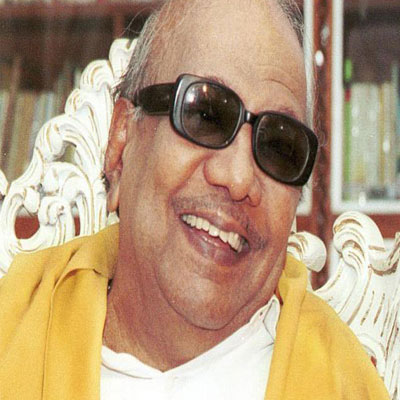
    NEW DELHI: DMK chief and former Tamil Nadu chief minister M Karunanidhi has lashed out at the Supreme Court’s ban on the photos of politicians in government ads.


    The veteran politician has said that this takes away the rights of the states.


    He was quoted in media reports as saying, “The PM and CMs are of same status in a federal set-up. In states, people give more importance to the CMs than the PM. A picture of a CM is inevitable in state govt advertisements. There are few educated people. The pictures help people understand ads better.”


    Holding that taxpayers’ money cannot be spent to build “personality cults” of political leaders, the Supreme Court restrained ruling parties from publishing photographs of political leaders or prominent persons in government-funded advertisements.


    The Court said such photos divert attention from the policies of the government, unnecessarily associate an individual with a government project, and pave the way for cultivating a “personality cult.”


    A bench of Justices Ranjan Gogoi and N.V. Ramana said the photos of only three constitutional authorities – the Prime Minister, the President and the Chief Justice of India – can be used in such ads. However, the personal approval of these three authorities will be necessary before publication.


    The observations of the Court were based on examination of the findings of a Committee led by Bangalore’s National Law University Director N.S. Madhava Menon set up in May last year, which had submitted its report in October. The Committee was set up by the Information and Broadcasting Ministry pursuant to an order of 23 April last year. Other members were former Lok Sabha secretary general T K Vishwanathan, and senior advocate Ranjit Kumar. Bimal Julka, secretary in the I&B Ministry, was the member secretary of the Committee.


    The court passed the order on a public interest litigation (PIL) filed by the NGOs Common Cause represented by counsel Meera Bhatia and the Centre for Public Interest Litigation (CPIL) represented by advocate Prashant Bhushan pleading it to frame guidelines.


    The petitions sought issuance of guidelines for curbing ruling parties from taking political mileage by projecting their leaders in official advertisements.


    The Menon panel had recommended a complete ban on publishing of photos in the ads. It had further said that no ads should be allowed on election eve.


    However, Justice Gogoi made changes in four cases. Instead of a complete ban on publishing of photos of all individuals, it said pictures of PM, President and CJI can be used provided they personally clear it – thus, in a way, making them also accountable for the publication.


    Secondly, the court improvised on the Menon committee recommendations to direct the government to appoint a three-member Ombudsman body of persons with “unimpeachable integrity.”


    The bench disagreed with the panel’s suggestion for a performance audit on such government ads.


    Holding that there had been “misuse and abuse” of public money on such advertisements, the three-member committee headed by eminent academician Professor Menon had framed guidelines to regulate expenditure and contents of such ads.


    The report had said only pictures and names of the President, the Prime Minister, Governor and Chief Ministers be published.


    The apex court bench had then said that the existing guidelines of the Directorate of Advertising and Visual Publicity (DAVP) do not cover such ads. There was therefore a need for substantive guidelines to be issued by the Court until the legislature enacts a law in this regard.


    The three members of the committee recommended that the governments must prepare a list of personalities whose birth or death anniversaries will be marked with ads in advance.


    The government must then specify which Ministry should release the ad to avoid different departments and state-run companies from paying tribute to the same leader with a multitude of ads. “There should be a single advertisement only,” the Committee said.


    The committee said that its recommendations are to prevent “the arbitrary use of public funds for advertising… to project particular personalities, parties or governments without any attendant public interest.”


    As was reported earlier by Indiantelevision.com, the move is likely to impact the revenues of some media groups as television channels will no longer be able to run TVCs by state governments featuring Chief Ministers and other local political leaders.

  • Supreme Court stays Delhi government’s defamation circular against media

    Supreme Court stays Delhi government’s defamation circular against media

    NEW DELHI: The Supreme Court has stayed operation of a circular dated 6 May by the Delhi government, which would have initiated defamation proceedings against media for publishing or broadcasting news that damage the reputation of the chief minister, the council of ministers and the government.


    The bench comprising Justices Dipak Misra and Prafulla C Pant issued a notice Delhi chief minister Arvind Kejriwal. “As an interim measure we direct stay of the circular dated May 6, 2015 till further order of this court,” the notice said.


    Asking Kejriwal to explain why the directorate of information has issued “such circular,” the court sought a reply within six weeks and listed the matter for further hearing on 8 July.


    The court’s order came on an application filed by senior advocate Amit Sibal seeking vacation of the stay granted by the apex court on the proceedings before a trial court in a defamation case.


    Sibal, who had filed a criminal defamation complaint against Kejriwal and others in the Patiala House court, said that while the chief minister on one hand seeks setting aside of penal laws on defamation, on the other hand he has issued such a circular.


    “It is noteworthy that the petitioner (Kejriwal) in his affidavit declares that he is working as chief minister of Delhi. However, the aforesaid circular directly contradicts and mitigates against the stand taken by him in the present petition,” the plea said, adding that the stay on the trial court proceedings against Kejriwal be vacated.


    The circular, issued by state information and publicity department, said that if any officer associated with the Delhi government feels that a published or aired item has caused damage to his or the government’s reputation, he should file a complaint with the principal secretary.

  • Freedom of speech and expression cannot be “absolute”: Supreme Court

    Freedom of speech and expression cannot be “absolute”: Supreme Court

    NEW DELHI: While holding that freedom of speech and expression cannot be “absolute,” the Supreme Court refused to quash criminal charges against Marathi poet Vasant Dattatraya Gurjar for penning an alleged vulgar and obscene poem on Mahatma Gandhi in 1994. 


    Putting vulgar and obscene words in the mouth of “historically respected personalities” like Gandhi cannot pass the “contemporary community standards test” meant to adjudge the obscenity of an alleged literary work, Justices Dipak Misra and P C Pant said. 


    At the same time, the court upheld the Bombay High Court’s decision of not quashing charge under section 292 (sale, publication of obscene books) under the IPC framed against bank employee Devidas Ramchandra Tuljapurkar for publishing the “vulgar and obscene” poem on Gandhi in 1994 in an in-house magazine of which he was an editor. The bank employee had challenged framing of charges against him.


    However, the Court quashed the criminal proceedings against the printers and publishers of the magazine in which the poem penned by Gurjar was published, saying they have already tendered an unconditional apology.


    The bench asked Tuljapurkar, the then editor of in-house magazine of Bank of Maharashtra Employees Union, to express his point of view before the lower court during the trial. The bench noted that the publisher published the poem “Gandhi Mala Bhetala” in 1994 and “immediately” after coming to know its impact; he tendered an unconditional apology in the next issue of the magazine. 


    “Once he has tendered the unconditional apology even before the inception of the proceedings and almost more than two decades have passed, we are inclined to quash the charge framed against him as well as the printer. We are disposed to quash the charge against the printer, as it is submitted that he had printed as desired by the publisher. Hence, they stand discharged,” the bench said. 


    “Freedom of speech and expression has to be given a broad canvas, but it has to have inherent limitations, which are permissible within the constitutional parameters. We have already opined that freedom of speech and expression as enshrined under Article 19(1)(a) of the Constitution is not absolute in view of Article 19(2) of the Constitution.We reiterate the said right is a right of great value and transcends and with the passage of time and growth of culture, it has to pave the path of ascendancy, but it cannot be put in the compartment of absoluteness. There is constitutional limitation attached to it,” the bench said. 

  • Spectrum auctions to be done in timely, fair & transparent way: Ravi Shankar Prasad

    Spectrum auctions to be done in timely, fair & transparent way: Ravi Shankar Prasad

    NEW DELHI: Communications and Information Technology Minister Ravi Shankar Prasad has assured the industry that the auction of spectrum in the future too would be conducted in a timely, fair and transparent manner.


    The hallmark will be good governance and “the road map will be fully disclosed in advance so that industry can put its act together in a planned manner,” he said.


    Inaugurating ‘Digital Bharat 2015,’ the first edition of FICCI’s platform for having transformative exchanges and deliberations, organized jointly with the Department of Telecommunications, Ministry of Communications & IT, Prasad said that the ‘Digital India’ programme was party-neutral, ideology-neutral and Centre-State-neutral. “It aims at bridging the urban-rural divide and is committed to ensure digital inclusion. I would like to see every mason and carpenter in the country using his smart phone to enhance his business and income,” he added.


    The last spectrum auction, the biggest so far, that ended in March this year fetched about Rs 1.10 lakh crore to the government. 


    The Minister also launched the FICCI-EY report titled ‘Speeding Ahead on the Telecom and Digital Economy Highway.’ 


    Telecom secretary Rakesh Garg said that the three ambitious and visionary programmes – Make in India, Digital India and Smart Cities – have opened up huge opportunities for the industry. The economy, he said, would stand to benefit immensely through higher productivity that the vast number of talented Indians will usher in. 


    He said that the government was committed to doing everything possible to make the environment conducive for industry and the consumer, the success of which will depend upon industry and government working together.


    The Indian Express whole-time director and head, new media Anant Goenka pointed out that the importance of digital technology could be gleaned from the success stories of the young multi-billionaires who have used digital platforms innovatively. “The question that remains is how ‘Digital Bharat’ is achieved in a fair and sustainable way,” he said.


    USIBC Digital Economy Industry Group chairman Joseph Alhadeff spoke of the need to achieve global standards in manufacturing and integration into the global supply chains. He also called for more enhanced cooperation amongst the stakeholders so that there was no duplication of effort. 


    FICCI president Jyotsna Suri, in her welcome address, said that it was encouraging that the Indian government is prioritizing technology as an enabler for the transformation and development of the country. “However, to reach the desired goals, it is extremely important to develop an environment, which nurtures Government-Industry dialogue and partnerships,” she emphasized and added, “We need to understand the nature of the opportunities being offered by the government programs like Digital India and Make in India and therefore FICCI has initiated the Digital Bharat series as a platform for having transformative exchanges and deliberations.”


    FICCI communications and digital economy committee chairman Virat Bhatia, who moderated the inaugural session and delivered a vote of thanks, stated, “The digital revolution now stands at the cusp of a transformation, with the government having laid out its vision of a digitally enabled India over the last one year. The success of both “Digital India” and “Make in India”, will ride on the back of strong telecom ecosystem, digital infrastructure and industry’s link in the value chain. Some important issues on policy and regulatory front will need continued attention.”


    EY global telecommunications leader Prashant Singhal presented the highlights and recommendations of the FICCI-EY report.


    The key takeaways of the report are as follows:


    ·Recommends to bring handsets under provisions of “Goods of Special Importance” under the Central Excise Tax Act, 1956; thus, capping the maximum VAT levied by states at five per cent.


    ·Endorses a ten-year tax holiday on a block of 15 years on all profits and gains for manufacturing in the mobile phone industry.


    ·Endorses to incorporate the DoT guidelines on installation of mobile tower in the statutory framework and rules in line with the 53rd Parliamentary Committee report.


    ·Recommends to have minimum interest subsidy of five per cent on all fixed capital investments for entire Electronic System Design and Manufacturing sector in the lines of benefits given under Technology Upgradation Fund Scheme.


    ·Recommends to eliminate or reduce Universal Service Obligation Fund (USOF) to one – three per cent.


    Commenting on these findings, Singhal said, “A favourable and stable regulatory environment, coupled with increased transparency, is critical for attracting investments to the sector. An empathetic perspective of challenges faced by service providers is also important for restoring its vitality. Our report highlights that the country will speed ahead on the Digital Highway only with the provision of a clear spectrum roadmap, reducing USOF levy, rationalizing taxes and providing a policy push to boost manufacturing ecosystem. The resultant benefits transcend sectors. Moreover, telecom should be considered a critical infrastructure sector and its financing needs should be addressed accordingly.”

  • TRAI to wait for final SC verdict before implementing tariff orders for C&S

    TRAI to wait for final SC verdict before implementing tariff orders for C&S

    NEW DELHI: The Telecom Regulatory Authority of India (TRAI) has said that amendments to its tariff orders issued on 1 October, 2004 and 21 July, 2010, which had been set aside by the Telecom Disputes Settlement and Arbitration Tribunal (TDSAT) earlier this month, would be subject to the outcome of the appeal filed by the regulator before the Supreme Court.


    The two amendments made by the TRAI to its tariff orders that aimed at preventing broadcasters from giving their channels directly to subscribers and putting commercial subscribers at par with ordinary subscribers were struck down by TDSAT on 9 March.


    TDSAT chairman Aftab Alam and member Kuldip Singh said the two amendments were “quite unsustainable and we are thus constrained to set aside the impugned amendment orders.”


    The amendments referred to the Telecommunication (Broadcasting and Cable) Services (Second) Tariff (Twelfth Amendment) Order 2014 dated 16 July, 2014 and the Telecommunications (Broadcasting and Cable) Services (Fourth) (Addressable Systems) Tariff (Fourth Amendment) Order 2014 dated 18 July, 2014 by which similar amendments were made in the Telecommunication (Broadcasting and Cable) Services(Second) Tariff Order 2004 dated 1 October, 2004 (relating to non-addressable or analogue systems) and the Telecommunication (Broadcasting and Cable) Services (Fourth) (Addressable Systems) Tariff Order 2010 dated 21 July, 2010 (relating to addressable systems) respectively.


    The Indian Broadcasting Foundation (IBF) and the Federation of Hotels and Restaurant Association of India had challenged the amendments as the commercial subscriber had been put at par with the ordinary subscriber and the tariff orders treat as equal groups of subscribers that are inherently unequal and are also so recognized in their different definitions in the tariff orders.


    In a press note today, TRAI said it had filed an appeal before the apex court and decided to hold its orders in abeyance ‘after duly considering the matter.’


    TRAI had issued the tariff orders – “The Telecommunication (Broadcasting and Cable) Services (Second) Tariff (Seventh Amendment) Order 2006″ dated21 November, 2006and the Telecommunication (Broadcasting and Cable) Services (Third) (CAS areas) Tariff (First Amendment) Order2006” dated 21 November applicable to commercial cable subscribers in the non-addressablesystem (non-CAS) and the CAS systems, respectively.


    Following an appeal, the Supreme Court had on 16 April, 2014 directed TRAI to look into the matter de-novo and within three months re-determine the tariff after hearing all the stakeholders’ contentions.


    The orders set aside by TDSAT on 9 March were the result of this re-examination.

  • TRAI issues dos & don’ts for MSOs and LCOs

    TRAI issues dos & don’ts for MSOs and LCOs

    MUMBAI: With industry not yet bearing the full fruits of digital addressable systems (DAS) rollout in phase I and phase II areas, the Telecom Regulatory Authority of India (TRAI) today issued a few dos and don’ts, which it believes will help give a broad operational framework to local cable operators (LCOs) and multisystem operators (MSO).


    The dos and don’ts have been issued on three levels: first, in respect of subscribers and customers of digital addressable cable TV; second, for LCOs providing cable TV services through DAS and thirdly for MSOs providing cable TV services through DAS.


    A brief overview of the same follows:


    (A) Dos & Don’ts for MSOs & LCOs in respect of Subscribers/Customers of DAS:


    DOs


    1. Representatives should carry a valid ID when visiting customers/subscribers premises.


    2. Ensure that the customer seeking cable TV connection through DAS is given a Customer Application Form (CAF)


    3. Handover a copy of the completed CAF along with the Manual of Practice (MOP) to the subscriber.


    4. Share a surrender application form with customer on request.


    5. Explain the T&C for providing STB to the customer along with tariff options.

    6. Ensure that all details are explained to the customers in detail.


    7. Provide with a bill and payment receipt to every subscriber.


    8. Send acknowledgement of receipt of payment electronically to the subscriber.


    9. Ensure that the subscriber is informed about his current status of his account.


    10. Reduce subscription charges if any channel is subscribed to be a subscriber becomes unavailable on the network of the MSO.


    11. Publish & prominently display the toll-free consumer care number and contact number of the Nodal Officer for redressal of consumer grievances.


    12. Set up a web-based complaint handling/monitoring system.


    13. Conduct periodic consumer awareness programmes about Quality of Service (QoS) Regulation provisions for subscribers.


    DON’Ts


    1. Activate STB before entering the details of customer and his choice of channels.


    2. Discontinue any channel to a subscriber, if the subscriber paid subscription amount for that channel in advance and that channel is available on your platform.


    (B) Dos & Don’ts for LCOs providing cable TV services through DAS


    DOs


    1. Register with Head Post Office before offering cable TV services.


    2. Renew registration with Head Post Office every year.


    3. Enter into an agreement with the MSO whose signal you will carry.


    4. Keep a copy of agreement with you.


    5. Give the completed CAF to the MSO for processing and retain one with yourself.


    6. Provide complete details of payment made by each subscriber to your MSO within the agreed time frame.


    7. Give the respected surrender application form to the MSO for processing.


    DON’Ts


    1. Transmit cable TV service without valid registration as this is illegal.


    2. Transmit cable TV signals to subscribers without proper written interconnection agreement with the MSO.


    3. Discontinue the transmission of cable signal without giving 21 days notice to the MSO, clearly specifying the reasons for the proposed discontinuation.


    4. Change the MSO of the subscriber, till the subscriber request so by filling a surrender application form for the existing MSO’s connection and a new CAF for the new MSO’s connection. The new STB should be activated only after entry of the details, as provided in new CAF, into the SMS of the new MSO.


    (C) Dos & Don’ts for MSOs providing cable TV services through DAS


    DOs


    1. Register with the Ministry of Information & Broadcasting (MIB) as an MSO.


    2. Enter into an agreement with LCO, if you are providing the cable TV service to subscribers through one or more LCOs.


    3. Ensure a copy of the agreement is handed to the LCO within 15 days from date of signing and receipt is duly acknowledged.


    4. Ensure that the T&C of the agreement conform to the TRAI regulations.


    5. Ensure that the agreement explicitly mentions the date of coming into force and the date of expiry.


    6. Ensure the agreement mentions the list of responsibilities of the MSO and the LCO, respectively, the revenue share agreed, and the procedure for uploading the consumer complaints, received by your linked LCOs, in the complaint handling/ monitoring system.


    7. Ensure that the interconnection agreement contains explicit provisions for settlement of disputes.


    8. Provide access to the relevant data in the Subscriber Management System (SMS) to all of your linked LCOs for the purposes of settlement of revenue shares in accordance with the agreement.


    9. Educate your linked LCOs about the various schemes you are offering for procuring a set-top-box (STB) by a subscriber and also the channel(s)/ bouquet(s) available on your network.


    10. Provide adequate number of spare STBs to all of your linked LCOs to meet the timelines set in the Quality of Service Regulations of TRAI, to avoid long disruptions in service to any subscriber due to malfunctioning STB.


    11. Ensure that prior notice of 15 days is provided through local newspapers and through scrolls on TV Screen to inform subscribers who are likely to be affected due to the disconnection. Such notice should be published in two leading local newspapers of the State in which affected LCOs are providing the services, out of which one notice should be published in a newspaper in the local language.


    12. Ensure that sufficient number of Customer Application Forms (CAFs) and Manual of Practice is available with your linked LCOs for distribution to the customers at the time of providing connection.


    DON’Ts


    1)Provide cable TV services without valid registration as MSO as this is illegal.


    2)Provide cable TV signals to LCOs without a written interconnection agreement as this is illegal.


    3)Give pre-activated STB to any LCO or to any customer.


    4)Disconnect the signals of TV channels of your linked LCO(s) without giving 21 days notice to such LCO(s) and clearly specifying the reasons for disconnection.

  • SC guidelines on govt ads might impact TV channels

    SC guidelines on govt ads might impact TV channels

    MUMBAI: Television channel and newspaper sales execs may be in for a bit of a shocker. Those gigantic ads and long running TVCs by state governments featuring Chief Ministers and other local political leaders mug shots tom-tomming their and their political parties’ achievements could well dry up.


    The reason: the Supreme Court (SC) today issued guidelines relating to Central government advertising, which are put out using public money. The guidelines clearly forbid the use of photographs of chief ministers, government bureaucrats and appointees and other political leaders in government ads. They however permit the use of the photographs of the President, the Prime Minister, Chief Justice of India, departed leaders, including Mahatma Gandhi in these ads.


    The apex court however refrained from disallowing the government to issue public advertisements six months prior to an election. It added that governments can’t be allowed to use public money for unproductive purposes like giving advertisements for political gains.


    Industry experts believe that the Supreme Court guidelines could impact the revenues of some media groups.


    A media observer tells Indiantelevision.com, “Local state governments, from time to time, release boastful ads and TVCs featuring their CMs in newspapers and on TV channels as a bit of a quid pro quo for favourable coverage and positioning of the parties and their representatives in the media. I don’t think any state CM will allow the ad expenditure if it does not feature him or her, because they tend to use it to build their own image.”


    Another expert opines that it is quite likely that the media managers could well divert government ad spending toward social and mobile media as the SC restrictions do not apply to them – at least as yet. This could be in the form of viral campaigns both as videos, and textual posts.


    Watch this space for further news.

  • Star India roots for OTT services; says premature to work on regulatory regime

    Star India roots for OTT services; says premature to work on regulatory regime

    NEW DELHI: With the burgeoning of Over The Top (OTT) services in the Indian ecosystem, the Telecom Regulatory Authority of India (TRAI) is looking at creating a regulatory framework to keep a check on them.


    However, media and entertainment major Star India is of the opinion that TRAI should not create ‘artificial distortions’ by creating regulatory frameworks for OTT services, as there is no any evidence of market failure, abuse of dominance, monopolistic practices, or anti-consumer and anti-competitive behavior.


    Responding to TRAI’s Consultation Paper on the subject, Star India said that no case has been made out in the Paper of anti-competitive practices. “No regulatory impact assessment has been done, there is no ‘consumer problem’ as such that has been defined, no cost benefit analysis has been conducted, no qualitative or quantitative aspects have been highlighted of the problem at hand, and so the Paper is actually deficient.”


    Star India also said that Internet based services are already covered by substantive legislative frameworks like the Copyright Act, the Information Technology Act 2008 combined with the Competition Act. These legislations not only set out the commercial and technical parameters for conducting business but also set the legal boundaries for conduct in a market based environment. “Hence, there appears to be no need for a separate regulatory framework or licensing regime, which seeks to erode or over ride the existing laws or create artificial regulatory constructs, which result in market distortions. In fact, this was the exact argument telecom operators had earlier made while stating their case for not regulating mobile value added services (MVAS), which in essence is quite similar to Internet-based services,” said News Corp’s Indian arm.


    Writing on behalf of the broadcaster, Star India vice chairman of legal and regulatory issues Pulak Bagchi said, “The very fact that OTT services have found technological solutions to increase efficiencies means that we should do everything in our ability to promote their growth, not curtail them. Licensing almost always tends to create a privileged club on the basis of restricting access, which is against the very ethos of this revolution.”


    Bagchi went on to add that lawful interception is a cost and technology issue. “The government only has to license these technologies from those who own or hold the IP for such technologies. Given that functions like lawful interception, ensuring privacy al are sovereign functions, costs towards the need to be shared by licensee telcos and the government. For this purpose, the AGR payments made by telcos should be deemed to include their contribution towards this end,” he said.


    The Indian government and law enforcement agencies access data stored by Internet platforms when deemed legally necessary. Any additional regulations carry grave risk of breaching user privacy and would also require constitutional review – especially since the Government is still working on a proposed Privacy Bill.


    Existing legal formulations can also be updated to incorporate necessary technology wherewithal for lawful interception and privacy. License conditions for telcos and ISPs can also be amended to provision for these issues.


    The government and courts also have the power to block access to websites on the grounds of national security and public order. It has taken similar steps in the past and has been widely reported by the media. The transparency reports periodically published by major Internet companies suggest that the Indian government routinely requests for user data and blocking of user accounts.Between July 2014 and December 2014, Indian authorities had 5,473 requests for data, covering 7,281 user accounts from Facebook and the company had a compliance rate of 44.69 per cent. Google had a compliance rate of 61 per cent with respect to the requests made by different government agencies across.


    The broadcaster further said there was multiple evidence to suggest that the so-called “communication OTT services” are capable of being lawfully intercepted with the right kind of technology being deployed for the purpose by law enforcement agencies.


    ThedramaticinnovationintheInternetspaceisprovidingenormousbenefitsto consumers through lower costs, multiple choices and universal access to information and this is sufficient evidence to put on hold any proposed regulatory intervention.


    Referring to a question about the growth of OTT impacting the traditional revenue stream of TSPs, Star India said, “There seems to be almost a suggestion that it is the duty of the regulator to guarantee the revenues of the TSPs. All that the OTTs have done is to remove inefficiencies in the value chain delivering better value to the consumers and instead of looking at it from the consumers’ point of view, there seems to be an inclination to try and protect incumbent and in many cases, outdated revenue streams of the TSPs. The only thing that OTTs have done is to create a level playing field for all and the incumbents are more than welcome to evolve their current business models to participate in this.However, we fail to recognize any obligation on the part of the regulator, society or the government to protect traditional revenue streams at the cost of burgeoning inefficiencies.”


    It further said that communicationOTT should be welcomed if it can serve the same purpose as that of traditional telecom services in a far less expensive and efficient manner, resulting in relative affordability, greater value and added ease to the consumers. If communication OTT services are less reliant on network capacity or capability because of their low data usage and higher tolerance for latency, it should be encouraged rather than be called in for questioning whether they are impacting traditional revenues of TSPs.


    The broadcaster said that TRAI should keep consumer interests in mind rather than being weighed down by perceived challenges to incumbent telcos or losses accruing to them because of so called decrease in messaging and voice services. Consumers have not been shown to be impacted so as to requiring OTTs to be licensed or registered.


    Furthermore, OTT services help in driving up data usage/consumption and resultant revenues for telcos/ISPs, and with greater broadband penetration there will be a rise in volumes and increased revenues from data usage shall more than set off any loss to telcos on account of traditional services like SMS and calls. Further, OTT services also pay at the back end for connectivity and hosting services to the ISP’s /TSP’s backbone.


    At the outset, Star India agrees that it was too early for a regulatory framework for OTT services. “It is correct that the Internet ecosystem is still in an embryonic stage of evolution with limited penetration in India (19.19 per cent of Indian population has access to Internet and India’s share of world Internet users is at an abysmal 8.33 per cent). High speed broadband continues to be a pipe dream. Consumer propositions and business models around the Internet in India are still in a state of flux.


    Summing up, Star India said that OTT services are at a nascent stage in India and any intervention is likely to throttle innovation or investments in this space with the biggest casualty being start-ups.OTT already has enough bottlenecks and barriers: In any event there are structural bottlenecks and barriers to OTT usage viz. poor networks, low penetration of plastic money, limited customisation etc. Intervention would result in creating further entry barriers thereby stifling competition, hence are best avoided; intervention shall skew level playing fields in negotiations between telcos/ISPs on one hand and OTT service providers on the other, telcos clearly have a higher hand in negotiations always.


    OTTservicesarenotinfrastructureproviders; OTT makes money from its content or service offering – owned or licensed (be it ads or subs) while telcos/ is monetize public property viz. spectrum licensed to it by the government.


    Star India said any intervention that adversely impacts OTT services could impinge on freedom of speech and expression and hence be deemed unconstitutional.


    OTT apps are not completely substitutable to communication services as they are not interoperable – i.e devices that communicate through such apps, require installations of the same, unlike communication services, which can talk across networks regardless of underpinning technologies (GSM, CDMA, 3G, 4G, etc), therefore TSPs cannot allege that they are losing out to OTT.


    Star India noted, “We have already seen how the VAS industry had an untimely demise owing to revenue sharing conflicts. Any regulatory intervention that mandates payments by OTTs to TSPs shall result in a similar destruction for the former.”


    In reply to one of the questions, Star India said that OTTs are paying for network usage, streaming and technology costs. Just the fact that they have found a more efficient way of utilizing the pipes does not mean that they should be penalized for the same.


    OTT players should not be asked to pay for use of the TSP’s network over and above data charges paid by consumers. “We are of the view that the real question that needs to be considered is whether the TSPs should pay the OTTs a share of data revenue for significantly driving data consumption, which is borne out by the manifold increase in telco data revenues. We believe that it is too early to have a regulatory framework around the relationship between TSPs and OTTs given the nascency of the ecosystem. Given the fact that numerous OTT services have created a strong consumer proposition for the Internet, thereby driving penetration, it is equally likely that TSPs incentivise / compensate OTT services that are responsible for driving u p data consumption by sharing a percentage of their data revenues. Given the rapidly evolving business practices, we believe overarching regulations would only stifle innovative partnership models and be detrimental to the consumer and the business community at this stage.”


    According to Star India, TSPs should not differentiate on the quality of service based on an economic arrangement with OTT players. However, it is too early to put constraints on any partnership arrangements between TSPs and OTT players that can result in tangible benefits to consumers.


    Internet-based services and apps do not pay for telecom operators for using the network, and it should remain the same going forward. Forcing Internet-based services to pay extra for using a particular network negatively impact consumers and harm the Indian digital ecosystem. As mentioned in the above answer, data revenues of Indian telecom operators is already on an upswing and is slated to increase rapidly over the next few years, hence the argument for creating a new revenue source is not justified.


    Charging users extra for specific apps or services will overburden them, which in turn will lead to them not using the services at all. It is also akin to breaking up the Internet into pieces, which is fundamentally against what Net Neutrality stands for. Also, the Internet depends on interconnectivity and the users being able to have seamless experience – differential pricing will destroy the very basic tenets of the Internet.


    In its covering note Star India said that it realised that the issue was of far reaching consequences and would have a huge impact in the industry going forward.