Category: Regulators

  • Post TDSAT order, TRAI issues fresh paper on tariff for commercial subscribers

    Post TDSAT order, TRAI issues fresh paper on tariff for commercial subscribers

    NEW DELHI: The Telecom Regulatory Authority of India (TRAI) has asked commercial subscribers whether there is need to define and differentiate between domestic subscribers and commercial subscribers for provision of TV signals and the basis for such classification.


    In a paper on “Tariff issues related to Commercial Subscribers”, the regulator has also asked if there is a need to enable engagement of broadcasters in the determination of retail tariffs for commercial subscribers on a case-to-case basis.


    The paper has been issued following the directions by the Telecom Disputes Settlement and Arbitration Tribunal (TDSAT) earlier this year that there was need for a fresh look at tariff orders. Stakeholders have been asked to give their comments by 31 July and counter-comments by 7 August.


    TRAI has sought information on how it can be ensured that TV signal feed is not misused for commercial purposes wherein the signal has been provided for non-commercial purpose. 


    It has also asked if there is a need to have a different tariff framework for commercial subscribers (both at wholesale and retail levels) and what should be the suggested tariff framework for commercial subscribers (both at wholesale and retail levels).


    It wants to know if the present framework is adequate to ensure transparency and accountability in the value chain to effectively minimise disputes and conflicts among stakeholders, and what should the practical and implementable mechanism be to ensure transparency and accountability in the value chain. 


    Following the Supreme Court’s order of 16 April, 2014, TRAI had notified the Telecommunication (Broadcasting and Cable) Services (Second) tariff (Twelfth   Amendment) order & the Telecommunication (Broadcasting and Cable) Services (Fourth) (Addressable Systems) Tariff (Fourth Amendment) order on 16 July, 2014. These two tariff amendment orders prescribing the tariff framework for commercial subscribers were challenged before TDSAT, which in its order of 9 March, 2015 had set aside these Tariff Amendment Orders. TRAI was asked to examine the issue afresh and come out with a new tariff dispensation for commercial subscribers within six months from the date of its order.

  • ‘Make in India’ initiative ups FDI equity inflows to 48% in a year

    ‘Make in India’ initiative ups FDI equity inflows to 48% in a year

    MUMBAI: The growth in Foreign Direct Investment (FDI) has been significant after the launch of ‘Make in India’ initiative in September 2014. The country has seen 48 per cent increase in FDI equity inflows during October 2014 to April 2015 over the corresponding period last year.


    In 2014-15, the country witnessed unprecedented growth of 717 per cent to $40.92 billion of investment by Foreign Institutional Investors (FIIs). The FDI inflow under the approval route saw a growth of 87 per cent during 2014-15 with inflow of $2.22 billion despite more sectors having been liberalized during this period and with more than 90 per cent of FDI being on automatic route. These indicators showcase remarkable pace of approval being accorded by the government and confidence of investors in the resurgent India. 

    The increased inflow of FDI in India, especially in a climate of contracting worldwide investments, indicates the faith that overseas investors have imposed in the country’s economy and the reforms initiated by the Government towards ease of doing business. The Make in India initiatives of the Government and its outreach to all investors have made a positive investment climate for India which is evidenced in the results for the last financial year especially the second half. 

    The FDI inflow during the financial year 2014-15 was spread across the sectors evidencing the fact of positive eco-system of investment opportunities, which India is now providing- Services Sector, Telecommunication, Trading, Automobile Industry, Computer Software & Hardware, Drugs & Pharmaceuticals  and Construction activities. 

    The FDI policy was amended to further enable a positive investment climate and sync it with the vision and focus areas of the present Government such as affordable housing, smart cities, financial inclusion and reforms in railway infrastructure. The Construction Development sector was allowed easy exit norms with rationalized area restrictions and due emphasis on affordable housing. The FDI cap in insurance and pension sector has been raised to 49 per cent. 


    100 per cent FDI has been allowed in railway infrastructure, excluding operations and also in the medical devices sector. 


    Further the definition of NRI was expanded to include Overseas Citizen of India (OCI) cardholders as well as Persons of Indian Origin (PIO) cardholders. NRIs investment under Schedule 4 of Foreign Exchange Management Act, 1999 (FEMA), Regulations will be deemed to be domestic investment made by residents, thereby giving flexibility to NRIs to invest in India.

  • Sahara asset attracts Rs 150 crore bids; SC turns into auction room

    Sahara asset attracts Rs 150 crore bids; SC turns into auction room

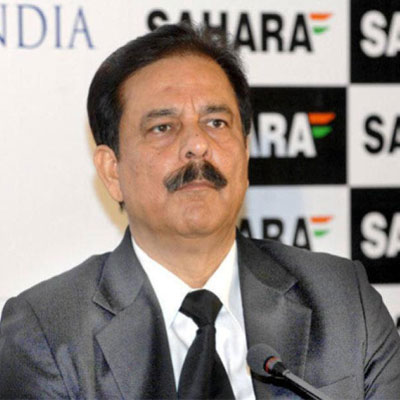
    MUMBAI: Sahara Group’s press and television business have taken a hit. Not just this, the group’s 45 acre property in Gorakhpur, Uttar Pradesh, has been entangled in a courtroom bidding war, with the Supreme Court turning into an auction room.


    Samriddhi Developers and Gorakhpur Real Estate Developers are the two companies that are vying for the property.


    While Samriddhi Developers had initially put an offer of Rs 64 crore, the amount rose to Rs 150 crore by the end of the bidding.


    According to an Economic Times report, the group needs to raise Rs 1,800 crore by way of cash as part of a Rs 5,000-crore payment it needs to make to free chairman Subrata Roy on bail. Aside from this, the Supreme Court has also asked for a Rs 5,000-crore bank guarantee in a case involving refunds to investors. 


    What is notable is that while Samriddhi and Sahara had signed an initial memorandum of understanding (MOU) for the sale of the plot at Rs 64 crore, the scenario changed after Gorakhpur Real Estate Developers made an offer of Rs 110 crore for the plot.


    Samriddhi Developers, senior advocate Paras Kuhad took instructions from one of the partners present in the court, and jacked the bid to Rs 125 crore. Later, the rival took it up to Rs 140 crore, adding another Rs 5 crore, before finally settling at Rs 150 crore.


    The bench has now asked both parties to show their bonafides by depositing 25 per cent of the amount by 31 July in the Sebi-Sahara account. The rest needs to be arranged in three equal installments by 31 October. If either of them fail to meet the deadline, the amount deposited will be forfeited.  


    The money generated from the sale of the Gorakhpur property will be added to the amount already deposited by the Sahara Group in the Sebi-Sahara account and go towards securing Roy’s release. 


    Complying with the July order, Gorakhpur Real Estate Developers has already deposited Rs 11 crore with the Supreme Court Registry to establish its bonafides. Samriddhi too has placed a letter and a cheque from its bankers to show its bonafides.


    The bench has now posted the matter for hearing on 3 August. 

  • FY-2015: Radio industry numbers the best as yet?

    FY-2015: Radio industry numbers the best as yet?

    Has the Indian radio industry put in its best performance as yet? Preliminary conclusions based on the results filed by a few of the listed and segments of listed companies seem to indicate so, as do extrapolations of data from the Telecom Regulatory Authority of India (TRAI) that is as yet available until Q3-2015.

    Note (1): (a)100,00,000 = 100 lakh = 10 million = 1 crore

    (b) The author has taken the liberty to introduce two new measures – average revenue per radio station and average operating profit per station. These are rough yardsticks and may not necessarily be indicative of a station or a network’s performance, because factors such as geography and market conditions within the area of operations are among many other factors that will also determine performance.

    CAGR since FY-2012 is likely to be between 11 and 12%: TRAI data

    As per data from TRAI, radio advertisement revenue has been increasing every quarter. Please refer to Fig A below, which shows ad revenue for a 15 quarter period starting Q1-2012 (quarter ended 30 June, 2012) until Q3-2015 (quarter ended 31 December, 2014). Ad revenue of Rs 450.95 crore for Q4-2015 has been calculated using the average percentage increase between Q3 and Q4 over three years (FY-2012, FY-2013 and FY-2014) – this works out to 1.76 per cent.

    Ad revenue of Rs 487.34 crore for Q4-2015 (quarter ended 31 March, 2015) is the projected revenue by the linear trend line in Fig A-1, which is based on the revenue of the first three quarters of FY-2015. This shows a growth of 19.75 per cent over FY-2014. This figure is quite close to the average (simple) revenue growth of 19.93 per cent by the six sample companies whose figures have been considered later in this report. (At the time of filing this report, TRAI had not released data for Q4-2015. It must also be pointed out that TRAI has been releasing ad revenue data for lesser than the licensed number of radio stations, as indicated in the second line of the X axis in Fig A below.)

    The trend line in Fig A indicates that ad revenue is increasing linearly. The figure also indicates that the radio industry has had its lowest quarter in terms of ad revenue in Q1, progressively increasing in Q2 and Q3, with the highest ad revenue in Q4 in FY-2012 and FY-2013. There could be various reasons for this and some that come to mind are that Q4 is the fag end of the financial year and advertisers use this very local medium to push through sales and attain year end targets for better margins. It could also mean that some advertisers already consumed a major portion of their ad budgets and are using the low cost alternative for grabbing consumer attention. However, in FY-2014, Q4-2014 ad revenue was lower than Q3-2014 by 1.02 per cent. Assuming the same trend is followed this year too, the projected ad revenue for Q4-2015 works out to about Rs 438.63 crore.


    Based on the lower projected figure of Rs 438.63 crore, projected ad revenue for FY-2015 works out to Rs 1636.03 crore, and hence 16.29 per cent more than the Rs 1406.82 crore in FY-2014. Ad revenue in FY-2014 had grown 17.36 per cent from Rs 1198.77 crore in FY-2013. Since 2012, the industry’s ad revenue has shown a CAGR of 11 per cent if one were to consider the lower projected ad revenue of Rs 438.63 for Q4-2015.

    If we consider Q4-2015 ad revenue as Rs 450.95 crore indicated in Fig A above, revenue for FY-2015 is Rs 1648.35 crore and CAGR works out to 11.21 per cent between FY-2012 and projected FY-2015 ad revenue.

    If we consider the projected ad revenue for Q4-2015 as Rs 487.34 crore, then projected revenue for FY-2015 is Rs 1684.74 crore and CAGR between FY-2013 and FY-2015 (proj), works out to 11.82 per cent.

    As mentioned above, based on TRAI quarterly ad revenue data, total ad revenue works out to Rs 1406.82 crore for FY-2014 and the average ad revenue per station as Rs 5.92 crore for 237.5 stations. Please note that TRAI data for Q1-2014 and Q2-2014 was for 237 stations and for Q3-2014 and Q4-2015 for 238 stations and hence a not very accurate median of 237.5 stations has been used to calculate the average ad revenue per station for FY-2014 above. 

    Based on the projected ad revenues for FY-2015 of Rs 1636.03 crore, Rs 1648.35 crore, 1684.74 crore for 241 stations, the corresponding projected average ad revenues per station works out to Rs 6.79 crore, Rs 6.84 crore and Rs 6.99 crore respectively.

    Let us look at how a few radio groups performed:

    Note (2):  (a) This report considers PAT posted by two radio companies (ENIL – Radio Mirchi, 32 radio stations; Jagran Prakashan – Radio City – 20 radio stations)  and their operating results, along with operating results of DB Corp (My FM, 17 stations), B. A. G Films (Radio Dhamaal, 10 stations) and HT Media (Fever FM, 4 stations).

    (b) EBIDTA numbers for ENIL (Mirchi) have been calculated by adding the depreciation to the total income from operations and subtracting the total expense from the result, assuming that ENIL reports interest in finance charges separately.

    The numbers in the charts below cover just 89 FM broadcasting stations of six sample companies of the total of 241 or 36.93 per cent. 

    It is interesting to note that Radio Mirchi with just 32 stations (13.5 per cent of total number of stations of 237 in FY-2014 as per TRAI) contributed revenue of Rs 384.49 crore to a total ad revenue of Rs 1406.82 crore in FY-2015, or 24.77 per cent of total ad revenues of the industry, that is assuming that all of Radio Mirchi’s total income from operations is ad revenue.

    Another great performer, Music Broadcast Private Limited (MBPL, now a part of the Jagran Prakashan group), Radio City with 20 stations (or 8.44 per cent of the total number of stations in FY-2014 of 237 as per TRAI) reported revenue of Rs 160.53 crore or 11.41 per cent of the ad revenue for FY-2014 as per TRAI data, again assuming that all of Radio City’s total income from operations is ad revenue.

    Of course, some of these companies/segments also have revenue streams other than radio advertisement, for example, Radio Mirchi conducts the Mirchi Music Awards every year and must also be reporting sponsorship revenue, but considering that many, and especially Radio Mirchi, My FM, Radio City and Fever FM are parts of some of the biggest professionally-run media houses in the country, these entities will be able to leverage a reasonable amount of money from other streams. A few of the entities also have internet radio stations that have turned quite popular, more so among the Indian diaspora.

    Y-o-y, Q2-2015 was the best quarter in terms of revenue for five (except Radio City, whose numbers for Q1-2015 and Q2-2015 were not available at the time of writing of this report) of the six entities. Combined Q2-2015 revenue for the five entities was Rs 157.12 crore, 20.05 per cent more than the Rs 130.88 crore in Q2-2014. If one were to neglect the loss reported by Oye FM and Radio Dhamaal during the quarter, then the operating profit/PAT for My FM, Radio Mirchi (PAT) and Fever increased by 80.56 per cent as compared to the previous year.

    Income of the six entities

    Combined Operating Income of the six sample companies in this report grew 17.34 per cent in FY-2015 to Rs 886.05 crore from Rs 738.05 crore (52.46 per cent of the total ad revenue as per TRAI for FY-2014). As mentioned above, the simple average growth in revenue for the six companies was 19.93 per cent. Please refer to Fig B below.

    The highest growth was by BAG Films Radio Dhamaal with a revenue growth of 47.09 per cent in FY-2015 to Rs 7.48 crore (0.86 per cent of Operating Income of the six sample entities in this report in FY-2015) from Rs 5.09 crore (0.69 per cent of Operating Income of the six sample entities in this report in FY-2014). Oye FM grew the least – its operating income increased 0.64 per cent to Rs 15.48 crore (1.79 per cent of Operating Income of the six sample entities in this report in FY-2015) from Rs 15.38 crore (2.08 per cent of Operating Income of the six sample entities in this report in FY-2014). My FM, Radio Mirchi and Radio City showed double digit growth in operating income in FY-2015 of 20.68 per cent, 14.04 per cent and 30.42 per cent respectively, while Fever FM’s operating revenue grew 6.72 per cent in FY-2015 as compared to FY-2014.

    Operating Results -PAT and Margins of the six entities

    Combined Operating result – of the six entities – operating profit grew 33.07 per cent to Rs 260.43 crore in FY-2015 from Rs 195.71 crore in the previous year. Four of the six sample entities reported growth in operating profit in FY-2015 as compared to FY-2014, while the other two reported lower operating loss in the current year (FY-2015) as compared to the previous year.

    Please refer to Fig C and Fig C1 below.  Radio Mirchi’s operating profit in FY-2015 of Rs 145.34 crore (55.81 per cent of combined operating profit of six entities in FY-2015) was 16.59 per cent more than the Rs 124.66 crore (63.7 per cent of combined operating profit of six entities in F-2014). Its operating margin in FY-2015 improved marginally to 33.15 per cent from 32.42 per cent in the previous year. Radio Mirchi’s operating margin was the highest for both the years among the six entities considered in this report.

    Radio City’s operating profit in FY-2015 increased 52.3 per cent to Rs 64.86 crore (24.9 per cent of combined operating profit of six entities in F-2015) from Rs 42.60 crore (21.77 per cent of combined operating profit of six entities in FY-2014 FY-2014). Its operating margin improved to 30.98 per cent in FY-2015 as compared to the 26.54 per cent in the previous year.

    My FM reported a 51.89 per cent growth in operating profit to Rs 31.23 crore (11.99 per cent of operating profit-reported by the six sample entities in this report in FY-2015) from Rs 20.56 crore (10.51 per cent of operating profit-PAT reported by the six sample entities in this report in FY-2014). Its operating margin increased to 32.57 per cent from 25.88 per cent in FY-2014.

    Fever FM’s operating profit grew 37.07 per cent to Rs 29.21 crore (11.22 per cent of operating profit-PAT reported by the six sample entities in this report in FY-2015) from Rs 21.31 crore (10.89 per cent of operating profit-PAT reported by the six sample entities in this report in FY-2014). Its margin increased to 29.39 per cent from 22.88 per cent.

    It may be noted that ENIL (Radio Mirchi) reported profit after tax of Rs 105.97 crore (24.2 per cent of Total Income from Operations or TIO) in FY-2015, which was 26.99 per cent more than the Rs 83.45 crore (23.32 per cent of TIO) in the previous year. Further, Radio City also reported a doubling of PAT in FY-2015 to Rs 42.95 crore (20.51 per cent of TIO) from Rs 21.45 crore (13.36 per cent of TIO) in FY-2014.

    Results per station

    As mentioned above, these measures are rough yardsticks and may not necessarily portray a true picture of a station or a network’s performance.

    The average revenue per station for all the 89 radio stations of the six entities in this report grew to Rs 9.73 crore in FY-2015 from Rs 8.29 crore in the previous year. The average operating result per station based on EBIDTA for all the companies increased to Rs 2.93 crore in FY-2015 from Rs 2.20 crore in the previous year.

    Please refer to Table A below for details of the six entities. Fever FM reported the highest revenue per station in both FY-2015 and FY-2014 at Rs 24.84 crore and Rs 23.28 crore respectively. The next highest revenue per station was Radio Mirchi with 32 stations and revenue of Rs 13.70 crore and Rs 12.02 crore in FY-2015 and FY-2014 respectively.

    Radio City’s average revenue per station improved to Rs 10.47 crore in FY-2015 from Rs 8.03 crore in the previous year, when it was lower than the average revenue per station of the six entities in this report.

    Fever FM also reported the highest operating profit per station at Rs 7.30 crore in FY-2015 as compared to the Rs 5.33 crore per station in FY-2014. The next highest on this parameter was Radio Mirchi. On considering its standalone EBIDTA for FY-2015 at Rs 145.34 crore based on the numbers reported by the company on the bourses, Radio Mirchi’s average operating profit per radio station works out to Rs 4.54 crore. For FY-2014, Radio Mirchi EBIDTA was Rs 124.66 crore and its average operating profit per station was Rs 3.90 crore. Radio City’s average operating profit per station works out to Rs 3.24 crore in FY-2015 as compared to the Rs 2.13 crore in FY-2014.

    Conclusion

    As per the FICCI-KPMG Media and Entertainment 2015 report (FICCI M&E 2015 report), the radio industry saw a phenomenal growth of 17.6 per cent in 2014. The report pegs the radio industry size for 2014 in India at Rs 1720 crore (Rs 7.24 crore average revenue per station on a base of 237.5 stations). With the implementation of phase III, FM radio will reach 85 per cent of India’s territory, further adding the medium as an important part of advertisers’ plans because radio is likely to be a cheaper alternative due of its reach. More stations are also likely to result into stronger regional networks.

    Although, phase III auctions have been curtailed to just 135 stations in 69 cities and further delayed to the latter half of fiscal 2015, the industry feels that phase III could herald a new era for radio in India. 

    The FICCI M&E 2015 report says that growth in 2014 could be attributed to several reasons that include new upcoming sectors like e-commerce and industries such as real estate, retail and lifestyle products. As per the report many of the players reached 100 per cent inventory utilisation and hence hiked ad rates. There seems to a welcome change for the industry, which saw advertisers shift focus from nationwide brand building to more local focused promotional targeting, feeding on the strength of radio as a medium. Content innovation also contributed to the strong performance by many players. The general elections of 2014 also saw election spends finding its way to the radio industry with spends of around 12 to 15 per cent of ad budgets as opposed to the normal one to three per cent. Prime Minister Narendra Modi’s address to the nation on All India Radio through his show ‘Mann ki Baat’ has gained a lot of attention for the medium.

    Challenges continue to hound the industry with smaller and standalone stations feeling the pressure of rising cost structures, measurement and royalty fee issues and the rising threat of the digital media eating into the radio ad budget pie. The good news is that now advertisers see radio as an integral part of their media plans, not just an add-on expense head.

    So while FY-2015 is the best year yet for the radio industry so far, but the future is far brighter for the industry and its ecosystem, delays in phase III could dim the brightness, though.

  • MIB seeks Home Ministry reply on Sun TV case; SC to hear 2G case against Marans on 25 July

    MIB seeks Home Ministry reply on Sun TV case; SC to hear 2G case against Marans on 25 July

    NEW DELHI: The Ministry of Information and Broadcasting (MIB) has sought a detailed report from the Ministry of Home Affairs (MHA) on the reasons for denial of security clearance to Sun TV Network channels.


    Noting that the reasons given by the MHA in an earlier communication were vague, an MIB official said that it would need to know full details in the event of Sun TV moving the courts on the issue.


    The MIB had earlier written to the Home Ministry seeking the reasons for denial of security clearance to the Sun TV network promoted by Kalanithi Maran and his brother Dayanidhi Maran against whom other cases are also pending. However, the official said that the reply was vague and hence more details had been sought in view of a possible challenge in court.


    The MHA had rejected the opinion of Attorney General Mukul Rohatgi that security clearance can be granted as agencies are probing cases related to corruption and not security. Hence, he said, corruption cases cannot be the ground to deny security clearance. The Prime Minister’s Office (PMO) is also learnt to have told the two ministries to sort this out among themselves.


    Meanwhile, on 25 July the Supreme Court will hear the petition of Sun TV whose assets are threatened to be attached in the 2G-related scam. 


    Chief Justice H L Dattu, while hearing the petition, asked the specially appointed prosecutor in the scam not to proceed against the firm till then. 


    Kapil Sibal, who appeared for the beleaguered firm of the Marans, sought injunction against attachment, stating that Rs 14,000 crore worth of assets are involved. 


    The Chief Justice accepted his argument that only the Supreme Court Bench monitoring the 2G affairs was competent to hear the case. 

  • TDSAT directs Star India not to disconnect signals to NSTPL

    TDSAT directs Star India not to disconnect signals to NSTPL

    NEW DELHI: Star India has been directed by the Telecom Disputes Settlement and Arbitration Tribunal (TDSAT) not to disconnect signals to Noida Software Technology Park Ltd (NSTPL) provided the latter makes an on-account payment of Rs 1 crore within one month.


    TDSAT chairman Justice Aftab Alam, and members Kuldip Singh and B B Srivastava while admitting the petition by NSTPL made it clear “that this payment is without prejudice to the rights and contentions of the parties.”


    Star India was directed to file reply within two weeks. Additionally, a rejoinder, if any, may be filed within one week from the date of receipt of a copy of the reply.


    The matter was directed to be heard along with a similar petition which is directed to be listed on 7 August.

  • FM phase III agreement formats with I&B and WPC released

    FM phase III agreement formats with I&B and WPC released

    NEW DELHI: Aiming to expedite the process for FM Radio Phase III, the Government has released the format of the Grant of Permission Agreement (GOPA) for FM Radio in Phase III and the agreement format for those migrating from Phase II.


    The Information and Broadcasting Ministry also placed on its website mib.nic.in the format of the undertaking to be given to the WPC Wing of the Telecom Ministry for frequency assignment.


    This undertaking makes it clear that the spectrum given to the FM operator will be provisional and will be surrendered in the event of the operator getting fresh spectrum after a permanent licence is issued through auction.


    The permission will be valid for a period of 15 years from the effective date and there will be no extension. The permission, unless cancelled or revoked earlier, will automatically lapse and expire at the end of 15 years. Additionally, the permission holder will thereafter have no rights to continue to operate the channel after the expiry date.


    The effective date of the permission period shall be reckoned from 1 April, 2015. The permission will be for free to air broadcasts on main carrier and data on sub-carriers.


    The agreement mentions that the permission holder shall not be competent to grant a sub–permission directly or indirectly. However, the permission holder may resort to outsourcing of content production as well as leasing of content development equipment as long as it does not impact the permission holder’s right as FM broadcaster and enjoys complete control over the channel. The permission holder will be fully responsible for any violations or omissions of the stipulated provisions with regard to the content.

    As per the agreement, the permission holder may hire or lease broadcasting equipments on long-term basis as long as it does not impact permission holder’s right as FM Radio broadcaster and enjoys complete control over the channel. However, the permission holder will be fully responsible for any violation of the stipulated technical parameters.


    The permission holder will not enter into any borrowing or lending arrangement with other permission holders or entities except recognised financial institutions and its related entities, which may restrict its management or creative discretion to procure or broadcast content or its marketing rights.


    It will be the responsibility of the permission holder to ensure that there is no linkage between a party from whom a programme is outsourced and an advertising agency.


    The holder will also have to ensure that no content, messages, advertisement or communication, transmitted in its broadcast channel is objectionable, obscene, unauthorised or inconsistent with the laws of India.


    The Government will have the right to temporarily suspend permission of the permission holder in public interest or for national security for such period or periods as it may direct. The company shall immediately comply with any directives issued in this regard failing which the permission issued shall be revoked and the company disqualified to hold any such permission in future for a period of five years.


    The total direct and indirect foreign investment including portfolio and foreign direct investments into the company has been capped at 26 per cent.


    In the event of the government announcing a new cross-media policy, the permission holder will have to conform to this within six months.


    The permission holder will follow the same programme and advertisement codes as followed by All India Radio (AIR) or any other applicable code, which the Central Government may prescribe from time to time.


    Additionally, the permission holder will be permitted to carry the news bulletins of AIR in the exact same format on such terms and conditions as may be mutually agreed with Prasar Bharati. No other news and current affairs programs have been permitted under the Phase III policy.


    The broadcast pertaining to the categories to be treated as non-news and current affairs broadcast and therefore permissible include information pertaining to sporting events, excluding live coverage. However live commentaries of sporting events of local nature may be permissible. Other coverage includes information pertaining to traffic and weather; coverage of cultural events, festivals; coverage of topics pertaining to examinations, results, admissions, career counseling; availability of employment opportunities; public announcements pertaining to civic amenities like electricity, water supply, natural calamities, health alerts etc. as provided by the local administration; and such other categories not permitted at present, that may subsequently be specifically permitted by the government.

  • TDSAT directs Ambala MSO to clear arrears of Rs 72 lakh due to MSM Discovery

    TDSAT directs Ambala MSO to clear arrears of Rs 72 lakh due to MSM Discovery

    NEW DELHI: The Telecom Disputes Settlement and Arbitration Tribunal (TDSAT) has allowed a petition by MSM Discovery for recovery of Rs 71.60 lakh from Ambala Communication, Haryana, which is outstanding dues on account of subscription fees.


    TDSAT chairman Justice Aftab Alam and member Kuldip Singh decided the matter ex parte as no one appeared on behalf of the Ambala MSO.


    The parties had entered into a subscription agreement dated 7 July, 2010 for a period from 1 April, 2010 to 31 December, 2010. It was stated that the agreement would be automatically renewed on the same terms and conditions provided therein for successive years starting from 1 January and ending on 31 December of the following year unless terminated.


    The agreement between the parties was on a subscriber base of 3523, for which subscription fees of Rs 5,55,357 exclusive of taxes (Rs 6,12,498 with taxes) was to be paid.


    Following a petition by the MSO in January 2012 asking for reconciling the accounts and for directions to MSM not to impose channels which the MSO did not want, TDSAT had said that the ends of justice would be served if the subscriber base was kept at 6000. (It had been contended by MSM during the hearing that the MSO had entered into an agreement with the Star group of channels at a subscriber base of 10,000).


    In the present petition filed by MSM last year, it was contented that in accordance with the directions of the Tribunal, it had raised invoices on the respondent at a reduced monthly subscription fees of Rs 3,72,599 exclusive of taxes (Rs 4,18,652 with taxes) but the MSO continuously defaulted in paying the due subscription fees despite numerous reminders and requests from the petitioner. 


    Ultimately, MSM served a notice dated 13 March, 2013 and finally deactivated the signals of the MSO on 17 May, 2013. 

  • Slew of e-Governance tools for aqua and other farmers launched by Govt

    Slew of e-Governance tools for aqua and other farmers launched by Govt

    NEW DELHI: With the government keen to take advantage of the renewed interest in digital technology with the marking of a ‘Digital Week’, several e-Governance initiatives were launched on 9 July to benefit farmers and fishermen.


    Commerce and Industry Minister Nirmala Sitharaman said that the programmes had been developed by Marine Products Export Development Authority (MPEDA).


    Two of these programmes – Shrimp Price Information over SMS by a missed call, and mKRISHI – Mobile App for aquaculture operations – have been developed for mobile phones, providing digitally enabled services on demand to the aqua farmers in the country.


    Two additional e-Governance initiatives were launched aimed at providing single window solution to exporters and other stakeholders through two new websites – Online MPEDA Registration portal for Exporters, and MPEDA Portal – www.mpeda.gov.in.


    The Minister also held an online conference with farmers from Machilipatnam, Andhra Pradesh relating to SMS service and the mobile app.  She talked to farmers from Valsaad, Gujarat regarding jhinga farms. Farmers expressed happiness at the launch of these e-Governance initiatives and expressed the view that these initiatives will help them with readily available information. 


    MPEDA is providing price related market information of Vannamei shrimp and BT shrimp to farmers over SMS on a missed call to a predetermined number. On receipt of the missed call, information on price of Vannamei shrimp and BT shrimp for different grades in major markets like Japan, USA and EU are provided by SMS.


    Farmers can dial +918590100800 for getting price information on Vannamei shrimp and call at +918590200800 for getting price information on BT shrimp. The prices (indicative C&F price in Indian Rupee) are obtained from INFOFISH (an Inter governmental organization of FAO) published data.


    The price information to farmers will provide them the current market trends enabling them to make an informed decision on harvest of their produce. The service is provided free of cost to farmers.  The information can be obtained by farmers all over India. MPEDA hopes that this information power about shrimp prices will empower the farmers to get better price realization.


    The mKrishi is a pilot project presently operated in Gujarat and will be extended all over India in 3 months.  Aquaculture of shrimp is a complex set of activities wherein huge amount of data is to be captured, analyzed and decisions are to be taken on a dynamic basis.  Currently farmers are keeping the records in manual form on a sheet of paper which may not provide them with on growth and trend of the aquaculture operations.


    This app will provide an easy tool for book keeping, advisory services and weather information.  It is an Android mobile application which has been developed by MPEDA and TCS Innovation Lab, Mumbai (as part of its CSR initiative).


    Farmers will require an android mobile handset (post 2013 models) with a data/GPRS connection (2G, 3G or WiFi).  The farmer has to enter the basic information regarding his farming activities, after which he gets expert guidance for all operations making his operations both economical and profitable.  The reports can be seen in the graphical format. An option to view the trends or reports in the computer is also provided to give seamless data entry and visualization.


    The mobile app is expected to revolutionalize the way the farm activities are carried out.  The app being used in a large scale can provide the trend of aquaculture activities across the country.  It will also help in resolving the farmer’s issues quickly on a more personalized approach.


    Registration of an exporter with MPEDA is a mandatory requirement under MPEDA Act, 1972.  Presently the registration process is being done manually.  The exporters are required to submit a physical application in the prescribed format along with certain mandatory documents.


    In the new system developed by NIC, exporters are expected to fill in their application form online with their log in ID also pay the fee online for which a payment gateway has been used. The mandatory documents are to be scanned and uploaded online by the applicant which will be verified by the registering authority. After due process the Certificate of registration will be generated.


    The stakeholders, mainly the exporters, will be benefitted by reduction of processes, time delay, transparency, status updation.  The objective of the new system is to facilitate ease of doing business and thereby provide the enabling environment for exporters to export more seafood from India. 


    In order to provide extensive information in public domain on various aspects of marine products sector, MPEDA has revamped its website into a portal and renamed the existing URL www.mpeda.com as www.mpeda.gov.in 


    The website has both static and dynamic pages on MPEDA, Exports, Production of Capture Fisheries, Culture Fisheries, Ornamental Fish, Services for Exporter, Farmer, Fishermen etc, Trade and Quality Control.


    Marine products of India are going to get a fillip in the international markets with the exhaustive information about it in the new website.  It will provide links to all important sites on fish & fishery products and export & marketing.

  • TDSAT directs Hathway to not disconnect signals of Siddhi Vinayak Cable Ops Association members

    TDSAT directs Hathway to not disconnect signals of Siddhi Vinayak Cable Ops Association members

    NEW DELHI: The Telecom Disputes Settlement and Arbitration Tribunal (TDSAT) has directed Hathway Cable & Datacom to not disconnect the supply of signals to any of the 16 cable operators who are part of the Siddhi Vinayak Cable Operators Association.


    Chairman Justice Aftab Alam and members Kuldip Singh and B B Srivastava also directed the MSO and the Association to resolve their problems through mediation and asked them to appear before the Mediation Centre.


    Hathway counsel J K Mehta told the Tribunal that his client was equally aggrieved by non-payment of regular monthly subscription fees by the members of the petitioner association. Mehta also stated that the cable operators are liable to make payment @ Rs 115 per STB (exclusive of taxes) prior to packaging.


    The Tribunal said the cable operators in turn will continue to make payment of the monthly subscription fees on the basis of the last payment made by them respectively.


    The Mediation Centre will try to resolve the disputes between the parties expeditiously and without any unnecessary loss of time, the bench said.