Category: Regulators

  • Day 2: FM Phase III sees increase of Rs 100+ crore in provisional winning price

    Day 2: FM Phase III sees increase of Rs 100+ crore in provisional winning price

    NEW DELHI: The second day of the e-auction for FM Radio channels in Phase III infused new enthusiasm though there were no bids in as many as 14 cities and the provisional winning price was lower than the Clock round price in some cases.


    In all, eight rounds of e-auction have been completed including four today for 135 FM channels in all the existing 69 cities of the first stage.


    At the close of second day of bidding, 79 channels in 55 cities became provisionally winning channels with cumulative provisional winning price of around Rs 479 crore against their aggregate reserve price of about Rs 377 crore.


    The auction began today with Auction Activity Requirement set at 80 per cent. A total of 26 bidders were allowed to participate in the auction. 


    The demand over the price in many cities fell by up to three per cent below the aggregate demand. 


    The Percentage Price Increment (in INR) applicable for the Next Clock Round was five per cent in the metros of Mumbai and Chennai, and in Bhubaneswar, Bengaluru, Ahmedabad, Guwahati, Rourkela, Jodhpur, and Pune, whereas in Delhi, it went up to eight per cent.


    The highest Provisional winning price – the same as the Clock round price at the end of the eighth round – was in Mumbai – Rs 55.43 crore; followed by Delhi – Rs 48.11 crore with both showing sizeable increase compared to the first day; Hyderabad – Rs 18 crore; and Lucknow – Rs 14 crore. Among cities recording more than Rs 10 crore, it rose sizeably in Bengaluru – Rs 30.39 crore; and marginally in Chennai – Rs 17.26 crore; Pune – Rs 19.7 crore; Ahmedabad Rs 16.89 crore and Cochin – Rs 10.21 crore (marginally lower than the clock round price), but fell just marginally in Chandigarh – Rs 15.61 crore.


    The ongoing auction is a Simultaneous Multiple Round Ascending (SMRA) e-auction, which is being conducted online from Auction Control Room No. 404 B Wing, Shastri Bhawan.

  • Sports Ministry sets up working group to update & revise Sports Code

    Sports Ministry sets up working group to update & revise Sports Code

    NEW DELHI: A working group has been set up by the Sports Ministry headed by retired Delhi High Judge CK Mahajan to review the National Sports Development Code of India (NSDCI) and suggest changes.


    In a report to be submitted in three months, the Group will also examine the NSDCI from both sports governance and legal angles and fine-tune/revise the same with the purpose of making it more precise and succinct.


    It will make specific recommendations on preparation of Electoral College and streamlining of State/District bodies.


    The Government has been issuing various instructions from time to time and taking several initiatives to ensure transparency and good governance in the Indian Olympic Association (IOA) and in various sports federations of the country.


    All the orders, notifications, instructions and circulars issued till 2001 were amalgamated with necessary modifications, into one comprehensive NSDCI 2011, which came into force with immediate effect from 31 January that year.


    Further amendments to the various provisions of NSDCI need to be re-examined to ensure suitable amendments to relevant provisions as a lot of developments have taken place in sports sector necessitating more accountability and transparency in the functioning of the sports bodies.


    Members of the Group are lawyer Pallavi Shroff, former hockey captain Ajitpal Singh, Arjuna awardee for table tennis Indu Puri, sports journalist Neeru Bhatia, Youth Affairs & Sports Ministry joint secretary Onkar Kedia, and Ministry Advisor Lt Gen Rajiv Bhalla. The Secretary of the Sports Authority of India will be the member secretary.

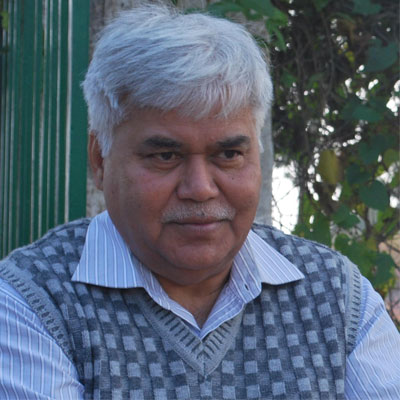
  • RS Sharma new TRAI chairman; challenges aplenty

    RS Sharma new TRAI chairman; challenges aplenty

    MUMBAI: The position had been lying vacant for almost three months. And his was one of the names mentioned as amongst the front runners to become the next Telecom Regulatory Authority of India (TRAI) chairman. (See: TRAI Chairmanship: An onerous responsibility fraught with delicate diplomacy & balancing acts)


    So when the announcement came that IT secretary Ram Sewak Sharma would be stepping into the shoes of Rahul Khullar whose term ended in May, it didn’t come as much of a surprise.

    The appointment committee of the Cabinet approved his name yesterday. Sharma is an IAS 1978 batch from the Jharkhand cadre. He was heavily involved in the implementation of the Aadhar project apart from designing the road map for the government’s digital India programme. He was director-general and mission director of the Unique Identification Authority of India.

    Sharma holds quite a few scholarly degrees from academia’s best. He has a Masters degree in Mathematics from IIT Kanpur, and a Masters in Computer Science from the University of California.

    Other names, which were being considered for the post, according to Business Standard, included Power Secretary PK Sinha, Information and Broadcasting Secretary Bimal Julka, Commerce Secretary Rajeev Kher, former telecom secretary M F Farooqui, and former Reserve Bank of India deputy governor Subir Gokarn.

    Sharma will have a key role to play on the net neutrality issue and also find solutions for the poor call quality that mobile companies are offering today. This apart, he has challenges facing him on cable TV digitisation, which has been in near limbo for a while now, especially when it comes to phase III and phase IV. The I&B ministry has been unable to push the pace on its own.

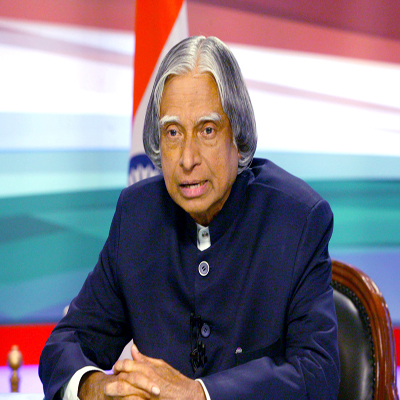
  • Former Indian President and renowned space scientist APJ Abdul Kalam passes away

    Former Indian President and renowned space scientist APJ Abdul Kalam passes away

    NEW DELHI: Former Indian President APJ Abdul Kalam, one of the country’s foremost aerospace scientists, passed away in Shillong this evening. He was 83 years old.
     
    Kalam was rushed to the hospital earlier in the day when he collapsed while giving a public lecture at Indian Institute of Management (IIM) Shillong. His condition was said to be critical and was kept under observation in the ICU.
     
    It is reported that he suffered a cardiac arrest during the lecture and was admitted at the Bethany Hospital.
     
    Kalam was born on 15 October, 1931 and served as the 11th President of India from 2002 to 2007. He received several prestigious awards, including the Bharat Ratna. After serving a term of five years as President, he returned to civilian life of education, writing, and public service.
     
    Born and raised in Rameswaram, Tamil Nadu, he studied physics and aerospace engineering in 1960.
     
    Kalam spent the next four decades as a scientist and science administrator, mainly at the Defence Research and Development Organisation (DRDO) and Indian Space Research Organisation (ISRO) and was intimately involved in the India’s civilian space programme and military missile development efforts. He thus came to be known as the Missile Man of India for his work on the development of ballistic missile and launch vehicle technology. He also played a pivotal organizational, technical and political role in India’s Pokhran-II nuclear tests in 1998, the first since the original nuclear test by India in 1974.
     
    Kalam started his career by designing a small helicopter for the Indian Army, but remained  unconvinced with the choice of his job at DRDO. Kalam was also part of the INCOSPAR committee working under Vikram Sarabhai, the renowned space scientist. In 1969, Kalam was transferred to ISRO where he was the project director of India’s first indigenous Satellite Launch Vehicle (SLV-III), which successfully deployed the Rohini satellite in near earth’s orbit in July 1980. 
     
    Kalam first started work on an expandable rocket project independently at DRDO in 1965. In 1969, he received the government’s approval and expanded the programme to include more engineers.
     
    During the period between the 1970s and 1990s, Kalam made an effort to develop the Polar Satellite Launching Vehicle (PSLV) and SLV-III projects, both of which proved to be success.
     
    In the 1970s, a landmark was achieved by ISRO when the locally built Rohini-1 was launched into space, using the SLV rocket. In the 1970s, Kalam also directed two projects, namely, Project Devil and Project Valiant, which sought to develop ballistic missiles from the technology of the successful SLV programme.
     
    Kalam’s research and educational leadership brought him great laurels and prestige in the 1980s, which prompted the government to initiate an advanced missile programme under his directorship. Kalam and Dr V S Arunachalam, metallurgist and scientific adviser to the Defence Minister, worked on the suggestion by the then Defence Minister, R Venkataraman on a proposal for simultaneous development of a quiver of missiles instead of taking planned missiles one after another. Venkataraman was instrumental in getting the cabinet approval for allocating Rs 388 crores for the mission, named Integrated Guided Missile Development Programme (IGMDP) and appointed Kalam as the chief executive. 
     
    Kalam played a major part in developing many missiles under the mission including Agni, an intermediate range ballistic missile and Prithvi, the tactical surface-to-surface missile, although the projects have been criticised for mismanagement and cost and time overruns.
     
    Kalam was the chief scientific adviser to the Prime Minister, and the Secretary of DRDO from July 1992 to December 1999. 
     
    In 1998, along with cardiologist Soma Raju, Kalam developed a low cost coronary stent, named the “Kalam-Raju Stent”. In 2012, the duo, designed a rugged tablet computer for health care in rural areas, which was named the “Kalam-Raju Tablet”.
  • FM Phase III e-auctions off to slow start; Govt claims Rs 395 crore as winning price

    FM Phase III e-auctions off to slow start; Govt claims Rs 395 crore as winning price

    NEW DELHI: The e-auction for FM Radio channels in Phase III got off to a slow start with no bids in certain cities and the provisional winning price lower than the clock round price.


    In all, four rounds of e-auction were held today with 135 FM channels in all the 69 cities of the first stage being opened.


    At the close of first day of bidding, 78 channels in 54 cities became provisionally winning channels with cumulative provisional winning price of around Rs 395 crore against their aggregate reserve price of about Rs 357 crore. 


    The e-auction began today (27 July) with Auction Activity Requirement set at 80 per cent. A total of 26 bidders were allowed to participate in the auction.


    However, there were no bids for 15 cities and the demand over the price in many cities fell by up to three per cent below the aggregate demand.


    The Percentage Price Increment (in INR) applicable for the next clock round was five per cent or higher in the metros of Delhi, Mumbai, and Chennai and in cities like Bhubaneswar, Bengaluru, Aurangabad, Ahmedabad, Guwahati, Jodhpur, Karnal, Patna and Pune.


    The highest provisional winning price – the same as the clock round price at the end of the fourth round – was in Mumbai – Rs 41.91 crore, Delhi – Rs 37.41 crore, Bengaluru – Rs 25 crore, Hyderabad – Rs 18 crore, Pune – Rs 16.21 crore, Chandigarh – Rs 15.61 crore; Chennai – Rs 14.2 crore; Lucknow – Rs 14 crore and Ahmedabad Rs 13.89 crore.


    The ongoing auction is a Simultaneous Multiple Round Ascending (SMRA) e-auction, which is being conducted online from Auction Control Room No. 404 B Wing, Shastri Bhawan.

  • Registered MSOs for DAS areas goes up to 315 as I&B grants new licences

    Registered MSOs for DAS areas goes up to 315 as I&B grants new licences

    MUMBAI: The Information & Broadcasting (I&B) Ministry is pulling up its socks to ensure that there is no delay in the complete digitisation of phase III areas, by December, 2015. In keeping with this, the Ministry has given six new permanent licences to multi system operators (MSOs) and 33 new provisional licences to those interested in setting up base in phase III areas.


    With this, the total number of MSOs that have been given permanent registration for a period of 10 years stands at 222 as of 22 July, 2015. While those granted provisional licence has gone up to 93 taking the total number of registered MSOs to 315.


    The MSOs that have been given permanent registration include: Tyagi Cable TV Network, ACN Cable, National Cable TV Nilgiris, Swamy Cable Network, Satellite Cable Communications and Air Media Network.


    Those given provisional licence include: Bhima Riddhi Infotainment, Shimla Broadband, Star Club, APK Networks, The Giddalur Cable Network and Sai Citi Cable Network amongst others.


    Click here to read the list of MSOs given permanent registration


    Click here to read the list of MSOs given provisional registration 

  • Security clearance clause for FM Phase III applies to companies & directors, not shareholders: Delhi HC

    Security clearance clause for FM Phase III applies to companies & directors, not shareholders: Delhi HC

    NEW DELHI: The Delhi High Court, which permitted Red FM to take part in the FM Phase III e-auctions that commenced today (27 July), said Digital Radio (Delhi) Broadcasting Ltd and Digital Radio (Mumbai) Broadcasting Ltd, which run Red FM in these two cities have not been alleged to be vehicles of any transgression of law and have been functioning since 2002-2003 without there being any allegation regarding their functioning resulting in any security concerns.


    Justices Badar Durrez Ahmed and Sanjeev Sachdeva, who had read out the operative portion yesterday (26 July), said Clause 3.8 of the Notice Inviting Applications had reference only to the company and its directors and there is no mention of its shareholders.


    Both Dayanidhi Maran and Kalanithi Maran are shareholders and therefore the Clause does not apply to them.


    At the outset, the Court said it was not adjudicating on the validity of clause 3.8. Although appeals have been made seeking the quashing of Clause 3.8, the main thrust of the arguments of Counsel Kapil Sibal and Dr Abhishek Manu Singhvi was on the interpretation of Clause 3.8 and whether the same was applied correctly or not. In any event, since the petitioners have participated in the auction process, they cannot now challenge Clause 3.8.


    The court also said that it was not touching upon the policy of requiring a security clearance. “We are, as rightly pointed out by Mr Tushar Mehta, Additional Solicitor General of India, not sitting in appeal over the decision of the Government as to the security angle assessment insofar as Dayanidhi Maran or Kalanithi Maran are concerned. We are also not called upon to comment upon, nor have we, as to whether the allegations/charges against the said two individuals and Sun TV are well founded or unfounded. Those would be decided in criminal proceedings,” the Court said.


    Thus the limited extent of judicial review was whether the security assessment in respect of the Maran brothers was germane to the requirements of security clearance prescribed in Clause 3.8 of the NIA. Clause 3.8 stipulates the requirement of a security clearance of the “company” as well as all its “Directors on the Board.” Now, on plain reading, this would imply that the company, which has applied must be security cleared. Not only the corporate entity, which is distinct and separate in law, but also its directors as individuals, distinct from the corporate entity, have to be security cleared. At the same time, the clause does not, on plain reading, extend to shareholders of the applicant company.


    The Government had argued that if the shareholders are not roped in then it would amount to ascribing a very narrow meaning to Clause 3.8 of the NIA, which would defeat the very purpose of having a security clearance particularly in this very sensitive field of radio waves.


    “We are afraid we cannot agree with this submission. Dr Singhvi was right in submitting that the clause has serious ramifications extending far beyond the present e-auction. If security clearance were to be denied to a company, as has happened in the two cases before us, that would a blot on that company – a badge of dishonour – as Dr Singhvi put it. When such serious penal consequences are to follow then the provisions of Clause 3.8 would require a strict interpretation and if there were any doubt, an interpretation against the maker of the clause would have to be adopted,” the Court said.


    Furthermore, the Court said there was no allegation that the petitioner companies were created as a “camouflage to shield the persons exercising control over them from any liability. There is also no allegation that the petitioner companies themselves have indulged in any activities, which could raise security concerns. In fact, both the petitioner companies have been operating their licenses under Phases I and II since 2002-2003. Even when the cases against the Marans were registered in 2011, the petitioner companies have continued to operate their respective radio channels without any objection concerning security issues. As pointed out by Mr Sibal, both these companies got extensions of their licenses by six months as recently as on 31 March 2015. Even then, no security concerns were raised in respect of the two companies.”


    It was pointed out by Sibal that in respect of the various cases against the Marans, nobody has been convicted and in fact, the charge-sheet has been filed in only one of four cases.

  • FM Phase III permission holders to pay Rs 9000 per month to BECIL for monitoring

    FM Phase III permission holders to pay Rs 9000 per month to BECIL for monitoring

    NEW DELHI: The Government said that permission holders of the first batch of FM Radio Phase III will have to pay Rs 9000 per channel, per city, per month as monitoring charges continuously to the Broadcast Engineers Consultants (India) Ltd (BECIL).


    This will be subject to an escalation charge of five per cent per annum on monitoring charges.


    The Information and Broadcasting (I&B) Ministry also put on its website the format of the Project Management Agreement between the permission holder and BECIL.


    Under the agreement, BECIL will make all reasonable endeavours to complete each of the activities in respect of the building, installation, commissioning and completion of the common transmission infrastructure (CTI) to the satisfaction of the first party for delivery to the permission holder in accordance with the timeline set out, provided always that the legal and beneficial ownership and all right, title and interest to all and any parts of the licence holder’s share in the Common Transmission Infrastructure (at whatever stage of completion) and the Equipment shall at all times remain with the licence holder and BECIL will not have any right at law or in equity and at anytime to make any claim of title or create any lien, charge or other encumbrance whatsoever over all or any parts of the CTI or the equipment.


    The obligations of BECIL have been set out in a clause and will automatically conclude upon the commissioning of the CTI. For the avoidance of doubt, the performance of equipment installed at the site shall be the exclusive responsibility of the licence holder.


    In terms of the Phase III FM Radio Policy, successful bidders have to co-locate transmission facilities on existing All India Radio/Doordarshan (Prasar Bharati) towers or towers to be constructed by BECIL as the case may be and common facilities have to be integrated by BECIL.


    The licence holders have to enter into an agreement with Prasar Bharati whereby Prasar Bharati has agreed to make available land and tower aperture for the cities from where the permission holders are operating to build, install and operate the common facilities and other equipment of the FM radio broadcast facility.

  • FM Phase III e-auctions commence, MHA to study judgment before deciding on appeal

    FM Phase III e-auctions commence, MHA to study judgment before deciding on appeal

    NEW DELHI: The e-auction for the first batch of FM Phase III commenced today, even as the Information and Broadcasting (I&B) Ministry said that it will abide by the court’s order.


    Director-General (Media and Communications) Frank Noronha said no decision had been taken. “But we will go according to the advice of the Ministry of Home Affairs (MHA),” he said. It is learnt that the MHA is consulting its legal team to examine if the Delhi and Madras High Court orders permitting FM channels of the Sun Group to participate in the auctions should be challenged.


    Any decision would depend on receiving the detailed Delhi High Court judgment as the judges only read out the operative portion in their verdict yesterday (26 July).


    Furthermore, any appeal in the Supreme Court will have to be filed by the I&B Ministry after getting full inputs from the Home Ministry.


    The I&B Ministry had in fact written to the Home Ministry earlier this month wanting full details of the denial of security clearance to Sun Group for purpose of preparing their arguments.


    Sun Group runs 45 radio channels across the country including those of Suryan FM and Red FM and had gone to Court in Delhi and Chennai when its name did not figure in the first list of 21 pre-qualified bidders for e-auction of the first batch of private FM radio Phase III channels.


    Earlier, I&B sources had told Indiantelevision.com that the government hoped to earn around Rs 600 crore from the 135 frequencies in 69 channels being auctioned in the first stage out of the total expectation of at least Rs 2,500 crore from the total 839 FM channels in 294 cities.

  • Regional Units  set up  to implement DAS; broadcasters ask MSOs for analogue rates till Dec

    Regional Units set up to implement DAS; broadcasters ask MSOs for analogue rates till Dec

    NEW DELHI: Twelve Regional Units (RUs) are being set up for implementation of Digital Addressable System (DAS) in Phase Ill areas.


    At the ninth meeting of the DAS Task Force earlier this month, Information and Broadcasting (I&B) Ministry joint secretary (broadcasting) R Jaya said these RUs will hold workshops on digitisation where all issues shall be discussed with the District Nodal officers nominated by State Governments.


    The remark came when a representative of local cable operators (LCO) from Assam said multi-system operators (MSO) are stopping signals to LCOs without any reason and the local authorised officers do not take cognisance of any violation of the provisions of the Cable TV Act. He added that there is no redressal mechanism for violations of Cable Act at State level and the cable operators do not have the means to file cases in Telecom Disputes Settlement and Arbitration Tribunal (TDSAT).


    Additional secretary J S Mathur, who chaired the meeting on 7 July, said time was fast running out and impressed on all stakeholders to ensure progress and timely completion of digitisation by the cutoff date.


    The Telecom Regulatory Authority of India’s (TRAI) GS Kesarwani was given the task to ask broadcasters to get details of MSOs who were intending to wait till September 2015 before sending requests to broadcasters for agreements in Phase III areas.


    On the other hand, Mathur said that the endeavour on the MSOs’ part should be to start using indigenously manufactured set-top-boxes (STBs) in their network.


    Kesarwani informed of a review meeting that was held by TRAI on the progress of signing inter-connect agreements for Phase Ill areas with broadcasters and MSOs. He said that three broadcasters namely Star India, Multi Screen Media (MSM) and TV18 – informed TRAI that they had received 55 requests from MSOs so far out of which they have signed commercial deals with two MSOs, whereas deals with 11 MSOs were in advance stages of negotiation.


    Kesarwani also urged MSOs who had not received any response to their requests from broadcasters, to inform TRAI.


    Saying that the Headend-in-the-Sky (HITS) operations were also covered under DAS regulations, Kesarwani asked HITS operators to apprise TRAI if no response was received from broadcasters to their requests for interconnect agreements.


    Apprehending that there may be some gap areas or MSO deficient areas, Jaya asked Indian Broadcasting Foundation (IBF) representatives to get details of these areas from broadcasters and intimate the same to the Ministry.


    Meanwhile even as they admitted some progress, representatives of national MSOs said  that broadcasters were asking for seeding plans and other data. However, MSOs were not in a position to provide this at this stage. They said channel pricing in Phase III areas was the main hurdle in signing of interconnect agreements. Some of them said that a few broadcasters had proposed agreements on analogue rates till December 2015 and others on reference inter-connect order rates.


    Even according to the TRAI, pricing can be different for different markets, they said.


    A representative of Siticable Networks said, “According to an analysis of urban areas carried out by us, it may not be feasible for any operator to carry out digitisation in urban areas having only a few hundred TV households. Even broadcasters are insisting on analogue agreements at present.”


    According to an IBF representative, broadcasters had entered into agreements with five regional MSOs. He said, “Broadcasters have filed an appeal in the Supreme Court challenging the TDSAT judgment on the tariff orders issued by TRAI.”


    On the issue of STBs, a representative of Consumer Electronics and Appliances Manufacturers Association (CEAMA ) said that no major orders were received by the industry so far from MSOs. On the other hand, while Siticable and Hathway officials said they were in talks with indigenous STB manufacturers, officials of direct-to-home (DTH) companies said that they had procured about three million STBs from Videocon.


    The meeting was attended by around 35 persons including some senior Ministry officials and some representatives from state governments.