Category: Regulators

  • Pay channel’s a la carte rate to not exceed two times its RIO rate: TRAI

    Pay channel’s a la carte rate to not exceed two times its RIO rate: TRAI

    NEW DELHI: The Telecom Regulatory Authority of India (TRAI) today said that the a la carte rate of a pay channel forming part of a bouquet offered by any digital platform should not exceed two times its RIO order rate offered by the broadcaster for addressable systems.


    TRAI also said that the sum of a la carte rates of all channels in the bouquet should not exceed three times the bouquet rate. 


    This applies to all multi-system operators (MSOs), direct to home (DTH) operators, internet protocol service (ISP) providers and Headend in the Sky (HITS) operators providing broadcasting services or cable service to its subscribers using a digital addressable system (DAS) and offers pay channels or pay and free-to-air (FTA) channels as part of a bouquet.


    These provisions are contained in the draft Telecommunication (Broadcasting and Cable) Services (fourth) (Addressable Systems) Tariff (Amendment order), 2015 that TRAI has prepared consequent to an order of the Telecom Disputes Settlement and Arbitration Tribunal (TDSAT) of 13 July.


    TRAI has also given the definitions of RIO and RIO rates in the draft, to which comments can be filed by 14 October with counter-comments if any, by 21 October.


    TRAI defines “RIO” as Reference Interconnect Offer published by a service provider specifying terms and conditions on which other service providers may seek interconnection from the service provider making the offer. On the other hand, “RIO rate” is the rate specified by the service provider in its Reference Interconnect Offer.


    The a-la-carte rates of all the channels offered by the service provider should be same for all the bouquet of channels formed by the service provider.


    The matter had gone to TDSAT as some platforms had objected to the “twin conditions” that were prescribed at retail level pricing of TV broadcasting services in order to link the a-la carte rates of channels to the bouquet rates in the Tariff order of 20 September, 2013.


    TDSAT, while disposing off the appeal vide its order of 13 July, stated that the Authority will consider the concerns of the appellants and take a final decision on the matter within four months from the date of the order.
  • FM migration fee submission date extended, Phase I kept out of migration

    FM migration fee submission date extended, Phase I kept out of migration

    NEW DELHI: Existing operators of Phase II FM Radio wanting to migrate to Phase III have been asked to deposit 25 per cent of the non-refundable one-time entry fee (NOTMF) by 5 October.


    Accepting a demand by Phase II FM operators for extension of time, the Government said that the balance will have to be paid by 15 October instead of the previous deadline of 1 October. 


    However, the Information and Broadcasting (I&B) Ministry made it clear that the option of migration only applied to Phase II operators and not Phase I operators.


    It also said that the migration fee had been fixed according to the recommendations of the Telecom Regulatory Authority of India of 20 February this year.


    As was reported earlier by Indiantelevision.com, each channel in Mumbai, which falls under the ‘A’ plus category will have to pay Rs 36.69 crore to the Ministry, while each channel from category ‘D’ city – Aizawl will have to shell out Rs 0.12 crore.


    This means that from Mumbai, the Ministry will receive a total of approximately Rs 256.83 crore, considering there are seven stations- Radio City, Red FM, Fever FM, Big FM, Radio One, Radio Mirchi and Oye FM.


    The second highest pay-out will come from New Delhi, which will pay Rs 33.33 crore per channel, which means that all the stations together will contribute about Rs 266.64 crore.

  • TDSAT asks two Amritsar LCOs to clear MSO dues before proceeding with case

    TDSAT asks two Amritsar LCOs to clear MSO dues before proceeding with case

    NEW DELHI: Two local cable operators (LCOs) of Punjab, who are members of the Amritsar Cable TV Operators Sangharsh Committee, have been asked by the Telecon Disputes Settlement and Arbitration Tribunal (TDSAT) to settle their dues with multi system operator (MSO) Fastway Transmission Pvt. Ltd., Amritsar before the case can proceed further.


    As the two – Bhatti Cable and Sajjan Cable – are unable to clear all the dues in one payment, the Tribunal accepted their plea to pay in two instalments. Both have already cleared all dues till February this year. Bhatti Cable, admittedly, has 953 functional set-top-boxes (STBs), whereas Sajjan Cable has 622 STBs.


    The dues against Bhatti Cable upto 30 September amount to Rs 6,66,700 and against Sajjan Cable is Rs 4,38,500. 


    Bhatti Cable is willing to pay to the respondent the sum of Rs 4,30,000 (that would include the subscription fee for the month of September 2015) this month. On the other hand, Sajjan Cable will pay the sum of Rs 2,30,000 (including the subscription fee for September 2015). 


    If the LCOs fail to clear off the balance dues by 30 October, it would be open to Fastway to discontinue the supply of its signals to them, the Tribunal said.


    Apart from payment of the arrears, both the local cable operators will also pay the monthly subscription fee for October 2015.


    In case any of the STBs with the subscribers of the two cable operators is not operational in the meanwhile, they will give intimation to the Fastway and shall also return the non-operational STBs.

  • Delhi govt approves online entertainment tax application for ticketed events

    Delhi govt approves online entertainment tax application for ticketed events

    MUMBAI: The Delhi Govt approved the first online application for Entertainment Tax on 23 September, 2015 based on a post-event settlement, which is a major breakthrough for the events and entertainment industry.


    The approval was done online in a record time of two hours, where previously the same could take several months.


    In August this year, The Event and Entertainment Management Association (EEMA) in collaboration with the Govt. of Delhi and the Police department of Delhi took several steps to simplify licensing for events and eliminate red tape and touts. A process was put into place whereby EEMA member companies can do ticketed events in the national capital without paying entertainment tax before the event. The first achievement in this direction is the online approval for the soon-to-be-held Zubin Mehta concert in Delhi.


    The development entails a single-window approval system, which is online for all non-ticketed events. Large ticketed events are likely to make their way back to the capital as the partnership between EEMA and the Delhi government has led to an online approval system for ticketed events too with elimination of pre-payment of tax, pre-event stamping of tickets and blockage of funds for tax payments.


    EEMA president and Wizcraft International founder director Sabbas Joseph said, “We are delighted to see our enduring efforts come to life and turn into reality. This is just one door open and still a major step ahead. Alongside the path breaking steps by the Delhi government, the Maharashtra Chief Minister Mr Devendra Fadnavis too has announced that venues would have pre-approved licenses and a single–window clearance system would be implemented shortly. We hope that the efforts of the CMs  from Delhi and Maharashtra pave the way for similar moves across the country.”


    The first ticketed show under this new licensing regime would be a concert by maestro Zubin Mehta performing live in Delhi after 15 years. The approvals were given online in less than two hours on 23 September, 2015.


    The show will be produced by Showtime Events. “I could not have imagined this speed of action in my wildest dreams! It seems the Commissioner means business and is determined to change the face of entertainment in Delhi,” said Showtime Events managing director Michael Menezes. 


    Due to antiquated tax rules and strangulating licensing norms in Delhi, companies were loathe to hold events and shows in the city and instead preferred Gurgaon or Noida as locations for the event staging.


    Earlier this year, The Delhi Government was forthcoming and eager to make Delhi India’s event-friendly capital city. Following a detailed EEMA representation and persistent efforts, the Delhi government moved at a rapid pace in streamlining the licensing process in Delhi and yielding promising results for the event industry. The Delhi Govt. also appointed antiquated tax rules and strangulating licensing norms commissioner Sanjay Kumar as the nodal officer for creation of the single-window licensing process, with an eye on ease-of-doing-business.


    What’s more, the complimentary ticket scenario has also got a thumbs down. Leading the way, Kejriwal publicly declared that no minister or MLA of his party will ever ask for free tickets to any event or movie.

  • TDSAT asks Star to show cause on Rudhrapur Cable Network’s contempt proceeding

    TDSAT asks Star to show cause on Rudhrapur Cable Network’s contempt proceeding

    NEW DELHI: Notice has been issued to Star India to show cause why contempt proceedings should not be initiated against it for not complying with the Telecom Disputes Settlement and Arbitration Tribunal (TDSAT) order of 18 August relating to Rudhrapur Cable Network.


    Star India was asked to respond within a week with TDSAT listing the matter for 7 October. 


    The Cable Network had come to the Tribunal seeking a direction to Star India for supply of its signals to the petitioner for retransmission in the areas of Rudrapur, Gadarpur, Kichha and rural areas.


    The Tribunal after arguments had directed that the parties should enter into an interconnect agreement without any delay applicable till 31 December, 2015. The areas under the interconnect agreement would be exactly same as the areas of the STN Television Network in Rudrapur, the Tribunal had said and added that following the execution of the agreement, the decoder boxes will be issued simultaneously to the petitioner for all the channels. 


    It had been argued by Star at that time that areas under question are in the third phase of DAS notification, hence as currently these areas are in the analogue mode and they are due to come under the DAS regime after 31 December, 2015. Star also declined to give signals to the petitioner on ground that STN has objected to any supply of signals to the petitioner on the ground that it owed large sum of money to STN. 

  • TRAI inks MoU with UAE telecom regulator to strengthen collaboration

    TRAI inks MoU with UAE telecom regulator to strengthen collaboration

    MUMBAI: India’s Telecom Regulatory Authority of India (TRAI) has signed a memorandum of understanding (MOU) with the UAE’s Telecommunications Regulatory Authority (TRA) to strengthen the collaboration between the two countries within the Telecommunications and Information and Communications technology (ICT) space. 


    TRAI secretary Sudhir Gupta and TRA director general H.E. Hamad Obaid Al Mansoori signed the MoU.


    The MoU pledges both countries’ commitment to promoting closer co-operation and knowledge exchange pertaining to various aspects of international and regional ICT.


    The two telecom regulators will cooperate in the areas of technological developments and new technologies; universal services, Mobile Number Portability (MNP), spectrum issues, green telecoms, e-government and e-services, participation in international events and forums, amongst other issues.


    The MoU was inked earlier this month during the joint commission meetings that both countries held in India, in the presence of UAE foreign minister H.H. Sheikh Abdullah Bin Zayed Al Nahyan and Minister of State H.E. Reem Bint Ibrahim Al Hashimi.


    Al Mansoori said, “This agreement falls within the framework of bilateral cooperation between UAE and India, and aims to secure optimum utilisation of the telecommunication sector to best serve the development efforts, economy, and knowledge society, which will reflect positively on the competitiveness of both countries. The importance of the telecommunications sector is reflected through the strategic role it plays in our contemporary society, as it contributes significantly in the economic and social development. We regard taking advantage of the global expertise and strengthening the ties with international stakeholders as necessities for the growth and prosperity of this sector.”


    TRA believes that the telecommunications sector is a strategic catalyst that will accelerate the UAE’s competitiveness. Moreover, TRA is always keen to exchange knowledge and experience within the ICT field and implement best practices that contribute positively to developing a knowledge–based economy.


    Additionally, Al Mansoori and TRA senior manager international affairs Nasser Bin Hammad met with Indian Minister of Road and Transport Ravi Shankar Prasad to exchange point of views regarding many significant topics such as UN post-2015 sustainable development agenda that will be validated by the General Assembly during this month. 


    Moreover, meeting attendees exchanged thoughts about the challenges facing the telecommunications sector including broadband services, cyber security, and the promotion of investing in telecommunications and ICT companies. Both parties agreed that discussing such topics further is crucial during bilateral meetings on the sidelines of international forums.

  • Mumbai to pay highest fees of Rs 36.7 crore for migration to FM Phase III

    Mumbai to pay highest fees of Rs 36.7 crore for migration to FM Phase III

    MUMBAI: FM operators in Mumbai will have to shell out the highest migration fees of Rs 36.69 crore, payable to the Information & Broadcasting (I&B) Ministry for migration from FM Phase II to Phase III.


    The I&B Ministry has released the city wise non-refundable one time migration fee (NOTMF) for migration from FM Phase II to Phase III for existing private FM broadcasters.


    According to the ministry, after Mumbai, Delhi FM operators follow with the second highest migration fee of Rs 33.33 crore, whereas Bengaluru is third in line with migration fee of Rs 21.60 crore.


    Apart from the top three, existing FM operators in 13 cities will have to pay migration fees of above Rs 10 crore. They are: Chandigarh (Rs 19.04 crore), Hyderabad (Rs 18 crore), Patna (Rs 17.89 crore), Coimbatore (Rs 16.87 crore), Cochin (Rs 15.04 crore), Nasik (Rs 14.66 crore), Lucknow (Rs 14 crore), Pune (Rs 14 crore), Ahmedabad (Rs 13.17 crore), Indore (Rs 13.06 crore), Chennai (Rs 12.27 crore), Visakhapatanam (Rs 11.68 crore) and Vadodara (Rs 11.30 crore).


    Additionally, FM operators in 47 cities will have to pay migration fees between Rs 10 – Rs 1 crore. They are as follows: Vijayawada (Rs 9.97 crore), Kolhapur (Rs 9.44 crore), Trivandrum (Rs 8.09 crore), Kanpur (Rs 8 crore), Jaipur (Rs 7.74 crore), Bhopal (Rs 7.49 crore), Kolkata (Rs 7.06 crore), Kozhikode (Rs 7.02 crore), Madurai (Rs 6.49 crore), Puducherry (Rs 6.49 crore), Aurangabad (Rs 6.23 crore), Tiruchi (Rs 6.11 crore), Rajkot (Rs 6.08 crore), Amritsar (Rs 6.03 crore), Trichur (Rs 5.65 crore), Varanasi (Rs 5.26 crore), Nagpur (Rs 5.10 crore), Mysore (Rs 4.66 crore), Tirupathi (Rs 4.50 crore), Mangalore (Rs 4.45 crore), Jalandhar (Rs 4.22 crore), Allahabad (Rs 4.08 crore), Kannur (Rs 4.05 crore), Jabalpur (Rs 3.80 crore), Surat (Rs 3.60 crore), Raipur (Rs 3.43 crore), Panaji (Rs 3.18 crore), Agra (Rs 2.56 crore), Shimla (Rs 2.34 crore), Jodhpur (Rs 2.05 crore), Asansol (Rs 2.02 crore), Patiala (Rs 1.64 crore), Rajahmundry (Rs 1.58 crore), Tirunelveli (Rs 1.57 crore), Gulbarga (Rs 1.50 crore), Tuticorin (Rs 1.50 crore), Gwalior (Rs 1.40 crore), Bhubaneshwar (Rs 1.27 crore), Jamshedpur (Rs 1.26 crore), Warangal (Rs 1.25 crore), Siliguri (Rs 1.05 crore), Udaipur (Rs 1.05 crore), Karnal (Rs 1.04 crore), Ranchi (Rs 1.03 crore), Rourkela (Rs 1.02 crore), Jammu (Rs 1.01 crore) and Kota (Rs 1 crore).


    The operators who exercised the option to migrate to FM radio Phase III will have an option to withdraw to migrate within five calendar days of intimation of the NOTMF. The option exercised by the operator who do not wish to migrate to FM radio Phase III shall be final and binding on the operators.

  • BECIL to audit Mumbai’s Home Systems, Star directed not to disconnect signals: TDSAT

    BECIL to audit Mumbai’s Home Systems, Star directed not to disconnect signals: TDSAT

    NEW DELHI: The Broadcasting Engineering Consultants (India) Ltd (BECIL) has been directed to examine the headend of Mumbai’s Home Systems Pvt Ltd following a petition filed by it against Star India.


    Telecom Disputes Settlement and Arbitration Tribunal (TDSAT) chairman Aftab Alam and members Kuldip Singh and B B Srivastava said BECIL will find out whether the Conditional Access System (CAS) and the Subscribers Management System (SMS) at the petitioner’s headend are properly integrated on the date of the audit.


    It would also examine, on the basis of the historical data available in the system, whether the systems were properly integrated during the period April 2014 to November 2014, when the commercial audit was made by Star.


    It will be open to the Star to submit to BECIL the report of its audit and the data collected from the Home System in course of the audit. Home Systems will bear the cost of the audit.


    It is expected that the BECIL will submit its report to the Tribunal within four weeks and so the case has been listed for 6 November.


    The petition had been filed by Home Systems against a disconnection notice issued by Star India based on non-payment of dues. The dues are under two heads – one relates to the licence fee and the other relates to the demand made by Star on the basis of a commercial audit of the petitioner’s headend. The licence fee dues as shown in the notice amount to Rs 56 lakh.


    After the notice Home Systems paid a sum of Rs 27,37,690 and according to it, the licence fee dues upto 31 August amounts to Rs 26,74,536, apart from the fee for September. 


    According to Star, in course of audit it was found that at the petitioner’s headend the CAS and the SMS were not properly integrated and hence, the data generated by SNS was incorrect. Home Systems disputed this.

  • Adcap case to be heard on 27 November, Court informed matter under discussion with MIB

    Adcap case to be heard on 27 November, Court informed matter under discussion with MIB

    NEW DELHI: The challenge to the advertising cap of 12 minutes per hour by the News Broadcasters Association (NBA) and others in the Delhi High Court will be heard on 27 November.
     

    The NBA sought the adjournment on the ground that the matter was under discussion with the Information and Broadcasting (I&B) Ministry to seek certain clarifications. On 8 September,  the matter was adjourned on the same plea.
     

    According to information available with Indiantelevision.com, this comes in the wake of a statement made by I&B Minister Arun Jaitley in January this year that there should be no ad cap in the print or electronic media. However, it is also learnt that Jaitley has given no such instructions in any order in the Ministry.
      

    The order that the Telecom Regulatory Authority of India (TRAI) will not take any action against any channel pending the petition will continue. In an earlier hearing, the Court had, at the regulator’s instance, directed that all channels keep a record of the advertisements run by them.

      
    The NBA had challenged the ad cap rule, contending that TRAI does not have jurisdiction to regulate commercial airtime on television channels.
     

    Apart from the NBA, the petition has been filed by Sarthak Entertainment, Pioneer Channel Factory, E24 Glamoru, Sun TV Network, TV Vision, B4U Broadband, 9X Media, Kalaignar, Celebrities Management, Eanadu Television and Raj Television.
     

    The news and regional broadcasters fear that the capping of commercial airtime will curtail their ad revenues. They also argue that the ad cap must be brought only after the benefits of cable TV digitisation start showing. 

     
    Meanwhile, TRAI recently released results of their records, which show that around 36 news channels apart from 105 general entertainment channels (GECs) are violating the ad cap by telecasting ads for more than 12 minutes an hour.

  • Govt. bows to votaries of free social media, withdraws controversial draft on Encryption Policy

    Govt. bows to votaries of free social media, withdraws controversial draft on Encryption Policy

    NEW DELHI: Following protests by votaries of a free social media, the government today withdrew a draft of an encryption policy, thus exempting mass use encryption products, which are currently being used in web applications, social media sites, and social media applications such as Whatsapp, Facebook, Twitter, etc


    In a statement, the Department of Electronics and Information Technology said that it had “noted public sentiments viz-a-viz this draft. It is clarified that the above mentioned draft is not the final view of the Government on the matter.”


    The draft had been prepared by a High-level Committee as part of an attempt to ensure secure transactions in Cyber Space for individuals, businesses and Government and prepare a National Encryption Policy. 


    The statement said the Department had also taken note of the ambiguity in some portions of the draft that may have led to misgivings. “Hence, the draft has been withdrawn and will be put up for consultation after appropriate revision.” 


    The removal of the draft also amounts to exemptions to SSL/TLS (Secure Sockets Layer/ Transport Layer Security) encryption products being used in Internet-banking and payment gateways as directed by the Reserve Bank of India and SSL/TLS encryption products being used for e-commerce and password-based transactions.


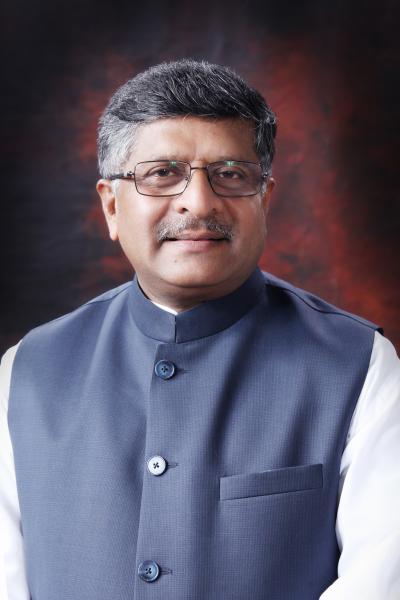
    Communications and IT Minister Ravi Shankar Prasad told newspersons that the draft was not the final view of the government. “The policy will consider the views of the public,” he said.


    Under the draft, which has now been withdrawn, every message that is sent through e-mail, Whatsapp or SMS was required to be stored in plain text format for 90 days from the date of transaction and made available to the law enforcement agencies on demand.


    The draft was to help introduce a New Encryption Policy under Section 84A of the Information Technology Act, 2000, and had called for public comments by 16 October.


    The stated mission of the policy is to provide confidentiality of information in cyber space for individuals, protect sensitive or proprietary information, ensure reliability and integrity of nationally-critical information systems and networks.


    “Users or organisations within B2B group may use encryption for storage and communication. Encryption algorithms and key sizes shall be prescribed by the government through notifications from time to time… On demand, the user shall be able to reproduce the same plain text and encrypted text pairs using the software or hardware used to produce the encrypted text from the given plain text,” the draft said.