Category: Regulators

  • Manpower audit required to identify posts in Prasar Bharati that need to be filled: Rathore

    Manpower audit required to identify posts in Prasar Bharati that need to be filled: Rathore

    NEW DELHI: Prasar Bharati has been advised to carry out a Manpower Audit to identify posts that actually need to be filled up, the Parliament has been informed.


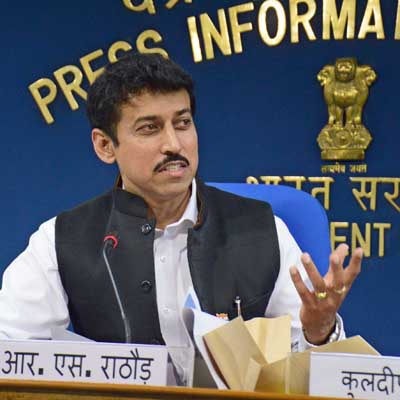
    Minister of State for Information and Broadcasting Col. Rajyavardhan Singh Rathore said in reply to a question that though there are vacancies in All India Radio and Doordarshan Kendras, there is a need to reassess actual requirement of staff in Prasar Bharati keeping in view changes in broadcast technologies.


    Earlier this year, a report had shown that although it had stressed the need for a manpower audit in view of technological upgradation, statistics showed that only 30093 of the 46756 sanctioned posts have been filled in the cash-strapped Prasar Bharati.


    Of the total, the filled posts in All India Radio are 15538 out of the sanctioned 26129, while 14555 posts have been filled out of the 20627 sanctioned posts in Doordarshan.


    In Group A, AIR has filled just 719 of the 2002 posts and DD has filled just 517 of the 1083 sanctioned strength.


    After rigorous exercise, the Government had identified 3452 posts as essential category posts for filling up in Prasar Bharati. Out of these, 3067 posts were identified by Government as essential category of posts in Prasar Bharati to be filled up through direct recruitment have been revived.


    A Special onetime dispensation was obtained to recruit these through Staff Selection Commission.


    Prasar Bharati sources say Staff Selection Commission has already recommended 2367 candidates for appointment. Prasar Bharati is in the process of issue of appointment orders.


    In addition, 38 middle/ senior level Programme posts have been revived for filling up on deputation basis.

  • TDSAT permits LCO to seek TV signals directly from distributor

    TDSAT permits LCO to seek TV signals directly from distributor

    NEW DELHI: The Telecom Disputes Settlement and Appellate Tribunal (TDSAT) has said that SRE Digital Cable Communications is entitled in law to ask Sun TV for supply of signals directly despite the fact that it has been receiving these signals from another multi system operator (MSO).


    TDSAT chairman Aftab Alam and members Kuldip Singh and B B Srivastava said however that this is subject to the operator satisfying the conditions mandated in the Regulations.


    Listing the matter for 21 December, the Tribunal said, “It will be open to Sun Distribution Services Pvt Ltd to make an inspection of the LCO’s system and to be satisfied that it is compliant with the regulatory norms.”


    On the next date, the LCO’s counsel Sujeet Kumar Mishra will also produce the invoices of A.C.T. Digital with the materials showing that payments are duly made against those invoices.


    The Tribunal also noted that the area in which the petitioner is operating is to come under the DAS regime in the third phase from 1 January, 2016. “It is, therefore, reasonable to assume that the petitioner would have a digital head-end in place. As a matter of fact, Mr. Mishra states that such is the position and the petitioner is capable of retransmitting any signals, including those received from SUN in digital mode.”


    However, it said that Sun could not be denied the request to examine the systems.


    In pursuance of the order passed on 29 October, Sun counsel Abhishek Malhotra filed an affidavit stating that the petitioner is receiving Sun’s signals from A.C.T. Digital. 


    Mishra admitted to the Tribunal that the petitioner had been receiving Sun’s signals from A.C.T. Digital from the month of November 2015. “Evidently, the earlier statements made on behalf of the petitioner were not correct,” the Tribunal noted.

  • India boasts of 830 TV channels even as MIB cancels permission of 125

    India boasts of 830 TV channels even as MIB cancels permission of 125

    NEW DELHI: The total number of television channels uplinking from or downlinking into India has risen to 830, with the permission of as many as 125 channels cancelled by the Ministry of Information and Broadcasting (MIB).


    Thus, the government had given permission to a total of 955 channels, which included those who have been later denied permission.


    Of the permitted channels, 398 are news and current affairs channels while 432 are general entertainment channels (GECs).


    Twenty channels including seven news channels have been permitted to uplink from India but not downlink within the country, as of 30 November, 2015. 


    A total of 725 channels including 349 GECs are allowed to uplink and downlink in the country while 85 including 70 GECs are uplinked from overseas but allowed to downlink into TV homes in the country.


    Star India brought into its fold the Maa cluster of channels including Maa TV, Maa Movies, Maa Music, and Maa Gold. NGC Network India launched National Geographic, Nat Geo Wild, Nat Geo Wild HD, Nat Geo People HD, Nat Geo Music HD, National Geographic HD, Fox Life and Fox Life HD in other Indian languages. Eenadu TV launched ETV Life, ETV Plus and ETV Abhiruchi that are Telugu channels permitted for uplinking. Additionally, Colors TV launched Colors Infinity and Colors Infinity HD.


    Other channels that received permission this year include 9X Bajao (earlier 9X Bajaao and 9X Bangla), Rengoni, Asianet HD, Australia Network, Da Vinci Learning (non-news channel), Sharnam, Tulsi TV (earlier Vedas Om TV); the multi-lingual Sree TV, Naaptol HD (earlier All Time), Media One Life in Malayalam and English; Sangeet Marathi; MNGK Star in English and Indian languages; Ishwar in English and Indian languages; Baby TV HD; Seven Sisters Rainbow; Positive Health; Shubh TV; Swadesh News; Cartoon TV (earlier Maha Mazza); Teleshop; Home Shop 18 Tamil; V S Entertainment; Nick HD+ (earlier Bandhan); Veria Living and Zee Café HD (for downlinking).

  • Broadcast media urged to help flood-affected people in South India

    Broadcast media urged to help flood-affected people in South India

    NEW DELHI: All television and radio channels have been asked by the Government to send relevant and vital information brought out by concerned government agencies for the people of Tamil Nadu and other southern Indian states affected by torrential rains and floods.

    In an advisory, the Information and Broadcasting Ministry said it was imperative that all information is broadcast that can assist those affected.

    The advisory noted that Doordarshan and All India Radio apart from some other channels had been disseminating information about the efforts of the government and rescue agencies and even weather-related information, help-lines, and contact numbers of personnel that can be of help to the affected people.

    Considering the enhanced gravity of the situation, it stressed the imperative need for dissemination of critical and vital information regarding all aspects of the disaster on real-time basis.

  • TDSAT issues bailable arrest warrants against two directors of Sahara India TV Network

    TDSAT issues bailable arrest warrants against two directors of Sahara India TV Network

    New Delhi: In a power rarely exercised by it, the Telecom Disputes Settlement and Appellate Tribunal has issued a bailable warrant of arrest against Sahara India TV Network Directors Govind Tiwari and Devendra Kumar Srivastava in a case of non-payment of dues to multi-system operator Delhi Distribution Company.  


    Listing the matter for 22 December, Chairman Aftab Alam and members Kuldip Singh and B B Srivastava said: “From the earlier orders, it appears that the Directors of the company are willfully flouting the directions of this Tribunal. The Tribunal is, therefore, left with no option but to secure their presence through coercive measures.” 


    It was also noted that neither the details of moveable and immoveable properties of the company were filed nor any payment being made towards the discharge of the decree. 


    Sahara India counsel Pankaj Agarwal who was present said he had been instructed that he would be handed over the cheque to be handed over to the MSO but was later told no cheque was being sent.


    The TDSAT office was directed to issue bailable warrants of arrest on the addresses being furnished by MSO Counsel Vibhav Srivastava to ensure their personal appearance on the next date fixed in the matter.

  • TRAI’s one month deadline for resolving 30 questions on spectrum auctions

    TRAI’s one month deadline for resolving 30 questions on spectrum auctions

    New Delhi, 27 November:  The Telecom Regulatory Authority of India wants to know whether the entire spectrum available with Department of Telecom in the 800 MHz band should be put for auction and how can the spectrum in the 800 MHz band, which is not proposed to be auctioned due to non-availability of inter-operator guard band, be utilized.


    In a consultation paper on “Valuation and Reserve Price of Spectrum in 700, 800, 900, 1800, 2100, 2300 and 2500MHz Bands”, it wants to know what should be the block size in the 700 MHz band.


    TRAI has sought comments to almost thirty questions in the paper by 21 December and counter-comments by 28 December and said no extra time would be given in view of the urgency of the issue.


    It also seeks to know if there is any requirement to change the provisions of the latest NIA with respect to block size and minimum quantum of spectrum that a new entrant/existing licenses/expiry licensee is required to bid for in 800, 900, 1800 and 2100 MHz bands.


    What should the block size in the 2300 MHz and 2500 bands be, the Regulator wants to know.


    Considering the fact that one more sub-1 GHz band (i.e. 700 MHz band) is being put to auction, is there a need to modify the provisions of spectrum cap within a band and is there any need to specify a separate spectrum cap exclusively for the spectrum in 700 MHz band?, TRAI has asked.


    Should a cap on the spectrum holding within all bands in sub-1 GHz frequencies be specified and should the existing provision of band specific cap (50 percent of total spectrum assigned in a band) be done away with, it has asked.


    TRAI wants to know whether the 2300 MHz and 2500 MHz bands be treated as same band for the purpose of imposing intra-band Spectrum Cap.


    In the auction held in March 2015, specific roll-out obligations were mandated for the successful bidders in 800 MHz, 900 MHz, 1800 MHz and 2100 MHz spectrum bands.


    Stakeholders are requested to suggest how the roll-out obligations be modified to enhance mobile coverage in the villages and whether there should be any roll out obligation for the existing service providers who are already operating their services in these bands.  


    In the auction held in 2010, specific roll-out obligations were mandated for the successful bidders in 2300 MHz spectrum band. Same were made applicable to the licensee having spectrum in 2500 MHz band. Stakeholders are requested to suggest whether the same roll-out obligations which were specified during the 2010 auctions for BWA spectrum be retained for the upcoming auctions in the 2300 MHz and 2500 MHz bands and should both these bands be treated as same band for the purpose of roll-out obligations.


    TRAI has also asked if the ISP category ‘A’ licensee should be permitted to acquire the spectrum in 2300 and 2500 MHz bands or the same eligibility criteria that has been made applicable for other bands viz. 800 MHz, 900 MHz, 1800 MHz and 2100 MHz band should be made applicable for 2300 MHz and 2500 MHz bands as well.


    Stakeholders are requested to comment on whether the guidelines for liberalisation of administratively allotted spectrum in 900 MHz band should be similar to what has been spelt out by the DoT for 800 and 1800 MHz band.


    Can the prices revealed in the March 2015 auction for 800/900/1800/2100 MHz spectrum be taken as the value of spectrum in the respective band for the forthcoming auction in the individual LSA, it wants to know.


    Should the value of the 2300 MHz spectrum be derived on the basis of the value of any other spectrum band using the technical efficiency factor and should the valuation of the 2500 MHz spectrum be equal to the valuation arrived at for the 2300 MHz spectrum, the Regulator has asked.


    What should be the ratio adopted between the reserve price for the auction and the valuation of the spectrum in different spectrum bands and why.  Should the realized prices in the recent March 2015 auction for 800/900/1800/2100 MHz spectrum bands be taken as the reserve price in respective spectrum bands for the forthcoming auction.
  • Adcap case to be heard on 11 February, MIB informs Court matter under discussion with broadcasters

    Adcap case to be heard on 11 February, MIB informs Court matter under discussion with broadcasters

    NEW DELHI, 27 November: The Information and Broadcasting Ministry today informed the Delhi High Court that it was in talks with the News Broadcasters Association and other stakeholders on the issue of the advertising cap of 12 minutes per hour.


    Consequently, the Court put off hearing of the matter to 11 February. This is the first time that the Ministry has put in an appearance in the petition filed by the News Broadcasters and others against the Telecom Regulatory Authority of India and others.


    The Bench observed that the matter had been pending for some time and therefore it will hear and conclude the case in the next hearing.


    Counsel for NBA Nisha Bhambhani also said that talks were on with the Ministry in this regard.


    Meanwhile in an intervention MSO Home Cable Network (P) Ltd said it wanted to intervene as it was directly affected by the outcome of the present petition. Lawyer Vivek Sarin appearing for Home Cable said in the intervention application that “the ordinary subscribers are unduly burdened with unjustified charges when the cost of operating the channels can be recovered from the advertisement revenue. The said cost includes notional profits also.”


    The application wanted the NBA petition to be dismissed and added: “The Pay channel broadcasters are profiteering at the expense of subscribers and the DPO’s. There is no justification for changing monthly subscription when commercial advertisements are inserted. The Standards of Quality of Service (Digital Addressable Cable TV Systems) Regulations 2012 (with Amendments thereafter) is justified to the extent they are applicable to Pay Channels. The pay channel broadcasters cannot charge the subscription fee while inserting commercials into the content or in the alternative, the subscribers have to be compensated for the revenue earned on the basis of their being subscribers of the channels.”


    In the last two hearings on 8 and 23 September, the NBA had sought the adjournment on the ground that the matter was under discussion with the Ministry to seek certain clarifications.


    (It is learnt by indiantelevision.com that this comes in the wake of a statement made by Minister Arun Jaitley in January this year that there should be no ad cap in the print or electronic media, However, no instructions have been issued in this regard by the Minister so far,).

    The order that TRAI will not take any action against any channel pending the petition will continue. In an earlier hearing, the Court had, at the regulator’s instance, directed that all channels keep a record of the advertisements run by them.
      
    The NBA had challenged the ad cap rule, contending that TRAI does not have jurisdiction to regulate commercial airtime on television channels.
     
    Apart from the NBA, the petitions have been filed by Sarthak Entertainment, Pioneer Channel Factory, E24 Glamoru, Sun TV Network, TV Vision, B4U Broadband, 9X Media, Kalaignar, Celebrities Management, Eanadu Television and Raj Television.
     

    The news and regional broadcasters fear that the capping of commercial airtime will curtail their ad revenues. They also argue that the ad cap must be brought only after the benefits of cable TV digitisation start showing. 


     Meanwhile, TRAI had three months earlier released results of their records which show that around 36 news channels apart from 105 General Entertainment Channels are violating the ad cap by telecast ads of more than 12 minutes an hour.

  • Sun asked to sign provisional agreement and commence signals to MSO

    Sun asked to sign provisional agreement and commence signals to MSO

    New Delhi: Sun Network has been directed by the Telecom Disputes Settlement and Appellate Tribunal to enter into a provisional interconnect agreement with multi system operator Balu Cable Network and commence supply of signals.


    Chairman Justice Aftab Alam and member Kuldip Singh felt that the order was proper and appropriate considering much time has already lapsed.


    The Tribunal said: “We note that this petition was filed on 28 May 2015 and it is lingering on, on some pretext or the other. The request on behalf of the respondent for making physical verification of the petitioner’s SLR cannot be disallowed.”  


    Listing the matter for 14 December, the Tribunal said Sun Network may make a physical verification of the petitioner’s SLR and submit its report on completion of the verification.


    Thereafter, the Tribunal will pass further orders, the bench said.

  • MSO clearances finally cross 550 with less than six weeks left for completing Phase III of DAS

    MSO clearances finally cross 550 with less than six weeks left for completing Phase III of DAS

    New Delhi: The number of multi system operators has raced to 553 by 24 November from around 470 early this month, as the government races to prepare to meet the deadline of completing the third phase of digital addressable system.


    Of these, 230 have got ten-year licences with three provisional licencees getting permanent licences, and a total of 323 (against 246 early this month) getting provisional licences. One temporary licencee was also given permanent licence till 2024 after its area of operation was changed.


    Information and Broadcasting Ministry sources said it had still not received any formal communication of the Home Ministry’s decision to do away with security clearances for MSOs, while some had been given provisional licences pending certain formalities relating to shareholders and so on.


    According to the list put on the I and B Ministry’s website today, Kal Cables of Chennai and Digi Cable Network Pvt Ltd of Mumbai remain on the cancellation list. Scod 18 Networking Pvt Ltd of Mumbai has also been refused security clearance while SR Cable TV Pvt Ltd of Bangalore has shut down its business.


    Two MSOs which had earlier been granted permanent licences were permitted to change their areas of operation.


    The new entrants in the permanent licence list include Waltair Entertainment Pvt. Ltd for Phase II in Vishakapatnam; Den Manoranjan Satellite Pvt. Ltd of Pune for Maharashtra; and Seemanchal Digital Network of Purnea for Bihar.  

  • Only 188 community radio stations operational even after a decade of this sector

    Only 188 community radio stations operational even after a decade of this sector

    New Delhi, 25 November: Even as 235 entities have signed the grant of permission agreement (GOPA) for setting up community radio stations in the country, the actual number of operational CRS is only 188 after more than a decade of launch of this sector.


    This shows an increase of only eight community radio stations since the last list issued in May this year.


    A total of 960 applications for CRS had been either rejected or withdrawn as on 15 November.


    However, another 323 applications are still under the consideration of the government from educational institutions, non-governmental organizations, Krishi Viguan Kendras and State Agriclture Universities. Some of these date back to 2011.


    The operational stations include 105 by universities and private and government educational institutions, seven by NGOs, seven by Krishi Vigyan Kendras, and five by State Agricultural Universities.


    State-wise, Tamil Nadu has the hghest number of CRS with 27, followed by Uttar Pradesh with 23. Maharashtra has 17, Madhya Pradesh has 15, and Karnataka has 14 stations. Uttarakhand, Haryana and Odisha have nine each; Kerala and Rajasthan have eight each; Delhi and Gujarat have six each; Andhra Pradesh, Bihar, and Telangana have five each; Assam, Chandigarh, Chattisgarh, Puducherry, Punjab, and West Bengal have three each; Himachal Pradesh has two and Jammu and Kashmir and Jharkhand have one each.


    Thus, there are only three CRS in the northeast, and only one in J and K.    


    Though the scheme was launched around a decade earlier, the outreach of the Community Radio Stations was enhanced in 2006 to include non Governmental and Community based organizations with at least three years of legal existence.