Category: Regulators

  • MIB grants provisional licences to 12 MSOs as DAS Phase III gets going

    MIB grants provisional licences to 12 MSOs as DAS Phase III gets going

    NEW DELHI: The Ministry of Information and Broadcasting (MIB) has granted provisional licences to another 12 multi system operators (MSOs) after 1 January, 2016 in a bid to help expedite the implementation of Phase III of digital addressable system (DAS) in all urban areas in the country.


    The number of MSOs that have received provisional licences has now gone up to 424, from 412 on 1 January, which had proved lucky for 30 MSOs as they got their provisional licences in a single day. In fact, once again, all the 12 MSOs got their licences on a single day – 12 January. So far, January has seen as many as 42 MSOs getting provisional licences.


    An earlier list had put the figure at 382 provisional licensees on 31 December, 2015 the day the analogue signals were to be switched off, showing 45 new MSOs had been added in the last fortnight of 2015.


    Adding to the 230 who have 10-year permanent licences, the total number of registered MSOs now goes up to 654.


    While the MIB website did not display the number of permanent licensees, indicating that the number remains at 230 as it has remained since 20 November.


    With the Home Ministry directive about doing away with security clearances for MSOs not being communicated in writing to the MIB, the pace remains slow.


    The new licensees covering 11 states include one MSOs in the northeast for Tripura, but it also includes two MSOs in Tamil Nadu and one in Chhattisgarh where DAS Phase III remains stayed.


    The other states covered include states like Haryana, Maharashtra, Uttar Pradesh, Madhya Padesh, and Kerala.


    The number of MSOs was 612 on 31 December, 567 in mid-December, 553 by 24 November and 470 earlier in November, but this increase was merely in those who have provisional licences.


    Sources said many MSOs holding provisional licences had not completed certain formalities relating to shareholders and so on.

     
  • TDSAT directs four broadcasters to sign pact & give signals to Chirala LCO

    TDSAT directs four broadcasters to sign pact & give signals to Chirala LCO

    NEW DELHI: Four broadcasters namely Eenadu Television, Maa TV, Sun Distribution Services and Taj TV have been directed by the Telecom Disputes Settlement and Appellate Tribunal (TDSAT) to enter into interconnect agreements with Chirala Cable Network for retransmission of their respective signals in 14 panchayats.


    TDSAT chairman Justice Aftab Alam and members Kuldip Singh and B B Srivastava gave the directive after examining a survey report submitted by the Advocate Commissioner Tushar Singh who had been appointed on 1 December last by the Tribunal to go to the rural areas around Chirala town and conduct a survey.


    According to the survey, the cable network has 2150 households in the area, the Advocate Commissioner had visited 10 houses in each of the rural areas listed by the network as his subscribers and also 10 others not in the list and found that even among those not in the list, there were four or five of the 150 houses visited by him who were receiving signals from the network as well as other local cable operator. Thus, the Tribunal raised the SLR figure by 2.5 per cent.


    The broadcasters were directed to execute the agreement not later than two weeks and to supply their signals to the network immediately thereafter. 


    Disposing of the four petitions by Chirala Cable Network, the Tribunal made clear that any variation in the SLR during the period of the agreement may take place only as provided under the Regulations. 


    The Tribunal accepted the report of 7 January, which showed that the network had the connectivity of 2081 as claimed by the network, apart from those not listed by it.


    The detailed survey report submitted by Singh, which the Tribunal said was made properly and reflects the true position, thus confirms the petitioner’s assertion that it has the connectivity of 2081 connections in the 14 panchayats. 


    “If we take into account the five houses not mentioned in the petitioner’s SLR that were receiving the petitioner’s signals, the SLR submitted by the petitioner may be increased by 2.5 per cent. We direct that the petitioner’s SLR be taken as 2150.”


    The Advocate Commissioner was directed to give copies of the expense account to the counsel representing four broadcasters who will to make proportionate payments to petitioner’s counsel B S Sai or the client within 10 days.

  • MIB advises broadcast company applicants to track status on STATS

    MIB advises broadcast company applicants to track status on STATS

    NEW DELHI: All companies in the broadcasting sector, whose applications are pending with the Information and Broadcasting Ministry, were today advised to track the status of their applications through the STATS (Satellite TV Channels Application Tracking System).


    This was in relation to uplinking and downlinking of TV channels, teleport operations and news agencies.


    The Ministry said each company has already been given a password and login ID.


    The I&B Ministry said that if there were difficulties in accessing the portal, an e-mail could be sent to the Under Secretary, TV(I) for rectification. Additionally, if any pending application did not figure on the Ministry’s website, the concerned companies could intimate Director (BC) for remedial action.

  • MIB will give greater operational flexibility to Films Division: Arora

    MIB will give greater operational flexibility to Films Division: Arora

    NEW DELHI: Ministry of Information and Broadcasting (MIB) Secretary Sunil Arora has urged the Directors in the Films Division to prepare a concept note on steps to be taken to promote quality documentary and short film making.


    In a review meeting of the Division ahead of the 14th Mumbai International Film Festival in the western metropolis, he also stressed on the need for the Films Division to improve its distribution and reach. 


    Recalling the rich heritage and experience in filmmaking of the Films Division, he said, “The creative output of the media unit should be reinvigorated and sustained.“


    Calling for greater cooperation in creative pursuits, Arora said, “People should not work in silos, creative organisations grow only when ideas and information sharing is as free as possible.“


    The 14th Mumbai International Film Festival is to be held in the city from 28 January to 3 February.


    Arora also asked Director General Mukesh Sharma to explore possibilities of utilising the social media platform. Stating that content is king, Arora promised that the Ministry would look into issues of granting operational flexibility.


    The Films Division was set up in 1948, primarily to produce documentaries and news magazines focusing on cultural and development issues. Besides producing films in house, the Films Division also commissions documentaries and short films from outside producers. Sixty-six such short films and documentaries are now in various stages of production.


    The Films Division also organises the biennial Mumbai International Film Festival for Documentaries, Animation & Short Films.  


    The 2016 edition of MIFF will feature 30 films in the international competition section and 27 films in the national competition section, besides 32 films in the New Media Competition.

  • Artistic creativity shouldn’t get curtailed while certifying films: Jaitley

    Artistic creativity shouldn’t get curtailed while certifying films: Jaitley

    NEW DELHI: Information and Broadcasting Minister Arun Jaitley today said artistic creativity and freedom should not get curtailed while certifying feature films or documentaries.


    At the same time, he noted that there is a mechanism in most countries of the world for certifying films and documentaries. 


    Addressing members of the Shyam Benegal Committee set up on New Year’s Day to examine the present guidelines, he said the film certification guidelines need contemporary interpretation and they should be made as non discretionary as possible.


    Minister of State Rajyavardhan Rathore was confident that the Committee of Experts under the chairmanship of Benegal would provide a holistic framework for interpretation of the provisions of Cinematograph Act 1952 and Rules that could help the Chairperson and other members of the Central Board of Film Certification Screening Committee.


    Benegal said there is a need to move towards a new system of grading films in terms of age, maturity, sensibility and sensitivity instead of censorship. 


    The two Ministers and I&B Secretary Sunil Arora held wide ranging interaction with the Committee in Mumbai today. 


    The Ministry had asked the Committee to recommend broad guidelines for certification of films by the Central Board of Film Certification (CBFC).


    Other members of the Committee including filmmaker Rakyesh Omprakash Mehra, advertising and communication expert Piyush Pandey, veteran film journalist Bhawana Somayaa, NFDC managing director Nina Lath Gupta and Joint Secretary (Films) Sanjay Murthy were present.


    The Committee will study the existing procedure being followed by the CBFC for certification of original films, their dubbed versions as well as recertification of films for screening on other media platforms. 


    The Committee will also study various directives of courts as well as notifications issued by other Government agencies like the Health & Family Welfare Ministry, Environment & Forests Ministry, and Animal Welfare Board of India etc, which have a bearing on the process of film certification. 


    The staffing pattern of CBFC would also be looked into in an effort to recommend a framework, which would provide transparent and user friendly services.

  • Delhi HC examining if TDSAT had jurisdiction in giving parity to HITS with MSOs

    Delhi HC examining if TDSAT had jurisdiction in giving parity to HITS with MSOs

    NEW DELHI: The Delhi High Court has reserved its orders on whether the Telecom Disputes Settlement and Appellate Tribunal (TDSAT) had the jurisdiction to ‘re-write the regulation’ by asking broadcasters to treat the headend in the sky (HITS) operator Noida Software Technology Park Ltd (NSTPL) at the same level as pan-India multi-system operators (MSOs).


    Justice Rajiv Sahai End law passed the order on a petition by Star India arising out of a Tribunal judgment of 7 December, 2015.


    The court also said that a directive by TDSAT of 18 December asking Star India and other broadcasters to produce the kind of agreements it had with Hathway, Den and SitiCable and listing the matter for 12 January would stand suspended until the outcome of the High Court case.


    The Court heard arguments presented by Star India and NSTPL whose petition had been accepted on 7 December by the Tribunal, which had asked Star India and Taj TV to execute fresh agreements with NSTPL. However, TDSAT had kept the operation of the judgment pending till 31 March this year.


    It had said that on past occasions it had made similar suggestions with the hope of nudging the Television Regulatory Authority of India (TRAI) to take proactive steps to reduce the scope of disputes arising out of the Regulations. At the same time, the fact that regulatory intervention may be the ideal way forward cannot and should not be an excuse for this Tribunal to shirk the interpretative issues that have come before us. This is particularly so when there appears to be regulatory inertia.


    The Tribunal had, on 18 December, impleaded Zee Turner and others in another petition by Star India against NSTPL and asked the broadcasters to produce agreements between broadcasters and major MSOs. It opined that some agreements have to be suspended by Star and Taj TV.

  • Gajendra Chauhan assumes office at FTII amidst protests; BP Singh to head Academic Council

    Gajendra Chauhan assumes office at FTII amidst protests; BP Singh to head Academic Council

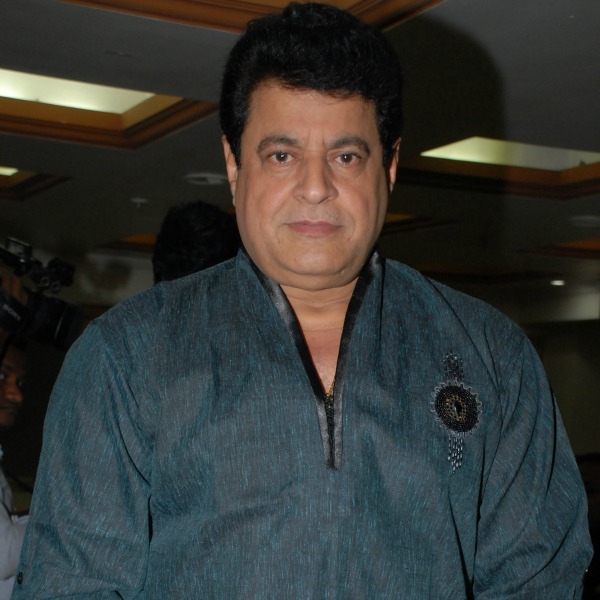
    NEW DELHI: Gajendra Chauhan, whose appointment in the Film and Television Institute of India (FTII) had led to a furore some months earlier, today formally took over as chairman of the premier body.
     
    There was slogan-shouting and protests by students as he entered the premise in Pune for the first meeting of the newly appointed FTII Society and the Governing Council in Pune and some students were taken away by the police.
     
    Chauhan is chairman of the Governing Council and President of the FTII Society.
     
    However in an attempt to meet one of the demands of the agitating students, television producer-director Brijendra Pal Singh, who was elected as the vice president of the Society and vice chairman of the Governing Council, will head the Academic Council as chairman.  
     
    An alumni of FTII, Singh is noted for his series CID, which is one of the longest running television series in India.
     
    The meeting of the Society was attended by its Chauhan, additional secretary and financial advisor Dr Subhash Sharma, director Rajkumar Hirani, producer-director B. P. Singh, actors Satish Shah and Rahul Solapurkar, and Information and Broadcasting Ministry Joint Secretary (Films) Sanjay Murthy.
     
    Anagha Ghaisas, Narendra Pathak, film critic Bhawana Somaiyya, Urmil Thapliyal and Pranjal Saikia were also present at the meeting. 
     
    The ex-officio members included Films Division DG Mukesh Sharma, FTII director Prashant Pathrabe, Ministry OSD Chaitanya Prasad, Children’s Films Society, India, CEO Shravan Kumar, and Satyajit Ray FTII director Sanjay Pattnayak.
     
    The Society also decided to nominate Hirani, Singh, Shah, Saikia, Pathak and Somaiyya to the Governing Council.
     
    The GC also approved the Annual Report and Statement of Accounts of the Institute for 2013-14 & 2014-15. The Revised Estimates for 2015-2016 and Budget Estimates for 2016-17 were also sanctioned at the meeting.
     
    Addressing Staff members on arrival, Chauhan said he would do his best to solve the problems of the Institution including the longstanding demand of pension for the staff.  
  • TRAI makes interconnect agreements mandatory between broadcasters & MSOs

    TRAI makes interconnect agreements mandatory between broadcasters & MSOs

    NEW DELHI: In view of several multi-system and local cable operators supplying signals even in the absence of an agreement, the Government today said that it was mandatory for the broadcaster of pay channels to enter into written interconnection agreement (ICA) for retransmission of its pay channels irrespective of whether subscription fee is paid by the MSO to the broadcaster.
     
    The Telecom Regulatory Authority of India (TRAI) today released the Telecommunication (Broadcasting and Cable Services) Interconnection (DigitalAddressable Cable Television Systems)(Sixth Amendment) Regulations 2016 in this regard.  
     
    The amendment provides for sufficient time (minimum sixty days) for entering into new interconnection agreement before the expiry of existing ICA between the service providers for retransmission of TV signals.
     
    It was made clear that after this amendment, no scope will be available in the name of mutual negotiations for continuing the provisioning of TV signal after expiry of the existing ICA. 
     
    MSOs have been mandated to inform the consumers in the event of failure to execute new ICA, about date of expiry of its existing ICA and disconnection of TV channels, fifteen days prior to the expiry of existing ICA to enable the consumers to take informed decision in respect of their choice. 
     
    At the outset, TRAI said it was observed from the interconnection details submitted by the service providers that signals of TV channels are being provided by several broadcasters to MSOs and MSOs to LCOs even in the absence of valid ICA in writing. 
     
    It was also observed that continuation of retransmission of signal without valid ICA, on the pretext of continued mutual negotiations, often results in disputes and sometimes abrupt disconnection, which affects the quality of service to the consumers. 
     
    In this regard, the draft sixth amendment was released for consultation on 3 November last and an Open House Discussion (OHD) was held on 11 December. 
     
    The amendment was issued after considering the stakeholder’s comments and in-house analysis.
     
    TRAI noted that a few stakeholders expressed their concern, stating that the timeline of 60 days for starting of negotiation will bring practical difficulties and inconvenience at the ground level in view of the large number of service providers across the country. 
     
    This concern has been addressed by adding the word “at least” before 60 days in the amendment thereby they can start negotiations any time prior to 60 days. Moreover, several broadcasters and MSOs do their mutual agreements for all its operating areas or pan-India basis simultaneously. 
     
    A few stakeholders had suggested that similar provision may be made in the regulations for non-DAS areas and also in other platforms such as DTH. In this context it was mentioned that the delay in renewal of ICA is predominantly observed between broadcasters and MSOs in areas where Digital Addressable Cable System has been implemented. 
     
    However, TRAI noted that the stakeholders’ request may be taken up while reviewing interconnection regulations as a whole, in future, when such need arise.
     
    TRAI is already in the process of finalising a model ICA to ensure smooth transition to DAS.
  • MIB grants 30 provisional MSO licences on 1 January to push DAS Phase III

    MIB grants 30 provisional MSO licences on 1 January to push DAS Phase III

    NEW DELHI: Even as almost six states now have received two months’ extension from their respective High Courts to implement Phase III of Digital Addressable System (DAS), the Ministry of Information and Broadcasting granted provisional licences to as many as 30 multi-system operators (MSOs) on New Year’s Day (1 January) in a bid to push cable TV digitisation.


    With the new licenses granted, the total number MSOs holding provisional licenses has jumped from 382 to 412 in a single day.


    An earlier list had put the figure at 382 provisional licensees on 31 December, the day the analogue signals were to be switched off in Phase III that covers all urban areas in the country, showing 45 new MSOs had been added in the last fortnight of 2015.


    Adding to the 230, who have 10-year permanent licences, the total number of registered MSOs now goes up to 642.


    The Information and Broadcasting Ministry website did not display the number of permanent licensees, indicating that the number remains at 230 as it has remained since 20 November.


    But this slow pace is in direct contradiction to the fact that the Ministry of Home Affairs (MHA) had nearly seven months earlier announced that it was aiming to do away with security clearances for MSOs.


    The new licensees covering 11 states include two MSOs namely Hashmee Cable Network and Vaadi Television, who have got provisional licences in Jammu and Kashmir.


    The other MSOs are from states like Andhra Pradesh, Telangana, Maharashtra, and Tamil Nadu where the implementation of DAS Phase III has been extended by varying periods. These are: Yuvaraj Cable and Anantha City Digital Comm. Network from AP; Hi – Tech Communication Network from Telangana; Rainbow Digitech, Sangli Media Communication, World Vision Cable Network, Chikhali Cable Network, Shah Cable Network, Shree Balaji Cable Network, TK Cable Network, Alone Cable Network, Amarnath Cable Network and Creative Cable Network from Maharashtra; and Tiruvannamalai Cable Network and Amoga Digital Netcom from Tamil Nadu.


    MSOs who have received licenses from the state of Uttar Pradesh are: Netvision Elegant Networks, V.B Distribution Cable Network, Welcome Cable Network and Jagjeet Cable TV Network; from Rajasthan are: Shekhawati Cable Networks, Om Cable Network, Kankroli Digital Network and Jaisal Cable Vision; and from Chhattisgarh are: CCN Digital Network and Vande Mahamaya Cable Network.


    Additionally, one MSO each from MP, Haryana and Karnataka namely Yash Cable Network, ABC News Palwal and RST Digital Media Services respectively received the provisional licenses.


    The number of MSOs was 612 on 31 December, 567 in mid-December, 553 by 24 November and 470 earlier in November, but this increase was merely in those who have provisional licences.


    Sources said many MSOs holding provisional licences had not completed certain formalities relating to shareholders and so on.

  • Adcap case on 11 February to consider if pay channels have right to show commercials

    Adcap case on 11 February to consider if pay channels have right to show commercials

    NEW DELHI: The Delhi High Court, which is slated to hear the advertising cap (adcap) challenge case on 11 February, today agreed to consider contentions on whether pay channels should be permitted to carry commercials in view of subscription fee charged by them. 


    In a brief hearing, counsel Vivek Sarin on behalf of Home Cable Network Pvt. Ltd, which has come as an intervenor in the case, also told the Court that the petitioners had not disclosed the fact that broadcasters had given their consent to observe the 10+2 minutes ad cap rule under the Cable Television Network Regulation Rules 1994 and the Act that followed a year later and also under the Uplink and Downlink Guidelines.  


    Defending the plea that pay TV broadcasters should not be allowed to take ads as they charged subscription fee, Sarin wanted the Court to order that offending pay TV broadcasters should deposit the advertisement revenue earned during the period from 17 December, 2013 onwards in the Consumer Welfare Fund maintained by the Union Government.


    He said the Standard of Quality of Services Regulation 2012 and the subsequent amendment of December 2013 was clear that all channels had to observe the adcap.


    However, Sarin also sought to argue that since pay channels charge a subscription fee, they should not be permitted to air ads and even if they do so, then the subscription charges should be adjusted accordingly. He said that the amendment of 17 December, 2013 to the Standard of Quality of Services Regulation should be modified accordingly and the protection given by the subsequent order of 27 November last should also be modified.


    The case, filed by 9x Media, News Broadcasters Association (NBA) and others against the Telecom Regulatory Authority of India (TRAI) and the Union Government, has been adjourned from time to time on the plea that the government and the broadcasters are in talks on the issue.


    Sarin wanted issuance of directions to the TRAI to enforce the 2012 Standards of Quality of Service (Digital Addressable Cable TV Systems) Regulations as amended in 2013 and the provisions of rule 7(11) of the Cable TV Network Rules 1994 against the offending pay TV broadcasters.


    He also sought directions to TRAI and the Union Government to enforce the Clause 5.1 of the Down Linking Guidelines and the undertakings given by the Pay TV Broadcasters under Form A 1 against the pay TV broadcasters.


    In the last hearing in November 2015, the Information and Broadcasting Ministry informed the Delhi High Court that it was in talks with the NBA and other stakeholders on the issue of the advertising cap of 12 minutes per hour on television channels.


    Consequently, the Court put off hearing of the matter to 11 February, 2016 but observed that the matter had been pending for some time and therefore it will hear and conclude the case in the next hearing.


    The intervention application by multi system operator (MSO) Home Cable Network and its head Vikki Chaudhary said it wanted to intervene as it was directly affected by the outcome of the present petition and “the ordinary subscribers are unduly burdened with unjustified charges when the cost of operating the channels can be recovered from the advertisement revenue. The said cost includes notional profits also.”


    The application wanted the NBA petition to be dismissed and added, “The pay channel broadcasters are profiteering at the expense of subscribers and the DPOs. There is no justification for changing monthly subscription when commercial advertisements are inserted. The Standards of Quality of Service (Digital Addressable Cable TV Systems) Regulations 2012 (with Amendments thereafter) is justified to the extent they are applicable to pay channels. The pay channel broadcasters cannot charge the subscription fee while inserting commercials into the content or in the alternative, the subscribers have to be compensated for the revenue earned on the basis of their being subscribers of the channels.”


    In the last two hearings on 8 and 23 September, the NBA had sought the adjournment on the ground that the matter was under discussion with the Ministry to seek certain clarifications.


    It is learnt by Indiantelevision.com that this comes in the wake of a statement made by I&B Minister Arun Jaitley in January last year that there should be no ad cap in the print or electronic media, However, no instructions have been issued in this regard by Jaitley so far.


    The Court in an initial hearing of this case directed that TRAI will not take action against any channel violating the ad cap rule until the hearing of petition is over. The Court has since reiterated that this order will continue. In an earlier hearing, the Court had, at the regulator’s instance, directed that all channels keep a record of the advertisements run by them.


    The NBA had challenged the ad cap rule, contending that TRAI does not have jurisdiction to regulate commercial airtime on television channels. Apart from the NBA, petitions have been filed by Sarthak Entertainment, Pioneer Channel Factory, E24 Glamour, Sun TV Network, TV Vision, B4U Broadband, 9X Media, Kalaignar, Celebrities Management, Eenadu Television and Raj Television.