Category: Regulators

  • I&B names 9 social media contest winners to witness Republic Day Parade

    I&B names 9 social media contest winners to witness Republic Day Parade

    NEW DELHI: Nine winners whose names were announced today by the Information and Broadcasting Ministry in contests organised on its social media platforms as a part of Republic Day celebrations, will get invitations to attend the Parade.


    The contests were held on Ministry’s platforms of Facebook (facebook.com/inbministry), Twitter (@MIB_India) and specially designed webpage (http://www.graffiti.inbministry.in) where graffiti were invited from participants on various flagship programmes of the Government.


    The competition was open for a fortnight from 1 to 14 January. The travel and accommodation arrangements of all these winners are being sponsored by Ministry.


    For the graffiti wall, the themes were Start Up India, Stand Up India; Digital Empowerment; Entrepreneurs of Young India; Skilled India, Powerful India; Make In India; Financial Security to All and Housing For All.


    The response on graffiti was over-whelming with 419 entries across all themes. The first prize in the graffiti contest was awarded to Narendra Kumar Singh for his work captioned Housing for All. “He has beautifully captured the idea of ‘Housing for All’ by using a metaphor of Weaver Birds’ nest. It shows independent and affordable housing for everybody across various income categories,” the jury said.


    The second prize was awarded to Narendra Borlepwar’s artwork Skill India, which depicts “the fusion of Education and vocational training leading to recognisable improvement in the economic graph.”


    The third prize was awarded to Vimal Kumar’s artwork Make In India showing “ladders, which visually double up as scaffolds on construction sites best captures the idea of ‘making.’”


    For the Twitter contest, netizens’ responses were invited on Twitter on three hashtags; #VisionofTeamIndia, #MyIdeaofIndia and #RDayNotJustaHoliday. A total of 888 tweets were received by @MIB_India. The winners of the tweet contests across three theme segments taken collectively are as follows in order of first, second and third places:


    Bhaiya ji Joshi @Igjganesh –“#MyIdeaofIndia For evry Mouth there is Meal for evry girl there is life For evry head there is roof For evry foot there is road (sic).”


    The I&B Ministry said that the user has summed up in very simple terms that everybody in the India should have the basic needs satisfied.


    N. Vinayak @vinumon2016 “#VisionofTeamIndia centre and states working together in the great act of nation building in spirit of ‘all for one and one for all.”


    In this, the user has drawn our attention to cooperative federalism, said the ministry.


    Neer Joy @neerjanni2000 – “#RDayNotJustaHoliday It is a moment2get inspiration 4rm freedom fighters & to taking up new initiatives4making India No1 country. (sic)”


    Via this message, the user has invoked the sacrifices and sufferings of freedom fighters for whom India became independent and a constitution was framed, the ministry said.


    Regarding the Poster making contest on Facebook, participants were invited to send posters on three themes; Give It Up – LPG Subsidy, Per Drop More Crop and Save the Girl Child. A total of 432 posters were received by the Ministry. The jury awarded first prize to A. Parag Chitnis for his artwork captioned “Save the Girl Child” where “the artist has highlighted a graphical representation of a female gene, which is led to the noose, whereas a male foetus seldom faces this ordeal.”


    The second best poster was designed by Sudhir Komawar for his artwork captioned “Per Drop More Crop,” which “brilliantly captures super imposed image of the leaves of crops inside huge drop of water reminding that how a universe of microscopic can subsist in a drop of water.”


    The third place was awarded to Anunay Arko for his painting captioned “INDIA where we worship goddess and a child is being killed, for being a GIRL.” It captures “a brilliant truism that women are the substratum of mankind.”
  • TRAI amends internet directions in consonance with DoT’s broadband definition

    TRAI amends internet directions in consonance with DoT’s broadband definition

    NEW DELHI: The Telecom Regulatory Authority of India (TRAI) has proposed an amendment to its direction relating to internet services to bring it in consonance with the new definition of broadband given by the Department of Telecom.


    The Department on 18 July, 2013 said, “Broadband is a data connection that is able to support interactive services including Internet access and has the capability of the minimum download speed of 512 kbps to an individual subscriber from the point of presence (POP) of the service provider intending to provide Broadband service.”


    TRAI had on 27 July, 2012 directed the service providers to provide broadband services in a transparent manner.


    In order to ensure transparency in delivery of internet and broadband services and to protect interests of consumers of the telecom sector and to facilitate further growth of internet and broadband services in India, TRAI now intends to direct all telecom service providers providing broadband (wire-line or wireless) services to provide on their website and also in all advertisements published through any media, the following information in respect of all broadband tariff plans offered under Fair Usage Policy.


    TRAI has sought views of stakeholders by 1 February with counter comments, if any, by 8 February.


    For Fixed broadband service, TSPs should indicate data usage limit with specified speed; speed of broadband connection upto specified data usage limit; and speed of broadband connection beyond data usage limit.


    For Mobile broadband service, data usage limit with specified technology (3G/4G) for providing services; technology (3G/4G) offered for providing broadband services up to specified data usage limit; and technology (2G/3G/4G) offered for providing broadband services beyond data usage limit.


    TSPs should also provide information to both new and existing subscribers on their registered email address and through SMS on their mobile number registered with the service providers; and ensure that download speed of broadband service provided to the fixed broadband subscriber is not reduced below 512 kbps in any broadband tariff plan; provide alert to the subscriber when his data usage reaches 80 per cent of the data usage limit under his plan and ensure that such alert is provided to the fixed broadband subscriber at each login after data usage crosses the said limit of eighty percent; and send alert to the subscriber either through SMS or Unstructured Supplementary Service Data (USSD) on his mobile number, registered with the service provider or to his registered email address, each time when the data usage by the subscriber reaches eighty per cent and hundred per cent of the data usage limit under his plan.


    The TSPs should also furnish compliance report by in a transparent manner.


    At the outset, TRAI says it has been entrusted with discharge of certain functions, inter alia, to regulate the telecommunication services, protect the interests of service providers and consumers of the telecom sector, lay-down the standards of quality of service to be provided by the service providers and ensure the quality of service and conduct the periodical survey of such service provided by the service providers so as to protect interest of the consumers of telecommunication services.

  • TRAI amends internet directions in consonance with DoT’s broadband definition

    TRAI amends internet directions in consonance with DoT’s broadband definition

    NEW DELHI: The Telecom Regulatory Authority of India (TRAI) has proposed an amendment to its direction relating to internet services to bring it in consonance with the new definition of broadband given by the Department of Telecom.


    The Department on 18 July, 2013 said, “Broadband is a data connection that is able to support interactive services including Internet access and has the capability of the minimum download speed of 512 kbps to an individual subscriber from the point of presence (POP) of the service provider intending to provide Broadband service.”


    TRAI had on 27 July, 2012 directed the service providers to provide broadband services in a transparent manner.


    In order to ensure transparency in delivery of internet and broadband services and to protect interests of consumers of the telecom sector and to facilitate further growth of internet and broadband services in India, TRAI now intends to direct all telecom service providers providing broadband (wire-line or wireless) services to provide on their website and also in all advertisements published through any media, the following information in respect of all broadband tariff plans offered under Fair Usage Policy.


    TRAI has sought views of stakeholders by 1 February with counter comments, if any, by 8 February.


    For Fixed broadband service, TSPs should indicate data usage limit with specified speed; speed of broadband connection upto specified data usage limit; and speed of broadband connection beyond data usage limit.


    For Mobile broadband service, data usage limit with specified technology (3G/4G) for providing services; technology (3G/4G) offered for providing broadband services up to specified data usage limit; and technology (2G/3G/4G) offered for providing broadband services beyond data usage limit.


    TSPs should also provide information to both new and existing subscribers on their registered email address and through SMS on their mobile number registered with the service providers; and ensure that download speed of broadband service provided to the fixed broadband subscriber is not reduced below 512 kbps in any broadband tariff plan; provide alert to the subscriber when his data usage reaches 80 per cent of the data usage limit under his plan and ensure that such alert is provided to the fixed broadband subscriber at each login after data usage crosses the said limit of eighty percent; and send alert to the subscriber either through SMS or Unstructured Supplementary Service Data (USSD) on his mobile number, registered with the service provider or to his registered email address, each time when the data usage by the subscriber reaches eighty per cent and hundred per cent of the data usage limit under his plan.


    The TSPs should also furnish compliance report by in a transparent manner.


    At the outset, TRAI says it has been entrusted with discharge of certain functions, inter alia, to regulate the telecommunication services, protect the interests of service providers and consumers of the telecom sector, lay-down the standards of quality of service to be provided by the service providers and ensure the quality of service and conduct the periodical survey of such service provided by the service providers so as to protect interest of the consumers of telecommunication services.

  • Benegal Committee on film certification invites public views within guidelines’ ambit

    Benegal Committee on film certification invites public views within guidelines’ ambit

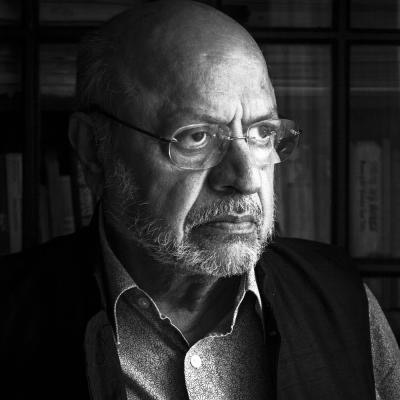
    NEW DELHI: The Shyan Benegal Committee examining the certification process followed by the Central Board of Film Certification (CBFC) set up early this month has sought the views and suggestions of the public in this regard.


    While noting that the views should be restricted to two pages covering all important aspects, the notice on the Information and Broadcasting Ministry website says the comments must be “within the ambit of the existing Act, Rules and guidelines, which have withstood the scrutiny of various Courts.”


    The comments may be forwarded to NFDC to rajani@nfdcindia.com.               


    The notice also gives the terms of reference of the Committee and says the guidelines are expected to provide aholistic interpretation of the provisions of the Cinematograph Act and the Rules.The present guidelines have also been reproduced in the notice.


    The other Members of the Committee include filmmaker Rakeysh Omprakash Mehra, creative director Piyush Pandey, media veteran Bhawana Somayya, NFDC MD Nina Lath Gupta and Joint Secretary (Films) Sanjay Murthy as Member Convenor. The Committee has been requested to submit its recommendations within two months.  


    Interestingly, although media reports had indicated that Gautam Ghose and Kamal Haasan had been included as members at the request of Benegal, the notice on the Ministry website makes no mention of this. 


    When setting up the Committee in later in a meeting with I&B Minister Arun Jaitley, Minister of State Rajyavardhan Rathore and Secretary Sunil Arora, it had been stated that the aim was to suggest a paradigm that ensures that artistic creativity and freedom do not get stifled/curtailed even as films are certified.


    Noting that “in most countries of the world there is a mechanism/process of certifying feature films and documentaries,” an official release had also said that the attempt should also be that “the people tasked with the work of certification understand these nuances.”


    The recommendations of this Committee are expected to provide a holistic framework and enable those tasked with the work of certification of films to discharge their responsibilities keeping in view this framework. 


    During their deliberations, the Committee would be expected to take note of the best practices in various parts of the world, especially where the film industry is given sufficient and adequate space for creative and aesthetic expression. 


    The Committee would recommend broad guidelines / procedures under the provisions of the Cinematograph Act 1952 / Rules for the benefit of the chairperson and other members of the Screening Committee. The staffing pattern of Central Board of Film Certification would also be looked into in an effort to recommend a framework which would provide efficient / transparent user friendly services. 


    This is not the first time that such a committee has been set up. After earlier attempts, the last Committee that examined similar issues was headed by the eminent Mukul Mudgal. However, no action has been taken on that report submitted in 2013.

  • Benegal Committee on film certification invites public views within guidelines’ ambit

    Benegal Committee on film certification invites public views within guidelines’ ambit

    NEW DELHI: The Shyan Benegal Committee examining the certification process followed by the Central Board of Film Certification (CBFC) set up early this month has sought the views and suggestions of the public in this regard.


    While noting that the views should be restricted to two pages covering all important aspects, the notice on the Information and Broadcasting Ministry website says the comments must be “within the ambit of the existing Act, Rules and guidelines, which have withstood the scrutiny of various Courts.”


    The comments may be forwarded to NFDC to rajani@nfdcindia.com.               


    The notice also gives the terms of reference of the Committee and says the guidelines are expected to provide aholistic interpretation of the provisions of the Cinematograph Act and the Rules.The present guidelines have also been reproduced in the notice.


    The other Members of the Committee include filmmaker Rakeysh Omprakash Mehra, creative director Piyush Pandey, media veteran Bhawana Somayya, NFDC MD Nina Lath Gupta and Joint Secretary (Films) Sanjay Murthy as Member Convenor. The Committee has been requested to submit its recommendations within two months.  


    Interestingly, although media reports had indicated that Gautam Ghose and Kamal Haasan had been included as members at the request of Benegal, the notice on the Ministry website makes no mention of this. 


    When setting up the Committee in later in a meeting with I&B Minister Arun Jaitley, Minister of State Rajyavardhan Rathore and Secretary Sunil Arora, it had been stated that the aim was to suggest a paradigm that ensures that artistic creativity and freedom do not get stifled/curtailed even as films are certified.


    Noting that “in most countries of the world there is a mechanism/process of certifying feature films and documentaries,” an official release had also said that the attempt should also be that “the people tasked with the work of certification understand these nuances.”


    The recommendations of this Committee are expected to provide a holistic framework and enable those tasked with the work of certification of films to discharge their responsibilities keeping in view this framework. 


    During their deliberations, the Committee would be expected to take note of the best practices in various parts of the world, especially where the film industry is given sufficient and adequate space for creative and aesthetic expression. 


    The Committee would recommend broad guidelines / procedures under the provisions of the Cinematograph Act 1952 / Rules for the benefit of the chairperson and other members of the Screening Committee. The staffing pattern of Central Board of Film Certification would also be looked into in an effort to recommend a framework which would provide efficient / transparent user friendly services. 


    This is not the first time that such a committee has been set up. After earlier attempts, the last Committee that examined similar issues was headed by the eminent Mukul Mudgal. However, no action has been taken on that report submitted in 2013.

  • TDSAT to hear Sun’s petition alleging Asianet’s changing placement of important channels

    TDSAT to hear Sun’s petition alleging Asianet’s changing placement of important channels

    NEW DELHI: The Telecom Disputes Settlement and Appellate Tribunal (TDSAT) will hear a petition by Sun Distribution Services Pvt Ltd on27 January alleging that the placement of important channels has been changed by Asianet Satellite Communication.


    The petition was initially filed alleging that Asianet had discontinued the distribution of Sun’s signals on its network without any notice and in violation of the regulations.

    However when the matter came up for hearing before TDSAT chairman Aftab Alam and members Kuldip Singh and B B Srivastava, Sun counsel Gopal Jain accepted that the channels had been resumed after filing of the petition.

    However, he said the channels’ placement had been changed to the great disadvantage of the petitioner and cited some examples. Asianet Counsel Shirin Khajuria said there was no subsisting placement agreement between the two sides. She also stated that the displacements, if any, of the channels are made in accordance with the regulations.


    The Tribunal also asked Asianet counsel to take proper instructions and, if so advised, to file a brief reply on the issue of displacements of channels.

  • TDSAT to hear Sun’s petition alleging Asianet’s changing placement of important channels

    TDSAT to hear Sun’s petition alleging Asianet’s changing placement of important channels

    NEW DELHI: The Telecom Disputes Settlement and Appellate Tribunal (TDSAT) will hear a petition by Sun Distribution Services Pvt Ltd on27 January alleging that the placement of important channels has been changed by Asianet Satellite Communication.


    The petition was initially filed alleging that Asianet had discontinued the distribution of Sun’s signals on its network without any notice and in violation of the regulations.

    However when the matter came up for hearing before TDSAT chairman Aftab Alam and members Kuldip Singh and B B Srivastava, Sun counsel Gopal Jain accepted that the channels had been resumed after filing of the petition.

    However, he said the channels’ placement had been changed to the great disadvantage of the petitioner and cited some examples. Asianet Counsel Shirin Khajuria said there was no subsisting placement agreement between the two sides. She also stated that the displacements, if any, of the channels are made in accordance with the regulations.


    The Tribunal also asked Asianet counsel to take proper instructions and, if so advised, to file a brief reply on the issue of displacements of channels.

  • Shyam Benegal favours dedicated science & tech TV channel to promote scientific temper

    Shyam Benegal favours dedicated science & tech TV channel to promote scientific temper

    NEW DELHI: Veteran filmmaker Shyam Benegal has stressed the need for a 24-hour dedicated science & technology television channel to promote scientific temper in the country. 


    Addressing a press conference about the upcoming National Science Film Festival at the Nehru Science Centre in Mumbai, Benegal said,  “A dedicated TV channel will go a long way in helping spread scientific temper and rational thinking among the citizens.”


    He said such a channel is the need of the hour to highlight issues on science, technology, environment, health and hygiene among other things.


    “A 24 hour S&T TV channel will be a fitting tribute to late Narendra Dabhgolkar who laid down his life in the pursuit of spreading scientific temper and creating a rational society,” Benegal added.


    Benegal complimented the Nehru Science Centre and Vigyan Prasar, an autonomous body under the Science and Technology Ministry for joining hands to organise the 6th National Science Film Festival in Mumbai from 9 to 13 February. 


    He said 45 films have been shortlisted to be screened during the festival. “The jury was pleasantly surprised to see quality films that have been made by professionals and school students. Most of the films, some from remote areas of the country, touch upon the local issues of environment, livelihoods, health and local innovation,” he said. 


    The winning films will be honoured with the Silver Beaver Awards and cash prizes. 


    Benegal is the chairperson of the National Jury. The other members of the jury include senior writer and art director Shama Zaidi; film editor Aseem Sinha; Prof. Iftekhar Ahmad, who is the director of AJK MCRC, New Delhi; Prasar Bharati Additional Director General Aparna Vaish; Dr Sabyasachi Bhattacharya who is a professor at the Tata Institute of Fundamental Research; film historian and curator Amrit Gangar; filmmaker Aruna Raje Patil, filmmaker and environmentalist Anil P. Joshi.


    Professional workshops on science film making will also be organised during NSFF 2016 in which renowned science film makers will share their experience with the participants. Film enthusiast can participate in the workshop by filling up an online application form at www.vigyanprasar.gov.in.

  • TDSAT asks Canara Star MD to attend Star India dispute hearing

    TDSAT asks Canara Star MD to attend Star India dispute hearing

    NEW DELHI: The Telecom Disputes Settlement and Appellate Tribunal (TDSAT) has directed Canara Star, Bangalore’s managing director to be present in the next hearing on 28 January to answer queries relating to its ongoing dispute with Star India.


    In the last hearing, which was held in the third week of December 2015, the Tribunal had asked Canara Star to intimate Star India whether it admits the SMS reports submitted by the broadcaster for the period 2014 to January 2015.


    The common order by the Tribunal on three petitions including one by Star India against Canara Star claiming recovery dues of about Rs 3 crore pertaining to the MSO’s operations in Digital Addressable Area (DAS) of Bangalore said this was subject to the two parties failing to arrive at a final settlement.


    The directive by TDSAT chairman Justice Aftab Alam and members Kuldip Singh and B B Srivastava came after being informed by Canara Star counsel Tushar Singh that the parties had failed to resolve dispute.


    However, Star India counsels Kunal Tandon and Arjun Natarajan told the Tribunal that no attempts had been made by Canara Star to resolve the dispute.


    Justice Alam said that TDSAT would be forced to issue warrants if the MD of Canara Star is not present on the next date.


    In the last hearing, the Tribunal had also asked Canara to produce its bank statements and materials to show payments made by it towards invoices raised by Star India based on Canara’s SMS reports.


    Canara, which has allegedly sold off its business to another MSO – All Digital, will produce its deed of transfer of establishment to All Digital, which was made a party in the petition filed by Star India.


    The other two petitions are by Canara Star challenging disconnection notices issues by Star India for analogue areas of Kumta and Bhatkal.


    Star India counsels Tandon and Natarajan had produced the SMS reports on the basis of which it had billed Canara Star.


    Star India argued that Canara cannot withhold payments to it for invoices, which were raised by the broadcaster on the basis of Canara Star’s SMS reports.


    All the three matters had been before the mediator from early August till mid November but no settlement could be arrived at.

  • Kamal Haasan, Gautam Ghose join Benegal’s committee on film certification

    Kamal Haasan, Gautam Ghose join Benegal’s committee on film certification

    NEW DELHI: Filmmaker Gautam Ghose and actor-filmmaker Kamal Haasan have been added to the Committee headed by Shyam Benegal to suggest a paradigm that ensures that artistic creativity and freedom do not get stifled/curtailed even as films are certified.


    Benegal said it had been felt that more regions of the country should be given representation on the panel.


    The Committee had over the weekend held its first meeting with Information and Broadcasting Minister Arun Jaitley, Minister of State Rajyavardhan Rathore, and Secretary Sunil Arora.


    The other Members of the Committee include filmmaker Rakeysh Omprakash Mehra, creative director Piyush Pandey, media veteran Bhawana Somayya, National Film Development Corporation MD Nina Lath Gupta and Joint Secretary (Films) Sanjay Murthy as Member Convenor. The Committee has been requested to submit its recommendations within two months.  


    When setting up the Committee on New Year’s Day, the Ministry had said that “in most countries of the world there is a mechanism/process of certifying feature films and documentaries,” an official release also said that the attempt should also be that “the people tasked with the work of certification understand these nuances.”


    The recommendations of this Committee are expected to provide a holistic framework and enable those tasked with the work of certification of films to discharge their responsibilities keeping in view this framework. 


    The note said Indian films have a glorious history and a whole lot of Indian films have enriched the cultural milieu of the country besides making astonishing advances in technical aspects of film making.


    During their deliberations, the Committee would be expected to take note of the best practices in various parts of the world, especially where the film industry is given sufficient and adequate space for creative and aesthetic expression.


    The Committee will recommend broad guidelines and procedures under the provisions of the Cinematograph Act 1952, Rules for the benefit of the chairperson and other members of the Screening Committee. The staffing pattern of Central Board of Film Certification would also be looked into in an effort to recommend a framework, which would provide efficient and transparent user friendly services.