Category: Regulators

  • Creation of good content vital with advent of new media: Rathore

    Creation of good content vital with advent of new media: Rathore

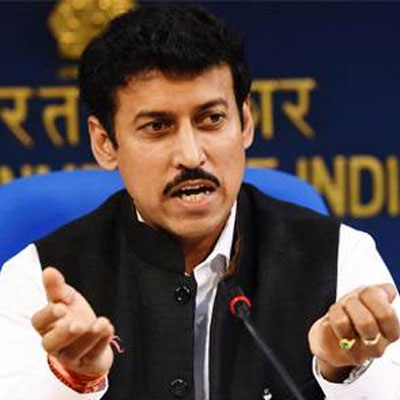
    NEW DELHI: Minister of State for Information and Broadcasting, Col. Rajyavardhan Rathore said today that the challenge as well as the opportunity would be to develop content and services for different platforms and consumers in view of the rapid changes in the information and communication technology and increasing number of smartphone users in India. 

    He said the public broadcaster Prasar Bharati was aware of the new challenges and would be constantly striving to keep pace with the new age technologies. The Minister also said the laws of the land should learn to keep pace with changing technology. 

    He complimented the Broadcast Engineering Society (BES) for their efforts and initiatives in bridging the gap between educational institutions and professional bodies.

    Inaugurating the 22nd International Conference & Exhibition on Terrestrial and Satellite Broadcasting BES EXPO 2016, he said it provided a unique platform and opportunity for participants and concerned stakeholders from across the world to share their ideas and experiences on the opportunities and challenges of the new age of digital broadcasting. He said that an idea would not be revolutionary if it remains dormant and BES EXPO 2016 provided an excellent forum to discuss these ideas and learn from each other. 

    Prasar Bharati Chairman A. Surya Prakash, CEO Jawhar Sircar, and I&B Special Secretary J S Mathur were also present on the occasion.

    Mathur said BES EXPO, which is amongst the top five exhibitions in the Knowledge Hub category provided an excellent opportunity for the whole of the broadcasting industry to witness the new technology from across the world in India.
     The winners of the awards instituted by the Broadcast Engineering Society in various categories such as training and innovation were felicitated. 

    The lifetime achievement award was conferred on M S H Baig for his outstanding contributions to the broadcasting industry. This year the society also conferred two special category awards to All India Radio for its Mobile App- ‘AIR Live’ and Doordarshan for its impactful coverage of Republic Day Parade, Independence Day, International Yoga Day and Ekta Diwas.

  • I&B Ministry grants new provisional licences to 27 MSOs

    I&B Ministry grants new provisional licences to 27 MSOs

    MUMBAI: The Information & Broadcasting Ministry has granted provisional licences to as many as 27 multi-system operator (MSO). With this, the total number of provisional registrations has gone up to 451, as of 2 February, 2016.

    It may be recalled that in January, the I&B Ministry granted provisional licenses to 42 MSOs in a bid to expedite the implementation digital addressable system (DAS) Phase III in all urban areas in the country.

    Between 18 January and 2 February, the I&B Ministry granted licenses to MSOs operating in the states of Jammu & Kashmir, Haryana, Rajasthan, Chhattisgarh, Tamil Nadu, Odisha, Madhya Pradesh, Manipur, Gujarat, Mizoram, Maharashtra and Kerala.

    Of the MSOs, which were granted provisional licenses, only Viswam Digital Network based in Puducherry was granted a pan-India license.

    The other MSOs that received provisional licenses for DAS Phases III and IV are as follows: Satellite Media Service, SL Cable TV Network, Sapna Cables, Sai Infocomm, Nathan Digital Communication, Maa Shanti Cable Network, Win Cable Network, Ghanshyam Cable Network, Information Service Television Network, Galaxy Cable Network, Shri Vinayak Cable Network, New Millennium Network, Sharda Maa City Cable, New Jai Bharat Cable Network, Sri Chakra Cable System, Friends Cable Network, CO TV, H.D Vision, Sahoo Cable Network, CZS Cable, D.M.V Cable Network, Vashnav Cable Network, Malanad Communication, PMC Network, OK Digital and Sam Digital Cable Network.

  • I&B Ministry grants new provisional licences to 27 MSOs

    I&B Ministry grants new provisional licences to 27 MSOs

    MUMBAI: The Information & Broadcasting Ministry has granted provisional licences to as many as 27 multi-system operator (MSO). With this, the total number of provisional registrations has gone up to 451, as of 2 February, 2016.

    It may be recalled that in January, the I&B Ministry granted provisional licenses to 42 MSOs in a bid to expedite the implementation digital addressable system (DAS) Phase III in all urban areas in the country.

    Between 18 January and 2 February, the I&B Ministry granted licenses to MSOs operating in the states of Jammu & Kashmir, Haryana, Rajasthan, Chhattisgarh, Tamil Nadu, Odisha, Madhya Pradesh, Manipur, Gujarat, Mizoram, Maharashtra and Kerala.

    Of the MSOs, which were granted provisional licenses, only Viswam Digital Network based in Puducherry was granted a pan-India license.

    The other MSOs that received provisional licenses for DAS Phases III and IV are as follows: Satellite Media Service, SL Cable TV Network, Sapna Cables, Sai Infocomm, Nathan Digital Communication, Maa Shanti Cable Network, Win Cable Network, Ghanshyam Cable Network, Information Service Television Network, Galaxy Cable Network, Shri Vinayak Cable Network, New Millennium Network, Sharda Maa City Cable, New Jai Bharat Cable Network, Sri Chakra Cable System, Friends Cable Network, CO TV, H.D Vision, Sahoo Cable Network, CZS Cable, D.M.V Cable Network, Vashnav Cable Network, Malanad Communication, PMC Network, OK Digital and Sam Digital Cable Network.

  • TRAI upholds public private partnership model for BharatNet implementation

    TRAI upholds public private partnership model for BharatNet implementation

    MUMBAI: The Telecom Regulatory Authority of India (TRAI) has recommended the public private partnership (PPP) model, which aligns private incentives with long-term service delivery in the vein of the Build-Own-Operate-Transfer (BOOT) model for implementing the national broadband project – BharatNet.


    As per its recommendations to the government, TRAI broadened the scope of the private sector company or ‘concessionaire’s’ role in implementing BharatNet. 


    TRAI had issued the consultation paper on the implementation model for BharatNet on 17 November last year to find alternate model implementation.


    According to TRAI’s consultation paper, “The scope of the concessionaire’s work should include both the deployment and implementation of the OFC and other network infrastructure as well as operating the network for the concession period. Concessionaires shall be entitled to proceeds of revenue from dark fibre and/ or bandwidth.”


    “The scope of concessionaires should be selected by way of a reverse bidding process to determine minimiability Gap Funding sought for concession. The area of implementation may be analogous with the Licensed Service Areas (LSAs) or the StateiUT. The use of a reverse bid process to determine lowest VGF sought can ensure that the amount of support from public funds is rational,” said TRAI in its consultation paper. 


    TRAI also added that the contracting agency may, in the first phase, explore the appetite and response of the potential BOOT participants through bidding process. “This can either be done in one go for the entire country (by having StatesiLSA or packages as ‘Schedules’) or it can be done beginning with certain States with larger potential of bidders’ response,” the paper said.


    The authority recommended in the second phase (after excluding those area where BOOT model can be implemented), that an EPC contractor may be selected, who should be responsible for building the network and will have defect liability period of two years after completing the network. “When the network is about to be completed, the contracting agency should engage a third party (through bidding process) who should be responsible for managing and marketing the network as per the broad principles laid down by the Government. The overlapping defect liability period of two years should be used to ensure smooth transition from construction to maintenance phase,” TRAI said.


    Other salient features of the recommendations are as follows:


    1) The period of concession should be coterminous with the technical life of the fibre. At present the consensus on this is 25 years. Such a period should be sufficient time to align the concessionaire’s incentives with high quality installation for service delivery, while also providing a large enough window to make a reasonable profit.


    2) The period may be further extended in blocks of 10, 20 and 30 years at the mutual agreement of the Government and the concessionaire. Care must be taken to ensure that the concessionaire provides access to all service providers in a non-discriminatory and transparent manner. Such competition is essential given that all manner of content (including entertainment, entitlements and Government services) will be delivered on the network.


    3) In addition the relationship between the concessionaire and the service provider should be at arm’s length. This can be ensured by mandating a legal separation of the businesses of infrastructure provision and service provision in case of overlapping interests to preclude the possibility of a vertically integrated entity abusing its position.


    4) Liberal eligibility criteria that allows for broad participation is necessary to ensure the participation of a large number of bidders and guarantee a strong and competitive auction process to enable optimal price discovery.


    5) There is no need to place a cap on participation in the bidding process – however a cap should be set on the number of implementation areas that agreed. This can ensure that the bidders’ capacity and resources are not   stretched thin due to winning bids for too many areas.


    6) Concessionaires be provided with flexibility in terms of route for laying optical fibre, choice of construction, topology and technology in order to ensure technical as well as economic efficiency. This flexibility is subject to the same standards of redundancy and quality as outlined for BharatNet by the Committee on NOFN .


    7) The Central and State Governments act as anchor clients to purchase a minimum amount of bandwidth (100 Mbps) to be purchased at market prices for the provision of services. Additionally, the mandating of a minimum amount of fibre (e. g. 50 per cent) be set aside for use by other service providers in order to encourage competition may be considered.


    8) RoW is perceived as a major risk factor by the private sector, safeguards recognising such a possibility and outlining the steps to be taken must be put in place under the agreement to attenuate such risk and encourage participation. Guaranteed provision of free RoW is a necessary and non-negotiable precondition to successful deployment of BharatNet, subject to the reinstatement of public property to its original condition.


    9) Involvement of State Governments is essential for success of the project irrespective of the strategy chosen for implementing it. States/UTs should be made an integral part of the project implementation and an institutional mechanism both at the State and District level should be created to effectively coordinate and sort out the implementation issues.


    10) The Central and State Government should additionally consider becoming involved with the concessionaire by becoming a minority equity partner ( -26 per cent) in the selected consortium – this can reduce the perceived risks and thus lower the costs of obtaining private finance while also automatically solving the risks associated with windfall profits. In addition, this can help the Government check monopolistic behaviour on the part of the concessionaire.

  • TRAI upholds public private partnership model for BharatNet implementation

    TRAI upholds public private partnership model for BharatNet implementation

    MUMBAI: The Telecom Regulatory Authority of India (TRAI) has recommended the public private partnership (PPP) model, which aligns private incentives with long-term service delivery in the vein of the Build-Own-Operate-Transfer (BOOT) model for implementing the national broadband project – BharatNet.


    As per its recommendations to the government, TRAI broadened the scope of the private sector company or ‘concessionaire’s’ role in implementing BharatNet. 


    TRAI had issued the consultation paper on the implementation model for BharatNet on 17 November last year to find alternate model implementation.


    According to TRAI’s consultation paper, “The scope of the concessionaire’s work should include both the deployment and implementation of the OFC and other network infrastructure as well as operating the network for the concession period. Concessionaires shall be entitled to proceeds of revenue from dark fibre and/ or bandwidth.”


    “The scope of concessionaires should be selected by way of a reverse bidding process to determine minimiability Gap Funding sought for concession. The area of implementation may be analogous with the Licensed Service Areas (LSAs) or the StateiUT. The use of a reverse bid process to determine lowest VGF sought can ensure that the amount of support from public funds is rational,” said TRAI in its consultation paper. 


    TRAI also added that the contracting agency may, in the first phase, explore the appetite and response of the potential BOOT participants through bidding process. “This can either be done in one go for the entire country (by having StatesiLSA or packages as ‘Schedules’) or it can be done beginning with certain States with larger potential of bidders’ response,” the paper said.


    The authority recommended in the second phase (after excluding those area where BOOT model can be implemented), that an EPC contractor may be selected, who should be responsible for building the network and will have defect liability period of two years after completing the network. “When the network is about to be completed, the contracting agency should engage a third party (through bidding process) who should be responsible for managing and marketing the network as per the broad principles laid down by the Government. The overlapping defect liability period of two years should be used to ensure smooth transition from construction to maintenance phase,” TRAI said.


    Other salient features of the recommendations are as follows:


    1) The period of concession should be coterminous with the technical life of the fibre. At present the consensus on this is 25 years. Such a period should be sufficient time to align the concessionaire’s incentives with high quality installation for service delivery, while also providing a large enough window to make a reasonable profit.


    2) The period may be further extended in blocks of 10, 20 and 30 years at the mutual agreement of the Government and the concessionaire. Care must be taken to ensure that the concessionaire provides access to all service providers in a non-discriminatory and transparent manner. Such competition is essential given that all manner of content (including entertainment, entitlements and Government services) will be delivered on the network.


    3) In addition the relationship between the concessionaire and the service provider should be at arm’s length. This can be ensured by mandating a legal separation of the businesses of infrastructure provision and service provision in case of overlapping interests to preclude the possibility of a vertically integrated entity abusing its position.


    4) Liberal eligibility criteria that allows for broad participation is necessary to ensure the participation of a large number of bidders and guarantee a strong and competitive auction process to enable optimal price discovery.


    5) There is no need to place a cap on participation in the bidding process – however a cap should be set on the number of implementation areas that agreed. This can ensure that the bidders’ capacity and resources are not   stretched thin due to winning bids for too many areas.


    6) Concessionaires be provided with flexibility in terms of route for laying optical fibre, choice of construction, topology and technology in order to ensure technical as well as economic efficiency. This flexibility is subject to the same standards of redundancy and quality as outlined for BharatNet by the Committee on NOFN .


    7) The Central and State Governments act as anchor clients to purchase a minimum amount of bandwidth (100 Mbps) to be purchased at market prices for the provision of services. Additionally, the mandating of a minimum amount of fibre (e. g. 50 per cent) be set aside for use by other service providers in order to encourage competition may be considered.


    8) RoW is perceived as a major risk factor by the private sector, safeguards recognising such a possibility and outlining the steps to be taken must be put in place under the agreement to attenuate such risk and encourage participation. Guaranteed provision of free RoW is a necessary and non-negotiable precondition to successful deployment of BharatNet, subject to the reinstatement of public property to its original condition.


    9) Involvement of State Governments is essential for success of the project irrespective of the strategy chosen for implementing it. States/UTs should be made an integral part of the project implementation and an institutional mechanism both at the State and District level should be created to effectively coordinate and sort out the implementation issues.


    10) The Central and State Government should additionally consider becoming involved with the concessionaire by becoming a minority equity partner ( -26 per cent) in the selected consortium – this can reduce the perceived risks and thus lower the costs of obtaining private finance while also automatically solving the risks associated with windfall profits. In addition, this can help the Government check monopolistic behaviour on the part of the concessionaire.

  • Supreme Court dismisses Government’s plea against Sun TV’s Red FM citing no security issue

    Supreme Court dismisses Government’s plea against Sun TV’s Red FM citing no security issue

    NEW DELHI: In what has come as a major relief for the Kalanithi Maran owned Sun TV Network, the Supreme Court today (29 January) dismissed the Government’s plea to deny security clearance to its radio channel Red FM.

    The apex court in its order said there was no ground for the complaint by the government and there was no evidence of abuse of radio waves by Red FM in the past.


    Speaking to Indiantelevision.com on the development, Sun Group CFO SL Narayanan said, “We are delighted with this development. This only goes to reinforce our faith in the judiciary.”


    Narayanan also informed that the judgment will help Red FM go ahead on its Phase III expansion plans.


    Red FM COO Nisha Narayanan added, “We are extremely happy with the decision of the Supreme Court to dismiss the plea of the MIB against the judgment of the Delhi High Court. This just re-affirms our faith in the judicial system and we at Red FM, like any other responsible media house, are totally committed to give our listeners a quality product like we have done in the past decade. Being a market leader, we are all charged up to strengthen brand ‘RED’ and launch Red FM in newer markets and build a strong brand there too.”


    Industry sources told this website that the judgment may lead to a rethink about the Home Ministry’s policy relating to denial to radio or television channels on security threat grounds.

    It may be recalled that Red FM was initially barred from participating in the Phase III FM auctions after the Home Ministry rejected security clearance to Sun TV Network’s radio channels and denied renewal to its license on the back of ‘security threat’ posed by the Marans.


    However, the Delhi and Madras High Courts had passed an order, which allowed Sun TV’s Digital Radio Broadcasting Ltd that runs Red FM, to participate in the auction that was held last year.

  • Supreme Court dismisses Government’s plea against Sun TV’s Red FM citing no security issue

    Supreme Court dismisses Government’s plea against Sun TV’s Red FM citing no security issue

    NEW DELHI: In what has come as a major relief for the Kalanithi Maran owned Sun TV Network, the Supreme Court today (29 January) dismissed the Government’s plea to deny security clearance to its radio channel Red FM.

    The apex court in its order said there was no ground for the complaint by the government and there was no evidence of abuse of radio waves by Red FM in the past.


    Speaking to Indiantelevision.com on the development, Sun Group CFO SL Narayanan said, “We are delighted with this development. This only goes to reinforce our faith in the judiciary.”


    Narayanan also informed that the judgment will help Red FM go ahead on its Phase III expansion plans.


    Red FM COO Nisha Narayanan added, “We are extremely happy with the decision of the Supreme Court to dismiss the plea of the MIB against the judgment of the Delhi High Court. This just re-affirms our faith in the judicial system and we at Red FM, like any other responsible media house, are totally committed to give our listeners a quality product like we have done in the past decade. Being a market leader, we are all charged up to strengthen brand ‘RED’ and launch Red FM in newer markets and build a strong brand there too.”


    Industry sources told this website that the judgment may lead to a rethink about the Home Ministry’s policy relating to denial to radio or television channels on security threat grounds.

    It may be recalled that Red FM was initially barred from participating in the Phase III FM auctions after the Home Ministry rejected security clearance to Sun TV Network’s radio channels and denied renewal to its license on the back of ‘security threat’ posed by the Marans.


    However, the Delhi and Madras High Courts had passed an order, which allowed Sun TV’s Digital Radio Broadcasting Ltd that runs Red FM, to participate in the auction that was held last year.

  • TRAI releases consultation paper on tariff issues for TV services

    TRAI releases consultation paper on tariff issues for TV services

    MUMBAI: The Telecom Regulatory Authority of India (TRAI) has issued its latest consultation paper on tariff issues related to television services.


    The regulator has also invited comments and counter-comments on the Consultation Paper from stakeholders by 4 March and 18 March, 2016 respectively.


    From the state-owned Doordarshan (DD) to cable and satellite television to advanced delivery platforms like direct-to-home (DTH), Headend-in-the-Sky (HITS), Over-the-Top (OTT) and Internet Protocol Television (IPTV), television has come a long way since DD first beamed its signals in India in 1959. The evolution of the broadcast industry has been driven largely by satellite TV distribution business and unorganised growth of cable TV.


    The growth of multiple digital addressable platforms will inevitably lead to a sunset of analog cable TV system in the country. This sheer number and diversity of platforms delivering digital TV signals in an increasingly converged scenario requires an overhaul of the tariff regulatory framework.


    TRAI said that in order to cater to innovative growth while protecting the interests of the stakeholders across the value chain, there is a need to institute a consolidated technology neutral regulatory framework for digital addressable systems.


    “This consultation is an attempt to create an enabling environment for growth of the sector in the light of various developments related to technology, emergence of multiple distribution platforms, evolving business models, and enhanced addressability across platforms. The consultation process also looks at futuristic issues and emerging challenges,” the Authority said.


    In view of the emerging trends in the TV broadcasting sector and changing consumption patterns of the consumers, TRAI said that there was a need to examine the tariff dispensation in a holistic manner.


    TRAI listed the objectives of current consultation as below:


    1) To carry out a review of existing tariff arrangements and developing a Comprehensive Tariff Structure for Addressable TV Distribution of “TV Broadcasting Services” across Digital Broadcasting Delivery Platforms (DTH/ Cable TV/ HITS/ IPTV) at wholesale and retail level.

    2) To ensure that the tariff structure is simplified and rationalised so as to ensure transparency and equity across the value chain.

    3) To reduce the incidence of disputes amongst stakeholders across the value chain encouraging healthy growth in the sector.

    4) To ensure that subscribers have adequate choice in the broadcast TV services while they are also protected against irrational tariff structures and price hikes.

    5) To encourage the investment in the TV sector

    6) To encourage production of good quality content across different genres.


    Issues covered in the consultation paper:


    1) Tariff models at wholesale and retail levels

    2) Channel pricing mechanism and methodologies

    3) Issues related to Niche Channels

    4) Pricing of High Definition (HD) channels

    5) Ease of channel or bouquet subscription

    6) Channel visibility on Electronic Program Guide (EPG)

    7) Pay-per-program viewing and tariff options

    8) Variants of channels

    9) Carriage, Placement and Marketing fees.

  • TRAI releases consultation paper on tariff issues for TV services

    TRAI releases consultation paper on tariff issues for TV services

    MUMBAI: The Telecom Regulatory Authority of India (TRAI) has issued its latest consultation paper on tariff issues related to television services.


    The regulator has also invited comments and counter-comments on the Consultation Paper from stakeholders by 4 March and 18 March, 2016 respectively.


    From the state-owned Doordarshan (DD) to cable and satellite television to advanced delivery platforms like direct-to-home (DTH), Headend-in-the-Sky (HITS), Over-the-Top (OTT) and Internet Protocol Television (IPTV), television has come a long way since DD first beamed its signals in India in 1959. The evolution of the broadcast industry has been driven largely by satellite TV distribution business and unorganised growth of cable TV.


    The growth of multiple digital addressable platforms will inevitably lead to a sunset of analog cable TV system in the country. This sheer number and diversity of platforms delivering digital TV signals in an increasingly converged scenario requires an overhaul of the tariff regulatory framework.


    TRAI said that in order to cater to innovative growth while protecting the interests of the stakeholders across the value chain, there is a need to institute a consolidated technology neutral regulatory framework for digital addressable systems.


    “This consultation is an attempt to create an enabling environment for growth of the sector in the light of various developments related to technology, emergence of multiple distribution platforms, evolving business models, and enhanced addressability across platforms. The consultation process also looks at futuristic issues and emerging challenges,” the Authority said.


    In view of the emerging trends in the TV broadcasting sector and changing consumption patterns of the consumers, TRAI said that there was a need to examine the tariff dispensation in a holistic manner.


    TRAI listed the objectives of current consultation as below:


    1) To carry out a review of existing tariff arrangements and developing a Comprehensive Tariff Structure for Addressable TV Distribution of “TV Broadcasting Services” across Digital Broadcasting Delivery Platforms (DTH/ Cable TV/ HITS/ IPTV) at wholesale and retail level.

    2) To ensure that the tariff structure is simplified and rationalised so as to ensure transparency and equity across the value chain.

    3) To reduce the incidence of disputes amongst stakeholders across the value chain encouraging healthy growth in the sector.

    4) To ensure that subscribers have adequate choice in the broadcast TV services while they are also protected against irrational tariff structures and price hikes.

    5) To encourage the investment in the TV sector

    6) To encourage production of good quality content across different genres.


    Issues covered in the consultation paper:


    1) Tariff models at wholesale and retail levels

    2) Channel pricing mechanism and methodologies

    3) Issues related to Niche Channels

    4) Pricing of High Definition (HD) channels

    5) Ease of channel or bouquet subscription

    6) Channel visibility on Electronic Program Guide (EPG)

    7) Pay-per-program viewing and tariff options

    8) Variants of channels

    9) Carriage, Placement and Marketing fees.

  • FCC commissioner Tom Wheeler proposes universal TV set-top-box

    FCC commissioner Tom Wheeler proposes universal TV set-top-box

    MUMBAI: In an attempt to overhaul the rules for television, tear down anti-competitive barriers and pave the way for software, devices and other innovative solutions to compete with set-top boxes (STBs), the Federal Communications Commission (FCC) has proposed universal STBs for television, which would allow consumers to view traditional cable and streaming video content on television.


    Wheeler is targeting a vote on 18 February by the five-member FCC on a proposal to overhaul the rules for STBs, which connect to cable, satellite and fiberoptic video systems.


    The proposed regulation would let customers get video services from providers instead of cable, satellite and other television providers.


    “Ninety-nine per cent of pay-TV subscribers are chained to their set-top boxes because cable and satellite operators have locked up the market,” the FCC said.


    According to the FCC, Americans spent $20 billion a year to lease pay-TV boxes, or an average of $231 a year. STB rental fees have jumped 185 per cent since 1994, while the cost of TVs, computers and mobile phones have dropped by 90 per cent.


    Recognising the importance of a competitive marketplace, the Congress directed the Commission to adopt rules that will ensure consumers will be able to use the device they prefer for accessing programming they’ve paid for.


    The FCC said that the only change it was proposing was to allow consumers alternative means of accessing the content they pay for.


    Wheeler’s proposal will create a framework for providing innovators, device manufacturers and app developers the information they need to develop new technologies. Consumers should be able to choose how they access the Multichannel Video Programming Distributor’s (MVPDs) – cable, satellite or telco companies – video services to which they subscribe.


    “A competitive marketplace is required by a 1996 law. Set-top boxes should be open to pay-TV rivals using formats that conform to specifications set by an independent, open standards body,” the FCC said.


    The proposal will help promote interoperability and remove barriers to innovation, prevent theft and misuse, lift up independent and minority programming content, honour the sanctity of contracts by providing copyright protection,  provide consumer protection by offering emergency alerts, privacy and advertising restrictions.


    It will also offer consumers more choice, greater flexibility, increased innovation, more competition and better prices.


    While the proposal has been welcomed by some, others have pooh-poohed it.


    “The promising slate of reforms proposed by (the chairman) could potentially allow consumers greater access to the content that they pay for, granting greater control over when, where, and how they want to access it, on the device they choose, without being locked into constant, unnecessary fees and excruciating installation and repair appointments,” said National Hispanic Media Coalition vice president of policy Michael Scurato.


    RLJ Entertainment chairman and Black Entertainment Television chairman Robert L. Johnson also came out in support of FCC’s proposal.


    Johnson said, “In my opinion, this is the best decision that the FCC has made to increase minority diversity in media content distribution since the Commission championed the tax certificate, which allowed for the increase in minority ownership of media properties. I am also very pleased that after speaking with several Members of the Congressional Black Caucus, the Caucus has agreed to a meeting to hear my position on this matter.”


    “If you have a good program idea, some financing and access to the Internet, you can find your audience. But your audience can only find you if they have a modem or a set-top box or software that lets them know you are there and gives them access to your programs unconstrained by the network gatekeeper,” he added.


    However, a coalition of pay-TV provider called Future of TV Coalition comprising the National Cable & Telecommunications Association, American Cable Association, Motion Picture Association of America and others, which has been formed to oppose the ‘AllVid’ proposal, said the proposed regulation will not provide new programming to customers or lower their television bills.


    In a statement, the Future of TV Coalition said, “The FCC proposal, as best anyone can understand it, still strips out all the tools that are used to honour license agreements, would increase consumer costs by mandating yet a second box inside the home and thus ignores the trends away from in-home boxes and devices, eliminates security protections and provides no reassurance on privacy rights.”


    TV One CEO Alfred Liggins and Future of TV Coalition co-chair added, “The ‘AllVid’ proposal is a brazen money grab by the Big Tech companies that would do severe damage to the programming ecosystem, and in particular, niche and minority-focused networks.”