Category: Regulators

  • TRAI rules against differential pricing for telecom services; imposes penalty of Rs 50,000 per day for offenders

    TRAI rules against differential pricing for telecom services; imposes penalty of Rs 50,000 per day for offenders

    NEW DELHI: In what is clearly a major win for crusaders of net neutrality, the Telecom Regulatory Authority of India (TRAI) has ruled against differential pricing and said no service provider will enter into any arrangement or contract that has the effect of discriminatory tariffs for data services.

    TRAI reserved the right to either ask a service provider to withdraw any discriminatory tariff or impose a penalty of Rs 50,000 per day (subject to a maximum of Rs 50 lakh) for discriminatory tariffs charged by service providers. The decision of the Authority as to whether a service provider is in contravention of this regulation will be final and binding. 

    ‘The Prohibition of Discriminatory Tariffs for Data Services Regulations 2016,’ issued today comes into effect immediately and will be reviewed every two years.

    TRAI said allowing service providers to charge differently for data could compromise the entire architecture of the internet. “Prohibition of discriminatory tariff is necessary to ensure that service providers continue to fulfill obligations in keeping internet open and non-discriminatory,” TRAI said.

    The Regulation has been issued after reviewing the responses received by the regulator to its Consultation Paper on Differential Pricing for Data Services issued on 9 December last year. As was reported earlier by Indiantelevision.com, major broadcasters like Star India, Sony Pictures Networks India and Zee Network submitted their comments to TRAI in favour of net neutrality citing the drawbacks of differential pricing for telecom services.

    TRAI said the paper was issued because two key principles of tariff regulation – non-discrimination and transparency were getting impacted from such practices and required consultation. 

    While almost all the broadcasters opposed differential rates, the telecom and internet service providers felt that this was necessary particularly in view of the deluge of over the top (OTT) services expected to come in.

    The general economic concept of ‘price differentiation’ covers all practices where a seller of goods or provider services charges different prices from different consumers, either for exactly the same goods or service or for slightly different versions of the same goods or service. The ‘service’ being referred to in the context of differential pricing of data services is the units of data or bits that a person consumes in order to access the internet. This understanding is also qualified by the fact that the current regulation refers to a particular category of price differentiation – that is content-specific. 

    While ruling out differential pricing in such cases, TRAI put a proviso: “Provided that this regulation shall not apply to tariffs for data services over closed electronic communications networks, unless such tariffs are offered or charged by the service provider for the purpose of evading the prohibition in this regulation.”

    It also said, “A service provider may reduce tariff for accessing or providing emergency services, or at times of grave public emergency, provided that such tariff shall be reported to the Authority within seven working days from the date of implementation of the reduced tariff and the decision of the Authority as to whether such reduced tariff qualifies under this regulation shall be final and binding.”

    The penalties will be imposed only after the service provider has been given a reasonable opportunity of representing against the contravention of the regulation. The amount payable by way of financial disincentive under these regulations will be remitted to such head of account as may be specified by TRAI.

    The regulator also said, “Nothing contained in these regulations shall affect any packs, plans or vouchers with unexpired validity subscribed by a consumer before the date of commencement of these regulations, provided that no such pack, plan or voucher shall be valid beyond a period of six months from the date of commencement of these regulations.”

    Explaining the rationale for the paper, TRAI said, “Some practices have come to the notice of the Authority wherein differential tariffs were offered based on the content, websites, applications, platforms.”

    It also said the appropriate regulatory response on the issue of differential pricing must necessarily be grounded in a sound understanding of the basic architecture of the internet. Any proposed changes in business models and commercial practices must also be seen in the context of the need to preserve the unique architecture of the Internet as a global communication network.

    The Internet and Mobile Association of India (IAMAI) welcomed the Regulation as a bold and fair move. It said net neutrality would be ensured with TRAI explicitly clarifying its stand in a very clear and transparent ruling about differential tariffs and agreements. The association had taken a ‘no exception standpoint’ against differential pricing.

    “This ruling vindicates the associations stand on the issue. The internet Start-up eco-system and the internet user community are delighted,” IAMAI said. 

    IAMAI has also welcomed the move that TRAI will be the ultimate authority to decide the cases of violations of this ruling and that the decision of the authority will be final and binding. 

    However, the association voiced a concern on the exceptions as to how this will pan out. The association hoped that the exceptions to the rule will not be misused by the TSPs. The exception states “…regulation shall not apply to tariffs for data services over closed electronic communications networks…”

    Meanwhile, the campaigner change.org claimed a massive victory and said “History has been created!” It said nearly 3.75 lakh Change.org users had supported Net Neutrality. 

    The nationwide campaign that unfolded over almost a year was started by Sandeep Pillai, a techie from Kollam in Kerala.
  • TRAI advises TV distribution platforms to use e-CAF to increase efficiency

    TRAI advises TV distribution platforms to use e-CAF to increase efficiency

    MUMBAI: As a proactive measure for enabling the use of digital technologies towards bringing efficiencies in providing and managing services to the subscribers, the Telecom Regulatory Authority of India (TRAI) has asked distribution platform operators (DPOs) like direct to home (DTH), multi-system operators (MSOs), Headend-In-The-Sky (HITS) and IPTV companies providing TV broadcast services to use Electronic Customer Application Form (e-CAF). 

    The CAF is required to be filled up by customers mandatorily before subscribing to TV services. The information captured in the CAF is then transferred to the Subscriber Management System (SMS) of the DPO for managing the services availed by the subscriber.

    The authority said that presently, use of CAF in paper format is prevalent and manual process is followed for updating information in the SMS, which involves processing millions of physical CAFs and their storage creates operational difficulties.

    “The e-CAF can be easily accessed and integrated with the SMS of the DPO eliminating the manual feeding of information and also provides customers a simpler method for subscribing to services; improve customer relationship, and management of their subscription and services. The e-CAF will bring efficiencies in the process of providing and managing services to the subscribers,” TRAI said in an advisory. 

    It went on to add that the adoption of e-CAF is an environment friendly measure and is likely to benefit all stakeholders.

  • TRAI advises TV distribution platforms to use e-CAF to increase efficiency

    TRAI advises TV distribution platforms to use e-CAF to increase efficiency

    MUMBAI: As a proactive measure for enabling the use of digital technologies towards bringing efficiencies in providing and managing services to the subscribers, the Telecom Regulatory Authority of India (TRAI) has asked distribution platform operators (DPOs) like direct to home (DTH), multi-system operators (MSOs), Headend-In-The-Sky (HITS) and IPTV companies providing TV broadcast services to use Electronic Customer Application Form (e-CAF). 

    The CAF is required to be filled up by customers mandatorily before subscribing to TV services. The information captured in the CAF is then transferred to the Subscriber Management System (SMS) of the DPO for managing the services availed by the subscriber.

    The authority said that presently, use of CAF in paper format is prevalent and manual process is followed for updating information in the SMS, which involves processing millions of physical CAFs and their storage creates operational difficulties.

    “The e-CAF can be easily accessed and integrated with the SMS of the DPO eliminating the manual feeding of information and also provides customers a simpler method for subscribing to services; improve customer relationship, and management of their subscription and services. The e-CAF will bring efficiencies in the process of providing and managing services to the subscribers,” TRAI said in an advisory. 

    It went on to add that the adoption of e-CAF is an environment friendly measure and is likely to benefit all stakeholders.

  • FM players seek FDI at par with GECs since only AIR news permitted

    FM players seek FDI at par with GECs since only AIR news permitted

    NEW DELHI: The Foreign Direct Investment (FDI) in the radio sector should be increased and the government should consider a 15 per cent national ceiling for future auctions and allow news on private FM radio, private FM players have said.

    A Stakeholders’ Consultation on 22 January on the Phase III e-Auction showed that the players wanted a lock-in period of three years on composition of largest Indian shareholder.

    Information & Broadcasting Ministry Secretary Sunil Arora said that the aim of FM Phase III was to enhance radio density in the country and efforts should be made for supporting FM radio to grow into a viable business model. He wanted all stakeholders to give their suggestions and inputs in writing by 30 January if they so desire considering that some stakeholders have already submitted their suggestions in meeting.

    FM operators felt that the reserve prices recommended by TRAI on 24 March 2015 were very high and unviable. However, Ministry officials said the TRAI recommendations were advisory in nature.

    Similarly, it was stated that the rentals by Prasar Bharati were very high.

    It was also argued that the FDI limit could be increased to 100 per cent to bring it at par with the general entertainment channels as no news other than that from All India Radio was permitted.

    This suggestion from Reliance Broadcasting found favour with many of the participants but some companies like ENIL and DB Corp wanted permission to make news bulletins on their own. The Association of Radio Operators in India (AROI) said news from PTI and ANI could be permitted.

    AROI said if subsequent auction takes place in batches without relaxing the 15 per cent national cap, then this cap should be applied on overall number of channels being put to auction in phase III and not batch wise. 

    ENIL found it unreasonable that Phase II migrant licenses were made to undergo three years’ lock-in restriction under Phase III regime as well when they had already served five years’ lock-in under Phase II. But HT Media said the lock-in requirement was fundamental to FM Phase III policy.

    Representative of Digital Radio Broadcasting also suggested that connected companies of a Group be treated as a single entity for participation in online bidding / auction process.

    Suggestions for future rounds included more clock rounds per day; increase of Auction Activity Requirement (AAR); apart from auction report at the end of the day, and report of each round.

    ENIL referred to delay of security clearance of its directors and key operatives from Home Ministry.

  • FM players seek FDI at par with GECs since only AIR news permitted

    FM players seek FDI at par with GECs since only AIR news permitted

    NEW DELHI: The Foreign Direct Investment (FDI) in the radio sector should be increased and the government should consider a 15 per cent national ceiling for future auctions and allow news on private FM radio, private FM players have said.

    A Stakeholders’ Consultation on 22 January on the Phase III e-Auction showed that the players wanted a lock-in period of three years on composition of largest Indian shareholder.

    Information & Broadcasting Ministry Secretary Sunil Arora said that the aim of FM Phase III was to enhance radio density in the country and efforts should be made for supporting FM radio to grow into a viable business model. He wanted all stakeholders to give their suggestions and inputs in writing by 30 January if they so desire considering that some stakeholders have already submitted their suggestions in meeting.

    FM operators felt that the reserve prices recommended by TRAI on 24 March 2015 were very high and unviable. However, Ministry officials said the TRAI recommendations were advisory in nature.

    Similarly, it was stated that the rentals by Prasar Bharati were very high.

    It was also argued that the FDI limit could be increased to 100 per cent to bring it at par with the general entertainment channels as no news other than that from All India Radio was permitted.

    This suggestion from Reliance Broadcasting found favour with many of the participants but some companies like ENIL and DB Corp wanted permission to make news bulletins on their own. The Association of Radio Operators in India (AROI) said news from PTI and ANI could be permitted.

    AROI said if subsequent auction takes place in batches without relaxing the 15 per cent national cap, then this cap should be applied on overall number of channels being put to auction in phase III and not batch wise. 

    ENIL found it unreasonable that Phase II migrant licenses were made to undergo three years’ lock-in restriction under Phase III regime as well when they had already served five years’ lock-in under Phase II. But HT Media said the lock-in requirement was fundamental to FM Phase III policy.

    Representative of Digital Radio Broadcasting also suggested that connected companies of a Group be treated as a single entity for participation in online bidding / auction process.

    Suggestions for future rounds included more clock rounds per day; increase of Auction Activity Requirement (AAR); apart from auction report at the end of the day, and report of each round.

    ENIL referred to delay of security clearance of its directors and key operatives from Home Ministry.

  • Lack of cooperation among Prasar Bharati divisions led to avoidable complications: MIB audit

    Lack of cooperation among Prasar Bharati divisions led to avoidable complications: MIB audit

    NEW DELHI: “The lack of co-operation among divisions of Prasar Bharati has led to several court cases and it is suggested that a centralised Cadre Controlling Authority may be set up to handle the service matters of the entire employees of Prasar Bharati.”

    Making this observation, the Additional Secretary and Financial Advisor in the Information and Broadcasting Ministry said after a Test Audit/Check of Non-Plan expenditure under Salary and Salary-related heads against the Grants-in-Aid released by the Ministry, “Separate bank accounts may be opened for Non-Plan Grants-In-Aid (Salary) and other heads. A comprehensive audit of Prasar Bharati units may be conducted by Prasar Bharati itself to have a complete and fair picture of their accounts/ expenditures.”

    The audit of amounts released for salary and salary-related expenses showed that while the grants-in-aid of Rs 5381.98 crore was given by the Ministry from 2012 to 2015, the expenditure incurred on Salary and Salary-related expenses was Rs 5694.92 crore and Rs 312.94 crore was from Prasar Bharati’s Internal and Budgetary Resources (IEBR).

    In this, the grant-in-aid in 2014-15 was Rs 2001.98 crore while the money for salaries and salary-related expenses was Rs 2033.70 crore and Rs 31.72 crore came from IEBR.

    The internal audit helped to save Rs 1188.14 crore under various heads including long-pending dues from other government departments.

    In all, grants-in aid amounting to Rs 6640.48 crores was released in the last three years to Prasar Bharati, of which Rs 2437.98 crore was during the year 2014-15.

    Of the total Rs 6640.48 crore given in the last three years, the aid in 2012-13 was Rx 2062.5 crore and in 2013-14 was Rs 2140 crore.


  • Lack of cooperation among Prasar Bharati divisions led to avoidable complications: MIB audit

    Lack of cooperation among Prasar Bharati divisions led to avoidable complications: MIB audit

    NEW DELHI: “The lack of co-operation among divisions of Prasar Bharati has led to several court cases and it is suggested that a centralised Cadre Controlling Authority may be set up to handle the service matters of the entire employees of Prasar Bharati.”

    Making this observation, the Additional Secretary and Financial Advisor in the Information and Broadcasting Ministry said after a Test Audit/Check of Non-Plan expenditure under Salary and Salary-related heads against the Grants-in-Aid released by the Ministry, “Separate bank accounts may be opened for Non-Plan Grants-In-Aid (Salary) and other heads. A comprehensive audit of Prasar Bharati units may be conducted by Prasar Bharati itself to have a complete and fair picture of their accounts/ expenditures.”

    The audit of amounts released for salary and salary-related expenses showed that while the grants-in-aid of Rs 5381.98 crore was given by the Ministry from 2012 to 2015, the expenditure incurred on Salary and Salary-related expenses was Rs 5694.92 crore and Rs 312.94 crore was from Prasar Bharati’s Internal and Budgetary Resources (IEBR).

    In this, the grant-in-aid in 2014-15 was Rs 2001.98 crore while the money for salaries and salary-related expenses was Rs 2033.70 crore and Rs 31.72 crore came from IEBR.

    The internal audit helped to save Rs 1188.14 crore under various heads including long-pending dues from other government departments.

    In all, grants-in aid amounting to Rs 6640.48 crores was released in the last three years to Prasar Bharati, of which Rs 2437.98 crore was during the year 2014-15.

    Of the total Rs 6640.48 crore given in the last three years, the aid in 2012-13 was Rx 2062.5 crore and in 2013-14 was Rs 2140 crore.


  • 2014-15: MIB earns Rs 836.52 crore from DTH; revenue from FM drops to Rs 80.3 crore

    2014-15: MIB earns Rs 836.52 crore from DTH; revenue from FM drops to Rs 80.3 crore

    MUMBAI: The Ministry of Information and Broadcasting (MIB) earned revenue of Rs 836.52 crore from the direct-to-home (DTH) sector for the year 2014-15. This was a considerable increase from the Rs 395.43 crore that the MIB earned from the sector in the previous year (2013-14). For the year 2012-13, the revenue from the sector stood at Rs 308.66 crore.

    Apart from Doordarshan’s free-to- air DD Direct Plus, there are six private DTH players in India namely Dish TV, Tata Sky, Sun Direct TV, Reliance Big TV, Airtel Digital TV and Videocon d2h.

    On the other hand, the revenue that the MIB earned from the auction of FM Radio dropped considerably in 2014-15 to Rs 80.30 crore from Rs 102.21 crore in 2013-14. In 2012-13, the revenue from the sector stood at Rs 61.27 crore. 

    The FM Phase-I Policy, which was approved by the Government in July, 1999, met with the limited success and saw a total number of 21 channels are operational in 12 cities under this scheme.

    On the other hand, the improved FM Phase-II Policy was notified in July, 2005 after considering the recommendations of Dr.Amit Mitra Committee and Telecom Regulatory Authority of India (TRAI). FM Policy Phase-II has been well received by all stake holders. It has resulted in huge growth in FM radio industry. However, many cities still remained uncovered by the private FM radio broadcasting.

    With the huge success of Phase II, FM Phase III Policy extended FM radio services to about 227 new cities, in addition to the present 86 cities, with a total of 839 new FM radio channels in 294 cities, Phase-III policy will result in coverage of all cities with a population of one lakh and above with private FM radio channels. The government has earned revenue by auction of FM channels to the private service providers.

  • 2014-15: MIB earns Rs 836.52 crore from DTH; revenue from FM drops to Rs 80.3 crore

    2014-15: MIB earns Rs 836.52 crore from DTH; revenue from FM drops to Rs 80.3 crore

    MUMBAI: The Ministry of Information and Broadcasting (MIB) earned revenue of Rs 836.52 crore from the direct-to-home (DTH) sector for the year 2014-15. This was a considerable increase from the Rs 395.43 crore that the MIB earned from the sector in the previous year (2013-14). For the year 2012-13, the revenue from the sector stood at Rs 308.66 crore.

    Apart from Doordarshan’s free-to- air DD Direct Plus, there are six private DTH players in India namely Dish TV, Tata Sky, Sun Direct TV, Reliance Big TV, Airtel Digital TV and Videocon d2h.

    On the other hand, the revenue that the MIB earned from the auction of FM Radio dropped considerably in 2014-15 to Rs 80.30 crore from Rs 102.21 crore in 2013-14. In 2012-13, the revenue from the sector stood at Rs 61.27 crore. 

    The FM Phase-I Policy, which was approved by the Government in July, 1999, met with the limited success and saw a total number of 21 channels are operational in 12 cities under this scheme.

    On the other hand, the improved FM Phase-II Policy was notified in July, 2005 after considering the recommendations of Dr.Amit Mitra Committee and Telecom Regulatory Authority of India (TRAI). FM Policy Phase-II has been well received by all stake holders. It has resulted in huge growth in FM radio industry. However, many cities still remained uncovered by the private FM radio broadcasting.

    With the huge success of Phase II, FM Phase III Policy extended FM radio services to about 227 new cities, in addition to the present 86 cities, with a total of 839 new FM radio channels in 294 cities, Phase-III policy will result in coverage of all cities with a population of one lakh and above with private FM radio channels. The government has earned revenue by auction of FM channels to the private service providers.

  • Creation of good content vital with advent of new media: Rathore

    Creation of good content vital with advent of new media: Rathore

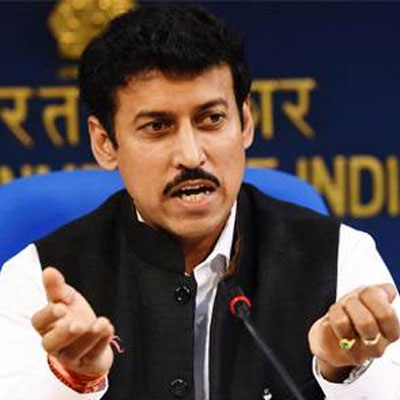
    NEW DELHI: Minister of State for Information and Broadcasting, Col. Rajyavardhan Rathore said today that the challenge as well as the opportunity would be to develop content and services for different platforms and consumers in view of the rapid changes in the information and communication technology and increasing number of smartphone users in India. 

    He said the public broadcaster Prasar Bharati was aware of the new challenges and would be constantly striving to keep pace with the new age technologies. The Minister also said the laws of the land should learn to keep pace with changing technology. 

    He complimented the Broadcast Engineering Society (BES) for their efforts and initiatives in bridging the gap between educational institutions and professional bodies.

    Inaugurating the 22nd International Conference & Exhibition on Terrestrial and Satellite Broadcasting BES EXPO 2016, he said it provided a unique platform and opportunity for participants and concerned stakeholders from across the world to share their ideas and experiences on the opportunities and challenges of the new age of digital broadcasting. He said that an idea would not be revolutionary if it remains dormant and BES EXPO 2016 provided an excellent forum to discuss these ideas and learn from each other. 

    Prasar Bharati Chairman A. Surya Prakash, CEO Jawhar Sircar, and I&B Special Secretary J S Mathur were also present on the occasion.

    Mathur said BES EXPO, which is amongst the top five exhibitions in the Knowledge Hub category provided an excellent opportunity for the whole of the broadcasting industry to witness the new technology from across the world in India.
     The winners of the awards instituted by the Broadcast Engineering Society in various categories such as training and innovation were felicitated. 

    The lifetime achievement award was conferred on M S H Baig for his outstanding contributions to the broadcasting industry. This year the society also conferred two special category awards to All India Radio for its Mobile App- ‘AIR Live’ and Doordarshan for its impactful coverage of Republic Day Parade, Independence Day, International Yoga Day and Ekta Diwas.