Category: Regulators

  • Expenditure on broadcasting by MIB up by almost Rs 400 crore between 2012 and 2015

    Expenditure on broadcasting by MIB up by almost Rs 400 crore between 2012 and 2015

    New Delhi: Broadcasting has occupied the largest chunk of the plan and non-plan expenditure of the Information and Broadcasting Ministry between 2012 and 2015. An analysis of the ministry’s expenditure shows that the Information sector came next with a slice that is far less than the expenses for the broadcasting sector.

    And though films are probably the highest taxed sector, it got a slice of less than half of that for the Information Sector. Expenditure on Secretarial services is minuscule in comparison to the overall budget for each year.
    The analysis also shows that the expenditure for broadcasting has been going up year on year, going up by almost Rs 400 crore between 2012-12 and 2014-15.

    The total expenditure on broadcasting in three years was Rs 6693.68 crore, while the expenditure on the three other sectors of the Ministry together for these years was less than one-third of this at Rs 1918.63 crore.

    Of the total expenditure of Rs 3158.53 crore in 2014-15, the expenditure on broadcasting was Rs 2467.4 crore, followed by the Information sector with Rs 466.4 crore, the film sector with Rs 176.33 crore, and Secretariat with Rs 48.4 crore.

    In 2013-14 out of the total expenditure of Rs 2828.52 crore, a sum of Rs 2157.19 crore was spent on broadcasting, followed by the Information sector with Rs 474.73 crore, film sector with 154.29 crore, and Secretarial expenses at Rs 42.31 crore.

    The total expenditure in 2012-13 was Rs 2625.26 crore. Of this, the expenditure on broadcasting was Rs 2069.09 crore, followed by Information with Rs 381.22 crore, films with Rs 133.02 crore and Secretariat with Rs 41.93 crore.

  • Supreme Court allows photos of Governors, CMs and Ministers permitted in Government ads, in review of earlier order

    Supreme Court allows photos of Governors, CMs and Ministers permitted in Government ads, in review of earlier order

    New Delhi: In a reversal of its own judgment of 13 May last year, the Supreme Court today allowed the use of photographs of governors, chief ministers and ministers in government advertisements.

    The apex Court gave the judgment on a batch of petitions filed by the Centre and various states seeking a review relating to photos of politicians on government advertisements.

    The Court had in May last year given a direction on a public interest petition that only photographs of the Prime Minister, President and Chief Justice of India can be published in official media advertisements and not those of chief ministers. But the personal approval of these three authorities will be necessary before publication.

    The Centre in its petition argued that it is for the government to decide whose photographs should be published and what the content of advertisements should be. It said the court should refrain from interfering in such policy matters.

    The Centre also said barring photos of chief ministers on advertisements was against the federal structure.

    Justices Ranjan Gogoi and Prafulla C. Pant who had passed the original directions said in September that the review petitions will be heard in open court.

    Prior to the order relating to hearing in open court, the judges perused the petitions of Tamil Nadu, West Bengal, Karnataka, and Assam in the chamber.

    The four states filed the review petitions challenging direction as being discriminatory and erroneous since it has permitted the photograph of the Prime Minister but not the chief ministers who too are elected representatives of the people.

    The states pointed out that the expert panel had recommended display of photos of CMs/governors as well but the Court had restrained the states from displaying photos of CMs/governors.

    The petitions had said: “There is nothing wrong if the publication issued by the government highlighting the achievements of the government contains photographs of the chief minister and the other ministers if they have made contribution to the achievements of the state government. The judgment is completely silent regarding the exclusion of the chief minister who is the head of the state government. If the photograph of the prime minister is permitted on the publication/advertisement then the photographs of the chief minister must have also been permitted by this court.”

    The original public interest litigations (PIL) filed by the NGOs Common Cause represented by counsel Meera Bhatia and the Centre for Public Interest Litigation (CPIL) represented by advocate Prashant Bhushan had urged the apex Court to frame guidelines.

    Holding that taxpayers’ money cannot be spent to build “personality cults” of political leaders, the Court in May last had restrained ruling parties from publishing photographs of political leaders or prominent persons in government-funded advertisements.

    The Court had said such photos divert attention from the policies of the government, unnecessarily associate an individual with a government project, and pave the way for cultivating a “personality cult”.

    The observations of the Court were based on examination of the findings of a Committee led by Bangalore’s National Law University Director N.S. Madhava Menon set up in May last year which had submitted its report in October.

    The Committee had been set up by the Information and Broadcasting Ministry pursuant to an order of 23 April 2014. Other members were former Lok Sabha Secretary General T K Vishwanathan, and senior advocate Ranjit Kumar. Mr Bimal Julka, then Secretary in the I and B Ministry, was the member Secretary of the Committee.  
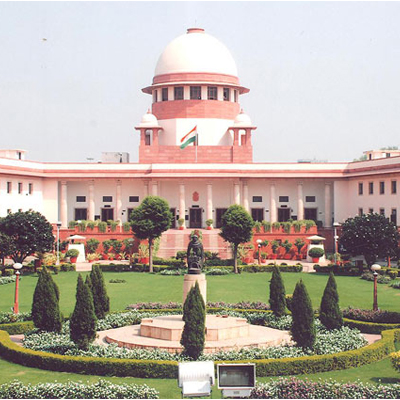
  • Supreme Court allows photos of Governors, CMs and Ministers permitted in Government ads, in review of earlier order

    Supreme Court allows photos of Governors, CMs and Ministers permitted in Government ads, in review of earlier order

    New Delhi: In a reversal of its own judgment of 13 May last year, the Supreme Court today allowed the use of photographs of governors, chief ministers and ministers in government advertisements.

    The apex Court gave the judgment on a batch of petitions filed by the Centre and various states seeking a review relating to photos of politicians on government advertisements.

    The Court had in May last year given a direction on a public interest petition that only photographs of the Prime Minister, President and Chief Justice of India can be published in official media advertisements and not those of chief ministers. But the personal approval of these three authorities will be necessary before publication.

    The Centre in its petition argued that it is for the government to decide whose photographs should be published and what the content of advertisements should be. It said the court should refrain from interfering in such policy matters.

    The Centre also said barring photos of chief ministers on advertisements was against the federal structure.

    Justices Ranjan Gogoi and Prafulla C. Pant who had passed the original directions said in September that the review petitions will be heard in open court.

    Prior to the order relating to hearing in open court, the judges perused the petitions of Tamil Nadu, West Bengal, Karnataka, and Assam in the chamber.

    The four states filed the review petitions challenging direction as being discriminatory and erroneous since it has permitted the photograph of the Prime Minister but not the chief ministers who too are elected representatives of the people.

    The states pointed out that the expert panel had recommended display of photos of CMs/governors as well but the Court had restrained the states from displaying photos of CMs/governors.

    The petitions had said: “There is nothing wrong if the publication issued by the government highlighting the achievements of the government contains photographs of the chief minister and the other ministers if they have made contribution to the achievements of the state government. The judgment is completely silent regarding the exclusion of the chief minister who is the head of the state government. If the photograph of the prime minister is permitted on the publication/advertisement then the photographs of the chief minister must have also been permitted by this court.”

    The original public interest litigations (PIL) filed by the NGOs Common Cause represented by counsel Meera Bhatia and the Centre for Public Interest Litigation (CPIL) represented by advocate Prashant Bhushan had urged the apex Court to frame guidelines.

    Holding that taxpayers’ money cannot be spent to build “personality cults” of political leaders, the Court in May last had restrained ruling parties from publishing photographs of political leaders or prominent persons in government-funded advertisements.

    The Court had said such photos divert attention from the policies of the government, unnecessarily associate an individual with a government project, and pave the way for cultivating a “personality cult”.

    The observations of the Court were based on examination of the findings of a Committee led by Bangalore’s National Law University Director N.S. Madhava Menon set up in May last year which had submitted its report in October.

    The Committee had been set up by the Information and Broadcasting Ministry pursuant to an order of 23 April 2014. Other members were former Lok Sabha Secretary General T K Vishwanathan, and senior advocate Ranjit Kumar. Mr Bimal Julka, then Secretary in the I and B Ministry, was the member Secretary of the Committee.  
  • TDSAT accepts GTPL and Taj TV payment schedule; distributor warned of consequences of breach

    TDSAT accepts GTPL and Taj TV payment schedule; distributor warned of consequences of breach

    New Delhi: The Telecom Disputes Settlement and Appellate Tribunal has accepted a payment schedule between GTPL and Taj Television for dues for eight months.The dues were for the period 1 August 2015 to 31 March 2016.

    However, Chairman Aftab Alam and members Kuldip Singh and B B Srivastava made clear that any breach in payment by GTPL, apart from any other consequences, would make GTPL liable to be proceeded for contempt in terms of section 21 of the TRAI Act. GTPL Counsel Nasir Husain also agreed to give post-dated cheques to Taj TV. The Tribunal said that the application stood disposed off on these terms.

  • TDSAT accepts GTPL and Taj TV payment schedule; distributor warned of consequences of breach

    TDSAT accepts GTPL and Taj TV payment schedule; distributor warned of consequences of breach

    New Delhi: The Telecom Disputes Settlement and Appellate Tribunal has accepted a payment schedule between GTPL and Taj Television for dues for eight months.The dues were for the period 1 August 2015 to 31 March 2016.

    However, Chairman Aftab Alam and members Kuldip Singh and B B Srivastava made clear that any breach in payment by GTPL, apart from any other consequences, would make GTPL liable to be proceeded for contempt in terms of section 21 of the TRAI Act. GTPL Counsel Nasir Husain also agreed to give post-dated cheques to Taj TV. The Tribunal said that the application stood disposed off on these terms.

  • MIB directs TV channels, MSOs, FM channels to follow directives of Delhi HC on Balaji comedy

    MIB directs TV channels, MSOs, FM channels to follow directives of Delhi HC on Balaji comedy

    New Delhi: Doordarshan and all private channels were today asked by the Information and Broadcasting ministry to comply with the directive of the Delhi High Court not to telecast or publicise in any manner the film Kya Kool Hain Hum 3.

     Justin Vipin Sanghi had passed the order earlier this year on a petition by Balaji Motion Pictures against WWW.1337.YOOTORRENT.COM and others barring them “from  communicating, making available, distributing ,duplicating, displaying, releasing, showing, uploading, downloading, exhibiting, playing, defraying the movie Kya KoolHai Hum 3 in any manner whatsoever without obtaining prior license from the plaintiff or in any other manner that would infringe the plaintiffs copyright in the said cinematograph film through any medium whatsoever.”

     Thirty-six other defendants were directed to ensure compliance of the order by the other defendants.

    The ministry directive dated 14 March was addressed to News Broadcasters Association (NBA), Indian Broadcasting Foundation Association of Regional Television Broadcasters of India, all TV Channels, all MSOs, and all FM Stations.

    In the petition, Balaji had said that release of any material or the film itself would lead to colossal losses to the company.

     Balaji impleading 300 defendants of which 1 to 203 are websites allegedly engaged in the business of uploading content. The plaintiff apprehends that the said websites may even upload unlicensed copy of the plaintiffs film Kya Kool Hai Hum3, of which the plaintiff claims to be the producer and copyright holder. defendants no.204 to 238 are Internet Service Providers (ISP), who are engaged in the business of providing basic telephony, mobile services and broadband network all over the world and are covered by the Information Technology Act, 2000 as well as Copyright Act, 1957 and the Telecom Regulatory Authority of India Act, 1997 (TRAI Act).

     The Ministry of Communication & Information Technology has been impleaded as defendant no.239. The plaintiff stated that defendants no.204 to 239 have been impleaded so that the orders that may be passed by the court may be implemented by them by blocking the infringing URLs of websites such as defendants no.1 to 203. Defendants no.240 to260 and 260-274 are Multi System Operators (MSOs) and cable operators governed by the Cable Network RegulationAct 1995 and the TRAI Act. The plaintiff stated that various MSOs and cable operators, including in Delhi could be engaged in unauthorised unlicensed production and broadcast, on their local channels and through other means, of various pirated contents, including cinematograph films through their cable network. The apprehension of the plaintiff was that the said defendants may indulge in broadcast of the aforesaid copyright of the plaintiff, which at the time of the court order of 19 January was yet to be released (on 22 January) and Balaji apprehends will infringe the copyright m  the  aforesaid cinematograph film.

  • MIB directs TV channels, MSOs, FM channels to follow directives of Delhi HC on Balaji comedy

    MIB directs TV channels, MSOs, FM channels to follow directives of Delhi HC on Balaji comedy

    New Delhi: Doordarshan and all private channels were today asked by the Information and Broadcasting ministry to comply with the directive of the Delhi High Court not to telecast or publicise in any manner the film Kya Kool Hain Hum 3.

     Justin Vipin Sanghi had passed the order earlier this year on a petition by Balaji Motion Pictures against WWW.1337.YOOTORRENT.COM and others barring them “from  communicating, making available, distributing ,duplicating, displaying, releasing, showing, uploading, downloading, exhibiting, playing, defraying the movie Kya KoolHai Hum 3 in any manner whatsoever without obtaining prior license from the plaintiff or in any other manner that would infringe the plaintiffs copyright in the said cinematograph film through any medium whatsoever.”

     Thirty-six other defendants were directed to ensure compliance of the order by the other defendants.

    The ministry directive dated 14 March was addressed to News Broadcasters Association (NBA), Indian Broadcasting Foundation Association of Regional Television Broadcasters of India, all TV Channels, all MSOs, and all FM Stations.

    In the petition, Balaji had said that release of any material or the film itself would lead to colossal losses to the company.

     Balaji impleading 300 defendants of which 1 to 203 are websites allegedly engaged in the business of uploading content. The plaintiff apprehends that the said websites may even upload unlicensed copy of the plaintiffs film Kya Kool Hai Hum3, of which the plaintiff claims to be the producer and copyright holder. defendants no.204 to 238 are Internet Service Providers (ISP), who are engaged in the business of providing basic telephony, mobile services and broadband network all over the world and are covered by the Information Technology Act, 2000 as well as Copyright Act, 1957 and the Telecom Regulatory Authority of India Act, 1997 (TRAI Act).

     The Ministry of Communication & Information Technology has been impleaded as defendant no.239. The plaintiff stated that defendants no.204 to 239 have been impleaded so that the orders that may be passed by the court may be implemented by them by blocking the infringing URLs of websites such as defendants no.1 to 203. Defendants no.240 to260 and 260-274 are Multi System Operators (MSOs) and cable operators governed by the Cable Network RegulationAct 1995 and the TRAI Act. The plaintiff stated that various MSOs and cable operators, including in Delhi could be engaged in unauthorised unlicensed production and broadcast, on their local channels and through other means, of various pirated contents, including cinematograph films through their cable network. The apprehension of the plaintiff was that the said defendants may indulge in broadcast of the aforesaid copyright of the plaintiff, which at the time of the court order of 19 January was yet to be released (on 22 January) and Balaji apprehends will infringe the copyright m  the  aforesaid cinematograph film.

  • TRAI permits flexibility in interconnect agreements without dilution of model agreement

    TRAI permits flexibility in interconnect agreements without dilution of model agreement

    New Delhi: In view of several disputes in TDSAT and various high courts on the issue, the Telecom Regulatory Authority of India has prescribed formats of the Model Interconnection Agreement (MIA) and Standard Interconnection Agreement (SIA) to be signed between the multisystem operator and the local cable operator for provisioning of cable TV services through the Digital Addressable Systems (DAS)

    The Telecommunication (Broadcasting and Cable Services) Interconnection (Digital Addressable Cable Television Systems) (Seventh Amendment) Regulations 2016 issued yesterday said MSO and LCO may enter into an interconnection agreement on lines of the MIA, or by signing the agreement strictly in terms of the SIA. Even as flexibility has been allowed on some issues, it has been mandated that the parties shall ensure that no such agreement will have the effect of diluting any of the conditions laid down in the MIA. 

    If the parties decide to enter into interconnection agreement on the terms of SIA, no addition, alteration and deletion of the clauses provided therein is allowed. They have the flexibility to modify clauses 10, 11 and 12 of the MIA through mutual agreement without altering or deleting any other clause of MIA. They also have a freedom to add additional clauses through mutual agreement to the MIA for stipulating any additional conditions.

    In a press release, the Authority said it was of the view that “the prescription of formats of MIA and SIA will pave the way for growth of the sector, result in reduction of disputes between the MSOs and LCOs, provide level playing field to the parties and increase healthy competition in the sector which ultimately will help in better quality of services to the subscribers.”

    Earlier in 2012, the Authority notified a comprehensive regulatory framework for DAS encompassing the interconnection regulation, the quality of service regulation, the tariff order and the consumer complaint redressal regulation.

    The interconnection regulation for DAS prescribes that MSO and LCO shall enter into a written interconnection agreement before provisioning of cable TV services to the subscribers. It was mandated that the interconnection agreement between MSO and LCO shall clearly earmark the roles and responsibilities in conformance to the quality of service regulations issued by the Authority from time to time.

    However, the Authority, while notifying the comprehensive regulatory framework for DAS did not notify any format specifying the terms and conditions for interconnection agreement as there could be various ways in which MSO and LCO can share the responsibilities in the interconnection agreement.

    TRAI received a large number of complaints regarding various issues in signing of the interconnection agreement between MSO and LCO. On the one end, the LCOs represented that the terms and conditions of draft agreements offered by MSOs are one sided and do not provide a level playing field. On the other end, the MSOs indicated that the LCOs are not willing to follow the terms and conditions of interconnection agreement already executed between them.

    It was noticed that the roles and responsibilities of MSO and LCO for meeting the quality of service norms as prescribed in the Quality of Service Regulations 2012 were not clearly defined in the interconnection agreement signed by them; due to which, in the event of any dispute between them the quality of service delivered to the consumers gets adversely affected.

    A comprehensive consultation process was carried out by the Authority to address the issue and the Authority decided to prescribe the terms and conditions for interconnection agreement in such a way that it addresses the various concerns of the stakeholders as well as it provide enough flexibility for accommodating various plausible business models between MSO and LCO.

    The full text of the Regulation is available on TRAI’s website www.trai.gov.in.

  • TRAI permits flexibility in interconnect agreements without dilution of model agreement

    TRAI permits flexibility in interconnect agreements without dilution of model agreement

    New Delhi: In view of several disputes in TDSAT and various high courts on the issue, the Telecom Regulatory Authority of India has prescribed formats of the Model Interconnection Agreement (MIA) and Standard Interconnection Agreement (SIA) to be signed between the multisystem operator and the local cable operator for provisioning of cable TV services through the Digital Addressable Systems (DAS)

    The Telecommunication (Broadcasting and Cable Services) Interconnection (Digital Addressable Cable Television Systems) (Seventh Amendment) Regulations 2016 issued yesterday said MSO and LCO may enter into an interconnection agreement on lines of the MIA, or by signing the agreement strictly in terms of the SIA. Even as flexibility has been allowed on some issues, it has been mandated that the parties shall ensure that no such agreement will have the effect of diluting any of the conditions laid down in the MIA. 

    If the parties decide to enter into interconnection agreement on the terms of SIA, no addition, alteration and deletion of the clauses provided therein is allowed. They have the flexibility to modify clauses 10, 11 and 12 of the MIA through mutual agreement without altering or deleting any other clause of MIA. They also have a freedom to add additional clauses through mutual agreement to the MIA for stipulating any additional conditions.

    In a press release, the Authority said it was of the view that “the prescription of formats of MIA and SIA will pave the way for growth of the sector, result in reduction of disputes between the MSOs and LCOs, provide level playing field to the parties and increase healthy competition in the sector which ultimately will help in better quality of services to the subscribers.”

    Earlier in 2012, the Authority notified a comprehensive regulatory framework for DAS encompassing the interconnection regulation, the quality of service regulation, the tariff order and the consumer complaint redressal regulation.

    The interconnection regulation for DAS prescribes that MSO and LCO shall enter into a written interconnection agreement before provisioning of cable TV services to the subscribers. It was mandated that the interconnection agreement between MSO and LCO shall clearly earmark the roles and responsibilities in conformance to the quality of service regulations issued by the Authority from time to time.

    However, the Authority, while notifying the comprehensive regulatory framework for DAS did not notify any format specifying the terms and conditions for interconnection agreement as there could be various ways in which MSO and LCO can share the responsibilities in the interconnection agreement.

    TRAI received a large number of complaints regarding various issues in signing of the interconnection agreement between MSO and LCO. On the one end, the LCOs represented that the terms and conditions of draft agreements offered by MSOs are one sided and do not provide a level playing field. On the other end, the MSOs indicated that the LCOs are not willing to follow the terms and conditions of interconnection agreement already executed between them.

    It was noticed that the roles and responsibilities of MSO and LCO for meeting the quality of service norms as prescribed in the Quality of Service Regulations 2012 were not clearly defined in the interconnection agreement signed by them; due to which, in the event of any dispute between them the quality of service delivered to the consumers gets adversely affected.

    A comprehensive consultation process was carried out by the Authority to address the issue and the Authority decided to prescribe the terms and conditions for interconnection agreement in such a way that it addresses the various concerns of the stakeholders as well as it provide enough flexibility for accommodating various plausible business models between MSO and LCO.

    The full text of the Regulation is available on TRAI’s website www.trai.gov.in.

  • TRAI: 35 companies control 243 operational FM channels, seven control 169

    TRAI: 35 companies control 243 operational FM channels, seven control 169

    New Delhi: Reliance Broadcast Network Ltd holds the largest number of FM radio channels with 45 Big FM channels in various cities.

    Figures released by the Telecom Regulatory Authority of India as part of its consultation paper on ‘Issues related to Radio Audience Measurement and Ratings in India’ shows that seven companies hold the largest number of FM channels (169) of the 243 channels currently operational after Phase II.

    Entertainment Network India Ltd through Radio Mirchi holds 36; South Asia FM Ltd through S FM has 23; Kal Radio Pvt. Ltd with S FM has 18; Music Broadcast Pvt. Ltd has 20 Radio City channels; D B Corp Ltd has 17 My FM channels; and BAG Information P Ltd runs ten Radio Dhamaal channels.A total of 28 companies run the remaining 74 FM channels in various parts of the country.

    Radio broadcasting services were opened to private sector in 2000 when the Government auctioned 108 FM radio channels in the VHF band (88 –108 MHz) in 40 cities in Phase-I of FM Radio. Out of these, only 21 FM radio channels became operational and subsequently migrated to Phase-II in 2005. In Phase-II of FM Radio, a total of 337 channels were put on bid across 91 cities having population equal to or more than 300,000. Of 337 channels, 222 channels became operational. At present, 243 FM Radio channels are operational in 86 cities.

    Phase-III auctions have begun to enable setting up of private FM Radio channels in all cities with a population of more than 100,000. As part of this Phase, auctions were done for 135 FM Radio channels in 69 cities where at least one channel of FM radio is already operational. Out of these, 91 FM Radio channels in 54 cities have been successfully auctioned.

    A total of 831 more FM Radio channels will be put up for auction in 264 new cities under FM radio Phase-III in addition to remaining channels of 135 FM radio channels put for auction recently.

    Terrestrial radio broadcasting which includes FM is a free-to-air service. A consumer can simply procure radio receiver equipment and tune into various radio channels available in that region. The business model of radio broadcasting service is based on advertisement revenue. Radio broadcasters are permitted to air commercials during their programme.

    The revenue of radio broadcasting sector in 2014 was Rs 1720 crore, with a year-on year increase of 18 per cent from 2013 to 2014, driven by increasing popularity of radio in smaller towns and cities. The radio broadcasting sector revenues are expected to grow at a CAGR of 18 per cent to reach Rs. 3950 crore by 2019.

    The total advertisement revenue of Media and Entertainment (M&E) industry was Rs. 41,400 crore in 2014, contributing approximately 31 per cent to the total M&E revenues. The advertisement revenue is expected to grow at a CAGR of 14.5 per cent to reach Rs 81,600 crore by 2019. Presently television and print media sectors corner the maximum advertisement revenue (approximately 80 per cent of the total revenues) spend in India. Though the radio broadcasting sector presently accounted for only 4 per cent of total advertisement revenue in 20143, it is however expected to garner 5 per cent of the total advertisement revenues by 2019.