Category: Regulators

  • Central government  drives Bind scheme with Rs 2,539 crore push

    Central government drives Bind scheme with Rs 2,539 crore push

    NEW DELHI: India’s public broadcasters are in the middle of their most ambitious revamp in decades. The government told Parliament this week that its Broadcasting Infrastructure and Network Development (Bind) scheme — approved for 2021–26 with an outlay of Rs 2,539.61 crore — is advancing on schedule, with close to Rs 981 crore already spent.

    The five-year programme is designed to modernise Doordarshan and Akashvani (All India Radio) with digital transmission, high-definition studios, new FM towers and a wider footprint in border, tribal and left-wing extremism–affected regions. The ministry said no major funds have lapsed, though procurement delays occasionally slowed spending, now being addressed through tighter monitoring.

    One of Bind’s biggest successes is the expansion of DD Free Dish, India’s only free-to-air DTH service. Channel count has surged from 104 in 2019 to 510 today, including 92 private broadcasters, 50 Doordarshan services and 320 educational channels. Popular Akashvani stations such as FM Gold, Rainbow and Vividh Bharati are also available on the platform, making free access to information and entertainment more widely available.

    Akashvani’s terrestrial coverage now spans 90 per cent of India’s geography and 98 per cent of its population. Alongside its traditional FM network, more than 260 AIR channels are now accessible through the NewsonAIR mobile app. To further strengthen reach, 59 new FM transmitters have been approved under the scheme.

    In parallel, Prasar Bharati has entered the OTT space with Waves, launched in 2024. The digital platform aggregates infotainment, news, education and cultural content, and integrates feeds from Doordarshan and AIR. Officials say Waves is helping extend public broadcasting to younger, mobile-first audiences and to Indians overseas.

    The Bind scheme, covering all states, represents an attempt to reposition public service broadcasting in a hyper-fragmented media market.

    For New Delhi, the strategy is as much about access as it is about influence — ensuring that public broadcasting reaches underserved communities while competing with private players on technology and content.


  • Piracy gets a reality check as India sets up anti-piracy task force

    Piracy gets a reality check as India sets up anti-piracy task force

    MUMBAI: India’s pirates may soon find their screens going blank. The Ministry of Information and Broadcasting (MIB) has announced the formation of a dedicated task force to crack down on online piracy, a menace that drains Rs 224 billion annually from the country’s entertainment industry, according to the 2024 Rob Report by EY and IAMAI.

    The scale of the problem is staggering with 51 per cent of Indian media consumers admitting to watching pirated content, both theatres and OTT platforms are losing revenue hand over fist. The Cinematograph Amendment Act 2023 had already introduced stricter penalties and empowered authorities to clamp down on illegal recordings and transmissions. Now, with a specialised task force, the fight against piracy is set to gain sharper teeth.

    Welcoming the move, JioStar CEO and IAMAI Digital Entertainment Committee (DEC) chair Kiran Mani called it a “timely and necessary step” that would directly channel industry expertise into decisive solutions. “By bringing together the collective experience of the ecosystem, we can help shape solutions that protect India’s creative economy and drive long-term growth,” he said.

    Echoing the urgency, Inshorts co-founder and CEO DEC Co-chair Deepit Purkayastha noted that piracy remains “one of the biggest hurdles” for the sector. “This task force is a chance to work hand in hand with the government to find solutions that really work. Together, we can set the stage for a stronger and more trusted entertainment industry,” he added.

    With stricter laws in place, industry leaders aligned, and the new task force gearing up, India’s media and entertainment sector has a rare chance to curb piracy, safeguard creativity, and expand its global influence. For once, it looks like the pirates may not have the last laugh.

  • TRAI warns public against scam calls misusing its name and authority

    TRAI warns public against scam calls misusing its name and authority

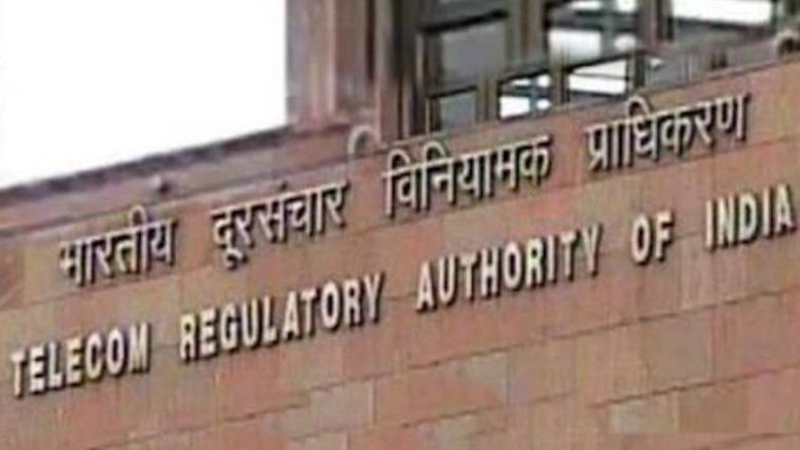
    MUMBAI: Dial M for Misuse: TRAI sounds alarm over scamsters impersonating its name. If you’ve recently received a call threatening “digital arrest” over telecom violations, don’t panic just hang up. The Telecom Regulatory Authority of India (TRAI) has issued a stern advisory warning the public against a spate of frauds misusing its name to scare, swindle, and scam.

    From SIM deactivation threats to bogus mobile tower offers, the fraudsters’ bag of tricks is as diverse as it is devious. The latest wave includes impersonators posing as TRAI or law enforcement officials, accusing victims of alleged telecom or financial offences. Victims are shown forged legal notices or fake identity documents and are often pressured into transferring money under the pretext of bail or verification fees.

    TRAI has clarified that it does not send messages threatening mobile number disconnection, nor does it authorise any third-party to do so. It certainly does not carry out investigations or collect payments through phone calls, Whatsapp, or video conferencing.

    Among the common scams flagged:

    . Digital Arrest: Calls threatening legal action or arrest unless payment is made

      SIM Deactivation: Fake alerts over KYC issues asking for urgent user verification

      Tower Installation Scams: Offers promising high rent for tower installation in exchange for upfront fees, falsely backed by forged TRAI approvals

      . Fake Letters and Emails: Scammers use doctored TRAI letterheads or logos to push fraudulent investment or compliance schemes

    TRAI has reiterated its role as an independent regulator, created under the TRAI Act of 1997, with no involvement in individual consumer disputes or investigations. It neither seeks Aadhaar, OTPs, nor banking credentials—and certainly doesn’t threaten arrests.

    The regulator has urged citizens, especially senior citizens and digitally less-savvy users, to stay alert. In case of suspicious communication:

      .  Disconnect immediately

       .  Never share personal or financial information

       .  Do not transfer money

       . Verify via official government websites or helplines

       . Report incidents at www.cybercrime.gov.in or call 1930

        Use the Chakshu feature on the Sanchar Saathi portal or the TRAI DND app to flag scam calls

    As digital scams become more sophisticated, TRAI’s message is clear: stay sceptical, stay safe.
     

  • India adds 2.7 million new telecom users in July, led by Jio

    India adds 2.7 million new telecom users in July, led by Jio

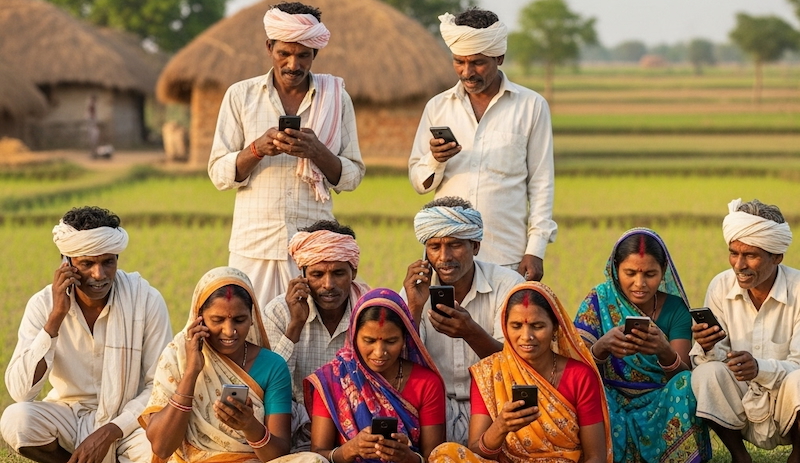
    MUMBAI: India’s telecom dial tone got a bit louder this July, as the country added a net 2.7 million new telephone connections, taking the total subscriber base to 1,180.87 million, according to TRAI’s latest figures. That’s a ring in the right direction especially with wireless connections doing the heavy lifting. Wireless subscriptions grew by 2.74 million, pushing the total to 1,172.57 million. On the other hand, wireline subscriptions held relatively steady, dipping slightly by 7,747 users, ending the month at 8.29 million.

    The urban-rural divide saw rural India catching up, with rural wireless users increasing to 526.27 million while urban counterparts stood at 646.30 million. Urban tele-density saw a slight decline to 126.62 per cent, while rural tele-density edged up to 58.66 per cent as reported by TRAI.

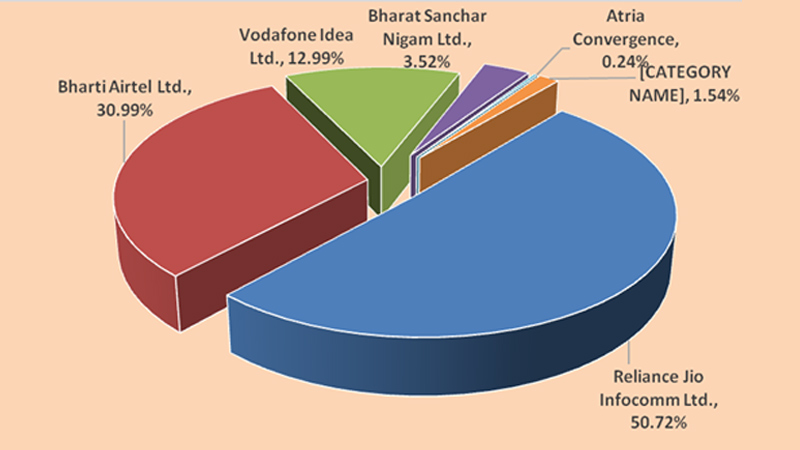
    Jio continued to be the star caller in town, adding a whopping 3.16 million wireless subscribers, cementing its lead with 458.95 million users. Bharti Airtel held strong in second with 383.57 million, gaining 1.11 million subscribers. Vodafone Idea continued its slow slide, losing 1.32 million subscribers, taking its count to 218.49 million.

    But not all subscribers are equal when it comes to active users, Jio again leads with a 104.08 per cent VLR (visitor location register), indicating some dual SIM overlap. Airtel boasted a healthy 99.21 per cent active base, while Vi clocked in at 87.17 per cent. BSNL trailed behind with only 50.64 per cent of its users actively using services.

    On the MNP (mobile number portability) front, Indians are still keeping their digits mobile with 12.94 million requests in July alone, bringing the all-time total to a staggering 921.94 million.

    In the wireline game, Jio added 0.25 million subscribers, now holding 33.11 per cent market share, while BSNL shed 0.20 million, dropping to 23.03 per cent. Airtel’s steady ship saw it maintain a 22.97 per cent slice.

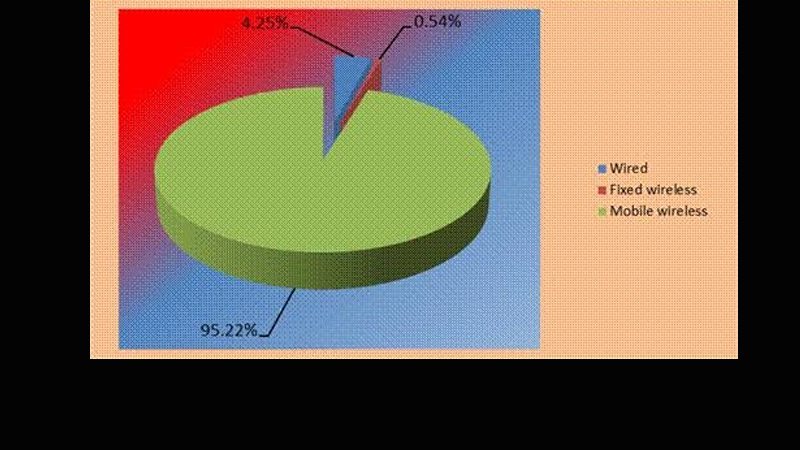
    Meanwhile, broadband connections both wired and wireless stood strong at 940.52 million, led by Reliance Jio (487.59 million), Airtel (264.33 million), and Vodafone Idea (125.08 million).

    So, while some telcos may be dropping calls and customers India’s telecom sector as a whole is still very much in signal, especially as it tunes into deeper rural penetration and data-led digital expansion.

    (If you are an Anime fan and love Anime like Demon Slayer, Spy X Family, Hunter X Hunter, Tokyo Revengers, Dan Da Dan and Slime, Buy your favourite Anime merchandise on AnimeOriginals.com.)

  • India’s telecom scene rings in mixed signals in 2024-25

    India’s telecom scene rings in mixed signals in 2024-25

    MUMBAI: The Telecom Regulatory Authority of India (TRAI) has released its annual performance indicators report for 2024-25 and the numbers show a curious mix of gains, drops and digital twists in India’s ever-buzzing telecom space.

    India added 14.7 million internet users over the year, nudging the total base to a hefty 969.1 million by March 2025, a modest growth of 1.54 per cent. Of these, a dominant 944.12 million are broadband surfers, up 2.17 per cent, while the slow-lane narrowband crowd shrank 17.66 per cent to just 24.98 million.

    Wireless users are spending more. Average revenue per user (arpu) for wireless shot up 16.89 per cent to Rs174.46 a month. Prepaid arpu jumped sharply from Rs 146.37 to Rs 173.84. Postpaid users, though, spent less, their arpu dipped to Rs180.86 from Rs 184.63.

    Talk time also climbed. The average subscriber chatted for 1,000 minutes a month, up from 963 the previous year. But again, the prepaid crowd did the heavy lifting, their usage rose to 1,047 minutes, while postpaid users spoke less, clocking just 503 minutes.

    The total number of telephone subscribers in India edged up marginally to 1,200.80 million, a limp 0.13 per cent rise. But while wireline made a surprising comeback with a 9.62 per cent jump (now at 37.04 million users), mobile telephony lost ground. Wireless subscribers fell by 1.74 million, a 0.15 per cent dip with a sharper 8.5 million drop for mobile-only users (excluding 5G FWA). Overall wireless teledensity slipped to 82.42 per cent.

    Interestingly, rural areas clung on rural subscriptions rose 0.15 per cent to 534.69 million. But rural teledensity inched down from 59.19 to 59.06 per cent. Urban teledensity, meanwhile, dropped more steeply from 133.72 to 131.45 per cent.

    India’s mobile data addiction shows no signs of slowing. Wireless data users grew 2.87 per cent to 939.51 million, and total data consumed soared to 2,28,779 petabytes, a 17.46 per cent rise. Revenues from this data deluge? A cool Rs 2.15 lakh crore up 15.49 per cent from last year.

    Telecom’s gross revenue hit Rs 3.72 lakh crore, up 10.72 per cent. while adjusted gross revenue (agr) rose 12.02 per cent to Rs 3.03 lakh crore. Pass-through charges, however, slid 1.31 per cent to Rs52,879 crore.

    Spectrum usage charges (suc) and licence fees went up too by 13.02 and 12.02 per cent, respectively. Access services, basically what we all use made up a commanding 83.65 per cent of agr.

    It’s not just telecom that got a review. The broadcasting scene had its own drama. India had 918 satellite TV channels licensed by the Ministry of Information and Broadcasting as of March 2025, with 908 available for downlinking. But pay DTH is losing fans, subscribers dropped to 56.92 million from 61.97 million a year ago, while Doordarshan’s free DTH carried on as usual.

    In radio, the number of operational private FM stations stayed flat at 388 across 113 cities. But a shuffle at the top saw six channels from Digital Radio (Delhi, Mumbai and Kolkata) merge into South Asia FM Ltd. The number of private radio operators is now 33, down from 36.

    Meanwhile, community radio keeps spreading its voice. The grassroots network now boasts 531 stations up from 494 the year before.

    The Indian telecom space is talking, streaming, and spending more, but it’s also shifting gears. Data is king, mobile’s golden days might be levelling off, wireline’s having a mini-renaissance, and DTH seems to be heading the way of the landline.

    (If you are an Anime fan and love Anime like Demon Slayer, Spy X Family, Hunter X Hunter, Tokyo Revengers, Dan Da Dan and Slime, Buy your favourite Anime merchandise on AnimeOriginals.com.)

  • Delhi High Court Orders Patanjali to Pause Negative Ads Targeting Dabur

    Delhi High Court Orders Patanjali to Pause Negative Ads Targeting Dabur

    MUMBAI: The rivalry between India’s leading Ayurvedic brands entered the legal arena this week, as the Delhi High Court ordered Patanjali Ayurved to halt all advertisements disparaging Dabur’s chyawanprash. The directive reflects the judiciary’s increasing scrutiny of advertising claims in the high-stakes wellness sector.

    The dispute began after Dabur, one of India’s oldest and most established names in Ayurvedic health, alleged that Patanjali’s recent campaigns not only targeted its flagship product, but also implied
    that competitors use inferior or artificial ingredients—claims Dabur described as misleading and potentially damaging to consumer trust.

    In its preliminary order, the court noted that while comparative advertising is allowed, it cannot cross into unfair or baseless disparagement. The judges observed that advertising should inform, not
    mislead, and must avoid statements that unjustly tarnish the reputation of rival products.

    The interim order requires Patanjali to suspend all negative advertisements against Dabur chyawanprash until further notice. The case will proceed for detailed examination of the ad content and
    industry standards.

    The legal intervention underscores the fierce marketing competition in India’s booming Ayurvedic and natural health market, where trust and authenticity are prized by both brands and consumers. Industry experts say the ruling sends a clear signal to marketers: fair play remains essential in the fight for health-conscious buyers.

    The matter is scheduled for further hearing in the coming weeks, when the court will assess the factual basis of Patanjali’s claims and address the broader issue of responsible advertising in the wellness
    sector. For now, both companies—and the wider industry—are watching closely, aware that the outcome could set the tone for brand battles in India’s fast-growing consumer market.

    (If you are an Anime fan and love Anime like Demon Slayer, Spy X Family, Hunter X Hunter, Tokyo Revengers, Dan Da Dan and Slime, Buy your favourite Anime merchandise on AnimeOriginals.com.)
     

  • Govt sharpens TRP policy: advisory roles out, conflict of interest curbed

    Govt sharpens TRP policy: advisory roles out, conflict of interest curbed

    NEW DELHI: In a move set to shake up the television ratings ecosystem, the ministry of information & broadcasting has proposed amendments to its decade-old policy on television rating agencies in India and opened the floor for public comments.

    The fresh draft tweaks the 2014 guidelines with sharper guardrails. Among the headline changes: rating agencies must now be Indian-registered companies under the Companies Act, 2013, and are barred from offering consultancy or advisory services that could lead to a conflict of interest with their core job—ratings.

    In a bid to declutter the framework, the ministry has deleted clauses 1.5 and 1.7, along with the proviso tagged to clause 1 post explanation.

    (Clause 1.5 basically states that “any member of the board of directors of the television rating company shall not be in the business of broadcasting/ advertising/advertising agency.)

    (Clause 1.7 states that the company shall comply with the following cross holdings requirements, namely.
    (a) No single company/ legal entity, either directly or through its associates or inter-connected undertakings, shall have substantial equity holding in rating agencies and broadcasters/advertisers/ advertising agencies.
    (b) No single company/legal entity, either directly or through its associates or inter-connected undertakings, shall have substantial equity holding in more than one rating agency operating in the same area.
    (c) The cross-holdings restriction will also be applicable in respect of individual promoters besides being applicable to legal entities.
    (d) A promoter company/member of the board of directors of the rating agency cannot have stakes in any broadcaster/ advertiser/advertising agency either directly or through its associates or inter-connected undertakings.
    Explanation: For the purpose of para 1.7, substantial equity shall mean equity of 10% or more of paid-up equity. Having a substantial equity holding in companies shall constitute a cross-holding. Provided that the eligibility conditions stipulated at 1.5, 1.6 and 1.7 will not be applicable in the self-regulation model where the industry-led body, such as, Broadcast Audience Research Council (BARC) itself provides the rating.)

    The new norms will apply not just to future applicants but also to existing players in the market.

    Stakeholders and the general public have 30 days to respond to the draft, preferably via email to the ministry. The consultation marks a significant step towards transparency and credibility in India’s ratings architecture—a space often marred by controversy and trust deficits.

    The complete amendment order and policy guidelines are available on the I&B ministry’s website.

  • Pine Labs appoints Sameer Kamath as CFO ahead of IPO; Shalini Saxena returns as General Counsel

    Pine Labs appoints Sameer Kamath as CFO ahead of IPO; Shalini Saxena returns as General Counsel

    Mumbai: IPO-bound Pine Labs has announced two key leadership appointments ahead of its planned public offering: Sameer Kamath is set to join as chief financial officer, while Shalini Saxena returns
    as general counsel. The announcement follows closely on the heels of the company’s draft red herring prospectus (DRHP) filing with the Securities and Exchange Board of India (SEBI) on 27 June.

    Kamath, currently group CFO at Avendus Capital, brings over two decades of financial leadership experience. He previously served as CFO at Motilal Oswal. He replaces Marc Mathenz, who stepped down in June shortly before the DRHP was filed.

    Saxena re-joins Pine Labs after her tenure as legal head at CoinDCX. She had earlier served as general counsel at Pine Labs from 2019 to 2022. Her return signals renewed legal leadership focus as the company navigates regulatory and compliance processes tied to its public listing.

    Pine Labs’ senior leadership team now includes:

    Amrish Rau, chief executive officer

    Kush Mehra, chief business officer

    Sumit Chopra, chief operating officer

    Navin Chandani, chief business officer – issuing business

    The Gurugram-based fintech firm is looking to raise Rs 2,600 crore via a combination of fresh equity issue and an offer-for-sale (OFS) of up to 147.8 million shares. Pine Labs is reportedly seeking a valuation in the range of $4.5–5 billion. Key shareholders include Peak XV Partners, Mastercard, PayPal, and Actis.

    The appointments place Pine Labs alongside a growing cohort of Indian startups accelerating towards public markets-a signal of rising maturity within the country’s fintech and technology sectors.

    (If you are an Anime fan and love Anime like Demon Slayer, Spy X Family, Hunter X Hunter, Tokyo Revengers, Dan Da Dan and Slime, Buy your favourite Anime merchandise on AnimeOriginals.com.)
     

  • Eight years of GST: India’s landmark tax reform turns a corner

    Eight years of GST: India’s landmark tax reform turns a corner

    MUMBAI: Eight years after its midnight launch, the Goods and Services Tax (GST) stands as a defining milestone in India’s economic reform journey. Introduced by the Modi 1.0 government on 1 July 2017, GST replaced 17 indirect taxes and 13 cesses, creating a unified tax system aimed at transforming revenue collection and compliance mechanisms.

    From its inception, GST has aimed to simplify the tax landscape and improve compliance—especially for small and medium enterprises (SMEs). Prime Minister Narendra Modi recently reiterated this in a social media post, calling GST a “powerful engine” of economic growth and an exemplar of cooperative federalism, where states act as equal partners in market integration.

    GST revenues have seen consistent growth—from Rs 7.19 lakh crore in 2017–18 to Rs 22.08 lakh crore in 2024–25. Registrations have more than doubled, rising from 60 lakh to 1.51 crore active taxpayers. The government credits this to technology-led compliance features such as e-invoicing, auto-populated returns, AI-driven analytics, and e-way bills, which together have helped reduce fraud and encourage voluntary adherence.

    The media and marketing industry has also undergone a structural shift under GST. Earlier fragmented under multiple state-level service taxes, the sector now operates under a more uniform 18 per cent GST slab, enabling centralised billing and improving cash flow predictability for agencies and broadcasters. For the television industry, in particular, GST eliminated disparities between content producers and distributors across states, streamlining operations and reducing cascading taxes. However, smaller agencies have flagged concerns about delayed input credit refunds and compliance costs, prompting calls for more sector-specific easing.

    Leaders across industry reflected on GST’s journey. Anand Mahindra, chairman of Mahindra Group, called it “India awakening as a common market for the first time.” Vijay Shekhar Sharma, founder of Paytm, termed GST “the dawn of a new India.” Kiran Mazumdar-Shaw, executive chairperson of Biocon, described it as “transformational,” while also calling for further simplification.

    Despite progress, key issues remain. Over two lakh disputes are pending due to the delayed establishment of GST appellate tribunals. The presence of multiple tax slabs and inverted duty structures—particularly in textiles and fertilisers—continues to create inconsistencies. Petroleum products and real estate remain outside GST’s ambit, limiting its scope as a truly comprehensive indirect tax.

    Tax experts from PwC India advocate for rationalising the rate structure to three tiers and gradually bringing petroleum products under GST to remove economic distortions. The GST Council has indicated that such reforms are under active consideration. Plans to operationalise 31 appellate tribunals by December aim to address the litigation backlog.
     

  • Delhi High Court blocks rogue sites from streaming India–England series

    Delhi High Court blocks rogue sites from streaming India–England series

    MUMBAI: In a significant win for content rights holders, the Delhi high court has restrained multiple rogue websites from illegally streaming the India tour of England 2025 (ITE 2025), following a copyright infringement plea filed by JioStar India Pvt Ltd (formerly Star India Pvt Ltd).

    Justice Saurabh Banerjee granted a ‘dynamic+’ injunction, enabling real-time blocking of infringing websites during live match broadcasts.

    The five-Test series between India and England is scheduled from June to August 2025 and JioStar holds exclusive digital media rights for ITE 2025 under a licensing agreement with Culver Max Entertainment Pvt Ltd (Sony).

    JioStar alleged various third party websites of streaming IPL 2025 illegally and were likely to do so again during the England tour.

    As per the court’s orders:

    . Immediate suspension of the four listed rogue domains by their respective registrars, including Namecheap Inc., Sav.com LLC, and Tucows Domains Inc.

    Direction to internet service providers — including Airtel, Jio, and Vodafone Idea — to block access to these websites within 72 hours.

    Permission for JioStar to notify additional infringing websites on affidavit during the series, without the need for separate court orders.

    Coordination mandated between the Department of Telecommunications (DoT) and the Ministry of Electronics and Information Technology (MeitY) to ensure ISP compliance.

    Inclusion of unnamed infringers as John Doe defendants to allow future enforcement.

    This comes after the court addressed the growing challenge posed by “hydra-headed” piracy websites, which routinely mask ownership and replicate via mirror domains.

    “The rights of an intellectual property holder cannot be rendered otiose in this world of rapidly developing technology,” the order observed.

    The judgement referenced recent rulings such as Universal City Studios v. Dotmovies.baby and Applause Entertainment v. Meta Platforms, reflecting evolving judicial strategies to curb digital piracy. The matter is scheduled for the next hearing on 13 October 2025. In the interim, JioStar has been directed to file regular affidavits identifying any new infringing domains during the India–England series.