Category: Regulators

  • TDSAT asks Bihar MSO to pay Rs 5.42 lakh with interest to MSM

    TDSAT asks Bihar MSO to pay Rs 5.42 lakh with interest to MSM

    NEW DELHI: Multisystem operator Dream Entertainment of Bihar has been directed by the Telecom Disputes Settlement and Appellate Tribunal to pay to MSM Discovery Pvt Ltd sums  of Rs l,31,399 and Rs 4,11,001 respectively as clearance of arrears.

    Chairman Justice Aftab Alam and member B B Srivastava also directed the MSO to pay interest @ 18percent from 1January 2014 to 16 April 2015, the date of deactivation of signals and @ 9 percent from 17 July 2015, the date of filing of the petition  before the tribunal, till the date of realization.

    It said that the case of MSM was fully supported by oral and documentary evidences that remain completely unchallenged and uncontroverted before the tribunal as the MSO did not appear.

    According to MSM, it had entered into a subscription agreement with the MSO on 3 June 2014 for retransmission of its TV channels in the town of Begusarai on payment of the fixed amount of Rs 78,320 (exclusive of taxes)  as monthly subscription charges. The subscription agreement was for the period 1 January 2014 to 31 December 2014. It had entered into another subscription agreement with the MSO on10 October 2014 for retransmission of its TV channels in the town of Begusarai on payment of the fixed amount of Rs.64,670 (exclusive of taxes) as monthly  subscription charges. The subscription agreement was for the period 1 April 2014 to 30 April 2015.

    MSM said the MSO was irregular in payment of its monthly subscription fee, it defaulted on the monthlypayments and as a result arrears of subscription fees amounting to Rs 5,42,009 became due from it as on 16 April 2015. The respondent did not pay its dues despite repeated reminders and so MSM issued a notice on 23 January.2015 and a public notice in local newspapers remained unanswered. MSM deactivated its signals to the respondent on 16 April 2015 and filed the petition after sending a legal notice to the MSO.


  • Govt  aims at plugging loopholes that enable copyright theft

    Govt aims at plugging loopholes that enable copyright theft

    NEW DELHI: The Government has approved an Intellectual Property Rights (IPR) policy aimed at creating a strong legal framework to protect IPR and create public awareness about the economic, social and cultural benefits of IPRs among all sections of society.

    Policy approved by the Union Cabinet has seven objectives which include IPR Awareness: Outreach and Promotion; Generation of IPRs; Legal and Legislative Framework; Administration and Management; Commercialization of IPRs; Enforcement and Adjudication; and Human Capital Development. The National Intellectual Property Rights (IPR) Policy will endeavor for a “Creative India; Innovative India’.

    The Policy recognises the abundance of creative and innovative energies that flow in India, and the need to tap into and channelise these energies towards a better and brighter future for all.

    The National IPR Policy is a vision document that aims to create and exploit synergies between all forms of intellectual property (IP), concerned statutes and agencies. It sets in place an institutional mechanism for implementation, monitoring and review. It aims to incorporate and adapt global best practices to the Indian scenario. This policy shall weave in the strengths of the Government, research and development organizations, educational institutions, corporate entities including MSMEs, start-ups and other stakeholders in the creation of an innovation-conducive environment, which stimulates creativity and innovation across sectors, as also facilitates a stable, transparent and service-oriented IPR administration in the country.

    The Policy recognizes that India has a well-established TRIPS-compliant legislative, administrative and judicial framework to safeguard IPRs, which meets its international obligations while utilizing the flexibilities provided in the international regime to address its developmental concerns.  It reiterates India’s commitment to the Doha Development Agenda and the TRIPS agreement.

    While IPRs are becoming increasingly important in the global arena, there is a need to increase awareness on IPRs in India, be it regarding the IPRs owned by oneself or respect for others’ IPRs. The importance of IPRs as a marketable financial asset and economic tool also needs to be recognised. For this, domestic IP filings, as also commercialization of patents granted, need to increase. Innovation and sub-optimal spending on R&D too are issues to be addressed.

    The broad contours of the National IPR Policy are a Vision Statement about an India where creativity and innovation are stimulated by Intellectual Property for the benefit of all; an India where intellectual property promotes advancement in science and technology, arts and culture, traditional knowledge and biodiversity resources; an India where knowledge is the main driver of development, and knowledge owned is transformed into knowledge shared.

    The aim is to stimulate a dynamic, vibrant and balanced intellectual property rights system in India to  foster creativity and innovation and thereby, promote entrepreneurship and enhance socio-economic and cultural development; and focus on enhancing access to healthcare, food security and environmental protection, among other sectors of vital social, economic and technological importance.

    The action by different ministries/ departments shall be monitored by The Department of Industrial Policy and Promotion (DIPP) which shall be the nodal department to coordinate, guide and oversee implementation and future development of IPRs in India.

    Welcoming the policy, NASSCOM also appreciated the decision to hand over IPR to the Department of Industrial Policy and Promotion. This single umbrella approach will help leverage linkages between various IP offices. The proposed Cell for IPR Promotion and Management (CIPAM) to be constituted under the aegis of DIPP, would be an important connection with the inventors and innovators.

    NASSCOM had in its interaction with the think tank highlighted  difficulties that companies face in monetizing intangibles like IPR and the proposal to create a ‘simple loan guarantee scheme to encourage start-ups’ based on IPRs as mortgage-able assets; financial support and securitization of IP rights for commercialization by enabling valuation of IP rights as intangible assets. 

    NASSCOM said the IT industry is committed to partner with the DIPP in the modernization efforts. Further, Periodic reviews and updates of  IP related rules, guidelines, procedures will ensure an effective IPR regime and NASSCOM is committed to work closely with the DIPP as the policy is implemented to support an innovation led Industry in India. 

  • Govt  aims at plugging loopholes that enable copyright theft

    Govt aims at plugging loopholes that enable copyright theft

    NEW DELHI: The Government has approved an Intellectual Property Rights (IPR) policy aimed at creating a strong legal framework to protect IPR and create public awareness about the economic, social and cultural benefits of IPRs among all sections of society.

    Policy approved by the Union Cabinet has seven objectives which include IPR Awareness: Outreach and Promotion; Generation of IPRs; Legal and Legislative Framework; Administration and Management; Commercialization of IPRs; Enforcement and Adjudication; and Human Capital Development. The National Intellectual Property Rights (IPR) Policy will endeavor for a “Creative India; Innovative India’.

    The Policy recognises the abundance of creative and innovative energies that flow in India, and the need to tap into and channelise these energies towards a better and brighter future for all.

    The National IPR Policy is a vision document that aims to create and exploit synergies between all forms of intellectual property (IP), concerned statutes and agencies. It sets in place an institutional mechanism for implementation, monitoring and review. It aims to incorporate and adapt global best practices to the Indian scenario. This policy shall weave in the strengths of the Government, research and development organizations, educational institutions, corporate entities including MSMEs, start-ups and other stakeholders in the creation of an innovation-conducive environment, which stimulates creativity and innovation across sectors, as also facilitates a stable, transparent and service-oriented IPR administration in the country.

    The Policy recognizes that India has a well-established TRIPS-compliant legislative, administrative and judicial framework to safeguard IPRs, which meets its international obligations while utilizing the flexibilities provided in the international regime to address its developmental concerns.  It reiterates India’s commitment to the Doha Development Agenda and the TRIPS agreement.

    While IPRs are becoming increasingly important in the global arena, there is a need to increase awareness on IPRs in India, be it regarding the IPRs owned by oneself or respect for others’ IPRs. The importance of IPRs as a marketable financial asset and economic tool also needs to be recognised. For this, domestic IP filings, as also commercialization of patents granted, need to increase. Innovation and sub-optimal spending on R&D too are issues to be addressed.

    The broad contours of the National IPR Policy are a Vision Statement about an India where creativity and innovation are stimulated by Intellectual Property for the benefit of all; an India where intellectual property promotes advancement in science and technology, arts and culture, traditional knowledge and biodiversity resources; an India where knowledge is the main driver of development, and knowledge owned is transformed into knowledge shared.

    The aim is to stimulate a dynamic, vibrant and balanced intellectual property rights system in India to  foster creativity and innovation and thereby, promote entrepreneurship and enhance socio-economic and cultural development; and focus on enhancing access to healthcare, food security and environmental protection, among other sectors of vital social, economic and technological importance.

    The action by different ministries/ departments shall be monitored by The Department of Industrial Policy and Promotion (DIPP) which shall be the nodal department to coordinate, guide and oversee implementation and future development of IPRs in India.

    Welcoming the policy, NASSCOM also appreciated the decision to hand over IPR to the Department of Industrial Policy and Promotion. This single umbrella approach will help leverage linkages between various IP offices. The proposed Cell for IPR Promotion and Management (CIPAM) to be constituted under the aegis of DIPP, would be an important connection with the inventors and innovators.

    NASSCOM had in its interaction with the think tank highlighted  difficulties that companies face in monetizing intangibles like IPR and the proposal to create a ‘simple loan guarantee scheme to encourage start-ups’ based on IPRs as mortgage-able assets; financial support and securitization of IP rights for commercialization by enabling valuation of IP rights as intangible assets. 

    NASSCOM said the IT industry is committed to partner with the DIPP in the modernization efforts. Further, Periodic reviews and updates of  IP related rules, guidelines, procedures will ensure an effective IPR regime and NASSCOM is committed to work closely with the DIPP as the policy is implemented to support an innovation led Industry in India. 

  • TDSAT vacates order staying disconnection of signals to MSO

    TDSAT vacates order staying disconnection of signals to MSO

    NEW DELHI: An order staying disconnection of signals of Eenadu TV to Hyderabad Cable Digital Services Pvt. Ltd has been vacated by the Telecom Disputes Settlement and Appellate Tribunal.

    Chairman justice Aftab Alam and member B B Srivastava said the order given late last week was being vacated as Eenadu TV Counsel Prabhat Ranjan had produced ample documents that “belie the allegations made in the petition that the supply of signals was abruptly disconnected without any notices, etc.”

    The Tribunal said that Ranjan had produced documents that showed that the multi-system operator owes a substantial amount as dues of subscription fees. Ranjan also stated that the interconnect agreement between the two sides had come to an end.

    Listing the matter for 27 May, the Tribunal asked Ranjan to file Eenadu TV’s reply
    bringing all the documents on record and asked the MSO to file a rejoinder, if any, within a week thereafter.


  • TDSAT vacates order staying disconnection of signals to MSO

    TDSAT vacates order staying disconnection of signals to MSO

    NEW DELHI: An order staying disconnection of signals of Eenadu TV to Hyderabad Cable Digital Services Pvt. Ltd has been vacated by the Telecom Disputes Settlement and Appellate Tribunal.

    Chairman justice Aftab Alam and member B B Srivastava said the order given late last week was being vacated as Eenadu TV Counsel Prabhat Ranjan had produced ample documents that “belie the allegations made in the petition that the supply of signals was abruptly disconnected without any notices, etc.”

    The Tribunal said that Ranjan had produced documents that showed that the multi-system operator owes a substantial amount as dues of subscription fees. Ranjan also stated that the interconnect agreement between the two sides had come to an end.

    Listing the matter for 27 May, the Tribunal asked Ranjan to file Eenadu TV’s reply
    bringing all the documents on record and asked the MSO to file a rejoinder, if any, within a week thereafter.


  • Ad cap case put off to 1 August, court to hear plea challenging stay order

    Ad cap case put off to 1 August, court to hear plea challenging stay order

    NEW DELHI: There is clearly no indication to an early resolution to the controversial issue of adcaps on television channels, with yet one more adjournment of the petitions pending before the Delhi High Court, this time to 1 August.

    The matter was put off by chief justice G Rohini and justice Jayant Nath as they did not have time to hear the matter in view of urgent cases.

    When the case comes up next, it is expected to take up an application by intervenor Home Cable Network Pvt Ltd seeking vacation of the order staying action against violating television channels.

    In the hearing on 29 March, a plea was made on behalf of the Information and Broadcasting ministry that a proposal was being contemplated to amend the relevant provision relating to limiting ads to 12 minutes an hour.

    However counsel Vivek Sarin of Home Cable counsel pressed for early hearing of his application for vacation of stay. Thereupon, counsel for Discovery Communications said it wanted to press its application to come in as intervenor. The court had on 11 February agreed to take up the application by Discovery Communications to intervene on the matter.

    Earlier on 27 November last year, the court chaired by the chief justice had said the matter had been pending for some time and therefore it would hear and conclude the case in the next hearing. On that day, the I and B Ministry had informed the Court that it was in talks with the News Broadcasters Association and other stakeholders on the issue of the advertising cap of 12 minutes per hour. This was the first time that the ministry had put in an appearance in the petition filed by the News Broadcasters and others against the Telecom Regulatory Authority of India and others.

    Home Cable Network Pvt. Ltd had been permitted to intervene on 5 January and the Court had agreed to consider contentions on whether pay channels should be permitted to carry commercials in view of subscription fee charged by them. Home Cable Counsel Vivek Sarin had told the court that the petitioners had not disclosed that broadcasters had given their consent to observe the 10+2 ad cap rule under the Cable Television Network Regulation Rules 1994 and the Act that followed a year later and also under the Uplink and Downlink Guidelines. He also said pay TV broadcasters should not be allowed to take ads as they charged subscription fee.

    The case, filed by News Broadcasters Association and others against the Telecom Regulatory Authority of India and the Union Government, has so far been adjourned from time to time on the plea that the government and the broadcasters are in talks on this issue.

    The court has already directed that the order that TRAI would not take any action against any channel pending the petition would continue. In an earlier hearing, the court had, at the regulator’s instance, directed that all channels keep a record of the advertisements run by them.

    The NBA had challenged the ad cap rule, contending that TRAI does not have jurisdiction to regulate commercial airtime on television channels. Apart from the NBA, the petitions have been filed by Sarthak Entertainment, Pioneer Channel Factory, E24 Glamoru, Sun TV Network, TV Vision, B4U Broadband, 9X Media, Kalaignar, Celebrities Management, Eanadu Television and Raj Television.

    Meanwhille, complaints against fifteen broadcasters by TRAI on the ad cap issue are also pending with the chief metropolitan magistrate in Delhi.

  • Ad cap case put off to 1 August, court to hear plea challenging stay order

    Ad cap case put off to 1 August, court to hear plea challenging stay order

    NEW DELHI: There is clearly no indication to an early resolution to the controversial issue of adcaps on television channels, with yet one more adjournment of the petitions pending before the Delhi High Court, this time to 1 August.

    The matter was put off by chief justice G Rohini and justice Jayant Nath as they did not have time to hear the matter in view of urgent cases.

    When the case comes up next, it is expected to take up an application by intervenor Home Cable Network Pvt Ltd seeking vacation of the order staying action against violating television channels.

    In the hearing on 29 March, a plea was made on behalf of the Information and Broadcasting ministry that a proposal was being contemplated to amend the relevant provision relating to limiting ads to 12 minutes an hour.

    However counsel Vivek Sarin of Home Cable counsel pressed for early hearing of his application for vacation of stay. Thereupon, counsel for Discovery Communications said it wanted to press its application to come in as intervenor. The court had on 11 February agreed to take up the application by Discovery Communications to intervene on the matter.

    Earlier on 27 November last year, the court chaired by the chief justice had said the matter had been pending for some time and therefore it would hear and conclude the case in the next hearing. On that day, the I and B Ministry had informed the Court that it was in talks with the News Broadcasters Association and other stakeholders on the issue of the advertising cap of 12 minutes per hour. This was the first time that the ministry had put in an appearance in the petition filed by the News Broadcasters and others against the Telecom Regulatory Authority of India and others.

    Home Cable Network Pvt. Ltd had been permitted to intervene on 5 January and the Court had agreed to consider contentions on whether pay channels should be permitted to carry commercials in view of subscription fee charged by them. Home Cable Counsel Vivek Sarin had told the court that the petitioners had not disclosed that broadcasters had given their consent to observe the 10+2 ad cap rule under the Cable Television Network Regulation Rules 1994 and the Act that followed a year later and also under the Uplink and Downlink Guidelines. He also said pay TV broadcasters should not be allowed to take ads as they charged subscription fee.

    The case, filed by News Broadcasters Association and others against the Telecom Regulatory Authority of India and the Union Government, has so far been adjourned from time to time on the plea that the government and the broadcasters are in talks on this issue.

    The court has already directed that the order that TRAI would not take any action against any channel pending the petition would continue. In an earlier hearing, the court had, at the regulator’s instance, directed that all channels keep a record of the advertisements run by them.

    The NBA had challenged the ad cap rule, contending that TRAI does not have jurisdiction to regulate commercial airtime on television channels. Apart from the NBA, the petitions have been filed by Sarthak Entertainment, Pioneer Channel Factory, E24 Glamoru, Sun TV Network, TV Vision, B4U Broadband, 9X Media, Kalaignar, Celebrities Management, Eanadu Television and Raj Television.

    Meanwhille, complaints against fifteen broadcasters by TRAI on the ad cap issue are also pending with the chief metropolitan magistrate in Delhi.

  • SC: States expected to set up bodies to monitor govt. ads, raps Delhi govt.

    SC: States expected to set up bodies to monitor govt. ads, raps Delhi govt.

    NEW DELHI: The Supreme Court has said it expected all government “functionaries to rise to the occasion” and to act in the matter of publication of Government advertisements with “utmost responsibility to ensure that such advertisements carry the right message to the citizens and do not glorify and/or personify any particular individual presently in the helm of affairs of the Union or the State.”

    Dismissing a contempt petition by the Centre for Public Interest Litigation, the court said the impact and importance of a government advertisement cannot be lost on the functionaries of the Union as well as the State.

    The court expressed confidence that in future advertisements of states, union territories or the Union of India, the “purpose” of government advertisements as dealt with in its judgment “shall be kept in mind and the advertisements will be published in the true spirit in which they are required to be so published.”

    Justice Ranjan Gogoi and justice P C Ghosh said in their recent judgment that the “spirit” of the judgment of 13 May 2015 relating to government advertising “would require the states to also constitute their respective committees which shall now be done.”

    The court added: “If the states so desire the committee constituted at the central level referred to in the affidavit of the Union of India may be entrusted with the task of overseeing the publication of advertisements in the states”.

    The judges said the judgment had “clearly laid down that the committee constituted would be responsible for ironing out the creases that may show from time to time in the implementation of the directions of the court and also to oversee such implementation. In the event it becomes so necessary and the committee, for any reasons, is unable to render effective and meaningful service it is always open for an aggrieved party or a conscious citizen to approach this court once again.”

    Noting that “we do not think it necessary to do so at this stage”, the judges rejected the argument by counsel Prashant Bhushan that the committee suggested by the court should be armed with further powers.

    The Court also noted that the government affidavit showed that the three-member committee has been constituted consisting of the persons mentioned in the body of the affidavit. In fact, the first meeting of the committee has been held on 18 April 2016.

    (A three-member committee headed by former chief election commissioner B B Tandon was set up on 6 April. The other members are News Broadcasters Association president and editor-in-chief of India TV Rajat Sharma, and Ogilvy & Mather executive chairman and creative director for South Asia Piyush Pandey)

    Referring to the allegations about the publication of advertisements by Tamil Nadu, the court said that the affidavit of the chief secretary to the state government showed that the advertisements published by the state do not carry the photograph of the chief minister and the advertisements which do carry the photograph of the chief minister were so published by the Indian Express, New Delhi Edition and funded by the said group and not by the state. Therefore, the judges said “we do not consider it necessary to pursue the matter any further”.

    As far as allegations about advertisements of Delhi government belittling other political parties went, the court said “a reading of the advertisements in question published by the government of NCT of Delhi would go to show that some portions of the same have been somewhat inarticulately drafted and there is room for improvement.”

  • SC: States expected to set up bodies to monitor govt. ads, raps Delhi govt.

    SC: States expected to set up bodies to monitor govt. ads, raps Delhi govt.

    NEW DELHI: The Supreme Court has said it expected all government “functionaries to rise to the occasion” and to act in the matter of publication of Government advertisements with “utmost responsibility to ensure that such advertisements carry the right message to the citizens and do not glorify and/or personify any particular individual presently in the helm of affairs of the Union or the State.”

    Dismissing a contempt petition by the Centre for Public Interest Litigation, the court said the impact and importance of a government advertisement cannot be lost on the functionaries of the Union as well as the State.

    The court expressed confidence that in future advertisements of states, union territories or the Union of India, the “purpose” of government advertisements as dealt with in its judgment “shall be kept in mind and the advertisements will be published in the true spirit in which they are required to be so published.”

    Justice Ranjan Gogoi and justice P C Ghosh said in their recent judgment that the “spirit” of the judgment of 13 May 2015 relating to government advertising “would require the states to also constitute their respective committees which shall now be done.”

    The court added: “If the states so desire the committee constituted at the central level referred to in the affidavit of the Union of India may be entrusted with the task of overseeing the publication of advertisements in the states”.

    The judges said the judgment had “clearly laid down that the committee constituted would be responsible for ironing out the creases that may show from time to time in the implementation of the directions of the court and also to oversee such implementation. In the event it becomes so necessary and the committee, for any reasons, is unable to render effective and meaningful service it is always open for an aggrieved party or a conscious citizen to approach this court once again.”

    Noting that “we do not think it necessary to do so at this stage”, the judges rejected the argument by counsel Prashant Bhushan that the committee suggested by the court should be armed with further powers.

    The Court also noted that the government affidavit showed that the three-member committee has been constituted consisting of the persons mentioned in the body of the affidavit. In fact, the first meeting of the committee has been held on 18 April 2016.

    (A three-member committee headed by former chief election commissioner B B Tandon was set up on 6 April. The other members are News Broadcasters Association president and editor-in-chief of India TV Rajat Sharma, and Ogilvy & Mather executive chairman and creative director for South Asia Piyush Pandey)

    Referring to the allegations about the publication of advertisements by Tamil Nadu, the court said that the affidavit of the chief secretary to the state government showed that the advertisements published by the state do not carry the photograph of the chief minister and the advertisements which do carry the photograph of the chief minister were so published by the Indian Express, New Delhi Edition and funded by the said group and not by the state. Therefore, the judges said “we do not consider it necessary to pursue the matter any further”.

    As far as allegations about advertisements of Delhi government belittling other political parties went, the court said “a reading of the advertisements in question published by the government of NCT of Delhi would go to show that some portions of the same have been somewhat inarticulately drafted and there is room for improvement.”

  • No fixation of Govt percentage for advertisements in states: Rijiju

    No fixation of Govt percentage for advertisements in states: Rijiju

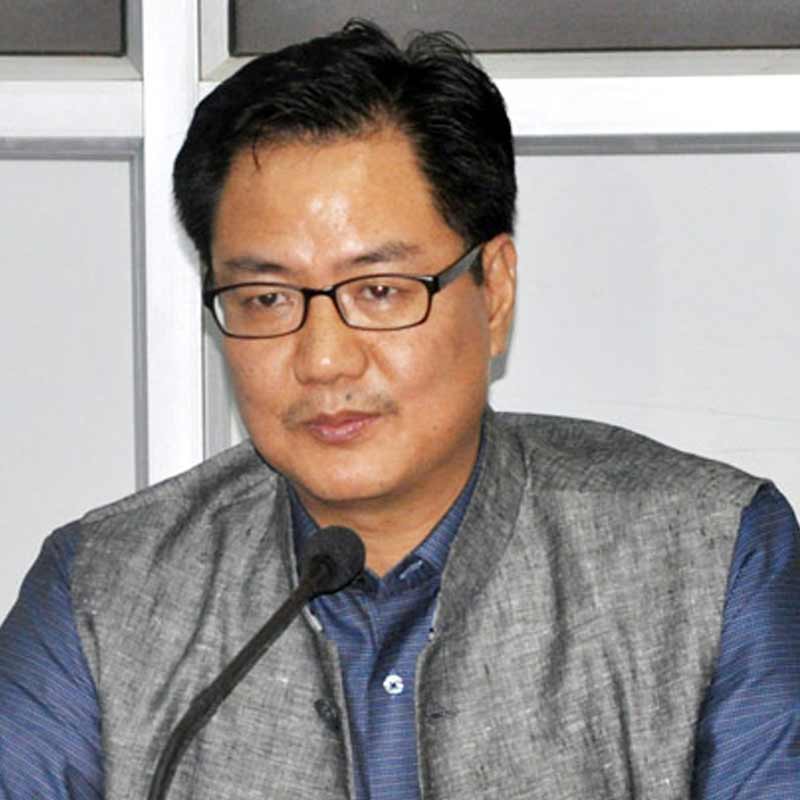
    New Delhi: The Government has denied that any orders have been issued for fixing the percentage of expenditure for ‘A’ ‘B’ and ‘C’ linguistic regions on advertising in Hindi and English.

    Minister of State for Home Kiren Rijiju said a certain percentage of total expenditure on Government advertisements to be given in Hindi and English may be decided by Central Ministries/Departments according to their requirements.

    This was in accordance with the President’s Orders on the recommendations of the Eighth part of the report of the Committee of Parliament on Official Language, he added in a reply in Parliament.

    Region “A” means the States of Bihar, Haryana, Himachal Pradesh, Madhya Pradesh, Chhattisgarh, Jharkhand, Uttarakhand,  Rajasthan and Uttar Pradesh and the Union Territories of Delhi and Andaman and Nicobar Islands; “Region A” means the States of

    “Region B” means the States of Gujarat, Maharashtra and Punjab and the Union Territory of Chandigarh, Daman and Diu and Dadra and Nagar Haveli.

    “Region C” means all other States and Union Territories