Category: Regulators

  • TDSAT: ZEEL not to disconnect signals to Star Broadband Service

    TDSAT: ZEEL not to disconnect signals to Star Broadband Service

    NEW DELHI: The Telecom Disputes Settlement and Appellate Tribunal has directed Zee Entertainment Enterprise Ltd not to give effect to the disconnection notice sent to Star Broadband Services (I) Pvt. Ltd and continue to supply its TV signals in terms of the earlier arrangements subsisting before the issuance of the notice.

    Listing the matter for 9 August, Chairman Justice Aftab Alam and member B B Srivastava felt the validity of the RIO and whether or not it is fully in compliance with the directions of the Tribunal, requires serious consideration.

    It said the expression “earlier subsisting arrangement” would include not only the previous interconnect agreement in writing between the two sides (though it might have expired before the publication of the RIO) but also any carriage agreement / placement agreement / discount agreement etc., in case the latter was co-terminus with the interconnect agreement.

    In the next hearing, the Tribunal may hear the parties and make ‘a proper and equitable interim arrangement till a final decision is rendered on this petition’. However, the Tribunal said “It is made clear in case of any default in payment in terms of the subsisting arrangement, it will be open to the broadcaster to proceed in accordance with law.”

    A reply has been filed on behalf of Zeel. Rejoinder, if any, may be filed within two weeks, the Tribunal said.

    Zeel counsel Tejveer Singh Bhatia had with him in a sealed cover the list of MSOs with whom his client entered into interconnect agreements during the period between the Tribunal’s decision of 7 December ( Noida Software Technology Park Ltd. Vs. M/s ZE Zeel. & Others) and the publication of its RIO on 11 May this year.

    Zeel counsel Meet Malhotra, learned senior counsel appearing for Zee Entertainment submitted that the RIO had been framed and issued directly in pursuance of the Tribunal’s decision and it was being offered on a uniform basis and therefore, there is no reason for the petitioner or for anyone else, not to accept it.

  • Delhi HC notice to Govt on petition seeking cancellation of Ad cap violating pay channels licenses

    Delhi HC notice to Govt on petition seeking cancellation of Ad cap violating pay channels licenses

    NEW DELHI: Even as the Ad cap case is pending before it, the Delhi High Court has issued notice to the Information and Broadcasting Ministry on a fresh petition which has charged the ministry with dereliction of its duties to take action against offending Pay TV broadcasters for violating the terms and conditions of the licenses/permission for uplinking and downlinking permission/license.

    Chief Justice G Rohini and Justice Jayant Nath asked the ministry to file its reply in four weeks.

    Notice was issued only to the ministry, although the petition also listed 21st Century Fox Inc., Star India Private Limited, Discovery Communications Inc., and Discovery Networks Asia-Pacific (South Asia) as respondents.

    Although the petition initially came up before a single bench on 19 May, it was directed to be posted before the court of the Chief Justice who is already hearing the other acap case filed by the News Broadcasters Association and others, and was heard on 27 May.

    The petitioners Vikki Choudhry and Home Cable Network Pvt Ltd. have urged the court to issue directions for cancellation of the licences of Star India and Discovery Networks Asia Pacific as they are alleged to be in violation of the license conditions agreed by them under clause 5.2 of the uplinking guidelines and clause 5.1 of the downlinking guidelines, apart from the undertaking in the form of affidavit for the Up-linking and Down-linking Guidelines, and also in violation of the provisions of section 8 of the Indian Telegraph Act 1885. It is alleged that these two have deliberately violated the Cable Television Networks (Regulation) Act 1995 and rules thereunder.

    The Court has also been urged to issue writ, order or direction to the two groups to deposit the revenue earned from the advertisement during the last three financial years (FY 2015-16, 2014-15, 2013-14) with the Consumer Welfare Fund of the Central Government constituted under the Excise Act, 1944

    Directions have also been sought for the Electronic Media Monitoring Centre of the I & B Ministry to monitor all the Pay TV channels broadcast in India and report the violations of the prescribed Advertising Code under the rule 7 (10) and 7(11) of the CTN Rules, 1994 and the CTNR Act, 1995 on monthly/weekly basis.

    The petition has alleged that the Pay TV broadcasters are in continuous violation of the terms of license under the uplinking and downlinking guidelines, and have in their weekly report admitted the same. It said “all the respondent channels are being parties as matter of illustration and ease of pleadings because the rule of minutage of advertisement 12 minutes per clock hour is in existence in several countries and these channels are strictly complying with such directives in other countries whereas they are in continued violations in India”.

    It was pointed out that Star India is a 100 percent subsidiary of 21st Century Fox Inc. and Discovery Networks Asia Pacific is 100 percent subsidiary of Discovery Communications Inc.
    It said the pay TV broadcasters are indulging into profiteering at the expense of poor ordinary consumers in blatant violation of important tariff structure contained in the Uplinking and Downlinking Guidelines and permissions granted by the Ministry.

    The petitioner said it had given detailed representations to the ministry several times without getting any reply. The petitioner had written to the Telecom Regulatory Authority of India in this connection but received a reply that the matter pertained to the ministry.

    It has been pointed out that the Indian Broadcasting Foundation had withdrawn its petitions before the Telecom Disputes Settlement and Appellate Tribunal against the Standards of Quality of Service (duration of advertisements in television channels) Regulations 2012 and assured the Tribunal that its members would comply with the law.

  • Delhi HC notice to Govt on petition seeking cancellation of Ad cap violating pay channels licenses

    Delhi HC notice to Govt on petition seeking cancellation of Ad cap violating pay channels licenses

    NEW DELHI: Even as the Ad cap case is pending before it, the Delhi High Court has issued notice to the Information and Broadcasting Ministry on a fresh petition which has charged the ministry with dereliction of its duties to take action against offending Pay TV broadcasters for violating the terms and conditions of the licenses/permission for uplinking and downlinking permission/license.

    Chief Justice G Rohini and Justice Jayant Nath asked the ministry to file its reply in four weeks.

    Notice was issued only to the ministry, although the petition also listed 21st Century Fox Inc., Star India Private Limited, Discovery Communications Inc., and Discovery Networks Asia-Pacific (South Asia) as respondents.

    Although the petition initially came up before a single bench on 19 May, it was directed to be posted before the court of the Chief Justice who is already hearing the other acap case filed by the News Broadcasters Association and others, and was heard on 27 May.

    The petitioners Vikki Choudhry and Home Cable Network Pvt Ltd. have urged the court to issue directions for cancellation of the licences of Star India and Discovery Networks Asia Pacific as they are alleged to be in violation of the license conditions agreed by them under clause 5.2 of the uplinking guidelines and clause 5.1 of the downlinking guidelines, apart from the undertaking in the form of affidavit for the Up-linking and Down-linking Guidelines, and also in violation of the provisions of section 8 of the Indian Telegraph Act 1885. It is alleged that these two have deliberately violated the Cable Television Networks (Regulation) Act 1995 and rules thereunder.

    The Court has also been urged to issue writ, order or direction to the two groups to deposit the revenue earned from the advertisement during the last three financial years (FY 2015-16, 2014-15, 2013-14) with the Consumer Welfare Fund of the Central Government constituted under the Excise Act, 1944

    Directions have also been sought for the Electronic Media Monitoring Centre of the I & B Ministry to monitor all the Pay TV channels broadcast in India and report the violations of the prescribed Advertising Code under the rule 7 (10) and 7(11) of the CTN Rules, 1994 and the CTNR Act, 1995 on monthly/weekly basis.

    The petition has alleged that the Pay TV broadcasters are in continuous violation of the terms of license under the uplinking and downlinking guidelines, and have in their weekly report admitted the same. It said “all the respondent channels are being parties as matter of illustration and ease of pleadings because the rule of minutage of advertisement 12 minutes per clock hour is in existence in several countries and these channels are strictly complying with such directives in other countries whereas they are in continued violations in India”.

    It was pointed out that Star India is a 100 percent subsidiary of 21st Century Fox Inc. and Discovery Networks Asia Pacific is 100 percent subsidiary of Discovery Communications Inc.
    It said the pay TV broadcasters are indulging into profiteering at the expense of poor ordinary consumers in blatant violation of important tariff structure contained in the Uplinking and Downlinking Guidelines and permissions granted by the Ministry.

    The petitioner said it had given detailed representations to the ministry several times without getting any reply. The petitioner had written to the Telecom Regulatory Authority of India in this connection but received a reply that the matter pertained to the ministry.

    It has been pointed out that the Indian Broadcasting Foundation had withdrawn its petitions before the Telecom Disputes Settlement and Appellate Tribunal against the Standards of Quality of Service (duration of advertisements in television channels) Regulations 2012 and assured the Tribunal that its members would comply with the law.

  • DND Mobile App developed by TRAI to complain about unsolicited commercial calls

    DND Mobile App developed by TRAI to complain about unsolicited commercial calls

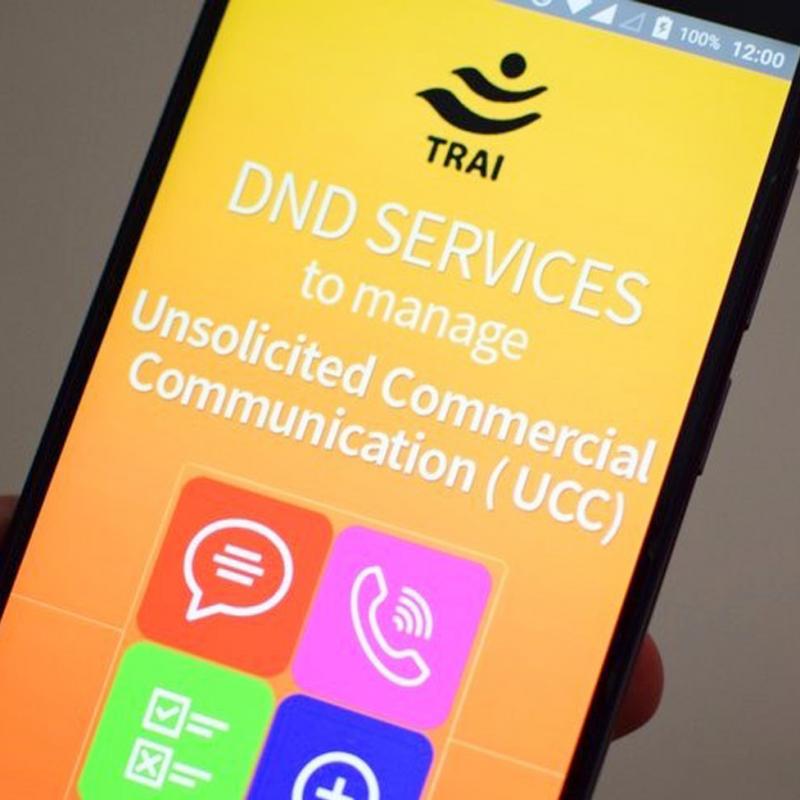
    New Delhi: A DND Mobile App has been developed by the Telecom Regulatory Authority of India for easy registration of complaints against Unsolicited Commercial Communications to the service providers and for the consumers to check the status of the complaint.

    TRAI had in December 2010 issued the Telecom Commercial Communications Customer Preference Regulations (TCCCPR) 2010 to provide an effective mechanism for curbing Unsolicited Commercial Communications. These regulations came into force with effect from 27 September 2011.

    The National Do Not Call Registry (NDNC) has been renamed National Customer Preference Register (NCPR). The Telemarketers after registration from TRAI get permission to access the National Customer Preference Register (NCPR).

    The regulations have been framed keeping in view the interest of the customers and telemarketers while ensuring effective implementation and therefore provided for a Do Not Disturb registry for consumers to register on to avoid marketing calls.

    Being complaint based regulations, there was need to put in place a complaint mechanism which is easy to use by the consumer.

    The app is available in the Google App store and Mobile Seva App store. The links for the apps are:

    https://play.google.com/store/apps/details?id=com.trai.dnd&hl=en

    https://apps.mgov.gov.in/descp.do?appid=1087

  • DND Mobile App developed by TRAI to complain about unsolicited commercial calls

    DND Mobile App developed by TRAI to complain about unsolicited commercial calls

    New Delhi: A DND Mobile App has been developed by the Telecom Regulatory Authority of India for easy registration of complaints against Unsolicited Commercial Communications to the service providers and for the consumers to check the status of the complaint.

    TRAI had in December 2010 issued the Telecom Commercial Communications Customer Preference Regulations (TCCCPR) 2010 to provide an effective mechanism for curbing Unsolicited Commercial Communications. These regulations came into force with effect from 27 September 2011.

    The National Do Not Call Registry (NDNC) has been renamed National Customer Preference Register (NCPR). The Telemarketers after registration from TRAI get permission to access the National Customer Preference Register (NCPR).

    The regulations have been framed keeping in view the interest of the customers and telemarketers while ensuring effective implementation and therefore provided for a Do Not Disturb registry for consumers to register on to avoid marketing calls.

    Being complaint based regulations, there was need to put in place a complaint mechanism which is easy to use by the consumer.

    The app is available in the Google App store and Mobile Seva App store. The links for the apps are:

    https://play.google.com/store/apps/details?id=com.trai.dnd&hl=en

    https://apps.mgov.gov.in/descp.do?appid=1087

  • TRAI studies Net Neutrality to ensure National Security and Customer Privacy

    TRAI studies Net Neutrality to ensure National Security and Customer Privacy

    NEW DELHI: With mounting pressure from different quarters for and against net neutrality with some wanting greater freedom and others opposing this, the Telecom Regulatory Authority wants to know what India’s policy should be and/or regulatory approach in dealing with issues relating to net neutrality

    The regulator has also asked what should be regarded as the core principles of net neutrality in the Indian context and what key issues are required to be considered so that the principles of net neutrality are ensured.

    These queries have been asked in a pre-Consultation Paper on Net Neutrality and stakeholders have been asked to respond by 21 June.

    The regulator has also asked what the reasonable traffic management practices that may need to be followed by telecom service providers should be while providing Internet access services and whether there any other current or potential practices in India that may give rise to concerns about net neutrality or its misuse.

    Stakeholders have been asked about the precautions with respect to the activities of TSPs and content providers to ensure that national security interests are preserved, and customer privacy is maintained.

    TRAI also wants to know what further issues should be considered for a comprehensive policy framework for defining the relationship between TSPs and Over-The-Top content providers.

    The regulator says it had issued a paper on 27 March last year and after much discussion among stakeholders and the government, the Department of Telecom had asked TRAI certain questions leading to the present paper.

    At the outset, TRAI says that during the last decade, the telecom industry in India has grown tremendously, both in terms of penetration as well as connectivity. Today,
    India is one of the fastest growing information and communication technologies markets in the world, fuelled largely by the cellular mobile revolution. Starting from a few million connections in 1997, there are more than a billion connections, with 97.5 percent of them being wireless subscribers. With this, the overall teledensity in India at the end of 2015 stood at 81.83 percent.

    India has also witnessed tremendous growth in terms of the total number of Internet users. At the end of December 2015, there were over 331 million  (33.1 crore) Internet subscribers in the country, of which about 94 percent (over 311 million or 31.1 crore) were wireless Internet users.

    The current nature of telecommunications and internet access services in India is therefore largely wireless. The number of broadband users has also been increasing steadily over the years. At present, India has approximately 136.5 million (13.65 crore) broadband subscribers, a figure that is expected to rise significantly in the coming years, particularly in light of the Government’s ‘Digital India’ initiative.

    This initiative emphasizes the electronic delivery of services to all citizens as an urgent national priority, with ‘Broadband for All’ as one of its fundamental pillars. Providing broadband to all will require a significant expansion of service providers’ networks, with substantial investments in infrastructure development

    Referring to Net Neutrality, TRAI says the term generally refers to the principle that TSPs must treat all Internet traffic on an equal basis, without regard to the type, origin, or destination of the content or the means of its transmission. It therefore implies that all points in a network should be able to seamlessly connect to all other points, without any discrimination by the TSP on aspects of speed, access or price. Adherence to this principle of net neutrality is arguably necessary for maintaining the open and non-discriminatory character of the Internet, features that are responsible for the phenomenal growth of the Internet in the past decades.

    The proliferation of a vast variety of applications, websites, and other forms of content on the Internet, has enhanced user choice and paved the way for greater innovation and competition. The diverse range of services available on the Internet has varying characteristics, uses and bandwidth requirements. Increasing Internet usage, particularly of services that consume high bandwidth, may require TSPs to adopt certain reasonable measures to protect the integrity of the network and provide appropriate quality of services to their users, while working within the ‘best efforts’ design of the Internet.

    The regulator therefore says this merits a deeper enquiry into the various issues relevant to the subject of net neutrality, including determining the reasonableness of traffic management tools that may be adopted by TSPs; understanding the importance of unrestricted access to the Internet; transparency and informed choice by users; customer privacy and national security. 
  • TRAI studies Net Neutrality to ensure National Security and Customer Privacy

    TRAI studies Net Neutrality to ensure National Security and Customer Privacy

    NEW DELHI: With mounting pressure from different quarters for and against net neutrality with some wanting greater freedom and others opposing this, the Telecom Regulatory Authority wants to know what India’s policy should be and/or regulatory approach in dealing with issues relating to net neutrality

    The regulator has also asked what should be regarded as the core principles of net neutrality in the Indian context and what key issues are required to be considered so that the principles of net neutrality are ensured.

    These queries have been asked in a pre-Consultation Paper on Net Neutrality and stakeholders have been asked to respond by 21 June.

    The regulator has also asked what the reasonable traffic management practices that may need to be followed by telecom service providers should be while providing Internet access services and whether there any other current or potential practices in India that may give rise to concerns about net neutrality or its misuse.

    Stakeholders have been asked about the precautions with respect to the activities of TSPs and content providers to ensure that national security interests are preserved, and customer privacy is maintained.

    TRAI also wants to know what further issues should be considered for a comprehensive policy framework for defining the relationship between TSPs and Over-The-Top content providers.

    The regulator says it had issued a paper on 27 March last year and after much discussion among stakeholders and the government, the Department of Telecom had asked TRAI certain questions leading to the present paper.

    At the outset, TRAI says that during the last decade, the telecom industry in India has grown tremendously, both in terms of penetration as well as connectivity. Today,
    India is one of the fastest growing information and communication technologies markets in the world, fuelled largely by the cellular mobile revolution. Starting from a few million connections in 1997, there are more than a billion connections, with 97.5 percent of them being wireless subscribers. With this, the overall teledensity in India at the end of 2015 stood at 81.83 percent.

    India has also witnessed tremendous growth in terms of the total number of Internet users. At the end of December 2015, there were over 331 million  (33.1 crore) Internet subscribers in the country, of which about 94 percent (over 311 million or 31.1 crore) were wireless Internet users.

    The current nature of telecommunications and internet access services in India is therefore largely wireless. The number of broadband users has also been increasing steadily over the years. At present, India has approximately 136.5 million (13.65 crore) broadband subscribers, a figure that is expected to rise significantly in the coming years, particularly in light of the Government’s ‘Digital India’ initiative.

    This initiative emphasizes the electronic delivery of services to all citizens as an urgent national priority, with ‘Broadband for All’ as one of its fundamental pillars. Providing broadband to all will require a significant expansion of service providers’ networks, with substantial investments in infrastructure development

    Referring to Net Neutrality, TRAI says the term generally refers to the principle that TSPs must treat all Internet traffic on an equal basis, without regard to the type, origin, or destination of the content or the means of its transmission. It therefore implies that all points in a network should be able to seamlessly connect to all other points, without any discrimination by the TSP on aspects of speed, access or price. Adherence to this principle of net neutrality is arguably necessary for maintaining the open and non-discriminatory character of the Internet, features that are responsible for the phenomenal growth of the Internet in the past decades.

    The proliferation of a vast variety of applications, websites, and other forms of content on the Internet, has enhanced user choice and paved the way for greater innovation and competition. The diverse range of services available on the Internet has varying characteristics, uses and bandwidth requirements. Increasing Internet usage, particularly of services that consume high bandwidth, may require TSPs to adopt certain reasonable measures to protect the integrity of the network and provide appropriate quality of services to their users, while working within the ‘best efforts’ design of the Internet.

    The regulator therefore says this merits a deeper enquiry into the various issues relevant to the subject of net neutrality, including determining the reasonableness of traffic management tools that may be adopted by TSPs; understanding the importance of unrestricted access to the Internet; transparency and informed choice by users; customer privacy and national security. 

  • Pan India Network allows removal of equipment from Prasar Bharati’s premises

    Pan India Network allows removal of equipment from Prasar Bharati’s premises

    NEW DELHI: Pan India Network Infravest Pvt. Ltd., Mumbai is willing and ready to have its equipment removed from the premises of Prasar Bharati licensed out to them under the previous licenses at different kendras.

    These kendras are Nanded, Allahabad, Jalgaon, Varanasi, Agra, Aloka, Amritsar and other kendras in Punjab.

    This was conveyed to the Telecom Disputes Settlement and Appellate Tribunal by Prasar Bharati counsel Tejveer Singh Bhatia.

    However, Bhatia made it clear that the Network had not admitted any of the allegations or statements made in the Miscellaneous Applications 152 to 159 of 2016 filed on behalf of the pubcaster.

    In view of the stand taken by the respondents, chairman justice Aftab Alam and member B B Srivastava disposed off the applications.

    However, the tribunal directed Pan India to have its equipment removed from the premises in question within 30 days.

  • Pan India Network allows removal of equipment from Prasar Bharati’s premises

    Pan India Network allows removal of equipment from Prasar Bharati’s premises

    NEW DELHI: Pan India Network Infravest Pvt. Ltd., Mumbai is willing and ready to have its equipment removed from the premises of Prasar Bharati licensed out to them under the previous licenses at different kendras.

    These kendras are Nanded, Allahabad, Jalgaon, Varanasi, Agra, Aloka, Amritsar and other kendras in Punjab.

    This was conveyed to the Telecom Disputes Settlement and Appellate Tribunal by Prasar Bharati counsel Tejveer Singh Bhatia.

    However, Bhatia made it clear that the Network had not admitted any of the allegations or statements made in the Miscellaneous Applications 152 to 159 of 2016 filed on behalf of the pubcaster.

    In view of the stand taken by the respondents, chairman justice Aftab Alam and member B B Srivastava disposed off the applications.

    However, the tribunal directed Pan India to have its equipment removed from the premises in question within 30 days.

  • Give more funds to DAVP for empowering people: Parliamentary Committee

    Give more funds to DAVP for empowering people: Parliamentary Committee

    NEW DELHI: Noting that the then Information and Broadcasting ministry secretary had admitted that the budget availability for publicity purpose was not adequate enough, a Parliamentary Committee has recommended that the budgetary allocation for the Directorate of Advertising and Visual Publicity should be enhanced.

    The Parliamentary Standing Committee for Information Technology which goes into issues relating to I and B said this will help DAVP to broadbase and increase the outreach of the multimedia campaigns being carried out by it through various means such as television, print, social media or other outreach programmes for the welfare of the society.

    Noting that a reduced allocation of Rs 125.60 crore had been made during 2016-17 at the Budget Estimate stage for the ‘People’s Empowerment through Development Communication’ (PEDC) scheme,  the Committee felt this amount was‘grossly inadequate to meet the requirement under this important scheme. As a matter of fact, the allocation was about 69 percent of the total outlay for the information sector. 

    The Committee was told that during the first year of 12th the Plan 2012-13, utilization of funds for PEDC was to the tune of Rs.103.18 crore which was increased to Rs.189 crore in the year 2013-14 and Rs.155.2 crore in the year 2014-15. For the year 2015-16, an allocation of Rs.151 crore had been made at the Revised Estimate stage out of which the actual expenditure as on 30 March 2016 had been Rs.146.34 crore.

    The Committee was given to understand that the line ministries and departments carry their ministry-specific campaign for which they have their own budgetary allocations. However, the DAVP’s budget allocation obtained through the Development Communication and Information Dissemination (DCID) programme of I&B ministry is used to run integrated campaigns on all the flagship programmes of the government.

    The Committee observed that the government had been launching several initiatives and direct benefit schemes for the welfare of the people, and information regarding these schemes have to be disseminated to the people and the target groups.

    To achieve this objective, the scheme of PEDC had an important role to play. In order to facilitate integrated campaign on various flagship programmes of the government, the DAVP needs a much larger budget with matching fund allocation which requires more allocation for the information sector.

    The DAVP is the nodal multimedia advertising agency of the government catering to the communication needs of the ministries/departments, autonomous bodies and PSUs. In order to strengthen the publicity of various peoples’ welfare and participation oriented programmes in a holistic manner, and to enable efficient discharge of its services, the DAVP had sought and obtained increased funding for two of its Plan Schemes – PEDC implemented through the DCID scheme and ‘Media Infrastructure Development Programme’.