Category: Regulators

  • TRAI open house on DAS interconnect opens up differences amongst stakeholders

    TRAI open house on DAS interconnect opens up differences amongst stakeholders

    NEW DELHI: An Open House Discussion (OHD), organised by regulator TRAI on inter-connection framework for broadcasting TV services distributed through addressable systems (DAS), brought out the fact that yawning gaps still exist between broadcasters and distribution platforms.

    The OHD, organised on Wednesday to garner final viewpoints of stakeholders after they have already submitted their stand on the issue, highlighted that the industry is still fighting for short to medium term gains instead of seeing the big picture.

    While the broadcasting fraternity stood its ground saying, by and large, that interconnect agreements are private matters between two parties after mutually agreeing on certain terms, distribution platforms maintained that “more transparency is needed.”

    “How can it be that a matter related to a broadcaster is private and nobody can ask about them, while those relating to us (distribution platforms) are supposed to be made public?” Jawahar Goel, managing director, Dish TV asked.

    Goel’s probing query came after Star India, quoting various laws and regulations, said that the regulator should not encroach upon or erode broadcasters’ “right to freedom of contract in negotiating with distribution platform operators (DPOs).”

    In its submission Star India had said, “The proposed regulations must allow freedom to negotiate to broadcasters so as to meet the peculiar demands of the market. Universal treatment to all seekers of signals— despite intelligible differences — is not an obligation imposed by law nor is it desirable.”

    Issue like discounts offered by broadcasters, pay channels turning FTA, cloning of existing content to start another TV channel, regulation of OTT platforms managed and owned by broadcasters, cost of spectrum charges paid by consumers for accessing OTT services, the vagueness of interconnect agreements without geographical locations mentioned and the pitfalls of a proposed Interconnect Management System (IMS) whereby commercial data and information could be put in an encrypted form in limited public domain were amongst many issues brought up by stakeholders.

    Pointing out broadcasters “impose stringent packaging restrictions” on DPOs, Videocon d2h, expressed its concerns on HD channels and their pricing, highlighting the fact that the difference in cost of the same content in standard definition and high-definition is hard to explain to price-sensitive consumers.

    While TRAI chairman RS Sharma in the beginning observed that transparency, non-discrimination and consumer interests were paramount, amongst other things, when the regulator proposes a regulation, some MSOs and LCOs (led by a vocal Roop Sharma of Cable Operators’ Federation of India) vociferously said it’s transparency that’s lacking.

    Dish TV also highlighted the discrimination between the licensing regime of DTH operators and cable ops — DTH licensee pays an annual fee, while a cable op doesn’t pay any licence fee on registration .

    Bharti Telemedia, part of the telecoms-to-media giant Bharti group, reiterated Dish TV’s point on DTH ops being treated differently saying a “non-level playing field amongst the various types of service providers” exists.

    In its submission to the TRAI earlier, Bharti had stated that DTH operators pay a higher tax of 34.5% and have a transparent business operation, while “digital cable operators, who have a similar nature of business, are not transparent and are also not liable to pay any licence fee.”

    Though global trends indicate there’s convergence of services and service providers, in India there seems to be hardly any convergence of ideas or consensus amongst the various stakeholders and this would make any regulator’s job that much tougher. Unless one leaves market dynamics to take care of many issues that were raised at the OHD.
  • TRAI sticks to earlier position of flat regime rather than a slab-based one for spectrum

    TRAI sticks to earlier position of flat regime rather than a slab-based one for spectrum

    NEW DELHI: The Telecom Regulatory Authority of India has reiterated its earlier “consistent position” that the Spectrum usage charge (SUC) must transition from a slab-based regime to a flat ad valorem regime.

    The ease of implementation, level playing field, encouragement to bidders to participate in the auction are key rationales for such a position being taken, the regulator has said in its response to a letter received from the Department of Telecom following TRAI’s earlier recommendations of 27 January this year.

    TRAI points out that the trading of spectrum is now happening and would gain momentum in due course. It said merger and acquisition would also take place in the sector in the near future going by recent media reports. All this would make the SUC regime more complex and would need an intricate and large system for smooth implementation, it reiterates.

    The Cellular Operators Association of India has also supported a flat rate instead of a slab-based one.

    At the same time, TRAI has suggested a separate formula for computation of the charges according to the weighted average method, as against the one considered by the Telecom Commission.

    “While the optimal solution in the view of the Authority is to move to a flat rate regime, we are constrained to limit ourselves to examine the weighted average solution as suggested by the Attorney General and proposed by DoT,” Trai said in its letter to the Department of Telecommunications (DoT).

    The Attorney-General had said “the contract which emerged after the 2010 auction and which is legally binding on both parties, does not permit the Government to change the SUC for BWA unilaterally.” As the Revenue cannot be segregated for each band, there is difficulty in finding a multiplicand for the SUC rate for that band. As an alternate solution, the Attorney General recommended that the Weighted Average of SUC rates across all spectrum bands, including BWA Spectrum obtained in the 2010 auction, should be employed on an operator-wise basis to calculate the SUC in a legally valid manner.

    Trai has recommended that the DoT should also include several alternate factors such as last market-determined price and technical efficiency of spectrum bands to arrive at the weighted average for computing the SUC. The telecom watchdog said that if the spectrum quantity in a band was the only weightage for calculating weighted average formula, it may lead to certain shortcomings.

    “Part of this shortcoming is based on the fundamental difficulty of using a proxy – any proxy, on which a weighted average computation is based, will not exactly map the revenue earned by each TSP (telecom service provider) from each band,” Trai said in its letter.

    The Telecom Commission had cleared a proposal to use weighted average formula for calculating spectrum SUC based on the total spectrum holding, for all bands allocated to telecom operators.

    DoT had requested the Authority to provide recommendation on SUC in the context of valuation and reserve price of spectrum in 700 MHz, 800 MHz, 900 MHz, 1800 MHz, 2100 MHz, 2300 MHz and 2500 MHz spectrum bands.

    In January, TRAI had recommended rates for auction of spectrum in the 700 Mhz, 800 Mhz, 900 Mhz, 1800 Mhz, 2100 Mhz, 2300 Mhz and 2500 Mhz bands.

  • TRAI sticks to earlier position of flat regime rather than a slab-based one for spectrum

    TRAI sticks to earlier position of flat regime rather than a slab-based one for spectrum

    NEW DELHI: The Telecom Regulatory Authority of India has reiterated its earlier “consistent position” that the Spectrum usage charge (SUC) must transition from a slab-based regime to a flat ad valorem regime.

    The ease of implementation, level playing field, encouragement to bidders to participate in the auction are key rationales for such a position being taken, the regulator has said in its response to a letter received from the Department of Telecom following TRAI’s earlier recommendations of 27 January this year.

    TRAI points out that the trading of spectrum is now happening and would gain momentum in due course. It said merger and acquisition would also take place in the sector in the near future going by recent media reports. All this would make the SUC regime more complex and would need an intricate and large system for smooth implementation, it reiterates.

    The Cellular Operators Association of India has also supported a flat rate instead of a slab-based one.

    At the same time, TRAI has suggested a separate formula for computation of the charges according to the weighted average method, as against the one considered by the Telecom Commission.

    “While the optimal solution in the view of the Authority is to move to a flat rate regime, we are constrained to limit ourselves to examine the weighted average solution as suggested by the Attorney General and proposed by DoT,” Trai said in its letter to the Department of Telecommunications (DoT).

    The Attorney-General had said “the contract which emerged after the 2010 auction and which is legally binding on both parties, does not permit the Government to change the SUC for BWA unilaterally.” As the Revenue cannot be segregated for each band, there is difficulty in finding a multiplicand for the SUC rate for that band. As an alternate solution, the Attorney General recommended that the Weighted Average of SUC rates across all spectrum bands, including BWA Spectrum obtained in the 2010 auction, should be employed on an operator-wise basis to calculate the SUC in a legally valid manner.

    Trai has recommended that the DoT should also include several alternate factors such as last market-determined price and technical efficiency of spectrum bands to arrive at the weighted average for computing the SUC. The telecom watchdog said that if the spectrum quantity in a band was the only weightage for calculating weighted average formula, it may lead to certain shortcomings.

    “Part of this shortcoming is based on the fundamental difficulty of using a proxy – any proxy, on which a weighted average computation is based, will not exactly map the revenue earned by each TSP (telecom service provider) from each band,” Trai said in its letter.

    The Telecom Commission had cleared a proposal to use weighted average formula for calculating spectrum SUC based on the total spectrum holding, for all bands allocated to telecom operators.

    DoT had requested the Authority to provide recommendation on SUC in the context of valuation and reserve price of spectrum in 700 MHz, 800 MHz, 900 MHz, 1800 MHz, 2100 MHz, 2300 MHz and 2500 MHz spectrum bands.

    In January, TRAI had recommended rates for auction of spectrum in the 700 Mhz, 800 Mhz, 900 Mhz, 1800 Mhz, 2100 Mhz, 2300 Mhz and 2500 Mhz bands.

  • TRAI commences exercise to explore growth of internet through Wi-fi networks

    TRAI commences exercise to explore growth of internet through Wi-fi networks

    NEW DELHI: Noting that Wi-Fi networks offer affordable, scalable and versatile technologies that can facilitate the spread of Internet access in rural and urban areas alike, the Telecom Regulatory Authority of India today issued a consultation paper on Proliferation of Broadband through Public Wi-Fi Networks.

    Through a set of twelve questions, the Authority has sought to get the opinion of stakeholders including internet and telecom service providers on how best Wi-fi (an acronym for Wireless Fidelity) can grow in the country. Comments have been invited by 10 August with counter-comments by 24 August.

    At the outset, the regulator has noted that the growth of Internet penetration in India and realisation of its full potential is closely tied to the proliferation of broadband services. “Broadband” is currently defined to mean a data connection that is able to support interactive services, including Internet access, with the capability of a minimum download speed of 512 kbps. It therefore refers to a means of delivering high-speed Internet access services.

    Broadband services can be delivered through a number of different access technologies, both wired and wireless, including Digital Subscriber Lines (DSL), optical fibre technology, cable TV networks and mobile broadband services like 2G/3G/4G. In addition to these, radio frequency signals (or spectrum) can also be used for the creation of “wireless local area networks” (WLANs), offering an effective mechanism for extending the “last-mile connectivity” of broadband connections to a wider segment of users.

    Trai says Modern technology makes it possible to integrate a server with high storage capacity with the Wi-Fi hotspot equipment. As the cost of such servers has come down significantly, along with the cost of storage, and the form factors of such devices are very small, it should be possible to cache or download content for easy browsing even when the backhaul connectivity is not available. Such an arrangement can find great application in storing children’s study materials, educational data, agricultural and health related information, as well as movies and entertainment content, for the benefit of Wi-Fi users in areas with irregular connectivity, such as rural areas.

    The regulator said that strictly speaking, Wi-Fi is a certification provided by the Wireless Broadband Alliance1 (WBA), which owns and controls the “Wi-Fi Certified” logo that can be applied to products that satisfy certain interoperability criteria.

    WBA is a non-profit organization, formed in 1999, that promotes Wi-Fi technology and certifies Wi-Fi products if they conform to certain standards of interoperability.

    The questions raised by Trai are:

    Q1. Are there any regulatory issues, licensing restrictions or other factors that are hampering the growth of public Wi-Fi services in the country?

    Q2. What regulatory/licensing or policy measures are required to encourage the deployment of commercial models for ubiquitous city-wide Wi-Fi networks as well as expansion of Wi-Fi networks in remote or rural areas?

    Q3. What measures are required to encourage interoperability between the Wi-Fi networks of different service providers, both within the country and internationally?

    Q4. What measures are required to encourage interoperability between cellular and Wi-Fi networks?

    Q5. Apart from frequency bands already recommended by TRAI to DoT, are there additional bands which need to be de-licensed in order to expedite the penetration of broadband using Wi-Fi technology?

    Q6. Are there any challenges being faced in the login/authentication procedure for access to Wi-Fi hotspots? In what ways can the process be simplified to provide frictionless access to public Wi-Fi hotspots, for domestic users as well as foreign tourists?

    Q7. Are there any challenges being faced in making payments for access to Wi-Fi hotspots? Please elaborate and suggest a payment arrangement which will offer frictionless and secured payment for the access of Wi-Fi services.

    Q8. Is there a need to adopt a hub-based model along the lines suggested by the WBA, where a central third party AAA (Authentication, Authorization and Accounting) hub will facilitate interconnection,
    authentication and payments? Who should own and control the hub? Should the hub operator be subject to any regulations to ensure service standards, data protection, etc?

    Q9. Is there a need for ISPs/ the proposed hub operator to adopt the Unified Payment Interface (UPI) or other similar payment platforms for easy subscription of Wi-Fi access? Who should own and control such payment platforms?

    Q10. Is it feasible to have an architecture wherein a common grid can be created through which any small entity can become a data service provider and able to share its available data to any consumer or user?

    Q11. What regulatory/licensing measures are required to develop such architecture? Is this a right time to allow such reselling of data to ensure affordable data tariff to public, ensure ubiquitous presence of Wi-Fi Network and allow innovation in the market?

    Q12. What measures are required to promote hosting of data of community interest at local level to reduce cost of data to the consumers?

  • TRAI commences exercise to explore growth of internet through Wi-fi networks

    TRAI commences exercise to explore growth of internet through Wi-fi networks

    NEW DELHI: Noting that Wi-Fi networks offer affordable, scalable and versatile technologies that can facilitate the spread of Internet access in rural and urban areas alike, the Telecom Regulatory Authority of India today issued a consultation paper on Proliferation of Broadband through Public Wi-Fi Networks.

    Through a set of twelve questions, the Authority has sought to get the opinion of stakeholders including internet and telecom service providers on how best Wi-fi (an acronym for Wireless Fidelity) can grow in the country. Comments have been invited by 10 August with counter-comments by 24 August.

    At the outset, the regulator has noted that the growth of Internet penetration in India and realisation of its full potential is closely tied to the proliferation of broadband services. “Broadband” is currently defined to mean a data connection that is able to support interactive services, including Internet access, with the capability of a minimum download speed of 512 kbps. It therefore refers to a means of delivering high-speed Internet access services.

    Broadband services can be delivered through a number of different access technologies, both wired and wireless, including Digital Subscriber Lines (DSL), optical fibre technology, cable TV networks and mobile broadband services like 2G/3G/4G. In addition to these, radio frequency signals (or spectrum) can also be used for the creation of “wireless local area networks” (WLANs), offering an effective mechanism for extending the “last-mile connectivity” of broadband connections to a wider segment of users.

    Trai says Modern technology makes it possible to integrate a server with high storage capacity with the Wi-Fi hotspot equipment. As the cost of such servers has come down significantly, along with the cost of storage, and the form factors of such devices are very small, it should be possible to cache or download content for easy browsing even when the backhaul connectivity is not available. Such an arrangement can find great application in storing children’s study materials, educational data, agricultural and health related information, as well as movies and entertainment content, for the benefit of Wi-Fi users in areas with irregular connectivity, such as rural areas.

    The regulator said that strictly speaking, Wi-Fi is a certification provided by the Wireless Broadband Alliance1 (WBA), which owns and controls the “Wi-Fi Certified” logo that can be applied to products that satisfy certain interoperability criteria.

    WBA is a non-profit organization, formed in 1999, that promotes Wi-Fi technology and certifies Wi-Fi products if they conform to certain standards of interoperability.

    The questions raised by Trai are:

    Q1. Are there any regulatory issues, licensing restrictions or other factors that are hampering the growth of public Wi-Fi services in the country?

    Q2. What regulatory/licensing or policy measures are required to encourage the deployment of commercial models for ubiquitous city-wide Wi-Fi networks as well as expansion of Wi-Fi networks in remote or rural areas?

    Q3. What measures are required to encourage interoperability between the Wi-Fi networks of different service providers, both within the country and internationally?

    Q4. What measures are required to encourage interoperability between cellular and Wi-Fi networks?

    Q5. Apart from frequency bands already recommended by TRAI to DoT, are there additional bands which need to be de-licensed in order to expedite the penetration of broadband using Wi-Fi technology?

    Q6. Are there any challenges being faced in the login/authentication procedure for access to Wi-Fi hotspots? In what ways can the process be simplified to provide frictionless access to public Wi-Fi hotspots, for domestic users as well as foreign tourists?

    Q7. Are there any challenges being faced in making payments for access to Wi-Fi hotspots? Please elaborate and suggest a payment arrangement which will offer frictionless and secured payment for the access of Wi-Fi services.

    Q8. Is there a need to adopt a hub-based model along the lines suggested by the WBA, where a central third party AAA (Authentication, Authorization and Accounting) hub will facilitate interconnection,
    authentication and payments? Who should own and control the hub? Should the hub operator be subject to any regulations to ensure service standards, data protection, etc?

    Q9. Is there a need for ISPs/ the proposed hub operator to adopt the Unified Payment Interface (UPI) or other similar payment platforms for easy subscription of Wi-Fi access? Who should own and control such payment platforms?

    Q10. Is it feasible to have an architecture wherein a common grid can be created through which any small entity can become a data service provider and able to share its available data to any consumer or user?

    Q11. What regulatory/licensing measures are required to develop such architecture? Is this a right time to allow such reselling of data to ensure affordable data tariff to public, ensure ubiquitous presence of Wi-Fi Network and allow innovation in the market?

    Q12. What measures are required to promote hosting of data of community interest at local level to reduce cost of data to the consumers?

  • TDSAT issues arrest warrant against MSO defaulter for non-clearance pf dues and non-appearance

    TDSAT issues arrest warrant against MSO defaulter for non-clearance pf dues and non-appearance

    NEW DELHI: In a rare case, the Telecom Disputes Settlement and Appellate Tribunal has issued bailable warrant of arrest for ACMEDigicom Pvt. Ltd. MD Raj Kumar Mishra in a petition by decree holder SITI Cable Network Limited [Successorin interest of Wire & Wireless {India) Ltd] for for failing to make payments as directed by the Tribunal.

    Siti Cable Counsel Tejveer Bhatia told member B B Srivastava that pursuant to the order dated 19 April 2016,one cheque for Rs two lakhs was encashed. However, the two cheques dated 30 May 2016 and 30 May 2016 forRs.4 lakhs each have not been honourned by the bank.

    He submitted before the Tribunal on 11 July 2016 that the outstanding is still to the tune of Rs 40 lakhs.

    There was no appearance on behalf of the judgment debtor. Besides, the Tribunal noted that “his conduct all alonghas been in the form of resiling from the commitment made.

    In view of that, the Tribunal issued the arrest warrant in order to secure his presence before the Tribunal on the nextdate fixed in the case – 22 August 2016.

  • TDSAT issues arrest warrant against MSO defaulter for non-clearance pf dues and non-appearance

    TDSAT issues arrest warrant against MSO defaulter for non-clearance pf dues and non-appearance

    NEW DELHI: In a rare case, the Telecom Disputes Settlement and Appellate Tribunal has issued bailable warrant of arrest for ACMEDigicom Pvt. Ltd. MD Raj Kumar Mishra in a petition by decree holder SITI Cable Network Limited [Successorin interest of Wire & Wireless {India) Ltd] for for failing to make payments as directed by the Tribunal.

    Siti Cable Counsel Tejveer Bhatia told member B B Srivastava that pursuant to the order dated 19 April 2016,one cheque for Rs two lakhs was encashed. However, the two cheques dated 30 May 2016 and 30 May 2016 forRs.4 lakhs each have not been honourned by the bank.

    He submitted before the Tribunal on 11 July 2016 that the outstanding is still to the tune of Rs 40 lakhs.

    There was no appearance on behalf of the judgment debtor. Besides, the Tribunal noted that “his conduct all alonghas been in the form of resiling from the commitment made.

    In view of that, the Tribunal issued the arrest warrant in order to secure his presence before the Tribunal on the nextdate fixed in the case – 22 August 2016.

  • Mauli Cable and Hathway resolve dispute, TDSAT disposes matter

    Mauli Cable and Hathway resolve dispute, TDSAT disposes matter

    NEW DELHI: The Telecom Disputes Settlement and Appellate Tribunal has disposed of a petition by Mauli Cable Network after it informed the Tribunal that an interconnect agreement had been signed with Hathway Cable and Datacom.

    Mauli Cable counsel Tushar Singh informed the Tribunal on 8 July 2016 that a part of the sum had also been cleared and the balance would be cleared as directed by the Tribunal on 24 June 2016. Counsel Nasir Hussain of Hathway also agreed with the statement.

    The Tribunal had directed Mauli to pay upfront a sum of Rs 15 lakh to when signig a fresh interconnect agreement on 28 June at the office of the latter.

    The vacation bench of Member B B Srivastava in its order had noted that Mauli had not denied the amount of Rs 33,27,944 but that the invoice had been raised only on 6 June 2016.

    The Tribunal had directed that the balance would be paid within four weeks of its order.

    Hathway told the Tribunal that it was providing the signals to Mauli for transmission, thereby answering the question raised by Mauli which had said it was not clear who the agreement was to be signed with.

  • Mauli Cable and Hathway resolve dispute, TDSAT disposes matter

    Mauli Cable and Hathway resolve dispute, TDSAT disposes matter

    NEW DELHI: The Telecom Disputes Settlement and Appellate Tribunal has disposed of a petition by Mauli Cable Network after it informed the Tribunal that an interconnect agreement had been signed with Hathway Cable and Datacom.

    Mauli Cable counsel Tushar Singh informed the Tribunal on 8 July 2016 that a part of the sum had also been cleared and the balance would be cleared as directed by the Tribunal on 24 June 2016. Counsel Nasir Hussain of Hathway also agreed with the statement.

    The Tribunal had directed Mauli to pay upfront a sum of Rs 15 lakh to when signig a fresh interconnect agreement on 28 June at the office of the latter.

    The vacation bench of Member B B Srivastava in its order had noted that Mauli had not denied the amount of Rs 33,27,944 but that the invoice had been raised only on 6 June 2016.

    The Tribunal had directed that the balance would be paid within four weeks of its order.

    Hathway told the Tribunal that it was providing the signals to Mauli for transmission, thereby answering the question raised by Mauli which had said it was not clear who the agreement was to be signed with.

  • Of cable TV operators, news channels and MIB minister Venkaiah Naidu

    Of cable TV operators, news channels and MIB minister Venkaiah Naidu

    MUMBAI: Indian cable TV operators and MSOs had better watch out. The information and broadcasting ministry is looking at strict enforcement of its earlier notification which mandates the carriage of 20 DD and Lok Sabha and Rajya Sabha TV channels to all their subscribers in cities where digitisation has been implemented. Some channels of the pubcaster and the two parliament channels have to be carried mandatorily on non-digitsed cable TV networks also.

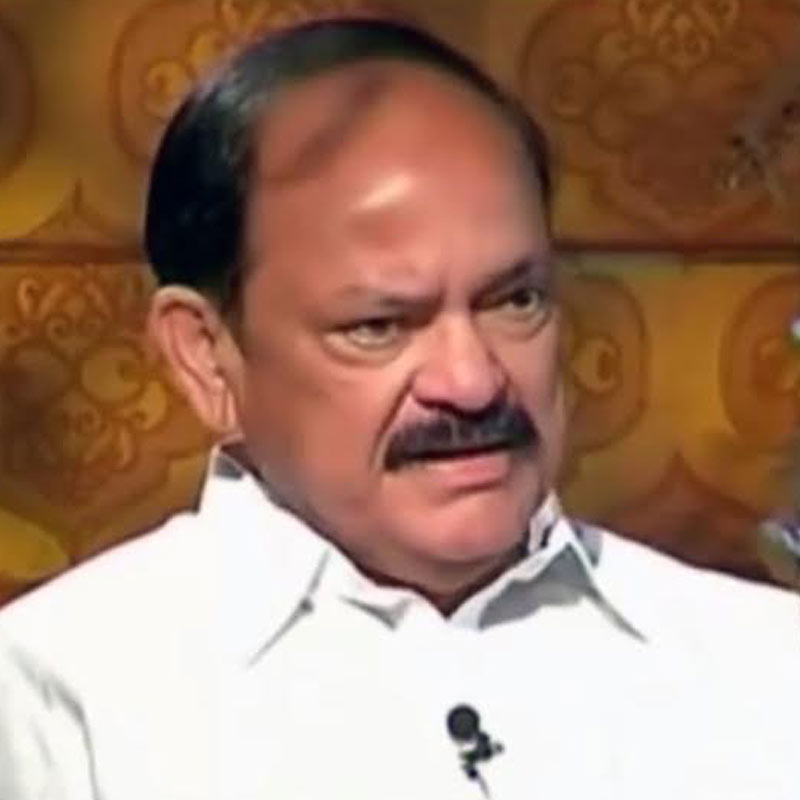
    This is one of the first commands that has been fired by the new information & broadcasting minister M. Venkaiah Naidu, following a meeting with bureaucrats in Shastri Bhawan in New Delhi over the weekend. Apparently, the issue of DD channel carriage came up in the meeting and Naidu told the officials to crack the whip.

    The ministry and the pubcaster have in the past too attempted to have the MSOs and cable TV operators follow the mandate, but many have not complied

    In his meeting on Friday, according to a PTI report, Naidu also directed I&B ministry officials to prepare a comprehensive policy on information and communication at the earliest. The policy will specify roles and responsibilities of various stakeholders to maximise the communication outreach to the people.

    On Sunday, Naidu expressed unhappiness over the fact that sensationalism has been getting precedence on news outlets over news about the country’s developmental initiatives.

    He has also asked the media to be constructive and added that he would be engaging and interacting with media, media owners and editors over the next few days. “The agenda of the country should be development,” he stated in a PTI report.