Category: Regulators

  • TRAI gives more time on responses to Paper on internet telephony which can affect mobile TV, IPTV

    TRAI gives more time on responses to Paper on internet telephony which can affect mobile TV, IPTV

    NEW DELHI: The Telecom Regulatory Authority of India today decided to give more time to stakeholders to respond to its consultation paper on internet telephony (VoIP).

    The paper had noted that unified IP based backbone and the benefits associated with the converged telecom access scenario has enabled service providers to launch more and more converged services such as Internet Telephony, IPTV, Mobile TV etc.

    TRAI has now asked stakeholders to respond by 22 August 2016 (which is exactly two months after the paper was issued on 22 June 2016) and give countercomments by 5 September 2016.

    The paper has sought to know the format of voice over internet telephony (VoIP) in India.

    The authority has pointed out that use of Internet Protocol (IP)-based networks, including the Internet, continues to grow around the world due to the multitude of applications it supports and particularly due to Voice Over IP (VoIP). IP-based networks are capable of providing real-time services such as voice and video telephony as well as non real-time services such as email and are driven by faster Internet connections, widespread take-up in broadband and the emergence of new technologies.

    The terms “IP Telephony”, “VoIP”, Internet Telephony and other variants often generates confusion as there are many different definitions used by various organizations. Some use them interchangeably while others give them distinct definitions. Further confusion is caused by using the terms to refer to both the IP-based technologies and the services that are enabled by these technologies.

    Convergence is primarily driven by increasing processing power, high capacity memory storage devices, reduced price, lesser power requirement and miniaturization of the devices. High-speed data transfer is now possible which is necessary for delivering innovative and advanced multimedia applications.

    Recent trends indicate that Telecom operators are adopting converged platforms to deliver multimedia rich applications containing voice, video and data.

    The separation of service provisioning and its management from the underlying network infrastructure in packet based networks is further increasing the acceptability of IP based Networks. It is now possible to separate provision of service contents, configuration and modification of service attributes regardless of the network catering such service. There has been enough evidence to suggest that in future IP networks will play much important role and may ultimately encourage migration of conventional networks towards Next Generation Networks or an All IP Network.

    The regulator wants to know what should the additional entry fee, Performance Bank Guarantee (PBG) and Financial Bank Guarantee (FBG) for Internet Service providers be if they are also allowed to provide unrestricted Internet Telephony.

    It says the point of Interconnection for Circuit switched Network for various types of calls is well defined, and should the same be continued for Internet Telephony calls or there is need to change Point of Interconnection for Internet Telephony calls.

    Trai has asked whether accessing of telecom services of the TSP by the subscriber through public Internet (internet access of any other TSP) can be construed as extension of fixed line or mobile services of the TSP.

    It wants to know whether the present ceiling of transit charge needs to be reviewed or it can be continued at the same level.

    The regulation has asked what the termination charge should be when call is terminating into Internet telephony network and whether an Internet telephony subscriber be able to initiate or receive calls from outside the SDCA, or service area, or the country through the public Internet thus providing limited or full mobility to such subscriber.

    Should the last mile for an Internet telephony subscriber be the public Internet irrespective of where the subscriber is currently located as long as the PSTN leg abides by all the interconnection rules and regulations concerning NLDO and ILDO, asks Trai.

    It wants to understand the framework if Number portability is allowed for Internet Telephony numbers.

    In case it is not possible to provide Emergency services through Internet Telephony, will it be enough to inform limitation of Internet Telephony calls in advance to the consumers, asks Trai.
    Since the 1960’s when digital voice communication first emerged, the Public Switched Telephone Network (PSTN) has been supported worldwide as the primary means of voice communication. The PSTN is a connection-oriented, circuit-switched network in which a dedicated channel (or circuit) is established for the duration of a communication. Originally transmitting only analog signals, the PSTN ultimately switched to digital communication, which offered solutions to the attenuation, noise and interference problems inherent in the analog system. The modern PSTN uses Pulse Code Modulation (PCM) to convert all analog signals into digital transmissions at the originating network and reverses the processes in the receiving network.
  • TDSAT asks MSO to reconnect Sun channels for Bhopal, Indore, and Jabalpur

    TDSAT asks MSO to reconnect Sun channels for Bhopal, Indore, and Jabalpur

    NEW DELHI: Sity Cable Network Ltd has been directed by the Telecom Disputes Settlement and Appellate Tribunal to reconnect the signals of Sun Distribution Service Pvt. Ltd to Bhopal, Indore and Jabalpur.

    This follows the assurance by Sity Cable counsel Tejveer Singh Bhatia that the amount of Rs2,12,672 will also be paid.

    The three cities will get the signals from the NOIDA headend of the MSO. Jaipur is already getting the signals from the Delhi headend.

    Listing the matter for 26 July 2016, member B B Srivastava also said in his order of 15 July that the two sides will meet before the next date the status of the connection to Nagpur.

  • TDSAT asks MSO to reconnect Sun channels for Bhopal, Indore, and Jabalpur

    TDSAT asks MSO to reconnect Sun channels for Bhopal, Indore, and Jabalpur

    NEW DELHI: Sity Cable Network Ltd has been directed by the Telecom Disputes Settlement and Appellate Tribunal to reconnect the signals of Sun Distribution Service Pvt. Ltd to Bhopal, Indore and Jabalpur.

    This follows the assurance by Sity Cable counsel Tejveer Singh Bhatia that the amount of Rs2,12,672 will also be paid.

    The three cities will get the signals from the NOIDA headend of the MSO. Jaipur is already getting the signals from the Delhi headend.

    Listing the matter for 26 July 2016, member B B Srivastava also said in his order of 15 July that the two sides will meet before the next date the status of the connection to Nagpur.

  • Digital & print media ad policy aimed at transparency, accountability: Naidu

    Digital & print media ad policy aimed at transparency, accountability: Naidu

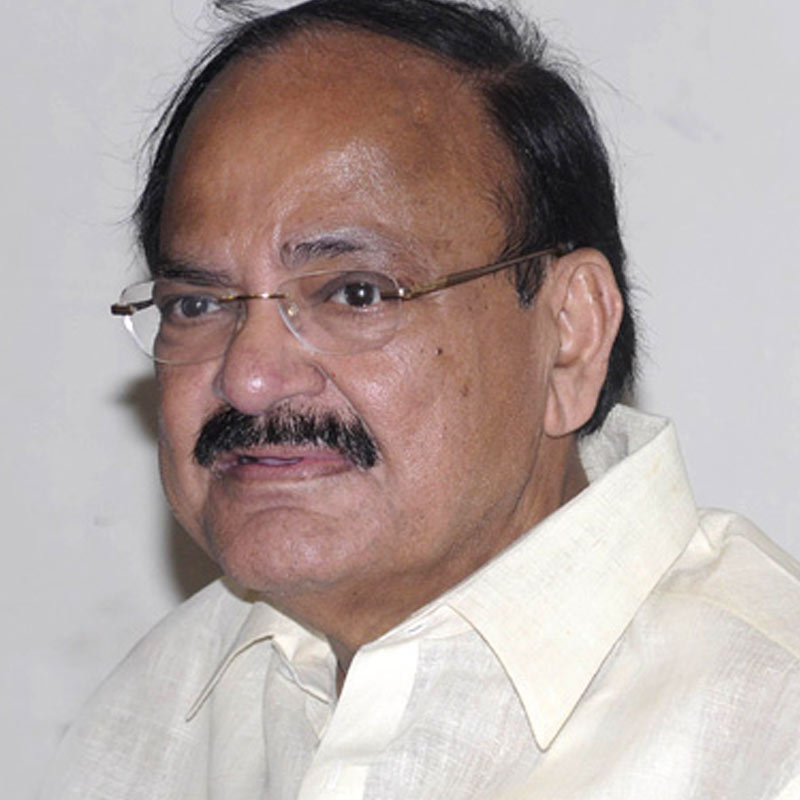
    NEW DELHI: Information and Broadcasting Minister M Venkaiah Naidu today said a Digital Media & New Print Media Advertisement policy was framed recently to promote transparency and accountability in issuing of advertisements.

    Addressing the first consultative meeting of members of Parliament attached to his Ministry since he took charge, he apprised the members about the three-member committee constituted by the Ministry to address the issues related to Content Regulation in Government Advertising. (The Committee had been formed after orders by the Supreme Court in a case relating to government advertisements.)

    All India Radio had completed the FMization of all channels of Vividh Bharati all over the country.

    Noting that the focus of the Ministry had been to streamline processes and promote transparency and accountability in its functioning, he said the e-auction of the first batch of has successfully & transparently completed e-auction of first batch of private FM radio channels Phase-III comprising 135 channels in 69 existing cities of Phase-II. He added that Private FM Radio has been permitted to broadcast at no cost AIR News for listeners to get credible information apart from entertainment.

    He said the Ministry had played a critical role in the communication and outreach activities for the Government Flagship schemes and Initiatives such as Swachh Bharat Abhiyan, Make in India, Beti Bachao Beti Padhao, etc. through 360 degree Multimedia campaigns. Minister of State Rajyavardhan Singh Rathore was also present in the meeting.

    Naidu said that in order to harness the India’s soft power in film sector, the Ministry is in the process of setting up of National Centre of Excellence for Animation, Gaming and VFX (NCOE) in Maharashtra. The institute would be a world class institution to provide skilled manpower in this emerging area.

    A Film Facilitation Office to promote and facilitate film shootings by foreign film makers in India. The Ministry has also included “Most Film Friendly State” as a special category award in National Film Awards this year. The Shyam Benegal Committee report for holistic interpretation of the provisions of the Cinematograph Act/ Rules was under consideration of the Ministry.
    Referring to the Publications Division which was the subject of the meeting, Naidu said the Division may approach stakeholders as part of corporate social responsibility to sponsor books for schools and libraries across the country. This would enhance the visibility of the rich collection of Divisions publications and at the same time making these books available to the younger generation in far off and remote villages.

    He said the Ministry would consider the possibility of publishing Employment News in regional languages also. He added that the Division would consider bringing out books regarding the contribution of large number of heroes of India’s struggle struggle from different regions who have not been given the recognition that they so rightly deserved.
    Members of the committee said efforts needed to be taken to enhance the visibility of the rich and diverse collection of books. This could be initiated through appropriate promotional and marketing strategies. Efforts needed to be taken to reach out the younger generation and publish books of their interest. Contemporary publication trends also needed to be a part of the vision and way forward strategy.

    A presentation was made by Joint Secretary Mihir Kumar Singh on behalf of the Ministry giving an overview of the steps and initiatives undertaken so far by the Division as well as the future roadmap for the Publications Division. Members of the committee were specially apprised of the digitization and e-initiatives of the Publications Division including the e-version of 100 volumes of Collected Works of Mahatma Gandhi.

    Parliamentarians Ms V. Sathyabama, Madhusudan Mistry and Vivek Gupta, Dr Sanjay Jaiswal, Ms Dev (Moon Moon Sen) Varma, and Harivansh attended the meeting.

  • Digital & print media ad policy aimed at transparency, accountability: Naidu

    Digital & print media ad policy aimed at transparency, accountability: Naidu

    NEW DELHI: Information and Broadcasting Minister M Venkaiah Naidu today said a Digital Media & New Print Media Advertisement policy was framed recently to promote transparency and accountability in issuing of advertisements.

    Addressing the first consultative meeting of members of Parliament attached to his Ministry since he took charge, he apprised the members about the three-member committee constituted by the Ministry to address the issues related to Content Regulation in Government Advertising. (The Committee had been formed after orders by the Supreme Court in a case relating to government advertisements.)

    All India Radio had completed the FMization of all channels of Vividh Bharati all over the country.

    Noting that the focus of the Ministry had been to streamline processes and promote transparency and accountability in its functioning, he said the e-auction of the first batch of has successfully & transparently completed e-auction of first batch of private FM radio channels Phase-III comprising 135 channels in 69 existing cities of Phase-II. He added that Private FM Radio has been permitted to broadcast at no cost AIR News for listeners to get credible information apart from entertainment.

    He said the Ministry had played a critical role in the communication and outreach activities for the Government Flagship schemes and Initiatives such as Swachh Bharat Abhiyan, Make in India, Beti Bachao Beti Padhao, etc. through 360 degree Multimedia campaigns. Minister of State Rajyavardhan Singh Rathore was also present in the meeting.

    Naidu said that in order to harness the India’s soft power in film sector, the Ministry is in the process of setting up of National Centre of Excellence for Animation, Gaming and VFX (NCOE) in Maharashtra. The institute would be a world class institution to provide skilled manpower in this emerging area.

    A Film Facilitation Office to promote and facilitate film shootings by foreign film makers in India. The Ministry has also included “Most Film Friendly State” as a special category award in National Film Awards this year. The Shyam Benegal Committee report for holistic interpretation of the provisions of the Cinematograph Act/ Rules was under consideration of the Ministry.
    Referring to the Publications Division which was the subject of the meeting, Naidu said the Division may approach stakeholders as part of corporate social responsibility to sponsor books for schools and libraries across the country. This would enhance the visibility of the rich collection of Divisions publications and at the same time making these books available to the younger generation in far off and remote villages.

    He said the Ministry would consider the possibility of publishing Employment News in regional languages also. He added that the Division would consider bringing out books regarding the contribution of large number of heroes of India’s struggle struggle from different regions who have not been given the recognition that they so rightly deserved.
    Members of the committee said efforts needed to be taken to enhance the visibility of the rich and diverse collection of books. This could be initiated through appropriate promotional and marketing strategies. Efforts needed to be taken to reach out the younger generation and publish books of their interest. Contemporary publication trends also needed to be a part of the vision and way forward strategy.

    A presentation was made by Joint Secretary Mihir Kumar Singh on behalf of the Ministry giving an overview of the steps and initiatives undertaken so far by the Division as well as the future roadmap for the Publications Division. Members of the committee were specially apprised of the digitization and e-initiatives of the Publications Division including the e-version of 100 volumes of Collected Works of Mahatma Gandhi.

    Parliamentarians Ms V. Sathyabama, Madhusudan Mistry and Vivek Gupta, Dr Sanjay Jaiswal, Ms Dev (Moon Moon Sen) Varma, and Harivansh attended the meeting.

  • TDSAT directs Star India to reconnect signals to Ortel on receipt of half of due amount

    TDSAT directs Star India to reconnect signals to Ortel on receipt of half of due amount

    NEW DELHI: Star India was directed by the Telecom Disputes Settlement and Appellate Tribunal to reconnect the signals to Ortel Communications within 24 hours as Ortel counsel gave cheques for Rs 3,34,93,967 to Star India counsel Rajsekhar Rao.

    The petition had been filed against disconnection of signals by Star with effect from 2 July 2016 in view of various notices issued under relevant regulations for both DAS and non-DAS areas.

    In his order, member B B Srivastava on 11 July 2016 said Ortel was desirous to have the interconnect agreement renewed but on RIO terms of Star.

    The cheques submitted were for 50% of the outstanding amount till June 2016 (Rs 6,77,71,172). The balance amount of Rs.342,77,205 as well as the installment agreed to be paid by 31 July 2016, will be paid by 25 July 2016 and 31 July 2016 respectively. The petitioner would a lso adhere to the payment schedule as agreed to earlier.

    The petitioner’s desire to have a fresh agreement on RIO basis for DAS areas would be on the basis of RIO and for non-DAS areas, the two sides will negotiate and sign an appropriate interconnect agreement as per TRAI Regulations within two weeks.

    In the meanwhile, the terms and conditions of the old agreement would continue to govern the relationship between the petitioner and the respondent and the petitioner will abide by the payment schedule and other terms of the previous agreement.

    Ortel meanwhile denied any charges of piracy for which FIRs had been lodged.

    Earlier, the petitioner had come before the Tribunal against these notices and when the matter was taken up on 27 May 2016, the petitioner submitted that the parties had arrived at an agreement and therefore, it withdrew the petition.

    The mutual agreement arrived at between the parties had been documented in the form of emails dated 26 May 2016 and a communication to the petitioner on 17 June 2016.

    However, the matter came up again in view of the amount of Rs 6,77,71,172 of which half was paid by chequest which the Bank refused to accept as there was “stop payment” instructions by the petitioner to the bank in view of the disconnection.

    (Updated on 20 July 2016 6:25 pm)

  • TDSAT directs Star India to reconnect signals to Ortel on receipt of half of due amount

    TDSAT directs Star India to reconnect signals to Ortel on receipt of half of due amount

    NEW DELHI: Star India was directed by the Telecom Disputes Settlement and Appellate Tribunal to reconnect the signals to Ortel Communications within 24 hours as Ortel counsel gave cheques for Rs 3,34,93,967 to Star India counsel Rajsekhar Rao.

    The petition had been filed against disconnection of signals by Star with effect from 2 July 2016 in view of various notices issued under relevant regulations for both DAS and non-DAS areas.

    In his order, member B B Srivastava on 11 July 2016 said Ortel was desirous to have the interconnect agreement renewed but on RIO terms of Star.

    The cheques submitted were for 50% of the outstanding amount till June 2016 (Rs 6,77,71,172). The balance amount of Rs.342,77,205 as well as the installment agreed to be paid by 31 July 2016, will be paid by 25 July 2016 and 31 July 2016 respectively. The petitioner would a lso adhere to the payment schedule as agreed to earlier.

    The petitioner’s desire to have a fresh agreement on RIO basis for DAS areas would be on the basis of RIO and for non-DAS areas, the two sides will negotiate and sign an appropriate interconnect agreement as per TRAI Regulations within two weeks.

    In the meanwhile, the terms and conditions of the old agreement would continue to govern the relationship between the petitioner and the respondent and the petitioner will abide by the payment schedule and other terms of the previous agreement.

    Ortel meanwhile denied any charges of piracy for which FIRs had been lodged.

    Earlier, the petitioner had come before the Tribunal against these notices and when the matter was taken up on 27 May 2016, the petitioner submitted that the parties had arrived at an agreement and therefore, it withdrew the petition.

    The mutual agreement arrived at between the parties had been documented in the form of emails dated 26 May 2016 and a communication to the petitioner on 17 June 2016.

    However, the matter came up again in view of the amount of Rs 6,77,71,172 of which half was paid by chequest which the Bank refused to accept as there was “stop payment” instructions by the petitioner to the bank in view of the disconnection.

    (Updated on 20 July 2016 6:25 pm)

  • TDSAT directs Auragabad MSO to pay part of sums due and enter into agreement with MSM Media

    TDSAT directs Auragabad MSO to pay part of sums due and enter into agreement with MSM Media

    NEW DELHI: Aurangabad Satellite Cable Service Centre has been directed by the Telecom Disputes Settlement and Appellate Tribunal to pay a part of its dues to MSM Media Pvt Ltd and to negotiate the terms of a new interconnect agreement.

    In his order, member B B Srivastava also asked the MSO to submit within two days the SLRs in respect of the six areas that continue to be under analogue transmission.

    Adjourning the matter to 1 August 2016, the Tribunal said he MSO “would be well advised to pay at least a part of the respondent’s dues for productive negotiations and interconnect agreement.”

    When the matter was taken up on 18 May 2016, it had been adjourned for a week to allow the parties to renegotiate the terms of interconnect agreement and were asked to work out an interconnect agreement on mutual terms.

  • TDSAT directs Auragabad MSO to pay part of sums due and enter into agreement with MSM Media

    TDSAT directs Auragabad MSO to pay part of sums due and enter into agreement with MSM Media

    NEW DELHI: Aurangabad Satellite Cable Service Centre has been directed by the Telecom Disputes Settlement and Appellate Tribunal to pay a part of its dues to MSM Media Pvt Ltd and to negotiate the terms of a new interconnect agreement.

    In his order, member B B Srivastava also asked the MSO to submit within two days the SLRs in respect of the six areas that continue to be under analogue transmission.

    Adjourning the matter to 1 August 2016, the Tribunal said he MSO “would be well advised to pay at least a part of the respondent’s dues for productive negotiations and interconnect agreement.”

    When the matter was taken up on 18 May 2016, it had been adjourned for a week to allow the parties to renegotiate the terms of interconnect agreement and were asked to work out an interconnect agreement on mutual terms.

  • TRAI open house on DAS interconnect opens up differences amongst stakeholders

    TRAI open house on DAS interconnect opens up differences amongst stakeholders

    NEW DELHI: An Open House Discussion (OHD), organised by regulator TRAI on inter-connection framework for broadcasting TV services distributed through addressable systems (DAS), brought out the fact that yawning gaps still exist between broadcasters and distribution platforms.

    The OHD, organised on Wednesday to garner final viewpoints of stakeholders after they have already submitted their stand on the issue, highlighted that the industry is still fighting for short to medium term gains instead of seeing the big picture.

    While the broadcasting fraternity stood its ground saying, by and large, that interconnect agreements are private matters between two parties after mutually agreeing on certain terms, distribution platforms maintained that “more transparency is needed.”

    “How can it be that a matter related to a broadcaster is private and nobody can ask about them, while those relating to us (distribution platforms) are supposed to be made public?” Jawahar Goel, managing director, Dish TV asked.

    Goel’s probing query came after Star India, quoting various laws and regulations, said that the regulator should not encroach upon or erode broadcasters’ “right to freedom of contract in negotiating with distribution platform operators (DPOs).”

    In its submission Star India had said, “The proposed regulations must allow freedom to negotiate to broadcasters so as to meet the peculiar demands of the market. Universal treatment to all seekers of signals— despite intelligible differences — is not an obligation imposed by law nor is it desirable.”

    Issue like discounts offered by broadcasters, pay channels turning FTA, cloning of existing content to start another TV channel, regulation of OTT platforms managed and owned by broadcasters, cost of spectrum charges paid by consumers for accessing OTT services, the vagueness of interconnect agreements without geographical locations mentioned and the pitfalls of a proposed Interconnect Management System (IMS) whereby commercial data and information could be put in an encrypted form in limited public domain were amongst many issues brought up by stakeholders.

    Pointing out broadcasters “impose stringent packaging restrictions” on DPOs, Videocon d2h, expressed its concerns on HD channels and their pricing, highlighting the fact that the difference in cost of the same content in standard definition and high-definition is hard to explain to price-sensitive consumers.

    While TRAI chairman RS Sharma in the beginning observed that transparency, non-discrimination and consumer interests were paramount, amongst other things, when the regulator proposes a regulation, some MSOs and LCOs (led by a vocal Roop Sharma of Cable Operators’ Federation of India) vociferously said it’s transparency that’s lacking.

    Dish TV also highlighted the discrimination between the licensing regime of DTH operators and cable ops — DTH licensee pays an annual fee, while a cable op doesn’t pay any licence fee on registration .

    Bharti Telemedia, part of the telecoms-to-media giant Bharti group, reiterated Dish TV’s point on DTH ops being treated differently saying a “non-level playing field amongst the various types of service providers” exists.

    In its submission to the TRAI earlier, Bharti had stated that DTH operators pay a higher tax of 34.5% and have a transparent business operation, while “digital cable operators, who have a similar nature of business, are not transparent and are also not liable to pay any licence fee.”

    Though global trends indicate there’s convergence of services and service providers, in India there seems to be hardly any convergence of ideas or consensus amongst the various stakeholders and this would make any regulator’s job that much tougher. Unless one leaves market dynamics to take care of many issues that were raised at the OHD.